风险管理

Search documents
Fed Cuts Interest Rates by a Quarter Point, as Expected
Barrons· 2025-09-17 18:00
CONCLUDED Fed Cuts Rates by a Quarter Point, as Expected, and Sees 2 More Cuts This Year Last Updated: 4 hours ago Customer Service Fed Cuts Interest Rates by a Quarter Point, as Expected By Megan Leonhardt The Federal Reserve lowered interest rates for the first time in nine months on Wednesday, but the central bank struck a cautious approach by cutting by a quarter of a percentage point. At the conclusion of a two-day policy meeting, the Federal Open Market Committee voted to lower its target for the fede ...
史蒂芬·罗奇:鲍威尔的政治勇气
Di Yi Cai Jing· 2025-09-17 13:18
鲍威尔在今年杰克逊霍尔会议上的严谨表现是一种非凡的、沃尔克式的政治勇气。 鲍威尔似乎从沃尔克和格林斯潘两人钢铁般的胆气和不涉政治的高度聚焦上得到了启发。沃尔克遭遇了 公众对高利率的广泛批评:农民围堵美联储总部(我当时就在那里工作),参议员和众议员们也被激怒 了。格林斯潘对非理性繁荣的担忧引发了华尔街的强烈抵制。同样,当内心坚定的鲍威尔在8月22日踏 上杰克逊霍尔的讲台时,他所承受的政治压力也绝对不小。 与传统认知相反,中央银行并不制定自身任务。这直接来自国会的授权——最初是1946年颁布的《就业 法案》,随后1978年出台的所谓《汉弗莱-霍金斯法案》又增加了控制通胀的内容。虽然美联储有权去 对最大就业和物价稳定的目标进行解读,但它在制定框架以实现法定任务目标方面享有最大的自由。 鲍威尔花了相当大的力气解释美联储对各项框架考虑因素的最新看法。在这方面没什么大的惊喜。在美 联储早前于2020年进行的框架审查中实际利率或排除通胀因素后的利率是相对于两个阈值进行评估的: 下端的有效下限和上端的"中性"——后者是指既不限制也不刺激经济增长或通胀的利率。 鲍威尔表示,风险平衡的变化"可能需要我们调整政策立场",而各大金融 ...
Why Risk Management Matters, Even Amid Bitcoin Rallies
Etftrends· 2025-09-17 12:45
Core Insights - The summer of 2025 has been largely beneficial for bitcoin investors, with the price remaining predominantly above the $100k threshold throughout the season [1] Summary by Category - **Market Performance** - Bitcoin's price has mostly stayed above $100k during the summer of 2025, indicating a strong market performance for the cryptocurrency [1]


浙江大学2025年度大商所“百校万才”工程教学项目正式启动
Qi Huo Ri Bao Wang· 2025-09-17 06:12
Core Viewpoint - The launch of the "Hundred Schools and Ten Thousand Talents" project at Zhejiang University aims to enhance the integration of industry, academia, and research in the futures and derivatives field, providing systematic education for students and nurturing new talent to serve the real economy [1][4]. Group 1: Project Overview - The project is supported by the Dalian Commodity Exchange and co-hosted by Zheshang Futures and Wuzhou Zhongda Futures, focusing on risk management and practical applications in the futures market [1][4]. - The curriculum is designed collaboratively by Zheshang Futures and Wuzhou Zhongda Futures, covering essential topics such as futures fundamentals, options trading strategies, risk management, and enterprise applications [4]. Group 2: Industry Insights - Industry leaders emphasize the growing demand for high-quality talent in the AI era, indicating that the project aims to attract more students to research and apply their knowledge in the futures industry [2]. - The futures industry is seen as having significant opportunities, with a focus on risk management as its primary function, which is closer to the real economy compared to securities [2][3]. Group 3: Educational Activities - The first lecture, led by Dalian Commodity Exchange's assistant director, provided an overview of the current state and functions of the futures market, emphasizing the importance of understanding the entire industry chain [3]. - The project includes plans for industry research, insurance activities, and student exchanges to strengthen the connection between academia and industry [4].
山西证券:切实防控金融风险 打造“稳健审慎”的风险文化名片
Zhong Guo Jing Ji Wang· 2025-09-16 07:16
Core Viewpoint - The financial industry must prioritize cultural construction as a strategic foundation for sustainable development, with risk culture being a core component of China's financial culture system, essential for high-quality and sustainable growth [1] Group 1: Risk Management Culture - Shanxi Securities adheres to the principle of "if it is unclear and unmanageable, do not expand," emphasizing a prudent culture that incorporates awareness and determination to maintain risk boundaries [2] - The company has established a four-tier risk management organization involving the board, management, internal control, and business departments to set and enforce risk preferences and bottom lines [2] - For new businesses, the company identifies major risks and implements corresponding control measures, refusing to enter businesses with unclear risks, prioritizing cautious advancement over blind expansion [2] Group 2: Practical and Problem-Oriented Culture - Shanxi Securities emphasizes substance over form in risk management, rejecting formalism that prioritizes procedures over effectiveness [3] - The company has implemented a "supervision system" to actively regulate its operations, with dedicated internal control personnel in all departments to enhance risk management effectiveness [3] - This approach allows the company to focus on the essence of business risks, predict potential risks, and effectively manage existing risks to ensure healthy operations [3] Group 3: Innovative Culture - With the ongoing reform of the capital market, Shanxi Securities recognizes the need for digital transformation in risk management due to increasing risk complexity and concealment [4] - The company is developing a risk management ecosystem centered around a big data center, launching systems for market risk management and unified client management to enhance risk visibility and management agility [4] - This digital approach significantly improves the company's ability to foresee and penetrate risks, establishing a robust digital risk defense for sustainable development [4] Group 4: Professional Culture - Shanxi Securities has developed a comprehensive risk management talent training system, focusing on both ideological guidance and professional development [5] - The company promotes a culture of risk awareness among employees through regular training and communication, fostering an environment where everyone prioritizes risk control [5] - Over 66% of the headquarters' risk management personnel hold financial risk management certifications, enhancing the professional capabilities of employees in understanding financial regulations and solving complex issues [5]

财富自由的黄金三角:赚钱、省钱、理财缺一不可
Sou Hu Cai Jing· 2025-09-16 02:44
Group 1 - The core concept emphasizes the importance of the "iron triangle" of wealth management: earning, saving, and investing, which must work together to achieve financial freedom [1][9] - Earning is the starting point of wealth accumulation, but it is not the endpoint; enhancing value creation ability is crucial [2][9] - Saving is not merely about frugality but involves rational planning and distinguishing between needs and wants, providing a safety net for investments [3][7] Group 2 - Investing acts as an accelerator for wealth growth, relying on proper asset allocation and the power of compounding [4][7] - The synergy between earning, saving, and investing creates a robust financial ecosystem; the absence of any one element can lead to imbalances in wealth accumulation [7][9] - Common misconceptions about wealth management need to be addressed, highlighting the necessity of balancing all three components for financial success [7][9] Group 3 - The art of balance involves adjusting priorities based on life stages, focusing on earning in youth, managing risks in middle age, and securing capital before retirement [8][11] - A dynamic approach to wealth management is essential, with a focus on long-term strategies and the interplay between active income and passive income [8][9]

累计期权“量体裁衣” 为沥青企业降本增效提供新解法
Qi Huo Ri Bao Wang· 2025-09-15 23:30
Group 1 - The core viewpoint highlights the increasing demand for asphalt in infrastructure projects, driven by China's "14th Five-Year Plan," which aims for over 5.5 million kilometers of roads and 190,000 kilometers of highways by 2025, making asphalt a critical raw material in the construction sector [1] - Asphalt terminal companies face significant pressure due to the volatility of raw material prices and the need for effective risk management systems to ensure sustainable development [1] - Traditional procurement methods, such as direct purchasing from refineries and stockpiling, are becoming less effective in managing market fluctuations [1] Group 2 - Yong'an Futures established a specialized service team to assess the production operations of asphalt terminal companies in Shandong and Shanxi, creating tailored risk management solutions that incorporate options tools to balance risk management, cost optimization, and capital efficiency [2] - In March 2024, an asphalt terminal company in Shandong prepared for demand by locking in procurement costs below 3,651 yuan/ton using a combination of futures and options, resulting in a total purchase of 2,850 tons [2] - The company received a compensation of 142,500 yuan after the option expired, demonstrating the effectiveness of using futures to stabilize procurement costs [3] Group 3 - A different asphalt terminal company in Shanxi utilized a "circuit breaker cumulative selling option" to manage inventory value amid high prices and low construction demand, resulting in a profit of 239,800 yuan from the option strategy [4] - The use of customized options allows companies to address various risk scenarios, enhancing their risk management strategies and improving profitability [4][5] - The application of off-exchange options in the asphalt industry represents an innovative approach to risk management, providing practical case studies for other entities in the asphalt supply chain [5]

专访安盛天平首席执行官左伟豪:企业出海风险“双重升级”,应将风险管理纳入战略决策核心
Mei Ri Jing Ji Xin Wen· 2025-09-15 14:14
Core Viewpoint - The 2025 China International Service Trade Fair highlights the innovation and practical achievements of China's financial services, particularly in supporting enterprises going global through cross-border financial services [1] Group 1: Challenges Faced by Enterprises Going Global - Enterprises face challenges concentrated in four main areas: legal and regulatory differences, cultural differences, data challenges, and service network deficiencies [2][3] - Legal and regulatory differences can lead to compliance risks and legal disputes due to unfamiliarity with local regulations [2] - Cultural differences create localization challenges, including product-market fit and employee management [2] - Data challenges arise from a lack of historical data for pricing, particularly in the auto insurance sector [3] - Service challenges include the absence of overseas claims and repair networks, increasing claims costs [3] Group 2: Evolving Risk Landscape - The risk landscape for enterprises going global has evolved from "product output" to "system output," with risks becoming more complex and structured [3][5] - Traditional risks include cultural differences, market adaptation, brand recognition, localization competition, and supply chain management [3] - Emerging risks include geopolitical conflicts, compliance pressures, cybersecurity, ESG requirements, and supply chain resilience [3][5] Group 3: Strategic Support for Globalization - The company aims to support Chinese enterprises' globalization by leveraging its global network and innovative cooperation models [4][6] - Strategic partnerships with major state-owned financial institutions are being formed to enhance local insurance services for Chinese enterprises abroad [4] - The company emphasizes a three-dimensional risk management approach: pre-compliance, in-process intervention, and post-claim efficiency [5][6] Group 4: Insights on the Chinese Market - The Chinese market presents unique value through its vast consumer potential, regulatory openness, and innovative ecosystem [6][7] - The company has actively participated in China's financial market reforms and has benefited from the increasing openness of the insurance sector [7] - The ongoing reforms and policies are expected to provide a sustainable growth environment for foreign insurance companies in China [7]
MSFO: Decent Income, But Hold Expectations Realistic
Seeking Alpha· 2025-09-15 14:13
Group 1 - The article emphasizes the importance of quantitative research, financial modeling, and risk management in equity valuation and market trends [1] - It highlights the experience of the analyst, including leadership roles in model validation and regulatory finance, which contributes to a deep understanding of both fundamental and technical analysis [1] - The collaboration between the analyst and their research partner aims to deliver high-quality, data-driven insights, focusing on macroeconomic trends and corporate earnings [1] Group 2 - The article does not provide any specific company or industry analysis, focusing instead on the analyst's background and approach to investment research [2][3]

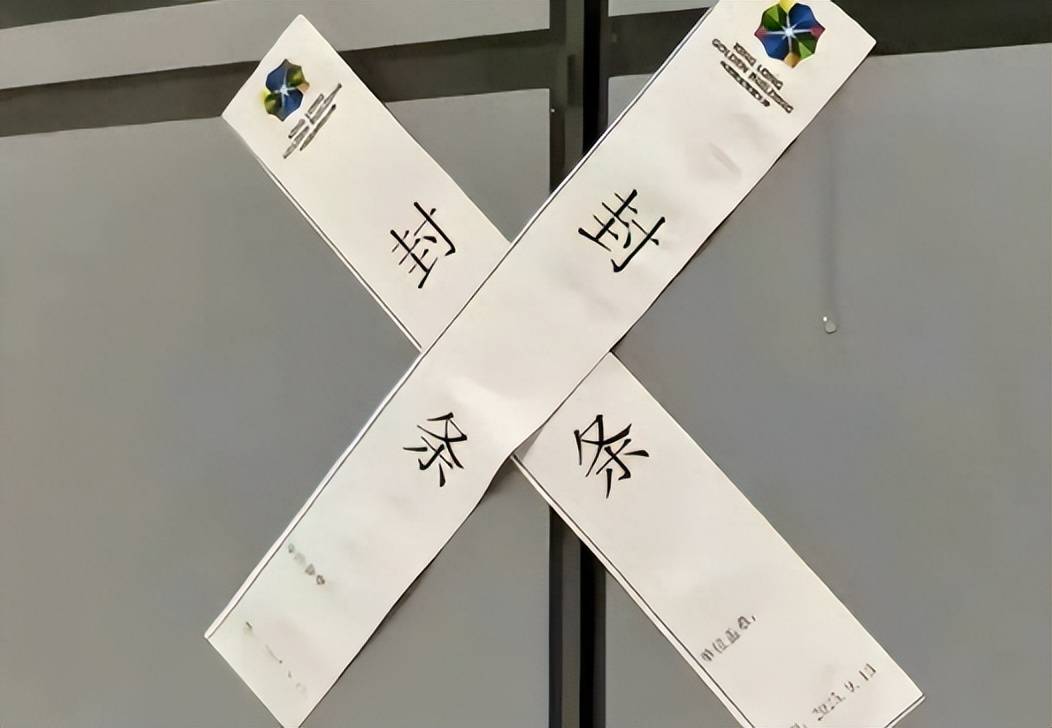
水贝黄金暴雷!20多家料商集体跑路,被骗1.6万报案回执都拿不到
Sou Hu Cai Jing· 2025-09-15 10:51
Core Viewpoint - The recent crisis in the Shenzhen Shui Bei gold market highlights a severe trust breakdown, with nearly twenty gold suppliers disappearing overnight, leading to significant financial losses for small businesses and raising concerns about systemic risks in the industry [1][3][19]. Group 1: Market Overview - Shui Bei is a critical hub for the gold and jewelry industry in China, with an annual transaction volume exceeding 700 billion yuan, and daily gold transactions ranging from five to ten tons [3]. - The market operates largely on informal agreements, relying on personal trust rather than formal contracts, which has created vulnerabilities in times of crisis [6][17]. Group 2: Impact on Small Businesses - Small business owners, like two sisters who invested 16,000 yuan in gold, have suffered devastating losses due to supplier defaults, highlighting the risks faced by those with limited bargaining power [11][15]. - The lack of formal contracts and reliance on informal transactions has left many businesses unable to pursue legal recourse effectively [15][19]. Group 3: Financial Practices and Risks - Many suppliers misused customer prepayments as personal funds for speculative investments, creating a large, unregulated pool of capital that increased systemic risk [17][25]. - The immediate trigger for the crisis was suppliers betting against gold prices, which backfired as prices surged instead of falling, leading to significant financial losses and a collapse of their operations [19][23]. Group 4: Historical Context and Future Outlook - This incident is not isolated; previous cases of financial mismanagement and supplier defaults have occurred, indicating a persistent lack of risk management in the market [25][37]. - Experts suggest that the market needs a fundamental transformation towards a more regulated and transparent system, emphasizing the importance of formal contracts, credit evaluation systems, and process transparency to prevent future crises [28][34][40].