
品牌出海

Search documents
资深茶饮专家交流
2025-06-04 15:25
Summary of Conference Call Records Company Overview - The company discussed its overseas expansion strategy, primarily focusing on Southeast Asia, with Indonesia, Malaysia, and Thailand being the top three markets for store openings [1][5]. Key Points and Arguments Market Potential and Challenges - Indonesia is identified as having significant market potential, while Vietnam presents a complex business environment with low consumer brand loyalty, making it one of the most challenging markets in Southeast Asia [1][5]. - The company has adjusted its product offerings based on consumer preferences in different Southeast Asian countries, such as high sugar preferences in Indonesia and health-conscious choices in Vietnam [1][9]. Financial Metrics - The gross margin for overseas single-store models is approximately 45%, with raw material costs accounting for 55% and labor costs being relatively low, around 16% of revenue [1][19]. - The actual net profit margin for stores in Southeast Asia ranges from 25% to 30%, with minimal VAT or consumption tax obligations [1][20]. Expansion Strategy - The company plans to open 1,000 to 1,500 new stores overseas in 2025, with a focus on Malaysia and Thailand, each expected to add around 400 stores [18]. - The long-term goal is to establish 20,000 overseas stores by 2028, with a significant push starting in 2026 [43]. Consumer Behavior Insights - Consumer loyalty varies significantly across Southeast Asian countries, with Vietnamese consumers showing lower brand loyalty and a tendency to follow trends [6][7]. - Different countries require tailored marketing strategies, such as higher sugar content in Indonesia and health-focused products in Vietnam [9][10]. Competitive Landscape - The company holds the leading position in the tea beverage industry in Indonesia, Vietnam, Malaysia, and Thailand, with local brands like Toco Toco in Vietnam and various coffee chains posing competition at different price points [31][23]. - Local brands benefit from established consumer bases and often provide superior in-store experiences, making competition challenging for Chinese tea brands [24][25]. Operational Challenges - The company has faced issues with rapid expansion, particularly in customer and store location audits, leading to a closure rate of about 1.6% due to poor site selection [12][14]. - Adjustments have been made to the franchisee selection process, focusing on operators who can actively manage stores rather than just financially capable individuals [13]. Supply Chain and Production - The company emphasizes the importance of a strong supply chain for successful international expansion, utilizing domestic super factories and establishing local warehouses in Southeast Asia to reduce costs and improve efficiency [25][26]. - Plans are in place to establish raw material factories in Vietnam and the Philippines by 2028, which will enhance supply chain capabilities across the region [27]. Future Outlook - The company aims to penetrate new markets in Central Asia, South Asia, South America, and North America, with a gradual expansion strategy expected to take 2 to 3 years for each new market [36]. - The domestic market remains a priority, with approximately 40,000 stores currently and plans to expand into rural areas and unique flagship locations [38][42]. Additional Important Insights - The average daily sales per store vary by market, with Vietnam averaging around 2,300 RMB per day, while Malaysia performs better with higher sales volumes [10]. - The company has successfully relocated underperforming stores, significantly increasing their sales post-move [35]. - The labor cost advantage in Vietnam is notable, with the company paying significantly lower wages compared to local textile or shoe factory workers [32]. This comprehensive overview captures the essential insights from the conference call, highlighting the company's strategic focus, market dynamics, financial performance, and operational challenges in its overseas expansion efforts.

鸿智科技:健康养生厨房小家电快速增长,公司大力拓展电商业务-20250604
KAIYUAN SECURITIES· 2025-06-04 07:30
Investment Rating - The investment rating for the company is "Outperform" (maintained) [2] Core Views - The company is experiencing rapid growth in the health and wellness kitchen appliance sector and is actively expanding its e-commerce business [2] - In 2024, the company achieved a revenue of 480 million yuan, representing a year-on-year growth of 14.77%, while the net profit attributable to the parent company was 35.42 million yuan, a decline of 3.12% [4] - The company anticipates a recovery in overseas demand, which is expected to drive performance potential, maintaining a positive outlook for the years 2025 to 2027 [4] Financial Performance Summary - In 2024, the company reported a revenue of 480 million yuan, with a year-on-year increase of 14.77% and a net profit of 35.42 million yuan, down 3.12% [4] - For Q1 2025, the company achieved a revenue of 102 million yuan, a year-on-year growth of 3.66%, and a net profit of 7.33 million yuan, up 3.40% [4] - The company projects net profits for 2025, 2026, and 2027 to be 41 million yuan, 49 million yuan, and 54 million yuan respectively, with corresponding EPS of 0.46, 0.55, and 0.61 yuan per share [4][8] Industry Insights - The kitchen small appliance industry is showing a bifurcated growth pattern, with low-end market competition intensifying while mid-to-high-end segments present significant growth opportunities [5] - Health-oriented products are rapidly growing due to increasing health awareness, while traditional essential categories are stabilizing [5] - The company’s main product, rice cookers, generated revenue of 370 million yuan, reflecting a year-on-year growth of 12.67% [5] Strategic Initiatives - The company is committed to developing its own brand, increasing market expansion efforts, and continuously innovating through technology upgrades [6] - In 2024, the company’s sales expenses increased by 14.38% to 14.02 million yuan, reflecting its aggressive e-commerce expansion strategy [6] - The company holds 175 patents, with 27 patents in the application stage, including 9 invention patents that have entered the review stage, reinforcing its foundation for sustainable development [6]
鸿智科技(870726):北交所信息更新:健康养生厨房小家电快速增长,公司大力拓展电商业务
KAIYUAN SECURITIES· 2025-06-04 07:02
Investment Rating - The investment rating for the company is "Outperform" (maintained) [2] Core Views - The company is experiencing rapid growth in the health and wellness kitchen appliance sector and is actively expanding its e-commerce business [2][4] - In 2024, the company achieved a revenue of 480 million yuan, representing a year-on-year growth of 14.77%, while the net profit attributable to the parent company was 35.42 million yuan, a decline of 3.12% [4] - The company anticipates a recovery in overseas demand, which is expected to drive performance potential, maintaining a positive outlook for the years 2025-2027 [4] Financial Performance Summary - In 2024, the company reported a revenue of 480 million yuan, with a year-on-year increase of 14.77% and a net profit of 35.42 million yuan, down 3.12% [4][8] - For Q1 2025, the company achieved a revenue of 102 million yuan, a year-on-year growth of 3.66%, and a net profit of 7.33 million yuan, up 3.40% [4] - The company projects net profits for 2025, 2026, and 2027 to be 41 million yuan, 49 million yuan, and 54 million yuan respectively, with corresponding EPS of 0.46, 0.55, and 0.61 yuan per share [4][8] Industry Insights - The kitchen appliance industry is showing a bifurcated growth pattern, with low-end market competition intensifying while mid-to-high-end segments present significant growth opportunities [5] - Health-oriented products are rapidly growing due to increasing health awareness, while traditional essential categories are stabilizing [5] - The company’s main product, rice cookers, generated revenue of 370 million yuan, reflecting a year-on-year growth of 12.67% [5][6] Strategic Initiatives - The company is focused on developing its own brand, enhancing market expansion efforts, and continuously innovating through technology upgrades [6] - In 2024, the company invested 17.07 million yuan in R&D, a year-on-year increase of 17.65%, and holds 175 patents, with 27 patents in the application stage [6][8]
王老吉与尼泊尔头部食品销售商签约,加快开拓南亚市场
Nan Fang Du Shi Bao· 2025-06-03 12:15
Group 1 - The core viewpoint of the news is that Guangzhou Wanglaoji Health Industry Co., Ltd., a subsidiary of Guangzhou Pharmaceutical Group, has signed a cooperation agreement with Nepal's Chobari Trading Company to enter the South Asian market, marking a significant step in the company's international expansion [2][3] - The trade value between China and Nepal is projected to exceed 55 billion RMB from 2019 to 2024, with an annual growth rate of 11.7%, highlighting the strengthening economic ties between the two countries [3] - The cooperation is seen not only as a business opportunity but also as a bridge for cultural exchange between China and Nepal, with both parties emphasizing the importance of effective distribution networks to reach the South Asian market [3] Group 2 - During the visit, the delegation from Guangzhou Pharmaceutical Group met with Nepal's former Deputy Prime Minister and discussed the global expansion strategy of the Wanglaoji brand [4] - The delegation also visited Nepal's first listed pharmaceutical company, Om Mega Shree Pharmaceuticals, to explore collaboration opportunities in pharmaceuticals and traditional Chinese medicine [4] - Wanglaoji has already entered over 100 countries and regions globally, with accelerated international expansion efforts, including the launch of the English brand identity WALOVI in Kuala Lumpur [4]

中美关税博弈 粤企积极应对 改变战术谋生存图发展 调整“帆” 织密“网” 坚固“本”
Guang Zhou Ri Bao· 2025-05-29 19:05
Core Viewpoint - The recent tariff conflict between China and the U.S. has prompted Chinese companies, particularly in Guangdong, to adapt their strategies to mitigate risks and explore new markets as a response to the changing trade environment [1][2]. Group 1: Company Responses to Tariff Changes - Companies like Kunyan Technology in Foshan have faced significant challenges due to their heavy reliance on the North American market, which accounted for over 80% of their business. The sudden increase in tariffs led to a halt in orders, prompting the company to seek new markets and diversify its customer base [2][3]. - Kunyan Technology has successfully reduced its North American customer base to less than 50% by actively engaging with clients from Brazil, Germany, the UK, and France, thus mitigating risks associated with the tariff conflict [3]. - Shenzhen Kairun Electronics has seen a 67% drop in the export volume of digital cameras due to increased tariffs, leading the company to optimize its supply chain and explore emerging markets to counteract the impact of policy changes [4][5]. Group 2: Strategic Adjustments and Innovations - Kairun Electronics is implementing strategic adjustments by enhancing contract terms to clarify delivery timelines and risk-sharing, as well as optimizing pricing mechanisms to remain competitive amidst tariff fluctuations [4][5]. - Dongguan's Wanle Toy Company has shifted its focus to domestic sales, signing a significant procurement order with JD Supermarket worth 50 million yuan, thus alleviating pressure from the U.S. market [6]. - The trend of "exporting to domestic sales" is gaining traction among companies, with many exploring local markets to reduce dependency on international trade [6]. Group 3: Global Expansion and Supply Chain Restructuring - Companies are increasingly adopting a "don't put all eggs in one basket" approach, diversifying their market presence to reduce reliance on single markets, as seen with Kunyan Technology's outreach to various countries [7][8]. - Many Guangdong enterprises are establishing manufacturing bases in countries like Mexico to minimize geopolitical risks and reduce tariff impacts while being closer to end markets [8][9]. - The shift towards global supply chain restructuring is evident, with companies considering Southeast Asia for production and sourcing opportunities [7][8]. Group 4: Brand Development and Localization - There is a growing emphasis on building strong independent brands as companies transition from pure OEM (Original Equipment Manufacturer) models to brand-oriented strategies, enhancing their market presence and pricing power [10][11]. - Companies are focusing on localizing their products and services to meet the preferences of different markets, which includes adapting product designs and establishing local service teams to improve customer satisfaction [11][12].
重生的TA|关税博弈“逆行者”:不要慌、加大生产、继续接单!
新浪财经· 2025-05-28 01:04
文|《好博会》报道组 闫妍 人物:杭州为家建筑装饰有限公司总经理 熊伟平 熊伟平今年36岁,经营着杭州为家建筑装饰有限公司,主营业务为中高端户外电动凉亭搭 建。2024年,这家公司交出了一份亮眼成绩单:销售额突破1亿元,其中60%以上订单来自 美国,25%销往欧洲,剩余份额则被澳洲、中东等市场瓜分。 在关税政策最扑朔迷离的那段时间,不少同行选择收缩美国市场战线,他反而加码押注,即 便是关税最高的时候,工厂也没有停工。随着关税暂时回落,他的生意更迎来了新一轮爆 发,正经历着甜蜜的烦恼,他苦笑着说,"工厂每天都是满负荷状态,甚至需要插队排单, 我只能多多的付工人加班费。" 今年4月以来,美国关税政策就像一柄达摩克利斯之剑,始终高悬在中国外贸商的头顶。每 一次华盛顿传来的风吹草动,都让中国外贸商家的神经再度紧绷。 那段时间,有员工跑来问熊伟平,"我们该怎么办?"他当时开了个会和员工们讲:"没有美 国市场,我们还有欧洲市场、中东市场,还有海量的市场让我们去做,何况现在还不到把美 国市场让给同行的时候,该干嘛干嘛,大家手里的事情不要停下。" 第一时间,熊伟平让员工们先去把手上的美国客户逐个梳理一遍,希望了解他们对关税的 ...

品牌远征与跨境电商“质变”:关税风浪中的外贸韧性试验
2 1 Shi Ji Jing Ji Bao Dao· 2025-05-27 13:06
Group 1: Brand Expansion and Market Strategy - The "Song Dynasty" fragrance brand from Hangzhou has achieved nearly 200% order growth in the US market within a year by leveraging e-commerce platforms like Yami [1] - Zhejiang enterprises are increasingly focusing on developing overseas brands and entering local e-commerce markets to adapt to changing trade dynamics [1][6] - Companies like Zhongtian Model Co. have successfully entered the US market by establishing a dedicated brand for educational toys, planning to expand into the Russian market next [3] Group 2: Trade Resilience and Economic Performance - Zhejiang province's foreign trade maintained resilience with a total import and export value of 1.75 trillion yuan in the first four months of the year, reflecting a year-on-year growth of 6.6% [2] - The province's growth rates in imports and exports outpaced national averages, indicating a robust trade environment despite global uncertainties [2] Group 3: Cross-Border E-commerce Development - Companies are shifting from cross-border stores to local stores to enhance competitiveness in overseas markets, particularly in the US and Russia [6][8] - The Zhejiang government is actively supporting cross-border e-commerce through various initiatives, including the establishment of a "capacity going out" service platform [9][10] Group 4: Brand and Product Innovation - Traditional foreign trade companies are increasingly focusing on brand development to ensure long-term stability and profitability in uncertain trade environments [4] - Companies like Jiali Century are successfully entering high-end markets in Europe after years of negotiation, highlighting the importance of brand recognition and product quality [4] Group 5: Market Trends and Consumer Preferences - There is a growing demand for branded products among European consumers, who often search for "brand + product" combinations on e-commerce platforms [5] - The diversification of consumer needs is driving Chinese manufacturers to enhance their production capabilities and focus on specialized, high-quality products [4]
智库要览丨解码中国企业“出海”新动向
Sou Hu Cai Jing· 2025-05-27 08:04
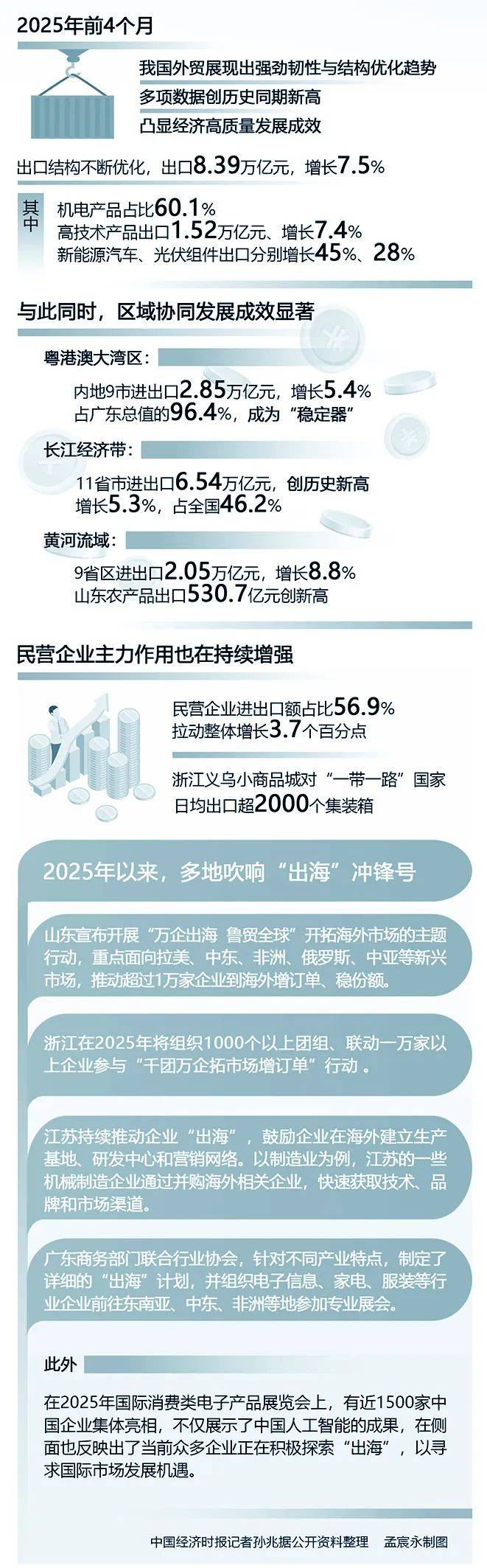
Core Viewpoint - Chinese companies are transitioning from merely exporting products to establishing brands and conducting research overseas, particularly in sectors like renewable energy, electric vehicles, and high-tech products, amidst a complex global economic landscape [1][30][31]. Group 1: Challenges and Opportunities for Chinese Companies Going Global - The EU's policies aimed at achieving carbon neutrality by 2050 create significant market opportunities in solar energy and storage, but Chinese companies face high entry barriers and costs when expanding into these markets [2][3][24]. - The Regional Comprehensive Economic Partnership (RCEP) offers Chinese companies reduced trade barriers and easier market access, yet challenges such as policy continuity and supply chain completeness remain [5][6][26]. - Companies are advised to adopt both horizontal and vertical strategies for international expansion, focusing on deepening their presence in manufacturing, services, and consumption while enhancing collaboration with related enterprises [4][24]. Group 2: Market Trends and Strategic Recommendations - The shift from product export to brand and research export indicates a maturation in the international strategies of Chinese firms, necessitating a focus on local market compliance and strategic planning [15][30]. - Reports highlight the importance of optimizing overseas patent strategies to mitigate risks associated with intellectual property disputes, particularly in the automotive sector [17][18][31]. - The increasing role of private enterprises in international trade is evident, with significant contributions to export growth and initiatives aimed at expanding market presence in emerging regions [10][29]. Group 3: Economic Performance and Regional Developments - In the first four months of 2025, China's exports reached 8.39 trillion yuan, marking a 7.5% increase, with high-tech products and electric vehicles showing notable growth rates of 7.4% and 45%, respectively [10][28]. - Regional cooperation has proven effective, with significant trade volumes reported in areas like the Guangdong-Hong Kong-Macao Greater Bay Area and the Yangtze River Economic Belt, contributing to national economic stability [10][28]. - Initiatives in provinces like Jiangsu and Guangdong are encouraging companies to establish overseas production bases and participate in international trade fairs, further supporting the "going global" strategy [11][29].
从黄浦江到大阪湾,“上海制造佳品汇”园区出海展示产业新风向
Sou Hu Cai Jing· 2025-05-24 10:16
在世界经济版图深度重构的当下,中国企业正以"新航海家"的姿态,走出国门开启战略远征,而东方美谷作为上海产业园区的标杆率先开启了组团出海的实 践。 5月21日至25日,2025"上海制造佳品汇"大阪专场暨"上海之夏"全球推介系列活动大阪站在大阪世博会期间举办。本次活动特别设立"园区出海"板块,由上 海东方美谷与上海市工业综合开发区联合主导,携多家本土消费品牌组成"出海矩阵",通过产品展示、技术交流、商贸洽谈等形式,向全球展现"上海制 造"的创新实力。此次活动也是政府、平台、企业以集团军模式登陆国际舞台,彰显了中国品牌出海从"单兵作战"转向"共创共赢"。 野生产 f Henting L " l TREF Lines LI 出牌 Th ", " ñ 4 2025.05 ( R a 园区出海"组团"亮相日本大阪,为本届活动带来多重亮点。上海设计周、王斌 图 园区出海登陆国际秀场 作为上海市推动时尚消费品产业高质量发展的重要平台,"上海制造佳品汇"由上海市经信委、商务委、市场监管局共同主办,自2020年以来已成长为展 示"上海制造"品牌魅力的核心窗口,也是"上海时尚出品"的核心名片。"上海时尚出品"是上海市经信委推出的 ...

好品山东粤澳深度合作区(横琴)品牌出海中心正式启动
Nan Fang Nong Cun Bao· 2025-05-24 04:03
Core Points - The "Good Products Shandong" brand export center in the Guangdong-Macao Deep Cooperation Zone (Hengqin) has officially launched, marking a significant step in Shandong's agricultural products going global [2][4][6] - The center aims to leverage Hengqin's policies and its connection to Portuguese-speaking countries to create a comprehensive export base for Shandong's agricultural products [5][6][22] - Shandong's agricultural exports have reached 164.82 billion yuan in 2024, maintaining its position as the leading province in agricultural exports for 26 consecutive years [10][11] Group 1 - The establishment of the brand export center is a practical implementation of the national Guangdong-Hong Kong-Macao Greater Bay Area strategy [8] - Shandong has already exported agricultural products to over 190 countries and regions, with exports to Hong Kong and Macao amounting to 2.11 billion yuan in 2024 [10][11] - The center has gathered over 700 unique products from more than 240 enterprises across 16 cities in Shandong [16][22] Group 2 - The center is positioned as a strategic support point for Shandong's high-quality agricultural products to enter the global market, particularly benefiting from the Greater Bay Area's large consumer market [22][31] - The collaboration between Guangdong and Shandong has evolved beyond simple trade, focusing on shared resources and joint innovation [28][31] - The "Great Bridge Economy" effect in Hengqin is expected to accelerate the integration of resources from Shandong, Guangdong, and Macao, creating a north-south agricultural hub [40][41]
