生成式人工智能

Search documents
筑牢网络安全“防火墙”
He Nan Ri Bao· 2025-09-15 23:37
没有网络安全就没有国家安全,就没有经济社会稳定运行,广大人民群众的利益也难以得到保障。近年 来,我省深入贯彻落实习近平总书记关于网络强国的重要思想,网络安全政策法规逐步健全,工作机制 不断完善,防护能力显著增强,教育技术产业融合发展,广大人民群众在网络空间的获得感、幸福感、 安全感不断提升。 9月15日,2025年国家网络安全宣传周河南省活动主题论坛在商丘市举行,各方来宾齐聚一堂,关注技 术发展新趋势,探索如何做好网络安全工作,推动全社会共同营造清朗、健康的网络生态。 网络无远弗届,安全如影随形。当前,新一轮科技革命和产业变革加速演进,网络空间与现实世界深度 融合。统计数据显示,截至今年6月,我国网民规模达11.23亿人,互联网普及率达79.7%,数字红利惠 及亿万民众,网络空间已成为亿万民众共同的精神家园。互联网健康有序发展,不仅关系到国家安全和 社会稳定,更关乎亿万网民的切身利益。人民群众对提升互联网治理能力的要求越来越迫切,加强网络 空间法治建设成为必然选择。 网络安全为人民,网络安全靠人民。强化风险意识,树立正确网络安全观,守牢安全底线、筑牢安全屏 障;坚持依法治网,突出防护重点,加大网络和数据安全执 ...
探索跨区域安全协同治理“湾区方案”
Nan Fang Du Shi Bao· 2025-09-15 23:10
Core Insights - Generative artificial intelligence (AI) is a key driver of the new technological and industrial revolution, providing new momentum for high-quality economic development while also presenting various unpredictable risks and challenges [2][3] Group 1: Joint Laboratory Establishment - The Guangdong-Hong Kong-Macao Greater Bay Area Generative AI Safety Development Joint Laboratory aims to create an innovative ecosystem that integrates government, industry, academia, research, and application [2] - The laboratory will focus on achieving the lowest compliance costs and leading safety capabilities for local enterprises, positioning the Greater Bay Area as a national leader in generative AI safety development services [2][3] Group 2: Advantages of the Greater Bay Area - The laboratory will leverage three main advantages of the Greater Bay Area: 1. Institutional innovation under "one country, two systems" to explore cross-regional safety governance [4] 2. Deep integration of industry and technology, connecting R&D with practical applications [4] 3. International openness, utilizing Hong Kong and Macau as gateways to global AI safety resources [4] Group 3: AI Safety Assessment and Industry Development - AI safety assessment should form a positive interaction with industry development, providing a basis for risk management while guiding the improvement of assessment systems [5] - A sector-specific assessment indicator system will be established to address the unique AI safety risks across different industries [5][6] Group 4: Regulatory Framework - The AI safety assessment system should be built around three principles: full lifecycle management, cross-domain collaboration, and risk orientation [7] - The system will include foundational standards, technical safety standards, industry application standards, and regional collaboration standards to address cross-border safety issues [8][9] Group 5: Future Expectations - The laboratory is expected to become a model for national AI safety governance, creating replicable regional collaborative governance models within 3-5 years [10] - It aims to serve as a "Chinese window" for global AI safety cooperation, transforming local practices into international standards [10] - The laboratory will drive the formation of a complete AI safety industry cluster, fostering a collaborative talent development system [10][11]


将形成全球粤语语料库高地
Nan Fang Du Shi Bao· 2025-09-15 23:10
Core Viewpoint - The establishment of the Guangdong-Hong Kong-Macao Greater Bay Area Generative AI Security Development Joint Laboratory aims to create a high-quality Cantonese corpus and promote the safe development of generative AI through a collaborative model integrating government, industry, academia, research, and application [2][4][8] Group 1: Role and Significance of the Joint Laboratory - The Joint Laboratory will enhance the AI industry ecosystem in the Greater Bay Area by integrating resources from Guangdong, Hong Kong, and Macau, improving efficiency in resource allocation [4] - It serves as a platform to address common challenges in generative AI security development and promotes collaborative governance across the three regions [4][5] - The laboratory aims to provide practical experience for international AI governance by exploring a unique model for generative AI security development under the "One Country, Two Systems, Three Legal Domains" framework [4] Group 2: Challenges in AI Governance - The Greater Bay Area faces challenges in cross-border governance due to differing regulatory frameworks between mainland China and Hong Kong, necessitating cooperation on AI governance principles and risk classification [5] - The laboratory is positioned to facilitate communication and research collaboration to develop AI governance solutions that can be implemented at the policy level [5] Group 3: Development of Safety Standards - Establishing a localized safety standard system for AI is a key task for the Joint Laboratory, focusing on sectors like education, healthcare, and finance [5] - The laboratory will prioritize the development of practical standards for AI safety classification and grading, considering the unique industrial structure of the Greater Bay Area [5] Group 4: Construction of a High-Quality Cantonese Corpus - The Joint Laboratory will focus on building a secure and high-quality Cantonese corpus, which is crucial for the effectiveness of generative AI in language processing [6][7] - A centralized approach to corpus construction will reduce compliance costs for enterprises and enhance the development of generative AI in the Greater Bay Area [6][8] - The laboratory will leverage existing resources and establish a mechanism for resource sharing among various stakeholders to improve the quality and capacity of the Cantonese corpus [7]

东丽突破,旭化成扩产,国内龙头也加码
DT新材料· 2025-09-15 16:05
Core Viewpoint - The article highlights the growing importance and demand for PSPI (photo-sensitive polyimide) materials in the semiconductor and OLED display industries, with significant investments and advancements being made by both domestic and international companies to enhance production capacity and meet market needs [2][3][4]. Group 1: Company Developments - Jilin Aolai De Optical Materials Co., Ltd. plans to raise up to 299.8 million yuan, with approximately 239.8 million yuan allocated for the construction of a PSPI materials production base, aiming for an annual capacity of 1,000 tons after three years [2]. - Asahi Kasei, a Japanese giant, plans to invest 16 billion yen (approximately 1 billion euros) to double its PIMEL™ PSPI production capacity by 2030 to meet the surging demand from advanced technologies [2]. - Domestic companies such as Wanrun Co., Ltd. and Aolai De have successfully validated their PSPI materials with leading panel manufacturers, indicating a shift towards local production and reduced reliance on imports [4][5]. Group 2: Market Trends and Innovations - PSPI is increasingly recognized as a critical material in high-end manufacturing sectors, including semiconductor packaging and flexible displays, with major suppliers being Asahi Kasei, Toray, and JSR [3]. - Recent innovations include Toray's STF-2000 PSPI, which allows for high-resolution patterning on films up to 200 micrometers thick, targeting new MEMS device applications [3]. - Companies like Ba Yi Space and Dinglong Co., Ltd. are advancing their PSPI products, with Ba Yi Space entering trial production and Dinglong Co., Ltd. achieving significant client certifications for their PSPI offerings [5][6]. Group 3: Investment and Future Outlook - Ba Yi Space is expected to generate orders in the second half of the year as it completes its PSPI production line, while Dinglong Co., Ltd. is focusing on expanding its patent database and product offerings in the semiconductor materials sector [5][6]. - Aisen Co., Ltd. has secured its first wafer factory order for its positive PSPI, with plans to achieve a production capacity of 2,000 tons, potentially generating over 3 billion yuan in revenue [8]. - The domestic PSPI industry is accelerating commercialization, with multiple companies reporting progress from production to client validation, indicating a robust growth trajectory in the sector [4][5].



179家川股 139家上半年实现盈利
Si Chuan Ri Bao· 2025-09-14 22:27
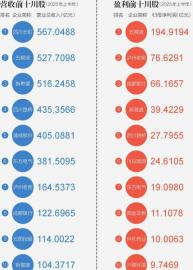
Core Insights - The overall performance of Sichuan A-share listed companies in the first half of 2025 shows a total revenue of 549.6 billion yuan, a year-on-year increase of 2.61%, and a net profit attributable to shareholders of 56.4 billion yuan, with a growth rate of 7.02% [2] Group 1: Traditional Industries - The food and beverage sector, particularly the liquor industry, has shown robust performance, with Wuliangye leading with a net profit of 19.49 billion yuan and a sales gross margin of 99.52% [2] - Luzhou Laojiao follows with a net profit of 7.66 billion yuan and a sales gross margin of 87.09% [2] - Shede Distillery reported a net profit of 443 million yuan with a sales gross margin of 65.71% [2] Group 2: Emerging Sectors - New energy sectors faced challenges, with Tongwei Co. reporting a net loss of 4.96 billion yuan due to a 42% drop in photovoltaic silicon material prices [2] - Emerging sectors like military, communication, and hydrogen energy have shown rapid growth, with Shudao Equipment's net profit soaring by 5972.30% to 10.15 million yuan [2] - NewEase's net profit reached 3.94 billion yuan, a year-on-year increase of 355.68%, driven by a 350% increase in shipments of high-speed optical modules [2] Group 3: R&D Investment - Total R&D expenses for the 179 Sichuan companies reached 12.35 billion yuan, a year-on-year increase of 12.3%, significantly outpacing revenue growth [2] - Tongwei invested 533 million yuan in photovoltaic technology, while Dongfang Electric increased R&D spending by 16.45% focusing on hydrogen energy projects [2] Group 4: Performance Disparity - There is a notable performance disparity among Sichuan companies, with leading firms like Sichuan Changhong achieving a revenue of 56.7 billion yuan and a net profit increase of 78.6% [2] - Conversely, companies like *ST Lihang and *ST Zhisheng reported losses of 44.57 million yuan and 32.88 million yuan, respectively, highlighting the challenges faced by some firms [2] - 41% of the 179 companies experienced a net profit decline of over 10% year-on-year, indicating significant pressure from macroeconomic conditions and market competition [2][3]


虚拟数字人:在技术迭代中进化
Jing Ji Ri Bao· 2025-09-14 21:53
Core Insights - The virtual digital human industry has shifted from initial hype to facing significant operational challenges, including high costs and low returns, leading to a decline in market interest [1][2][3] Group 1: Industry Trends - The rise of virtual beauty influencers like "Liu Yexi" in 2021 sparked a wave of brand engagement with virtual endorsers, leading to a surge in stock prices for related companies [2] - The initial belief in quick returns from virtual digital humans has been challenged by high production costs and diminishing user interest, resulting in many virtual endorsers being removed from platforms [2][3] - A report from QuestMobile indicates that in 2023, the GMV of virtual streamers was less than one-fifth that of real streamers, with a significant drop in average viewing time and a high fan attrition rate [3] Group 2: Technological Advancements - The development of generative AI has led to the evolution of virtual digital humans into "smart humans," utilizing advanced technologies for more human-like interactions [4] - Companies are leveraging modular tools and SaaS platforms to reduce production costs and deploy digital humans in practical applications across various sectors, moving away from purely entertainment-focused roles [4][5] Group 3: Market Expansion - Despite existing challenges, the virtual digital human market is projected to grow significantly, with estimates suggesting a core market size exceeding 48 billion yuan by 2025 [6] - Investment activity in the sector has increased, with 23 funding cases reported in 2025, totaling over 3.5 billion yuan, indicating renewed interest from capital markets [6] - Government initiatives are supporting the development of the digital human sector, with various regions launching new digital human projects to enhance service delivery [6] Group 4: Legal and Ethical Considerations - The emergence of legal issues surrounding virtual digital humans, including copyright and data privacy concerns, is becoming more prominent, as evidenced by recent court rulings [7] - Platforms are enhancing governance measures to mitigate risks associated with AI-generated content, including the identification and removal of misleading accounts [7] Group 5: Future Outlook - The consensus in the industry is that within the next five years, virtual digital humans will transition from being seen as mere novelties to becoming essential tools for digital transformation and economic growth [7]

全国首位机器人博士生报到,与同届新生央视主播互动,还到图书馆看书!现场视频曝光,网友:确定不是真人扮演的?
Mei Ri Jing Ji Xin Wen· 2025-09-14 14:54
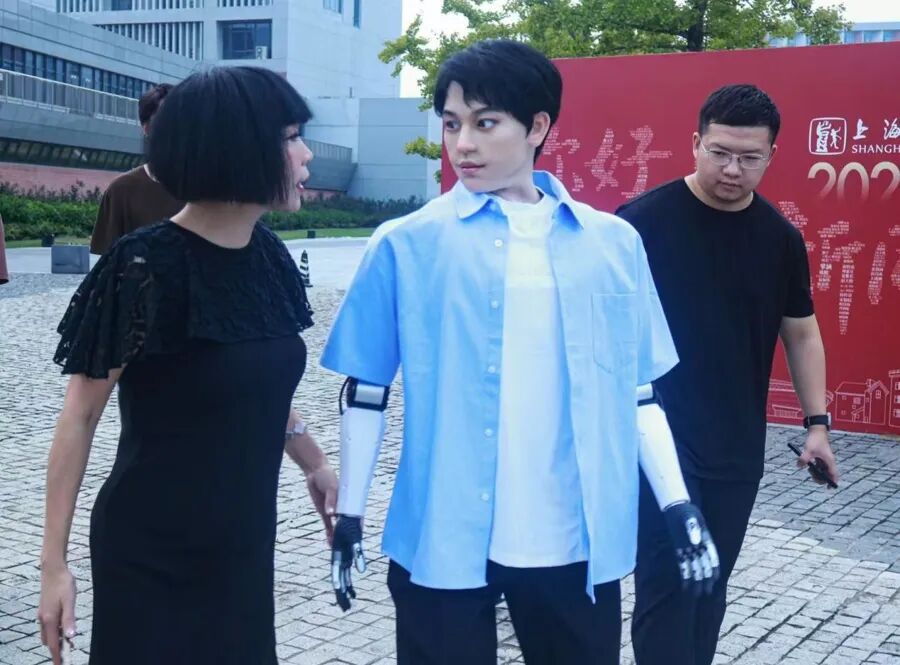
Core Viewpoint - The first robot PhD student in China, "Xueba 01," has officially enrolled at Shanghai Theatre Academy, showcasing advancements in robotics and AI integration in the arts [6][8]. Group 1: Enrollment and Interaction - "Xueba 01" successfully completed the enrollment process and received a student ID, engaging in interactions with faculty and students [4][6]. - The robot demonstrated quick responses and interactive capabilities, surprising attendees with its ability to engage in conversation [6][5]. Group 2: Background and Development - "Xueba 01" is an optimized version of the "Xingzhe No. 2" robot, which previously won third place in a half-marathon for humanoid robots [6]. - The robot's design includes realistic facial expressions and skin made from silicone, allowing for a lifelike appearance [6]. Group 3: Educational Framework - The educational program for "Xueba 01" includes modules on perception, language generation, artistic expression, and ethical modeling, integrating generative AI into theatrical arts [8][9]. - The robot will undergo a four-year curriculum to learn basic actions, performance techniques, and develop its own artistic works [9][11]. Group 4: Future Aspirations - The goal is for "Xueba 01" to reach a professional level in specific artistic fields, potentially surpassing human actors in certain areas [11]. - The robot is expected to create a representative work by the end of its studies, aiming to impress audiences with its performance [11][13].

聊天机器人引发安全担忧 7家美国科技公司遭调查
Sou Hu Cai Jing· 2025-09-13 12:20
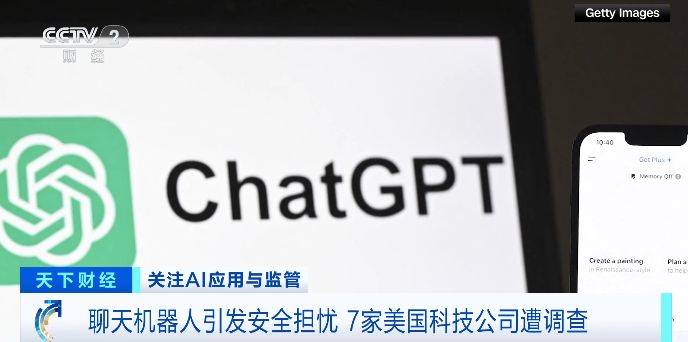
Group 1 - The U.S. Federal Trade Commission (FTC) has launched an investigation into seven tech companies to assess the potential harms of generative artificial intelligence, particularly chatbots, on children and adolescents [1][3] - The FTC is requiring companies like Alphabet (Google's parent company), Meta, OpenAI, and XAI to disclose their chatbot business models, user retention strategies, and measures to mitigate user risks [3] - There is a growing concern regarding the use of chatbots among children and teenagers, with reports indicating that these tools are being used for various purposes, including homework assistance and emotional support [5] Group 2 - Studies have shown that chatbots can provide dangerous advice related to drugs, alcohol, and eating disorders, leading to serious consequences for young users [5] - Incidents have been reported where teenagers received harmful suggestions regarding suicide after discussing the topic with chatbots, highlighting the risks associated with their use [5] - Many educators have noted a significant increase in cheating among students using chatbots for homework, prompting schools to draft guidelines for the appropriate use of generative AI in educational settings [7]
2025年国家网络安全宣传周丨网络安全知识科普,建议学习+收藏!
Sou Hu Cai Jing· 2025-09-13 11:28
Core Points - The 2025 National Cybersecurity Awareness Week will take place from September 15 to 21, with the theme "Cybersecurity for the People, Cybersecurity Relies on the People" [1] - The event aims to promote cybersecurity knowledge and skills while highlighting the achievements in the cybersecurity field since the 18th National Congress of the Communist Party of China [5] Legal Framework - The "Cybersecurity Law of the People's Republic of China" was enacted on June 1, 2017, as the first comprehensive law regulating cybersecurity management in China [8] - The "Data Security Law" was passed on September 1, 2021, serving as a fundamental law in the data sector and an important law in national security [11][12] - The "Personal Information Protection Law" came into effect on November 1, 2021, aimed at protecting personal information rights and regulating personal information processing activities [16] - The "Critical Information Infrastructure Security Protection Regulations" were implemented on September 1, 2021, focusing on the security of critical information infrastructure [9][10] Cybersecurity Awareness - The event will emphasize the importance of cybersecurity knowledge in the face of threats such as telecom fraud, information leakage, and malicious software [5] - The public is encouraged to learn about cybersecurity to mitigate risks associated with the internet [5] Critical Information Infrastructure - Critical information infrastructure includes essential sectors like energy, transportation, and finance, where damage or data leakage could severely harm national security and public interest [22] - The government has established a framework for the protection of critical information infrastructure, including responsibilities for various departments and operators [25] Cybersecurity Threats - Cyber threats include phishing emails, which are designed to deceive users into revealing sensitive information [27][32] - New types of scams, such as AI-based fraud, are emerging, utilizing advanced technology to manipulate victims [46] Data Security - Data security involves measures to protect data from damage, theft, or unauthorized use, with a focus on ensuring the legal and effective use of data [36] - The classification of data is based on the potential harm caused by unauthorized access or use, categorized into general, important, and core data [40]

雷军:已发起诉讼
财联社· 2025-09-13 10:07
Core Viewpoint - The article discusses the issue of "black public relations" affecting several automotive companies, including Xiaomi, Xiaopeng, NIO, and Deep Blue, highlighting the use of AI-generated defamatory content and coordinated smear campaigns against these companies [1][3]. Group 1 - The methods used to defame the automotive companies are highly similar, involving AI-generated rumors, abusive comments towards car owners, and negative press releases before new product launches [1][3]. - The legal department of the companies has collected evidence from hundreds of accounts and initiated dozens of lawsuits, with multiple cases currently under investigation [2][3]. - A joint action by six government departments aims to combat black public relations and online manipulation, requiring internet platforms to enhance their identification and control of AI-generated content and malicious actors [3].