
生成式人工智能

Search documents
何超琼:旅游经济正迈向智能化新阶段,技术创新成关键力量
Nan Fang Du Shi Bao· 2025-09-11 05:04
Group 1 - The global tourism industry is at a critical moment of recovery and transformation, with strong growth despite economic challenges, contributing 10.6% to national employment in China last year [1] - The tourism sector is projected to generate $11.7 trillion in value by 2025, accounting for 10.3% of global GDP, highlighting the need for continuous innovation and development [1] - Sustainable development, digital technology innovation, and smart infrastructure are essential for transforming travel experiences and resource management [1] Group 2 - The tourism economy is entering a new intelligent phase, with technology as a key driver for innovation and the integration of digital tools enhancing the travel experience [2] - Upcoming reports will emphasize the role of cities in the transformation process, with examples like Macau's VR heritage tour project enhancing cultural heritage dissemination [2] - Cultural performances, such as the collaboration with director Zhang Yimou, showcase the fusion of traditional culture and cutting-edge technology, promoting deeper understanding of Chinese history and arts [2]
新华财经早报:9月11日
Xin Hua Cai Jing· 2025-09-11 00:54
针对汽车行业网络乱象六部门联合开展专项整治行动 对欧盟贸易政策强烈不满欧洲议会第三大党团提出针对冯德莱恩的不信任动议 2025年8月份核心CPI继续回升 PPI同比降幅收窄 十四届全国人大常委会第十七次会议10日上午在北京人民大会堂举行第二次全体会议。 受国务院委托,国家发展和改革委员会主任郑栅洁作了关于今年以 来国民经济和社会发展计划执行情况的报告。报告指出,下半年要实施好党中央部署的各项政策措施,不断释放内需潜力,进一步推动科技创新和产业创新 深度融合,坚定不移深化改革扩大开放,持续用力防范化解重点领域风险,全面推进区域协调发展和城乡融合发展,以碳排放双控全面转型推动绿色低碳发 展,多措并举保障改善民生,加强重点领域安全能力建设。(新华社) 8月份,消费市场运行总体平稳,居民消费价格指数(CPI)环比持平,同比下降0.4%,扣除食品和能源价格的核心CPI同比上涨0.9%,涨幅连续第4个月扩 大。国内市场竞争秩序持续优化,部分行业供需关系改善,工业生产者出厂价格指数(PPI)环比由上月下降0.2%转为持平;同比下降2.9%,降幅比上月收 窄0.7个百分点。(新华财经) 国新办9月10日举行"高质量完成'十四 ...




【财经早报】11连板牛股,今日再度停牌核查
Zhong Guo Zheng Quan Bao· 2025-09-10 23:39
Group 1: Automotive Industry - Six departments, including the Ministry of Industry and Information Technology, have launched a three-month special rectification action to address online chaos in the automotive industry, focusing on illegal profit-making, exaggerated and false advertising, and malicious attacks [2][3] - The initiative aims to enhance the effectiveness of handling online issues related to automotive companies and promote a healthy marketing environment to support high-quality development in the automotive sector [2] Group 2: M&A Activity in the Sci-Tech Sector - Since August, the Sci-Tech Innovation Board has disclosed 15 new M&A transactions with a total value exceeding 2.4 billion yuan, half of which are significant asset restructurings involving stock issuance or cash [4] - From 2025 onwards, a total of 73 M&A transactions have been disclosed on the Sci-Tech Innovation Board, with 24 involving stock or convertible bonds and 7 significant cash transactions [4] - Following the release of measures to deepen reforms on the Sci-Tech Innovation Board, 134 M&A transactions have been disclosed, with 80 successfully completed [4] Group 3: Company News - Tianpu Co., Ltd. has experienced a continuous trading suspension due to abnormal stock fluctuations, with a cumulative increase of 185.29% from August 22 to September 10 [5] - Dongyangguang announced a joint investment of 3.5 billion yuan with an affiliate to increase capital in Yichang Dongshu No. 1 Investment Co., Ltd., and plans to acquire 100% equity of Qinhuai Data's China operations for 28 billion yuan [5] - BYD's senior executives have collectively increased their holdings in the company by 523.78 million yuan through stock purchases [6] - Daikin Heavy Industries signed a long-term production lock agreement for offshore wind power infrastructure with a foreign developer, securing a manufacturing capacity of up to 400,000 tons and receiving a lock-in fee of 14 million euros [7] - Zhujiang Co. plans to sell shares in various companies, potentially generating over 50% of its audited net profit from the sale [8]
538款生成式人工智能服务完成备案
Xin Hua She· 2025-09-10 19:54
Core Points - The article discusses the ongoing efforts by the National Internet Information Office to promote the innovation and regulation of generative artificial intelligence services through a registration process [1] Group 1 - As of August 31, 2025, a total of 538 generative artificial intelligence services have completed the registration process [1] - Generative artificial intelligence services that possess public opinion attributes or social mobilization capabilities can register through local internet information departments [1] - Existing generative artificial intelligence applications or features must prominently display the registration status, including model name, registration number, or online number on their product detail pages [1]
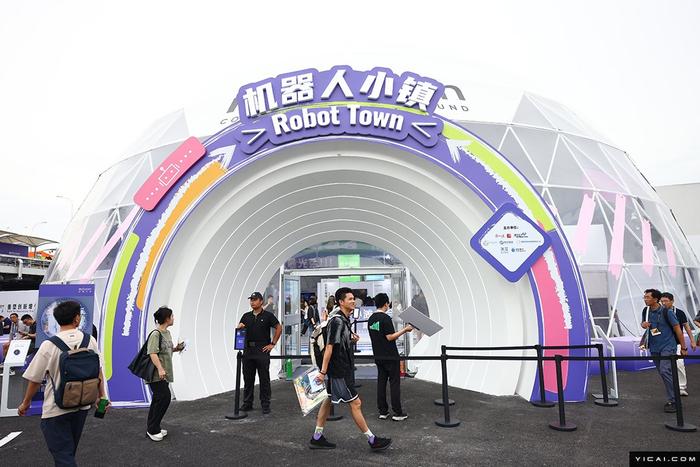
外滩大会首次设立“机器人小镇” 集中展出100多款机器人产品
Di Yi Cai Jing· 2025-09-10 13:31
Core Insights - The "2025 Inclusion·Bund Conference" was held in Shanghai, showcasing over 100 robotic products from more than 40 companies in the field of embodied intelligence [2] Group 1: Event Overview - The conference featured four major robotic exhibition groups, including Zhangjiang Robot Valley and Chengdu Humanoid Robot Innovation Center, and introduced the "Robot Town" concept [2] - The event highlighted advancements in embodied intelligence and showcased various innovative robotic technologies [2] Group 2: Featured Robots - The Zhiyuan Expedition A2 robot demonstrated humanoid design and multimodal interaction capabilities, allowing it to converse with users in a lifelike manner [4] - The Aladdin psychological consultation robot utilizes generative AI for mental health support, addressing various psychological issues [6] - The Kepler K2 Bumblebee robot, weighing 75 kg and standing 175 cm tall, features 52 degrees of freedom and can carry loads of up to 30 kg [8] - The Rui Na simulation expression robot from Zhuoyide Company offers realistic skin and expression simulation, along with intelligent voice and eye-tracking interaction [9] - The Carri FLEX robot is designed for lightweight tasks with a single-arm mechanism, promoting resource efficiency [11] - The Raydiculous dinosaur robot is the world's first bipedal walking intelligent dinosaur, integrating advanced walking technology and AI interaction [13] - The BinoSense R200 robot from Aiguan Vision features a bionic eye system and advanced AI capabilities for visual and auditory functions [25]

中央网信办:截至8月31日累计有538款生成式人工智能服务完成备案
Zhong Guo Xin Wen Wang· 2025-09-10 13:01
Core Points - As of August 31, a total of 538 generative artificial intelligence services have completed registration with the National Internet Information Office [1] - From July to August, 99 new generative AI services were registered, and 27 additional applications or functions were recorded by local internet information offices [1] - Generative AI services with public opinion attributes or social mobilization capabilities can register through local internet information departments [1] Summary by Categories Registration and Compliance - The registration process for generative AI services is ongoing, with a total of 538 services registered as of the end of August [1] - The recent period saw 99 new services registered, indicating a growing trend in the sector [1] Local Registration - Local internet information offices are responsible for registering generative AI applications or functions that directly call upon registered model capabilities [1] - A total of 263 generative AI applications or functions have completed local registration [1] Public Disclosure - Existing generative AI applications must publicly disclose the registered services they utilize, including model names and registration numbers [1]
切断网络水军资金来源,让车圈告别乌烟瘴气
Xin Jing Bao· 2025-09-10 10:28
Core Viewpoint - The Chinese government is launching a three-month special campaign to address online chaos in the automotive industry, targeting illegal profit-making, exaggerated and false advertising, and malicious attacks [1][2]. Group 1: Government Action - Six government departments have jointly issued a notice to conduct a nationwide special rectification action in the automotive sector [1]. - The campaign aims to investigate and punish public relations and marketing companies involved in online chaos, as well as the automotive companies that purchase their services [2]. Group 2: Industry Context - The rapid development of China's new energy vehicle industry has led to significant achievements, making it the global leader in production and sales for several consecutive years [1]. - However, the industry faces threats from online chaos, which undermines the innovation environment and long-term development of the sector [1]. Group 3: Online Chaos and Its Impact - The rise of social media and public opinion platforms has increased the influence of public sentiment on product sales, but it has also led to negative impacts, such as black public relations and online attacks against competitors [2]. - New technologies, including generative artificial intelligence, are being used to create fake content and manipulate public perception, which poses a risk to the automotive industry [2]. Group 4: Importance of a Healthy Public Opinion Environment - A healthy industry requires not only advanced technology and a robust supply chain but also a clear public opinion environment that allows for accurate information transmission and stable trust [2]. - The notice outlines detailed governance plans to address illegal profit-making, exaggerated advertising, and malicious attacks, indicating a comprehensive approach to tackling these issues [2]. Group 5: Role of Media and Industry Responsibility - The automotive industry must actively report and cut ties with black public relations firms to eliminate the financial incentives for online chaos [3]. - A clear public opinion environment is essential for the healthy development of the automotive industry, and media supervision plays a crucial role in maintaining this environment [3].
长飞光纤光缆涨近6% 光通信技术迎重大突破 机构指公司空芯技术产能水平领先
Zhi Tong Cai Jing· 2025-09-10 06:02
Core Viewpoint - Changfei Fiber's stock price increased by nearly 6%, reaching HKD 48.58 with a trading volume of HKD 1.138 billion, following significant advancements in optical communication technology [1] Company Summary - Lumenisity's research team, supported by Microsoft, announced the development of a new type of hollow-core fiber that achieved the lowest signal attenuation level ever recorded, marking a major breakthrough in optical communication technology [1] - Changfei Fiber is highlighted by Zhongtai Securities for its leading hollow-core technology production capacity and successful bids in related projects [1] - Changfei has successfully laid the world's first 7-core submarine fiber optic cable, indicating a significant advancement in China's submarine space division multiplexing communication technology [1] Industry Summary - Minsheng Securities reports a surge in capital expenditure for AI data centers, leading to increased demand for high-end fiber applications [1] - The rapid development of generative AI and the fast iteration of AI models have created substantial demand for computing power, driving the construction of data centers [1] - Major North American cloud service providers, including Microsoft, Google, META, and Amazon, are projected to have a total capital expenditure of approximately USD 95.8 billion by Q2 2025, reflecting a year-on-year growth of about 64%, with an optimistic outlook for annual demand [1] - The ongoing construction of domestic and international data centers is expected to drive steady growth in demand for related products from companies like Changfei Fiber [1]

港股异动 | 长飞光纤光缆(06869)涨近6% 光通信技术迎重大突破 机构指公司空芯技术产能水平领先
智通财经网· 2025-09-10 06:00
Core Viewpoint - Longi Fiber Optics (06869) has seen a nearly 6% increase in stock price, attributed to significant advancements in optical communication technology, particularly the development of a new type of hollow-core fiber with the lowest signal attenuation ever recorded [1] Company Summary - Longi Fiber Optics' stock rose by 5.88% to HKD 48.58, with a trading volume of HKD 1.138 billion [1] - The company has been recognized for its leading hollow-core technology capacity and has successfully won bids for related projects [1] - Longi, in collaboration with partners, has laid the world's first 7-core submarine optical cable, marking a significant breakthrough in China's submarine space division multiplexing communication technology [1] Industry Summary - The demand for high-end optical fiber applications is increasing due to a surge in capital expenditure for AI data centers [1] - The rapid development of generative AI and the fast iteration of AI models have created substantial demand for computing power, leading to ongoing construction of data centers [1] - Major North American cloud service providers, including Microsoft, Google, META, and Amazon, are projected to have a total capital expenditure of approximately USD 95.8 billion by Q2 2025, reflecting a year-on-year increase of about 64% [1] - The continuous construction of data centers both domestically and internationally is expected to drive steady growth in demand for related products [1]
人工智能大调整已经开始
3 6 Ke· 2025-09-07 23:24
Group 1: Core Insights - The current state of corporate investment in artificial intelligence (AI) reveals a significant mismatch, with a high failure rate of AI projects, as 95% of generative AI pilot projects fail to deliver meaningful returns [1] - The shift from hype to value creation in venture capital is evident, with investors now demanding revenue rather than just compelling narratives, leading to a market contraction for AI investments [2] - The primary reason for the high failure rate of AI projects is poor data infrastructure, with an estimated 60% of failures attributed to inadequate data systems [3] Group 2: Market Dynamics - The AI investment landscape is shifting towards established companies with robust data pipelines, while many startups face a "valley of death" due to unclear profitability paths [2] - Successful AI applications focus on enhancing human capabilities rather than replacing them, emphasizing the importance of human oversight and critical thinking [4] - Companies that purchase ready-made AI tools tend to outperform those that attempt to build complex solutions in-house, highlighting the importance of integrating AI into existing workflows [4][12] Group 3: Productivity and Economic Impact - Despite predictions of a productivity boom driven by generative AI, evidence suggests that AI has not significantly improved productivity for most companies, with some instances of productivity decline [5] - Historical parallels are drawn between the current AI era and past technological revolutions, indicating that merely integrating new technologies into outdated systems is insufficient for realizing productivity gains [6][7] Group 4: Strategic Considerations - The competitive advantage in the AI landscape will increasingly depend on the quality of proprietary data rather than the size of AI models, as companies that invest in data collection and management will build lasting advantages [11] - The debate between building versus buying AI solutions is crucial, with most companies advised to purchase existing models to focus on application and user experience [12] Group 5: Human Element in AI - As AI becomes more prevalent, the value of human skills such as critical thinking, creativity, and emotional intelligence will increase, as AI cannot replicate these uniquely human attributes [13][14] - The future workforce will require individuals who can effectively question and interpret AI outputs, rather than simply following machine-generated answers [16]