
人工智能(AI)

Search documents
1月16日收盘:美股周四收高 芯片与银行股领涨
Xin Lang Cai Jing· 2026-01-15 21:08
Market Overview - US stock market rebounded with major indices rising after two days of decline, led by the chip and banking sectors [1][11] - Dow Jones increased by 292.81 points (0.60%) to 49,442.44; Nasdaq rose by 58.27 points (0.25%) to 23,530.02; S&P 500 gained 17.87 points (0.26%) to 6,944.47 [3][13] Semiconductor Sector - TSMC shares rose by 4.5% after reporting record quarterly earnings with a profit increase of 35%, boosting investor confidence in AI demand resilience [3][10] - Following TSMC's earnings report, other chip stocks like Micron Technology, NVIDIA, and AMD saw widespread gains [3][10] - US President Trump announced a 25% tariff on certain chip products, including NVIDIA H200 and AMD MI325X, but exempted chips imported to support the US technology supply chain [3][10] Economic Data - Initial jobless claims decreased to 198,000 for the week ending January 10, down by 9,000 from the previous week and below the Dow Jones estimate of 215,000 [5][15] - The four-week moving average of jobless claims fell to 205,000, the lowest level since January 20, 2024 [5][15] - The Empire State Manufacturing Index for January rose to 7.7, up 11 points from December and exceeding expectations of 1.0 [16] - The Philadelphia Fed Manufacturing Index increased to 12.6, significantly higher than the previous month's -8.8 and the expected -4.5 [17] Focus Stocks - Lumentum, Coherent, and Astera Labs saw gains in the optical communications sector [18] - SanDisk's stock rose after Bernstein raised its target price from $300 to $580 [18] - Boston Scientific announced plans to acquire Penumbra for $14.5 billion [18] - Morgan Stanley reported fourth-quarter net revenue exceeding expectations [19] - Spotify announced a price increase for subscriptions in the US and other regions [20] - Bank of America expects GE Vernova's fourth-quarter orders to grow strongly, with adjusted EBITDA surpassing expectations [21] - The FDA is set to make a decision on Eli Lilly's weight loss drug on April 10 [22]


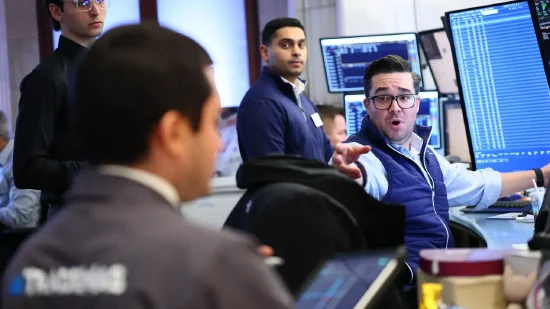
Stock market today: Dow, S&P 500, Nasdaq rise as TSMC boosts AI hopes, bank stocks rally
Yahoo Finance· 2026-01-15 21:00
US stocks rose on Thursday, in a recovery from back-to-back losses as chip linchpin TSMC's strong outlook boosted AI hopes and bank stocks rallied after upbeat earnings reports from two Wall Street heavyweights. The tech-heavy Nasdaq Composite (^IXIC) edged up nearly 0.3%, paring more significant gains from earlier in the session. The S&P 500 (^GSPC) and Dow Jones Industrial Average (^DJI) gained 0.3% and about 0.6%, respectively, bouncing back from two consecutive days of losses for the Wall Street index ...
利好不断!深夜,芯片股大涨
Zheng Quan Shi Bao· 2026-01-15 16:08
Group 1 - The semiconductor sector in the US stock market experienced a significant rise, with the Philadelphia Semiconductor Index increasing by over 3% on January 15 [1] - TSMC's market capitalization surpassed $1.8 trillion, driven by strong demand for AI hardware, with Q4 2025 net profit reaching NT$505.7 billion, a 35% year-on-year increase, and consolidated revenue of NT$1.46 trillion, up 20.5% year-on-year [1] - TSMC's operating profit for Q4 2025 was NT$564.9 billion, a 32.7% year-on-year increase, with an operating margin of 54% and a gross margin of 62.3%, exceeding market expectations [1] Group 2 - TSMC forecasts Q1 2026 sales between $34.6 billion and $35.8 billion, surpassing market expectations of $33.22 billion, with a projected gross margin of 63% to 65% [2] - TSMC's capital expenditures for 2025 totaled $40.9 billion, with expectations for 2026 capital expenditures between $52 billion and $56 billion, indicating a significant increase in future capital spending [2] - Omdia predicts that global semiconductor revenue will exceed $1 trillion for the first time in 2026, driven by unprecedented demand for AI, with a projected revenue growth of 20.3% year-on-year for 2025 [2]

利好不断!深夜,芯片股大涨
证券时报· 2026-01-15 15:55
Core Viewpoint - The semiconductor sector in the US stock market has experienced significant gains, driven by strong demand for AI hardware and positive earnings reports from key companies like TSMC [1][4]. Group 1: Market Performance - On January 15, US stock indices opened higher, with the Dow Jones up 0.38%, Nasdaq up 0.76%, and S&P 500 up 0.53% [1]. - The Philadelphia Semiconductor Index surged over 3%, indicating a broad rally in chip stocks [2]. Group 2: Individual Stock Performance - Notable individual stock performances include: - COHERENT up over 11% - Entegris up nearly 9% - KLA and Applied Materials both up over 7% - TSMC and ASML both up over 6% [2][3]. Group 3: TSMC Financial Performance - TSMC's market capitalization surpassed $1.8 trillion, with Q4 2025 net profit reaching NT$505.7 billion, a 35% year-on-year increase, exceeding market expectations [4][5]. - TSMC's consolidated revenue for the quarter was NT$1.46 trillion, a 20.5% year-on-year increase, also above market estimates [5]. - The operating profit was NT$564.9 billion, a 32.7% year-on-year increase, with an operating margin of 54% [5]. Group 4: Future Projections - TSMC anticipates Q1 2026 sales between $34.6 billion and $35.8 billion, exceeding market expectations of $33.22 billion, with a projected gross margin of 63% to 65% [6]. - The company plans to significantly increase capital expenditures, with 2025 spending at $40.9 billion and 2026 projected between $52 billion and $56 billion [7]. - Omdia forecasts that global semiconductor revenue will exceed $1 trillion by 2026, driven by unprecedented demand for AI [7].

Goldman Sachs(GS) - 2025 Q4 - Earnings Call Transcript
2026-01-15 15:30
Financial Data and Key Metrics Changes - In Q4 2025, the company generated earnings per share (EPS) of $14.01, with a return on equity (ROE) of 16% and a return on tangible equity (ROTE) of 17.1% [21] - For the full year, EPS was $51.32, representing a 27% increase compared to the previous year, with an ROE of 15% and an ROTE of 16%, improving by 230 and 250 basis points respectively from 2024 [21] - The company reported total revenues of $13.5 billion for Q4 and $51.5 billion for the full year, with a significant increase in total assets under supervision reaching a record $3.6 trillion [21][24] Business Line Data and Key Metrics Changes - Global Banking and Markets (GBM) produced record revenues of $41.5 billion for the year, up 18% year-over-year, with investment banking fees rising 25% to $2.6 billion in Q4 [22] - FICC net revenues were $3.1 billion in Q4, up 12% year-over-year, while equities net revenues reached $4.3 billion, with equities financing results hitting a quarterly record of $2.1 billion, up 42% year-over-year [23][24] - Asset and Wealth Management (AWM) revenues were $16.7 billion for 2025, with a pre-tax margin of 25% and record management fees of $3.1 billion in Q4, up 10% year-over-year [24] Market Data and Key Metrics Changes - The investment banking backlog rose for the seventh consecutive quarter to a four-year high, primarily driven by advisory activities [23] - The company maintained its number one position in M&A advisory and ranked first in leverage lending, with a strong outlook for investment banking activity in 2026 [22][23] Company Strategy and Development Direction - The company is focused on narrowing its strategic focus and enhancing its client offerings, including the transition of the Apple Card portfolio and the completion of the General Motors credit card program [5][21] - The firm aims to grow its more durable financing revenues, which comprise 37% of total FICC and equity revenues, and has set a target of achieving a pre-tax margin of 30% in AWM [9][11] - The introduction of One Goldman Sachs 3.0, an operating model propelled by AI, aims to improve efficiency and accountability across the organization [18] Management's Comments on Operating Environment and Future Outlook - Management expressed optimism about the investment banking outlook for 2026, citing catalysts such as corporate strategic repositioning and increased sponsor activity [7][20] - The company is confident in its ability to deliver strong returns for shareholders, supported by a robust capital position and diversified funding mix [28][29] - Management acknowledged potential challenges from economic growth, policy uncertainty, and market volatility but remains focused on disciplined risk management [28][29] Other Important Information - The company announced a $0.50 increase in its quarterly dividend to $4.50, representing a 50% increase from the previous year, and has $32 billion of remaining buyback capacity [16][28] - Total operating expenses for the year were $37.5 billion, with compensation expenses of $18.9 billion, reflecting a compensation ratio of 31.8% [27] Q&A Session Summary Question: How does the company plan to scale wealth management? - Management highlighted the strength of its ultra-high net worth franchise and plans to expand through third-party wealth channels, including partnerships with RIAs [30][31] Question: What is the level of confidence in maintaining mid-teens returns? - Management believes they have significantly raised the floor for returns, supported by the growth of durable revenues, and expects to operate in the mid-teens through the cycle [34][35] Question: Is there potential for transformational M&A? - Management stated that while they are open to opportunities, the bar for significant transformational M&A remains high due to cultural integration considerations [42] Question: What is the current state of the capital markets cycle? - Management indicated that the environment is set up to be constructive for M&A and capital markets activity in 2026, with expectations of exceeding 2021 activity levels [44][45]

早盘:美股继续上扬 道指上涨200点
Xin Lang Cai Jing· 2026-01-15 15:07
Group 1 - The core point of the news is that the US stock market continued to rise, driven by strong performance in the chip sector following TSMC's record quarterly earnings, which boosted confidence in AI demand resilience [1][3][19] - The Dow Jones Industrial Average rose by 212.51 points, or 0.43%, closing at 49,362.14 points; the Nasdaq increased by 174.877 points, or 0.75%, to 23,646.627 points; and the S&P 500 gained 36.10 points, or 0.52%, to 6,962.70 points [3][19] - TSMC reported a profit increase of 35%, which reignited investor confidence in AI demand, leading to a broad rally in chip stocks including Micron Technology, NVIDIA, and AMD [3][19] - The announcement of a 25% tariff on certain chip products by President Trump, including NVIDIA's H200 and AMD's MI325X, was made, but it was clarified that chips imported to support the US technology supply chain would be exempt from this tariff [3][19] Group 2 - Economic data showed a decrease in initial jobless claims to 198,000, down by 9,000 from the previous week, which is below the Dow Jones estimate of 215,000 [6][22] - The Empire State Manufacturing Index for January rose to 7.7, an increase of 11 points from December, exceeding expectations of 1.0; the Philadelphia Fed Manufacturing Index was reported at 12.6, significantly higher than the previous month's -8.8 and above the expected -4.5 [7][22] - Small-cap stocks, represented by the Russell 2000 index, have outperformed the S&P 500 for nine consecutive trading days, indicating a notable rotation in market dynamics [4][20]
JPM2026:礼来、辉瑞、AZ等巨头豪赌AI与并购
Xin Lang Cai Jing· 2026-01-15 14:09
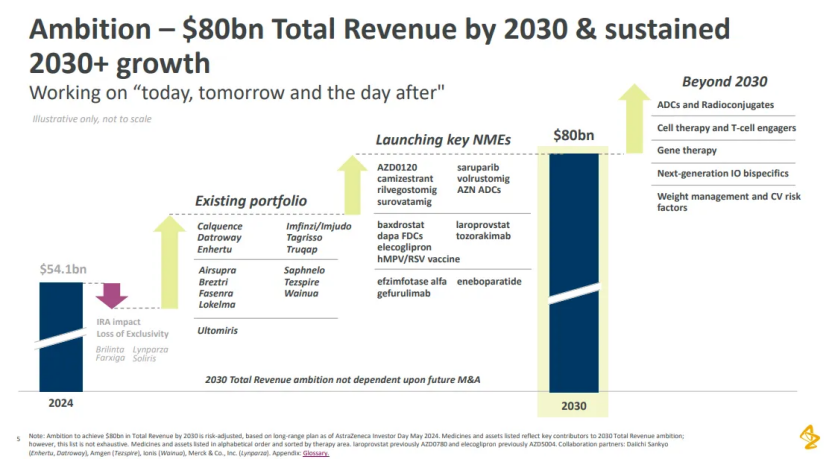
Industry Overview - The 44th JPMorgan Healthcare Conference is taking place in San Francisco, attracting over 8,000 industry elites from biotechnology, pharmaceuticals, and medical devices [1][24] - The global pharmaceutical sector saw a record 516 licensing deals in the past year, totaling over $250.2 billion, indicating a rise in industry transaction activity [24] - The shadow of the "patent cliff" continues to loom over many large pharmaceutical companies, prompting them to actively seek targets and plan for the future [24] AI Integration - AI has transitioned from a concept to a core component of research and development, with companies increasingly focusing on its strategic importance [24][29] - AstraZeneca has elevated AI to a strategic level, implementing its AI Development Agent (AIDA) system to reduce CMC development time by 50% [29] - Eli Lilly announced a partnership with NVIDIA to establish an AI innovation lab, investing $1 billion over five years to accelerate drug development [7][32] AstraZeneca's Strategy - AstraZeneca is focusing on "next-generation dual antibodies + high-value ADCs" as pillars for innovation and growth, aiming for $80 billion in total revenue by 2030 [2][25] - The company has initiated 14 Phase III trials for its PD-1/TIGIT and PD-1/CTLA-4 dual antibodies, with peak sales expected to exceed $3 billion and $2 billion, respectively [5][28] - AstraZeneca's revenue grew by 11% in the first nine months of 2025, with core EPS increasing by 15% [6][29] Pfizer's Focus - Pfizer's strategy for 2026 emphasizes maximizing acquisition asset value, achieving key R&D milestones, and applying AI across its operations [9][33] - The company has reduced operational costs by $5.6 billion to offset declining COVID-19 revenue, which is projected to drop from $11 billion in 2024 to $6.5 billion in 2025 [11][35] - Pfizer is building a differentiated portfolio in the obesity market, aiming to launch products by 2028 that could tap into a market projected to reach $150 billion by 2030 [12][35] Novartis' Pipeline - Novartis is focusing on cardiovascular, renal, metabolic, immunology, neuroscience, and oncology, with a robust pipeline supported by various technology platforms [36][39] - The company expects nine products to achieve peak sales of over $1 billion, with CDK4/6 inhibitors potentially exceeding $10 billion in peak sales [39] - Novartis anticipates a compound annual growth rate of 5-6% in sales from 2025 to 2030 [39] Bristol-Myers Squibb's Approach - Bristol-Myers Squibb is diversifying its pipeline to navigate the patent cliff, focusing on neuroscience, cardiovascular, immunology, and oncology [16][40] - The company plans to disclose core registration data for 13 new molecular entities in 2026 and complete 14 Phase III trials [41] Sanofi's Business Development - Sanofi is actively pursuing business development to enhance its early pipeline, aiming to launch 8-12 high-quality early projects by 2028-2030 [22][49] - The company has completed over 20 business development transactions since 2025, including significant acquisitions to bolster its pipeline [49]


Opera (NasdaqGS:OPRA) FY Conference Transcript
2026-01-15 14:02
Summary of Opera Limited's Q3 Conference Call Company Overview - **Company**: Opera Limited - **Industry**: Internet and Technology - **Core Business**: Transitioned from a browser company to a diversified consumer internet platform, including search, advertising, and fintech services - **Monthly Active Users**: Approximately 300 million, representing about 6% of the global internet user base [3][6] Financial Highlights - **Revenue Guidance for 2025**: Expected to be around $600 million with an Adjusted EBITDA of $140 million [4] - **Dividend Policy**: Opera pays a recurring dividend every six months, yielding approximately 5%-6% [4] - **Share Buybacks**: Totaling about $500 million since 2020 [4] - **Revenue Composition**: 37% from query-based revenue and two-thirds from advertising [16] Product Innovation and Development - **Browser Variants**: Multiple versions of the Opera browser tailored for different user segments, including Opera One for general users, GX for gamers, and Opera Neon for a unique browsing experience [5][11] - **AI Integration**: Early adopter of integrating large language models (LLMs) into its products, enhancing user experience through features like Opera AI, which assists users in tasks across websites [7][9] - **Gaming Browser**: The GX browser is specifically designed for gamers, featuring optimizations for performance and user experience [11][12] Market Position and Growth Potential - **User Base Growth**: Significant potential for growth in the gaming segment, with a 10x potential in Western markets [12] - **Emerging Markets**: Launched MiniPay, a non-custodial wallet for stablecoins, which has rapidly grown to over 12 million wallets and 360 million transactions [13] - **Brand Awareness**: 44% awareness in the U.S., 60% in the U.K., and 70% in Germany, indicating room for growth in brand recognition [15] Revenue Streams and Advertising Model - **Advertising Model**: Primarily performance-based, with revenue generated through partnerships and user engagement [31][32] - **Long-standing Partnerships**: Maintains a 20-year partnership with Google for search-related revenue [17] Challenges and Market Dynamics - **Concerns about Fraud**: Addressed concerns regarding fraudulent activities in the advertising space, emphasizing the importance of genuine user traffic [24][25] - **Impact of AI on Browsing**: Discussed potential risks of generative AI affecting traditional search and advertising models, but emphasized the unique value of the Opera browser in enhancing user experience [33][34] Financial Health and Strategy - **Profitability**: Stable profit margins with a guided EBITDA margin of 23% for the year [19] - **Cash Flow Management**: High conversion from EBITDA to cash flow, with no financial debt and a solid cash position [21][22] - **Investment vs. Profitability**: Balancing growth investments with profitability, receiving mixed feedback from stakeholders on the approach [20][21] Conclusion - Opera Limited is positioned as a significant player in the internet and technology sector, leveraging innovation and a diversified product portfolio to drive growth. The company maintains a strong financial profile with a focus on user engagement and market expansion, particularly in gaming and fintech services.

曾经盛极一时的VR、元宇宙,现在怎么样了?
Feng Huang Wang· 2026-01-15 10:47
Core Insights - Meta has conducted a new round of layoffs, affecting over 1,000 employees, primarily in the Reality Labs department responsible for VR/AR hardware and metaverse projects [1][2][4] - The company is shifting its focus from the ambitious metaverse vision to more practical applications like AI smart glasses, indicating a strategic retreat from its previous investments in immersive digital environments [2][4][12] - The metaverse, once seen as the future of interaction, is now viewed as a failed concept, with significant financial losses reported in Meta's metaverse initiatives [3][7][11] Company Strategy - Meta's layoffs represent a significant strategic withdrawal from the metaverse vision that CEO Mark Zuckerberg has promoted since 2014, with plans to cut about 10% of the Reality Labs workforce, which consists of approximately 15,000 employees [4][12] - The company has invested heavily in the metaverse, with losses exceeding $60 billion since 2020, and Reality Labs alone has accumulated losses of over $70 billion since 2021 [7][12] - The focus is now on developing AI technologies and products, with plans to produce over 10 million AI glasses by 2026, reflecting a shift in priorities towards more immediate technological advancements [14][16] Industry Trends - The concept of the metaverse is being redefined, with Gartner predicting that by 2026, 30% of organizations will be ready with products and services for the metaverse [14] - The competition is shifting from VR to mixed reality (MR) and lightweight AI glasses, with major companies like Meta and ByteDance entering the market with new products [14][15] - The industry is witnessing a consolidation of efforts towards AI integration, with Meta establishing a new department called "Meta Computing" to enhance its infrastructure and capabilities in AI [16][17]
