关税

Search documents
瑞银CEO:关税对消费者及美联储货币政策的影响尚不确定
Sou Hu Cai Jing· 2025-09-11 02:20
Core Insights - UBS CEO Sergio Ermotti highlighted the ongoing uncertainty regarding the impact of global tariffs on the US economy and Federal Reserve monetary policy [1] - The belief remains that the US economy will continue to grow, but inflation issues and their influence on Federal Reserve policy are still unknown [1] - The market generally anticipates a rate cut by the Federal Reserve during the meeting on September 16-17, but there is divergence among investors regarding the pace of subsequent policy adjustments [1] - Ermotti stated that the true impact of tariffs will be felt by consumers, and it remains unclear whether tariffs will lead to inflationary effects [1]
美国8月CPI前瞻:整体通胀逼近3%?
Di Yi Cai Jing· 2025-09-11 01:44
Group 1 - The upcoming August Consumer Price Index (CPI) report is expected to show persistent inflation pressures, complicating the Federal Reserve's potential interest rate cuts [1][5] - Wall Street anticipates a 0.3% month-over-month increase in the August CPI, with a year-over-year rise of 2.9%, indicating a 0.2 percentage point acceleration [2][3] - Core CPI, excluding food and energy, is projected to rise 0.3% month-over-month and 3.1% year-over-year, remaining consistent with July figures [2][4] Group 2 - The increase in tariffs and rising food prices, particularly for common items like beef, are expected to contribute to higher overall CPI data [2][4] - The core goods prices are anticipated to see a slight increase, with a year-over-year rise reaching 1.5%, the highest since May 2023 [3][4] - Service sector inflation is showing signs of resurgence, particularly in travel-related services, which may counterbalance the easing of goods inflation [3][4] Group 3 - The Federal Reserve's decision-making is influenced by the labor market's deterioration and the potential for continued inflation, with a significant chance of rate cuts in the coming months [5][6] - Investors are closely monitoring the CPI report as it may impact the Fed's willingness to continue rate cuts post-September [6][7] - Concerns are growing regarding the impact of core service inflation on overall inflation, which could lead to a reassessment of the Fed's aggressive rate cut strategy [7]
美国8月CPI前瞻:整体通胀逼近3%?
第一财经· 2025-09-11 01:30
2025.09. 11 本文字数:2187,阅读时长大约4分钟 7月CPI数据表明,关税并非美联储完成抗通胀斗争的唯一挑战。服务业通胀居高不下,叠加商品价 格反弹,不仅阻碍了过去两年的通胀回落趋势,还使通胀水平进一步偏离美国联邦公开市场委员会 (FOMC)的目标。 第一财经记者汇总发现,华尔街预计情况似乎并没有改善。8月CPI或环比上涨 0.3%,与7月持平, 同比上涨2.9%,加速0.2个百分点。食品和能源价格上涨也将对整体CPI形成支撑。不考虑能源和食 品,8月核心CPI或环比上涨0.3%,同比增长3.1%,均与7月持平。 美国安本资产管理公司(Ameriprise)首席经济学家普莱斯(Russell Price)表示:"我们认为,关 税成本将持续传导,此外食品价格还将进一步上涨。"他补充称,牛肉等常见食品价格已 "飙升",食 品价格上涨仍将推动整体CPI数据走高。 富国银行预计,8月核心商品价格将涨幅略高于7月。 此前一直较为温和的新车通胀态势预计将有所 抬头,原因是汽车销量回升推动库存减少,且购车激励措施的使用频率有所下降。服装、休闲娱乐用 品、通信硬件等其他进口密集型商品的价格也将保持稳健增长,预计 ...


美国8月CPI前瞻:整体通胀逼近3%?是否搅局美联储决议
Di Yi Cai Jing· 2025-09-11 00:09
Core Insights - The upcoming August Consumer Price Index (CPI) report is expected to confirm persistent inflation issues, with commodity and service prices maintaining high pressure on overall prices [2][3] - The Federal Reserve's future policy path remains uncertain due to potential stagflation risks, despite expectations of interest rate cuts [2][6] Inflation Pressure - July CPI data indicates that tariffs are not the only challenge in combating inflation, as service sector inflation remains high and commodity prices are rebounding, hindering the downward trend in inflation [3] - Wall Street anticipates a 0.3% month-over-month increase in August CPI, with a year-over-year rise of 2.9%, reflecting a 0.2 percentage point acceleration [3] - Food and energy prices are expected to support overall CPI, with core CPI projected to rise 0.3% month-over-month and 3.1% year-over-year, consistent with July figures [3] Commodity Prices - Wells Fargo predicts that core commodity prices will see a slight increase in August, with new car inflation expected to rise due to recovering sales and reduced inventory [4] - Prices for imported goods such as clothing and communication hardware are also expected to maintain steady growth, with core commodity prices projected to rise 1.5% year-over-year, the highest since May 2023 [4] Service Sector Inflation - Service sector inflation has somewhat offset rising commodity prices, but this effect is diminishing, with travel-related service prices rebounding in July and expected to continue strong growth in August [4] - Increased consumer demand for travel is indicated by rising hotel occupancy rates and TSA passenger screening numbers [4] Tariff Impact - The impact of tariffs on inflation is expected to persist, with core CPI month-over-month increases projected to remain around 0.3% [5] - The phased implementation of tariffs is anticipated to prevent sudden price spikes, although overall inflation data is expected to show significant price increases [5] Policy Outlook - Following a downward revision of non-farm employment data, the market anticipates a 75 basis point reduction in the federal funds rate by the end of the year, with a nearly 80% chance of a rate cut in October [6] - The upcoming CPI report is crucial for influencing the Federal Reserve's decision on future rate cuts, with concerns about the sustainability of inflation due to tariff costs [7][8] Market Reactions - Investors are increasingly focused on core service inflation risks, which may prompt a reassessment of the Federal Reserve's aggressive rate cut plans if overall inflation data exceeds expectations [8] - The potential for a modest increase in CPI could still lead the Federal Reserve to signal concerns about future price increases while proceeding with rate cuts [8]
Why Is AST SpaceMobile (ASTS) Down 25.8% Since Last Earnings Report?
ZACKS· 2025-09-10 16:30
Company Overview - AST SpaceMobile, Inc. reported a wider-than-expected net loss of $99.4 million or 41 cents per share for Q2 2025, compared to a loss of $72.6 million or 51 cents per share in the same quarter last year, missing the Zacks Consensus Estimate of a loss of 19 cents [3][5] - Quarterly revenues increased to $1.2 million from $0.9 million year-over-year, but still fell short of the Zacks Consensus Estimate of $5 million [5] Financial Performance - Total operating expenses rose to $73.9 million from $63.9 million in the year-ago quarter, driven by increased research and development and engineering services costs [6] - For the first half of 2025, the company utilized $72 million in cash for operating activities, up from $64.3 million in the prior year, and had $923.6 million in cash and cash equivalents as of June 30, 2025, with long-term debt of $482.5 million [7] Market Conditions - Unfavorable macroeconomic conditions, including rising inflation, higher interest rates, and geopolitical conflicts, have negatively impacted the company's operations, leading to fluctuations in satellite material prices and increased capital costs [4] Estimates and Outlook - Since the earnings release, there has been a 17.07% upward trend in estimates revisions for the stock, indicating a potentially positive outlook [8] - AST SpaceMobile holds a Zacks Rank 3 (Hold), suggesting an expectation of in-line returns in the coming months [11] Industry Comparison - AST SpaceMobile is part of the Zacks Wireless Equipment industry, where competitor Motorola reported revenues of $2.77 billion for the last quarter, reflecting a year-over-year increase of 5.2% [12] - Motorola's earnings per share for the same period were $3.57, up from $3.24 a year ago, and it is expected to post earnings of $3.84 per share for the current quarter, indicating a change of 2.7% from the previous year [13]

Why Is 3D Systems (DDD) Down 7.9% Since Last Earnings Report?
ZACKS· 2025-09-10 16:30
Core Viewpoint - 3D Systems has experienced a decline in share price by approximately 7.9% since the last earnings report, underperforming the S&P 500, raising questions about its future performance leading up to the next earnings release [1] Financial Performance - In Q2, 3D Systems reported a non-GAAP loss of $0.07 per share, which was better than the Zacks Consensus Estimate of a loss of $0.13, compared to a loss of $0.14 per share in the same quarter last year [2] - The company generated revenues of $94.8 million, reflecting a year-over-year decline of 16.3% and falling short of the consensus mark by 3.56% [3] - Product revenues decreased by 25% year-over-year to $53.8 million, making up 56.7% of total revenues, while services revenues, which contributed 43.3%, declined by 1.2% year-over-year to $41 million [3][4] Segment Performance - Healthcare Solutions revenues fell by 7.9% year-over-year to $45 million, primarily due to reduced purchases in the Dental segment, although the MedTech business grew by 13% year-over-year [6] - Industrial Solutions revenues decreased by 22.6% year-over-year to $49.8 million [7] Profitability Metrics - Non-GAAP gross profit declined by 19.8% year-over-year to $37.2 million, with the gross profit margin decreasing by 170 basis points to 39.2% [7] - Adjusted EBITDA fell by $5.3 million year-over-year, compared to a loss of $12.9 million in the same period last year [7] Balance Sheet Overview - As of June 30, 2025, cash and cash equivalents were $116.4 million, down from $135 million as of March 31, 2025, primarily due to cash used in operating and financing activities [8] - Total debt as of June 30, 2025, was $122.6 million, a decrease from $212.3 million as of March 31, 2025 [8] Analyst Sentiment - There have been no earnings estimate revisions from analysts in the past two months, indicating a period of stability in expectations [9] Investment Scores - 3D Systems holds a Growth Score of B and a Momentum Score of B, but a Value Score of D, placing it in the bottom 40% for value investors, resulting in an aggregate VGM Score of C [10] Future Outlook - The company has a Zacks Rank of 2 (Buy), suggesting an expectation of above-average returns in the coming months [11]

刚刚!美联储 降息大消息!直线拉升!
Zhong Guo Ji Jin Bao· 2025-09-10 14:25
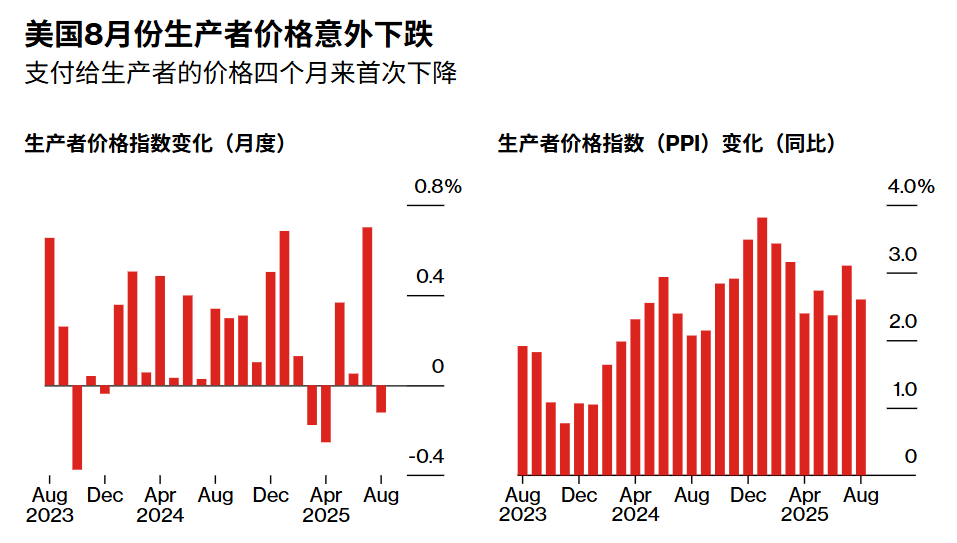
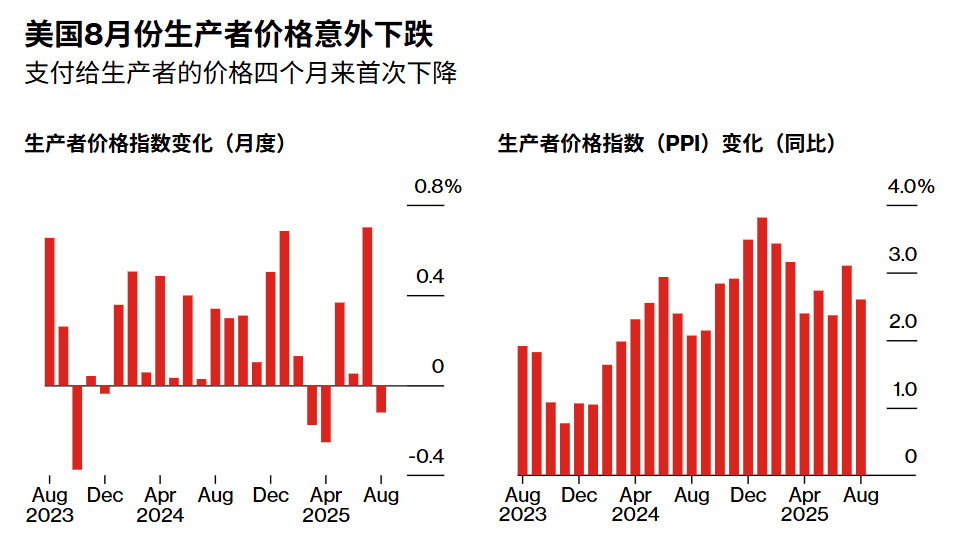
Core Viewpoint - The unexpected decline in the Producer Price Index (PPI) in the U.S. for August marks the first drop since April, reinforcing the rationale for the Federal Reserve to consider interest rate cuts [2][5]. Group 1: PPI Data - The PPI decreased by 0.1% month-on-month in August, with July's data revised downwards. Year-on-year, the PPI increased by 2.6% [2]. - Excluding food and energy, the prices of goods rose by 0.3%, while service costs fell by 0.2%. The profit margins for wholesalers and retailers dropped by 1.7%, matching the largest decline since 2009 [6][7]. Group 2: Economic Implications - The decline in inflation expectations has led to an increase in U.S. stock index futures and bond prices, with market participants anticipating multiple interest rate cuts by the end of 2025 [6][8]. - The upcoming Consumer Price Index (CPI) data is expected to reveal how much of the tariffs have been passed on to American households, with analysts predicting a significant monthly increase in core indicators excluding food and energy [6]. Group 3: Federal Reserve Outlook - Federal Reserve officials are expected to lower interest rates in response to the rapid slowdown in the labor market, as indicated by recent employment data [6]. - The PPI report is closely monitored as some components are used to calculate the Fed's preferred inflation measure, the Personal Consumption Expenditures (PCE) price index [6].
刚刚!美联储,降息大消息!直线拉升!
Zhong Guo Ji Jin Bao· 2025-09-10 13:43
Core Insights - The Producer Price Index (PPI) in the U.S. unexpectedly declined for the first time since April, reinforcing the case for the Federal Reserve to consider interest rate cuts [2][5]. Group 1: PPI Data - In August, the PPI fell by 0.1% month-over-month, with July's data revised downwards. Year-over-year, the PPI increased by 2.6% [2]. - Excluding food and energy, the prices of goods rose by 0.3%, while service costs decreased by 0.2% [6][7]. - The more stable PPI measure, excluding food, energy, and trade services, increased by 0.3%, indicating a 0.4% rise in the costs of intermediate demand processing products [7]. Group 2: Market Reactions - Following the PPI data release, U.S. stock index futures and Treasury prices rose, with the expectation of interest rate cuts by the Federal Reserve [6][8]. - The two-year Treasury yield fell, and the dollar weakened, as the market priced in three cumulative rate cuts by the end of 2025 [8]. Group 3: Economic Implications - The decline in PPI suggests that companies are cautious about raising prices amid economic uncertainty, despite higher costs from tariffs [5]. - The upcoming Consumer Price Index (CPI) data is anticipated to reveal how much of the tariff burden has been passed on to American households [6].
Wholesale prices unexpectedly declined 0.1% in August, as Fed rate decision looms
CNBC· 2025-09-10 12:34
Group 1 - Wholesale prices fell slightly by 0.1% in August, contrary to expectations of a 0.3% increase, providing potential for the Federal Reserve to consider an interest rate cut [2][3] - Core Producer Price Index (PPI), excluding food and energy, also decreased by 0.1%, while it was anticipated to rise by 0.3% [2] - Services prices dropped by 0.2%, primarily driven by a 1.7% decline in trade services prices, contributing to lower wholesale inflation [4] Group 2 - Despite inflation being above the Fed's 2% target, officials are optimistic that easing housing and wage pressures will gradually reduce prices [5] - Concerns regarding the labor market have increased, with a report indicating nearly 1 million fewer jobs created than previously reported, raising worries about employment stability [7] - The upcoming Fed meeting will include a decision on interest rates and an economic outlook update [7]
印度的惨痛教训,让人更加清醒地认识中国
Hu Xiu· 2025-09-10 11:28
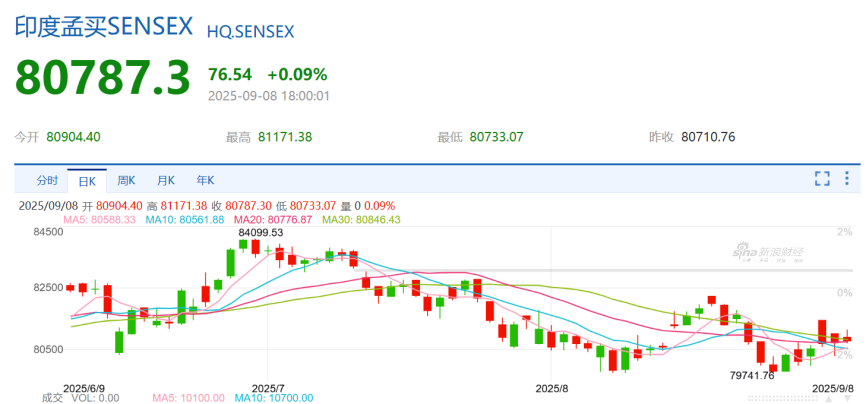
Group 1 - India is perceived as both undervalued and overvalued, with significant potential for development following China due to demographic dividends, market prospects, and geopolitical factors [1] - The Indian stock market reached a peak of 84,000 points on June 22, 2025, but subsequently underperformed, with the Bombay 30 Index down 3.39% year-to-date as of September 8, 2025, lagging behind other markets by nearly 20% [5][8] - The Indian rupee depreciated nearly 3% against the dollar and over 5% against the yuan in 2025, marking it as one of the weakest currencies among major economies [12] Group 2 - A significant decline in foreign direct investment (FDI) was reported, with net FDI dropping 96.5% in the fiscal year 2025, from $10 billion to just $353 million, a historical low [19] - Despite an overall increase in foreign investment totaling $81 billion, the outflow of $49 billion from foreign investors was noted, with a withdrawal rate approaching 20% [21] - Indian companies are increasingly investing abroad, with outbound investments reaching $29 billion in the fiscal year 2025, up from $17 billion in 2024 [23] Group 3 - The U.S. government's changing stance, including potential tariffs of 50% on Indian goods, could reduce India's GDP growth to below 6% [31] - The manufacturing sector in India has been declining, with its GDP share falling to 12.5% in 2024, the lowest since 1967 [64] - The Indian manufacturing industry faces challenges in competitiveness due to high import tariffs on intermediate goods, which inflate local production costs [92] Group 4 - The IT services sector in India is experiencing significant job losses due to the rise of AI, with estimates suggesting that around 200,000 IT jobs were lost in the past year, potentially rising to 300,000 by 2025 [112] - The Indian stock market's IT sector has been the worst performer, reflecting the broader challenges faced by the industry [113] - The relationship between population and productivity in India is shifting, with the potential for a demographic burden rather than a demographic dividend [114]