卫星互联网

Search documents
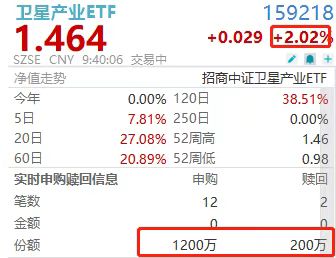
暴力加仓!卫星产业ETF(159218)10分钟揽金近1500万!信科移动-U、国机精工领涨
Jin Rong Jie· 2025-12-24 16:26
风险提示:市场有风险 投资需谨慎 资讯所属栏目还有更多独家策划、专家专栏,免费查阅>> 西部证券认为,结合近期卫星互联网政策、商业火箭首飞排期和核心产业链企业订单变化,我国卫星互 联网和商业航天产业有望在明年迎来基本面拐点,坚定看好。政策顶层规划方面,商业航天产业事业已 是国家力量重点支持方向。"十五五"规划建议中,"建设现代化产业体系,巩固壮大实体经济根基"部分 提出:"加快建设制造强国、质量强国、航天强国、交通强国、网络强国",航天强国在文件中排序前 列。国家航天局在11月发布《行动计划》及成立商业航天司,将商业航天纳入国家航天发展总体布局, 支持力度持续加码。从产业空间来看,卫星互联网产业"十五五"期间将保持翻倍复合增速。我国目前在 册的卫星星座共计100个,其中包括商业航天项目88个,国家级战略工程12个,仅前五大星座规划总数 已接近5万颗。我们参考SpaceX的火箭火箭发射价格、微小卫星重量等资料,测算未来五年我国低轨星 座建设将带来1011亿元的火箭运力和2074亿元的卫星制造增量市场,两大新增市场的年复合增速分别为 82%和95%,具备优秀的成长性。 | 卫星产业ETF | | 159218 | ...


金融工程日报:指震荡攀升录得六连阳,商业航天概念再度爆发-20251224
Guoxin Securities· 2025-12-24 15:25
证券研究报告 | 2025年12月24日 金融工程日报 沪指震荡攀升录得六连阳,商业航天概念再度爆发 核心观点 金融工程日报 市场表现:20251224 大部分指数处于上涨状态,规模指数中中证 2000 指数 表现较好,板块指数中科创 100 指数表现较好,风格指数中中证 500 成长指 数表现较好。国防军工、电子、建材、轻工制造、计算机行业表现较好,农 林牧渔、煤炭、食品饮料、银行、家电行业表现较差。毫米波、玻璃纤维、 卫星互联网、商业航天、MLCC 等概念表现较好,钨矿、黄金精选、动物保健 精选、乳业、猪瘟疫苗等概念表现较差。 市场情绪:20251224 收盘时有 86 只股票涨停,有 6 只股票跌停。昨日涨停 股票今日收盘收益为 2.54%,昨日跌停股票今日收盘收益为-1.12%。今日封 板率 75%,较前日提升 6%,连板率 28%,较前日提升 2%。 市场资金流向:截至 20251223 两融余额为 25316 亿元,其中融资余额 25146 亿元,融券余额 170 亿元。两融余额占流通市值比重为 2.6%,两融交易占市 场成交额比重为 11.3%。 折溢价:20251223 当日 ETF 溢价较多 ...
华尔街分析师喊出黄金6000美元的口号
Sou Hu Cai Jing· 2025-12-24 12:43
Group 1 - A-shares are experiencing a breakthrough, with favorable external conditions such as record high prices for gold, silver, copper, and platinum, which are expected to drive related cyclical stocks [1][3] - The S&P 500 index is nearing historical highs, and December's policy environment is positive, aligning with the implementation of the 14th Five-Year Plan in 2026 [1][3] - The Shanghai Composite Index has stabilized above the 60-day moving average, just 80 points away from a ten-year high, indicating potential for further upward movement [3] Group 2 - The commercial space sector is evolving, with state-led research and private companies providing core components, although the level of commercialization still needs improvement [3] - The successful launch of the Long March 12 rocket and the focus on satellite internet and satellite computing servers highlight the importance of rocket recovery technology for reducing space logistics costs [3] - Companies to watch in the commercial space sector include Aerospace Electromechanical, Mengsheng Electronics, Aerospace Morning Light, Hualing Cable, Srei New Materials, Aerospace Technology, and AVIC Heavy Machinery [3] Group 3 - The autonomous driving industry is advancing with road testing across various regions, emphasizing the need for localized machine learning to ensure safety [5] - The shift towards regional road testing may lead to relaxed regulations for autonomous driving in specific cities, indicating a potential market expansion [5] - The future of autonomous driving may transform from consumer use to production resources, potentially disrupting the taxi and ride-hailing industries by 2026 [5]

卫星互联网行业:国内星座加速组网,星箭场全产业链发力
Dongxing Securities· 2025-12-24 12:13
Investment Rating - The report maintains a "Positive" outlook for the satellite internet industry in China as it enters a new phase of accelerated networking and industrialization by December 2025 [2]. Core Insights - The satellite internet industry in China is rapidly evolving, with significant contributions from both state-owned and private enterprises, leading to the formation of various satellite constellations such as GW and Qianfan [4][36]. - The domestic satellite internet sector is expected to see a surge in satellite launches, with China Star Network (GW constellation) completing 17 satellite launches by December 10, 2025, totaling 125 satellites in orbit [4][36]. - The report highlights the growing demand for satellite payloads, emphasizing the need for cost-effective mass production of satellites and the importance of key component suppliers [4][38]. - The commercial space launch sector is experiencing a shortage of launch slots, benefiting companies involved in the construction of launch facilities [5][56]. - Private rocket companies are crucial in addressing the launch capacity bottleneck for large-scale satellite constellations, with several companies making significant advancements in reusable rocket technology [6][38]. - The report outlines a strategic investment approach for the "14th Five-Year Plan" period, indicating that commercial space will be a key driver of high-quality technological development in China [7]. Summary by Sections 1. Satellite Internet Development - The satellite internet industry is transitioning into a broadband internet phase, with significant advancements in satellite constellations and payload technologies [18][20]. - The report identifies three phases of satellite internet commercialization, highlighting the evolution from competing with terrestrial networks to integration with them [18][19]. 2. Satellite Payload Opportunities - The report identifies key components in satellite payloads, including onboard base stations, routers, phased array antenna systems, and laser inter-satellite links, which are critical for the development of satellite internet [38][39]. - The integration of satellite and terrestrial networks is emphasized, with a focus on creating a comprehensive communication architecture [38][41]. 3. Commercial Launch Facilities - The report notes the current shortage of launch slots in China's commercial space sector, with only one operational commercial launch site, leading to increased demand for new facilities [5][56]. - The ongoing construction of the second phase of the Hainan commercial launch site is expected to significantly increase launch capacity by 2026 [5][56]. 4. Private Rocket Companies - The report highlights the strategic importance of private rocket companies in overcoming the launch capacity challenges for satellite constellations, with several companies actively pursuing reusable rocket technologies [6][38]. - The potential reduction in launch costs through advancements in reusable technology is noted, with estimates suggesting costs could drop from approximately 100,000 RMB per kilogram to below 30,000 RMB [6][38]. 5. Investment Strategy - The report outlines an optimistic investment strategy for the satellite internet industry, anticipating accelerated growth in satellite launches and the involvement of private companies in supporting high-frequency launch demands [7].
粤开市场日报-20251224
Yuekai Securities· 2025-12-24 12:13
Market Overview - The A-share market showed a positive trend today, with major indices mostly rising. The Shanghai Composite Index increased by 0.53% to close at 3940.95 points, while the Shenzhen Component Index rose by 0.88% to 13486.42 points. The Sci-Tech 50 Index and the ChiNext Index also saw gains of 0.90% and 0.77%, closing at 1352.13 points and 3229.58 points respectively. Overall, 4125 stocks rose, 1132 fell, and 200 remained unchanged, with a total trading volume of 18803 billion yuan, a decrease of 196 billion yuan from the previous trading day [1][14]. Industry Performance - Among the Shenwan first-level industries, sectors such as defense and military, electronics, building materials, light industry manufacturing, and machinery equipment led the gains, with increases of 2.88%, 2.12%, 1.72%, 1.69%, and 1.49% respectively. Conversely, industries like agriculture, forestry, animal husbandry, fishery, coal, food and beverage, and banking experienced declines, with decreases of 0.85%, 0.70%, 0.36%, and 0.30% respectively [1][14]. Concept Sector Performance - The top-performing concept sectors today included fiberglass, satellite internet, commercial aerospace, satellite navigation, military information technology, TOPcon batteries, RF and antennas, HBM, copper-clad laminates, 6G, cross-strait integration, large aircraft, aircraft carriers, Apple, and smart speakers [2][11].
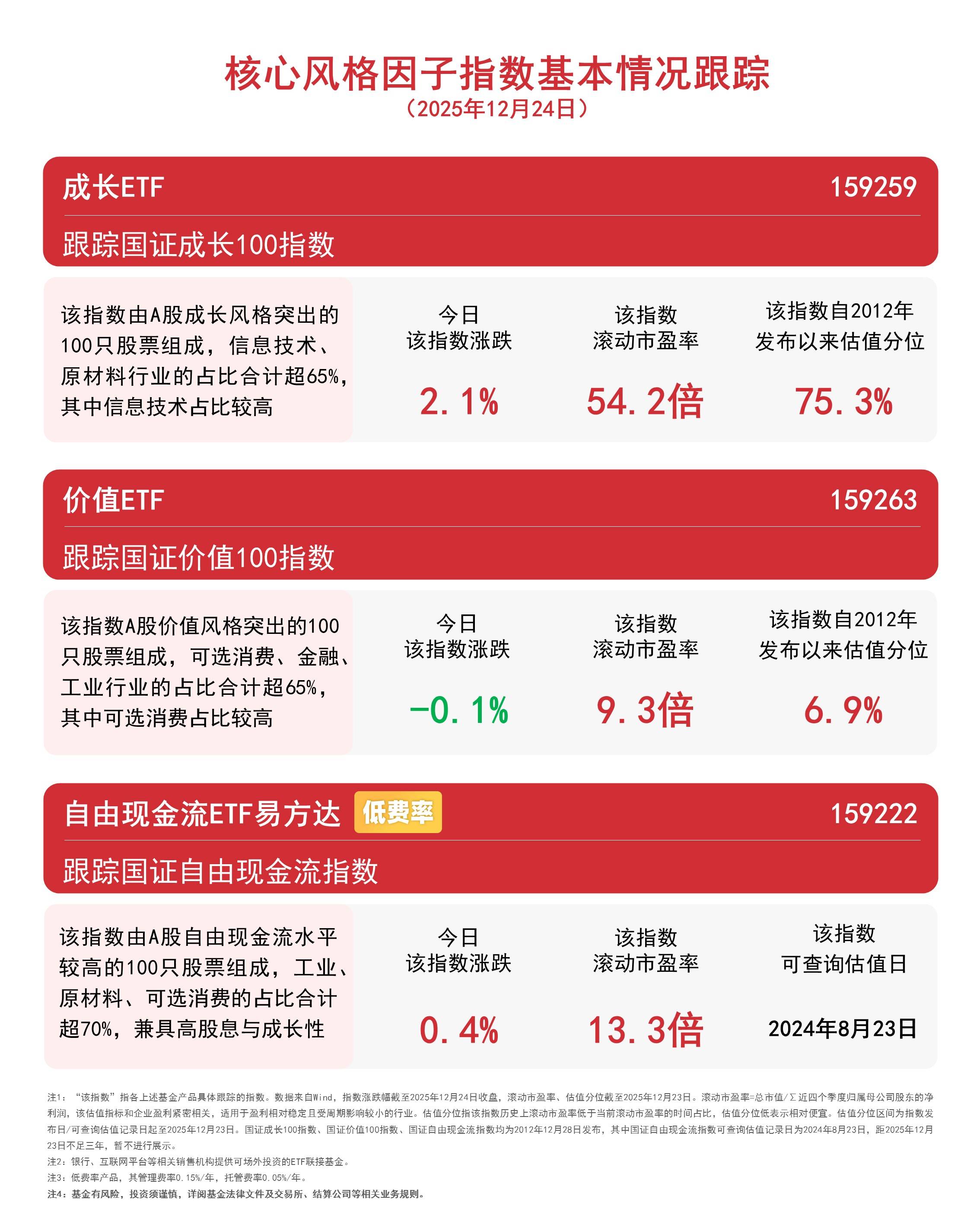
科技方向局部活跃,成长ETF(159259)标的指数涨超2%
Sou Hu Cai Jing· 2025-12-24 11:22
Group 1 - The market experienced a volatile upward movement today, with most technology growth stocks rising, particularly in the satellite internet and commercial aerospace sectors [1] - The Guozheng Growth 100 Index increased by 2.1%, while the Guozheng Free Cash Flow Index rose by 0.4%, and the Guozheng Value 100 Index decreased by 0.1% [1] - The Guozheng Growth 100 Index focuses on A-share stocks with prominent growth styles, with over 70% of its weight concentrated in the electronics, communications, and computer sectors, effectively targeting the core areas of AI computing power [1] Group 2 - The Growth ETF (159259) is the only product tracking the Guozheng Growth 100 Index, providing investors with opportunities to capitalize on growth-style investments [1]
数据复盘丨商业航天、卫星互联网等概念走强 104股获主力资金净流入超1亿元
Zheng Quan Shi Bao Wang· 2025-12-24 10:07
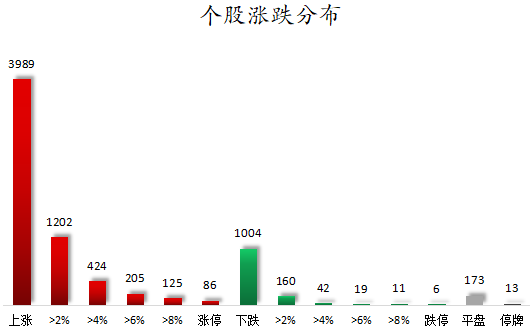
Market Overview - The Shanghai Composite Index closed at 3940.95 points, up 0.53%, with a trading volume of 773.9 billion yuan [1] - The Shenzhen Component Index closed at 13486.42 points, up 0.88%, with a trading volume of 1106.34 billion yuan [1] - The ChiNext Index closed at 3229.58 points, up 0.77%, with a trading volume of 508.985 billion yuan [1] - The total trading volume of both markets was 1880.24 billion yuan, a decrease of 19.647 billion yuan compared to the previous trading day [1] Sector Performance - Strong sectors included defense, electronics, construction materials, light manufacturing, machinery, environmental protection, chemicals, and computers [2] - Concepts such as commercial aerospace, satellite internet, 6G, and nuclear pollution prevention showed active performance [2] - Weak sectors included agriculture, precious metals, coal, insurance, and banking [2] Stock Performance - A total of 3989 stocks rose, while 1004 stocks fell, with 173 stocks remaining flat and 13 stocks suspended [2] - 86 stocks hit the daily limit up, while 6 stocks hit the daily limit down [2] Fund Flow - The net inflow of main funds in the Shanghai and Shenzhen markets was 3.81 billion yuan, with the ChiNext seeing a net inflow of 5.12 billion yuan [5] - The electronic sector had the highest net inflow of 4.916 billion yuan, followed by power equipment and defense industries [5] - The chemical sector experienced the largest net outflow of 1.577 billion yuan, along with pharmaceuticals and transportation [5] Individual Stock Highlights - 104 stocks received net inflows exceeding 1 billion yuan, with Demingli leading at 955 million yuan [6] - The top net outflow stock was Xinyi Sheng, with a net outflow of 928 million yuan [10] - Institutional investors net bought 21 stocks, with Tianyin Electromechanical receiving the highest net purchase of approximately 496 million yuan [13]



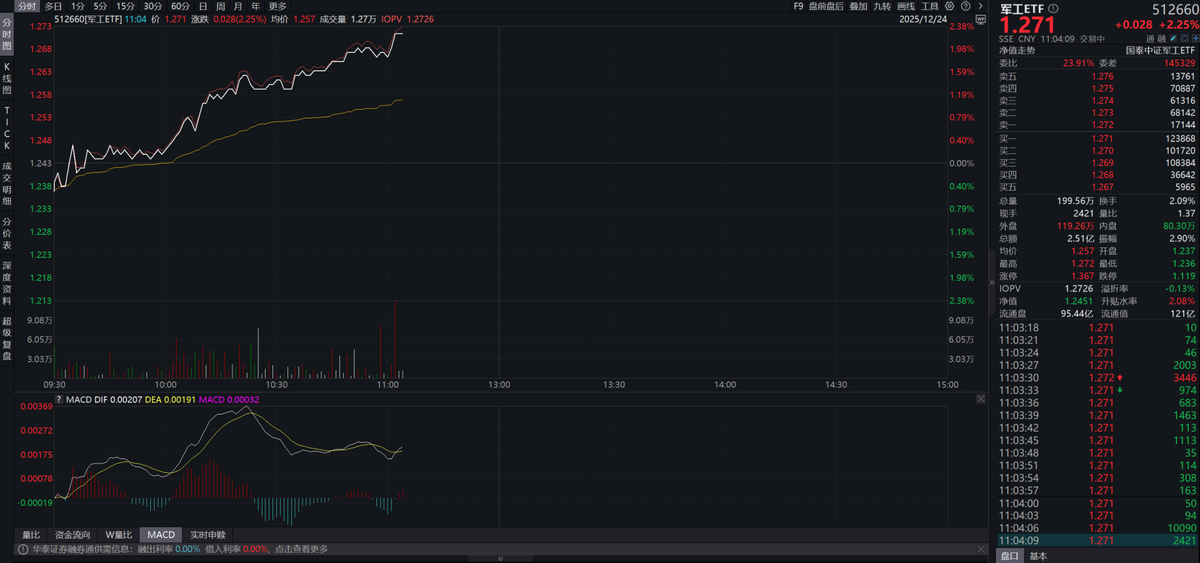
低轨卫星加速发展,军工ETF(512660)涨超2%
Mei Ri Jing Ji Xin Wen· 2025-12-24 07:52
Group 1 - The low Earth orbit (LEO) satellite communication is entering a critical phase of large-scale deployment and commercialization, boosting the fundamentals of the military industry, with the military ETF (512660) rising over 2% [1] - The acceleration of satellite development is driven by the global digitalization process, existing blind spots in terrestrial communication networks, and emerging application scenarios such as low-altitude economy, ocean communication, emergency rescue, and IoT wide-area connectivity [3] - LEO satellites are becoming a core pillar for building the next-generation integrated information infrastructure due to their unique advantages of low latency, high bandwidth, wide coverage, and low dependence on ground stations [3] Group 2 - Enhanced on-board processing (OBP) capabilities allow satellites to have stronger data routing and computing functions, reducing reliance on ground stations, while mature phased array antenna technology significantly improves user terminal performance and portability [4] - The widespread use of reusable launch vehicles alleviates launch bottlenecks, leading to a continuous decrease in the cost of transmitting per bit, establishing an economic foundation for large-scale user access [4] - Policies supporting the construction of LEO satellite constellations have been included in several national strategies, with clear growth paths created for various segments of the industry chain [4] Group 3 - The alleviation of capacity bottlenecks in the industry chain is expected to benefit the manufacturing sector, with ground equipment revenue projected to account for the highest share of global satellite industry revenue in 2024 [7] - As OBP technology is realized, the dependence of constellations on ground stations is expected to decrease, indirectly compressing satellite operating costs and increasing the revenue share of satellite manufacturing and services [7] - There is anticipated growth in demand for consumer broadband terminals, IoT terminals, and specialized communication devices for industries, providing unprecedented market opportunities for domestic companies with core hardware R&D and large-scale delivery capabilities [7] Group 4 - The military ETF (512660) covers the entire military industry chain, ranking first among similar products, and reflects the overall performance of representative listed companies in the defense and military sectors [9][12] - The military industry is expected to enter a new growth cycle during the 14th Five-Year Plan period, with increased demand for new-generation main battle equipment and new operational capabilities, leading to a sustained boom until 2027 [9] - The military industry is transitioning to a high-quality development phase, with improvements expected on both supply and demand sides, and foreign trade in military products becoming a cornerstone of growth [9]
卫星板块强势反弹,卫星ETF(563230)盘中涨幅达4.66%
Mei Ri Jing Ji Xin Wen· 2025-12-24 07:52
Core Viewpoint - The satellite sector is experiencing significant activity, driven by both policy and technological advancements, leading to notable gains in related ETFs and stocks [1] Group 1: Market Performance - The satellite ETF (563230) saw an intraday increase of 4.66%, while the military industry leader ETF (512710) rose by 2.73%, and the aviation ETF (159392) increased by 2.61% [1] - Notable stocks include Newray Energy reaching a daily limit up, XW Communication rising over 18%, and China Satellite hitting the daily limit [1] Group 2: Policy and Technological Developments - The State-owned Assets Supervision and Administration Commission (SASAC) announced on December 24 that during the 14th Five-Year Plan period, central enterprises will focus on the aerospace sector, enhancing support for related companies [1] - On December 23, the China Aerospace Science and Technology Corporation successfully launched the Long March 12A reusable rocket, marking a significant step for the "national team" in reusable rocket operations [1] Group 3: Industry Outlook - Analysts suggest that the collaboration between state-owned enterprises and private companies will drive China's aerospace sector towards "low-cost, high-frequency" operations, accelerating the deployment and commercialization of satellite internet [1] - The satellite ETF (563230) closely tracks the satellite industry index, which encompasses various sectors including integrated circuit design, communication systems, defense equipment, and aerospace, indicating a high investment efficiency and purity in the sector [1]
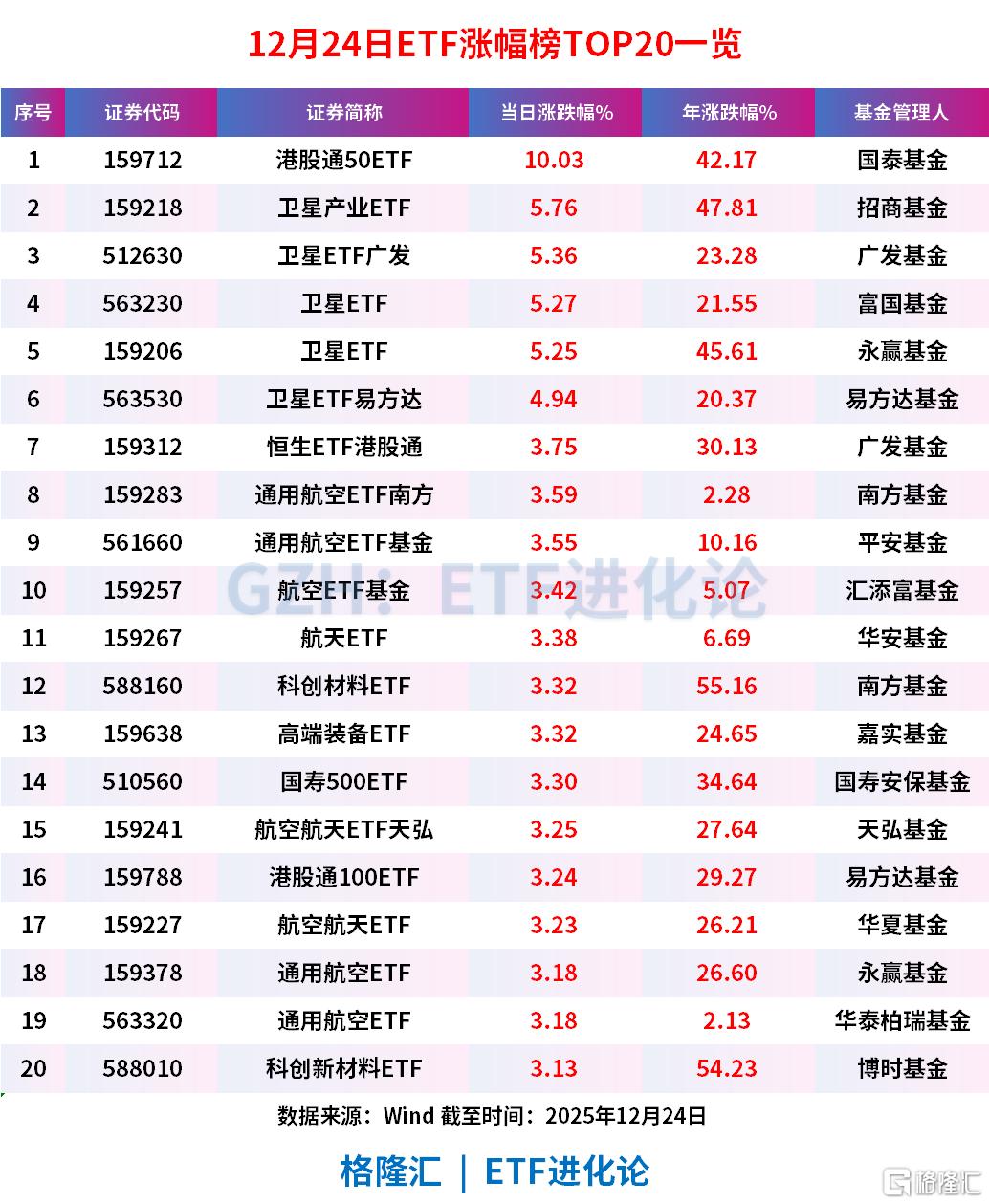
商业航天板块大爆发,卫星产业ETF、卫星ETF广发、卫星ETF飙涨5%
Ge Long Hui· 2025-12-24 07:38
Group 1 - The commercial aerospace sector experienced a significant rebound, with various satellite ETFs rising over 5% today [1] - The satellite industry ETF managed by China Merchants Fund saw a daily increase of 5.76% and an annual increase of 47.81% [3] - The overall performance of satellite-related ETFs indicates strong market interest and investment potential in the commercial aerospace sector [1][3] Group 2 - The IPO guidance for Blue Arrow Aerospace has been completed, marking a significant step in its journey in the capital market [5] - The successful maiden flight of the Long March 12A rocket demonstrates advancements in China's aerospace capabilities, although the first-stage recovery did not meet expectations [5] - The launch of the Commercial Aerospace Industry Alliance's innovation fund, with an initial scale of 1-2 billion and a long-term goal of 10 billion, focuses on low-orbit satellite constellations and reusable launch vehicles [5] Group 3 - The Trump administration has signaled strong support for commercial aerospace, aiming to attract an additional $50 billion in investments by 2028 [6] - SpaceX's internal valuation has reached $800 billion, with market predictions suggesting a potential IPO valuation exceeding $1 trillion [6] - The deployment of over 9,000 satellites in the Starlink constellation and projected revenues of $15.5 billion by 2025 highlight the growth potential in the commercial aerospace sector [6] Group 4 - The establishment of a dedicated Commercial Aerospace Department by the National Space Administration signifies a transition to a regulated development phase for the industry [7] - The action plan for promoting high-quality and safe development in commercial aerospace outlines 22 key measures, including technology innovation and financing support [7] - Recent technological breakthroughs, such as the successful flight of the reusable Zhuque-3 rocket, indicate progress towards scalable applications in commercial aerospace [7] Group 5 - The A-share market features ETFs tracking satellite communication and satellite industry indices, with the satellite industry index being the only pure-play index in this sector [8] - The largest ETF tracking the satellite industry index is managed by China Merchants Fund, reflecting the growing interest in this area [8] - The satellite industry index is expected to benefit from the U.S. $50 billion space investment plan and China's regulatory support for commercial aerospace [8]