
能源转型

Search documents
光伏50ETF(159864)涨超2.2%,行业需求与技术迭代引关注
Mei Ri Jing Ji Xin Wen· 2026-01-06 02:22
Group 1 - The core viewpoint of the article highlights that the photovoltaic equipment industry is entering a bottoming phase, with expectations for "anti-involution" policies to accelerate [1] - Short-term focus should be on the demand growth for technologies such as N-type long crystal, Xbc/0BB/HJT/TOPCon, while long-term attention should shift to perovskite batteries, which may open new growth avenues for the industry [1] - The photovoltaic sector is part of the broader semiconductor industry, with leading equipment manufacturers having the potential to extend into the semiconductor field, although high technical barriers may prolong the transformation period [1] Group 2 - The overseas market is becoming a significant growth driver for electrical equipment, particularly with an optimistic outlook on exports to the U.S., as demand for electrical and renewable energy equipment is expected to rise amid easing trade disputes [1] - The photovoltaic 50 ETF (159864) tracks the photovoltaic industry index (931151), which selects listed companies involved in the entire solar photovoltaic power generation supply chain, reflecting the overall performance of related securities [1] - The photovoltaic industry index is characterized by high growth potential and technological innovation, serving as an important tool for investors looking to allocate resources in the renewable energy sector [1]
金观平:绿电发得出更要用得好
Jing Ji Ri Bao· 2026-01-06 00:12
Core Viewpoint - The article emphasizes the urgency of expanding green electricity (green power) applications in China to achieve carbon neutrality goals and enhance global competitiveness in manufacturing [1][2]. Group 1: Importance of Green Electricity - China has established the world's largest renewable energy system, but the challenge lies in effectively utilizing green electricity [1]. - The European Union's carbon border adjustment mechanism, effective from January 1, 2026, will require Chinese companies to provide clear proof of green production for products like steel and cement to avoid high tariffs [1]. - The reliance on green electricity is becoming a new standard in international trade, impacting China's manufacturing competitiveness [1]. Group 2: Challenges in Green Electricity Application - The intermittent nature of wind and solar energy creates significant challenges for the power grid, leading to wasted green electricity due to insufficient grid capacity [2]. - Despite the reduction in costs for solar panels and wind turbines, the overall system costs for green electricity remain high, necessitating substantial investments in storage facilities and flexible coal power modifications [2]. - The current market mechanisms for green electricity are underdeveloped, with complexities in certification and trading, leading to difficulties for companies in purchasing and verifying green electricity [2]. Group 3: Solutions for Expanding Green Electricity Use - To expand green electricity applications, there is a need for technological innovation and improved market mechanisms, including the development of energy storage technologies and smart grids [3]. - Establishing a unified national electricity market and simplifying green electricity trading processes are essential for making green electricity more accessible [3]. - Implementing policies that incentivize the use of green electricity for companies can create a win-win situation, benefiting both consumers and producers [3].
沪银期价维持高位运行
Zheng Quan Ri Bao· 2026-01-05 22:49
Group 1 - The core viewpoint of the articles indicates that silver prices are experiencing a significant upward trend driven by a fundamental shift in demand structure, with industrial demand becoming the dominant force [1][2] - As of January 5, 2026, the main contract for silver futures on the Shanghai Futures Exchange closed at 18,247 yuan per kilogram, reflecting a 1.16% increase, supported by high international silver prices during the New Year holiday [1] - Analysts predict that silver prices will continue to benefit from loose liquidity, long-term supply-demand gaps, and increased industrial demand driven by AI narratives, with expectations for international silver prices to potentially reach 100 USD per ounce [2] Group 2 - The silver market is expected to face a supply gap by 2025, while demand in sectors such as photovoltaics, electric vehicles, and AI infrastructure is showing sustained growth [1] - The relationship between silver price fluctuations and global manufacturing activity, as well as the energy transition process, is becoming more significant than its correlation with monetary policy [2] - The price dynamics of silver are being restructured as it transitions from a "supporting role" in financial markets to a "strategic metal" crucial for the development of green energy and digital infrastructure [1]
绿电发得出更要用得好
Jing Ji Ri Bao· 2026-01-05 22:39
Core Viewpoint - The article emphasizes the urgency of expanding green electricity (green power) applications in China to achieve carbon neutrality goals and enhance global competitiveness in manufacturing [1][2]. Group 1: Importance of Green Electricity - China has established the world's largest renewable energy system, but the challenge lies in effectively utilizing green electricity [1]. - The European Union's carbon border adjustment mechanism, effective from January 1, 2026, will require Chinese companies to provide clear proof of green production for products like steel and cement to avoid high tariffs [1]. - The reliance on fossil fuels and high dependence on foreign oil and gas highlight the need for energy security and a shift towards renewable energy to support national security and economic stability [1]. Group 2: Challenges in Green Electricity Application - The intermittent nature of wind and solar energy creates significant challenges for the power grid, leading to wasted green electricity due to insufficient grid capacity [2]. - Despite the reduction in costs for solar panels and wind turbines, the overall system costs for green electricity remain high, necessitating substantial investments in storage facilities and flexible coal power modifications [2]. - The current market mechanisms for green electricity are underdeveloped, with complexities in certification and trading, leading to difficulties for companies in purchasing and verifying green electricity [2]. Group 3: Solutions for Expanding Green Electricity Use - To expand green electricity applications, there is a need for technological innovation, such as the development of energy storage technologies and smart grids to enhance the flow of green electricity [3]. - Establishing a unified national electricity market and simplifying green electricity trading processes will make it easier for companies to engage in green electricity transactions [3]. - Implementing policies that provide financial incentives for companies using and producing green electricity can create a win-win situation, promoting broader adoption of green energy [3].
沐风追光,驰骋在“亿”千瓦的风景里
Xin Hua Ri Bao· 2026-01-05 22:16
Core Insights - The article highlights the significant milestone of Jiangsu's renewable energy capacity surpassing 100 million kilowatts by 2025, marking it as a leader in the Yangtze River Delta region [1][3] - The narrative emphasizes the integration of renewable energy into daily life, showcasing how solar panels and wind energy are transforming local economies and lifestyles [2][6] Group 1: Renewable Energy Capacity - Jiangsu's renewable energy installed capacity reached 100 million kilowatts, accounting for 46% of the province's total power generation capacity [3] - By the end of last year, the total renewable energy capacity exceeded 115 million kilowatts, solidifying its position as the largest power source in Jiangsu [6] Group 2: Economic Impact - The deployment of solar panels in rural areas has led to significant income increases for households, with an average earning of over 100,000 yuan per household in the first ten years [2] - The renewable energy sector has created a robust industrial chain in Jiangsu, with over 40% of the country's photovoltaic component production capacity concentrated in the province [6] Group 3: Technological Innovations - Jiangsu has developed a smart control system capable of real-time monitoring and power forecasting for over 900,000 distributed solar power units [5] - Energy storage stations and electric vehicle battery integration into the grid are being implemented to enhance grid stability and reliability [5] Group 4: Future Outlook - The article suggests that the renewable energy journey in Jiangsu is not just about increasing capacity but also about embedding sustainable practices into economic development and daily life [7] - The ongoing advancements in technology and infrastructure are expected to further facilitate the integration of renewable energy into the grid, ensuring a stable and reliable power supply [4][5]
Why Geopolitical Chaos Isn’t Pushing Prices Higher
Yahoo Finance· 2026-01-05 22:00
If you’ve been watching global headlines lately, it would be easy to assume oil prices would be sky-high: a major oil-reserve country mired in crisis, sanctions on perennial producers, regional conflicts simmering, and social unrest in several exporters. And yet Brent and WTI have been languishing around $60 a barrel, a level that, a decade ago, most analysts would have dismissed as impossible in such conditions What’s happening? At first glance, the logic of oil pricing should be straightforward: suppl ...
期市开门红 期货市场平稳开局 能源、有色品种领涨
Shang Hai Zheng Quan Bao· 2026-01-05 18:28
Group 1 - The futures market had a stable start on the first trading day of 2026, with energy and non-ferrous metal futures leading the gains, particularly asphalt and Shanghai aluminum contracts, which rose nearly 4% [2] - The geopolitical tensions, particularly the U.S. military actions in Venezuela, have significantly impacted energy futures, causing volatility in prices due to potential supply disruptions [2][3] - Venezuela holds the world's largest oil reserves at 303.2 billion barrels, and the disruption of its core export crude, Merey, which has a high asphalt yield, is expected to lead to a shortage of asphalt raw materials and increase prices [3] Group 2 - The overall strength in non-ferrous metal futures was noted, with industrial metals leading the gains, including a 4.14% rise in casting aluminum alloys and a 3.98% increase in Shanghai aluminum contracts [3] - The geopolitical conflicts have not directly impacted non-ferrous metals but have raised concerns about resource security, which is likely to sustain positive sentiment in the sector [3] - Institutions predict that global resource security demands will become a new main theme in 2026, with challenges to supply due to geopolitical risks and resource protectionism [4] Group 3 - The demand for strategic resources is expected to increase due to energy transitions and resource reserve requirements, particularly in non-OECD countries and emerging markets [5] - AI investments and industrialization in emerging economies are anticipated to drive new demand, contributing to the next commodity supercycle [5] - The restructuring of global trade and industrial division is likely to support the industrialization of emerging economies, further enhancing demand for commodities [5]

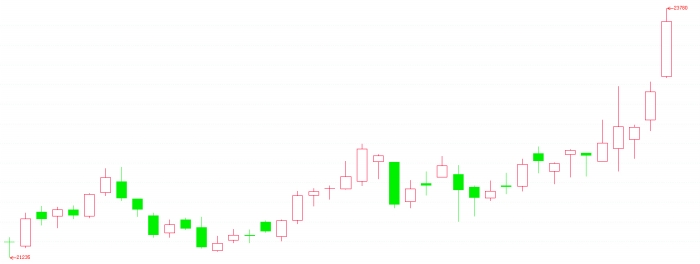
星星充电母公司「万帮数字能源」,递交IPO招股书,拟赴香港上市
Xin Lang Cai Jing· 2026-01-05 10:45
Core Viewpoint - Wanbang Digital Energy Co., Ltd. (referred to as "Xingxing Charging") has submitted its prospectus for an IPO on the Hong Kong Stock Exchange, aiming to leverage its position as the world's largest supplier of smart charging equipment amidst the global energy transition [2][24]. Company Overview - Founded in 2014 by Shao Danwei, the company addresses the market pain points of electric vehicle charging, establishing a business matrix that includes smart charging, microgrid systems, and large-scale energy storage [8][30]. - The company operates in over 70 countries and regions, forming a comprehensive value chain layout known as "source-network-load-storage" [8][30]. Main Business - As of 2024, Wanbang Digital Energy is recognized as the largest global supplier of smart charging equipment, with projected sales exceeding 470,000 units and a market share of 5.3% [9][31]. - The company has developed a complete ecosystem around its charging products, including installation services, to meet diverse charging needs [9][31]. - The microgrid system business has seen significant growth, with revenues reaching 608 million RMB in the first nine months of 2025, a 430% increase year-on-year [10][32]. - The large-scale energy storage segment, however, has faced challenges, with revenues declining by 31.3% year-on-year to 281 million RMB in the same period [10][32]. Financial Performance - The company reported revenues of 3.474 billion RMB in 2023, with a projected growth of 20.4% to 4.182 billion RMB in 2024, and a further increase of 23.0% to 3.072 billion RMB in the first nine months of 2025 [19][41]. - Net profit for 2023 was 493 million RMB, but it is expected to decline by 31.7% to 336 million RMB in 2024, before rebounding to 301 million RMB in the first nine months of 2025, largely due to a one-time asset transfer gain [19][41]. - The gross margin has decreased from 33.4% in 2023 to 24.6% in the first nine months of 2025, indicating pressure on profitability due to increased competition and rising material costs [20][42]. Shareholder Structure - The major shareholder, Wanbang New Energy Investment Group, holds 75% of the company, with Shao Danwei and her spouse Ding Feng controlling approximately 87.16% of the voting rights [16][38]. - Institutional investors, including major players like China International Capital Corporation and Schneider Electric, also hold stakes, providing both financial support and strategic value [16][38].

第15届阿联酋国际投资峰会暨中阿能源项目交流对接会新闻发布会即将举办
中国能源报· 2026-01-05 10:22
邀请函 全球领先的多边经贸合作盛会——第15届阿联酋国际投资峰会,将于2026年4月13—15日在迪拜 世界贸易中心举行。本届峰会由阿联酋外贸部、迪拜商会、AIM 全球基金会联合主办,主题为 ——重塑全球繁荣:开启投资新路径,迈向可持续与包容的未来。 为进一步推动中国与阿联酋在能源领域,特别是油气、可再生能源、电力、能源转型等方面的投 资与合作,中国能源报、AIM全球基金会将于第15届阿联酋国际投资峰会期间,联合主办中阿能 源项目交流对接会,打造能源领域集政策沟通、项目合作、技术交流与资本对接的高端实效对话 合作平台。 第15届阿联酋国际投资峰会暨中阿能源项目交流对接会新闻发布会拟定于2026年1月27日下午, 在北京·人民日报社·新媒体大厦举行。 诚邀全球新能源企业500强、中国能源企业500强及国家/地方专精特新企业出席本次新闻发布会, 齐聚产业核心力量与创新活力,共谱中阿合作新篇章。 发布会流程 第15届阿联酋国际投资峰会暨中阿能源项目交流对接会新闻发布会 主题:技术赋能・资本聚力 新闻发布环节 15:15-15:35 第15届阿联酋国际投资峰会暨中阿能源项目交流对接会介绍 互动问答 15:35-15: ...
Moneta Markets 外汇:比特币能耗真相再审视
Xin Lang Cai Jing· 2026-01-05 10:22
1月5日,围绕比特币能耗的争论持续升温,市场情绪往往被夸大的叙事所左右。结合多项ESG研究与公 开数据,Moneta Markets外汇表示,比特币挖矿的能源问题更应从结构和效率角度审视,而非停留在绝 对消耗量的表面比较。随着数字资产逐渐融入主流金融体系,能源使用方式及其长期影响正成为投资者 评估风险与价值的重要维度。 从研究结论来看,将比特币简单描述为"资源黑洞"并不符合数据事实。多项同行评审研究显示,比特币 网络的能源消耗与交易数量并不线性挂钩,这意味着其系统具备一定的规模扩展能力。Moneta Markets 外汇认为,同时,在可再生能源占比较高的地区,挖矿活动通过灵活调节用电负载,反而有助于平衡电 网供需结构。 在电价问题上,目前缺乏可靠证据证明比特币挖矿会系统性推高居民或企业用电成本。相反,在部分市 场中,挖矿作为可调节的大型用电主体,为电力系统提供了额外的需求缓冲,有助于提升整体运行效 从研究结论来看,将比特币简单描述为"资源黑洞"并不符合数据事实。多项同行评审研究显示,比特币 网络的能源消耗与交易数量并不线性挂钩,这意味着其系统具备一定的规模扩展能力。Moneta Markets 外汇认为,同时 ...
