量子计算

Search documents
丹麦第一家12英寸晶圆厂落成
半导体行业观察· 2025-11-21 00:58
Core Insights - The establishment of Denmark's first 300mm wafer manufacturing facility, the POEM Technology Center, marks a significant step towards technological autonomy in Europe [1][3] - The center aims to accelerate breakthroughs in photonic and quantum chip manufacturing, enhancing Denmark's and Europe's semiconductor ecosystem [1][2] Group 1: Facility Overview - The POEM Technology Center is a collaboration between the Novo Nordisk Foundation's Quantum Chip Project (NQCP) and French company Riber, located at the Niels Bohr Institute of the University of Copenhagen [1] - The center will utilize advanced techniques such as molecular beam epitaxy to produce silicon and silicon-on-insulator wafers, with plans to be fully operational within a year [1][2] Group 2: Production and Research Focus - Initial materials for research are expected to be ready by the end of the year, with ongoing development of chip production infrastructure [2] - The center will serve as a pilot production line and prototype center, focusing on developing components necessary for quantum computing [2] Group 3: Strategic Importance - The POEM Technology Center aligns with Europe's efforts to reduce dependence on US and Asian chip manufacturing, supported by initiatives like the EU Chip Act [3] - The NQCP aims to create a national ecosystem for advanced quantum and photonic chips, collaborating with various stakeholders in the semiconductor industry [4]

新型光子芯片能将单色光转为三色光 可作为量子计算和高精度测量新工具
Ke Ji Ri Bao· 2025-11-21 00:47
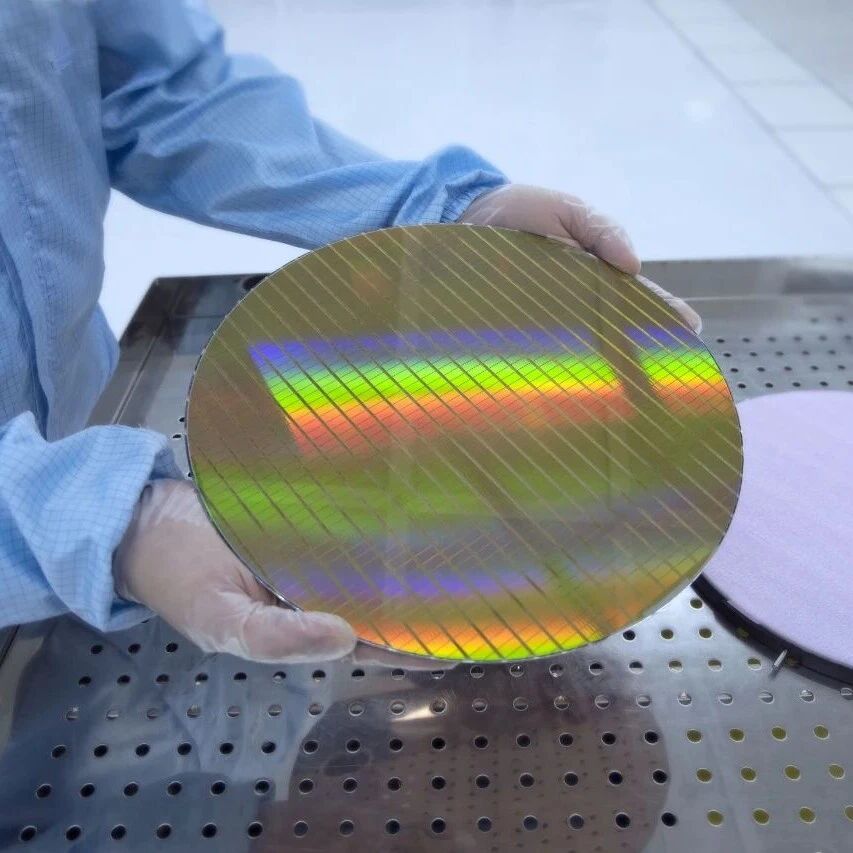
Core Insights - A research team from the University of Maryland has developed a new type of photonic chip that passively converts monochromatic laser sources into red, green, and blue light without the need for active control or repeated optimization, providing new tools for quantum computing, high-precision frequency measurement, and optical metrology [1][2] Group 1 - Traditional photonic devices can capture and manipulate photons but have limited functionality and are difficult to mass-produce stably [1] - The new chip can directly generate new frequencies of light that do not exist in the input light, saving space and energy compared to additional laser sources [1] - The technology relies on special nonlinear light-matter interactions, enhanced by using photonic resonators to allow light to circulate multiple times within the chip [1][2] Group 2 - The team previously proposed a method using an array of tiny resonators to amplify nonlinear effects, guiding light along the edges and converting pulsed lasers into multi-frequency light [2] - In the latest research, the array itself improves the success rate of frequency conversion without active adjustment, with experiments showing that six chips on the same wafer produced second, third, and fourth harmonic light corresponding to red, green, and blue light when input with standard 190THz laser [2] - The differences in circulation speeds between small rings and "super rings" in the array facilitate passive matching of conversion conditions, allowing the chip to generate more frequency light as the input intensity increases [2]
华为将发布AI领域突破性技术,解决算力资源利用效率难题;广东省发文加强算力产业供给,算力产业链持续受益——《投资早参》
Mei Ri Jing Ji Xin Wen· 2025-11-20 23:44
每经记者|杨建 每经编辑|彭水萍 (一)重要市场新闻 1、美股三大指数集体收跌,道指跌0.84%,标普500指数跌1.56%,纳指跌486.18点,跌幅2.15%;大型 科技股集体下挫,AMD跌超7%,甲骨文跌超6%,奈飞、英伟达跌超3%,特斯拉、亚马逊跌超2%,微 软跌超1%。中概股多数下跌,纳斯达克中国金龙指数跌3.26%,蔚来跌超6%,小鹏汽车跌超5%,哔哩 哔哩、百度、拼多多跌超4%。 2、美国劳工统计局周四公布本该上月发布的9月非农报告显示,美国9月非农就业人口增长11.9万人, 是预期5.1万的两倍多,同时,8月份新增就业人数从增长2.2万人下修2.6万,至减少0.4万人,7月和8月 非农就业人数合计下修3.3万人。国际油价走低,美油主力合约跌0.88%,报58.73美元/桶;布伦特原油 主力合约跌0.66%,报63.09美元/桶。欧洲三大股指收盘全线上涨,德国DAX指数涨1.11%报23419.35 点,法国CAC40指数涨0.34%报7981.07点,英国富时100指数涨0.21%报9527.65点。 (二)行业掘金 1、华为将于11月21日发布一项AI领域突破性技术,相关技术有望解决算力资源 ...
携手思科(CSCO.US)打造容错量子计算网络 IBM(IBM.US)涨超3.5%
Zhi Tong Cai Jing· 2025-11-20 16:07
Core Viewpoint - IBM and Cisco have announced a collaboration to design a network of large-scale, fault-tolerant quantum computers, aiming for a proof of concept by around 2030 and laying the groundwork for a "quantum computing internet" in the late 2030s [1] Group 1: Collaboration Details - The two companies will jointly demonstrate a prototype network that connects multiple independent large-scale fault-tolerant quantum computers over the next five years [1] - This network aims to scale quantum computing tasks to levels of tens of thousands or even hundreds of thousands of qubits, which is beyond the capacity of traditional single-machine systems [1] Group 2: Applications and Impact - The distributed network architecture will enable quantum computing to run complex programs with scales reaching trillions of quantum gates, which is crucial for solving large optimization problems, advanced materials design, and drug development [1] - Jay Gambetta, head of IBM Research, emphasized that this collaboration will further expand the capabilities of quantum computing [1]


晚报 | 11月21日主题前瞻
Xuan Gu Bao· 2025-11-20 14:19
Group 1: Digital Economy and Computing Power - Guangdong Province aims to establish a national digital economy innovation development pilot zone by 2027, targeting a digital economy core industry value-added share of over 16% of GDP and an annual compound growth rate of over 15% for the data industry [1] - The AI industry is experiencing strong demand, as evidenced by Nvidia's recent earnings report, which alleviated concerns about an AI bubble [1] - Domestic computing power supply chains are expected to enter a rapid growth phase, with significant capital expenditure increases anticipated from local cloud service providers [1] Group 2: Huawei's AI Technology - Huawei plans to unveil a breakthrough AI technology on November 21, which could increase computing resource utilization from the industry average of 30%-40% to 70%, effectively doubling existing hardware efficiency [2] - This innovation allows for unified scheduling and efficient utilization of various computing hardware, enhancing the domestic AI computing power supply chain's autonomy and ecosystem integration [2] - The technology aims to compete with international leaders in AI hardware and software collaboration, potentially becoming a crucial support for China's AI infrastructure [2] Group 3: Quantum Computing - IBM and Cisco are collaborating on foundational work for distributed quantum computing, aiming to demonstrate a network concept that integrates large-scale fault-tolerant quantum computers within five years [3] - This initiative seeks to address fundamental challenges faced by quantum computing networks and aims to connect multiple large-scale quantum computers [3] - Quantum computing is viewed as a transformative technology that could lead to significant advancements across various industries, with a projected market size reaching hundreds of billions by 2030 [4] Group 4: Tungsten Market - Chapter Tungsten Industry announced price increases for tungsten products, with black tungsten concentrate at 328,000 yuan per ton and ammonium paratungstate at 478,000 yuan per ton, reflecting a 6% rise from the previous month [5] - The demand for tungsten has surged due to growth in industries like photovoltaics and automotive, while supply constraints have intensified market tensions [5] - The first batch of tungsten mining quotas for 2025 is set at 58,000 tons, a 6.45% decrease from the previous year, indicating tightening supply [5] Group 5: Lithium Iron Phosphate Industry - The China Chemical and Physical Power Industry Association is set to release guidelines to standardize pricing in the lithium iron phosphate sector, aiming to curb below-cost competition [6] - The lithium iron phosphate battery sector dominates new energy storage, with an expected total shipment of 580 GWh in 2025, reflecting a growth rate exceeding 75% [6] - The industry is anticipated to improve its economic outlook as it combats internal competition and benefits from high demand in energy storage applications [6]
彩讯股份(300634) - 300634彩讯股份投资者关系管理信息20251120
2025-11-20 13:09
Group 1: Company Position and Performance - The company holds a leading position in enterprise email, AI full-stack technology, and intelligent digitalization, with AI applications accounting for approximately 19% of revenue in the first half of 2025, projected to reach around 25% for the full year [1][2] - Revenue for the first three quarters of 2025 reached 1.341 billion yuan, representing a year-on-year growth of 10.81% [2] - The company has a robust order backlog and is positioned as an "AI + industry" solution provider, combining software technology and AI innovation capabilities [2] Group 2: AI and Technology Development - The company has launched various AI products, including enterprise brain, AI voice assistant, and digital human, which are widely used in telecommunications, finance, energy, and transportation sectors [2] - The Rich AIBox platform is designed to support Huawei's super AI applications, enhancing industry AI application deployment [6] - The company has achieved Ascend Native certification, indicating deep integration with Huawei's Ascend computing capabilities [6] Group 3: Strategic Partnerships and Collaborations - The company has not engaged in direct collaboration with OpenAI but focuses on its own AI technology development, particularly in industry models and AI application platforms [2][3] - The RichMail email product has received certification from Huawei's Kunpeng, Ascend, and Euler technologies, with ongoing collaboration primarily in the Harmony ecosystem and enterprise-level AI applications [3] Group 4: Future Outlook and Growth Potential - The company aims to enhance its AI core technology research and application deployment, with expectations for significant growth in AI revenue and profits over the next three years [4] - The company is exploring opportunities in AI healthcare and has a technology reserve in this area, although it has not yet ventured into brain-computer interface applications [4] Group 5: Investor Concerns and Market Confidence - Concerns have been raised regarding significant share reductions by three major shareholders, impacting investor confidence and the company's stock performance [5] - The company is encouraged to seek strategic investors to alleviate market pressure and boost investor confidence [5]
美股盘前要点 | 9月非农就业数据重磅来袭!英伟达最新财报全面超预期
Ge Long Hui· 2025-11-20 12:32
Market Overview - US stock index futures are collectively rising, with Nasdaq futures up 1.54%, S&P 500 futures up 1.1%, and Dow futures up 0.53% [1] - Major European indices are also up, with Germany's DAX index rising 0.66%, UK's FTSE 100 index up 0.46%, France's CAC index up 0.6%, and the Euro Stoxx 50 index up 0.73% [1] Key Events in US Market - The US will release September adjusted non-farm payrolls, unemployment rate, and initial jobless claims for the week ending November 15 at 21:30 [2] - The Federal Reserve's October FOMC meeting minutes indicate increased uncertainty due to data gaps, with December rate cut expectations rapidly cooling [2] - White House officials are reportedly urging Congress to reject a bill that would limit Nvidia's export of AI chips [2] - Barclays has raised its year-end target for the S&P 500 index to 6600 points, with a target of 7400 points for the end of next year [2] - Muddy Waters Capital's CEO stated that now is not the time to short large US tech companies [2] - Morgan Stanley predicts that AI shopping agents will drive e-commerce transformation, potentially generating an additional $115 billion in consumer spending [2] Company-Specific Updates - Nvidia's Q3 earnings report exceeded expectations, with revenue reaching a record $57.01 billion, and CEO Jensen Huang noted that Blackwell sales are outstanding [2] - Due to rising memory costs, Nvidia and AMD are reportedly considering halting the production of mid-range gaming graphics cards [2] - Cathie Wood has made significant purchases in cryptocurrency-related stocks, totaling over $10 million [2] - IBM and Cisco announced plans to build a large-scale, fault-tolerant quantum computing network [2] - Applied Materials responded to rumors of "suspending supply to China," stating that it expects no significant changes in business before 2026 [2] - DHL Express has signed a three-year sustainable aviation fuel procurement agreement with Phillips 66 [2] - Walmart's Q3 revenue grew by 5.8% year-on-year to $179.5 billion, with adjusted EPS of $0.62, both exceeding expectations [2] - Palo Alto Networks reported Q1 revenue growth of 16% year-on-year to $2.47 billion, although platform progress has slowed [2] - NetEase's Q3 revenue was 28.36 billion yuan, with adjusted ADS earnings of 14.73 yuan, both below expectations [2]

国芯科技参股公司合肥硅臻首发基于硅光集成芯片的通用可编程光量子计算机
Zheng Quan Shi Bao Wang· 2025-11-20 11:39
Core Insights - The core focus of the news is the launch of a general-purpose programmable optical quantum computer by Silizhen, a subsidiary of Guoxin Technology, at the 2025 Quantum Technology and Industry Conference in Hefei, marking a significant advancement in quantum computing technology [1][2]. Company Developments - Silizhen's optical quantum computer is designed for general quantum computing, utilizing photons as qubit carriers and integrated photonic chips as the core, enabling self-developed key components with high fidelity, easy deployment, and scalability [1][2]. - The system architecture employs photon path encoding for qubit manipulation and utilizes an interference network for unitary evolution, ensuring efficient collaboration between the optical quantum chip and the measurement and control system [2][3]. - The device currently supports 4 physical qubits, suitable for experimental validation in small to medium quantum computing scenarios, with average fidelity exceeding 99.4% for single and two-qubit states [2][3]. Technological Advantages - The optical quantum computer features high resistance to disturbances due to its use of photons as qubit carriers, providing a stable foundation for computation and execution efficiency [3]. - The modular programmable computing core based on silicon photonic integrated chips allows for resource expansion and functional upgrades, addressing both research exploration and industrial application needs [3]. - Key components such as the entangled photon source, integrated optical quantum computing chip, and measurement and control system are all developed in-house by Silizhen, showcasing the company's technological capabilities [3]. Application Potential - The optical quantum computer is expected to serve various fields, including quantum algorithm validation in research, AI applications like autonomous driving, quantum encryption prototype development in communications, and financial market simulations [3].
助力智能化转型,联想控股持续深化科技创新布局
Cai Jing Wang· 2025-11-20 08:15
Core Insights - A new wave of technological revolution and industrial transformation is accelerating, with breakthroughs in artificial intelligence, quantum computing, and new materials profoundly impacting industrial development models, corporate organizational forms, and global competitive landscapes [1] - Lenovo Holdings emphasizes technology innovation as a driver for high-quality development, investing in over a thousand tech companies across various cutting-edge fields, establishing a long-term oriented technology ecosystem [1] Group 1: Emerging Industries and Strategic Investments - The "14th Five-Year Plan" outlines clear directions for industrial upgrades, focusing on strategic emerging industries such as new energy, new materials, aerospace, and low-altitude economy, while also looking ahead to future industries like quantum technology and brain-computer interfaces [2] - Lenovo Holdings adopts a "early investment and new financing" strategy to support tech companies in overcoming key technological challenges and achieving commercialization, with notable investments in leading firms like CATL and Trina Solar in the new energy sector [2][3] - Lenovo Holdings' subsidiary, Lianhong New Materials, is entering a harvest phase with a significant investment of 12.5 billion yuan in an integrated project expected to be fully operational by the end of 2025, covering critical material production lines [2][3] Group 2: Artificial Intelligence Ecosystem - Lenovo Holdings is advancing its "AI+" initiative, leveraging its comprehensive ecosystem to accelerate AI applications across various scenarios, with over 270 AI-related companies within its system [4] - The company has established representative cases in six key areas, including technology, industry, and governance, demonstrating the conversion of AI capabilities into productivity [4] - Lenovo Group is promoting the widespread adoption of AI, launching a super intelligent system for individuals, enterprises, and cities, and creating benchmark cases in manufacturing, education, and finance [4][5] Group 3: Future Growth and Innovation - The ongoing technological revolution is expected to create new growth opportunities across various sectors, with Lenovo Holdings' systematic layout providing observable and reusable paths for transforming technology into productivity [6] - As key technologies extend to application ends and industry chain collaboration accelerates, innovation will reshape industry structures, continuously generating new industries, models, and dynamics for sustainable high-quality development [6]

创·投嘉年华报名从速!
投资界· 2025-11-20 06:09
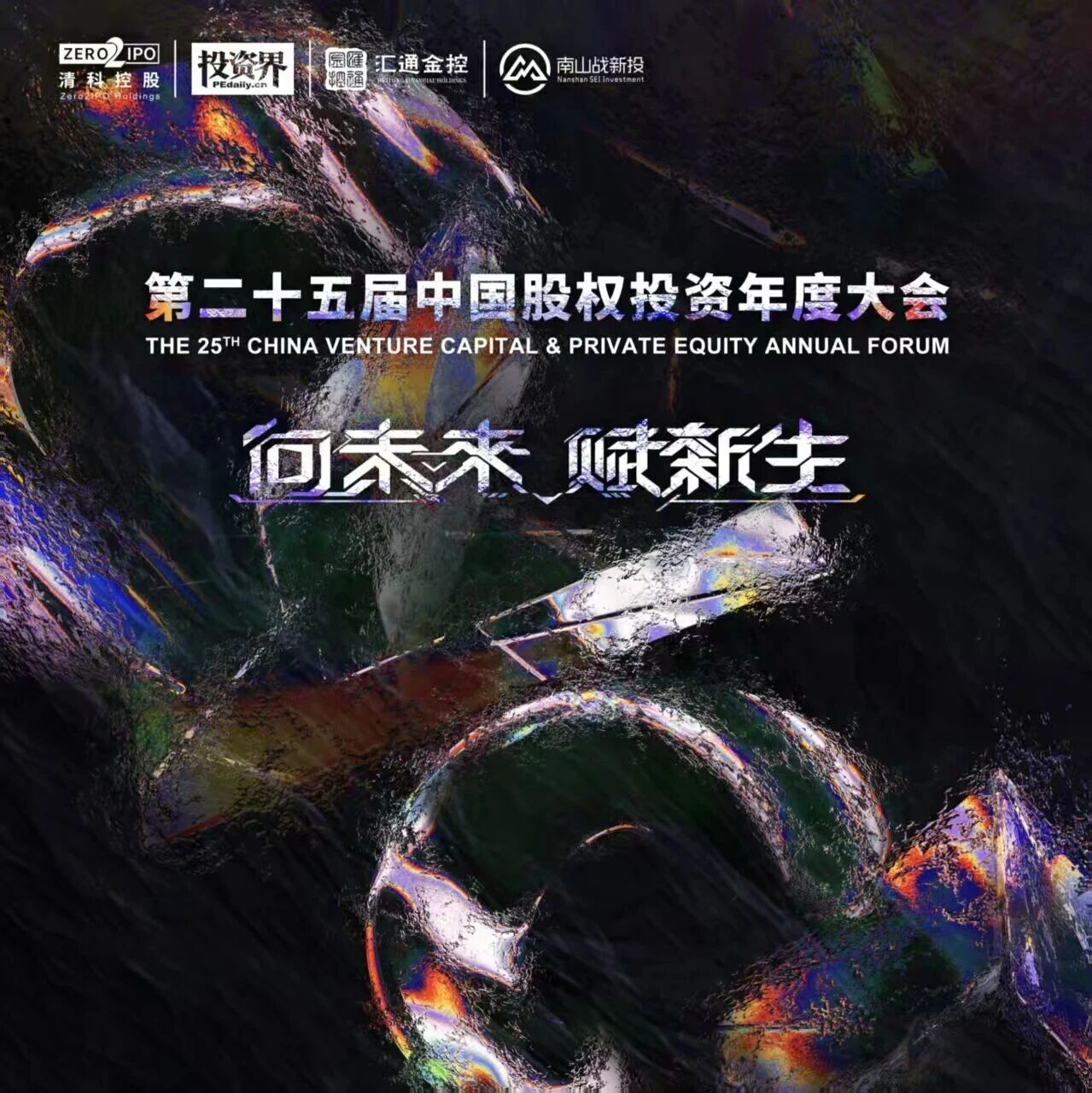
Core Viewpoint - The article discusses the upcoming 25th China Venture Capital & Private Equity Annual Forum, highlighting its significance in the investment landscape and the participation of key industry leaders [2][3]. Event Details - The forum will take place from December 2 to December 5, 2025, in Shenzhen, China [3]. - The event is themed "Innovation and Investment Carnival," featuring a lineup of prominent speakers and industry experts [5]. Key Speakers - Notable speakers include Chen Wei (Chairman and Founding Partner of Dongfang Fuhai), Ni Zhengdong (Founder and Chairman of Qianhai Capital), and other influential figures from various investment firms [6][8][21][24][30][36][40][44][49][66]. Agenda Highlights - The agenda includes a series of keynote speeches, panel discussions, and roundtable dialogues focusing on investment trends, challenges, and opportunities in the venture capital space [129][132][134]. - Specific topics will cover themes such as the future of mergers and acquisitions in China, the rise of corporate venture capital, and the investment landscape in hard technology [134][135]. Special Activities - The forum will also feature special events such as a networking dinner and a sports event, aimed at fostering connections among industry professionals [144][147]. Sponsorship and Support - The event is supported by various sponsors, including prominent investment firms and financial institutions, indicating strong industry backing [151][152].