产业链安全

Search documents
北汽集团:持续优化订单确认、交付验收、支付结算等机制 坚决反对任何形式的不合理付款行为和恶性竞争
Mei Ri Jing Ji Xin Wen· 2025-09-15 07:36
(文章来源:每日经济新闻) 每经AI快讯,9月15日,北京汽车集团发布声明,持续优化订单确认、交付验收、支付结算等机制,坚 决反对任何形式的不合理付款行为和恶性竞争,切实保障供应商伙伴合法权益,坚持与供应商伙伴携手 共进,聚焦核心技术突破与产品品质提升,构建健康、稳定、共赢的汽车产业生态,增强产业链韧性和 安全水平。 ...

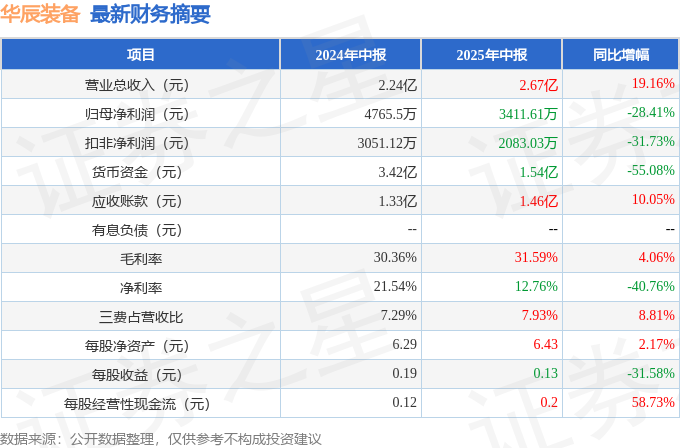
华辰装备2025年中报简析:增收不增利,公司应收账款体量较大
Zheng Quan Zhi Xing· 2025-08-23 22:57
Core Viewpoint - The recent financial report of Huachen Equipment (300809) shows a mixed performance with a revenue increase but a significant decline in net profit, highlighting potential challenges in cash flow and receivables management [1][2]. Financial Performance - The total revenue for the first half of 2025 reached 267 million yuan, a year-on-year increase of 19.16% compared to 224 million yuan in 2024 [1]. - The net profit attributable to shareholders was 34.12 million yuan, reflecting a decline of 28.41% from 47.65 million yuan in the previous year [1]. - The gross profit margin improved to 31.59%, up 4.06% year-on-year, while the net profit margin decreased significantly to 12.76%, down 40.76% [1]. - The company reported a substantial increase in accounts receivable, which accounted for 236.26% of the net profit, indicating potential liquidity issues [1][3]. Cash Flow and Investment - The net cash flow from operating activities increased by 59.59%, attributed to a reduction in procurement payments [2]. - The net cash flow from investment activities rose by 53.22%, due to an increase in maturing structured deposits [2]. - The net increase in cash and cash equivalents was up 71.36%, driven by the same factors [2]. R&D and Product Development - The company increased its R&D investment by 42.54%, focusing on new product development [2]. - New high-end precision grinding products are expected to enhance the company's competitive position in the market and contribute to domestic high-end equipment manufacturing [5][7]. Market Position and Future Outlook - Huachen Equipment is recognized as a leading enterprise in the high-end precision grinding equipment sector, with a strong focus on innovation and technology [4][5]. - The company is actively expanding its product line to include advanced grinding machines that cater to critical industries such as steel, aerospace, and semiconductor manufacturing [5][7]. - The first ultra-precision curved surface grinding machine has been completed and delivered for customer validation, indicating progress in product development [7].

2024专精特新上市公司市值战略研究报告
Sou Hu Cai Jing· 2025-08-17 03:22
Group 1 - The core viewpoint of the report emphasizes the role of specialized, refined, unique, and innovative (专精特新) listed companies as leaders among small and medium-sized enterprises, driving innovation, industrial upgrading, and supply chain security during China's economic transformation [1][17]. - Specialized and innovative companies have shown remarkable market performance, significantly outperforming the broader market indices over the past five years, with the specialized index rising by 10.71% since early 2021, surpassing the broader market by 32.81 percentage points [2][25]. - As of the end of 2024, the market capitalization of specialized companies accounted for 14.16% of the total A-share market, with their number representing 34.36% of all A-shares, indicating a steady expansion of this group [2][25]. Group 2 - The report outlines a strategic approach to market capitalization management, focusing on creating value and managing expectations, which involves solidifying internal value and effectively communicating with the market [3][4]. - In terms of value creation, specialized companies face pressure, with a notable decline in fixed asset turnover rates, indicating underutilization of resources and potential overcapacity issues [4][20][22]. - The report highlights the importance of enhancing capital interaction and establishing a toolbox for market capitalization management to navigate market fluctuations and improve operational efficiency [5][4]. Group 3 - The specialized companies are positioned as stabilizers in the supply chain, particularly in the context of rising global challenges and the need for domestic production capabilities [2][18]. - The report notes a significant valuation premium for specialized companies, with a TTM price-to-earnings ratio of 67.20, well above other indices, reflecting strong market confidence in their growth potential [2][25]. - The report suggests that specialized companies should focus on deepening their expertise in niche markets and improving their innovation-to-market conversion efficiency to enhance their competitive edge [5][14].
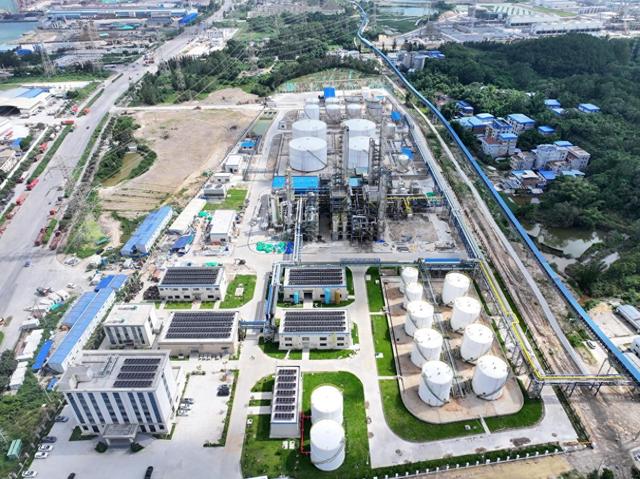
中国化学四化建承建的国内单套最大粗苯加氢项目中交 为华南地区石化产业添强劲引擎
Huan Qiu Wang· 2025-08-15 11:35
Core Viewpoint - The Guangxi Hongkun crude benzene hydrogenation project, constructed by China Chemical Fourth Construction Company, has officially been handed over, marking the largest single-unit crude benzene refining facility in China and the only one in South China, which will fill a regional industrial chain gap and drive the development of related industries [1][3]. Group 1 - The crude benzene hydrogenation unit is the first core facility of Hongkun Group, which started construction in July 2023, and has been executed with meticulous planning and management to ensure timely completion [3]. - The project team implemented a "Party Building + Engineering" integration mechanism, establishing responsibility zones and teams to tackle technical challenges, achieving significant milestones in a concentrated effort over 80 days [3][5]. - A comprehensive safety management system was developed, ensuring 100% coverage of personnel, equipment, and processes, with a total of 320 safety hazards rectified, achieving a 100% rectification rate [3]. Group 2 - The project faced climatic challenges such as long rainy seasons and typhoons, yet the team demonstrated resilience, completing the installation of three large equipment units within 144 hours and achieving a welding pass rate of 98.05% for 176,000 inches of piping [5]. - The successful handover of the project is seen as a significant victory for the largest crude benzene hydrogenation unit in the country and a new starting point for ensuring the safety of the high-end new materials industry chain in South China [5]. - The company is committed to ensuring the safe, stable, and efficient operation of the facility in the next phase of production [5].

至正股份收购AAMI 99.97%股权事项获上交所审核通过
Ju Chao Zi Xun· 2025-08-12 12:42
Group 1 - The core viewpoint of the news is that Zhizheng Co. has received approval for a significant asset restructuring plan, marking a key advancement in a nearly year-long cross-border acquisition transaction [1] - Zhizheng Co. plans to invest over 3.5 billion yuan to acquire 99.97% of AAMI, a leading global semiconductor lead frame supplier, while divesting its traditional cable materials business [1] - The restructuring involves complex domestic and international operations, including asset swaps, share issuance, and cash payments, optimizing the company's equity and governance structure [1][2] Group 2 - The transaction is expected to lead to a qualitative leap for Zhizheng Co., with AAMI's revenue exceeding 7 billion yuan from 2022 to the first three quarters of 2024 [2] - After the transaction, Zhizheng Co. will establish a dual-driven business model of "semiconductor materials + equipment," with semiconductor business revenue expected to exceed 30% in the first half of 2024 [2] - The collaboration between ASMPT's advanced packaging technology and AAMI's lead frame process will create significant industrial synergy, benefiting high-growth sectors like automotive electronics and AI computing [2] Group 3 - The transaction is significant for supply chain security, as lead frames are critical materials for semiconductor packaging, directly affecting chip reliability and heat dissipation [3] - AAMI's integration will help address domestic technology and capacity gaps in the high-end lead frame market, which is currently dominated by Japanese and Korean companies [3] - Zhizheng Co. aims to focus on high-end applications in automotive electronics and AI computing post-transaction, supporting the advancement of domestic semiconductors into higher-end fields [3]

(活力中国调研行)厚积“薄”发 柔玻璃撑起产业硬脊梁
Zhong Guo Xin Wen Wang· 2025-07-06 03:53
Core Viewpoint - The article highlights the advancements in flexible and foldable glass technology developed by China National Building Material Group Glass New Materials Research Institute, showcasing its applications in various high-tech products and its significance in the global glass industry [1][2][3]. Group 1: Product Innovation - The flexible foldable glass produced by the company is only 30 micrometers thick, approximately one-third the thickness of a standard A4 paper, and has a bending lifespan exceeding one million cycles [1]. - This glass maintains high temperature resistance, hardness, light transmittance, gas tightness, and flatness, ensuring stable mechanical and chemical properties even under oxidative and illuminated conditions [1]. - The flexible glass has been widely applied in products such as foldable smartphones, rollable televisions, and flexible medical testing equipment [1]. Group 2: Research and Development - The production of ultra-thin flexible foldable glass required over a thousand experiments for formulation, followed by industrial trials and the design of dedicated production lines [2]. - The team, led by an academician from the Chinese Academy of Engineering, has successfully overcome key technological challenges, establishing a comprehensive industrial chain from high-strength glass to precision post-processing [2]. - The company has developed a "three-chain integration" model, combining innovation, engineering, and industry chains, resulting in numerous "China's first, world-leading" achievements [2]. Group 3: Market Impact - The development of the world's first 8.6-generation OLED ultra-thin float glass substrate is set to be completed by the end of 2024, marking a significant milestone in the production of high-generation OLED glass substrates in China [2][3]. - These innovations support the demand for advanced glass materials in sectors such as information display, new energy, semiconductors, and high-end equipment, ensuring the security of China's industrial supply chains [3]. - The advancements in glass technology signify a shift for China from following and catching up to leading in the global glass industry [3].
东方钽业: 宁夏东方钽业股份有限公司2025年度向特定对象发行A股股票募集资金使用可行性分析报告
Zheng Quan Zhi Xing· 2025-06-23 14:39
Fundraising Plan - The company plans to raise a total of up to 1.2 billion RMB through a private placement of A-shares, with the funds allocated to three construction projects and working capital [1] - The total investment for the projects is estimated at 1.37358 billion RMB, with 1.2 billion RMB sourced from the fundraising [1] Project Overview and Feasibility Analysis - The fundraising projects aim to support domestic economic circulation and ensure the security of national industrial chains, aligning with national development strategies [2][3] - The wet metallurgy project will produce key raw materials such as potassium fluotantalate and niobium oxide, essential for subsequent production processes in high-temperature alloys, semiconductors, and defense industries [2][3] - The projects are expected to optimize the product structure and upgrade the company's industrial capabilities, addressing the growing demand in the tantalum and niobium sector [2][3] Industry and Market Context - The projects are supported by national and local industrial policies that emphasize the development of rare metals and new materials, which are critical for various high-tech applications [5][6] - The company is positioned to meet the increasing market demand for high-value-added products in sectors like semiconductors and aerospace, enhancing its competitive edge [4][7] Financial Projections - The company anticipates a compound annual growth rate (CAGR) of 10% in revenue over the next three years, with projected revenues of approximately 1.41 billion RMB in 2025 and 1.70 billion RMB in 2027 [16][18] - The fundraising will also address the projected working capital gap of 232.66 million RMB from 2025 to 2027, ensuring sufficient liquidity for operations [19][20] Operational Impact - The fundraising projects are expected to enhance the company's operational capabilities, improve financial stability, and reduce financial risk by optimizing the capital structure [20][21] - The implementation of these projects will solidify the company's market position and support long-term sustainable growth [21]

“双标”的美国产业政策:类型、动因、效果及思考
清华金融评论· 2025-04-19 10:27
Core Viewpoint - The article discusses the contradictions and effects of the U.S. industrial policy, highlighting the dual standards in trade practices and the impact of domestic challenges on the competitiveness of U.S. manufacturing [2]. Group 1: Types and Mechanisms of U.S. Industrial Policy - U.S. industrial policy can be categorized into domestic supportive policies and foreign restrictive policies, aimed at enhancing domestic industry competitiveness and limiting foreign competition [5]. - Domestic supportive policies include fiscal and financial measures, government procurement, and innovation support, while foreign restrictive policies encompass investment restrictions and trade protection measures [5][4]. Group 2: Fiscal and Financial Policies - The Inflation Reduction Act plans to invest $391 billion in energy and climate initiatives from 2022 to 2031, with $234 billion allocated for tax credits and $157 billion for subsidies and loans [6]. - The CHIPS Act authorizes approximately $52 billion in subsidies and loan guarantees for semiconductor manufacturing and related research [6]. - U.S. government spending on industrial subsidies has increased from $45.8 billion in 2000 to $128 billion in 2022, maintaining around $100 billion annually thereafter [6]. Group 3: Government Procurement and Market Access Policies - The U.S. government prioritizes domestic procurement, mandating that at least $200 billion of federal purchases annually be for products with over 50% domestic content [13]. - The U.S. has pressured other countries to lower trade barriers and increase procurement of American goods, exemplified by agreements with Japan and China [14][13]. Group 4: Innovation Support Policies - Innovation support policies include funding for research and development in clean energy and technology, with significant investments outlined in the Infrastructure Investment and Jobs Act and the Inflation Reduction Act [16][18]. - The U.S. government has established various research centers to promote technological innovation, providing competitive funding to universities and companies [17]. Group 5: Infrastructure Investment Policies - The Infrastructure Investment and Jobs Act allocates nearly $100 billion for transportation infrastructure, while the Inflation Reduction Act invests approximately $30 billion in modernizing the electric grid [19][20]. - The Biden administration's broadband plan aims to invest $42.45 billion to enhance broadband access in underserved areas [19]. Group 6: Trade Protection Policies - The U.S. has implemented tariffs on imports based on national security and unfair trade practices, including a 25% tariff on steel and a 10% tariff on aluminum [24]. - The U.S. has historically pressured countries to agree to voluntary export restrictions, as seen in agreements with Japan in the 1980s [25]. Group 7: Technology Restriction Policies - The U.S. has placed several Chinese technology companies on an entity list, restricting their access to U.S. technology under the guise of national security [27]. - The CHIPS and Science Act prohibits semiconductor companies receiving U.S. subsidies from expanding operations in China for ten years [27]. Group 8: Implementation Motivations and Characteristics - The U.S. industrial policy aims to enhance competitiveness, ensure supply chain security, reduce income inequality, and maintain technological leadership [32][36]. - The federal government primarily drives these policies, with state and local governments playing a limited role [37]. Group 9: Effectiveness of U.S. Industrial Policies - Overall, U.S. industrial policies have seen varying degrees of success, particularly in innovation support, while trade protection measures have had limited effectiveness [39]. - Successful policies include innovation initiatives that have led to significant technological advancements and job creation [40][41].