
信用风险

Search documents
中金:美国中小银行为何又“暴雷”
中金点睛· 2025-10-19 23:59
Core Viewpoint - Recent declines in stock prices of Zions Bank (ZION) and Western Alliance (WAL) are attributed to concerns over loan losses, raising fears about the asset quality issues stemming from previous loose credit conditions and potential systemic financial risks [2][3] Group 1: Risk Origin and Comparison - The current risks faced by U.S. regional banks are primarily credit risks rather than interest rate risks, as analyzed in a previous report [2] - ZION and WAL differ significantly from the previously failed Silicon Valley Bank (SVB) and First Republic Bank (FRC) in terms of liability stability, with ZION and WAL showing no signs of deposit runs [2][3] - The liability structures of ZION and WAL are more stable and diversified compared to SVB and FRC, with uninsured deposits at 43% and 50% respectively, and non-interest-bearing demand deposits at 32% and 28% [2][3] Group 2: Asset Quality and Credit Risk - The asset risks for ZION and WAL are primarily related to credit risk, unlike SVB and FRC, which faced significant interest rate risks due to their long-term bond holdings [3] - ZION and WAL have a higher proportion of loans (62% and 76%) compared to securities investments (30% and 13%), which reduces their exposure to interest rate fluctuations [3] - Current evidence does not suggest that the recent loan risk events are systemic, as the overall loan delinquency rates in the U.S. banking sector remain historically low [3] Group 3: Financial Stability and Systemic Impact - ZION and WAL's potential bad debt exposure is limited, with loan write-offs accounting for only 13% and 8% of their 2024 profits, and impacting their core Tier 1 capital minimally [3][4] - The asset sizes of ZION (888 billion) and WAL (809 billion) are significantly smaller than those of SVB and FRC, indicating that the current risks are more localized and do not pose a systemic threat to the financial system [4] - The high interest rate environment may lead to increased credit risks, but any resulting credit tightening is expected to be moderate unless clear signs of economic recession emerge [4]



金融工程周报:流动性问题的小预演-20251019
Huaxin Securities· 2025-10-19 11:01
- The report does not contain specific quantitative models or factors for analysis[2][3][4] - The report primarily discusses macroeconomic trends, asset allocation strategies, and market observations without detailing quantitative models or factor construction[2][3][4] - No formulas, construction processes, or backtesting results for quantitative models or factors are provided in the report[2][3][4]
The stock market's regional bank scare highlights credit risks that could come back to bite
Yahoo Finance· 2025-10-17 23:47
Core Insights - The recent volatility in the banking sector was triggered by updates from regional banks Zions Bancorp and Western Alliance, which raised concerns about credit risk in the market [2][3][4] Company Summaries - Zions Bancorp reported a $50 million charge-off on a loan from its subsidiary, California Bank & Trust, leading to a 13% drop in its stock [3] - Western Alliance faced a lawsuit alleging fraud against a borrower, resulting in an 11% decline in its stock [3] - Both banks saw a recovery in their stock prices on Friday, with Zions up 4% and Western Alliance up 2% [4] Industry Context - The recent events highlight the potential risks in the private credit market, which includes non-bank lenders such as private equity firms and hedge funds [6] - JPMorgan CEO Jamie Dimon warned of further credit-market upheaval, referencing recent bankruptcies in the subprime auto lending sector as indicators of underlying risks [5] - Despite the recent turmoil, market experts do not foresee a broader banking crisis emerging from these events [7]
Rattled Wall Street on alert after trillion-dollar risk runup
Fortune· 2025-10-17 21:05
Core Viewpoint - Wall Street is experiencing renewed anxiety over credit risks following significant market events, including the collapse of First Brands Group and Tricolor Holdings, which have raised concerns about hidden credit losses and broader lending stress [1][3]. Market Sentiment and Positioning - Investors had previously been optimistic, largely ignoring risks such as government shutdowns and high valuations, with allocations to risky assets reaching 67% of tracked portfolios by the end of August [2]. - Despite a bull market adding $28 trillion in value, recent volatility indicates a shift in sentiment, with over $3 billion exiting high-yield bond funds in a week [3][8]. Credit Risk and Investment Strategies - Strategies that mitigate credit risk are gaining popularity, with a focus on shorting higher-leveraged firms while supporting low-debt counterparts [4]. - The tone among large money managers is shifting towards discipline, with concerns about lax credit standards and speculative flows disconnected from fundamentals [5]. Risk Reduction Actions - Legal & General, managing $1.5 trillion, has reduced risk exposure due to a mismatch between investor positioning and fundamentals, moving to short equities [6]. - Berenberg's head of multi-asset strategy has trimmed equity exposure by approximately 10 percentage points and added equity hedges, indicating a cautious approach [7]. Market Performance and Indicators - The S&P 500 rose by 1.7% despite credit concerns, while the S&P Regional Banks Select Industry Index fell nearly 2% [8]. - High-yield corporate bond spreads widened by 0.25 percentage points to 2.92 percentage points this month, and the VVIX reached its highest level since April, indicating increased investor anxiety [8]. Active Management Challenges - The proportion of long-only actively managed funds beating benchmarks is at a low of 22% for 2025, intensifying the pressure on managers to chase performance despite deteriorating fundamentals [9]. Crypto Market Dynamics - The crypto market has not rebounded after a $150 billion loss, with a notable absence of retail buying interest, suggesting a shift towards risk control rather than speculative behavior [10].

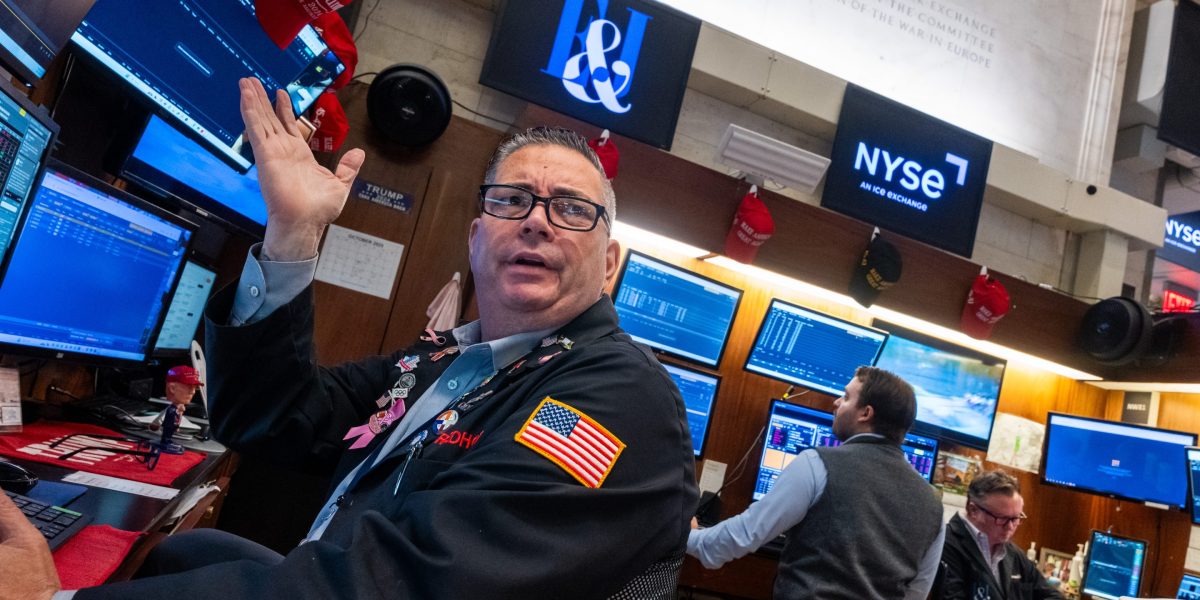
Regional bank earnings, credit concerns in focus
Youtube· 2025-10-17 17:21
Core Insights - Regional bank stocks are experiencing a rebound following third-quarter reports that alleviated credit quality concerns [1][2] - Zions Bank faced significant losses, taking a $50 million charge and losing $1 billion in market capitalization due to borrower defaults [4] - Analysts believe the market's reaction to credit concerns may be an overreaction, with some banks indicating they do not expect to take additional provisions [3][4] Group 1: Regional Banks - Huntington Bank and other regional banks reported decent metrics in net charge-offs and non-performing loans, indicating healthy balance sheets [2] - The market is still processing the implications of Zions' losses and the potential for further defaults among borrowers [2][4] - Western Alliance stated it does not anticipate needing additional provisions, suggesting confidence in their financial stability [3] Group 2: Investment Banks - Jeffre's stock rose by 5.4% following an upgrade from analysts, who believe the issues are contained and better than expected [6] - Jeffre's management claims they were defrauded, which could impact recovery rates compared to a typical bankruptcy scenario [7][8] - The distinction between fraud and bankruptcy is crucial, as fraud may lead to higher losses than a slow bankruptcy process [8]


美国地方银行股价暴跌,信用风险重燃
3 6 Ke· 2025-10-17 09:30
Group 1 - The market's concern over the banking sector has intensified following the bankruptcies of First Brand Group and Tricolor Holdings in September, leading to increased fears of creditor losses and credit risk expansion [1][2] - On October 16, the Dow Jones Industrial Average fell by 301 points, closing at 40,952, with bank stocks experiencing the most significant sell-off, as the S&P 500 banking sector index dropped by 2.8% and the SPDR S&P Regional Banking ETF fell by 6.2% [1] - Western Alliance Bancorporation announced a lawsuit against borrowers due to improper conduct related to commercial real estate loans, while Zions Bancorporation is suing borrowers for "obvious false statements and contract breaches" [2] Group 2 - Western Alliance maintained its full-year performance forecast, while Zions set aside approximately $60 million in bad debt reserves [2] - Concerns about the banking sector are exacerbated by the uncertainty surrounding the debts of First Brand Group and Tricolor Holdings, with no clarity on whether the debts of the two regional banks are related to these bankruptcies [2] - Kenny Polcari from SlateStone Wealth indicated that the current situation reflects a broader concern in the banking industry, with potential ripple effects from the issues faced by these two banks [3]
全球资产狂欢,货币扩张下的货币贬值交易与信用风险【纽约Talk18】
Hua Er Jie Jian Wen· 2025-10-16 09:37
Core Insights - In the second half of 2025, global asset prices are expected to perform strongly against a backdrop of monetary expansion, with most markets showing impressive results [3] - Despite the financial boom, unusual "danger" signals have emerged in the market, indicating potential risks [3] - The founder of GSB Award Fund and former Managing Director at Deutsche Bank, Guo Shengbei, will share insights on the latest market thoughts and understanding [3] - The column aims to highlight investment opportunities and market risks for the fourth quarter [3]

贸易紧张局势升温!华尔街“恐慌指数”飙至近五个月来新高
智通财经网· 2025-10-14 22:30
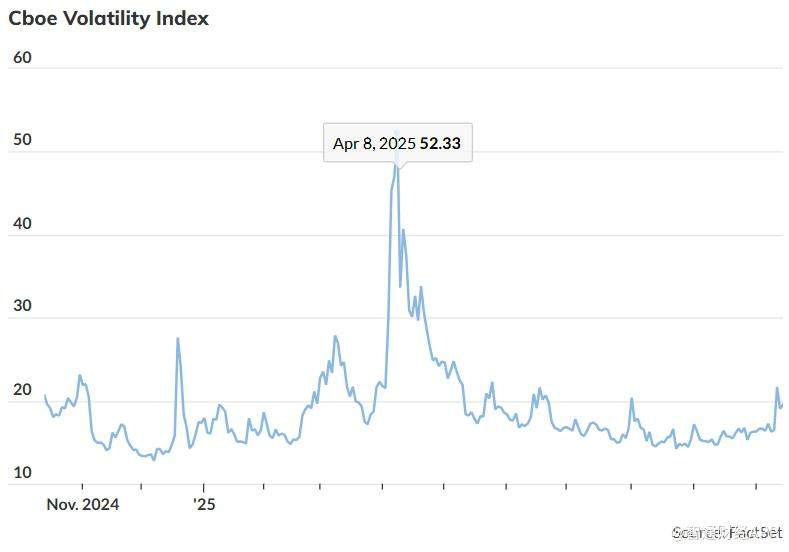
Group 1 - The VIX, known as the "fear index," surged to 22.94 points, the highest level since May 23, indicating increased investor anxiety over potential escalation in US-China trade tensions [1][4] - The long-term average of the VIX is slightly below 20 points, marking a critical threshold for market sentiment transitioning from calm to tense [4] - Since early September, a divergence between implied volatility and actual volatility has emerged, suggesting that some investors are adopting defensive strategies through options [4] Group 2 - Recent US-China trade tensions have reignited concerns, with President Trump threatening to impose 100% tariffs on all Chinese imports [7] - JPMorgan's CEO warned of credit risks expanding due to losses on loans to a subprime auto lender, indicating instability in the credit market [7] - Institutional investors, including BlackRock, have requested redemptions from a Jefferies fund that suffered significant losses due to the bankruptcy of an auto parts supplier [7]
避险潮下,海外债资产如何选择
GUOTAI HAITONG SECURITIES· 2025-10-14 14:08
Group 1 - The report highlights that the global bond market is experiencing heightened risk aversion due to the U.S. government shutdown and tariff threats, leading to a recommendation for long-term developed country bonds and emerging market sovereign debt while reducing high-yield credit exposure [1][6][7] - The U.S. Treasury yield curve has steepened significantly, with the 10-year and 30-year Treasury yields decreasing by 6.2 and 7 basis points respectively, reflecting increased demand for safe assets amid economic uncertainty [6][8][9] - The report notes that the credit spreads for U.S. high-yield bonds widened by 17 basis points to 2.631%, indicating a growing sensitivity to credit risk in a liquidity-rich environment [8][10][9] Group 2 - The report indicates that the offshore RMB sovereign bonds experienced a weekly increase, with the 10-year yield rising by 5.18 basis points to 1.9109%, driven by factors such as enhanced liquidity management and a hot primary market [14][15] - It mentions that the issuance of offshore bonds was concentrated among high-rated financial institutions, with all newly issued bonds rated AAA and primarily with a one-year maturity [17][18] - The report outlines that the issuance structure reflects a mix of short-term financing from financial institutions, long-term allocations from supranational entities, and hybrid instruments from the industrial sector, with U.S. dollar bonds dominating the market [20][21]
博时基金张磊:聚焦科创债券的投资价值
Xin Lang Ji Jin· 2025-09-28 01:28
Core Insights - The total scale of bond ETFs has surpassed 600 billion yuan as of September 19, with a rapid development in the market for sci-tech bond ETFs, which has attracted significant attention [1][2] - The market for sci-tech bond ETFs has exceeded 100 billion yuan, driven by strong market demand and government support for technology innovation [2][3] Sci-Tech Bond Development - Sci-tech bonds are a special type of credit bond with specific requirements for issuers regarding their business or the use of raised funds, focusing on technology innovation [2][3] - The categories of sci-tech bonds include those from innovative enterprises, companies upgrading their industries, venture capital firms investing in tech companies, and operators of national high-tech zones [2] Investment Value of Sci-Tech Bonds and ETFs - The investment value of sci-tech bonds is supported by government policies, low credit risk, and opportunities for capital gains from the growth of issuing companies [3][4] - The Shanghai AAA Sci-Tech Bond Index has shown a total return of 13.42% since its inception, with an annualized return of 5.01%, outperforming other mainstream indices [4][5] Advantages of Sci-Tech Bond ETFs - Sci-tech bond ETFs offer lower fees, ease of trading, and lower investment thresholds compared to direct bond purchases or traditional bond funds [6][7] - They allow for convenient trading, transparency in holdings, and lower credit risk through diversified investments in high-grade credit bonds [6][7] Target Investors and Participation - Sci-tech bond ETFs are suitable for investors looking to support national technology strategies while seeking lower volatility returns [7][8] - Ordinary investors can participate easily through secondary market purchases, with recommendations for long-term holding and strategic buying during market adjustments [8]