智能化转型

Search documents
奔驰、宝马销量跌回十年前,押注“本土化”背水一战
Xin Hua Cai Jing· 2026-01-19 01:48
Core Viewpoint - The BBA (Benz, BMW, Audi) brands are experiencing significant sales declines in China, with projections indicating a return to sales levels not seen in a decade, highlighting the increasing pressure from domestic competitors and changing market dynamics [1][2][4]. Sales Performance - In 2025, Benz's global sales are projected to be 2.16 million units, a 10% decrease year-on-year, with sales in China at 551,900 units, down 19% [1]. - BMW's global sales are expected to reach 2.46 million units, a slight increase of 0.5%, while its Chinese sales are forecasted at 625,500 units, a decline of 12.5% [1]. - Audi's global sales are projected at 1.62 million units, down 2.9%, with Chinese sales at 617,500 units, a decrease of 5% [1]. - BBA brands have seen consecutive sales declines in China for two years, dropping to levels last seen in 2017 [1]. Market Dynamics - By 2026, both Benz and BMW are expected to forecast annual sales of less than 500,000 units in China, reverting to sales levels from a decade ago [2]. - Domestic high-end brands are setting ambitious sales targets, with NIO aiming for 456,400 to 489,000 units, Xiaomi targeting 550,000 units, and Hongmeng Zhixing projecting 1 to 1.3 million units by 2026 [3]. Financial Performance - BBA brands reported significant profit declines in recent financial statements, with Benz's net profit down 50%, Audi's down 25%, and BMW's down 6.8% [4]. Pricing Strategies - BMW initiated a price reduction across 31 models, with discounts reaching up to 301,000 yuan, indicating market pressure [6]. - The luxury car pricing structure is under significant strain, with reports of discounts reaching as low as 60-70% on various models [6]. Competitive Landscape - The BBA brands face intense competition from domestic brands that are rapidly gaining market share, particularly in the high-end segment [8]. - The shift towards electric and smart vehicles has left BBA brands lagging, as their products are often based on older platforms, leading to a competitive disadvantage [7][8]. Strategic Responses - BBA brands are beginning to adapt to the Chinese market by enhancing their product offerings and integrating local technology solutions [9][10]. - Benz plans to launch over 15 new models by 2026, while BMW aims to introduce around 20 new products, focusing on electric and smart vehicle technologies [10][11].
2026年全球及中国钼金属行业背景、发展现状、市场供需、竞争格局及未来发展趋势研判:供需紧平衡凸显价值,高端转型开拓新局[图]
Chan Ye Xin Xi Wang· 2026-01-19 01:09
Core Insights - Molybdenum is a critical transition metal with high melting point and strength, categorized into four main forms: pure molybdenum, molybdenum alloys, molybdenum compounds, and molybdenum products [1][2][3] - The global molybdenum market is characterized by a long-term tight balance, with a projected demand gap of 0.39 million tons in 2024, which may expand in the future [1][7] - China holds a significant advantage in molybdenum reserves, becoming the core support for global molybdenum industry development, with production and consumption both leading globally [1][9] Industry Overview - The molybdenum industry is divided into three main segments: upstream (exploration and mining), midstream (smelting and processing), and downstream (deep processing and end applications) [5][6] - Upstream is dominated by major enterprises that control core resources, while midstream is characterized by high industry concentration but relies on imported high-end technologies [5][6] - Downstream applications are primarily in the steel industry, with rapid growth in emerging fields such as renewable energy and aerospace [1][6] Policy and Strategic Importance - Recent policies from the Chinese government aim to regulate resource management and promote industry upgrades, including export controls and support for green mining technologies [6][7] - Molybdenum is classified as a strategic mineral due to its scarcity and concentrated global distribution, with China, the US, and Peru being the top three countries in terms of reserves [6][7] Supply and Demand Dynamics - Global molybdenum production is expected to remain between 262,100 tons and 290,200 tons from 2020 to 2024, with consumption fluctuating between 247,600 tons and 294,100 tons [7][8] - In 2024, China's molybdenum production is projected to reach 133,700 tons, with consumption also on the rise, reflecting a compound annual growth rate of 6.78% from 2020 to 2024 [10][11] Competitive Landscape - The Chinese molybdenum industry is characterized by an oligopolistic structure, with leading companies like Jinduicheng Molybdenum Co., Ltd. and Luoyang Molybdenum Co., Ltd. controlling approximately 70% of the market share [11][12] - The competition is intensifying as smaller firms focus on niche markets, while larger firms leverage their resources and technology to maintain a competitive edge [11][12] Future Development Trends - The industry is expected to shift towards green and intelligent resource development, with a focus on efficient utilization of low-grade and associated molybdenum ores [12][13] - There will be a transition from traditional raw material output to high-end manufacturing, with an emphasis on domestic production of high-purity molybdenum products and specialized alloys [12][13] - Demand for molybdenum is anticipated to grow in both traditional sectors and emerging fields, with strategic support from policies aimed at enhancing the high-potential areas of the industry [12][14]






从“单一冬测基地”迈向全链条平台——黑龙江省黑河市寒区试车产业实现多维度跃升
Zheng Quan Ri Bao· 2026-01-18 17:09
Core Insights - The fifth Heilongjiang Cold Region Test Festival commenced in Heihe, attracting 147 automotive companies and 4044 test vehicles, with over 60% being new energy vehicles [1] - The transition of the global automotive industry towards electrification and intelligence has made performance metrics in extreme cold environments essential rather than optional [1] Group 1: Testing Infrastructure and Capabilities - Heihe's unique natural conditions provide a testing environment with over 200 days of ice coverage annually and temperatures below -35°C for a month, facilitating the validation of vehicle performance [2] - The city has developed 120 specialized testing roads and is investing 260 million yuan in the Honghe Valley Four Seasons Low-Temperature Test Field, aiming to create Asia's first year-round low-temperature testing facility [2] - The number of cold region test vehicles in China is projected to increase by approximately 40% for the 2025-2026 testing season, with some testing sites reporting up to 90% of vehicles being new energy models [2] Group 2: Industry Development and Standards - Heihe has invested over 1 billion yuan in infrastructure and has participated in the formulation of 58 national and industry standards, including 2 international standards, with test data recognized by over 40 countries [4] - The cold region testing industry has evolved significantly, expanding its scale and brand influence, and attracting foreign investment for testing [4] - Cold region testing is becoming a necessary quality benchmark for new energy and intelligent connected vehicles, with companies focusing on core performance metrics [4][5] Group 3: Economic Impact and Future Directions - The integration of cold testing with tourism and sports has generated over 600 million yuan annually for related industries [6] - The cold region testing has shifted from traditional performance validation to a critical technology hub for safety and reliability in electric vehicles and intelligent systems [6] - Heihe aims to enhance its testing capabilities by expanding into intelligent connected and low-altitude testing, with ongoing collaborations with companies like Baidu [5][6]
欧科亿预计2025年净利润同比增超67.53%
Zheng Quan Ri Bao· 2026-01-18 16:44
Core Viewpoint - The company, Zhuzhou Oke Yi Precision Tool Co., Ltd. (Oke Yi), is expected to see significant profit growth in 2025, driven by industry trends and its strategic positioning in the high-end manufacturing sector [1][2]. Group 1: Financial Performance - Oke Yi forecasts a net profit attributable to shareholders of between 96 million to 110 million yuan for 2025, representing a year-on-year increase of 67.53% to 91.96% [1]. - The net profit after deducting non-recurring gains and losses is projected to be between 62 million to 75 million yuan, showing a year-on-year growth of 135.83% to 185.28% [1]. Group 2: Industry Context - The demand for CNC tools, referred to as the "teeth of industry," has been robust due to the accelerated transformation of the manufacturing sector towards high-end and intelligent production [1]. - The price of key raw materials, such as tungsten carbide and cobalt powder, has significantly increased, leading to a rise in product prices across the industry [1]. Group 3: Company Strategy and Development - Oke Yi has optimized its product structure, increasing the proportion of high-value-added products, and maintained high capacity utilization for CNC blades in the second half of the year [1]. - The company is experiencing faster-than-expected capacity release from its CNC tool industrial park project, which is contributing to rapid growth in overall carbide tool and bar capacity [1]. - The company plans to focus on high-end markets, increasing R&D investment, and upgrading products towards deep processing and system integration to solidify its industry-leading position [3]. Group 4: Management Confidence - The company’s board secretary, Han Hongtao, plans to increase his shareholding by 10 million to 20 million yuan, reflecting confidence in the company's long-term investment value and future development [2]. - Oke Yi has been deeply involved in the carbide tool sector for 30 years, holding 166 patents and achieving international advanced levels in several products, which can replace imports [2].

全球最大的汽车供应商预警:利润率跌破2%
新华网财经· 2026-01-18 04:00
2024年,博世营业利润率已经从2023年的4.8%下降至3.5%。哈通在邮件中指出,2025年博世利润缩水部分源于高昂的高达31亿欧元的重组成本,即为裁 员等计划拨备的准备金,约占销售额的3.5%。 该报道还称,博世2025年营收约为910亿欧元,略高于2024年的900亿欧元。然而,这一增长主要得益于收购江森自控-日立公司所带来的约40亿欧元收 入。若剔除该并购影响,按可比口径计算,博世去年的实际营收实则出现下滑。 博世将于1月30日发布2025年财报数据。今年1月8日,哈通在接受媒体采访时就已对2025年财报发出预警,他预计,2025年博世盈利将出现大幅下滑,并 直言2026年也将充满挑战,公司至少要到2027年才有可能实现其设定的7%的长期营业利润率目标。他将原因归结于高昂的关税、疲软的经济增长抑制了 消费者支出。 为应对经营压力,博世的裁员措施也已启动。2025年10月,由于电动汽车需求未达预期、传统内燃机业务逐步退出以及中国市场竞争白热化等原因,博世 宣布在其核心的移动出行部门削减1.3万个工作岗位,并计划在2030年底前完成。这一轮裁员博世是继2024年宣布裁员9000人之后的又一次加码。 博世 ...

全球最大的汽车供应商预警:利润率跌破2%
第一财经· 2026-01-17 16:21
Core Viewpoint - Bosch is facing significant financial pressure in 2025, with profit margins expected to fall below 2%, far from the target [3][4] Financial Performance - Bosch's operating profit margin decreased from 4.8% in 2023 to 3.5% in 2024 [3] - The company anticipates revenues of approximately €91 billion in 2025, slightly above €90 billion in 2024, primarily due to the acquisition of Johnson Controls-Hitachi, contributing around €4 billion [3] - Excluding the impact of this acquisition, Bosch's actual revenue showed a decline [3] Cost and Restructuring - Bosch is incurring restructuring costs of €3.1 billion, accounting for about 3.5% of sales, related to layoffs and other plans [3] - The company has initiated layoffs, planning to cut 13,000 jobs in its core mobility solutions division by the end of 2030, following a previous announcement to lay off 9,000 employees in 2024 [5] Industry Context - Bosch, as the largest automotive parts supplier globally, is not alone in facing challenges; ZF Friedrichshafen, another major German supplier, is also experiencing financial difficulties [5] - ZF reported a 10.3% decline in sales to €19.7 billion in the first half of the year, with a net loss of €195 million compared to a net profit of €45 million in the same period last year [5] - The shift towards electric and smart vehicles is significantly impacting traditional parts suppliers like Bosch and ZF [5]

全球最大的汽车供应商预警:利润率跌破2%
Di Yi Cai Jing Zi Xun· 2026-01-17 15:30
Group 1 - Bosch is facing significant financial pressure in 2025, with CEO Stefan Hartung indicating that the profit margin will be well below 2%, far from the expected target [1] - In 2024, Bosch's operating profit margin is projected to decline from 4.8% in 2023 to 3.5% [1] - The profit decline is partly attributed to high restructuring costs of €3.1 billion, which accounts for approximately 3.5% of sales [1] - Bosch's revenue for 2025 is estimated at €91 billion, slightly above the €90 billion forecast for 2024, primarily due to the acquisition of Johnson Controls-Hitachi, contributing around €4 billion in revenue [1] - Excluding the impact of the acquisition, Bosch's actual revenue showed a decline year-over-year [1] - Hartung has warned that 2026 will also be challenging, with the company unlikely to reach its long-term operating profit margin target of 7% until at least 2027, citing high tariffs and weak economic growth as contributing factors [1] Group 2 - To address operational pressures, Bosch has initiated layoffs, planning to cut 13,000 jobs in its core mobility solutions division by October 2025, following a previous announcement to lay off 9,000 employees in 2024 [2] - Bosch, as the world's largest automotive parts supplier, is facing significant challenges due to the industry's shift towards electrification and smart technology, impacting traditional component manufacturers [2] - ZF Friedrichshafen, another major German automotive supplier, is also experiencing financial difficulties, with a 10.3% year-over-year decline in sales to €19.7 billion in the first half of the year, and a net loss of €195 million compared to a net profit of €45 million in the same period last year [2] - ZF's EBITDA decreased by 42% to €367 million, with the EBITDA margin dropping from 2.9% to 1.9% year-over-year [2] - As of June 30, 2025, ZF's net debt reached €10.462 billion, with a leverage ratio of 3.21 [2] - To alleviate debt pressure, ZF announced the sale of its Advanced Driver Assistance Systems (ADAS) business for €1.5 billion to Harman [2]
从两个“百万”看中国新能源汽车产业量质齐升
Zhong Guo Zhi Liang Xin Wen Wang· 2026-01-15 09:20
Group 1 - The core message highlights the significant milestones achieved by Chinese electric vehicle manufacturers, with NIO producing its one-millionth vehicle, symbolizing a dual breakthrough in scale and brand for the industry [1] - The emergence of new energy vehicle companies like NIO, Li Auto, and Xpeng has redefined the automotive industry in China, moving away from traditional fuel vehicles to electric and intelligent models, thus reshaping business models and user relationships [2] - The collaboration between Huawei and JAC Motors to create the high-end vehicle, the Zunji S800, signifies a shift in the automotive industry towards high-end pricing and advanced technology integration, marking a new phase in China's automotive evolution [2] Group 2 - Data from the China Association of Automobile Manufacturers indicates strong performance in the new energy vehicle sector, with production and sales reaching 14.907 million and 14.78 million units respectively from January to November 2025, reflecting year-on-year growth of 31.4% and 31.2% [3] - The Chinese new energy vehicle industry is transitioning from survival to value creation, indicating a maturation phase as brands aim for global competitiveness [3]





钱大妈提交上市申请;安踏或收购猛犸象;Alaïa任命首席营销官
Sou Hu Cai Jing· 2026-01-15 07:43
Listing Dynamics - Qian Dama International Holdings Limited has submitted its IPO application to the Hong Kong Stock Exchange, with CICC and Agricultural Bank of China International as joint sponsors [3] - Qian Dama is the largest community fresh food chain in China, with a GMV of 14.8 billion yuan in 2024, maintaining the top position in the community fresh food sector for five consecutive years [3] - If the IPO is successful, Qian Dama will be the "first stock in community fresh food," allowing for low-cost financing to support future store expansion and enhance its operational advantages [3] M&A Activities - Jacobs Capital is considering selling the Swiss outdoor brand Mammut, with an estimated transaction value of up to 500 million euros, attracting significant interest from major sports goods companies and private equity funds [8] - Centric Brands has acquired certain assets of Fownes Brothers & Co., Inc., a leading importer and distributor of cold-weather accessories, enhancing its product portfolio in the cold accessory market [10] - L Catterton has announced the acquisition of a controlling stake in the American cheese brand Good Culture for over 500 million dollars, aimed at expanding production capacity and accelerating growth plans [16] Corporate Developments - Yuexiu Group has officially integrated Wangjiadu Food into its food sector, focusing on high-quality investment opportunities in the industry [13] - Haidilao has announced significant management restructuring, with founder Zhang Yong returning as CEO to enhance innovation capabilities and accelerate the development of a younger management team [25] - Angelica Cheung, former editor-in-chief of Vogue China, has joined the board of Four Seasons Hotels and Resorts, contributing to brand maintenance and luxury brand value enhancement [28]

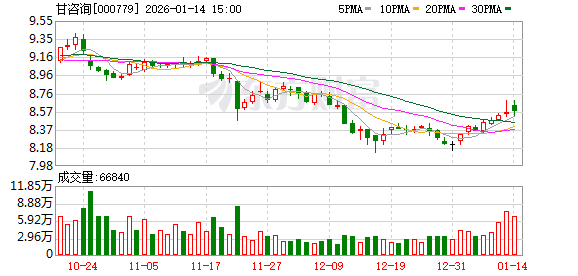
甘咨询:数字化、智能化转型已然成为行业共识
Zheng Quan Ri Bao· 2026-01-14 12:41
证券日报网讯 1月14日,甘咨询在互动平台回答投资者提问时表示,数字化、智能化转型已然成为行业 共识,公司将结合自身实际,在保持生产经营稳定的基础上,稳妥推进相关工作。 (文章来源:证券日报) ...