民间投资

Search documents
扩内需战略实施方案将出台,正研究制定居民增收计划
第一财经· 2026-01-20 14:48
Core Viewpoint - The article emphasizes the Chinese government's commitment to expanding domestic demand and stabilizing economic growth through a series of policies aimed at enhancing consumer spending and effective investment [3][4][6]. Group 1: Policy Announcements - The National Development and Reform Commission (NDRC) plans to implement a strategic plan for expanding domestic demand from 2026 to 2030, focusing on creating an economy driven by domestic consumption and endogenous growth [3][6]. - The Ministry of Finance announced six policies to stimulate private investment and promote consumer spending, with adequate budgetary arrangements for these initiatives in 2026 [3][6][14]. Group 2: Economic Growth and Consumer Confidence - Economic recovery relies on enhancing endogenous growth momentum, primarily through boosting consumer confidence and increasing household income [4][6]. - The government is working on plans to increase urban and rural residents' income, which is crucial for enhancing consumer spending capacity [5][6]. Group 3: Investment and Consumption Strategies - The article highlights the importance of effective investment and consumer spending as key drivers of economic growth, with a focus on reducing financing costs and barriers for private enterprises [14][15]. - The "Two New" policy, which promotes equipment upgrades and the replacement of old consumer goods, has significantly contributed to stabilizing investment and expanding consumption [10][11]. Group 4: Future Economic Outlook - The Chinese economy is projected to grow by 5% in 2025, with a significant contribution to global economic growth [6]. - The first quarter of 2024 is expected to see a GDP growth of approximately 4.9%, supported by various fiscal measures and investment plans [15].


多省市已全面启动新一年国补工作
21世纪经济报道· 2026-01-20 14:43
Core Viewpoint - The article discusses the Chinese government's proactive measures to stimulate domestic demand and investment in 2026, focusing on policies aimed at enhancing consumer spending and supporting emerging industries. Group 1: Economic Policies and Strategies - The National Development and Reform Commission (NDRC) is planning to implement significant high-tech industry projects and develop a strategy for expanding domestic demand from 2026 to 2030 [1][4] - The NDRC emphasizes strengthening the domestic circulation and adapting to the trend of demand upgrading, in conjunction with the new round of technological revolution and industrial transformation [1] - A comprehensive package of policies was released by the Ministry of Finance, including optimizing personal consumption loan subsidies and implementing special guarantees for private investment [2][11] Group 2: Consumer Spending Initiatives - Promoting consumption is a key focus for 2026, with policies aimed at increasing residents' income and optimizing consumption supply [4][8] - The government has allocated 625 billion yuan to support the "trade-in" policy for consumer goods, which has already been initiated in several provinces [4] - The personal consumption loan subsidy policy allows residents to enjoy a 1% interest subsidy on loans used for consumption, including credit card installment payments [7][8] Group 3: Support for Private Investment - The Ministry of Finance's package includes four policies specifically aimed at stimulating private investment, such as loan subsidies for small and micro enterprises and a special guarantee plan for private investment [11][12] - The new policies aim to reduce financing costs for enterprises and enhance profitability, thereby encouraging private investment [11][12] - The government is also focusing on releasing investment demand in high-tech industries and fostering new growth drivers [13][14] Group 4: Income Growth and Employment Stability - The government is working on a plan to increase residents' income and stabilize employment, which is crucial for expanding consumer spending [8][9] - There is a strong emphasis on reforming income distribution, including increasing subsidies for low-income groups and optimizing tax policies to enhance residents' disposable income [9][10]

中国推出一揽子财政金融协同促内需政策
Sou Hu Cai Jing· 2026-01-20 13:41
Group 1 - The core viewpoint of the news is the introduction of a comprehensive set of six fiscal and financial policies aimed at stimulating domestic demand in China, with a focus on supporting private investment and consumption [1][2] Group 2 - Four policies are designed to support private investment, including interest subsidies for loans to small and micro enterprises, a special guarantee plan for private investment, a risk-sharing mechanism for private enterprise bonds, and interest subsidies for equipment upgrade loans [1] - The new interest subsidy for small and micro enterprise loans and the optimized interest subsidy for equipment upgrade loans can provide a subsidy of 1.5 percentage points on the total loan amount, significantly expanding the supported areas and loan purposes [1] - The policies aim to lower financing costs and reduce barriers for private enterprises, addressing the issues of high financing costs and difficulties in obtaining financing [1] Group 3 - Two policies are aimed at promoting consumption, which include interest subsidies for loans to service industry entities and personal consumption loans, with enhanced subsidy strength, broader consumption areas, longer implementation periods, and wider institutional coverage [2]
两部委同日重磅发声!政策靠前发力,多措并举扩内需
2 1 Shi Ji Jing Ji Bao Dao· 2026-01-20 13:30
Group 1: Economic Policy Initiatives - The Chinese government is focusing on policies to stimulate consumption, stabilize investment, and cultivate emerging industries as part of the 2026 economic strategy [1][2] - The National Development and Reform Commission (NDRC) is planning to implement significant high-tech industry projects and develop a strategy for expanding domestic demand from 2026 to 2030 [1][3] - A comprehensive package of policies was released by the Ministry of Finance, including optimizing personal consumption loan subsidies and implementing special guarantees for private investment [1][2][4] Group 2: Consumer and Investment Support - The Ministry of Finance aims to enhance consumer spending and private investment through various measures, including a 1% subsidy on personal consumption loans and expanding the scope of eligible financial institutions [4][5] - A total of 625 billion yuan has been allocated for the first phase of the "old for new" consumption support program, which has already been initiated in several provinces [3][4] - The government is also focusing on increasing the loan limits for businesses and expanding the categories of supported consumption areas to stimulate economic activity [5][8] Group 3: Focus on High-Tech Industries - The government is prioritizing investments in high-tech sectors, with the National Entrepreneurship Investment Fund set to attract over 1 trillion yuan in investments for projects in fields like quantum technology and biomedicine [10][11] - The share of high-tech manufacturing value added in industrial output has exceeded 17%, indicating a growing emphasis on innovation and technology [11][12] - Policies are being developed to support technological innovation and enhance the capabilities of small and medium-sized enterprises in high-tech sectors [12]
财政部详解今年积极财政政策重点安排
Xin Lang Cai Jing· 2026-01-20 12:46
Group 1 - The effectiveness of the 2025 fiscal policy includes increased counter-cyclical adjustments, with a deficit rate set at around 4%, and new government debt of 11.86 trillion yuan, which is a significant increase compared to previous years [1] - The focus on boosting consumption involved issuing long-term special bonds totaling 1.3 trillion yuan, with 300 billion yuan allocated for consumer subsidies, leading to a sales increase of approximately 2.6 trillion yuan in related goods [2] - Strengthening social welfare included a 667.4 billion yuan employment subsidy, increased healthcare funding, and a rise in pension standards, with total financial support for social welfare reaching about 4.9 trillion yuan [3][4] Group 2 - The 2026 fiscal policy will continue to implement a more proactive approach, focusing on increasing total fiscal expenditure while ensuring sustainability and optimizing expenditure structure [6][7] - Four key policies to stimulate private investment include lowering financing costs through interest subsidies and expanding the scope of support for small and medium-sized enterprises [8][9] - The export tax rebate policy will see adjustments, with the cancellation of rebates for certain products starting April 1, 2026, to promote resource efficiency and environmental sustainability [10] Group 3 - The comprehensive policy to promote domestic demand includes a goal to expand domestic consumption and investment, with a focus on simplifying processes and ensuring targeted support for key sectors [11][12] - Six specific policies have been introduced, including interest subsidies for loans to small and medium-sized enterprises and enhancements to consumer loan support [12][13] - The agricultural insurance sector has seen significant growth, with premium subsidies leading to a scale exceeding 155 billion yuan, providing risk coverage for over 1.25 billion households [23][24] Group 4 - The optimization of personal consumption loan subsidies has increased the maximum subsidy amount and extended the policy's duration to the end of 2026, broadening the range of eligible institutions [25][26][27] - The focus on fostering new economic drivers includes increased funding for technology and innovation, with a 10% rise in central government technology spending [15][16][17] - The fiscal measures aim to facilitate the construction of a unified national market, with ongoing reforms in fiscal and tax systems to enhance efficiency and fairness [18][19][20]
财政部答一财:更大力度激发民间投资
第一财经· 2026-01-20 12:39
Core Viewpoint - The article discusses the implementation of six new policies aimed at stimulating private investment and promoting consumer spending in China, as announced by the Ministry of Finance and other departments [3][4]. Group 1: Policy Overview - The six policies are designed to enhance domestic demand, focusing on stimulating private investment and consumer spending as key components of internal demand [4]. - The policies are structured around "one goal," "two focuses," "three principles," and "six policies" [4]. Group 2: Specific Policies - The first policy is a loan interest subsidy for small and micro enterprises, providing a 1.5% subsidy on loans for key industries such as new energy vehicles and medical equipment, with a maximum loan amount of 50 million yuan [5]. - The second policy is a special guarantee plan for private enterprises, offering loan guarantees up to 20 million yuan for small and micro enterprises needing medium to long-term loans for business expansion [5]. - The third policy introduces a risk-sharing mechanism for private enterprise bonds, providing credit enhancement support to mitigate investor losses [5]. - The fourth policy expands the scope of existing equipment update loan interest subsidies, now including loans for fixed assets and technological innovation, with a 1.5% subsidy for up to two years [6]. - The fifth policy optimizes the loan interest subsidy for service industry entities, increasing the maximum loan amount from 1 million yuan to 10 million yuan, with a 1% subsidy for one year [6]. - The sixth policy offers a personal consumption loan interest subsidy of 1% for loans used for consumption, now including credit card installment payments, with over 500 financial institutions eligible to provide these loans [6].

中小微企业贷款贴息来了!新能源、医药等重点领域产业链迎针对性支持
Sou Hu Cai Jing· 2026-01-20 11:45
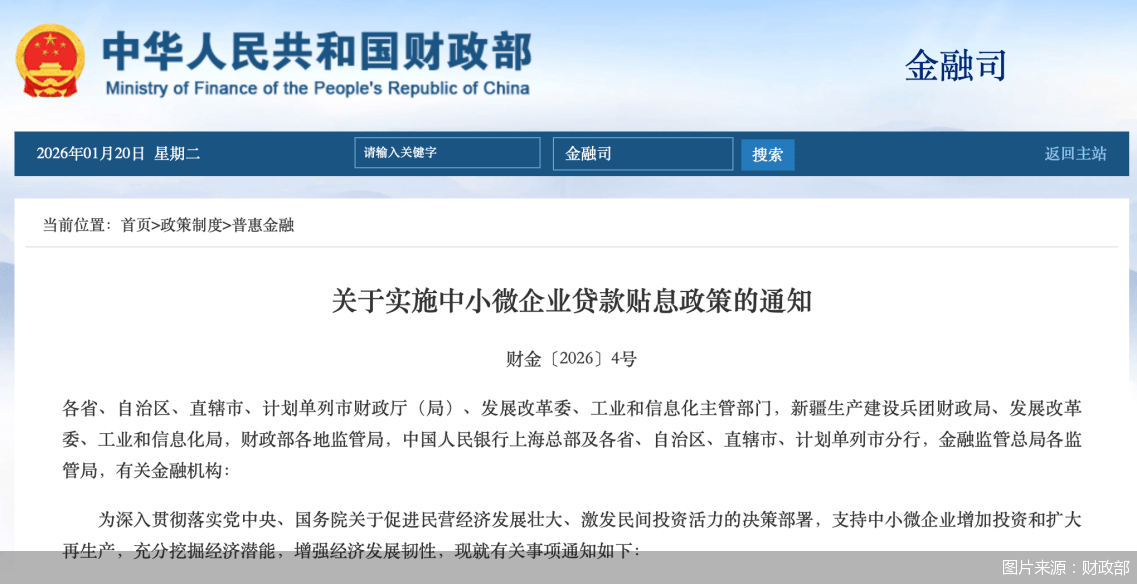
北京商报讯(记者 董晗萱)中小微企业贷款也有真金白银支持!1月20日,财政部等部门连发多条通知,在优化个人消费贷款、经营贷贴息政策的同时,明 确实施中小微企业贷款贴息政策。 政策要求,对2026年1月1日起经办银行发放的、符合条件的中小微民营企业固定资产贷款和中小微民营企业参与项目使用的新型政策性金融工具资金,中央 财政按照贷款本金给予年化1.5个百分点、期限不超过2年的贴息支持,单户贴息贷款规模上限5000万元。政策实施期限暂定1年,后续可视情况延长。 适用对象为,投向相关重点领域产业链及其上下游产业的全部中小微民营企业(包括但不限于由支持小微企业融资协调工作机制推荐或由工业和信息化部共 享的优质中小微民营企业)固定资产贷款,中小微民营企业参与项目使用的新型政策性金融工具资金。 投向领域包括,支持新能源汽车、工业母机、医药工业、医疗装备、基础软件和工业软件、民用大飞机、服务器、移动通信设备、新型显示、仪器仪表、工 业机器人、轨道交通装备、船舶与海洋工程装备、农机装备等相关重点产业链及上下游产业,科技服务、物流服务、信息和软件服务、节能环保服务、生产 性租赁服务、商务服务等生产性服务业领域,农、林、牧、渔、农 ...
财政部:授信、担保、融资同向发力,支持民间投资政策力度加大|快讯
Hua Xia Shi Bao· 2026-01-20 11:21
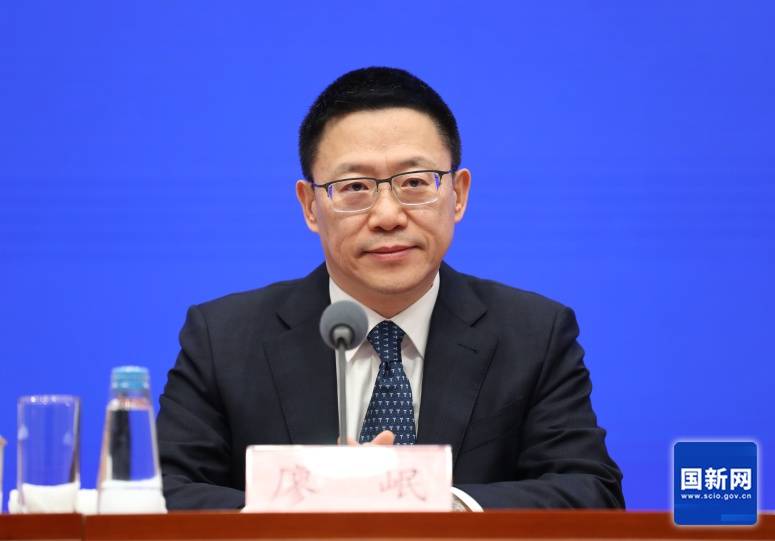
文/张智 比如一家企业想申请一笔2000万元的中长期贷款,由于自身的信用水平不够,就需要担保进行增信支 持。传统的担保模式下,单个企业可获得的担保额度一般不超过1000万元,这次专项担保计划提高到了 2000万元以后,这家企业的贷款担保需求就容易得到满足。同时,国家融资担保基金的分担比例将由现 在的20%最高提高到40%,即国家层面为这笔贷款提供的风险分担将由400万元最高提高到800万元。在 直接融资方面,考虑到民营企业发债融资有一定的难度,因此中央财政安排了风险分担资金,与央行相 关的政策工具协同配合后,可以分担相关债券发行的大部分风险,帮助更多的民营企业拓宽融资渠道。 总的来说,通过这一套"组合拳",将实实在在地助力企业节约融资成本、增强盈利,更好地激发民间投 资这"一池春水"。 1月20日,财政部副部长廖岷在国新办会议上表示,激发民间投资是近期发布的一揽子政策的"重头 戏"。 编辑:徐芸茜 其中,支持民间投资的四项政策,惠及领域很广,支持力度也比较大,工具箱也很丰富,有信贷、有贴 息、有担保、有补偿。几项政策同向发力,对企业来说,主要有两个方面的直接利好。 一方面,降低融资成本,解决民营企业融资贵的问 ...

财政部:新设中小微企业贷款贴息,可为企业提供贷款总额的1.5个百分点贴息
Sou Hu Cai Jing· 2026-01-20 08:30
1月20日,国务院新闻办公室举行新闻发布会,介绍发挥积极财政政策作用,推动经济社会高质量发展有关情 况。 另一方面,降低融资门槛,解决民营企业融资难的问题。主要是通过专项担保、发债分险,来帮助企业获得 资金。在间接融资方面,设立民间投资专项担保计划,这是一项新政策,提高授信担保额度、风险分担的比 例和代偿上限,让银行敢贷、愿贷、多贷。比如一家企业想申请一笔2000万元的中长期贷款,但可能自身的 信用水平还不够,这就需要担保进行增信的支持。传统的担保模式下,单个企业可获得的担保额度一般不超 过1000万元,这次专项担保计划提高到2000万元以后,这家企业的贷款担保需求就容易得到满足。同时,国 家融资担保基金的分担比例将由现在的20%最高提高到40%,也就是说,国家层面为刚才这笔贷款提供的风险 分担将由400万元最高提高到800万元。也就是一笔2000万元的贷款,国家层面可以给到的担保最高达到800万 元。在直接融资方面,也是考虑到民营企业发债融资还是有一定的难度,所以中央财政安排风险分担资金, 与央行相关的政策工具协同配合后,可以分担相关债券发行的大部分风险,帮助更多的民营企业拓宽融资渠 道。 九派新闻特派记者 ...
财政部:推出支持民间投资四项政策,降低企业融资成本和门槛
Sou Hu Cai Jing· 2026-01-20 08:30
Core Viewpoint - The Chinese government is implementing a series of policies aimed at stimulating private investment to promote high-quality economic and social development, with a focus on reducing financing costs and easing access to financing for private enterprises [1][3]. Group 1: Policies to Stimulate Private Investment - The new policies include various support measures such as loans, interest subsidies, guarantees, and compensations, which are designed to lower financing costs for private enterprises [3]. - A specific example provided indicates that a manufacturer of agricultural machinery could save 1.5 percentage points on a loan of 50 million yuan, resulting in a reduction of interest expenses by 1.5 million yuan over two years, thereby enhancing the company's investment capacity [3]. Group 2: Reducing Financing Barriers - The government is introducing a special guarantee plan to help private enterprises secure funding by increasing the credit guarantee limits and risk-sharing ratios, making it easier for banks to lend [4]. - For instance, the guarantee limit for a single enterprise has been raised from 10 million yuan to 20 million yuan, and the risk-sharing ratio from the national financing guarantee fund has increased from 20% to 40%, allowing for a maximum guarantee of 8 million yuan on a 20 million yuan loan [4]. Group 3: Expected Outcomes - The combination of these policies is anticipated to effectively help enterprises save on financing costs and enhance profitability, thereby invigorating private investment [5].