稳定币

Search documents
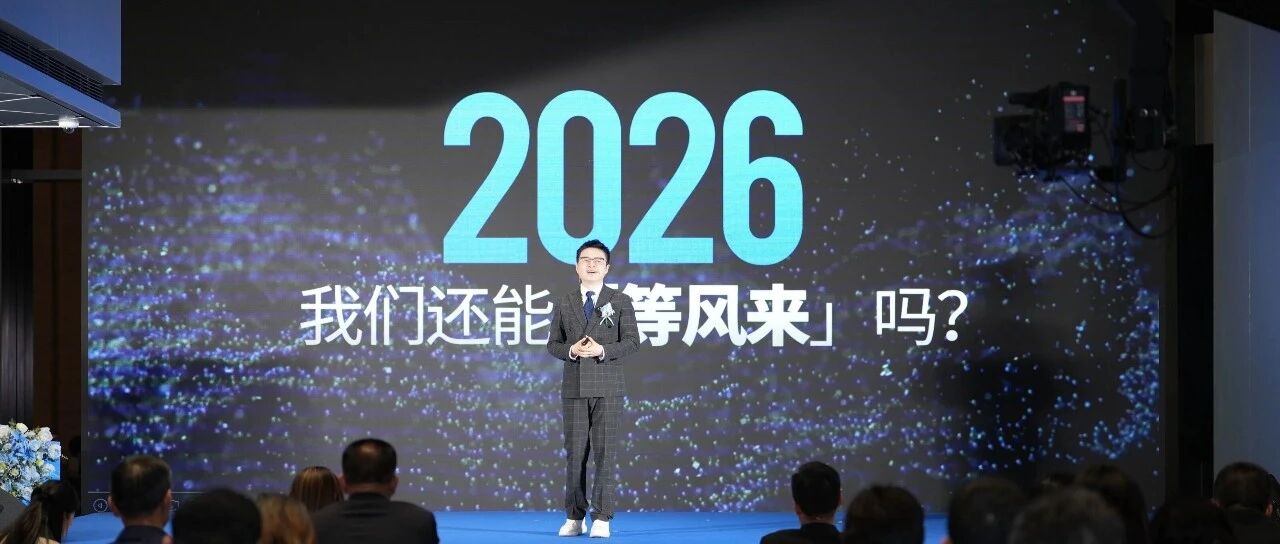
观点 | 杜雨2026跨年演讲全文:新年别再“等风来”,给普通人的AI造风指南
未可知人工智能研究院· 2026-02-19 14:43
Group 1 - The core theme of the article revolves around the concept of "mou shi" (strategizing) rather than merely "qu shi" (seizing opportunities) or "mou shi" (doing things), emphasizing the importance of positioning oneself in the right place to benefit from emerging trends, particularly in AI [4][6][40] - The article discusses the contrasting experiences of traditional entrepreneurs struggling to find opportunities and younger entrepreneurs thriving in the AI space, highlighting the need to identify one's position relative to the "wind" or trend [4][6] - AI is identified as a definitive trend worth investing in, with the author noting that while many have not yet seen significant benefits from AI, the funding in the AI sector has increased compared to other sectors [6][8] Group 2 - The article draws parallels between the current state of AI and the internet in 1995, suggesting that 2025's AI landscape is akin to the early days of the internet, with similar user penetration rates [10][11] - It emphasizes the importance of learning from past figures in the tech industry, such as Jack Ma and Li Yanhong, who were once ordinary individuals but leveraged emerging technologies to build successful companies [13][14][32] - The article presents three successful young entrepreneurs as examples of the "new geeks" in the AI era, showcasing their achievements and the potential for others to follow suit [33][36][37] Group 3 - The article provides practical advice for ordinary individuals looking to capitalize on AI opportunities, emphasizing the importance of focusing on specific, manageable projects rather than grandiose ideas [20][24] - It highlights the significance of using AI tools to streamline processes, as demonstrated by a case of a student who transformed her tutoring business through AI [20][21] - The article concludes with key principles for navigating the future, including the need for flexibility, technological empowerment, and a focus on value creation [40][41][42][43]

【收藏】投资知识篇:螺丝钉精华文章汇总2025
银行螺丝钉· 2026-02-19 13:39
Core Viewpoint - The article serves as a summary of selected articles from 2025, aimed at providing readers with a convenient way to review, share, and collect valuable content related to investment knowledge and practical insights [1][2]. Investment Knowledge and Insights - The summary includes insights on investment fundamentals, addressing common questions faced by investors during the fund investment process [2]. - Key topics covered include the development stages of index funds in the US stock market, the concept of stablecoins, and strategies for enhancing index investments [4][5]. - The article emphasizes the importance of understanding different investment products and their performance in various market conditions, including how to manage risks and optimize returns [4][5]. Investment Strategies and Performance - Highlights include the performance of various investment portfolios, such as the "螺丝钉投顾组合" which has achieved notable results over its four-year history [4]. - The article discusses the benefits of using index funds for global stock market investments and the introduction of features like automatic profit-taking to enhance investment management [4]. - It also mentions the recent high performance of the "365天投顾组合" and explores the sources of its returns, questioning whether adjustments are needed in the current market environment [4]. Practical Knowledge - The article provides practical advice on tax filing deadlines and benefits available for families, such as child-rearing subsidies [5]. - It encourages readers to stay informed about investment opportunities and market trends, including the significance of annual shareholder letters from influential investors like Warren Buffett [4][5].

美国参议员 Elizabeth Warren 敦促美联储与财政部拒绝救助加密亿万富翁
Xin Lang Cai Jing· 2026-02-19 08:39
Core Viewpoint - Senator Elizabeth Warren publicly urges the Federal Reserve and the Treasury not to use taxpayer funds or federal backstop mechanisms to bail out billionaires in the cryptocurrency industry amid recent market volatility [1] Group 1: Regulatory Concerns - Warren emphasizes that without sufficient regulatory constraints, insiders and crypto billionaires, including the Trump family, can easily protect themselves during a crisis while shifting all losses onto retail traders or retirees [1] - She strongly advocates for the U.S. Treasury to implement strict accompanying rules for the GENIUS Act and to issue clear guidance prohibiting the use of federal resources, such as the foreign exchange stabilization fund or Federal Reserve emergency loan tools, to backstop stablecoins and the cryptocurrency industry [1]
法国银行集团 Société Générale 将欧元稳定币 EUR CoinVertible 部署至 XRP Ledger
Xin Lang Cai Jing· 2026-02-19 02:29
Core Viewpoint - Société Générale's digital asset division SG-FORGE has launched its euro stablecoin EUR CoinVertible on the XRP Ledger, continuing its multi-chain deployment strategy [1] Group 1: Company Developments - SG-FORGE has previously deployed EUR CoinVertible on Ethereum and Solana, indicating a strategic approach to diversify its blockchain presence [1] - The deployment on the XRP Ledger is supported by Ripple's custody solution, highlighting a partnership that may enhance the stablecoin's utility [1] Group 2: Industry Implications - The integration of EUR CoinVertible into Ripple-related products and its potential use as collateral for transactions suggests a growing trend of stablecoins being utilized in various blockchain ecosystems [1]


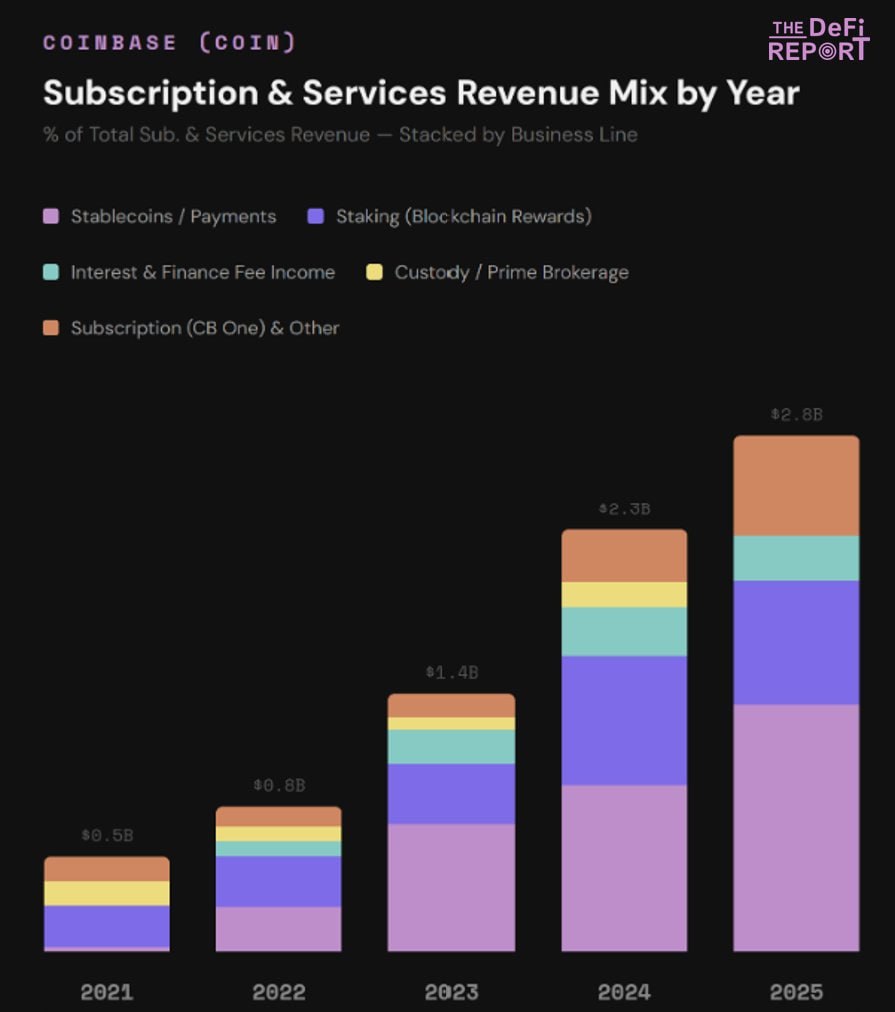
Coinbase 稳定币相关收入占 2025 年总收入约 19%
Xin Lang Cai Jing· 2026-02-18 01:54
Group 1 - The core point of the article highlights that despite a significant decline in retail trading volume compared to the peak in 2021, Coinbase has managed to compensate through its subscription and services business, with stablecoin-related revenue projected to account for approximately 19% of total revenue in 2025 [1] - Coinbase has partnered with Circle to earn 100% interest income on USDC assets held on its platform and shares 50% of the external USDC reserve earnings, resulting in Coinbase's stablecoin revenue surpassing that of Circle [1] - The company holds veto rights over new USDC-related partnerships, indicating a strategic position in its collaborations [1]

嘉信理财拟招募数字资产、稳定币产品经理
Xin Lang Cai Jing· 2026-02-16 10:55
吴说获悉,嘉信理财在官网发布招聘信息,拟招募"数字资产、稳定币产品经理(高级经理)",明确指 出其数字资产业务部门正在为零售客户构建加密产品,涵盖账户开立、资金流转、加密交易与链上转账 等,并将重点负责稳定币产品的策略、落地与用户体验优化。 (来源:吴说) ...

彻底沸腾!刚刚,暴涨90%!整个板块,集体狂飙!
券商中国· 2026-02-16 06:03
Core Viewpoint - The cryptocurrency market's downturn has not negatively impacted the performance of related stocks, with significant gains observed in virtual currency concept stocks in the Hong Kong market [1][2]. Group 1: Stock Performance - On February 16, the virtual currency concept sector in the Hong Kong stock market saw a rise of over 9%, with Star Chain Group (00399.HK) experiencing a peak increase of 90% [1][2]. - Other notable stocks included Guofu Quantum (00290.HK) with a 20% rise, and Mi Strategy (02440.HK) which surged over 12% [1]. - Star Chain Group's stock had previously closed up over 38% on the last trading day of the Year of the Snake [2]. Group 2: Strategic Developments - Star Chain Group announced a strategic cooperation framework agreement with China International Digital Finance Group on February 12, 2026, for a gold real-world asset tokenization project [4]. - The agreement outlines the establishment of project entities, with China International Digital Finance providing the tokenized underlying assets and Star Chain Group offering blockchain infrastructure and technical support [4]. - This collaboration aims to enhance Star Chain Group's position in digital finance and cross-border settlement applications, creating new revenue streams and diversifying income sources [4]. Group 3: Regulatory Environment - The Hong Kong Monetary Authority (HKMA) is currently evaluating applications for stablecoin issuer licenses, with the goal of issuing the first licenses by March 2023 [5]. - A report by BCG and Aptos Labs indicates that 97% of surveyed individual investors are interested in tokenized funds and programmable digital currencies, with 61% willing to double their fund allocation if these features are available [6]. - The year 2026 is highlighted as a critical turning point for the regulatory and infrastructural decisions that will shape Hong Kong's role in the global on-chain financial system [6].

美联储1月FOMC会议纪要公布 港股周一半日市随后休市三日
Xin Lang Cai Jing· 2026-02-15 23:31
周三(2月18日):美联储1月FOMC会议纪要公布。 周五(2月20日):美国12月PCE数据及第四季度GDP初值;美国最高法院定于2月20日宣判,就特朗普关 税案作出裁决。 中国宏观 本周,春节迎来史上最长假期,2月15日至23日放假调休,A股休市。 来源:智通财经 智通财经2月16日讯(编辑 冯轶)智通财经为您带来本周港股要闻: 海外宏观 周一(2月16日):欧元区财长将于2月16日将讨论发行欧元计价稳定币及增加欧盟联合债券等方案,以提 升欧元的国际货币地位。 周二(2月17日):乌克兰准备于2月17日或18日在美国举行会晤。 行业动态 周一(2月16日):首届印度人工智能峰会将在新德里举行,英伟达CEO黄仁勋、谷歌CEO皮查伊等全球 科技领袖确认参会。 周三(2月18日):谷歌发布Pixel 10a手机。 港股要闻 周一(2月16日):港股除夕半日市,周二至周四休市。 周五(2月20日):港股开盘。 此外,AI成为春节假期绝对主角,国内方面,DeepSeek V4预计春节面世,字节、阿里等巨头齐聚"春 节档"发布新模型或应用, ...

一周要闻·阿联酋&卡塔尔|阿联酋央行批准迪拉姆稳定币DDSC正式上线/卡塔尔央行推出双语虚拟助手服务
3 6 Ke· 2026-02-15 04:28
Group 1: AITO and Autonomous Driving Developments - AITO announced its entry into the UAE market through a partnership with ADM, marking a significant step in its global expansion strategy [1] - AITO's milestone of producing its 1 millionth vehicle in January 2023 highlights its growth trajectory [1] - WeRide and Uber plan to deploy at least 1,200 Robotaxis in Abu Dhabi, Dubai, and Riyadh by 2027, making it the largest Robotaxi project in the MENA region [1] - Baidu's Apollo Go and Uber are set to launch a fully autonomous driving service in Dubai in Q1 2026, marking the first commercial deployment of such technology in a high-standard regulatory market [1] Group 2: Aldar's Financial Performance - Aldar reported a nearly 50% increase in revenue for 2025, with total sales reaching 41 billion AED (approximately 11.2 billion USD), a 21% year-on-year growth [2] - The UAE market contributed 36 billion AED to Aldar's sales, with overseas buyers accounting for 75% of the total [2] - Aldar's board proposed a dividend of 1.6 billion AED, reflecting an 11% increase from the previous year [2] Group 3: Dubai International Airport Projections - Dubai International Airport (DXB) is projected to handle 95.2 million passengers in 2025, a 3.1% increase year-on-year, setting a new record for international passenger traffic [2] - The airport's connectivity will expand to 291 destinations across 110 countries by the end of 2025 [2] Group 4: Abu Dhabi Fund and AI Investments - Abu Dhabi's MGX fund is negotiating to participate in a new funding round for AI company Anthropic, which aims to raise over 20 billion USD, with a potential investment of several hundred million USD [2] - Anthropic's valuation is expected to double to 350 billion USD in this funding round [2] Group 5: Digital Currency and AI Developments - The UAE Central Bank approved the launch of the DDSC stablecoin, which is pegged to the dirham, marking a significant advancement in the country's regulated digital financial system [3] - Robo.ai and DaBoss.AI established a joint venture in the UAE to create an AI data center, focusing on data collection and annotation for AI models [4]