
稳楼市

Search documents
李迅雷:稳楼市有利于稳酒业!高端白酒,尤其是酱香白酒,和房地产周期有高度的相关
Sou Hu Cai Jing· 2025-10-28 07:26
Group 1 - The chief economist of Zhongtai Financial International, Li Xunlei, discussed the high correlation between high-end liquor, particularly sauce-flavored liquor, and economic cycles at the "2025 Chishui River Forum" [1] - Li indicated that the aging population is accelerating, which may lead the real estate industry to face a prolonged adjustment phase [1] - The Central Economic Work Conference has explicitly stated the need to stabilize the real estate and stock markets, suggesting that stability in the real estate market would significantly benefit the liquor industry [1]

申银万国期货早间策略-20250929
Shen Yin Wan Guo Qi Huo· 2025-09-29 02:45
1. Report Industry Investment Rating - No information provided in the report. 2. Core Viewpoints of the Report - The September trend of the stock index was more volatile compared to July and August, entering a high - level consolidation phase after continuous growth. Due to some funds' hedging needs at high levels after a long - term uptrend, there was a divergence in long - and short - term forces, leading to significant fluctuations in the stock index. However, in the medium - to long - term, China's capital market is just at the beginning of the strategic allocation period. The CSI 500 and CSI 1000 indices, which are mainly composed of technology growth stocks, are more aggressive with larger fluctuations and potentially higher returns. The SSE 50 and CSI 300 indices, which are dominated by dividend blue - chip stocks, are more defensive with smaller fluctuations but relatively weaker price elasticity [2]. 3. Summaries by Relevant Catalogs 3.1 Stock Index Futures Market - **IF Contracts**: The previous day's closing prices of IF contracts (for different delivery months) decreased compared to the previous two days, with declines ranging from - 0.87% to - 1.16%. Trading volumes were 35095.00, 3254.00, 71448.00, and 11288.00 respectively, and the changes in open interest were - 2835.00, 367.00, - 3631.00, and - 350.00 [1]. - **IH Contracts**: The closing prices also declined, with decreases from - 0.43% to - 0.48%. Trading volumes were 15109.00, 966.00, 29241.00, and 2910.00 respectively, and the changes in open interest were 819.00, 301.00, 341.00, and - 420.00 [1]. - **IC Contracts**: The prices dropped by - 1.44% to - 1.48%. Trading volumes were 35918.00, 3743.00, 82089.00, and 14285.00 respectively, and the changes in open interest were - 1087.00, 841.00, 3028.00, and 583.00 [1]. - **IM Contracts**: The prices decreased by - 1.33% to - 1.47%. Trading volumes were 56703.00, 5684.00, 155277.00, and 25326.00 respectively, and the changes in open interest were 623.00, 1021.00, 8777.00, and 1116.00 [1]. - **Inter - month Spreads**: The current inter - month spreads of IF, IH, IC, and IM contracts showed different changes compared to the previous values [1]. 3.2 Stock Index Spot Market - **Index Performance**: The CSI 300, SSE 50, CSI 500, and CSI 1000 indices all declined, with decreases of - 0.95%, - 0.40%, - 1.37%, and - 1.45% respectively. The trading volumes and total trading amounts also changed [1]. - **Industry Performance**: Different industries had different trends. Energy, main consumption, pharmaceutical and healthcare, etc. showed certain percentage changes in prices [1]. 3.3 Futures - Spot Basis - The futures - spot basis of IF contracts (for different delivery months) compared to the CSI 300 index had different values on the previous day and the previous two days [1]. 3.4 Other Domestic and Overseas Indices - **Domestic Indices**: The Shanghai Composite Index, Shenzhen Component Index, Small and Medium - sized Board Index, and ChiNext Index all declined, with decreases of - 0.65%, - 1.76%, - 1.85%, and - 2.60% respectively [1]. - **Overseas Indices**: The Hang Seng Index declined by - 1.35%, while the Nikkei 225, S&P 500, and DAX Index increased by 0.27%, 0.59%, and 0.87% respectively [1]. 3.5 Macro Information - The National Development and Reform Commission will implement practical measures to stimulate private investment. The National Bureau of Statistics reported that the labor - age population still has scale advantages and demographic dividends. During the National Day and Mid - Autumn Festival holidays, small - passenger cars can pass toll - free on national highways, and the expected cross - regional passenger flow is 23.6 billion person - times, a 3.2% increase from last year. The 2025 Conference on Accelerating the Construction of a Transportation Power emphasized multiple transportation construction tasks. South Korea will implement a visa - free policy for Chinese group tourists from September 29 to next June 30, and the number of Chinese tourists to South Korea is expected to exceed 5 million this year [2]. 3.6 Industry Information - Eight departments issued a work plan for the non - ferrous metals industry, aiming for an average annual growth of about 5% in added value and 1.5% in the output of ten non - ferrous metals from 2025 - 2026. From January to August, the national transportation fixed - asset investment was 2.26 trillion yuan. The State Administration for Market Regulation issued regulations on food safety responsibilities of catering service chain enterprises. As of September 27, more than 470 policies to stabilize the real - estate market were introduced in about 200 cities (counties) [2].
全国约200省市县计出台房地产政策 巩固市场止跌回稳态势
Cai Jing Wang· 2025-09-29 02:01
Core Insights - The article highlights the ongoing efforts and innovative policies implemented across various regions in China to stabilize and revitalize the real estate market as of the third quarter of 2025 [1][2]. Policy Measures - Over 470 real estate-related policies have been introduced across approximately 200 provinces and cities, with more than 120 policies launched in the third quarter alone [1]. - Key measures include the expansion of housing provident fund (HPF) withdrawal options and targeted home purchase subsidies, particularly for families with multiple children [2]. Demand Stimulus - The optimization of housing provident fund policies has been a significant initiative, with around 220 adjustments made nationwide in 2025, including over 60 in the third quarter [1]. - Notably, Guangzhou has expanded HPF support to include second-hand homes, which is expected to alleviate the financial burden of down payments for buyers [2]. - Other cities like Shenzhen and Suzhou have also allowed HPF withdrawals for various housing-related expenses, enhancing the flexibility of financial support [2]. Supply-Side Improvements - To improve the supply-demand relationship, many regions are acquiring idle land and existing properties, with over 4,600 parcels of land and a total area exceeding 24 million square meters earmarked for acquisition [3]. - The issuance of special bonds has accelerated, with nearly 2 billion yuan already issued, representing 31% of the total planned amount [3]. Conversion of Existing Assets - Policies supporting the conversion of commercial properties into residential or public service uses have been introduced, allowing for the optimization of existing real estate assets [4][5]. - These initiatives aim to meet new societal demands while alleviating financial pressures on developers by transforming stagnant assets into effective supply [5]. Overall Market Outlook - The third quarter's policy direction has focused on fine-tuning demand stimulation through HPF and subsidy policies while accelerating the clearance of existing inventory through innovative measures [5]. - With continued policy support, the real estate market is expected to maintain its stabilization and recovery trend [5].

多地计划加大购房支持,激发改善性住房需求
Huan Qiu Wang· 2025-09-29 00:56
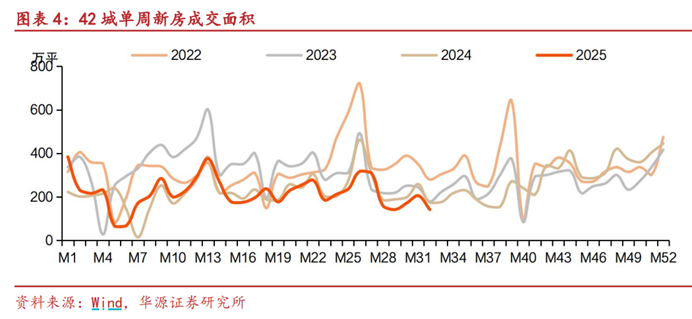
Group 1 - The Shanghai Municipal Planning and Natural Resources Bureau has released guidelines to promote the quality improvement of residential properties, indicating a more regulated approach to the construction of "good houses" in the city [1] - Several new first-tier cities, including Hefei, Chongqing, Chengdu, Nanjing, Zhuhai, and Foshan, are studying new real estate policies to stimulate demand for improved housing and will introduce supportive measures for home purchases [1] - Since September 2024, the central government's clear requirement has been to stabilize both the real estate and stock markets, which is crucial for boosting social expectations and facilitating domestic demand circulation amid external uncertainties [1] Group 2 - The central government has frequently emphasized the importance of building good houses and high-quality housing this year, suggesting that high-quality residential properties may experience a development wave due to policy guidance and changes in supply-demand structure [3] - Huayuan Securities maintains a positive outlook on the real estate sector, anticipating a favorable environment for high-quality housing development [3]
突发!青岛千亿国企下场了,大手笔收购商品房!
Sou Hu Cai Jing· 2025-09-27 18:31
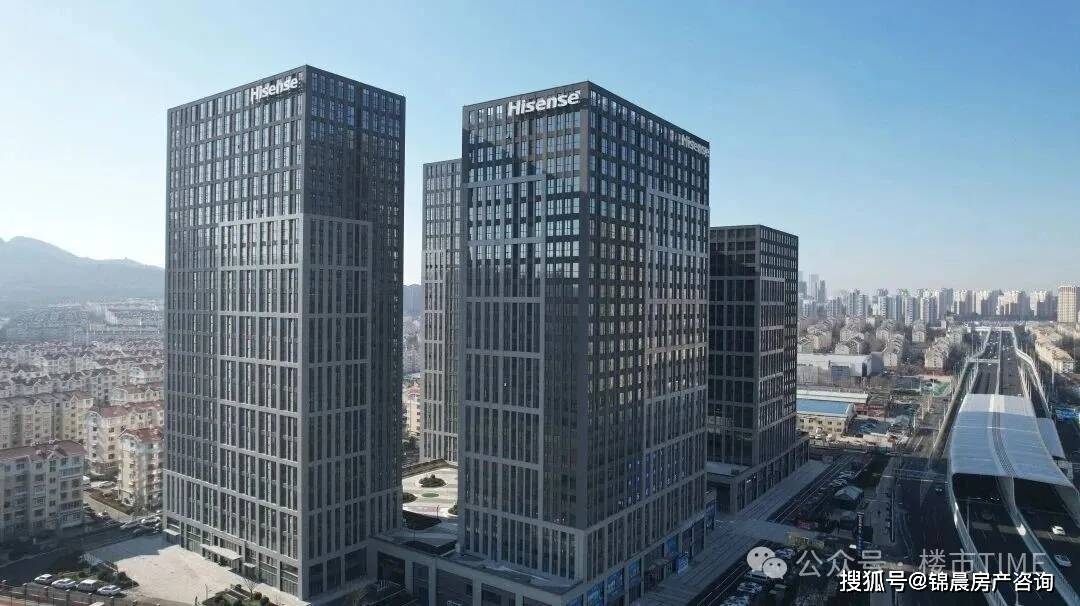
Group 1 - The core point of the article is that Qingdao's state-owned enterprise, Haifa Group, has made a significant move by acquiring residential properties to support the local housing market, indicating government efforts to stabilize the real estate sector [3][5][20] - Haifa Group, in collaboration with Hisense Group, signed an agreement to purchase two projects, "Hisense Liyang Road No. 7" and "Hisense Zhengyang Center," totaling approximately 22,000 square meters, all designated for affordable housing [3][5] - The acquisition is part of a broader strategy by the local government to implement "stabilizing the housing market and increasing supply" through innovative financing methods, including special bonds and low-interest loans from the central bank [5][7] Group 2 - Haifa Group, a large state-owned capital operation platform with a registered capital of 10 billion and revenue exceeding 113.8 billion last year, is stepping into the housing market not as a traditional real estate player but as a government-directed investment to stabilize the market [8][10] - The selected properties for acquisition are already completed and have clear ownership, making them suitable for the government's goal of providing affordable housing [15][18] - The move by state-owned enterprises to purchase residential properties sends a strong signal to the market, potentially boosting buyer confidence and indicating a commitment from the government to support the housing sector [20]

现在就是必须用大招的时候,经济学家马光远:只需五招即可稳楼市
Sou Hu Cai Jing· 2025-09-05 21:44
Core Viewpoint - The current real estate market is at a critical juncture for stabilization, with the government signaling strong measures to support this trend [1] Group 1: Market Conditions - Real estate development investment has declined by over 30%, and housing prices have generally dropped by more than 30%, with major cities like Beijing, Shanghai, Guangzhou, and Shenzhen seeing prices fall to 2016 levels [3] - Predictions suggest that housing prices in China may have an additional decline potential of 25% to 30%, leading to a total drop exceeding 60%, resulting in a loss of over 200 trillion yuan in national wealth [3] Group 2: Proposed Measures - Five key measures are proposed to stabilize the real estate market, focusing on addressing public concerns about unfinished projects and price drops [6] - A commitment to prevent project defaults and ensure that capable developers do not go bankrupt due to funding issues is essential [6] - Implementing a price guarantee for homebuyers, such as compensating for price drops within a year, could alleviate fears and change market expectations [6] Group 3: Housing Demand and Urban Renewal - There is a significant need for urban renewal, as over 60% of homes were built before 1998, indicating a large potential for improvement [8] - Policies should be designed to address the housing needs of migrant workers and new urban residents, which could positively impact market expectations [10] - The government’s approach to providing housing solutions for young people and new city residents aligns with the proposed measures and could lead to immediate market changes [10]

深夜突发!深圳楼市限购调整,本周六起施行!
Zheng Quan Shi Bao· 2025-09-05 15:57
Core Viewpoint - Shenzhen's new real estate policy, effective from September 6, 2025, aims to optimize and adjust housing purchase regulations, following similar moves in Beijing and Shanghai [1] Group 1: Housing Purchase Policy Adjustments - Residents eligible to purchase commodity housing in specified districts (including Luohu, Baoan, Longgang, Longhua, Pingshan, and Guangming) can buy an unlimited number of properties [2] - Non-local residents without proof of continuous social insurance or income tax payments for at least one year are limited to purchasing two properties in the same districts [2] - In Yantian District and Dapeng New District, there will be no qualification review for purchasing commodity housing [3] Group 2: Corporate Housing Purchase Policy - Enterprises can purchase commodity housing across Shenzhen to address employee housing needs, with specific conditions in certain districts [3] - In districts like Futian, Nanshan, and Baoan (Xinan Street), companies must meet criteria such as being established for over one year and having paid at least 1 million RMB in taxes [3] Group 3: Personal Housing Loan Policy - Financial institutions will no longer differentiate between first and second home loans in terms of interest rate pricing, allowing for more flexible loan arrangements [3] Group 4: Housing Fund Management Adjustments - New proposals include six additional scenarios for withdrawing housing provident fund to support home purchases, including down payment and tax payment withdrawals [4] - Full withdrawal of provident fund balance is allowed for first homes, while second homes can withdraw up to 60% of the balance [4] - The scope for loan repayment withdrawals has been expanded nationwide, allowing for withdrawals to cover loans for homes purchased outside Shenzhen [4] Group 5: Market Trends and Insights - The second-hand housing market in Shenzhen shows signs of recovery, with a four-month increase in transaction volume as of August [6] - Despite some recovery, many properties still face pressure on sales, with buyers awaiting new policy changes [6] - The overall market remains favorable for first-time buyers due to friendly loan and interest conditions, suggesting continued high transaction levels in the second-hand market [6] Group 6: Broader Market Context - Major cities like Guangzhou have fully lifted purchase restrictions, while Beijing, Shanghai, and Shenzhen are progressively relaxing their policies [7] - The trend of "targeted loosening" in real estate policies aims to stimulate demand and alleviate inventory pressure, indicating a potential acceleration in further relaxations [7]
8月地方债发行规模近万亿
21世纪经济报道· 2025-09-03 23:45
Core Viewpoint - The issuance of local government bonds remains strong, with a focus on special bonds for debt replacement, stabilizing the real estate market, and funding government investment projects [1][3][5]. Group 1: Local Government Bond Issuance - In August, the issuance of local government bonds reached 977.6 billion yuan, with new special bonds accounting for 486.6 billion yuan, representing about half of the total [1]. - From January to August, the cumulative issuance of new special bonds was 3.26 trillion yuan, which is 74% of the annual quota of 4.4 trillion yuan [3]. - The issuance of special bonds has accelerated in recent months, with amounts of 443.2 billion yuan, 527.1 billion yuan, 616.9 billion yuan, and 486.6 billion yuan from May to August [3]. Group 2: Debt Replacement and Financial Management - Over 40% of the new special bonds issued in August were allocated for government stock investment projects, primarily for debt replacement [1][3]. - The issuance of refinancing special bonds for replacing hidden debts reached 1.93 trillion yuan from January to August, with only about 70 billion yuan remaining for the year [1][3]. - The total issuance of special bonds for debt replacement from January to August was 9.68 trillion yuan, accounting for 30% of all new special bonds issued [3]. Group 3: Funding Allocation and Project Focus - The funds from new special bonds are primarily directed towards project construction, including municipal infrastructure, transportation, and social services [3][4]. - The issuance of land reserve special bonds has increased, with a total of 324 billion yuan issued across ten provinces from January to August [4]. - Special bonds for "stabilizing the real estate market" amounted to approximately 595 billion yuan from January to August, making it the second-largest category of funding after municipal infrastructure [5]. Group 4: Support for Government Investment Funds - A significant portion of the special bonds issued in August was directed towards government investment funds to support technological innovation and emerging industries [7][8]. - Various provinces, including Beijing and Shanghai, have issued special bonds to inject capital into government investment funds, with amounts ranging from 50 billion yuan to 100 billion yuan [7][8]. - The shift in the use of special bonds towards supporting strategic emerging industries reflects a broader trend of reallocating funds from traditional infrastructure to new infrastructure and innovation-driven projects [8][9].
8月地方债发行规模近万亿 多地专项债注资政府投资基金
2 1 Shi Ji Jing Ji Bao Dao· 2025-09-03 13:46
Core Viewpoint - The issuance of local government bonds in August reached 977.6 billion yuan, maintaining strong momentum despite a decline compared to June and July, with special bonds accounting for about half of the total issuance [1] Group 1: Bond Issuance and Utilization - From January to August, the cumulative issuance of new special bonds reached 3.26 trillion yuan, accounting for 74% of the annual quota of 4.4 trillion yuan, with a notable acceleration in issuance since May [2][3] - In August, 44% of the newly issued special bonds were allocated for debt repayment, totaling 212.9 billion yuan, while the cumulative amount for debt repayment from January to August was 968 billion yuan, representing 30% of the total new special bonds issued [2] - The funds from new special bonds are primarily directed towards project construction, including municipal infrastructure, transportation, and social projects, with significant allocations for municipal and industrial park infrastructure [2][5] Group 2: Land Reserve Bonds - The issuance of land reserve special bonds has increased, with a total of 3.24 trillion yuan issued by ten provinces from January to August, with Shanghai leading at 568 billion yuan [3] - Local governments are utilizing special bonds to recover idle land, which helps alleviate financial pressure on developers and promotes stability in the real estate market [3] Group 3: Acquisition of Existing Properties - Some provinces are initiating projects to acquire existing residential properties, with 32 projects identified across four provinces, primarily funded by special bonds [4][5] - The total funding for "stabilizing the housing market" through special bonds reached approximately 595 billion yuan from January to August, making it the second-largest category of funding after municipal infrastructure [5] Group 4: Support for Innovation and Emerging Industries - A significant trend in August was the issuance of special bonds to support government investment funds aimed at enhancing local technological innovation and strategic emerging industries [6][7] - Various provinces, including Beijing and Shanghai, have allocated special bonds to government investment funds, indicating a shift in investment focus from traditional infrastructure to new infrastructure and emerging sectors [7][8]
8月地方债发行规模近万亿,多地专项债注资政府投资基金
2 1 Shi Ji Jing Ji Bao Dao· 2025-09-03 12:28
Core Viewpoint - The issuance of local government bonds in August reached 977.6 billion yuan, maintaining strong momentum despite a decline compared to June and July, with new special bonds accounting for about half of the total issuance [1] Group 1: Bond Issuance and Utilization - From January to August, the cumulative issuance of new special bonds reached 3.26 trillion yuan, accounting for 74% of the annual quota of 4.4 trillion yuan, with a notable acceleration in issuance in recent months [2][1] - In August, over 40% of the new special bonds were allocated for government existing investment projects, termed "debt reduction" funds, with a total of 2.129 trillion yuan issued for this purpose [2] - The issuance of special bonds for land reserve reached 600 billion yuan in August, with ten provinces issuing over 320 billion yuan in land reserve special bonds [1][3] Group 2: Debt Reduction and Project Funding - The demand for "debt reduction" remains significant, with 30% of the new special bonds issued from January to August allocated for this purpose, totaling 9.68 trillion yuan [2] - The primary use of new special bond funds, excluding "debt reduction," was for project construction, including municipal infrastructure, transportation, and social projects [2] Group 3: Land Reserve and Housing Market Stabilization - The issuance of land reserve special bonds has increased, with a total of 3.24 trillion yuan issued by ten provinces from January to August, aimed at recovering idle land and alleviating financial pressure on developers [3] - Some provinces are also initiating projects to acquire existing residential properties, with 32 projects reported across four provinces, primarily funded by special bonds [4][5] Group 4: Support for Innovation and Emerging Industries - A significant trend in August was the issuance of special bonds to support government investment funds, enhancing support for local technological innovation and strategic emerging industries [6] - Various provinces, including Beijing and Shanghai, issued special bonds for government investment funds, indicating a shift in investment focus from traditional infrastructure to new infrastructure and emerging sectors [7][6] Group 5: Economic Impact and Future Outlook - Experts suggest that the increased investment in strategic emerging industries through special bonds is a necessary shift to adapt to high-quality economic development and innovation-driven growth [7][8] - The potential for growth in strategic emerging industries is highlighted, with expectations for positive contributions to GDP and tax revenue, indicating a favorable outlook for the effectiveness of these investments [8]