
藏粮于地

Search documents
锐财经|中国经济顶住压力稳中有进
Ren Min Ri Bao Hai Wai Ban· 2025-11-04 05:19
Core Insights - China's economy has shown resilience and progress in the first three quarters, with effective investment and strong social welfare measures laying a solid foundation for achieving annual economic and social development goals [1][6]. Economic Performance - The GDP grew by 5.2% year-on-year, maintaining a leading position among major global economies [2] - Retail sales of consumer goods increased by 4.5%, accelerating by 1.2 percentage points compared to the same period last year [2] - Industrial output rose by 6.2%, marking the highest growth for the same period since 2022 [2] Sectoral Growth - The equipment manufacturing and high-tech manufacturing sectors saw value-added growth of 9.7% and 9.6%, respectively, with their shares in industrial output increasing by 2.1 and 0.8 percentage points year-on-year [2] - The integrated circuit and smart device manufacturing sectors experienced significant growth, with increases of 22.4% and 12.2% in value-added [2] Quality and Efficiency - Improvements in product prices and corporate profits were noted, with industrial enterprise profits rising by 3.2% year-on-year, and a notable 21.6% increase in September alone [3][4] Resilience in Exports - Despite external challenges, exports maintained a growth rate of 7.1%, with high-tech and electromechanical products growing by 11.9% and 9.6%, respectively [2] - Exports to countries involved in the Belt and Road Initiative increased by 12.4% [2] Consumer and Industrial Trends - The service retail sector grew by 5.2%, driven by popular events such as sports and concerts [3] - Production of high-end and green technologies is on the rise, with civilian drones and industrial robots increasing by 43.2% and 29.8%, respectively [3] Social Welfare and Food Security - The government has effectively ensured food security and energy supply, with measures in place to stabilize grain markets and enhance agricultural production conditions [4][5] - The national coal stockpile reached 220 million tons, sufficient for over 35 days, ensuring energy supply during the winter [4][5] Investment Expansion - The government is actively promoting effective investment, with 500 billion yuan allocated to support local government financial capacity and investment projects [6] - Over 2,300 projects have been supported, with total investments around 7 trillion yuan, focusing on digital economy, AI, and infrastructure [6] Future Outlook - International economic organizations have raised their forecasts for China's economic growth, indicating confidence in achieving annual development goals [6][7]
沈阳以“良田+良种+良机”绘就秋粮“二十二连丰”
Xin Hua Wang· 2025-11-03 07:07
Core Insights - The agricultural sector in Shenyang is experiencing a significant harvest, with over 98% of autumn grain collected, indicating a potential for the 22nd consecutive year of bumper harvests [2] - The city has implemented a strategy focused on "storing grain in the land and technology," integrating high-quality land, seeds, and machinery to enhance agricultural productivity [2][3] Group 1: Agricultural Production - Shenyang's grain sowing area has exceeded planned targets, with a first-class seedling ratio of 93.5%, an increase of 3 percentage points compared to previous years [2] - The city has introduced innovative farming techniques, such as "stacked composting and deep soil loosening," which have improved soil organic matter content by 0.2 percentage points and increased efficiency by over 200 yuan per acre [3] - The mechanization rate for major crops has reached over 98%, with nearly 4,000 corn harvesters and 1,500 rice harvesters deployed [5] Group 2: Technological Advancements - Advanced planting techniques, such as the "two-row, one-empty" cultivation method, have been adopted, resulting in increased yields without reducing planting density [3] - The introduction of high-efficiency planting layouts, like the wide-narrow row "T-shaped" planting technique, has improved light utilization and increased corn yields by nearly 100 kilograms per acre [4] Group 3: Economic Impact - The investment in high-standard farmland construction has accelerated, with completion rates exceeding 60% for provincial demonstration projects [3] - The introduction of large-scale harvesting machinery has significantly increased operational efficiency, with new machines capable of harvesting over 200 acres per day, achieving a yield increase of 30 to 50 jin per acre [5] Group 4: Specialty Products and Branding - Shenyang is focusing on developing specialty products such as edible fungi and pickled vegetables, with the establishment of a national modern agricultural industrial park [6] - The city is promoting regional public brands like "Shenyang Zhenpin," enhancing the visibility of local agricultural products on a national scale [6] Group 5: Rural Reforms - Shenyang is advancing comprehensive rural reforms, including extending land contracts for an additional 30 years, which provides farmers with stability and encourages investment in land [7] - The city has allocated 14 billion yuan in financial support for rural revitalization, outlining specific measures to ensure food security and promote agricultural development [7]

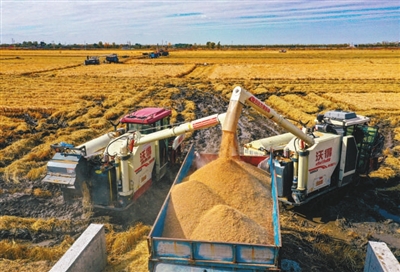
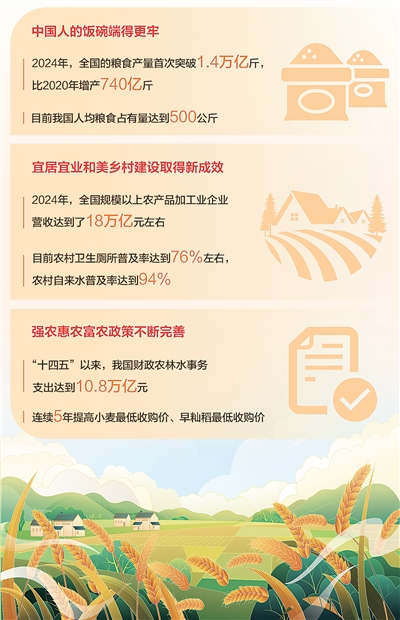
中国饭碗将端得更稳更牢
Jing Ji Ri Bao· 2025-11-02 21:52
Core Insights - The article emphasizes the importance of ensuring stable grain production in the face of complex climate conditions and extreme weather challenges by leveraging technology and policy support [1][2][3] Group 1: Technological Support - The Ministry of Agriculture and Rural Affairs has released key grain and oil varieties and promoted technologies to enhance grain production, focusing on stabilizing area, increasing yield, and improving quality [1] - During the harvest season from September to October, adverse weather conditions were mitigated through coordinated efforts in agricultural meteorology, machinery harvesting, and drying equipment to safeguard the autumn grain harvest [1] Group 2: Policy Support - A comprehensive policy system has been established to support grain production, including subsidies for farmland fertility protection, producer subsidies, agricultural insurance premium subsidies, and minimum grain purchase prices [1] - The central government has allocated disaster relief funds multiple times to assist in grain production and ensure harvests in response to frequent natural disasters [1] Group 3: Challenges and Risks - The article highlights ongoing challenges such as decreasing and deteriorating arable land resources, frequent extreme weather and pest outbreaks, water scarcity in northern regions, and declining willingness among producers to grow grain [1] Group 4: High-Standard Farmland Construction - High-standard farmland is deemed essential for stable grain production, necessitating continuous construction and upgrading, with a focus on quality and effective prevention of "non-grain" usage [2] - There is a need for organic integration of water-saving irrigation and other facilities in northern high-standard farmland to enhance disaster resilience and production stability [2] Group 5: Income Protection Mechanism - A robust income protection mechanism for grain farmers is crucial, requiring improvements in the agricultural policy system that integrates pricing, subsidies, and insurance [2] - The promotion of precision farming technologies and the establishment of a comprehensive "smart farming" model are encouraged to enhance efficiency and reduce costs [2] Group 6: Development of Socialized Services - Expanding and improving socialized services is vital for integrating smallholders into modern production and promoting advanced technology to ordinary farmers [3] - The strategy of storing grain in the land and technology aims to strengthen the foundation of grain production and ensure that China's grain bowl remains stable and secure [3]
中国式现代化离不开农业农村现代化 这个“重中之重” 如何抓紧抓实(乡村观察)
Ren Min Ri Bao· 2025-10-30 22:38
Core Viewpoint - The modernization of agriculture and rural areas is essential for China's overall modernization, as emphasized by the central government and the 14th Five-Year Plan, which prioritizes addressing "three rural issues" [1] Group 1: Agricultural Production - The 14th Five-Year Plan aims to enhance agricultural comprehensive production capacity and quality, with a target of surpassing 1.4 trillion jin (approximately 700 million tons) of grain production by 2024 [2] - The focus is on improving production capacity through high-standard farmland construction and advancing agricultural technology to ensure food security [2][3] - The integration of advanced machinery and technology in farming practices is crucial for increasing efficiency and productivity, with examples of significant investments in agricultural machinery [4] Group 2: Rural Development - The plan emphasizes creating livable and workable rural spaces, with initiatives to improve infrastructure and public services, enhancing the quality of life for rural residents [7] - Successful rural development involves collaborative efforts among neighboring villages to address common challenges and promote integrated growth [7][8] - The transformation of rural areas includes environmental improvements and the development of rural tourism, contributing to local economies [8] Group 3: Farmer Income - Policies aimed at increasing farmers' income include direct subsidies and support for agricultural machinery purchases, which have significantly reduced costs for farmers [10][11] - The stability of grain prices and the promotion of high-quality agricultural products are essential for enhancing farmers' earnings [10] - Financial support mechanisms, including insurance and credit products tailored for farmers, are necessary to mitigate risks and encourage agricultural investment [11][12]
这个“重中之重”,如何抓紧抓实(乡村观察)
Ren Min Ri Bao· 2025-10-30 22:37
Core Viewpoint - The modernization of agriculture and rural areas is essential for China's overall modernization, as emphasized by the 20th Central Committee and the 15th Five-Year Plan proposal, which prioritizes addressing "three rural issues" and promoting urban-rural integration [1][3]. Group 1: Agricultural Production - The proposal aims to enhance agricultural comprehensive production capacity and quality, with a target of exceeding 1.4 trillion jin in national grain production by 2024 [1][3]. - The strategy includes implementing "storing grain in the ground and technology," advancing high-standard farmland construction, and improving agricultural machinery levels to ensure food security [3][4]. - The focus is on balancing production capacity, ecological sustainability, and income growth, ensuring that agricultural production meets both quantity and quality standards [5][6]. Group 2: Rural Development - The initiative promotes the construction of livable and workable rural areas, emphasizing the importance of improving living conditions and public services in rural communities [6][7]. - The "ten million project" experience is being utilized to enhance rural environments, leading to increased farmer satisfaction and community development [7][8]. - Collaborative development mechanisms among neighboring villages are encouraged to address resource limitations and promote integrated rural revitalization [7][8]. Group 3: Farmer Income - Policies aimed at increasing farmer income include direct financial support, such as subsidies for agricultural machinery and crop planting, which have significantly reduced costs for farmers [9][10]. - The stable prices for summer wheat and autumn rice, approximately 1.2 yuan and 1.3 yuan per jin respectively, are contributing to farmers' income stability [9][10]. - The government is enhancing the effectiveness of agricultural support policies, ensuring that financial aid reaches farmers directly and efficiently [10][11].
刘小涛主持召开省政府党组会议
Xin Hua Ri Bao· 2025-10-28 23:25
Group 1 - The provincial government emphasizes the importance of implementing Xi Jinping's recent speeches and directives, particularly regarding women's development and empowerment [1] - The government aims to address key issues faced by women, including marriage, childbirth, healthcare, and rights protection, by integrating these concerns into local government projects [1] - There is a focus on promoting the "her economy" and encouraging businesses to incorporate women's and children's welfare into their corporate social responsibility strategies [1] Group 2 - The government highlights the significance of food security as a top priority, advocating for the "store grain in the ground and technology" strategy to ensure stable production and supply of food and key agricultural products [2] - Emphasis is placed on optimizing agricultural practices through the "five optimizations" strategy, which includes improving soil, seeds, production, storage, and sales to enhance agricultural productivity and farmer motivation [2] - The government is committed to deepening international cooperation in various fields, including trade, investment, and cultural tourism, while aligning with national strategies for global development and governance [2]
“五良”到田头 丰收有奔头
Xin Hua She· 2025-10-28 05:29
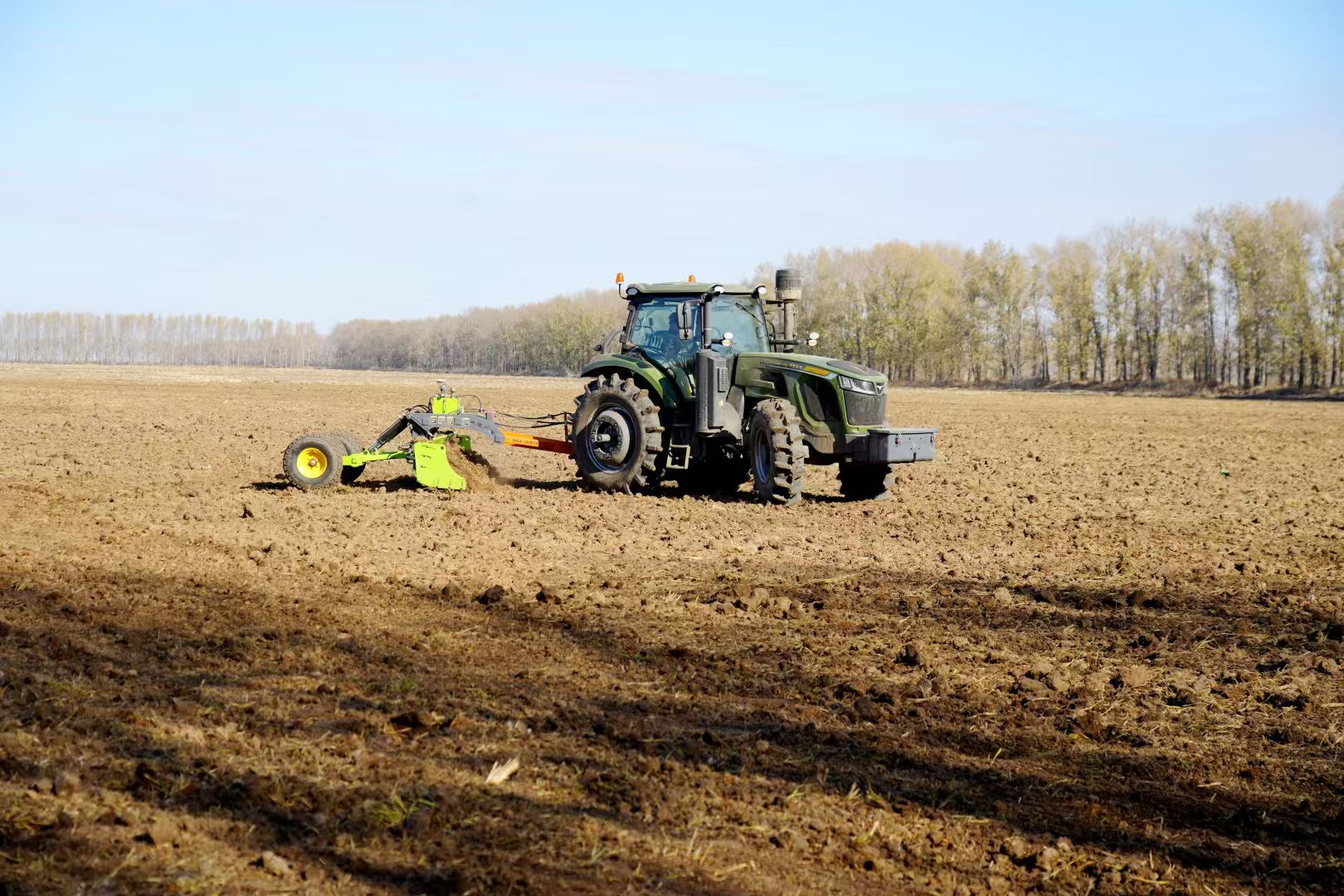
Group 1 - The harvest season in Heilongjiang Province is marked by high yields of black beans, with farmers reporting an expected yield of over 6,000 pounds per hectare and a net income of 5,000 yuan per hectare [1] - Advanced agricultural techniques such as deep soil loosening, layered fertilization, and precision sowing have contributed to the high productivity of black beans [1] - The combination of good seeds, farming methods, opportunities, land, and systems is enhancing agricultural production efficiency in Heilongjiang, the largest grain-producing province in China [1] Group 2 - The North China Agricultural Group has been utilizing large machinery for autumn tillage, which has been a practice for over 20 years, improving efficiency compared to smaller machines [2] - The trend of autumn tillage is becoming more common among local farmers, leading to better planting schedules and increased yields [2] - Modern agricultural machinery is being used for standardized processes in land reform, enhancing the efficiency of farming operations [5] Group 3 - The implementation of high-standard land reform during the optimal construction period before heavy snowfall is crucial for improving agricultural practices [5] - The use of advanced measurement technologies has improved land leveling precision to centimeter levels, preventing uneven distribution of water and nutrients [5] - Farmers have reported significant increases in effective planting areas and overall yields due to the consolidation of smaller fields into larger standardized plots [7]
沃野开镰迎丰收 智慧农业绘新景
Zhen Jiang Ri Bao· 2025-10-26 23:27
Core Insights - The article highlights the successful harvest of rice in the high-standard farmland of Dinggang Town, Zhenjiang Economic Development Zone, showcasing the integration of modern agricultural technology and mechanization in enhancing food production and farmer income [1][2][3] Group 1: Harvest and Production - The rice harvest at Ronghe Farm covers 9,720 acres, with a fully mechanized process from harvesting to drying and processing, reflecting the modern agricultural concept of "storing grain in the land and technology" [1] - The farm is currently harvesting approximately 400 tons of rice daily, with half being dried on-site and the other half sold directly to grain merchants [1] - The expected yield for hybrid rice is around 800 kg per mu, while glutinous and japonica rice are projected to yield approximately 650 kg per mu [2] Group 2: Technological Advancements - The introduction of new agricultural machinery, including two tractors and three precision seeders, enhances operational efficiency and reduces seed usage [2] - The precision seeders allow for a reduction in seed usage from 40-45 jin per mu to 30-35 jin, saving approximately 200,000 yuan for 10,000 mu of land [2] - The integration of various technologies such as drones for fertilization and intelligent drying systems signifies a shift towards modern, smart agriculture [3]

【人民日报】保护黑土地 大国粮仓更稳固(总书记的关切·落地的回响)
Ren Min Ri Bao· 2025-10-26 00:40
Core Insights - The protection and utilization of black soil, referred to as the "panda of arable land," is emphasized by President Xi Jinping, highlighting its importance for future generations [1][2] - The Northeast region of China, known for its fertile black soil, faces challenges such as soil fertility depletion, necessitating effective measures for conservation and sustainable use [1][2] Group 1: Black Soil Protection Initiatives - In 2025, the central government plans to strengthen the governance of erosion ditches in the Northeast black soil region, with significant investments made in local projects [1][3] - The Heilongjiang Province has reported a remarkable increase in corn yield, with a per mu (0.067 hectares) output surpassing 1000 kg after the treatment of erosion ditches [1] - The Ministry of Water Resources has allocated a total of 14.406 billion yuan to the Northeast black soil region during the 14th Five-Year Plan, addressing 57,300 erosion ditches and protecting approximately 13.74 million mu of arable land [2] Group 2: Financial Support and Technological Advancements - Farmers in Heilongjiang Province receive various subsidies for black soil protection practices, including 20 yuan per mu for straw returning and 150 yuan per mu for crop rotation, significantly boosting their income [2] - The average organic matter content in Heilongjiang's soil is projected to reach 40.3 grams per kilogram by 2024, reflecting a 4.1 grams per kilogram increase since 2016 [2] - The government is exploring innovative financing methods for ecological product value transformation to support erosion ditch governance, indicating a shift towards sustainable economic models [3] Group 3: Policy and Legislative Framework - The implementation of the "Black Soil Protection Law" signifies a robust legal framework aimed at safeguarding this critical agricultural resource [4] - The total area of black soil protected in China has exceeded 400 million mu during the 14th Five-Year Plan, underscoring the government's commitment to food security and sustainable agriculture [4]
“四良”融合绘出好丰景
Jing Ji Ri Bao· 2025-10-22 22:10
Core Insights - The article highlights the transformation of agricultural practices in Yongfeng Village, Sichuan Province, emphasizing the integration of high-standard farmland construction, seed innovation, and advanced farming techniques to achieve stable and increased grain production [1][2][3]. Group 1: Agricultural Practices and Innovations - Yongfeng Village has experienced a significant increase in rice yield, with farmers reporting an average yield of 1,400 jin per mu, attributed to high-standard farmland construction and the adoption of new agricultural technologies [1]. - The introduction of a trial platform for new rice varieties and advanced planting techniques has played a crucial role in enhancing both the yield and quality of rice [1][2]. - The application of various agricultural technologies has led to a 20% to 30% increase in production efficiency, along with a 10% to 20% improvement in fertilizer and water utilization rates [2]. Group 2: National Agricultural Strategy - The Chinese government has established a plan to enhance grain production capacity by over 100 billion jin by 2030, focusing on technological integration and optimizing agricultural structures [2]. - The plan emphasizes the importance of land and seed management, promoting a combination of high-standard farmland, quality seeds, and advanced farming practices to improve grain supply quality [2][3]. - The overall contribution of agricultural technology advancements to production has reached 63.2%, with over 75% mechanization in crop farming and a seed coverage rate exceeding 96% [2].