资产负债管理

Search documents
中国太保副总裁苏罡:将采取更加多元化的固收配置策略
Zhong Zheng Wang· 2025-12-11 14:25
Core Viewpoint - China Pacific Insurance (601601) is addressing the long-term challenge of low interest rates in the insurance industry, emphasizing the need for a diversified fixed-income investment strategy to adapt to the current market conditions [1][2] Group 1: Investment Strategy - The company aims to balance safety, profitability, and liquidity in its asset-liability management, focusing on matching yield costs, term structures, and liquidity [1] - In equity investments, China Pacific Insurance follows a "core plus satellite" strategy, with a core focus on dividend value [1] - The company seeks to achieve a competitive comprehensive investment return by maintaining a reasonable equity allocation while managing volatility risks to provide attractive long-term returns for policyholders and stable dividends for shareholders [1] Group 2: Asset-Liability Management - Asset-liability management is crucial for insurance companies to maintain stable operations and sustainable development, with significant room for improvement in China's insurance industry [2] - Companies must maintain a reasonable asset-liability gap, which can create better long-term risk-return profiles [2] - Different types of insurance products, such as traditional, participating, and universal insurance, require differentiated duration control strategies [2]

友邦人寿携手中央财经大学成功举办第二届中财总精论坛暨《新时代中国养老金融高质量发展的突破路径白皮书》发布仪式
Cai Jing Wang· 2025-12-05 09:15
Core Insights - The second China Financial Actuarial Forum focuses on the role of actuaries in the context of the "14th Five-Year Plan" and the integration of artificial intelligence in the insurance industry [1][9] - The forum emphasizes the need for actuaries to transition from passive risk managers to proactive drivers of high-quality industry development [2][9] Group 1: Forum Overview - The forum gathered over 170 participants, including industry experts and students, to discuss innovative development paths for the actuarial industry [1] - The event was supported by AIA Life Insurance and hosted by the Central University of Finance and Economics [1] Group 2: Keynote Speeches - Keynote speakers discussed various topics, including the evolution of health insurance, asset-liability management, and the role of actuaries [3][4] - Gong Xingfeng highlighted the need for health insurance to shift from scale pursuit to value cultivation and emphasized the importance of product innovation [3] - Peng Jihai pointed out the challenges faced by the insurance industry due to declining interest rates and the need for asset-liability rebalancing [3][4] Group 3: White Paper Release - A white paper on the high-quality development of pension finance in China was released, addressing issues such as insufficient total volume and structural imbalance [5] - The white paper proposes a "12345+10" implementation framework to guide the industry towards high-quality development [5] Group 4: Roundtable Discussions - The first roundtable focused on high-quality development paths under the "14th Five-Year Plan," with discussions on the role of actuaries in addressing longevity risk and supply shortages [6][7] - The second roundtable explored the collaboration between the insurance industry and artificial intelligence, highlighting the need for a systematic risk governance framework [8] Group 5: Future Directions - The forum serves as a practical implementation of the spirit of the 20th National Congress of the Communist Party of China, contributing to the construction of a financial power [9] - AIA Life Insurance will continue to support the development of actuarial education and research, fostering sustainable growth in the insurance industry [9]

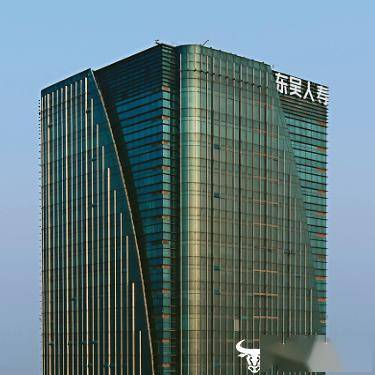
东吴人寿财务负责人张群贵上任两年了 老被董事长夸赞
Sou Hu Cai Jing· 2025-12-05 00:36
Core Viewpoint - Dongwu Life Insurance has experienced significant fluctuations in its operational performance in recent years, but managed to turn a profit in the third quarter of this year, achieving a net profit of 35.89 million yuan [1]. Financial Performance - The company reported a net profit of 0.50 billion yuan cumulatively this year, despite a loss of over 6 million yuan in the second quarter [3]. - From 2019 to 2022, Dongwu Life maintained profitability, but faced a substantial loss of 1.785 billion yuan in 2023 due to changes in the market environment [3]. - The company returned to profitability in the following year, achieving a net profit of 22 million yuan [3]. Management and Leadership - Zhang Qungui, the current financial head, has been in his position for just over two years and has previously held multiple roles within the company, including Chief Actuary and temporary financial head [3]. - The chairman, Zhao Kun, emphasized the importance of leveraging new accounting standards to enhance financial management and indicated a strategic focus on improving operational stability [4]. Strategic Initiatives - Dongwu Life has implemented three major management measures for 2024: comprehensive budget management, solvency management, and asset-liability management, aimed at increasing scale, enhancing quality, and optimizing structure [4]. - The company is recognized as the first national life insurance company established in a prefecture-level city, which provides it with a unique position in the market [4].

薛洪言:银行五年期定存密集退场,释放了什么信号?
Xin Lang Cai Jing· 2025-12-02 07:56
Core Viewpoint - The recent trend of commercial banks in China reducing long-term deposit products, particularly five-year fixed deposits, reflects a significant transformation in the banking industry's operational logic due to ongoing pressure from narrowing net interest margins and the need to optimize liability structures [1][2][4]. Group 1: Market Dynamics and Industry Changes - The reduction of five-year deposit products is driven by multiple market factors and signifies a profound shift in the banking industry's operational logic [2]. - Continuous narrowing of net interest margins due to multiple cuts in the Loan Prime Rate (LPR) has pressured banks' asset-side yields, leading to a reevaluation of long-term deposits as potential liabilities rather than profit contributors [2][4]. - The adjustment in deposit products is a response to the changing financing needs of the economy, which favors shorter-term, diverse risk profiles, thus reducing the efficiency of long-term liabilities [3]. Group 2: Financial Management and Risk Control - From an asset-liability matching perspective, banks are focusing more on supporting the short-term turnover needs of the real economy, which diminishes the utility of long-term liabilities and increases the risk of maturity mismatches [3]. - The shift towards shorter liability durations is a proactive measure for banks to manage interest rate risks and enhance the resilience of their balance sheets [3]. - This adjustment also aims to improve the efficiency of financial resource allocation, allowing banks to better match funding supply with actual demand in the economy [3]. Group 3: Competitive Strategies and Product Innovation - The current adjustment in deposit products indicates a transformation in competitive strategies within the banking sector, moving away from simple price wars to product and service innovations [3][4]. - Banks are increasingly focusing on wealth management services and innovative product offerings to meet diverse customer needs, which may lead to a more sustainable development path for smaller banks [5][6]. - The transition from scale expansion to refined operations is essential for banks to maintain competitiveness in a market characterized by high cost pressures and the need for differentiated services [6][7]. Group 4: Impact on Consumers and Financial Literacy - The reduction of long-term deposit options will significantly impact consumers' investment habits and asset allocation strategies, pushing them to explore more complex financial products [8][10]. - Different consumer segments will likely respond differently to the changes, with some seeking higher returns in capital markets while others may prefer defensive asset allocations [8][9]. - This shift necessitates an increase in financial literacy among consumers, as they will need to navigate a more complex financial landscape and make informed decisions regarding their investments [9][10]. Group 5: Future Outlook and Industry Evolution - The overall adjustment in deposit products is a practical choice for banks to address operational pressures and optimize asset-liability management, reflecting a broader industry shift towards quality and efficiency [4][11]. - As banks move away from reliance on high-cost liabilities, their competitive edge will increasingly depend on their ability to manage assets and liabilities effectively, offer differentiated services, and provide comprehensive financial solutions [11][12]. - The transformation initiated by the reduction of long-term deposits may lead to a more mature and rational financial behavior among consumers, shifting from passive savings to proactive asset management [10][12].
不揽储了?有民营银行阶段性停售所有期限存款
Di Yi Cai Jing· 2025-11-27 09:24
Core Viewpoint - The banking sector, particularly small and medium-sized banks, is experiencing a significant reduction in deposit offerings, with some banks like Blue Ocean Bank suspending various term deposits due to pressure on net interest margins and high funding costs [1][6]. Group 1: Deposit Trends - Blue Ocean Bank has completely sold out of all its deposit products, including 3-month, 6-month, 1-year, 2-year, 3-year, and 5-year term deposits, indicating a severe limitation on deposit acceptance [2][4]. - The bank's customer service stated that the 2-year, 3-year, and 5-year term deposits are currently full, with no indication of when new quotas will be available [4]. Group 2: Interest Rate Dynamics - The bank's deposit rates for various terms are as follows: 3-month (1.35%), 6-month (1.55%), 1-year (1.65%), 2-year (1.85%), and both 3-year and 5-year at 2% [4]. - The net interest margin for Blue Ocean Bank has decreased from 4.34% to 2.35% over the year, reflecting a significant drop of 1.99 percentage points [5]. Group 3: Market Context - The trend of suspending long-term deposits is not isolated to Blue Ocean Bank; other small and medium-sized banks are also withdrawing similar products, indicating a broader industry shift [6][8]. - The overall environment of declining deposit rates and weak credit demand has led banks to limit high-cost deposit acceptance to manage their balance sheets effectively [7][8].

Federal Agricultural Mortgage (NYSE:AGM) FY Conference Transcript
2025-11-19 16:57
Summary of Federal Agricultural Mortgage Corporation (Farmer Mac) FY Conference Call Company Overview - **Company Name**: Federal Agricultural Mortgage Corporation (Farmer Mac) - **Ticker Symbol**: AGM - **Market Capitalization**: Approximately $2 billion - **Total Assets**: About $40 billion, with $31 billion in business volume - **Employee Efficiency**: Core earnings per employee at approximately $900,000 [6][7][12] Core Business Segments - **Agricultural Finance**: Accounts for about two-thirds of business volume, with core farmland mortgages at $18.2 billion [14] - **Infrastructure Finance**: Comprises one-third of business volume, including power and utilities, renewable energy, and broadband infrastructure [16][19] Financial Performance - **Revenue and EPS Growth**: Low double digits compound annual growth rate over the last 10 years [7] - **Net Effective Spread**: Increased from 90 basis points to 120 basis points over five years [21] - **Cumulative Losses**: Only 12 basis points of cumulative losses in agricultural finance loans [28] Market Dynamics - **Agricultural Sector**: Challenges in soybean, cotton, and rice markets due to reliance on exports, particularly to China [42][45] - **Renewable Energy**: Significant growth in renewable energy financing, particularly solar and battery projects, with expectations for continued expansion [17][18] - **Broadband Infrastructure**: Focus on providing liquidity for telecommunication services and data centers, with strong growth anticipated [20] Strategic Initiatives - **Diversification**: Expanded into corporate agricultural finance and infrastructure to mitigate risks and enhance growth [9][15] - **Securitization**: Completed six securitization transactions totaling $1.8 billion, with plans for more [34][35] - **GSE Funding Advantage**: Access to capital markets similar to other government-sponsored enterprises, providing competitive rates [39][40] Risk Management - **Asset Liability Management**: Focus on matching interest rate risk and maintaining liquidity with $8 billion in liquidity reserves [12][31] - **Credit Quality**: Strong credit metrics with no significant sector concerns, supported by diversification across commodities [28][29] Shareholder Returns - **Dividend Growth**: 14 consecutive years of dividend increases, with a current yield of 3.5% [36][49] - **Future Outlook**: Optimistic about market opportunities and potential for continued dividend growth as business matures [37][49] Conclusion - **Unique Positioning**: Farmer Mac is a mission-driven public company with a unique focus on providing liquidity across agriculture and infrastructure sectors, supported by a strong GSE funding advantage and disciplined risk management practices [38][49]

十年之约!体量40万亿的年度盛会,不见不散
Zheng Quan Shi Bao Wang· 2025-11-15 10:02
Core Insights - The "2025 China Insurance Asset-Liability Management Annual Conference" will be held in Shenzhen, marking its tenth edition, focusing on the theme "Empowering Synergy, Reshaping Value" [1][2] - The conference will feature discussions on the evolution of the insurance industry over the past decade, highlighting significant growth in total assets, investment scale, and premium income [2][5] Industry Development - As of September 2023, the total assets of the insurance industry have increased from 12 trillion yuan at the end of 2015 to over 40 trillion yuan, while the scale of insurance fund utilization has grown from 10 trillion yuan to over 36 trillion yuan [2] - Annual premium income has risen from 2.4 trillion yuan to over 5 trillion yuan, solidifying China's position as the second-largest insurance market globally [2] Conference Highlights - The conference will include keynote speeches from prominent figures in the insurance sector, focusing on asset-liability matching and the role of patient capital in driving new productivity [3][4] - Over 50 insurance institutions and nearly 100 industry professionals are expected to participate in the event [4] Historical Context - The first annual conference was held in 2016, aimed at enhancing the asset-liability management capabilities of the insurance industry through high-level exchanges and discussions [5][6] - The evolution of asset-liability management has become a core competency for insurance institutions, emphasizing the importance of navigating economic cycles [5][6]
70家人身险公司前三季度实现净利润逾4600亿元
Zheng Quan Ri Bao Zhi Sheng· 2025-11-07 16:10
Core Insights - The insurance industry has reported strong performance in the first three quarters of the year, with 70 life insurance companies collectively achieving insurance business revenue of 3.11 trillion yuan and net profit of 460.53 billion yuan, surpassing last year's total figures [1][2] Group 1: Financial Performance - Among the 70 life insurance companies, 56 reported positive net profits, totaling 462.92 billion yuan, while 14 companies incurred losses amounting to 2.39 billion yuan [2] - China Life, Ping An Life, and China Pacific Life led in insurance business revenue, with figures of 669.65 billion yuan, 470.93 billion yuan, and 232.44 billion yuan respectively [2] - The net profits of China Life and Ping An Life exceeded 100 billion yuan, with 165.52 billion yuan and 105.57 billion yuan respectively, ranking first and second [2] Group 2: Factors Influencing Performance - The strong net profit performance is attributed to lower funding costs, optimized business structures, and improved investment returns due to market conditions [1][3] - The insurance industry has adjusted product preset interest rates and reduced rigid liabilities, contributing to lower costs and improved underwriting performance [3] - The rise in equity markets and the appreciation of long-term bonds have also positively impacted investment returns [3] Group 3: Future Considerations - The importance of asset-liability management is emphasized for sustainable development, with a focus on optimizing business structures and long-term investments [4][5] - The current preset interest rate for ordinary life insurance products has been adjusted down to 1.90%, reflecting a downward trend throughout the year [4] - Insurance companies are encouraged to reduce the proportion of fixed-rate products and increase the sales of participating and flexible rate products to mitigate the impact of declining interest rates [5]


Federal Agricultural Mortgage (AGM) - 2025 Q3 - Earnings Call Transcript
2025-11-03 22:30
Financial Data and Key Metrics Changes - The company achieved record net effective spread of $97.8 million and core earnings of $49.6 million for Q3 2025, with year-to-date net effective spread and core earnings at $281 million and $143 million respectively, reflecting double-digit year-over-year growth [5][6][22] - The total allowance for losses was $37.2 million, or 12 basis points of total outstanding business volume, indicating a well-diversified portfolio [11][12] Business Line Data and Key Metrics Changes - The infrastructure finance line of business grew by $600 million to $11 billion, driven by strong interest in data centers and renewable energy projects [16][19] - The renewable energy segment more than doubled year-over-year to $2.3 billion, with expectations for continued growth supported by a strong near-term pipeline [17] - The broadband infrastructure segment also doubled year-over-year to $1.3 billion, reflecting increased demand for data centers [18] Market Data and Key Metrics Changes - The agricultural finance portfolio reflected strong loan purchase growth, with the farm and ranch loan purchase portfolio growing by $285 million in Q3 2025 [19][20] - Despite market uncertainties, the company reported stable credit quality metrics, with a modest uptick in 90-day delinquencies attributed to seasonal impacts [11][22] Company Strategy and Development Direction - The company is focused on diversifying its loan portfolio into newer lines of business such as renewable energy and broadband infrastructure, which are seen as key growth areas [6][14] - The securitization program is a strategic initiative aimed at optimizing the balance sheet and enhancing growth opportunities [14] Management's Comments on Operating Environment and Future Outlook - Management expressed confidence in the overall health of the portfolio, citing strong asset quality metrics and a diversified business model [4][12] - The company anticipates continued growth in its various segments despite market volatility and uncertainties [22] Other Important Information - The company successfully issued $100 million of Series H preferred stock, strengthening its capital position and improving its Tier 1 capital ratio to 13.9% [12][13] - The company repurchased approximately 30,000 shares of Class C common stock for about $5 million, demonstrating a commitment to returning capital to shareholders [14] Q&A Session Summary Question: Outlook for spreads given Fed rate cuts - Management indicated that a cut in interest rates by the Fed should have no impact on the net effective spread due to their asset-liability management strategy [25][26] Question: Credit provision levels - Management noted that the current provision levels are low compared to other financial institutions and reflect episodic events rather than systemic risks [31][32] Question: Impact of tariffs on agriculture - Management clarified that while there are financial pressures in major crops, they have not seen significant negative impacts on their portfolio, and market stabilization payments are expected soon [36][37] Question: Loan structure and prepayment expectations - Management stated that they are seeing significant increases in loan applications and approvals, with a mix of fixed and variable rate loans, and prepayment speeds are expected to remain low [41][45]
加快“看未来”技术应用 邮储银行前三季度使用“看未来”技术批复金额4.62万亿元 同比增长170.30%
Jing Ji Guan Cha Wang· 2025-10-30 10:37
Core Insights - Postal Savings Bank of China (PSBC) reported a stable performance in risk control with a non-performing loan ratio of 0.94% as of September [2] - The bank accelerated its "Look Forward" technology application, with customer approvals increasing by 37.24% year-on-year and the approval amount reaching 4.62 trillion yuan, a 170.30% increase [2] - PSBC achieved double growth in revenue and net profit in the first three quarters, enhancing its risk management capabilities [2] Revenue Performance - PSBC's operating income for the first three quarters was 265.08 billion yuan, a year-on-year increase of 1.82% [3] - The net interest margin stood at 1.68%, maintaining an excellent industry level, with interest income improving quarterly [3] - Non-interest income grew by 27.52% year-on-year, contributing to an increase in its share of total revenue by 2.40 percentage points [3] - The bank's net profit reached 76.79 billion yuan, reflecting a year-on-year growth of 1.07% [3] Cost Management - PSBC implemented refined cost management, resulting in a 2.66% decrease in business and management expenses year-on-year [3] - The cost-to-income ratio improved to 57.40%, down 2.65 percentage points from the previous year [3] Asset Management - The bank's loans increased by 742.69 billion yuan, with a year-on-year increase of 112.21 billion yuan [4] - Corporate loans rose by 653.54 billion yuan, a growth of 17.91%, enhancing the stability of its retail and corporate loan structure [4] - Investment income saw a significant increase of 76.70% year-on-year [4] Liability Management - PSBC's deposits increased by 928.90 billion yuan, a growth of 6.08%, with corporate deposits rising by 201.81 billion yuan, a 12.19% increase [4] - The average interest rate on interest-bearing liabilities decreased to 1.22%, down 25 basis points from the previous year, maintaining a strong position among listed banks [4]