重营销轻研发

Search documents
国产美妆赴港IPO:1700元香水割不动贵妇
凤凰网财经· 2025-06-03 08:52
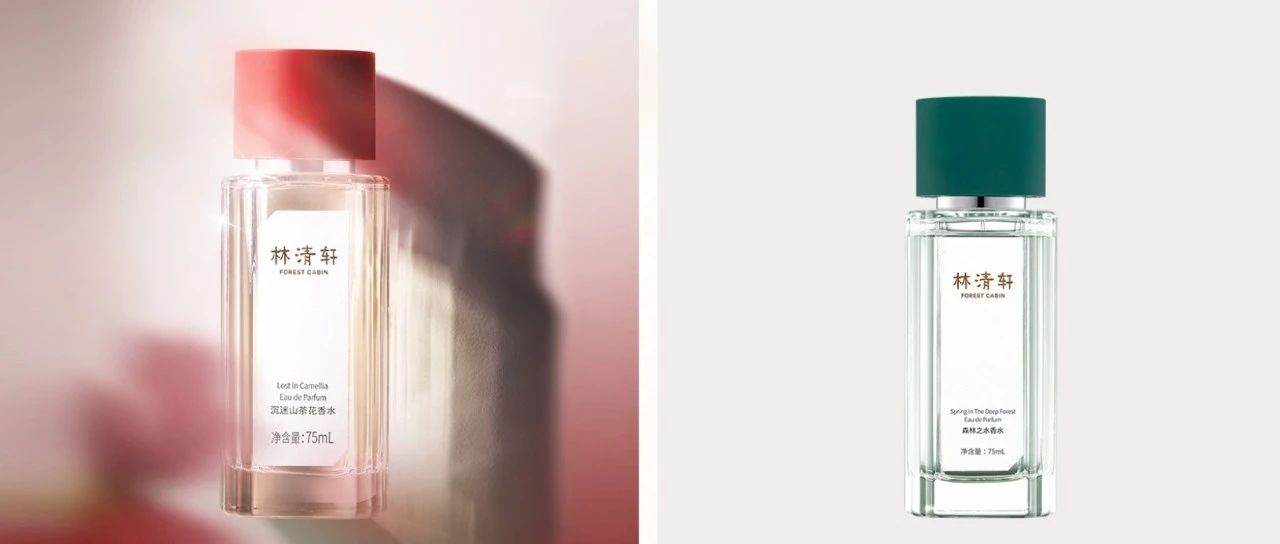
Core Viewpoint - Lin Qingxuan's high growth in performance relies heavily on massive marketing expenditures, with marketing costs reaching 365 million yuan in 2024, accounting for 30% of revenue, and growing by 95% year-on-year, far exceeding the revenue growth rate of 50.3% [1][19] Group 1: Financial Performance - Lin Qingxuan's revenue for 2022, 2023, and 2024 was 691 million yuan, 805 million yuan, and 1.21 billion yuan respectively, with net profits turning from a loss of 5.9 million yuan in 2022 to 84.5 million yuan in 2023 and projected at 187 million yuan in 2024 [5][17] - The gross profit margins for the same years were 78%, 81.2%, and 82.5% respectively, indicating a positive trend in profitability [8][18] - Despite the revenue doubling over three years, the heavy reliance on marketing and the two instances of regulatory penalties have impacted the foundation of its premium positioning and consumer trust [6][19] Group 2: Marketing and Compliance Risks - The company has faced compliance risks due to aggressive marketing strategies, including a fine of 21,000 yuan for misleading advertising in early 2023 and a previous fine of 50,000 yuan in 2021 for inaccurate efficacy claims [2][24] - Marketing expenditures have significantly outpaced revenue growth, with 2024 marketing costs representing 30% of total revenue, indicating a potential erosion of profit margins [19][20] Group 3: Product Strategy and Market Positioning - Lin Qingxuan's high-end product strategy has faced criticism, with luxury items like a 1,700 yuan perfume and a 2,600 yuan essence drawing consumer backlash, challenging its vision of becoming one of the "world's top five cosmetics families" [3][30] - The company has shifted its sales strategy towards online channels, with online sales contributing 59.1% of total revenue in 2024, up from 45.2% in 2022 [11][12] - The product mix shows a growing contribution from essence oils, which accounted for 37% of total revenue in 2024, while other categories like lotions and serums have seen a decline in their revenue share [8][9] Group 4: Organizational Structure and R&D Investment - The company has a workforce of 2,043 employees, with 85.2% in sales and marketing, while only 3.1% are in research and development, reflecting a heavy focus on marketing over product innovation [21][22] - R&D expenditures were only 3% of annual revenue, with total R&D spending over three years being less than 20% of the 2024 marketing budget [20][21]

调味品掀“餐桌争夺战”行业普遍重营销轻研发
Nan Fang Du Shi Bao· 2025-05-22 23:08
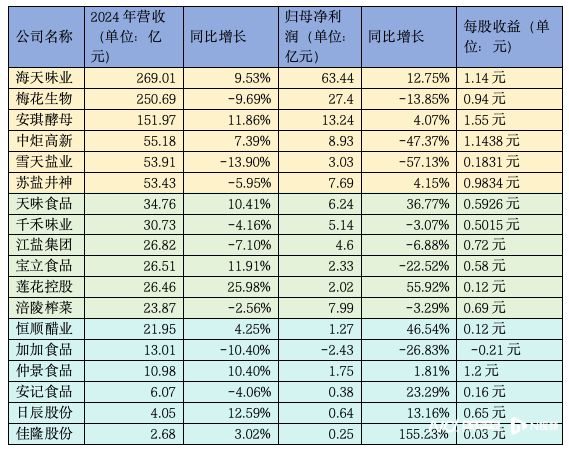
Core Insights - The condiment industry is experiencing significant challenges, with 40% of listed companies reporting revenue declines in their 2024 annual reports, and some leading firms like Xue Tian Salt Industry and Zhong Ju High-tech seeing net profits nearly halved [2][4][5] Group 1: Company Performance - Hai Tian Wei Ye reported a revenue of 26.9 billion yuan, a year-on-year increase of 9.53%, with a net profit of 6.34 billion yuan, up 12.75% [2] - Xue Tian Salt Industry's net profit plummeted over 57% to 893 million yuan, with revenue down more than 13% [4] - Zhong Ju High-tech's net profit fell by 47.37% to 893 million yuan, with both revenue and net profit declining in the first quarter of 2025 [4] Group 2: Market Dynamics - The industry is undergoing severe channel disruptions, with Fuling Zha Cai cutting 607 distributors in a year, while Jia Long Co. saw its distributor count surge from 156 to 535 [2][6] - The overall trend shows that over half of the companies are experiencing continued revenue shrinkage into the first quarter of 2025 [2][5] Group 3: Sales and Marketing Trends - A common issue in the industry is the focus on marketing over research and development, with many companies having R&D expenses below 5% of their total expenditures [9] - Sales expenses are rising significantly, with 11 out of 18 companies reporting increased sales costs, including Lianhua Holdings, which saw a 79.60% increase in sales expenses [8][9]





调味品餐桌“争夺战”:中炬高新等净利腰斩,加加食品巨亏
Nan Fang Du Shi Bao· 2025-05-20 10:08
Core Viewpoint - The condiment industry is experiencing significant challenges, with many companies reporting declining revenues and profits, indicating a shift towards a survival battle focused on cost and innovation [1][2][6]. Revenue and Profit Trends - Among 18 listed condiment companies, 40% reported revenue declines in their 2024 annual reports, with notable companies like Xue Tian Salt Industry and Zhong Ju Gao Xin seeing net profits nearly halved [2][4]. - In Q1 2025, over half of the companies continued to experience revenue shrinkage, with Tian Wei Food's net profit plummeting over 57% [1][4][11]. Company-Specific Performance - Xue Tian Salt Industry's 2024 net profit was 8.93 billion yuan, down over 57%, with Q1 2025 showing a further decline in revenue by 27.24% [4][5]. - Zhong Ju Gao Xin reported a 47.37% drop in net profit for 2024, attributed to legal settlements affecting financials [9]. - Jia Jia Food faced a loss exceeding 200 million yuan in 2024, citing declining sales and increased market expenses [9]. Distribution Channel Dynamics - The industry is undergoing severe channel disruptions, with companies like Fuling Zha Cai cutting over 600 distributors, while others like Jia Long Holdings saw a 242.95% increase in distributor numbers [12][16]. - Xue Tian Salt Industry reduced its distributor count by over 3,000, primarily in provincial markets, as part of a strategy to optimize customer relationships [17]. Sales and Marketing Expenses - 11 out of 18 companies reported increased sales expenses, with Lianhua Holdings' sales expenses surging by 79.60% [18][20]. - The trend of "heavy marketing and light R&D" is prevalent, with R&D expenses generally below 5% of total expenses for most companies, while sales expenses often exceed 10% [22]. Overall Industry Outlook - The condiment industry is facing a survival battle characterized by cost management and innovation, as many companies struggle with declining revenues and profits amid a challenging economic environment [1][6].

小家电年报|半数公司净利润下滑/亏损扩大 倍轻松毛利率60%净利率却<1% 科沃斯、飞科电器存货周转超百天
Xin Lang Zheng Quan· 2025-05-15 09:49
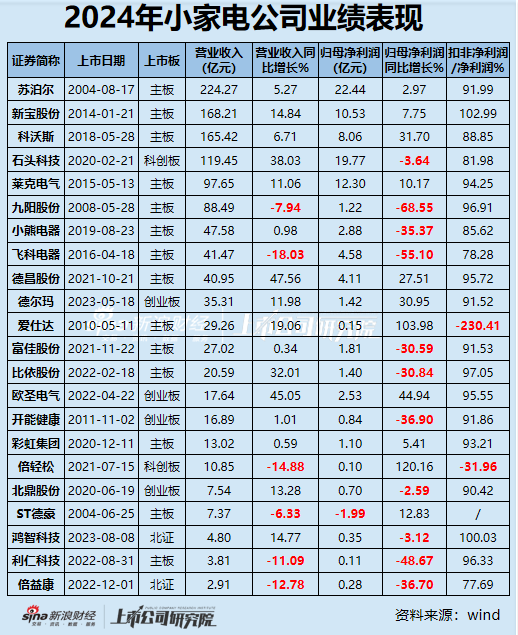
Core Viewpoint - The small home appliance industry in A-shares has shown significant revenue and profit growth in 2024, but there is a notable divergence in performance among companies, with many facing declining profits or losses [1][4]. Industry Overview - The small home appliance sector achieved a revenue of 1190.5 billion yuan and a net profit of 94.69 billion yuan in 2024 [1]. - The industry consists of 22 listed companies, characterized by a mix of consumer and technology attributes, with a diverse range of products including kitchen appliances, cleaning devices, personal care products, and environmental appliances [1]. - The competitive landscape is marked by a concentration of leading companies that leverage brand premium and R&D investment, while some firms struggle with high inventory and uncontrolled expenses [1]. Company Performance - Half of the companies in the small home appliance sector reported a decline in net profit or an increase in losses in 2024, indicating a challenging environment [1][4]. - Leading companies such as Supor, Xinbao, and Ecovacs reported revenues exceeding 10 billion yuan, with most achieving net profit growth, except for Stone Technology [2][3]. Profitability Analysis - Overall profitability in the small home appliance sector remains stable, with only one company, ST Dehao, reporting a loss [4]. - Eight companies have a net profit below 100 million yuan or are operating at a loss, while only four companies have a net profit exceeding 1 billion yuan [4]. - Companies like Aishida and Beilingsong reported significant net profit growth of 103.98% and 120.16%, respectively, but their non-recurring profit ratios were -230.41% and -31.96%, indicating low quality of earnings [4][7]. Cost Structure - The small home appliance industry generally has a higher gross margin compared to black and white goods, but there are significant internal disparities [5]. - Companies like Beilingsong have a gross margin exceeding 60%, yet their net margin is below 1%, highlighting issues with expense management [5][6]. - Sales expenses for many companies far exceed R&D expenses, with Beilingsong's sales expense ratio reaching 50.14%, indicating a heavy reliance on marketing over innovation [11]. Operational Efficiency - Some companies exhibit low operational efficiency, with inventory turnover days exceeding 100 days for several firms, indicating potential inventory accumulation risks [12][15]. - Companies like Supor and Stone Technology demonstrate efficient cash flow management, with turnover days of 44.53 and -37.81 days, respectively [14].

润本业绩增长藏隐忧:存货激增28%,被质疑重营销轻研发
Nan Fang Du Shi Bao· 2025-05-13 11:25
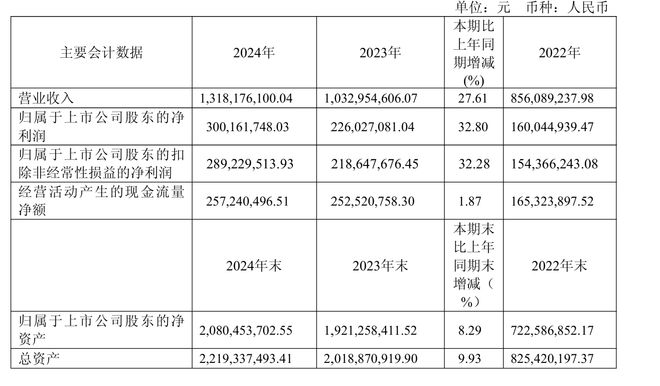
Core Viewpoint - Runben Co., Ltd. (603193.SH) reported strong financial performance for 2024 and Q1 2025, with significant revenue and profit growth, but faces concerns regarding its marketing-heavy strategy and rising inventory levels [1][4][14]. Financial Performance - In 2024, the company achieved revenue of 1.318 billion yuan, a year-on-year increase of 27.61%, and a net profit of 300 million yuan, up 32.8% [1][2]. - For Q1 2025, revenue reached 240 million yuan, reflecting a 44% year-on-year growth, while net profit was 44.2 million yuan, a 24.6% increase [1][2]. Revenue Breakdown - The revenue from the mosquito repellent series was 439 million yuan, up 35.39%, accounting for 33.3% of total revenue; the baby care series generated 690 million yuan, a 32.42% increase, making up 52.4%; and the essential oil series brought in 158 million yuan, growing by 7.88%, representing 11.9% [4][9]. Marketing and R&D Expenditure - The company has spent significantly on marketing, with promotional expenses totaling nearly 6 billion yuan from 2020 to 2023, while R&D expenses were only 71 million yuan during the same period [14][15]. - In 2024, sales expenses reached 380 million yuan, a 41.25% increase, with 321 million yuan allocated for promotional activities [14][15]. Inventory Concerns - As of the end of 2024, the company's inventory value was 119 million yuan, a 28% increase year-on-year, marking the highest level since 2020 [12][10]. - The production volumes exceeded sales volumes across all product lines, leading to inventory accumulation, with mosquito repellent, baby care, and essential oil series having respective unsold stock increases of 14.25%, 12.93%, and 39.82% [12][13]. Future Plans - The company plans to invest 6 billion yuan in a new R&D base in Guangzhou, aimed at enhancing its production and research capabilities in personal care, cosmetics, and medical devices [18][19].

江西生物IPO前大额分红 销售费用高企研发缩水
Xin Lang Zheng Quan· 2025-05-13 08:05
Core Viewpoint - Jiangxi Biological has distributed a total of 126 million yuan in dividends from 2023 to 2024, which accounts for 80.25% of its net profit during the same period, raising concerns about financial sustainability before its IPO [1][2]. Financial Performance - Jiangxi Biological reported revenues of 142 million, 198 million, and 221 million yuan over the past three years, with corresponding profits of 26.468 million, 55.481 million, and 75.14 million yuan, totaling 157 million yuan in profit [2]. - The company achieved gross profits of 107 million, 134 million, and 155 million yuan, with gross margins of 75.4%, 67.8%, and 70.3% respectively [2]. Dividend Distribution - The company declared dividends of 10 million yuan in May 2023 and 76 million yuan in October 2023, followed by an additional 40.1 million yuan in September 2024, leading to a cumulative dividend payout of 126 million yuan [2]. Shareholding Structure - The controlling shareholder, Jing Yue, holds approximately 76.64% of the voting rights through Hainan Zhizheng and Qianhai Tianzheng [2]. Expenditure Analysis - Jiangxi Biological's sales expenses from 2022 to 2024 totaled 94.62 million yuan, with over 70% allocated to promotional activities, primarily for academic conferences and hospital promotions [3]. - In contrast, R&D expenditures have significantly decreased, with a 43.5% year-on-year drop in 2024 to 13.68 million yuan, representing only 6.33% of revenue, which is below the industry average of 15%-20% [3]. R&D and Quality Control Issues - The company’s R&D spending in 2024 was less than half of its distribution costs, indicating a concerning imbalance favoring marketing over research [3]. - Jiangxi Biological has faced penalties for producing substandard drugs, including a fine of 1.33 million yuan in 2018 for producing defective tetanus antitoxin, highlighting ongoing quality control issues [3]. - The company's MSCI ESG rating is only CCC, significantly below the industry average of BB, reflecting its quality management challenges [3].
服饰年报|重营销侵吞利润 欣贺股份、锦泓集团、安奈儿超5成收入用作营销
Xin Lang Zheng Quan· 2025-05-09 08:33
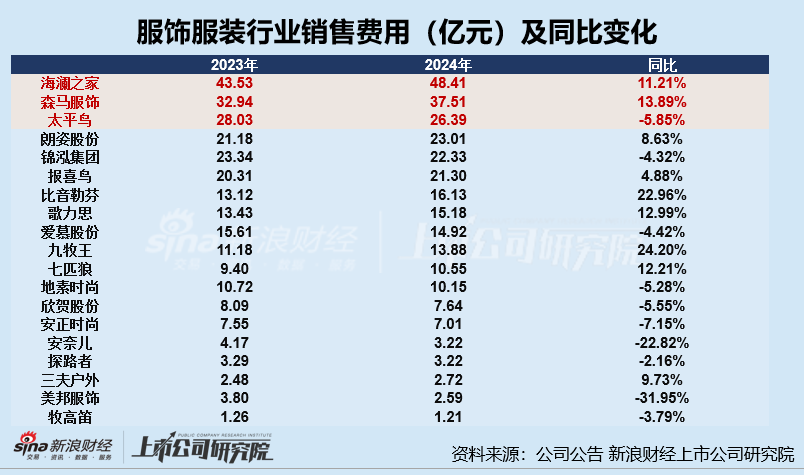
Core Viewpoint - The textile and apparel industry is experiencing high marketing expenditures, with several companies significantly increasing their sales expenses, which raises concerns about the balance between marketing and research and development investments [1][4]. Sales Expenses Overview - The top three companies in terms of sales expenses for 2024 are Haier Home (48.41 billion), Semir Apparel (37.51 billion), and Taiping Bird (26.39 billion) [1][2]. - Sales expenses for Haier Home and Semir Apparel have increased by 11.21% and 13.89% respectively compared to the previous year [1][2]. - Notable increases in sales expenses are observed in Jiuwang (13.88 billion, up 24.2%), Biyinlefen (16.13 billion, up 22.96%), and Semir Apparel (37.51 billion, up 13.89%) [1][2]. Sales Expense Ratios - In 2024, companies like Xinhe (54.36%), Jinhong Group (50.8%), Annail (50.42%), and Geli Si (50%) are allocating over 50% of their revenue to marketing expenses, indicating high marketing spending [2][3]. - Jiuwang's sales expense ratio is 43.64%, reflecting a significant increase from the previous year [3]. Marketing vs. R&D Investment - The industry shows a trend of high marketing expenses compared to low R&D investments, with Xinhe's sales expense ratio at 54.36% and R&D expense ratio at only 4.4% [4]. - This imbalance contributes to product homogeneity and insufficient innovation, leading to inventory issues and price wars among brands [4].




溜溜果园弃A转港:遭原料涨价、量贩渠道双重挤压 自降身价募资凑2.61亿红杉赎回款
Xin Lang Zheng Quan· 2025-04-28 09:47
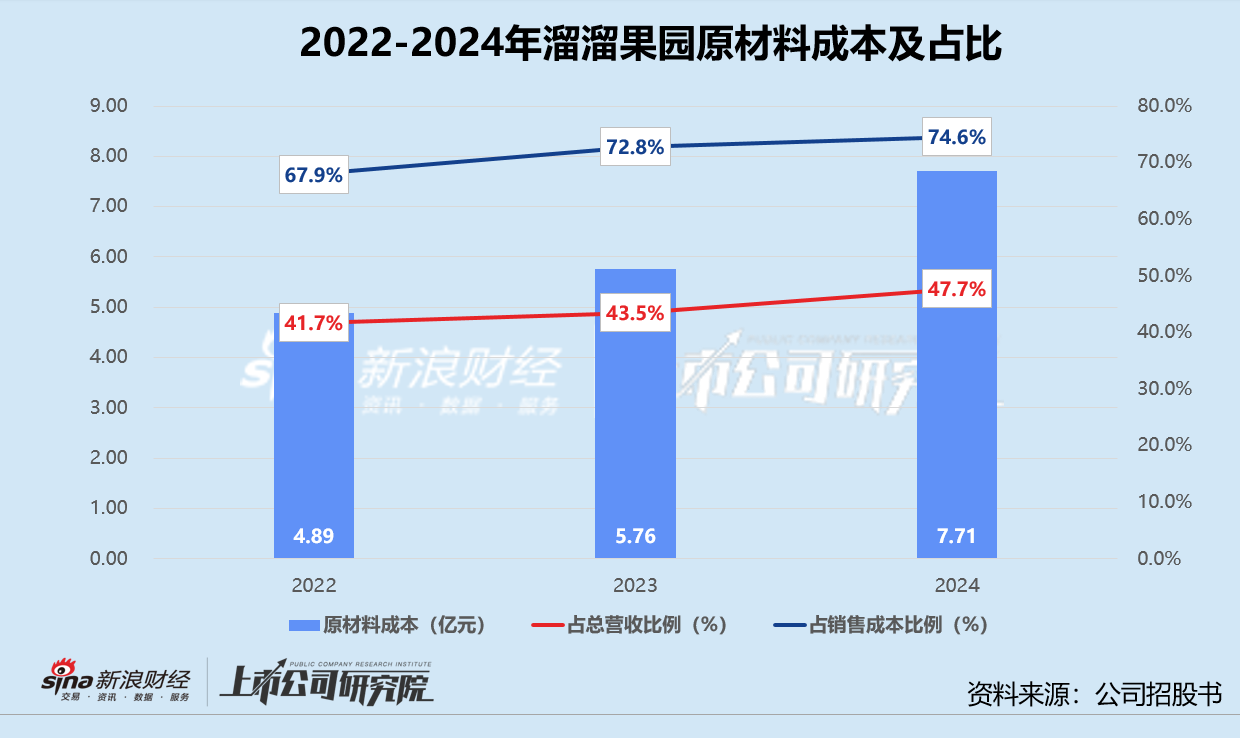
Core Viewpoint - Liu Liu Mei has resumed its path to IPO after five years, presenting a steady growth report but facing significant challenges in product diversity and cash flow due to major investor withdrawal [2][3][13]. Financial Performance - Liu Liu Mei's total revenue is projected to grow from 1.174 billion yuan in 2022 to 1.616 billion yuan in 2024, representing an increase of 85% compared to 2019 [2]. - Net profit is expected to rise from 68.43 million yuan to 148 million yuan during the same period, recovering from a decline seen between 2016 and 2018 [2]. Product and Market Challenges - The company relies heavily on three core products: dried plums, dried plums products, and plum jelly, with over 85% of revenue coming from dried plums and jelly [3]. - Raw material costs have increased significantly, with domestic green plum prices rising from 2,400 yuan to 2,600 yuan per ton and imported dried plum prices increasing from 16,200 yuan to 20,700 yuan per ton from 2020 to 2024 [3]. - The company's raw material costs are projected to rise from 489 million yuan in 2022 to 771 million yuan in 2024, accounting for 41.7% to 47.7% of total revenue [3]. Competitive Landscape - The snack food market is becoming increasingly competitive, with the CR3 and CR5 market concentration ratios declining to 11.1% and 16.5% respectively by 2024 [6]. - Competitors like Three Squirrels and Bestore are offering similar plum snacks at lower prices, putting pressure on Liu Liu Mei's pricing strategy [6][8]. Sales Channels and Strategy - Liu Liu Mei is shifting its sales strategy towards discount snack stores, with revenue from distributors decreasing from 874 million yuan to 659 million yuan between 2022 and 2024 [7]. - The top five customers accounted for 33.1% of total revenue in 2024, with significant sales to major retail chains [7]. Marketing and R&D Expenditure - The company has invested heavily in marketing, with advertising expenses totaling 427 million yuan from 2022 to 2024, representing 27.3% of total gross profit [11]. - In contrast, R&D spending has been minimal, with a research expense rate of only 1.2% in 2024, raising concerns about long-term sustainability [11][13]. Investor Dynamics - Sequoia Capital, a major investor, has exited, leading to liquidity issues for Liu Liu Mei, which had to arrange for D-round financing to cover buyback obligations [13][14]. - The company's cash and cash equivalents were reported at 78.04 million yuan as of December 31, 2024, indicating a tight cash flow situation [14].
贝泰妮一季报:业绩双降、归母净利润暴跌84%、经营现金流量净额转负
Xin Lang Zheng Quan· 2025-04-28 07:03
Core Viewpoint - Betaini, once known as the "cosmetic medicine leader," faces its most severe challenge since its listing in Q1 2025, with a significant decline in revenue and profit [1][2] Financial Performance - The company's revenue for the period was 949 million yuan, a year-on-year decrease of 13.51% [1] - The net profit attributable to shareholders was only 28.34 million yuan, down 83.97% year-on-year [1] - Operating cash flow was negative, reaching -68.65 million yuan in Q1 [2] Brand and Market Position - The core brand, Winona, is experiencing a slowdown in growth and a weakening market position, which poses the biggest risk to Betaini [1] - Winona's ranking in the beauty category on Tmall dropped from 5th to 9th during the 2023 Double 11 shopping festival [1] - The company has invested 536 million yuan in acquiring brands like Jirui and Bomei, but these new businesses have not effectively supported the company's performance [1] Industry Challenges - The competitive landscape in the efficacy skincare sector has intensified, leading to increased pressure on Betaini [1] - The company's reliance on online channels is showing signs of fatigue, with offline channels also facing challenges due to reduced foot traffic [1] - The current business model of "heavy marketing and light R&D" is proving to be limited, necessitating a shift towards innovation and product strength [2]
“翻新卫生巾”余波未平,自由点母公司一季度线上增长遇阻
Xin Jing Bao· 2025-04-22 12:03
Core Viewpoint - The "refurbished sanitary napkin" incident has significantly impacted Baiya Co., Ltd. (003006), with noticeable changes in revenue and profit growth, particularly in e-commerce channels due to public sentiment [1][2]. Group 1: Financial Performance - In Q1 2025, Baiya Co. achieved revenue of 9.95 billion, a year-on-year increase of 30.1%, and a net profit of approximately 1.31 billion, up 27.27% [1]. - The cash flow from operating activities saw a drastic decline of 92.92%, dropping to 6.91 million from 97.57 million in the same period last year [7][8]. - The overall gross margin decreased by 1% to 53.3% compared to the previous year [4]. Group 2: Sales Channel Dynamics - The e-commerce channel, which was a significant growth driver, reported revenue of 3.22 billion in Q1 2025, with a growth rate of only 8.6%, down from 150.5% in the previous year [3][4]. - Offline sales channels performed better, generating 6.5 billion in revenue, a 49% increase, with growth in non-core regions reaching 125.1% [3][4]. Group 3: Marketing and Expenses - Sales expenses rose to 3.38 billion, a year-on-year increase of 28.5%, while R&D expenses decreased by 1% to 15.11 million [6][7]. - The company has historically prioritized marketing over R&D, with sales expenses being approximately 17 times higher than R&D expenditures in the past year [7]. Group 4: Future Outlook - Baiya Co. plans to increase investment in product R&D, focusing on the development and upgrade of existing products, particularly in the low-penetration segment of panty sanitary napkins [9].