
粮食安全

Search documents
红四方: 红四方2025年半年度报告
Zheng Quan Zhi Xing· 2025-08-25 17:05
Core Viewpoint - The report highlights the financial performance and operational challenges faced by China Salt Anhui Hongsifang Fertilizer Co., Ltd. in the first half of 2025, emphasizing a significant decline in revenue and profits due to macroeconomic factors and market conditions affecting fertilizer prices and sales volumes [1][3]. Financial Performance - The company's revenue for the first half of 2025 was approximately CNY 1.81 billion, a decrease of 8.18% compared to the same period in the previous year [3]. - Total profit for the period was CNY 56.82 million, down 42.29% year-on-year [3]. - Net profit attributable to shareholders was CNY 43.97 million, reflecting a 47.10% decline compared to the previous year [3]. - The net cash flow from operating activities was negative CNY 19.76 million, a significant drop of 122.51% from the previous year [3]. - The basic earnings per share decreased by 69.09% to CNY 0.17 [3]. Industry Overview - The company operates in the chemical raw materials and products manufacturing sector, specifically in nitrogen fertilizer and compound fertilizer production [5]. - The Chinese government emphasizes food security as a national priority, which directly impacts the fertilizer industry, as fertilizers are crucial for increasing crop yields [5]. - The report notes that the national summer grain planting area remained stable at 399 million mu, with a slight increase in yield per mu, indicating a steady demand for fertilizers [5]. Market Conditions - The average ex-factory price of urea in the first half of 2025 was CNY 1,755 per ton, down 19.8% year-on-year, reflecting a challenging pricing environment [5]. - The compound fertilizer market experienced price fluctuations, with initial price increases followed by a notable decline due to rising raw material costs and weakened demand in certain regions [5]. Product Portfolio - The company produces a wide range of fertilizers, including conventional compound fertilizers, crop-specific formula fertilizers, and new special fertilizers, with over 500 specifications available [6][7]. - Nitrogen fertilizers include urea, ammonium sulfate, and ammonium chloride, with urea being the most widely used nitrogen fertilizer in China [6][7]. Strategic Initiatives - The company is actively responding to national policies aimed at reducing fertilizer application while enhancing efficiency, focusing on developing a differentiated product system [6]. - The company aims to strengthen its market position by collaborating with new agricultural entities and providing comprehensive solutions that include both products and services [6].
善水科技上半年多项主要产品毛利率同比增长
Zheng Quan Ri Bao· 2025-08-25 16:15
Core Viewpoint - Jiujiang Shanshui Technology Co., Ltd. reported a significant increase in revenue and net profit for the first half of 2025, driven by favorable market conditions in the fine chemical sector, particularly in the dye industry [1][2][3]. Group 1: Financial Performance - The company achieved operating revenue of 305 million yuan, representing a year-on-year growth of 23.08% [1]. - The net profit attributable to shareholders was 47.77 million yuan [1]. Group 2: Market Dynamics - The fine chemical sector outperformed the basic chemical sector, with the dye industry being a highlight due to improved domestic consumption and stricter environmental regulations [2]. - Prices for dye intermediates, such as 6-nitro compounds, surged due to supply-side constraints from environmental policies and seasonal demand [2]. Group 3: Industry Characteristics - The dye intermediate industry exhibits strong stability once integrated into the downstream supply chain, with high switching costs for customers due to the specific quality requirements of dye products [3]. - The company has established long-term stable partnerships with several well-known dye enterprises, maintaining a leading market share in its segment [3]. Group 4: R&D Investment - Research and development investment increased by 42.97% year-on-year, focusing on upgrading existing products and developing high-value-added products [4]. - The company has developed a core technology system that integrates product research, process development, and equipment modification, positioning it at the forefront of the industry [4]. Group 5: Product Quality and Production Efficiency - The company’s 6-nitro products have significant quality advantages, utilizing a continuous nitration process that reduces waste and lowers environmental costs [5]. - The gross margin for 6-nitro products was 45.69%, reflecting an increase compared to the previous year [5]. - The company is actively promoting the capacity release of chlorinated pyridine series products, with a gross margin of 26.33% for 2,3-dichloropyridine, showing substantial growth [5].

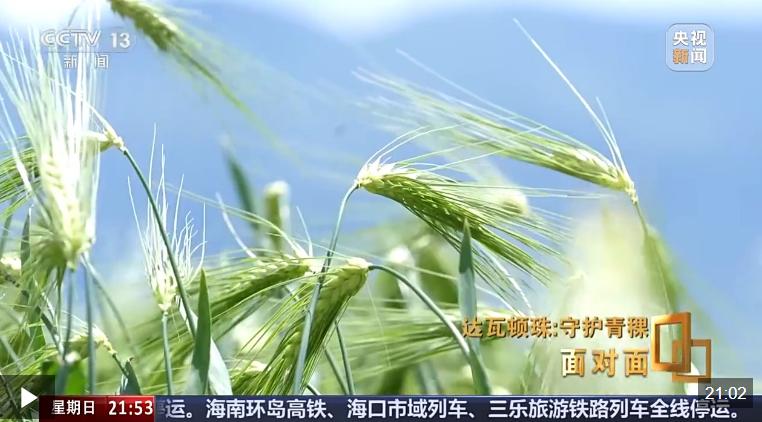
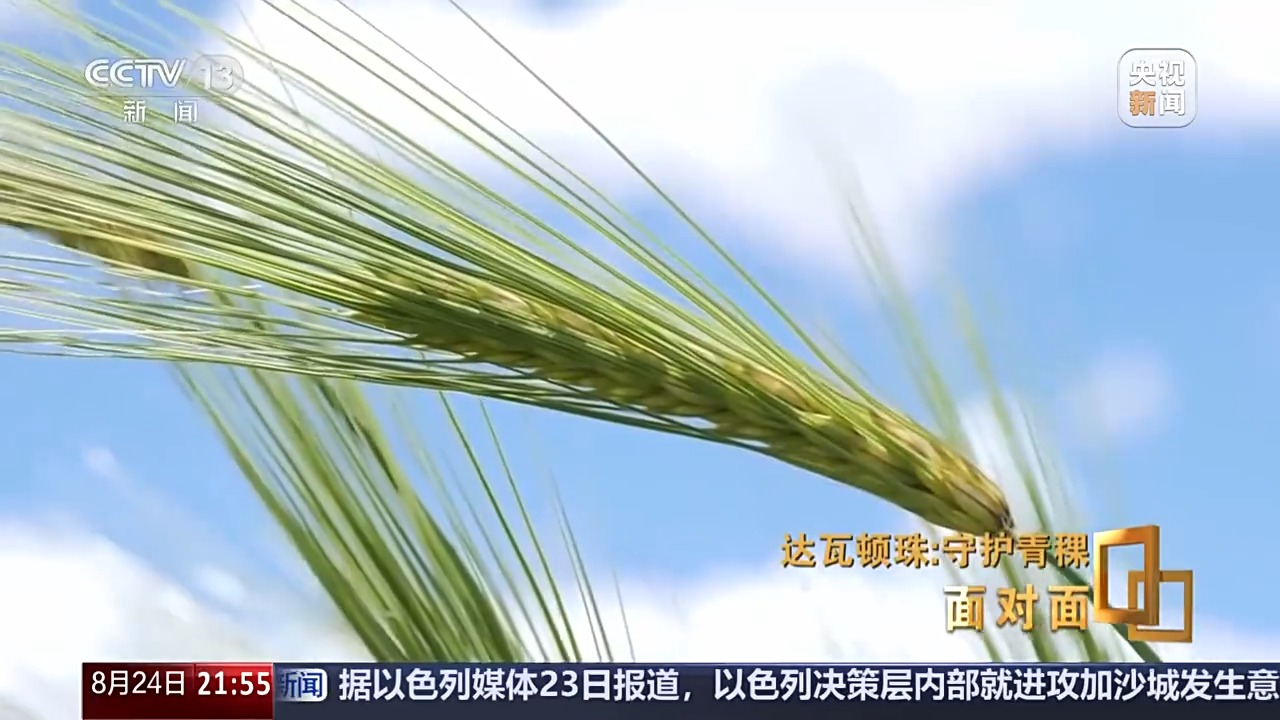
面对面丨青稞为何要保留延续四千多个品种?解码“西藏粮仓”密码
Yang Shi Xin Wen Ke Hu Duan· 2025-08-25 08:16
Core Viewpoint - The establishment of the world's largest barley germplasm resource base in Linzhou County, Lhasa, Tibet, is crucial for preserving diverse strains of barley, which are essential for food security and agricultural resilience in the region [2][25]. Group 1: Importance of Barley - Barley, specifically highland barley, is a traditional staple food for the Tibetan people and is vital for food security in Tibet due to its adaptability to extreme high-altitude climates [4]. - The diverse strains of barley serve as a "genetic bank," providing potential resistance to diseases and ensuring food supply stability in case of agricultural crises [2]. Group 2: Research and Development - The germplasm resource base contains over 4,000 varieties of barley, which are essential for breeding programs aimed at improving crop resilience and yield [2][25]. - The barley yield in Tibet has significantly increased from less than 200 jin per mu (approximately 100 kg) in the early days of liberation to 700-800 jin per mu (approximately 350-400 kg) today, with 80%-90% of the area covered by improved varieties [24]. Group 3: Personal Journey of Researchers - Dawa Tonzhu, a key researcher, was inspired by his mentors and the historical contributions of earlier scientists in the field of barley research, leading him to pursue advanced studies and contribute to the development of new barley varieties [10][27]. - The late Nima Zhashi, a prominent figure in Tibetan barley research, played a crucial role in supporting Dawa Tonzhu's education and career, emphasizing the importance of fieldwork and farmer engagement in agricultural research [12][22]. Group 4: Future Directions - The ongoing efforts to breed new barley varieties and promote agricultural technology are vital for enhancing the productivity and sustainability of barley farming in Tibet [25][27]. - The research community aims to leverage the genetic diversity preserved in the germplasm resource base to develop improved barley strains that can meet the challenges posed by climate change and agricultural diseases [27].

农林牧渔行业周报第 26 期:供过于求局面加剧,猪价继续下跌-20250825
HUAXI Securities· 2025-08-25 05:20
Investment Rating - The industry rating is "Recommended" [3] Core Insights - The pork market is experiencing an oversupply, leading to a continued decline in pork prices [2] - The planting industry is focusing on pest control for autumn crops, which is crucial for achieving the annual grain production target of approximately 1.4 trillion jin [11] - The commercialization of genetically modified crops is expected to accelerate, enhancing self-sufficiency in key varieties [11] Summary by Sections Planting Industry - A national meeting was held to address pest control for autumn crops, emphasizing its importance for overall grain yield [11] - The autumn crop accounts for three-quarters of the annual grain production, making pest control critical [11] - The Ministry of Agriculture is promoting the protection of new plant varieties to support innovation in the seed industry [11] - Recommended stocks include Beidahuang and Suqian Agricultural Development in the planting sector, and major seed companies like Dabeinong and Longping High-Tech [11] Swine Farming - The average price of external three-breed pigs is 13.80 yuan/kg, with a slight weekly decrease of 0.07% [2] - Demand remains weak, and there are no immediate positive factors expected to boost demand [2] - The number of breeding sows has decreased to 40.43 million, down 370,000 from the peak last year [2] - Recommended stocks in the breeding sector include DeKang Agriculture, Jingji Zhino, Muyuan Foods, and Wen's Foodstuffs [2] Key Agricultural Products Data Tracking - Corn: The average price is 2385.10 yuan/ton, down 0.39% week-on-week [24] - Wheat: The average price is 2435.58 yuan/ton, down 0.10% week-on-week [27] - Rice: The average price for japonica rice is 2892.80 yuan/ton, down 0.66% week-on-week [32] - Soybeans: The average price is 3952.63 yuan/ton, up 0.27% week-on-week [37] - Cotton: The average price in Xinjiang is 15090.00 yuan/ton, up 0.18% week-on-week [42] Feed and Vitamin Prices - The average price of pig feed is 2.71 yuan/kg, down 0.37% week-on-week [49] - The average price of vitamin E is 67.50 yuan/kg, unchanged week-on-week [49]


五环承建安哥拉化肥项目强夯启动
Zhong Guo Hua Gong Bao· 2025-08-25 02:16
Core Viewpoint - The project by China Chemical's subsidiary, China Wuhuan Engineering Co., has made significant progress with the AMUFERT fertilizer project in Angola, marking a key milestone in its construction phase [1] Group 1: Project Progress - The first strong compaction machine has been assembled, tested, and accepted, allowing the project to officially enter the main construction phase [1] - The initiation of strong compaction work is crucial for providing technical support for foundation treatment and accelerating the overall construction process [1] - The timely start of the strong compaction work has received high praise from the project owner, AMUFERT, and the project management consultant for the company's professionalism and efficiency [1] Group 2: Project Details - The AMUFERT fertilizer project is Angola's first large-scale fertilizer project, located in the Zaire Province of Soyo City [1] - The project plans to build a fertilizer plant that uses natural gas as raw material, with a daily production capacity of 2,300 tons of synthetic ammonia and 4,000 tons of urea [1] - Upon completion, the project will help Angola reduce its long-term reliance on imports, enhance food security, promote agricultural modernization, and support the diversification of the national economy [1]

青稞为何要保留延续四千多个品种?解码“西藏粮仓”密码
Yang Shi Xin Wen· 2025-08-25 00:05
Core Viewpoint - The establishment of the world's largest barley germplasm resource base in Linzhou County, Lhasa, Tibet, is crucial for agricultural biodiversity and food security, particularly for the local population who rely heavily on barley as a staple food and currency [1][3][5]. Group 1: Importance of Barley - Barley, specifically Qiang barley, is essential for the Tibetan people, serving as both food and a medium of exchange for other goods like butter and meat [5]. - The genetic diversity of over 4,000 barley varieties is vital for resilience against potential agricultural crises, such as plant diseases [1][3]. Group 2: Research and Development - The germplasm resource base was developed under the leadership of Dawa Tonzhu, who emphasized the importance of maintaining diverse barley varieties for future breeding efforts [1][24]. - The yield of barley in Tibet has significantly improved, with production per mu increasing from less than 200 jin to 700-800 jin, and the coverage of improved varieties reaching 80%-90% [23]. Group 3: Personal Journey of Dawa Tonzhu - Dawa Tonzhu's journey from a student with financial difficulties to a leading researcher in barley cultivation highlights the importance of mentorship and support in agricultural science [9][11]. - His experiences in the field have shaped his understanding of agricultural challenges and the need for practical solutions that directly benefit local farmers [19][24]. Group 4: Legacy and Future Directions - The passing of his mentor, Nima Zhaxi, marked a significant moment, yet Dawa Tonzhu continues to advance barley research and development, ensuring the legacy of scientific inquiry and agricultural improvement in Tibet [21][24]. - The focus remains on utilizing the rich genetic resources available to develop new barley varieties that can meet the evolving needs of the agricultural sector [29][30].
农林牧渔行业2025年第34周周报:规模创新高,本届亚宠展有何看点-20250824
Tianfeng Securities· 2025-08-24 12:42
Investment Rating - Industry rating: Outperform the market (maintained rating) [9] Core Insights - The pet industry is experiencing significant growth, with the Asia Pet Expo showcasing over 2,600 exhibitors and 20,000 brands, indicating a thriving market driven by globalization and innovation [2][13] - China's pet food exports have shown continuous growth, with 201,000 tons exported from January to July 2025, reflecting a year-on-year increase of 6.64% [14] - The pig farming sector is facing challenges, with the average pig price at 13.82 yuan/kg, a decrease of 3.63% from the previous week, and the average weight of pigs reaching a historical high [15][16] - The dairy sector is poised for a recovery, with the original milk price expected to rebound as production capacity decreases after a prolonged period of losses [17][18] - The poultry sector is focusing on breeding gaps, with a significant decline in the import of breeding chickens due to avian influenza concerns, which may impact future supply [19][20] - The planting sector emphasizes food security and the importance of biotechnology, with a focus on high-yield and resilient crop varieties [25] - The feed sector is recommended for investment, particularly in companies like Haida Group, which is expected to benefit from market recovery and increased market share [26] Summary by Sections Pet Sector - The Asia Pet Expo has reached a record scale of 310,000 square meters, highlighting the industry's vitality and innovation potential [2][13] - Pet food exports from China have increased, with a total of 201,000 tons exported in the first seven months of 2025, showing a year-on-year growth of 6.64% [14] - Recommended companies include pet food brands like Guibao Pet, Zhongchong Co., and Petty Co. [14] Pig Sector - The average pig price is currently at 13.82 yuan/kg, with a year-to-date low in profitability for pig farming [15][16] - The average weight of pigs is at a historical high, indicating supply pressures [15] - Recommended companies include leading pig farming firms such as Wens Foodstuffs Group and Muyuan Foods [16] Dairy Sector - Yuran Dairy reported stable performance with a revenue of 10.3 billion yuan, showing a year-on-year growth of 2.3% [17] - The dairy industry is expected to see a recovery as production capacity decreases [18] - Recommended companies include Yuran Dairy and China Shengmu Organic Milk [18] Poultry Sector - The poultry sector is facing challenges with breeding imports, particularly for white chickens, due to avian influenza [19][20] - Recommended companies include Shennong Development and Yisheng Livestock [20] Planting Sector - The focus is on food security and biotechnology, with an emphasis on high-yield and resilient crop varieties [25] - Recommended companies include Longping High-Tech and Dabeinong Technology Group [25] Feed Sector - Haida Group is highlighted as a key investment opportunity due to its increasing market share and performance [26] - The animal health sector is also recommended, particularly companies like Kexin Biological [27]


【新思想引领新征程】攥紧中国种子、端稳中国饭碗 为把牢粮食安全主动权和推动农业现代化提供坚实保障
Yang Guang Wang· 2025-08-24 03:27
Core Viewpoint - The article emphasizes the importance of seed technology and self-sufficiency in ensuring food security in China, highlighting the government's commitment to advancing agricultural modernization through seed innovation and research [1][6]. Group 1: Seed Technology and Innovation - The Chinese government is focusing on achieving self-reliance in seed technology to ensure food security and supply of important agricultural products [1]. - Research teams are actively working on breeding new varieties of crops, including salt-tolerant crops, to adapt to challenging agricultural conditions [3][4]. - The establishment of a comprehensive network of breeding demonstration bases in Heilongjiang province aims to enhance crop yield and quality through advanced breeding techniques [3][4]. Group 2: Research and Development Platforms - National laboratories are being utilized to address key challenges in seed promotion and to accelerate the breeding of new varieties [2]. - The integration of artificial intelligence and molecular breeding techniques is being employed to improve the efficiency and precision of crop breeding [4]. Group 3: Resource Management and Utilization - The establishment of seed banks and genetic resource repositories is crucial for the innovation of seed varieties and ensuring a stable food supply [5]. - The proportion of domestically bred crop varieties has exceeded 95%, indicating a significant reduction in reliance on imported seeds [5][6]. - The Ministry of Agriculture is committed to enhancing the capacity for seed supply and advancing key technologies in seed breeding [6].
联合国官员:加沙饥荒报告包含以方数据
Yang Shi Xin Wen· 2025-08-23 01:17
Core Insights - The World Food Programme, Food and Agriculture Organization, and UNICEF representatives held a press conference in New York on the latest "Integrated Food Security Phase Classification" report [1] - In response to a question from a CCTV reporter regarding Israel's denial of the report's reliability, UN officials stated that the report uses a "gold standard" and includes data from the Israeli government and the Gaza Humanitarian Foundation, a private organization supported by the US and Israel [1] Summary by Categories - **Organizations Involved** - The report was presented by the World Food Programme, Food and Agriculture Organization, and UNICEF [1] - **Report Credibility** - UN officials emphasized the report's credibility by referring to it as using a "gold standard" [1] - The report incorporates data from both the Israeli government and the Gaza Humanitarian Foundation, which is backed by the US and Israel [1]
大数据观察|大国粮仓的升级故事
Ren Min Ri Bao· 2025-08-22 01:48
Core Viewpoint - The evolution of grain storage in China reflects a significant upgrade in food security, transitioning from traditional methods to modern, intelligent, and environmentally friendly storage solutions [1] Group 1: Historical Development of Grain Storage - Early grain storage facilities were simple structures, often made from earth and wood, with limited capacity and high loss rates due to pests and moisture [2] - The first technological upgrade occurred in the 1950s with the introduction of the "Soviet-style warehouse," which improved storage capacity to about 2,500 tons but still faced limitations in structural integrity and climate adaptability [3] - The 1980s and 1990s saw the rise of brick-concrete warehouses, enhancing storage quality and efficiency, leading to a significant increase in storage capacity and a reduction in grain loss [4] Group 2: Current State of Grain Storage - Modern grain storage primarily consists of high flat warehouses and shallow round warehouses, which are equipped with advanced storage technologies and provide better pest and moisture control [5] - The construction of new generation smart green warehouses emphasizes intelligent monitoring and management, focusing on energy efficiency and environmental protection [6] Group 3: Future Developments and Initiatives - During the 14th Five-Year Plan, China aims to enhance grain storage facilities and promote green storage technologies, with plans to establish 100 demonstration points for integrated green storage technology across seven ecological storage areas [7] - The current grain storage capacity in China has reached over 700 million tons, matching the annual grain production, supported by the largest food internet system globally [7]