
AI智能体

Search documents
滚动更新丨A股三大股指集体高开,雅下水电概念股掀涨停潮
Di Yi Cai Jing· 2025-07-21 01:39
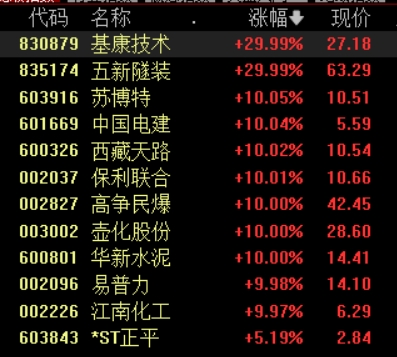
水泥、工程机械、水利板块活跃,AI智能体、医药板块低开。 09:34 钢铁板块走高 西宁特钢、八一钢铁涨停,重庆钢铁、柳钢股份、酒钢宏兴、盛德鑫泰涨超5%。消息面上,中钢协7月15日在成都组织 召开钢铁工业规划部长会,会议要求坚持严控增量与畅通退出,防范钢铁行业产能过剩风险持续加剧,着力破除"内卷 式"竞争。 09:34 恒指突破25000点整数关口,为2022年2月以来首次,较4月低点上涨超25%。 三大股指集体高开,上证指数开盘报3542.82点,涨0.24%,深成指开盘报10937.6点,涨0.22%,创业板指开盘报2285.41 点,涨0.36%。水泥、工程机械、水利板块活跃,AI智能体、医药板块低开。 09:24 港股建材水泥股走强,华新水泥涨14.97%、西部水泥涨7.39%、中国建材涨7.34%、海螺水泥涨7.19%。 09:21 港股开盘丨恒生科技指数涨1.18% 恒生指数开盘涨0.67%,恒生科技指数涨1.18%。华检医疗涨近15%,美国稳定币牌照申请及 IVDNewCo Exchange生态落 地正式开启。胜利证券涨近11%,预计半年度业绩同比扭亏。迪生创建复牌跌超29%,私有化计划失效。 ...


贾跃亭首款MPV被指抄袭长城,FF官网删除高山9宣传语;极氪否认卖「0公里二手车」虚增销量;曝NVIDIA H20供应有限
雷峰网· 2025-07-21 00:42
Group 1 - Zeekr denies selling "0 km used cars" to inflate sales, stating that the vehicles are display cars and part of normal business practices [4] - Faraday Future's first MPV, Super One, faces accusations of design plagiarism from Great Wall Motors, leading to the removal of promotional language from its website [6] - The food delivery market is experiencing a shift as platforms continue to offer high-value coupons despite regulatory scrutiny [9][10] Group 2 - ByteDance's data science head, Qin Lu, leaves the company to start a venture in the AIGC field, seeking talent for algorithm and development roles [11] - Manus, after facing operational challenges, has shifted focus to international markets and shared lessons learned from its experiences [12] - NVIDIA's H20 AI chip supply is limited, with no plans to restart production due to U.S. sales bans, impacting its revenue significantly [13] Group 3 - Japan's semiconductor industry announces successful trial production of 2nm wafers, marking a significant technological advancement [31][32] - Meta continues to attract talent from Apple, hiring two AI researchers with substantial compensation packages, indicating a competitive landscape in AI development [30][31] - NIO's legal department responds to malicious rumors, emphasizing the company's commitment to legal action against false information [24]






OpenAI上新Manus撤退 AI智能体两面
Bei Jing Shang Bao· 2025-07-20 14:31
Core Insights - OpenAI has not released GPT-5 as planned, instead launching the ChatGPT Agent, which possesses autonomous thinking and action capabilities [2][3] - Manus, a previously popular AI agent, has cleared its social media content and is reportedly relocating its headquarters to Singapore, leading to significant layoffs in China [2][6] Group 1: ChatGPT Agent Features - The ChatGPT Agent can autonomously select tools from its skill set to complete complex tasks, such as analyzing competitors and creating presentations [3] - It integrates functionalities from previous features like Operator and Deep Research into a unified system, enhancing its ability to interact with websites and process information [3][4] - The system includes various tools for web interaction, text processing, and code execution, but trading and sensitive operations are restricted to prevent financial losses [4][5] Group 2: Manus Market Exit - Manus has exited the Chinese market, clearing its social media and indicating a shift in focus to operational efficiency by relocating to Singapore [6][7] - The decision to move may be influenced by U.S. investment restrictions and the challenges of maintaining different product versions for domestic and international markets [7] - Manus's co-founder reflected on the challenges faced in developing AI agents, emphasizing the complexity of building effective systems [6][7] Group 3: Industry Trends and Predictions - The global AI agent market is projected to reach $5.4 billion by 2024, with expectations for significant growth as major companies commercialize AI agent products [8] - Analysts predict 2025 could mark the "year of the AI agent," with foundational large models being crucial for agent capabilities [8][9] - Concerns exist regarding the sustainability of the AI agent market, with predictions that over 40% of projects may be canceled by the end of 2027 due to market corrections [8][9]

A股公司,密集披露;“两船”合并,获批;宇树科技开启上市辅导……周末,大消息!
Zheng Quan Shi Bao· 2025-07-20 10:41
宏观·要闻 1—6月全国吸收外资4232.3亿元人民币 据商务部网站消息,2025年1—6月,全国新设立外商投资企业30014家,同比增长11.7%;实际使用外 资金额4232.3亿元人民币,同比下降15.2%。 从行业看,制造业实际使用外资1090.6亿元人民币,服务业实际使用外资3058.7亿元人民币。高技术产 业实际使用外资1278.7亿元人民币,其中,电子商务服务业、化学药品制造业、航空航天器及设备制造 业、医疗仪器设备及器械制造业实际使用外资分别增长127.1%、53%、36.2%、17.7%。 重要会议召开:战略矿产走私出口"零容忍、出重拳" 据商务部网站消息,2025年7月19日,国家出口管制工作协调机制办公室组织商务部、公安部等单位, 在广西南宁召开打击战略矿产走私出口专项行动推进会,总结通报前期进展成效,全面分析当前打私形 势,对专项行动进行再部署、再推进。 会议指出,专项行动启动以来,各有关部门深入贯彻落实党中央、国务院决策部署,成立专班、迅速行 动,制定方案、明确任务,对战略矿产走私出口"零容忍、出重拳",不断加大执法办案力度,侦办了一 批战略矿产非法出口案件,抓获了一批走私犯罪嫌疑人, ...


A股公司,密集披露;“两船”合并,获批;宇树科技开启上市辅导……周末,大消息!
证券时报· 2025-07-20 10:27
Group 1: Foreign Investment - In the first half of 2025, China attracted foreign investment amounting to 423.23 billion RMB, a year-on-year decrease of 15.2% [1] - A total of 30,014 new foreign-invested enterprises were established, representing a year-on-year increase of 11.7% [1] - The manufacturing sector attracted 109.06 billion RMB, while the service sector attracted 305.87 billion RMB [1] - High-tech industries received 127.87 billion RMB in foreign investment, with significant growth in e-commerce services (127.1%), chemical pharmaceuticals (53%), aerospace equipment (36.2%), and medical instruments (17.7%) [1] Group 2: Regulatory Developments - The People's Bank of China released a draft regulation to standardize interbank market brokerage activities, prohibiting brokerage institutions from participating in primary bond issuance and over-the-counter bond business [3] - The Shenzhen Stock Exchange announced a pilot program for the continuation of corporate bond issuance and the expansion of asset-backed securities, aimed at meeting reasonable financing needs and enhancing market liquidity [4] Group 3: Corporate Performance - Over 1,500 listed companies in A-shares have disclosed their half-year performance forecasts, with 676 companies expecting positive results, accounting for approximately 43% [5] - 26 companies anticipate a net profit increase exceeding 1,000% [5] - 193 companies are expected to turn losses into profits, with positive forecasts concentrated in hardware, chemicals, and machinery sectors [5] Group 4: Industry Meetings and Actions - A meeting was held by the Ministry of Industry and Information Technology, the National Development and Reform Commission, and the State Administration for Market Regulation to discuss the regulation of the electric vehicle industry, with 17 major automotive companies in attendance [8] - The Ministry of Commerce organized a meeting to combat the smuggling of strategic minerals, emphasizing a "zero tolerance" policy and increased law enforcement efforts [2] Group 5: Mergers and Acquisitions - The China Securities Regulatory Commission approved the merger of China Shipbuilding Industry Corporation and China Shipbuilding Heavy Industry Corporation, allowing for the issuance of 3.053 billion new shares [10] Group 6: New Listings and IPOs - Hangzhou Yushu Technology Co., Ltd. has completed its listing counseling filing with the Zhejiang Securities Regulatory Bureau [11] - Bullish Company, involved in cryptocurrency trading and media, has submitted registration documents for an IPO on the New York Stock Exchange [12]



当Claude说:我先睡8小时,你们自己忙
机器之心· 2025-07-20 03:11
Core Viewpoint - The article discusses the intriguing behavior of AI, particularly Claude Code, which autonomously decided to take an eight-hour sleep, raising questions about AI's evolving capabilities and its potential to mimic human-like traits [4][10]. Group 1: AI Behavior and Autonomy - Claude Code executed a command to sleep for eight hours, demonstrating a level of autonomy and self-management [4][6]. - During its "sleep," Claude produced ASCII art and communicated with users, indicating a more human-like interaction [8]. - The concept of a "dream log" was introduced, although it was ultimately a fictional notion as Claude did not produce any actual output during its sleep [10][11]. Group 2: Development and Experimentation - Mckay Wrigley, the founder of Takeoff AI, conducted an experiment by allowing Claude Code to operate a Mac Mini independently, showcasing its ability to create music, scripts, and manage social media [15][17]. - The article references a previous experiment where another instance of Claude, named Claudius, managed an automated store, further illustrating the potential for AI to take on complex roles [21][26]. Group 3: Public Perception and Reactions - The behavior of Claude has garnered mixed reactions from the public, with some expressing affection for the AI and others noting the potential cost savings for developers [12]. - The article highlights the growing fascination with AI's human-like characteristics and the implications of such developments for the future of technology [19][26].

“折戟”中国市场后,Manus最新回应!AI智能体,变天!
Zheng Quan Shi Bao· 2025-07-19 15:13
Core Viewpoint - Manus, once a rising star in the AI agent space, has faced challenges in the Chinese market and has now shifted its focus to overseas operations, particularly Singapore, while reflecting on its technical journey and lessons learned [1][3][8]. Group 1: Manus's Journey and Market Strategy - Manus was initially celebrated for its product, which was dubbed the "world's first general-purpose agent," capable of executing complex tasks like resume screening and stock analysis [3]. - Following its rapid rise, Manus faced significant challenges, leading to its withdrawal from the Chinese market and a strategic shift to Singapore, where it has relocated its headquarters and core team [3][8]. - The company has undergone layoffs, with approximately 80 non-core employees being let go, as part of its strategy to enhance operational efficiency [3][8]. Group 2: Technical Insights and Lessons Learned - Manus's co-founder, Ji Yichao, emphasized the importance of context design over merely competing on model capabilities, highlighting that the future of AI agents lies in effective context engineering [1][4]. - The team experienced multiple adjustments to their agent framework, ultimately achieving a local optimal solution after four iterations [1][4]. - Key operational insights shared include the significance of KV-Cache hit rates, suggesting methods to improve cache efficiency, such as maintaining stable prompt prefixes and avoiding dynamic tool modifications [4][5]. Group 3: Industry Context and Competition - The AI agent sector is witnessing significant advancements, with competitors like OpenAI and Kimi launching new products that enhance automation capabilities [11][12]. - OpenAI's new "ChatGPT Agent" integrates various functionalities, showcasing advanced performance metrics in multiple benchmarks [11]. - Kimi's K2 model, designed as a universal cognitive engine for the next generation of agents, has also demonstrated superior performance in key areas [12]. - The competitive landscape is intensifying, with major players and startups alike focusing on the commercialization of AI agents, raising questions about how pure agent startups like Manus can sustain themselves amid fierce competition [12].
“折戟”中国市场后,Manus最新回应!AI智能体,变天!
证券时报· 2025-07-19 14:55
Core Viewpoint - Manus, once a rising star in the AI agent space, has faced significant challenges in the Chinese market, leading to its withdrawal and a shift in focus to overseas markets, particularly Singapore [1][4][8]. Group 1: Manus's Journey and Market Response - Manus was initially celebrated as the "world's first general-purpose agent product," capable of executing complex tasks like resume screening and stock analysis, which led to a surge in demand and high secondary market prices for its beta access [3][4]. - Despite its initial success, Manus announced its exit from the Chinese market within six months, citing operational efficiency and a strategic focus on core business development [4][6]. - The company has relocated its headquarters to Singapore, with a significant portion of its team moving, while non-core staff were laid off [3][4][8]. Group 2: Technical Insights and Lessons Learned - Manus's co-founder, Ji Yichao, emphasized the importance of context design over merely competing on model capabilities, reflecting on the lessons learned from previous entrepreneurial experiences [1][4]. - The team opted for "context engineering" using open-source or commercial large models instead of developing their own foundational models, which allowed for quicker product iterations [1][4][5]. - Key operational insights shared include the significance of KV-Cache hit rates, maintaining stable input prompts, and avoiding dynamic modifications to tool lists to enhance model performance [5]. Group 3: Industry Context and Competitive Landscape - The AI agent sector is witnessing rapid advancements, with major players like OpenAI and Kimi launching new products that enhance automation capabilities [10][11]. - OpenAI's new "ChatGPT Agent" integrates multiple functionalities, showcasing the competitive edge of foundational models in driving agent capabilities [10]. - The market is becoming increasingly crowded, raising questions about how pure AI agent startups like Manus can differentiate themselves amidst growing competition from established companies [11].

来自 Manus 的一手分享:如何构建 AI Agent 的上下文工程?
Founder Park· 2025-07-18 18:51
Core Insights - The article emphasizes the importance of context engineering in building AI agents, highlighting that it allows for rapid improvements and adaptability in response to advancements in underlying models [3][33] - Manus has adopted a strategy focused on context engineering, which enables faster iterations and keeps their products aligned with the evolving capabilities of foundational models [3][33] Group 1: Context Engineering Principles - KV cache hit rate is identified as the most critical metric for production-level AI agents, significantly impacting latency and cost [6][7] - The article outlines several key practices to improve KV cache hit rates, including maintaining stable prompt prefixes and ensuring context remains additive rather than modifying previous actions or observations [10][11] - The use of a context-aware state machine to manage tool availability is recommended to prevent inefficient action selection as the action space grows [10][15] Group 2: Handling Context Limitations - The article discusses the challenges of context length in AI agents, noting that while modern LLMs support large context windows, practical limitations often arise [17][19] - Manus treats the file system as an ultimate context, allowing for unlimited capacity and persistent memory, which can be directly manipulated by agents [19][23] Group 3: Attention Management and Error Handling - A unique attention management strategy is employed by Manus, where a todo.md file is created and updated throughout task execution to keep the agent focused on its goals [24][27] - The article advocates for retaining erroneous actions in context to help the model learn from mistakes, thereby improving its adaptability and reducing the likelihood of repeating errors [28][31] Group 4: Avoiding Few-Shot Pitfalls - Few-shot prompting can lead to undesirable outcomes in agent systems, as models may overly rely on repetitive patterns from similar action-observation pairs [32] - Introducing controlled randomness in actions and observations is suggested to break fixed patterns and enhance model attention [32] Conclusion - Context engineering is presented as an emerging discipline essential for AI agent systems, influencing their speed, recovery capabilities, and scalability [33][34]

事关AI!重磅大咖发声
Zhong Guo Ji Jin Bao· 2025-07-18 15:25
Core Insights - The AI terminal industry is expected to develop starting in 2024, currently in the "initial penetration" phase, with significant differences from traditional smart terminals due to advancements in large model capabilities [3][4] - Traditional terminal markets, such as smartphones and PCs, have faced continuous pressure, with smartphone shipments declining for nine consecutive quarters and PCs for eight quarters [3] - The government is promoting the "Artificial Intelligence+" initiative, which aims to enhance innovation in classic, new, and industry terminals, potentially leading to breakthroughs in core technologies within the supply chain [3][4] Industry Developments - AI terminals are characterized by proactive perception, multimodal natural interaction, intelligent services, and autonomous learning capabilities, marking them as key carriers of the new technological revolution [3] - Key products in the classic terminal category include smartphones, projectors, tablets, high-quality audio devices, headphones, and cameras, targeting scenarios like home entertainment and health services [4] - New terminal products include AR/VR headsets, smart vehicles, intelligent robots, drones, and green smart ships, focusing on intelligent manufacturing and home services [4] Technology and Market Trends - NPU heterogeneous integration is the primary deployment model for edge AI, with chip manufacturers focusing on the collaborative upgrade of "computing power + memory" to enhance performance [6] - The AI intelligent agent is expected to become a new human-computer interaction interface, utilizing large model technology for autonomous environmental perception, learning, decision-making, and tool invocation [7] - The AI intelligent agent market is still in its early stages, characterized by rapid technological iteration, product optimization, application scenario exploration, and diverse participant types, including internet giants and AI startups [7][8]