提振消费

Search documents
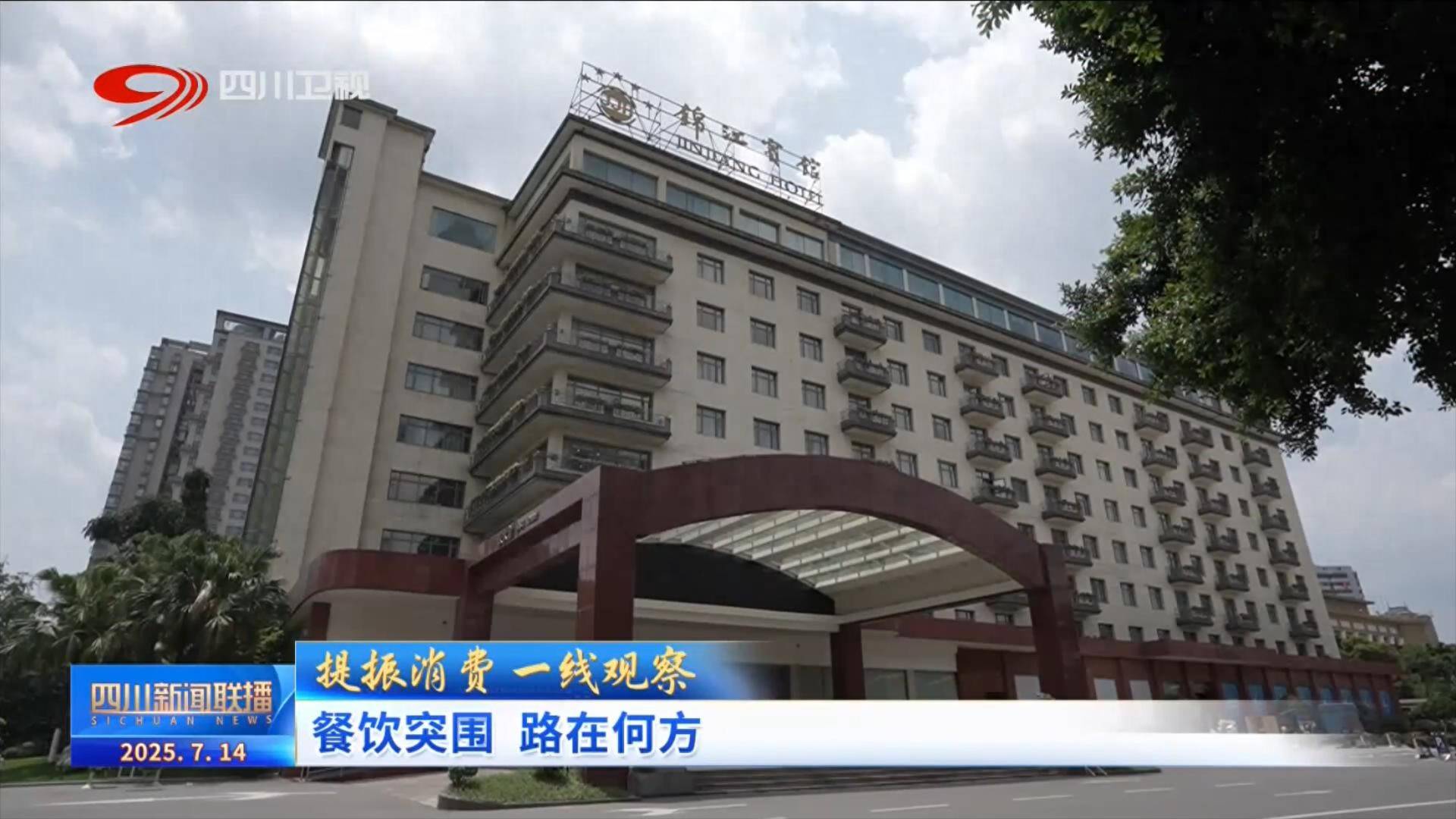
提振消费 一线观察:餐饮突围 路在何方
Sou Hu Cai Jing· 2025-07-15 05:14
Core Viewpoint - The Sichuan food industry is adapting to changing consumer habits and increasing competition by focusing on family dining experiences and promoting local culinary brands to boost consumption [1][5][11] Group 1: Industry Trends - Sichuan has launched measures to enhance local food brands and promote service consumption as part of a national initiative [1] - The restaurant industry is experiencing heightened competition, prompting establishments to innovate their offerings and marketing strategies [5][7] - Many restaurants are shifting towards healthier menu options, such as low-salt, low-sugar, and low-oil dishes, to meet consumer demand for healthier eating [7] Group 2: Business Strategies - The Jinjiang Hotel has introduced affordable meal packages to attract customers while maintaining high service quality, resulting in a revenue increase of 38.9% [5][6] - The China Huashang is focusing on family dining experiences, with over 75% of its clientele being families, reflecting a trend towards emotional and celebratory dining [7][9] - Restaurant operators emphasize the importance of returning to the basics of good food and service to enhance customer experience and reduce dining costs [11]

国新证券每日晨报-20250715
Guoxin Securities Co., Ltd· 2025-07-15 02:42
Domestic Market Overview - The domestic market experienced a mixed performance on July 14, with the Shanghai Composite Index closing at 3519.65 points, up 0.27%, while the Shenzhen Component Index closed at 10684.52 points, down 0.11% [1][5][9] - Among the 30 sectors tracked, 20 sectors saw gains, with machinery, petroleum and petrochemicals, and electric power and utilities leading the increases, while comprehensive finance, real estate, and media sectors faced significant declines [1][5][9] - The total trading volume for the A-share market was 14809 billion, showing a noticeable decrease compared to the previous day [1][5][9] Overseas Market Overview - On the same day, the three major U.S. stock indices recorded slight gains, with the Dow Jones up 0.2%, the S&P 500 up 0.14%, and the Nasdaq up 0.27%, reaching a historical high [2][5] - The Wande American Technology Seven Giants Index fell by 0.1%, with Apple dropping over 1% and Nvidia down 0.52% [2][5] Key News Highlights - The Central Committee of the Communist Party of China released opinions on strengthening judicial work in the new era, emphasizing the need to combat financial crimes and improve regulations in emerging financial sectors [11] - The People's Bank of China announced that the social financing scale increased by 22.83 trillion yuan in the first half of the year, which is 4.74 trillion more than the same period last year [10][13] - China's total import and export value for the first half of the year reached 21.79 trillion yuan, a year-on-year increase of 2.9%, with exports growing by 7.2% and imports declining by 2.7% [14][15]
央行:结构性货币政策工具将突出支持提振消费等主线,港股消费ETF(159735)涨超1%,哔哩哔哩-W涨超6%
2 1 Shi Ji Jing Ji Bao Dao· 2025-07-15 02:12
Group 1 - The Hong Kong stock market indices opened higher, with the CSI Hong Kong Stock Connect Consumer Theme Index strengthening [1] - The Hong Kong Consumer ETF (159735) rose by 1.25% with a trading volume exceeding 23 million [1] - Notable gainers among constituent stocks include Bilibili-W, which increased by over 6%, along with other companies like Techtronic Industries, Nongfu Spring, Haier Smart Home, Kuaishou-W, Li Auto-W, and Meituan-W [1] Group 2 - The Hong Kong Consumer ETF (159735) has seen a year-to-date share growth rate of 100.37% as of July 14 [1] - The ETF tracks the CSI Hong Kong Stock Connect Consumer Theme Index, which consists of 50 large-cap, liquid consumer-related stocks within the Hong Kong Stock Connect [1] - The People's Bank of China indicated a focus on structural monetary policy tools to support technology innovation and boost consumption, enhancing economic transformation and upgrading [1] Group 3 - Everbright Securities predicts that the market will enter a new phase of upward momentum in the second half of the year, potentially surpassing the peak in the second half of 2024 [2] - The consumption sector is highlighted with three focus areas: domestic demand subsidies related to home appliances and consumer electronics, offline service consumption including dining and tourism, and new consumption trends [2]

适度宽松货币政策护航实体经济 重点领域政策落地显效
Jin Rong Shi Bao· 2025-07-15 01:46
Core Viewpoint - The People's Bank of China (PBOC) has implemented a series of monetary policies aimed at supporting the real economy, with significant effects observed in the first half of 2025. Group 1: Monetary Policy Implementation - The PBOC has adopted a supportive monetary policy stance, having cut the reserve requirement ratio (RRR) 12 times and policy interest rates 9 times since 2020, leading to a decrease in loan market rates by 115 basis points for 1-year loans and 130 basis points for loans over 5 years [2] - A comprehensive set of financial support measures was introduced in May, focusing on maintaining liquidity, adjusting interest rates, and enhancing support for key sectors such as consumption and technology innovation [2][4] Group 2: Financial Data and Economic Impact - In the first half of 2025, the average interest rate for new corporate loans was approximately 3.3%, down about 45 basis points year-on-year, while the rate for new personal housing loans was around 3.1%, down about 60 basis points [3] - The structure of credit has improved, with new loans primarily directed towards manufacturing and infrastructure, and significant growth in green, inclusive, and digital loans, with increases of 27.4%, 11.2%, and 9.5% respectively [3] Group 3: Future Monetary Policy Directions - The PBOC plans to continue its moderately loose monetary policy, focusing on maintaining liquidity and aligning monetary supply with economic growth and price stability [4] - Emphasis will be placed on supporting key areas such as technology innovation, consumption expansion, and small and micro enterprises, while ensuring effective transmission of monetary policy [4][10] Group 4: Support for Consumption and Innovation - The PBOC has established a 500 billion yuan fund for service consumption and elderly care to enhance financial support for sectors like hospitality, education, and healthcare, aiming to stimulate consumer demand [6] - As of May 2025, loans for technology innovation and transformation reached 1.7 trillion yuan, supporting 1.5 million small and medium-sized tech enterprises [7] Group 5: Market Stability and Risk Management - The Chinese financial market has shown resilience amid global uncertainties, with the RMB exchange rate stabilizing around 7.2 against the USD [12] - The bond market has remained stable, with banks increasing their bond holdings to manage risks and ensure sustainable support for the real economy [13]
7月15日早间新闻精选
news flash· 2025-07-15 00:11
Group 1 - The Central Committee of the Communist Party of China has issued opinions to strengthen financial trial work, emphasizing the need to punish financial crimes such as market manipulation and insider trading, and to promote healthy development in the financial market [1] - The People's Bank of China will conduct a 14 billion yuan reverse repurchase operation on July 15, 2025, to maintain ample liquidity in the banking system [2] - As of the end of June, the broad money supply (M2) in China reached 330.29 trillion yuan, with a year-on-year growth of 8.3% [2] Group 2 - The People's Bank of China, along with financial regulatory bodies, has released the "Green Finance Support Project Directory (2025 Edition)" to standardize various green financial products [6] - The PBOC's deputy governor stated that structural monetary policy tools will focus on supporting technological innovation and boosting consumption [7] - The first half of 2025 financial reports show that China National Salt Industry Corporation's net profit dropped by 88.04% year-on-year [9] Group 3 - Tianqi Lithium expects a net profit of 0 to 155 million yuan for the first half of the year, indicating a turnaround from losses [11] - China Eastern Airlines anticipates a net loss of 12 to 16 billion yuan for the first half of the year [11] - Meta is planning to invest several billion dollars in artificial intelligence, with significant projects like Prometheus and Hyperion set to launch in the coming years [14]
7月14日晚间新闻精选
news flash· 2025-07-14 13:57
Group 1 - The Central Committee of the Communist Party of China has issued opinions to strengthen judicial work in the new era, emphasizing severe punishment for financial crimes such as market manipulation, insider trading, illegal fundraising, loan fraud, and money laundering [1] - To maintain ample liquidity in the banking system, the People's Bank of China will conduct a 1.4 trillion yuan reverse repurchase operation using a fixed quantity, interest rate bidding, and multiple price levels starting from July 15, 2025 [1] - The Deputy Governor of the Central Bank, Zou Lan, stated that structural monetary policy tools will focus on supporting technological innovation and boosting consumption, with an improvement in the misalignment of monetary policy cycles between China and the US expected in the second half of the year, leading to a narrowing of interest rate differentials [1] Group 2 - Ganfeng Lithium expects a net loss of 300 million to 550 million yuan for the first half of the year, while Tianqi Lithium anticipates a net profit of 0 to 155 million yuan, marking a turnaround from losses [2] - Xiangyang Bearing is projected to have a net loss of 13 million yuan for the half-year period, and Jingyuntong expects a net loss of 165 million to 225 million yuan [2] - Greenland Holdings anticipates a net loss of 3 billion to 3.5 billion yuan for the first half of the year, while Zhongyan Chemical reports an 88% year-on-year decline in net profit [2] - Tongwei Co. expects a net loss of 4.9 billion to 5.2 billion yuan, and JA Solar anticipates a net loss of 2.5 billion to 3 billion yuan for the first half of the year [2] - Longi Green Energy expects a net loss of 2.4 billion to 2.8 billion yuan, showing a reduction in losses compared to previous periods [2] - Lianhuan Pharmaceutical anticipates a net loss of 38 million to 45 million yuan for the first half of the year [2]




央行重磅发声!事关货币政策、汇率
财联社· 2025-07-14 08:42
Core Viewpoint - The People's Bank of China (PBOC) is implementing structural monetary policy tools to support technological innovation and boost consumption, aiming to enhance economic transformation and upgrade [3][8]. Group 1: Monetary Policy Measures - In May, the PBOC launched a comprehensive set of financial policy measures, all of which were implemented by the end of May, with a focus on supporting technological innovation and consumption [3][7]. - As of the end of June, the total social financing stock increased by 8.9% year-on-year, with M2 growing by 8.3% and RMB loans up by 7.1% [6]. - Since 2020, the PBOC has cut the one-year and five-year Loan Prime Rate (LPR) by 115 and 130 basis points respectively, reflecting a supportive monetary policy stance [5][9]. Group 2: Economic Indicators - By the end of May, the contract amount for loans related to technological innovation and technological transformation reached 17.4 trillion yuan, available for enterprises to draw upon [3]. - The balance of loans for the "Five Major Financial Articles" reached 103.32 trillion yuan by the end of May, a year-on-year increase of 14%, with technology loans accounting for 43.3 trillion yuan, up 12% [16]. - In the first half of the year, new loans primarily targeted the manufacturing and infrastructure sectors, with manufacturing medium- and long-term loans growing by 8.7% and infrastructure loans by 7.4% [15]. Group 3: Consumption and Service Sector - The PBOC has established a 500 billion yuan service consumption and elderly care refinancing facility to enhance financial support for the service sector, which is crucial for boosting consumption and expanding domestic demand [13]. - The service consumption market shows strong demand, but the main limitation to expanding service consumption is supply [12][13]. Group 4: Bond Market and Financing - In the first half of 2025, China's bond market issued various bonds totaling 4.43 trillion yuan, a 16% year-on-year increase, significantly supporting fiscal policy implementation and financing for real enterprises [19]. - The net financing from bonds accounted for 38.6% of the increase in social financing, indicating a robust bond market performance [19].

央行邹澜:结构性货币政策工具将突出支持科技创新、提振消费等主线
news flash· 2025-07-14 07:56
人民银行副行长邹澜7月14日在国新办新闻发布会上表示,今年5月,人民银行再次推出一揽子金融政策 措施,这其中有不少结构性货币政策工具,这些结构性政策措施已经在5月底前全部实施启动。截至5月 末,科技创新和技术改造贷款签约合同金额达1.74万亿元,企业随时可以提款使用;科技创新债券风险 分担工具为股权投资机构发债融资提供增进支持。下一步,还将发挥好货币政策工具总量和结构的双重 功能,结构性货币政策工具将继续坚持聚焦重点、合理适度、有进有退的原则,在支持金融五篇大文章 的基础上,突出支持科技创新、提振消费等主线,进一步提升对促进经济结构调整转型升级、新旧动能 转换的效果。(人民财讯) ...
中国消费市场动能分析与复苏路径
Jin Rong Shi Bao· 2025-07-14 06:11
Core Viewpoint - Expanding domestic demand is essential for maintaining stable economic growth and is a key component of Xi Jinping's economic thought. The recent guidance from the People's Bank of China and other departments emphasizes the importance of enhancing consumption capacity and optimizing the consumption environment to counter external uncertainties and promote high-quality economic development [1][2][3]. Group 1: Importance of Consumption - Short-term, boosting consumption is necessary to maintain economic stability amid increasing external risks, as domestic demand is expected to contribute 69.7% to economic growth in 2024, with final consumption expenditure accounting for 44.5% [2][3]. - Long-term, enhancing consumption supports economic transformation by increasing resilience and promoting industrial upgrades, allowing domestic markets to reduce reliance on external markets [4]. Group 2: Challenges to Consumption Dynamics - The slowdown in consumer spending is primarily driven by changes in expectations and financial conditions, with rising uncertainty leading to cautious spending behavior [5][6]. - High household debt levels, which have increased from 38% of GDP in 2015 to 60% in 2024, are squeezing disposable income and pressuring families to reduce consumption [6][7]. Group 3: Mechanisms to Foster Consumption - Government measures such as consumption vouchers and trade-in subsidies have shown significant short-term effects on durable goods and service consumption, with retail sales of home appliances and communication equipment rising by 24%-25% year-on-year in early 2025 [8][17]. - Structural reforms are necessary for sustainable consumption growth, including reducing unnecessary overtime to increase leisure time, improving the social security system, and reforming the household registration system to enhance consumer confidence and capability [9][10][16]. Group 4: New Consumption Growth Points - Emerging sectors like new energy vehicles, the silver economy, and domestic brands are expected to offset traditional consumption declines, with new energy vehicle sales growing by 35.5% last year [11][12]. - The silver economy is projected to create numerous job opportunities and economic growth points as the aging population's diverse needs increase [12]. Group 5: Lessons from Japan - To avoid falling into a "low-desire society" like Japan's "lost three decades," China should implement proactive fiscal and monetary policies, enhance social security, and improve residents' income expectations [13][14][15].
经济学家滕泰:新场景、新服务构成新供给,创造新消费需求
Nan Fang Du Shi Bao· 2025-07-11 08:47
Core Viewpoint - "Boosting consumption" is not just a consumption issue but a key point for China's transformation over the next decade, impacting fiscal policy, monetary policy mechanisms, income distribution, and sustainable economic growth [2][5]. Group 1: Current Economic Challenges - The main contradiction restricting China's economic development is insufficient domestic demand, making "boosting consumption" a long-term national strategy [5]. - China is currently trapped in an "over-investment trap," with excessive investments in real estate, infrastructure, and manufacturing, leading to diminishing returns [5][6]. - The recognition of the need to boost consumption has improved, but actual actions require further strengthening [5][6]. Group 2: Policy Recommendations - There is a call to redirect funds from inefficient and ineffective investments to boost consumption and shift societal decision-making from "heavy investment, light consumption" to a more balanced approach [6]. - Increasing disposable income and social security for low- and middle-income residents is essential to encourage consumption [6]. - New monetary policy mechanisms should be explored, including potential zero or negative interest rates to stimulate economic recovery, as seen in the U.S., Japan, and Europe [8]. Group 3: Future Consumption Trends - New supply creates new demand, with innovations in products, services, and consumption methods driving future consumption [8][9]. - Emerging consumption trends, such as new products and methods exemplified by brands like Pop Mart, indicate that basic consumption needs have limited growth potential, but new consumption forms will continuously drive demand [9]. - The advent of technologies like artificial intelligence is expected to generate significant new demand, reshaping lifestyles and consumption patterns [9].