
绿色低碳转型

Search documents
调研速递|首钢股份接待招商基金等机构调研 前三季度净利同比增368% 电工钢产量预计提升超10%
Xin Lang Cai Jing· 2025-11-20 10:17
Core Insights - The company held a specific investor survey on November 19, 2025, discussing performance, product competitiveness, capital expenditure, and carbon emission policies [1][2] Group 1: Performance and Product Profitability - In the first three quarters of 2025, the company achieved a net profit of 9.53 billion yuan, a significant increase of 368.13% year-on-year, driven by the competitiveness of core products such as electrical steel, automotive plates, and tinplate [3] - The company is focusing on improving the profitability of its medium-thick plates by expanding market share in new energy and high-end equipment sectors while optimizing production processes [3] Group 2: Electrical Steel Business - The company expects a more than 10% increase in electrical steel production in 2025, supported by a comprehensive production system covering over 600 key process control points [4] - The company is accelerating the development and promotion of high-end products, including new oriented electrical steel products for high-efficiency transformers and non-oriented high magnetic products for robotics and new energy vehicles [4] Group 3: Automotive Plate Competitiveness - The automotive plate business has seen steady growth in production and profitability, driven by a dual approach of product innovation and service enhancement [5] - The company plans to launch a new automotive plate production line in 2027, which will enhance product structure flexibility and maintain market leadership [5] Group 4: Capital Expenditure and Depreciation - Future capital expenditures will be controlled within 50% of depreciation and amortization, focusing on production line upgrades, intelligent manufacturing, and quality improvement [6] - Depreciation is expected to decline as new plants have already accounted for some equipment depreciation [6] Group 5: Carbon Emission Policy Response - The company is adopting a cautious approach to carbon emission trading, with a focus on short-term stability and long-term technological innovation [8] - Initiatives include promoting short-process carbon reduction, conducting advanced technology research, and establishing a closed-loop recycling system in collaboration with Volvo [8]

三年打造新能源金属期货矩阵!广期所李慕春详解绿色低碳转型的“期货力量”
Zheng Quan Shi Bao Wang· 2025-11-20 09:04
三年三大品种落地,新能源期货体系初具规模 为助力绿色低碳转型,广期所近年来已陆续推出工业硅、碳酸锂、多晶硅期货和期权。"基本做到一年 一个品种。"李慕春表示。 2022年12月上市工业硅期货与期权,2023年上市碳酸锂期货与期权,2024年上市多晶硅期货与期权,三 个品种都直接服务于新能源产业。其中,工业硅与多晶硅是光伏产业链的核心原材料,碳酸锂是新能源 汽车与锂电池产业链的关键原材料。 截至目前,这三大品种运行平稳,成交量和持仓量稳步增长,市场规模不断扩大。数据显示,工业硅、 碳酸锂、多晶硅日均成交量均在30万手以上,法人客户持仓占比超过60%,产业参与度显著。 值得注意的是,李慕春也在会上宣布,铂、钯期货与期权已获证监会批准注册,将于11月27日正式上市 交易。铂、钯是汽车尾气治理等绿色产业的重要原料,同时也是风电及氢能等新能源领域的关键原料, 我国约60%的铂和近80%的钯用于汽车尾气催化剂等相关生产,市场需求稳定、价格敏感度高,铂、钯 产业的健康平稳发展对于促进绿色发展意义重大。 11月18日,在第二十届中国经济论坛平行论坛之2025大湾区科技与金融创新发展大会上,广州期货交易 所党委委员、副总经理李 ...
李强:扎实推进未来5年新增“千万千瓦光伏”和“千万千瓦风电”项目
Zhong Guo Dian Li Bao· 2025-11-20 08:03
Core Points - The speech emphasizes the need for reforming global governance in response to unilateralism and protectionism, highlighting the challenges faced by many countries due to increased trade barriers [1] - The Shanghai Cooperation Organization (SCO) is positioned as a key player in global governance reform, with the potential to implement the global governance initiative proposed by President Xi Jinping [1][2] Group 1: Unique Advantages of SCO - The SCO has established unique principles and methods for international and regional affairs, aligning closely with the core ideas of the global governance initiative [2] - The organization promotes mutual trust, mutual benefit, equality, consultation, respect for diverse civilizations, and common development, which resonate with the goals of global governance [2] - The SCO has a rich history of managing differences among member states, fostering trust and cooperation, and serving as a successful model for global governance [2] Group 2: Focus on Development and Security - The speech calls for a dual focus on development and security, emphasizing the need for a stable environment to address global challenges [3] - There is a commitment to building an open and inclusive world economy, reducing barriers, and enhancing trade to support global economic recovery [3] - The SCO is urged to strengthen security cooperation mechanisms to effectively address various threats, including organized crime and cyberattacks [3] Group 3: Innovation and Transformation - The importance of digitalization, intelligence, and green transformation is highlighted as crucial for future development [4] - The SCO is encouraged to enhance cooperation in technology and industry innovation, promoting platforms for digital economy collaboration [5] - There is a commitment to advancing clean and efficient use of traditional energy and renewable energy projects to contribute to global climate change efforts [5] Group 4: Future Development Strategy - The SCO's future development strategy for 2026-2035 has been approved, outlining a vision for enhanced cooperation and stronger organizational capabilities [6] - Emphasis is placed on strategic coordination among member states to strengthen the organization's cohesion and response to global changes [6] - The need for effective implementation of cooperation initiatives and financial collaboration among member states is stressed to enhance regional financial stability [6] Group 5: 25th Anniversary and Future Cooperation - The upcoming 25th anniversary of the SCO is acknowledged, with a call for continued support and collaboration among member states [7] - The speech concludes with a commitment to uphold the "Shanghai Spirit" and work together towards a peaceful and prosperous future [7]
山西太谷:精准滴灌“黑色黄金”生态圈 以“碳”为笔绘就产业新蓝图
Sou Hu Cai Jing· 2025-11-20 07:26
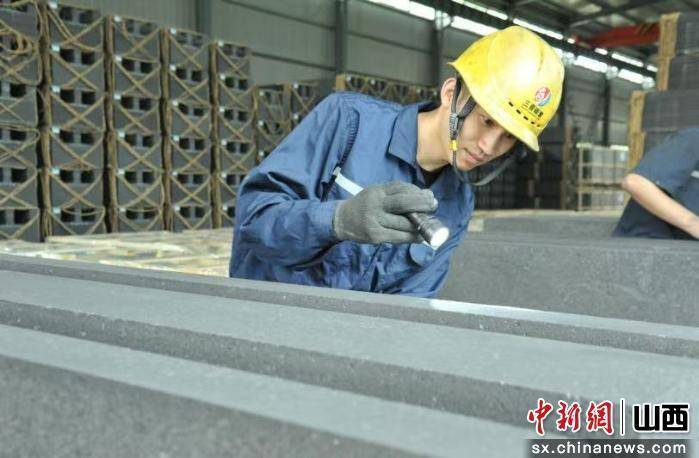
Core Insights - The article highlights the role of carbon materials, referred to as "black gold," in supporting the metallurgy and new energy industries, particularly in the context of the economic development of the Taigu District [1] Group 1: Financial Support and Services - Taigu Rural Commercial Bank has invested 230 million yuan to support the transformation and upgrading of carbon enterprises, providing essential financial resources for the industry's development [1] - The bank has implemented a tailored financial service approach, creating specific plans for individual enterprises based on their unique needs, thereby breaking down barriers between banks and businesses [3] - The bank's comprehensive financial services include credit support, resource integration, and cooperation facilitation, addressing the core needs of green procurement, low-carbon technology research, and environmental equipment upgrades [4] Group 2: Industry Challenges and Solutions - The carbon industry faces common challenges such as significant fluctuations in raw material prices and the need for substantial investments in environmental upgrades, which strain cash flow [3] - Taigu Rural Commercial Bank has established a "government-bank-enterprise" platform to facilitate ongoing communication and collaboration, focusing on the unique characteristics of carbon enterprises [5] - The bank has successfully increased credit limits for companies with good credit histories, enabling them to overcome funding bottlenecks and expedite project financing [5] Group 3: Market Expansion and Innovation - With the support of Taigu Rural Commercial Bank, Shanxi Sanjin Carbon Co., Ltd. is set to launch an expansion project by June 2025, with sales volume exceeding 58,000 tons in the first three quarters of 2025, expanding its market reach internationally [4] - The bank's innovative "industrial chain finance" service model helps enterprises address their transformation challenges by focusing on talent acquisition, technological upgrades, and market expansion [5] - The bank's efforts not only enhance existing business capabilities but also support enterprises in diversifying into emerging sectors such as new energy and aerospace [5]

加快完善高水平对外开放体制机制
Jing Ji Ri Bao· 2025-11-20 00:41
原标题:加快完善高水平对外开放体制机制 开放是中国式现代化的鲜明标识。党的十八大以来,以习近平同志为核心的党中央坚持对外开放的 基本国策,推动形成更大范围、更宽领域、更深层次对外开放格局。随着全球经贸格局深刻调整、外部 环境不确定性进一步上升,世界经济发展面临诸多挑战。习近平总书记科学把握世界大势,多次强调坚 定不移推进高水平对外开放。党的二十届四中全会通过的《中共中央关于制定国民经济和社会发展第十 五个五年规划的建议》把"高水平对外开放体制机制更加健全"列入"十五五"时期经济社会发展的主要目 标,对"扩大高水平对外开放,开创合作共赢新局面"作出战略部署。这些重要论述和部署要求,既是立 足当下应对外部风险挑战的主动作为,又是着眼长远、引领全球合作的战略谋划,为进一步全面深化改 革、推进高水平对外开放指明了方向。 深刻领会重要意义 从改革开放初期设立经济特区,到加入世界贸易组织、推动共建"一带一路"和推进自贸试验区建 设,我国经济在开放中实现历史性跨越,创造了举世瞩目的发展奇迹,开放型经济新体制建设取得显著 进展。 历史和实践充分证明:开放带来进步,封闭必然落后。改革开放以来,我国经济持续快速发展正是 在不断扩 ...
多方聚力同向而行 共筑科技金融新生态丨2025大湾区科技与金融创新发展大会成功举办
Guo Ji Jin Rong Bao· 2025-11-19 23:51
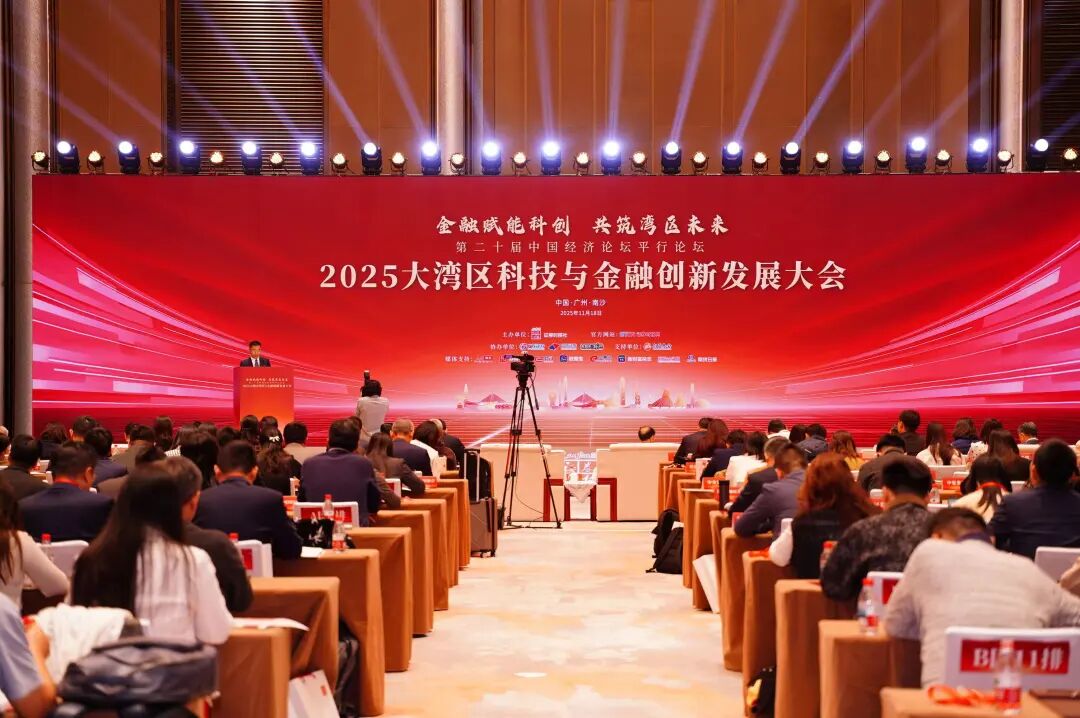
转自:证券时报 11月18日,第二十届中国经济论坛平行论坛——2025大湾区科技与金融创新发展大会在广州南沙成功举办。 广州期货交易所党委委员、副总经理李慕春在演讲中介绍,为助力绿色低碳转型,广期所近年来已陆续推出工业硅期货与期权、碳酸锂期货与期权、多晶 硅期货与期权。这些期货品种已在产业发展中发挥多方面重要功能:价格发现作用良好,实物交割平稳运行,产业参与度逐步提高,同时投资者结构持续 优化,工业硅期货法人客户持仓占比达60%。下一步,广期所将聚焦加快打造绿色期货交易所,通过进一步丰富完善品种体系、持续加强市场服务和培 育、深入推进高水平对外开放,为绿色低碳转型贡献更多期货力量。 广州市南沙区委常委、常务副区长孙勇表示,近三年来,南沙高质量发展跑出加速度、彰显高质量,2025年前三季度GDP增速跃居全市第二,"稳中向 好、向新提质"的发展态势愈发强劲。据介绍,目前南沙区金融业增加值占全区GDP占比超11%,居行业第三,金融业产生的税收常年位居行业前五,成 为全区支柱性产业之一, "南沙金融30条"的重磅发布使南沙成为目前全国唯一连续三次获批国家级金融专项政策的区级地区,累计落地近百项金融创新 成果,近40项 ...
湖北生态环境权益交易平台推动绿色转型 上线首月累计融资规模达2576亿
Chang Jiang Shang Bao· 2025-11-19 23:51
Core Insights - The Hubei Ecological Environment Rights Trading Platform has successfully launched, facilitating the transformation of ecological resources into economic value, with over 2 million registered users and a total transaction volume of 65 billion yuan [1][2] - The platform integrates five core functions: carbon emission rights, pollutant discharge rights, ecological product value realization, solid waste resource utilization, and green financial services, positioning itself as a key driver for green and low-carbon transformation [1][2] Summary by Sections Platform Overview - The Hubei Ecological Environment Rights Trading Platform went live on October 18, showcasing significant market vitality and development potential [1] - The platform is built on Hubei's comparative advantages in resource and environmental factors, supported by a rich data accumulation [1] Market Performance - In its first month, the platform has achieved a cumulative transaction volume of 65 billion yuan and a financing scale of 257.6 billion yuan [1][2] - Hubei has the most diverse trading entities and the largest trading scale among national pilot carbon markets, maintaining an active carbon financial innovation landscape [1] Unique Features - The platform has established the first standardized trading module for ecological product value realization in the country, assigning prices to previously "priceless" ecological products [2] - A robust technical support system has been developed, including a unified database for ecological environment rights elements, ensuring efficient, transparent, and secure transactions [2] Future Outlook - The platform aims to enhance its role in resource allocation, supporting both intra-provincial and inter-provincial trading of ecological environment rights and value discovery [2]
好生态孕育更多新经济 上海崇明加快建设世界级生态岛
Shang Hai Zheng Quan Bao· 2025-11-19 18:24
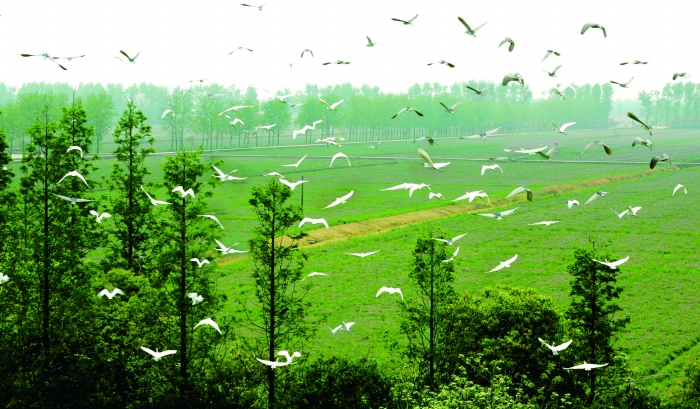
Core Viewpoint - The article highlights the ecological and economic development of Chongming District in Shanghai, emphasizing the integration of ecological preservation with economic growth, aiming to create a world-class ecological island and a model for green development along the Yangtze River [2][3]. Ecological Development - Chongming District has implemented a "+ ecology" development strategy, achieving a 100% compliance rate for surface water quality and key construction land safety utilization [2]. - The forest coverage rate is 21.64%, wetland protection rate is 60.73%, and the air quality rate remains around 90% [2]. - Chongming has received multiple accolades, including being named a "Natural Oxygen Bar" and an "International Wetland City" [2]. Economic Growth - The district's GDP is projected to reach 44.881 billion yuan in 2024, with industrial added value increasing by 29.2% compared to the end of the 13th Five-Year Plan [3]. - Chongming is developing a "Silicon Valley" for agriculture, focusing on seed source, facility, and biological agriculture, with nearly 5 billion yuan invested in 33 modern agricultural projects [3]. Advanced Manufacturing - Longxing Island has become a leading shipbuilding base, with a 20% global market share in LNG ships and significant achievements in various marine engineering equipment [4]. - The district is advancing towards a "world-class" shipbuilding industry, supported by research institutions and innovative technologies [4]. Green and Low-Carbon Transition - Chongming is establishing a carbon neutral demonstration zone, with a goal to reduce GDP energy consumption by 13.5% by 2025 and increase renewable energy's share of total electricity consumption to 32% [4]. Social Development - The district is enhancing the quality of life for residents, with per capita disposable income rising from 29,457 yuan in 2020 to 40,612 yuan in 2024, a 37.9% increase [5]. - Chongming has developed 1,127 rural homestays and improved transportation networks, including a comprehensive road network and the introduction of new energy public transport [5][6]. Future Infrastructure - The Chongming Line of the metro is expected to begin trial operations by the end of 2026, with plans for high-speed rail connections to major hubs by 2029 [6].
巴西石油学会主席罗伯托:冀科技创新驱动中巴领军碳减排
Zhong Guo Xin Wen Wang· 2025-11-19 10:06
Core Viewpoint - Brazil's oil industry leaders emphasize the importance of China as a global economic leader and advocate for deepening cooperation between Brazil and China in the field of carbon reduction through technological innovation and collaboration [1][2]. Group 1: China's Role in Carbon Reduction - China has become a global leader in economic development and is expected to play a significant role in carbon reduction efforts [1]. - China National Offshore Oil Corporation (CNOOC) is actively enhancing its natural gas production and promoting a carbon capture, utilization, and storage (CCUS) circular economy model [2]. Group 2: CNOOC's Initiatives in Brazil - CNOOC has established itself as the first foreign company in Brazil to achieve independent natural gas sales, aiming to optimize the energy structure and support local market development [2]. - The company is focusing on offshore wind power and renewable energy development, contributing to the green development of deepwater oil and gas fields [2]. Group 3: Global Cooperation and Recognition - CNOOC is expanding international cooperation in green energy, leveraging the complementary energy advantages of China and Brazil to enhance technology research and development [2]. - Gerard Gallagher from Ernst & Young praised China's innovative capabilities and its significant contributions to carbon reduction, highlighting the country's role in achieving global decarbonization goals [3].

中企在巴西绿色低碳发展战略在COP30会场引发关注
Xin Hua Cai Jing· 2025-11-19 06:36
Core Viewpoint - The conference held at COP30 in Brazil highlighted the importance of green low-carbon development strategies by Chinese enterprises, particularly focusing on China National Offshore Oil Corporation's (CNOOC) initiatives in Brazil [1][2]. Group 1: CNOOC's Green Low-Carbon Development Strategy - CNOOC aims to optimize its energy structure by being the first foreign company in Brazil to achieve independent natural gas sales, thereby promoting a clean energy supply system [2]. - The company is accelerating the development of zero-carbon industries, with a focus on offshore wind power and renewable energy collaboration, to support green development in deepwater oil and gas fields [2]. - CNOOC seeks to expand green international cooperation by leveraging the complementary energy advantages of China and Brazil, engaging in joint technology research and improving industry standards [2]. Group 2: Industry Perspectives and Collaboration - The President of the Brazilian Petroleum Society emphasized China's role as a global economic leader and expressed hope for continued cooperation between China and Brazil in carbon reduction efforts [2]. - The global head of sustainability at Ernst & Young praised CNOOC's significant contributions to carbon reduction and highlighted China's innovative capabilities as a driving force for global decarbonization [2]. - Conference attendees unanimously agreed on the need for collective responsibility in creating a green future, advocating for a development model that balances protection and development [3].