长期主义

Search documents
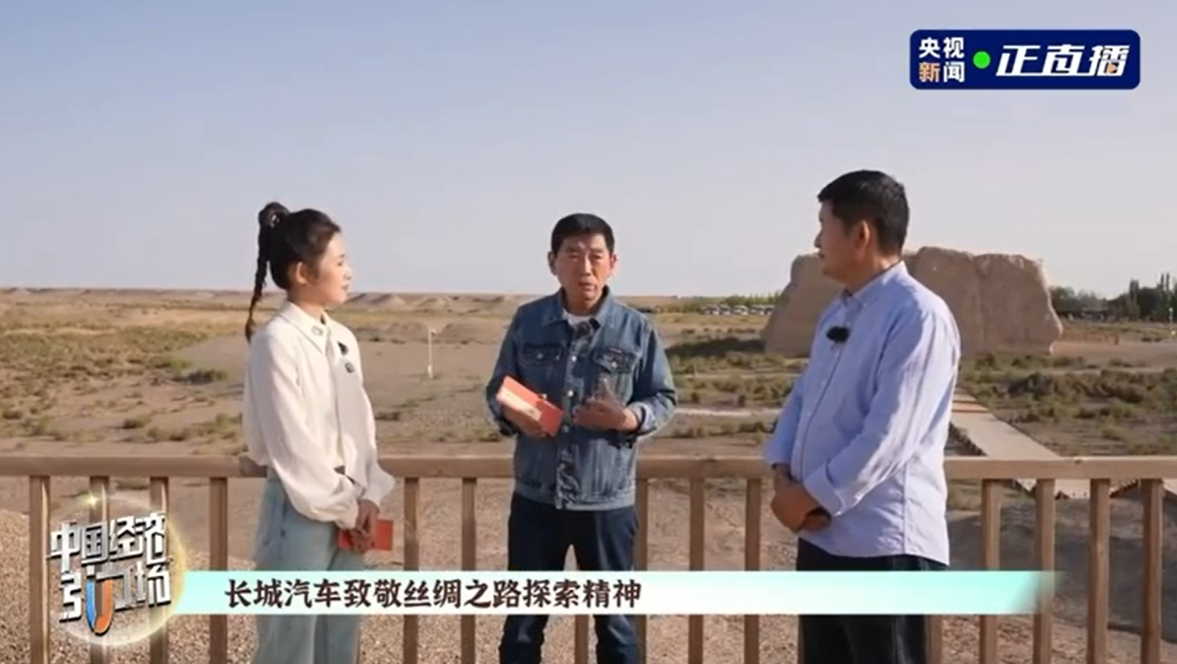
“致敬敦煌文化”长城汽车探索融合发展路径
Huan Qiu Wang· 2025-09-25 01:43
Core Viewpoint - The dialogue between Longyuan Automobile and cultural representatives emphasizes the integration of Chinese brands with traditional culture, particularly through the lens of Dunhuang culture and the Great Wall's historical significance [1][3]. Group 1: Cultural Heritage and Historical Significance - Dunhuang serves as a crucial point on the Silk Road, embodying over two millennia of border defense and cultural exchange, which continues to inspire modern enterprises [3]. - The Great Wall symbolizes not only a geographical landmark but also the deep-rooted cultural heritage of the Chinese nation, with Longyuan Automobile feeling a sense of pride and responsibility in sharing this legacy [3]. Group 2: Product Design and Cultural Integration - Longyuan Automobile incorporates the beauty of Dunhuang culture into its product design, exemplified by the Tank 500 "Dunhuang Green," which draws inspiration from the art of Mogao Caves [4]. - The company aims to blend cultural values with technological advancements, showcasing a commitment to both heritage and innovation in its offerings [4]. Group 3: Commitment to Innovation and Global Expansion - Longyuan Automobile is focused on technological breakthroughs and aims to transition from "importing" to "exporting" automotive technology, thereby enhancing its global market presence [6]. - The company emphasizes long-term commitment to quality and innovation, aligning with the spirit of perseverance seen in the guardians of Dunhuang [7][9].


朱勇:坚持长期主义穿越周期 实现信托业高质量发展
Zhong Guo Zheng Quan Bao· 2025-09-25 00:36
Core Viewpoint - The trust industry has experienced significant fluctuations over the past 23 years, characterized by three distinct development phases: exploration, rapid growth, and adjustment. The future outlook remains optimistic as the industry adapts to regulatory changes and seeks new growth avenues. Summary by Sections Development Phases - The trust industry can be divided into three phases: exploration (2002-2006), rapid growth (2007-2017), and adjustment (2018-present). The exploration phase laid the groundwork for future development, while the rapid growth phase saw trust assets increase from 4.8 trillion yuan to 26.25 trillion yuan, marking a significant transformation in the industry [2][3]. Asset Scale and Growth - By the end of 2007, trust assets reached 9.8 trillion yuan, doubling from the previous year. The industry experienced exponential growth, with annual increases exceeding 50% from 2007 to 2013. However, growth began to slow after 2013, with assets at 10.91 trillion yuan, indicating a shift in the growth trajectory [3][4]. Current Trends and Future Outlook - The trust asset scale declined to a low of 20.49 trillion yuan by the end of 2020 but has since shown signs of recovery, projected to reach 29.56 trillion yuan by the end of 2024. The industry is adapting to new regulations and focusing on service-oriented trusts, which are expected to drive future growth [4][10]. Profitability and Economic Contribution - Trust industry profits have closely followed asset growth, peaking at 82.4 billion yuan in 2017 before declining. The industry plays a vital role in the national economy, contributing significantly to tax revenues through asset management product VAT [4][5]. Key Industry Insights - The trust industry does not face systemic risks, with most companies having addressed issues related to non-standard funding pools. The industry has moved away from rigid repayment structures, allowing for healthier growth dynamics [6][7]. Regulatory Environment and Market Perception - The trust industry has been subject to strict regulation, distinguishing it from shadow banking. Recent regulatory frameworks have enhanced transparency and compliance, positioning the industry for sustainable growth [7][8]. Long-term Strategies - The future of the trust industry hinges on restructuring business models according to the three classifications of trust services: asset service trusts, asset management trusts, and charitable trusts. This reclassification is expected to alleviate competitive pressures and foster new growth opportunities [9][10]. Risk Management and Cultural Development - Trust companies are encouraged to enhance risk management capabilities and cultivate a culture of trust to ensure long-term sustainability. Emphasizing service value and community engagement will be crucial for the industry's future success [11].
坚持长期主义穿越周期 实现信托业高质量发展
Zhong Guo Zheng Quan Bao· 2025-09-24 20:17
Core Viewpoint - The trust industry has experienced significant fluctuations over the past 23 years, characterized by three distinct development phases: exploration, rapid growth, and adjustment [1][2]. Summary by Sections Development Phases - The trust industry can be divided into three phases based on asset scale: exploration period (2002-2006), rapid growth period (2007-2017), and adjustment period (2018-present) [2][3]. - During the exploration period, the industry laid the groundwork for future growth, despite slow growth and small scale [2]. - The rapid growth period saw trust assets increase from 4.8 trillion yuan to 26.25 trillion yuan, with annual growth rates exceeding 50% [2][3]. - The adjustment period began in 2018, with a decline in asset scale due to regulatory pressures, reaching a low of 20.49 trillion yuan in 2020, but has since started to recover [3][4]. Key Metrics - Trust assets peaked at 26.25 trillion yuan in 2017, representing a significant portion of the financial sector [3]. - The industry’s profit reached a peak of 82.4 billion yuan in 2017, followed by a decline as the industry adjusted [4]. Regulatory Environment - The introduction of the Trust Law in 2001 marked the beginning of a more regulated environment for the trust industry [2]. - Regulatory measures have been implemented to address risks associated with real estate trust businesses, including financial support policies for real estate projects [7]. Industry Risks and Misconceptions - The trust industry does not face systemic risks, as most companies have addressed issues related to non-standard funding pools and shareholder self-financing [6]. - The misconception of trust companies as "shadow banks" is addressed, emphasizing that they operate under strict regulatory oversight [7]. Future Outlook - The future of the trust industry is expected to focus on restructuring business models according to the three categories of trust services: asset service trusts, asset management trusts, and charitable trusts [8]. - The industry is anticipated to experience a second growth curve, particularly in asset service trusts, driven by regulatory encouragement and market demand [8][9]. - Long-term growth will depend on the industry's ability to manage risks, cultivate trust, and create value through services [10].
洛阳钼业周星:ESG是矿企的必答题
Zhong Guo Jing Ying Bao· 2025-09-24 14:27
Core Viewpoint - The importance of ESG (Environmental, Social, and Governance) in the mining industry is emphasized, highlighting that it requires long-term investment and commitment for sustainable development [1][2]. Group 1: ESG Commitment - ESG is viewed as a fundamental aspect for the long-term sustainability of mining companies, not merely a branding exercise [1]. - The mining industry is characterized by high ESG density, making it essential for companies to prioritize ESG initiatives to ensure their ongoing viability [1]. - For Luoyang Molybdenum, ESG is integral to all operations, balancing economic value creation with adherence to environmental standards and community benefits [1]. Group 2: Long-term Investment Perspective - Mining is a long-term investment sector, with operations potentially lasting decades or even centuries [2]. - Luoyang Molybdenum has invested nearly $10 billion in the Democratic Republic of the Congo (DRC), emphasizing the need for a long-term vision and local integration [2]. - The company has invested $325 million in community initiatives since the TFM mine began production, contributing to a stable external environment for operations [2]. Group 3: Global Expansion and Competitive Advantages - Luoyang Molybdenum has evolved from a local company to a global resource player, with over 90% of its assets and revenue derived from overseas [3][4]. - Chinese mining companies possess advantages in technology, manufacturing, and collective spirit, which are beneficial in resource-rich but infrastructure-poor regions [4]. - The internationalization of mining is seen as an extension of industrial chain globalization, with Chinese companies poised to leverage their capabilities in underdeveloped areas [4]. Group 4: Social Responsibility in DRC - The DRC is identified as an underdeveloped region with a GDP of approximately $70 billion in 2024, highlighting the significant responsibility of companies operating there [5]. - Luoyang Molybdenum is committed to community development through infrastructure projects such as roads, bridges, hospitals, and agricultural initiatives [5]. - The company's efforts in the DRC are framed as essential for embedding ESG practices into its operational foundation, ensuring resilience against risks and changes [5].
华源证券陈洁:构建完善的财富管理生态需坚持长期主义,避免零和博弈
Zheng Quan Shi Bao Wang· 2025-09-24 09:42
Core Viewpoint - The core viewpoint emphasizes the need for wealth management channels to create professional value rather than merely serving as sales conduits, focusing on the role of buy-side advisory to achieve excess returns for clients [1] Group 1: Wealth Management Ecosystem - The construction of a comprehensive wealth management ecosystem should adhere to long-termism and avoid zero-sum games [1] - Clients are open to accepting fees, contingent on whether institutions can create value and generate excess returns for them [1]
景顺长城基金康乐:宁取细水长流 践行长期主义
Zhong Guo Zheng Quan Bao· 2025-09-23 20:16
"长期主义对公募基金而言,不是一种选择,而是一种必然。"近日,景顺长城基金总经理康乐在接受中 国证券报记者采访时表示,对于景顺长城基金来说,长期主义自公司成立之日起便镌刻在了"宁取细水 长流,不要惊涛裂岸"的投资理念和经营哲学里。在二十多年的发展历程中,面对短和长的取舍时,公 司始终追求长期稳健发展,舍弃短期捷径。 深度研究穿越市场波动 ● 本报记者 张凌之 体系化保障长期投资 公募基金的使命是向投资者提供长期稳定回报。康乐表示,投资规律决定了价值实现需要时间,唯有长 期资金能够陪伴优质企业成长,真正支持国家经济转型与创新战略。因此,长期主义是公募基金发展的 基石。 这一理念已深深植根于景顺长城基金的投研文化和制度设计中。景顺长城基金的长期投资理念,要求基 金经理坚持从基本面出发,追求持续的长期收益,与持有人利益和市场长期方向保持一致。对基金经理 的考核中,三年及五年的长期业绩考核占据更高权重。通过定期投资回顾,深入回顾其组合的投资纪 律、投资风格和中长期业绩表现,帮助基金经理保持风格不漂移,并持续沉淀和优化其投资方法论。当 基金经理的投资风格与市场不匹配,业绩表现落后时,公司给予较长的观察与成长期,支持和鼓 ...
巴菲特清仓比亚迪,价值投资者的使命是什么?
Sou Hu Cai Jing· 2025-09-23 15:50
01 美国股市最早的价值,主要是给企业融资和促进资源优化配置, 19世纪初,美国处于快速发展阶段,但交通不便制约了经济的进一步发展,修建运河成为当时的迫切需求。 纽约州州长决定成立伊利运河公司,并通过债券的方式向公众募集资金100万美元,使得运河能够顺利建设,在1825年全程通航,降低了运输成本,提高了 运输效率。 这两天巴菲特清仓比亚迪的新闻,上了很多热搜。 其实对于巴菲特清仓比亚迪,我并不觉得奇怪,2022年巴菲特就开始逐步减持比亚迪的股票。 当时,我写过几篇分析文章,有市场疯狂估值太高的原因,有巴菲特需要买石油对冲人民币贬值的原因,也有可能是巴菲特接班人风格调整的原因。 但是,我想从另外一个角度看待这个事情。 我们经常说:不忘初心! 那股市的初心是什么?价值投资者的初心是什么? 02 这种公开募集的方式也为美国股市的发展奠定了重要基础。 中国股市诞生于20世纪80年代末至90年代初,是计划经济向市场经济转型的产物,推动了中国经济体制改革的进程。 像融资困难的科技企业就是通过资本市场募资得到了高速发展,2004年腾讯在香港上市募资15亿港币,2005年百度美国上市募资1.09亿美元,2007年阿里巴 巴在 ...


巴菲特怎么不爱比亚迪了?
Sou Hu Cai Jing· 2025-09-23 12:53
Core Viewpoint - Warren Buffett's Berkshire Hathaway has liquidated its investment in BYD, indicating a shift in Buffett's interest towards the company, which has transformed significantly since his initial investment in 2008 [1][5]. Group 1: Investment History and Performance - Buffett's investment in BYD began in 2008, acquiring 225 million shares for $230 million, resulting in an approximate 3890% increase in stock price over 17 years [7]. - The decision to sell BYD shares reflects Berkshire's strategy of focusing on investments that provide the best growth potential, rather than holding onto stocks for their absolute value [3][5]. Group 2: BYD's Transformation - BYD has evolved into the world's leading electric vehicle manufacturer, with significant advancements in technology and a strong global presence [7]. - The company's current strategy emphasizes long-term growth and technological innovation, moving away from short-term profit maximization [9]. Group 3: Diverging Strategies - There is a fundamental difference in investment philosophy between Buffett's short-term profit focus and BYD's long-term vision under CEO Wang Chuanfu [9]. - This divergence in goals suggests that BYD's current trajectory may not align with the investment strategies favored by Berkshire Hathaway [9].

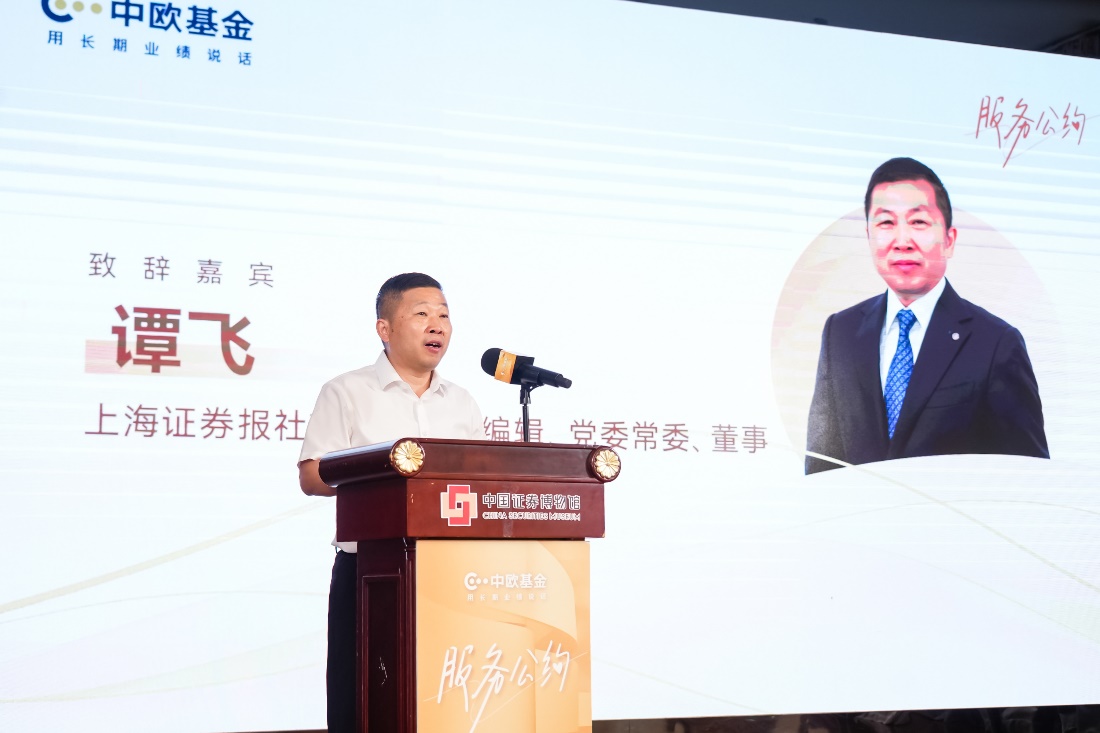
中欧基金发布《服务公约》 以长期主义提升投资者获得感
Shang Hai Zheng Quan Bao· 2025-09-23 06:57
Core Viewpoint - The event organized by Shanghai Securities News and China Europe Fund emphasizes the importance of investor-centric services in the mutual fund industry, highlighting the launch of the "Service Charter" with four key service principles aimed at enhancing investor satisfaction and promoting high-quality industry development [1][3]. Group 1: Service Principles - The "Service Charter" outlines four main principles: frequent engagement with investors, sharing market insights, maintaining open communication, and continuous innovation in products [1][6]. - The principle of frequent engagement includes hosting over 3,000 offline events since 2006 to understand and address investors' needs [6]. - The sharing principle involves providing diverse market insights through various formats, with a total of 450 million words written in market reports and 2.6 billion views on video content [6][7]. Group 2: Commitment to Investors - The company aims to create value for clients by prioritizing their interests through optimized product design and transparent fee structures [3][5]. - The focus on professional support includes providing educational content and services to guide investors through market cycles [3][6]. - The establishment of a transparent communication mechanism is crucial for safeguarding investors' rights and building trust [3][6]. Group 3: Product Innovation - The company emphasizes product innovation centered around investor needs, having launched the first floating management fee fund in 2013 and participating in various product innovation trials [7]. - The introduction of Smartbeta multi-strategy products aims to provide investors with clear positioning and stable styles, addressing their core needs for reliable investment tools [8]. Group 4: Long-term Commitment - The company adheres to a long-term performance philosophy, ensuring that services withstand the test of time and continuously enhance investor satisfaction [9]. - The "Service Charter" is intended to integrate long-term investor interests into every service aspect, fostering a culture of long-term value creation for clients and society [9].
方便面龙头的新增长逻辑:康师傅高管揭秘如何用“一碗好面”赢得市场与资本信心|凤凰网财经《知行》
凤凰网财经· 2025-09-22 13:45
Core Viewpoint - The article emphasizes that Master Kong is undergoing a significant transformation in the instant noodle industry, aiming to redefine instant noodles from a quick meal to a high-quality dining experience with the launch of the "Special Fresh Noodle" [2][3]. Group 1: Value Reconstruction - The "Special Fresh Noodle" distinguishes itself from traditional instant noodles by focusing on quality rather than just convenience, offering a dining experience closer to freshly cooked noodles through innovative cooking techniques [3][4]. - This product aims to change consumer perceptions, positioning instant noodles as a viable option for quality meals rather than just a quick fix [5]. Group 2: Growth in a Saturated Market - The company believes that the instant noodle market still has potential for growth, as consumer needs in various dining scenarios remain unmet [6][7]. - Master Kong is focusing on technological innovation and market segmentation to create new opportunities, moving from a scale-based competition to a quality-driven approach [6][7]. Group 3: Long-term Vision - Master Kong's strategy is centered around respecting consumer needs, which has evolved significantly over the years, emphasizing health, taste, and emotional value [8][9]. - The company aims to maintain a balance between short-term market pressures and long-term value creation, focusing on continuous innovation and consumer satisfaction [10][11]. Group 4: Capital Market Signals - Despite market challenges, Master Kong is committed to innovation and quality, which is expected to drive long-term value and attract investor confidence [10][11]. - The company has demonstrated strong financial health, with a dividend yield exceeding 6%, reflecting its stable cash flow and governance structure [11]. Group 5: Future Outlook - Master Kong envisions instant noodles evolving into a versatile dining solution that fits various life scenarios, thus enhancing their role in modern dining [13][14]. - The company aims to lead the industry by continuously innovating and responding to changing consumer demands, reinforcing its commitment to long-term growth and consumer satisfaction [15][17].