
服务消费

Search documents
19条举措扩大服务消费 加强财政金融支持
Sou Hu Cai Jing· 2025-09-16 17:17
Core Viewpoint - The Chinese government is enhancing policy support for service consumption as a key measure to expand domestic demand, with 19 specific initiatives outlined in the recent policy measures [1][2]. Group 1: Policy Measures - The policy measures focus on five areas: cultivating service consumption promotion platforms, enriching high-quality service supply, and stimulating new service consumption growth [1][2]. - Specific initiatives include the implementation of a service consumption quality improvement action plan and the establishment of pilot cities for new consumption formats and models [2][3]. Group 2: Financial Support - The measures emphasize strengthening financial support through various funding channels, including central budget investments and local government bonds, to support the construction of cultural, tourism, and other service facilities [5]. - The People's Bank of China has set up a 500 billion yuan re-lending program to guide financial institutions in increasing support for high-quality service supply in sectors like accommodation, tourism, and education [4][5]. Group 3: Market Expansion - The policy encourages the opening up of sectors such as telecommunications, healthcare, and education to attract more foreign investment and enhance service supply [2][3]. - The government aims to optimize the supply of services by reducing restrictions in high-end medical and leisure sectors, thereby increasing the quality of service offerings [2][3].
九部门:探索设置中小学春秋假
Bei Jing Shang Bao· 2025-09-16 16:39
Core Viewpoint - The Chinese government has introduced significant policies to boost service consumption, focusing on various initiatives to enhance consumer engagement and stimulate economic growth [1][3][5]. Group 1: Policy Measures - The policy document outlines 19 measures across five key areas, including the launch of "service consumption seasons" and support for high-quality consumption resources [1][3]. - It emphasizes the importance of developing new consumption scenarios and promoting innovative service consumption models [3][4]. - The measures encourage extending operating hours for popular cultural and tourist venues and optimizing reservation systems [4][5]. Group 2: Cultural and Sports Events - The policies aim to cultivate high-profile sports events and cultural activities, enhancing the visibility of these sectors [4][6]. - There is a focus on integrating sports events with tourism, promoting activities like "travel with events" to drive consumer spending [4][6]. - The government supports the introduction of international sports events and local mass sports competitions to create well-known brands in the sports sector [4][5]. Group 3: Education and Family Support - The introduction of "spring and autumn breaks" for schools is aimed at reducing academic pressure and promoting family travel, which could stimulate consumption [6][7]. - Local governments are encouraged to explore the implementation of these breaks, considering regional climate and economic conditions [6][7]. Group 4: Financial Support for Consumption - The policy measures call for increased financial support for service consumption, including consumer credit and risk-sharing mechanisms [8]. - Financial institutions are encouraged to develop tailored financial products to support service consumption sectors, enhancing access to credit for businesses [8]. - The government aims to lower financing costs for service industry operators through fiscal subsidies and financial incentives [8].

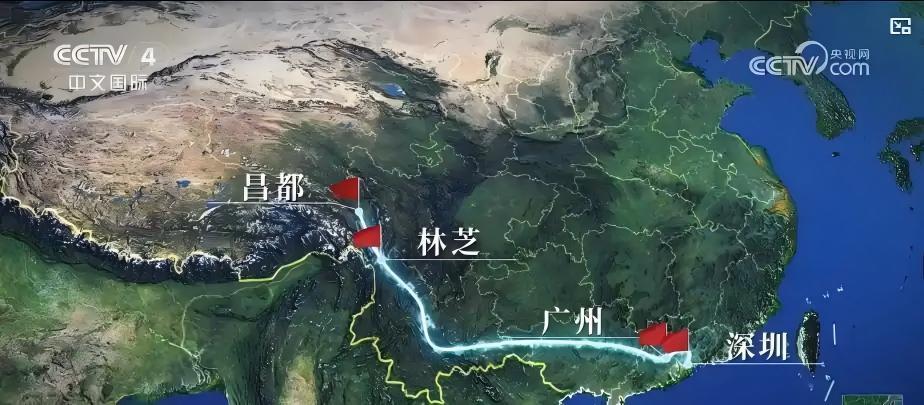
城市24小时 | 直达湾区,又一条“能源大动脉”来了
Mei Ri Jing Ji Xin Wen· 2025-09-16 16:04
Core Points - The construction mobilization meeting for the ±800 kV UHVDC project from Tibet to the Guangdong-Hong Kong-Macao Greater Bay Area was held on September 16, marking the start of the world's largest flexible DC transmission project [1][4] - The project will connect four converter stations in Tibet and Guangdong, aggregating over 20 million kW of clean energy, providing a strong green low-carbon energy guarantee for the region [1][4] - The total investment for the project is approximately 53.2 billion yuan, with an additional investment of over 150 billion yuan for supporting clean energy infrastructure [4] Energy Demand and Supply - In July, Guangdong's electricity consumption reached 531.52 billion kWh, a year-on-year increase of 4.3%, with the highest load reaching 165 million kW, accounting for 11% of the national load [2][4] - The total electricity consumption in China for the year reached 1.02 trillion kWh in July, marking an 8.6% year-on-year increase [1][2] Economic Impact - The project is expected to create over 100,000 direct jobs during peak construction and significantly boost the upstream and downstream equipment industries [4] - Since 2015, the cumulative electricity export from Tibet has reached 15.79 billion kWh, generating over 4.2 billion yuan in economic benefits for the region [2] Strategic Importance - The UHVDC project is seen as a key move in optimizing national energy resource allocation, breaking regional barriers, and achieving precise alignment between resources and markets [4] - The project will enable the delivery of over 43 billion kWh of clean energy annually to the Greater Bay Area, equivalent to half the annual output of the Three Gorges Dam [4]
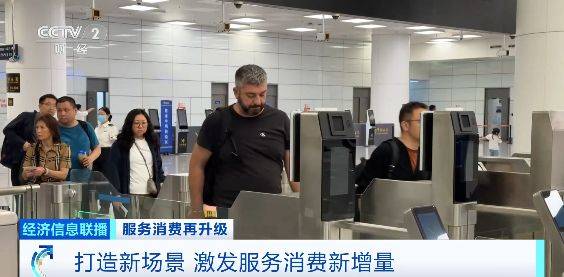
如何打造新场景,激发服务消费新增量?专家解读→
Sou Hu Cai Jing· 2025-09-16 15:05
Core Insights - The Ministry of Commerce has released policies aimed at expanding service consumption, highlighting its importance in driving economic growth and meeting people's needs for a better life [1] Group 1: Service Consumption Growth - In the first eight months of this year, service retail sales in China grew by 5.1% year-on-year, outpacing the growth rate of goods retail sales [1] - Service consumption is identified as a key area for economic growth and fulfilling consumer needs [1] Group 2: Attracting Foreign Consumers - The policy aims to gradually expand the number of countries eligible for unilateral visa exemptions and to issue 5-year multiple-entry visas for more qualified individuals [3] - The strategy includes leveraging traditional cultural advantages such as cuisine, traditional Chinese medicine, and historical sites to encourage travel agencies and online platforms to create tailored travel routes for foreign tourists [3] Group 3: Enhancing Inbound Consumption - Experts emphasize the need to improve the convenience of inbound consumption, including enhancing foreign currency payment systems and expanding the coverage of tax refund stores [5] - There is a call for smarter tax refund processing to facilitate foreign consumer spending [5] Group 4: Digital Service Consumption - Expanding digital service consumption is highlighted as a significant area for growth, with a focus on creating new products, scenarios, and hotspots in information consumption [7] - The initiative includes developing "AI+" consumption models to transform traditional service venues into digital consumption scenarios, thereby enhancing service quality and expanding consumption scale [9]
利好来了!9部门发文
Shang Hai Zheng Quan Bao· 2025-09-16 14:33
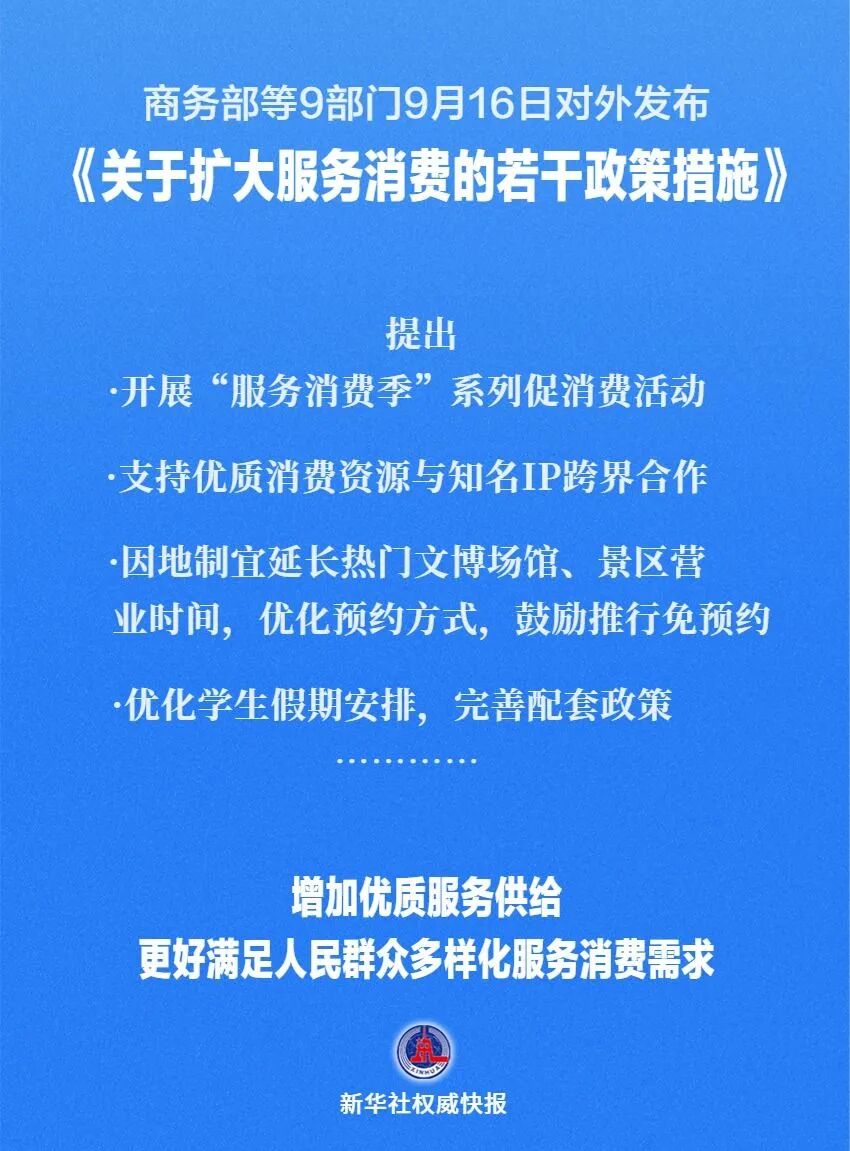
Core Viewpoint - The announcement by nine departments aims to expand service consumption as a crucial support for improving people's livelihoods and upgrading consumption, thereby playing a significant role in promoting high-quality economic development [7][4]. Group 1: Policy Measures - The document outlines five areas with 19 specific measures to stimulate service consumption, including the launch of "service consumption seasons" and support for high-quality consumption resources collaborating with well-known IPs [5][6]. - It emphasizes the need to extend operating hours for popular cultural and tourist venues, optimize reservation methods, and encourage no-reservation policies [5][8]. - The policy encourages the introduction of high-quality sports events and leagues, as well as the development of sports competition brands with independent intellectual property rights [5][9]. Group 2: Enhancing Service Supply - The initiative includes expanding high-level openness in the service industry, particularly in internet, culture, telecommunications, and healthcare sectors [8][10]. - It aims to utilize existing funding channels to support the creation of high-quality cultural products and services, enhancing the supply of cultural offerings [8][10]. - The policy encourages localities to innovate exhibition methods in cultural venues and collaborate with social forces to develop cultural and digital products [8][10]. Group 3: Stimulating New Consumption - The measures propose attracting more foreign visitors for consumption by optimizing visa policies and promoting China's cultural resources [9][10]. - It encourages the expansion of digital service consumption and supports e-commerce platforms in creating integrated online and offline service scenarios [9][10]. - The policy suggests optimizing school holiday arrangements to increase travel and service consumption opportunities [9][10]. Group 4: Financial Support - The plan includes utilizing various funding sources to support the construction of service facilities in culture, tourism, and healthcare [10][11]. - It aims to enhance financial support for service consumption sectors, encouraging financial institutions to develop tailored financial products [10][11]. - The initiative focuses on providing fiscal interest subsidies to stimulate service consumption and reduce financing costs for service providers [10][11]. Group 5: Monitoring and Implementation - The document calls for optimizing service consumption statistics and innovating monitoring methods to reflect regional service consumption development accurately [11][12]. - It emphasizes the need for all relevant departments to implement the policies effectively and coordinate efforts to enhance service consumption [11][12].
9月16日重要资讯一览
Zheng Quan Shi Bao Wang· 2025-09-16 13:32
Group 1 - The Chinese government has officially released the industry standard for medical devices using brain-computer interface technology, marking the first standard of its kind in the country, which will take effect on January 1, 2026 [4] - Shenzhen Securities Regulatory Bureau has issued a warning letter to Shenzhen Qianhai Hongtai Fund Management Co., Ltd. for failing to complete fund filing procedures after fundraising, in violation of the Private Fund Management Regulations [5] - Wanxiang Qianchao is focusing on breakthroughs in key components such as planetary roller screws, precision shafts, and precision reducers [7] Group 2 - Tianpu Co., Ltd. has no plans for significant adjustments to its main business in the next 12 months following the asset injection plan from Zhonghao Xinying [7] - Huqin Technology has submitted an application for the issuance and listing of H-shares to the Hong Kong Stock Exchange [7] - Fuchuang Precision's shareholder, Guotou Chuangye Fund, plans to reduce its stake by no more than 3% [7] Group 3 - Vanke A has received a loan of no more than 2.064 billion yuan from Shenzhen Metro Group [7] - Hengwei Technology intends to acquire 75% of Shuheng Technology's shares, leading to a suspension of its stock [7] - Shanghai Construction Group has experienced a significant short-term stock price increase, indicating potential market overheating and irrational speculation [7] Group 4 - Houen Automotive Electric has received a product designation letter, estimating a total revenue of approximately 2.477 billion yuan over its lifecycle [7] - Huowei Group has entered NVIDIA's supply chain [7] - AVIC Optoelectronics has shipped UQD connectors and liquid cooling pipe components to overseas manufacturers [7]
服务消费迎政策“礼包”,入境游、赛事经济、中高端医疗站上风口
2 1 Shi Ji Jing Ji Bao Dao· 2025-09-16 12:49
Core Points - The Ministry of Commerce and nine other departments jointly issued measures to expand service consumption, highlighting a significant focus on enhancing service sectors in China [1] - The measures include 19 specific tasks aimed at improving service supply, attracting foreign consumption, and increasing financial support for service industries [1][2] Group 1: Service Consumption Expansion - The measures propose to cultivate service consumption promotion platforms and develop new consumption models and scenarios [1] - A wide range of industries are covered, including internet, culture, telecommunications, education, and high-end medical services, indicating a broad policy benefit for related sectors [1][2] - Specific initiatives include extending operating hours for popular cultural venues and optimizing reservation methods to enhance visitor experience [2] Group 2: Financial and Policy Support - The measures emphasize financial support for service industries, including fiscal interest subsidies to reduce financing costs for service providers [1][2] - There is a focus on expanding market access and reducing restrictive measures in sectors like telecommunications, healthcare, and education [2][4] Group 3: Tourism and International Consumption - The measures aim to attract more foreign visitors by expanding visa exemptions and improving travel facilitation, which is expected to boost inbound tourism [6][7] - Data from travel platforms indicate a significant increase in foreign tourist bookings, suggesting a growing interest in domestic travel destinations [7] Group 4: Technological Integration and Innovation - The integration of digital technologies like XR in the cultural and tourism sectors is expected to create immersive experiences that attract younger consumers [3] - The measures encourage the introduction of international sports events and support local sports competitions, which could enhance the sports economy [3]
九部门发文扩大服务消费,稳增长的财政政策仍可加码
Hua Xia Shi Bao· 2025-09-16 12:43
Economic Growth and Demand - China's economic growth remains strong, but domestic demand is slightly below expectations, with key production and demand indicators showing stable growth in the first eight months of the year [2] - In August, there was a marginal decline in economic performance, with year-on-year growth rates for industrial value added, service production index, retail sales, fixed asset investment, and export amounts all weakening [2] - The internal driving force for economic growth has not yet solidified, with ongoing transitions between old and new growth drivers, particularly due to household deleveraging impacting economic circulation [2] Service Consumption Policies - The Ministry of Commerce and nine other departments issued policies on September 16 to expand service consumption, enhancing consumer credit support and promoting collaboration between financial institutions and businesses [3][4] - Service consumption is identified as a crucial support for improving livelihoods and upgrading consumption, with a projected 6.2% year-on-year growth in service retail sales for 2024, outpacing goods retail sales by 3 percentage points [5] - The government aims to attract more foreign consumers and reduce restrictions in high-end medical and leisure sectors to increase quality service supply [6] External Trade and Export Dynamics - In August, China's total goods imports and exports grew by 3.5% year-on-year, with both exports and imports achieving three consecutive months of growth [7] - The export of electromechanical products saw a significant increase, with a 9.2% year-on-year growth in the first eight months [7] - Despite a decline in export growth rate, the resilience of exports is expected to exceed expectations due to adjustments in export markets, particularly with ASEAN and EU countries compensating for reduced exports to the US [7][8] Economic Outlook and Policy Implications - The economic growth is primarily supported by policy measures and structural highlights, but challenges remain due to weak internal and external demand, low corporate profit expectations, and funding constraints [8] - The fourth quarter is seen as a critical period for economic stabilization, with the effectiveness of policy financial tools, local government projects, and consumption stimulus policies being pivotal for maintaining growth [8]

19条举措扩大服务消费,加强财政金融支持
Di Yi Cai Jing· 2025-09-16 11:17
Core Viewpoint - The Chinese government is implementing strong policy support to expand service consumption as a key strategy for boosting domestic demand, with specific measures outlined in the recent policy document [2][3]. Group 1: Policy Measures - The policy document includes 19 specific measures across five areas to enhance service consumption, focusing on financial support, quality service supply, and stimulating new consumption growth [2][3]. - Financial institutions are encouraged to increase credit allocation for service consumption, utilizing various funding channels such as central budget investments and local government bonds [2][6]. Group 2: Service Consumption Growth - Service consumption has become a significant aspect of domestic demand expansion, with service retail sales growing by 5.1% year-on-year from January to August, outpacing the growth of goods retail sales [3]. - The government aims to cultivate new consumption formats and scenarios, promoting innovative service consumption experiences and supporting the development of new consumption leaders [3][4]. Group 3: Supply Optimization - The policy emphasizes the need to open up sectors like telecommunications, healthcare, and education to enhance service supply, attracting foreign investment and private capital [4][8]. - Since 2015, China has expanded its pilot programs for service industry openness, with new cities added to the list of trial areas [4]. Group 4: Financial Support - The People's Bank of China has established a 500 billion yuan fund to support service consumption and elderly care, aiming to enhance the quality of service supply in sectors like hospitality, tourism, and education [7]. - The policy encourages financial institutions to develop tailored financial products for service consumption businesses, addressing their unique financing needs [6][7].
界面晚报 | 商务部等九部门发布19条举措支持服务消费;日本自民党总裁选举或进入5人混战
Sou Hu Cai Jing· 2025-09-16 10:59
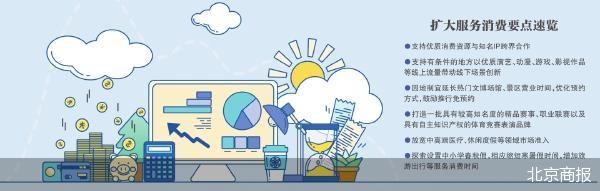
据商务部网站周二发布消息,商务部、国家发改委、财政部等九个部门联合发布《关于扩大服务消费的 若干政策措施》(以下简称《措施》),从培育服务消费促进平台、丰富高品质服务供给、激发服务消 费新增量等五方面提出多达19条具体举措。在培育服务消费促进平台方面,《措施》提出,开展消费新 业态新模式新场景试点城市建设。积极发展首发经济,推动创新和丰富服务消费场景,支持优质消费资 源与知名IP跨界合作,打造一批商旅文体健融合的消费新场景,培育一批新型消费龙头企业。 服务消费迎重磅政策支持,商务部等九部门发布19条举措 ...