数字孪生

Search documents
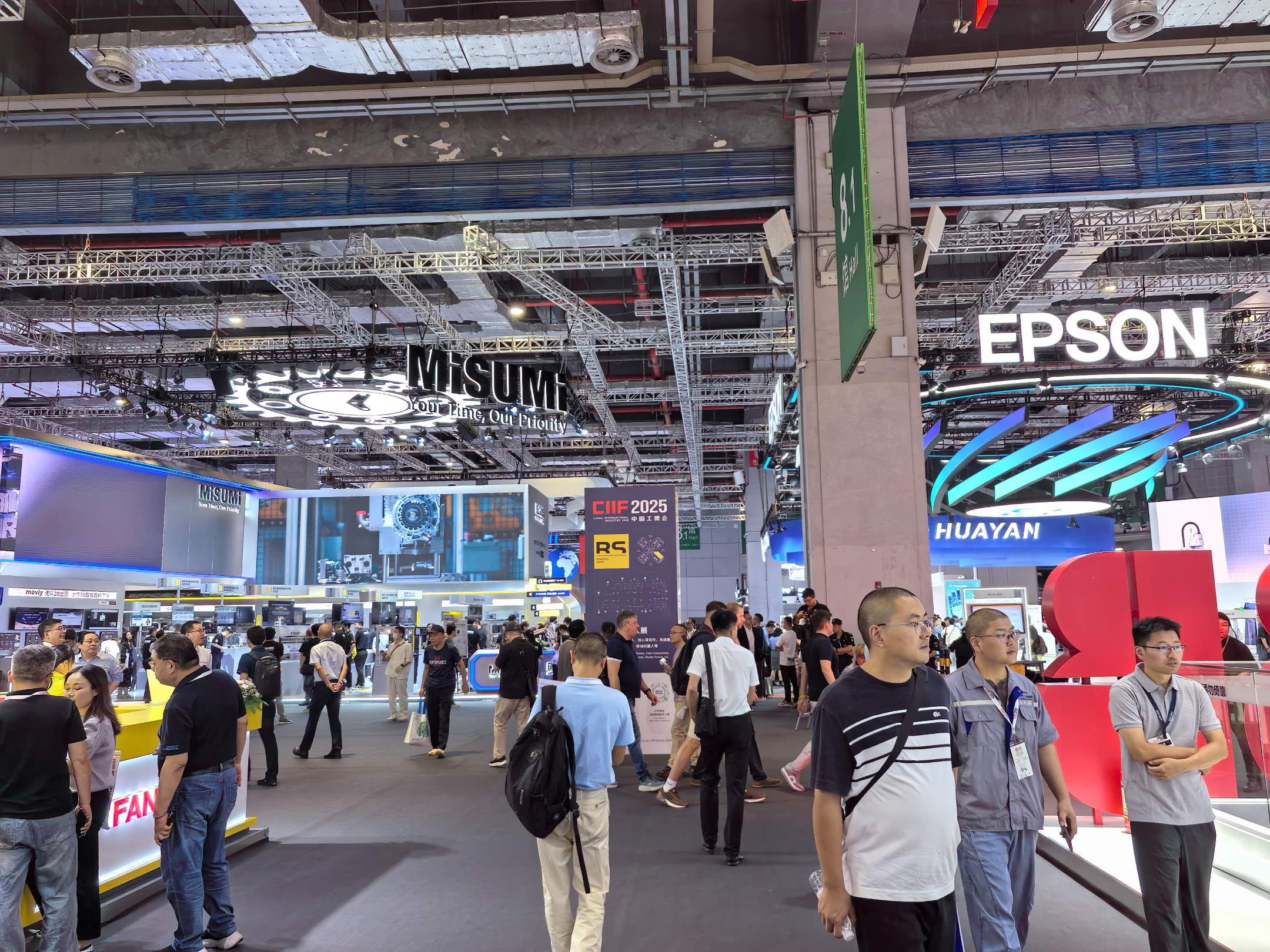
超千项新技术新展品首展首发 第二十五届工博会展现全球工业科技前沿成果
Zheng Quan Shi Bao Wang· 2025-09-29 03:20
Core Insights - The 25th China International Industry Fair showcased over 3,000 exhibitors from 28 countries, highlighting trends in high-end, intelligent, and green industrial development [1] - The fair featured significant achievements in China's industrial sector, including the C919 aircraft and high-speed maglev trains, supported by 1,500 foundational projects [2] - The event served as a platform for companies to enhance collaboration and innovation within the industrial ecosystem, with substantial interest from international buyers [3] Historical Context - China's industrial landscape has been reshaped by a complete industrial chain and continuous innovation, establishing a strong presence in the global market [2] - The exhibition included historical industrial artifacts, showcasing the evolution of China's manufacturing capabilities [2] Current Trends - The fair emphasized the transformation of industrial robots into intelligent collaborators capable of environmental perception and autonomous decision-making [3] - The event facilitated the release of the "Shanghai Industrial Mother Machine Industry Capability Handbook," promoting over 80 cooperative projects with a total contract value exceeding 3 billion yuan [3] Future Outlook - The exhibition highlighted emerging technologies such as controllable nuclear fusion and AI-driven manufacturing systems, indicating a shift towards zero-carbon futures [4] - Innovations like advanced packaging technology and heavy-load robots were showcased, reflecting China's role as a key player in global industrial innovation [5] - The fair underscored China's transition from a technology follower to a significant contributor and leader in global industrial development [5]
水利部答一财:在推进数字孪生水利体系建设中,重点抓监测感知、数学模型建设和业务应用三方面
Di Yi Cai Jing· 2025-09-29 02:56
Core Viewpoint - The future trend and development direction of the water conservancy sector are digitalization, networking, and intelligence, with a focus on building a digital twin water conservancy system to enhance flood prevention, water resource management, and operational efficiency [1][2] Group 1: Digital Twin Water Conservancy System - The Ministry of Water Resources is advancing the construction of a digital twin water conservancy system, which includes digital twin basins, water networks, and engineering projects, significantly enhancing the "four-pre" functions of forecasting, warning, simulation, and planning [1] - Key areas of focus in the digital twin water conservancy system include monitoring perception, mathematical model construction, and business applications [1] Group 2: Monitoring and Perception - Since the "14th Five-Year Plan," there has been a rapid development of an integrated monitoring perception system that combines aerial, terrestrial, and water engineering monitoring, improving the ability to perceive water conservancy physical objects [1] - This system provides dynamic real-time information support for monitoring and controlling safety risks in water conservancy projects and the operation of the digital twin water conservancy system [1] Group 3: Mathematical Models - The construction of a high-fidelity digital flow field simulation mathematical model system is underway, enabling forward-reverse-forward application for decision support in flood and drought disaster prevention and unified scheduling of watershed engineering [1] Group 4: Business Applications - The digital twin platform construction is being advanced based on actual needs and utility orientation, covering various business applications at all levels [2] - The flood forecasting period for major rivers has been extended from 3 days to 10 days, providing strong support for flood resistance in significant events, such as the largest flood in the Beijiang River since 1915 [2] - Monitoring and early warning for ecological flow control at 268 key river and lake sections across the country have been achieved, ensuring safety in the South-to-North Water Diversion Project [2]
水利部答一财:推进数字孪生水利体系建设
Di Yi Cai Jing· 2025-09-29 02:54
Core Insights - The flood forecasting period for major rivers in China has been extended from 3 days to 10 days, enhancing the country's flood management capabilities [1][3] - The Ministry of Water Resources is focusing on the construction of a digital twin water conservancy system, which includes digital twin basins, water networks, and engineering projects, to improve flood prevention and water resource management [1][3] Group 1: Digital Twin Water Conservancy System - The digital twin system aims to enhance monitoring, mathematical modeling, and business applications within the water conservancy sector [3] - A comprehensive "sky-ground-water-engine" integrated monitoring system has been established to improve the perception of physical water objects, providing real-time information for risk monitoring and control [3] - The development of high-fidelity digital flow field simulation models supports decision-making for flood and drought disaster prevention and unified scheduling of water projects [3] Group 2: Practical Applications and Achievements - The digital twin platform has successfully supported the management of significant floods, including the largest flood in the Beijiang River since 1915 and the major flood in the Haihe River basin [3] - Monitoring and early warning systems have been implemented for 268 key river and lake ecological flow control sections across the country [3] - The digital twin system for the South-to-North Water Diversion Project provides real-time reflections of project conditions, optimizing scheduling and ensuring safety in water supply and quality [3]

IPO周报|摩尔线程科创板过会;极飞科技、TOP TOY、优艾智合赴港上市
IPO早知道· 2025-09-28 14:25
Group 1: IPO Developments - Different Group, the parent company of BeBeBus, officially listed on the Hong Kong Stock Exchange on September 23, 2025, under the stock code "6090," becoming the "first stock in maternal and infant consumption technology" [3] - The company, founded in 2018, focuses on designing and selling parenting products, with its first brand, BeBeBus, covering key parenting scenarios such as travel, sleep, feeding, and hygiene care [3] - According to Frost & Sullivan, BeBeBus ranks first among durable parenting product brands targeting mid-to-high-end consumers in China based on 2024 GMV [3] Group 2: Financial Performance of Different Group - Different Group's founder and chairman, Wang Boyan, emphasized the company's commitment to R&D and global market expansion during the listing speech [4] - The stock opened with a rise of over 40% on its debut [4] Group 3: Moer Thread's IPO Approval - Moer Thread's IPO application for the Sci-Tech Innovation Board was approved on September 26, 2025 [5] - Established in 2020, Moer Thread specializes in the research, design, and sales of full-function GPUs and related products, aiming to provide computing acceleration platforms for AI and high-performance computing [5] - The company reported a revenue of 702 million yuan for the first half of 2025, surpassing the total revenue from 2022 to 2024, which was approximately 608 million yuan [5][6] Group 4: Moer Thread's Product Development - Moer Thread has launched four generations of GPU architecture chips from 2021 to 2024, with the latest being the intelligent SoC chip "Changjiang" [6] - The company's products have achieved performance levels close to or on par with international standards, with the MTT S80 graphics card's performance nearing that of NVIDIA's RTX 3060 [6] Group 5: Ji Fei Technology's IPO Submission - Guangzhou Ji Fei Technology Co., Ltd. submitted its IPO prospectus to the Hong Kong Stock Exchange on September 25, 2025, aiming for a main board listing [8] - Ji Fei Technology ranks second globally in the agricultural robot and agricultural drone industries, with market shares of 10.7% and 17.1% respectively [8] - The company reported revenues of 605 million yuan, 614 million yuan, and 1.066 billion yuan from 2022 to 2024, with a revenue increase from 730 million yuan to 745 million yuan in the first half of 2025 [8] Group 6: TOP TOY's IPO Submission - TOP TOY International Group Limited submitted its IPO prospectus to the Hong Kong Stock Exchange on September 26, 2025, with major underwriters including JPMorgan, UBS, and CITIC Securities [11] - Founded in 2020, TOP TOY has become the largest and fastest-growing trendy toy brand in China, achieving a GMV of 2.4 billion yuan in 2024 [11] - The company reported revenues of 679 million yuan, 1.461 billion yuan, and 1.909 billion yuan from 2022 to 2024, with a revenue increase from 858 million yuan to 1.36 billion yuan in the first half of 2025 [11][12] Group 7: You Ai Zhi He's IPO Submission - Hefei You Ai Zhi He Robot Co., Ltd. submitted its IPO prospectus to the Hong Kong Stock Exchange on September 26, 2025, planning to list under Chapter 18C [14] - Established in 2017, You Ai Zhi He focuses on mobile robotic solutions for various industries, ranking first in the industrial mobile robot sector globally based on 2024 revenue [14] - The company reported revenues of 78 million yuan, 108 million yuan, and 255 million yuan from 2022 to 2024, with a revenue increase from 100 million yuan to 127 million yuan in the first half of 2025 [15]
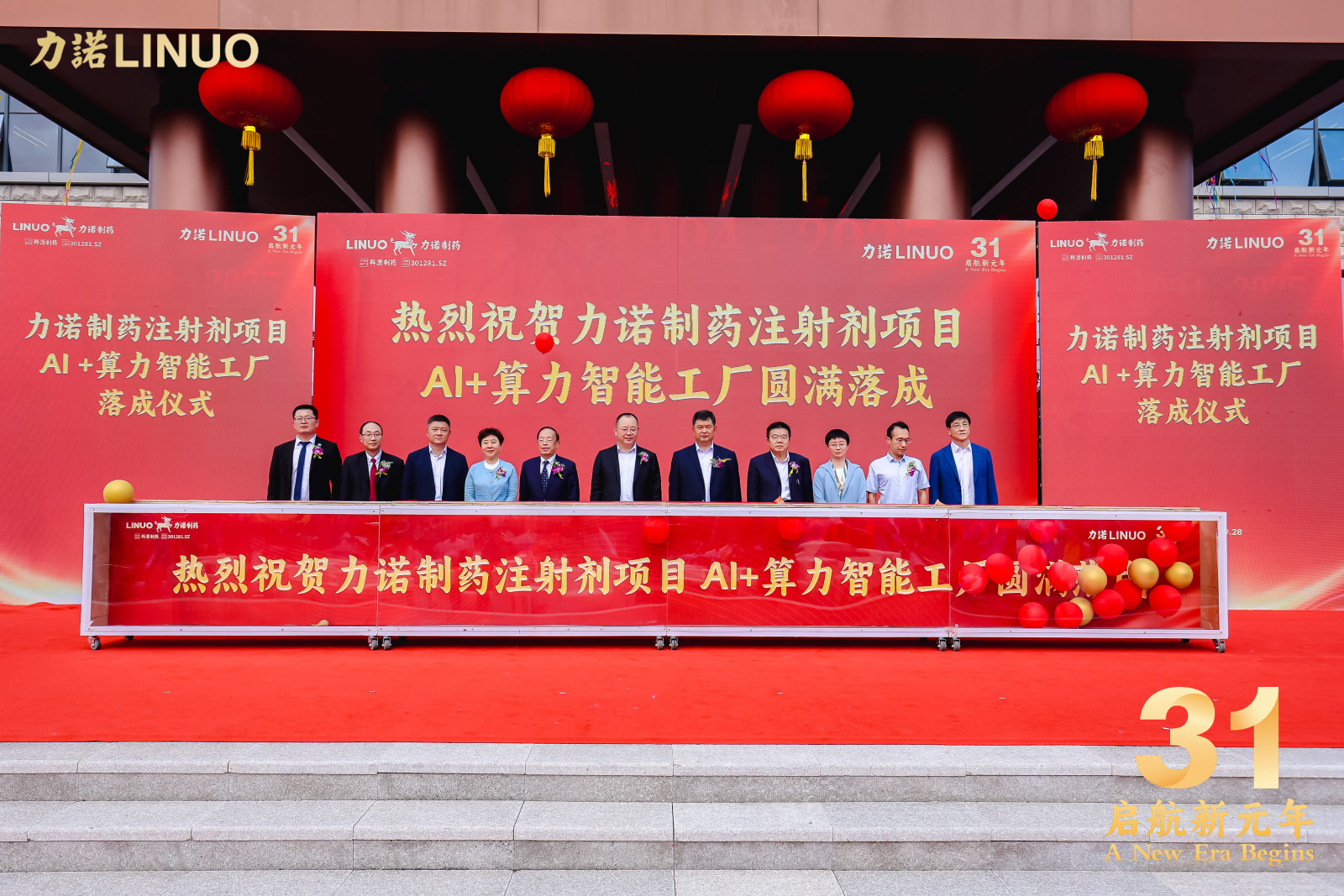
科源制药旗下首家AI+算力智能工厂携七大创新亮点举行落成仪式
Qi Lu Wan Bao· 2025-09-28 10:10
Core Insights - The completion of the AI-powered intelligent factory for injectable drugs by Koyuan Pharmaceutical's subsidiary, Linuo Pharmaceutical, marks a significant breakthrough in smart manufacturing within the injectable drug sector [1][3][4] - The project encompasses a total construction area of approximately 46,000 square meters, featuring quality inspection and R&D buildings, high-end injectable drug production workshops, and a comprehensive intelligent warehouse [3][4] Group 1: Project Overview - The factory's production and quality management systems are established according to national GMP, US FDA, and EU GMP standards, integrating smart, lean, green, and safe production [3][11] - The project is recognized as a key initiative for green, low-carbon, and high-quality development in Shandong Province, as well as a significant project for enterprise technological transformation and industrial upgrades [3][4] Group 2: Technological Advancements - The factory employs advanced technologies such as 4K ultra-high-definition monitoring, 5G high-speed transmission, and AI intelligent analysis to create a smart park platform that optimizes energy consumption and ensures ecological compliance [5][10] - The production system integrates cutting-edge pharmaceutical equipment and digital innovation technologies, featuring two production lines for freeze-dried powder injections and BFS (Blow-Fill-Seal) technology [7][10] Group 3: Quality Control and Logistics - The smart laboratory establishes a new paradigm for digital transformation in pharmaceutical quality control, utilizing AI central control systems and intelligent robotic clusters for fully automated operations [8] - The intelligent warehouse employs a four-way car storage system and WMS (Warehouse Management System) to ensure real-time synchronization of inventory data, enhancing the efficiency of the pharmaceutical supply chain [9] Group 4: Strategic Positioning - The factory's production and quality systems are designed to meet international standards, enhancing product quality recognition and market access, particularly for high-end markets in Europe and the US [11] - The establishment of this intelligent factory is a key strategic move for Koyuan Pharmaceutical and Linuo Pharmaceutical, aimed at expanding their high-end formulation product matrix and enhancing market competitiveness [11]
以色列,重塑全球芯片版图
半导体芯闻· 2025-09-28 09:47
Core Viewpoint - Israel has transformed from a "startup nation" to a global semiconductor powerhouse, playing a crucial role in reshaping the global chip landscape, with around 200 semiconductor companies and an annual export exceeding $10 billion, accounting for 5% of the national export [1][3]. Historical Development - The pivotal year for Israel's semiconductor industry was 1964 when Motorola established the first semiconductor R&D center in Israel, laying the foundation for the industry [3]. - Over the next decade, major companies like Microsoft and National Semiconductor entered Israel, enhancing local technological capabilities and establishing manufacturing facilities [3][4]. - The 1980s to 2000s marked a significant growth period, highlighted by Intel's development of the 8088 processor in 1984, which became a key component in the rise of the global PC industry [4]. Local Innovations - Israeli companies have made significant contributions, such as Galileo Technology's development of the first true flash file system in 1990, which revolutionized storage devices [5]. - Mobileye's introduction of the first ADAS-specific processor in 2004 established Israel as a leader in automotive technology, culminating in its acquisition by Intel for $15.3 billion [6]. Key Industry Players - Major global companies like Intel have played a significant role in Israel's semiconductor landscape, establishing R&D centers and manufacturing facilities that integrate local talent and technology into global supply chains [9]. - Mobileye's trajectory exemplifies the successful transition from R&D to commercialization, with its technology being widely adopted in the automotive industry [10]. - Other notable companies include Mellanox, acquired by NVIDIA for $6.9 billion, and Habana Labs, acquired by Intel for approximately $2 billion, both enhancing their respective parent companies' capabilities in AI and data center technologies [11][12]. Emerging Technologies - Israel's semiconductor industry is well-positioned to capitalize on emerging technologies such as AI, with the generative AI chip market projected to reach $125 billion by 2024 [30]. - The rise of edge computing and IoT aligns with Israel's strengths in sensor and edge computing chip development, presenting opportunities for commercialization in various sectors [30]. Competitive Advantages - Israel's semiconductor industry benefits from a strong local ecosystem supported by multinational companies, high R&D investment (4.3% of GDP), and a vibrant startup culture with around 70 semiconductor startups raising $5.5 billion [28][29]. - The education system emphasizes engineering and technology, producing a skilled workforce that supports innovation and aligns with global industry standards [28]. Future Outlook - The future of Israel's semiconductor industry will depend on its ability to leverage opportunities while addressing challenges such as talent retention, geopolitical risks, and competition from other regions [32][33]. - By focusing on its strengths in design and R&D, Israel can enhance its position as a "technology innovation node" in the global semiconductor landscape, particularly in AI and edge computing [33].

数字孪生长江智慧纪巡财审协同监督系统——公务用车管理和接待管控数据治理平台上线运行
Shui Li Bu Wang Zhan· 2025-09-28 08:21
Group 1 - The core viewpoint of the news is the integration of digital technology into the supervision of public vehicle management and reception control, enhancing transparency and efficiency in management processes [1][2][3] - The Longjiang Water Resources Commission has implemented a collaborative supervision system that incorporates big data, focusing on the management of public vehicles and receptions as key modules [1][3] - The Hanjiang Group Company has independently developed a data governance platform for public vehicle management and reception control, which has been officially launched [1][2] Group 2 - The digital management system creates a closed-loop process for public vehicle management, covering approval, scheduling, usage, settlement, and analysis, ensuring comprehensive data tracking [2] - AI technology is embedded throughout the supervision management chain, enhancing compliance through pre-audit and real-time warning mechanisms, thus improving risk management capabilities [2] - The Longjiang Water Resources Commission aims to use the digital practices of Hanjiang Group as a model for further development and application across the commission, strengthening political supervision [3]
“数字孪生”护航、“超充”加速 双节电力保障玩转“黑科技”
Xin Hua Cai Jing· 2025-09-28 07:24
Group 1: Power Supply and Safety Measures - Power companies in Shanghai and Sichuan are leveraging technology to ensure reliable power supply during the upcoming National Day and Mid-Autumn Festival holidays [1][2] - In Shanghai, the State Grid's Pudong Power Supply Company is using a digital twin system for real-time monitoring of power loads at event venues, ensuring uninterrupted power supply for the International Light Festival [1] - The Shanghai Electric Power Company has deployed 174 emergency repair stations and over 2,800 personnel to maintain power supply stability during the holiday period [2] Group 2: Green Energy Initiatives - The Sichuan Electric Power Company is enhancing the green travel network by increasing the number of charging stations along popular travel routes, such as the G318 highway, with 58 charging stations available every 60 kilometers [2][3] - Various innovative charging solutions have been implemented in tourist areas, including mobile charging stations and solar-powered charging facilities, to address charging difficulties for electric vehicles [3][4] - Chengdu has launched 26 operational and 22 under-construction interactive charging stations that provide efficient charging services while also supporting the local power grid during peak demand [4] Group 3: Community Engagement and Support - Local power departments are actively engaging in community support by conducting inspections and ensuring the safety of charging facilities during the holiday season [2][4] - In rural areas, the establishment of charging stations, such as the one in Beichuan County, is promoting the adoption of electric vehicles among residents [4]
携手建设沙特智慧城市:中企“智”造阿拉伯半岛新明珠
人民网-国际频道 原创稿· 2025-09-28 06:31
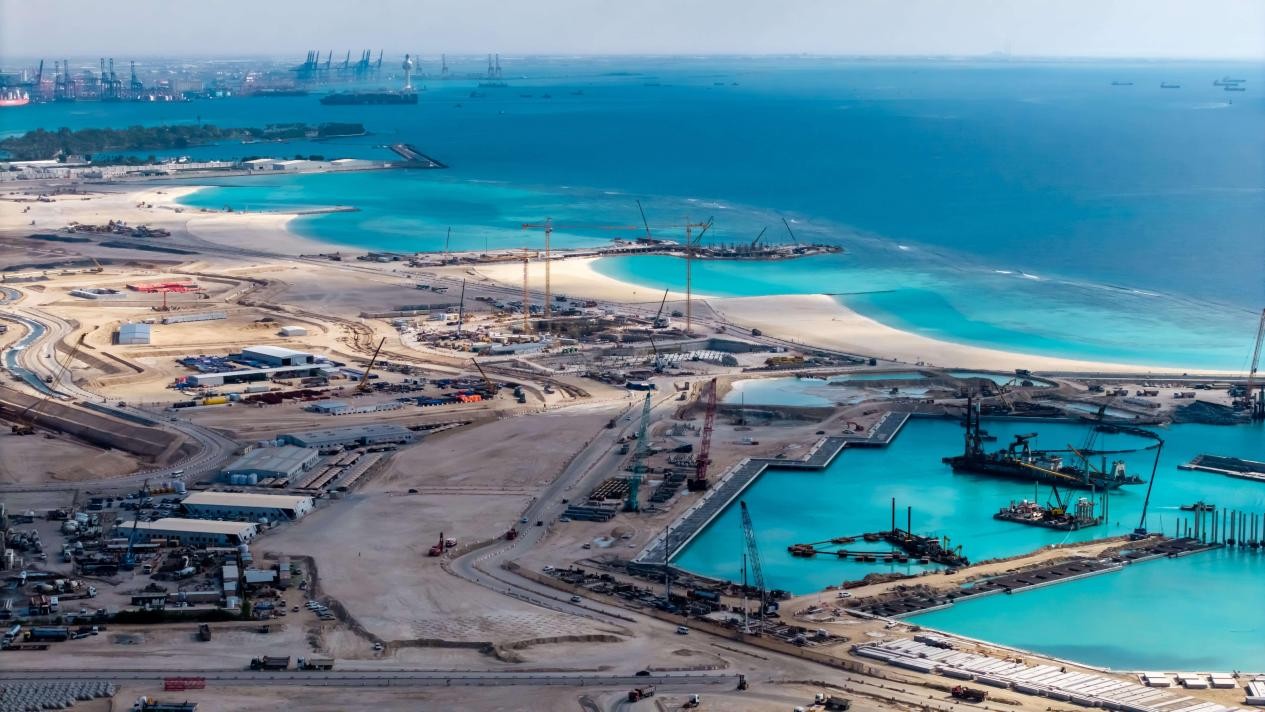
Core Viewpoint - The Jeddah Comprehensive Development Project, undertaken by Chinese companies, aims to create a smart new urban area in Jeddah, Saudi Arabia, featuring various facilities such as museums, opera houses, and high-end hotels, with a focus on integrating smart city systems and management platforms [1][2]. Group 1: Project Overview - The project covers a total area of 5.7 million square meters and includes a coastline of 9.5 kilometers [2]. - Key construction elements include a 1,507-meter comprehensive service corridor, a 324-kilometer pipeline system, 18 kilometers of municipal roads, and six service buildings [2][4]. Group 2: Technological Integration - The project utilizes Building Information Modeling (BIM) to create a digital twin of the construction process, allowing for preemptive identification of potential issues and optimization of construction plans [3][4]. - The integration of Virtual Reality (VR) and Augmented Reality (AR) technologies enhances project management and execution, providing immersive experiences and precise location tracking of infrastructure [6][8]. Group 3: Efficiency and Quality Improvement - The use of BIM and AR technologies has significantly improved construction efficiency and quality, reducing rework and enhancing safety during installation processes [4][6]. - The project team has developed a smart construction site and integrated various subsystems for real-time monitoring and management, ensuring that data is visible and manageable [8]. Group 4: Future Prospects - The project aims to leverage BIM and digital twin technologies to facilitate dynamic management and resource coordination in smart city operations, enhancing urban living [8]. - Successful implementation of these technologies in Jeddah is expected to serve as a model for other cities in Saudi Arabia, promoting further Sino-Saudi cooperation in urban development [8].
到场专业观众达22.4万人,第二十五届工博会闭幕
Guo Ji Jin Rong Bao· 2025-09-28 03:44
Core Insights - The 25th China International Industry Fair (CIIF) concluded with a focus on "New Quality in Industry, Boundless Intelligent Manufacturing" showcasing advancements in high-end, intelligent, and green industrial development [1][4] - The event attracted over 3,000 exhibitors from 28 countries and regions, with a record attendance of 224,000 professional visitors, marking an 11% increase from the previous year [4] - The fair highlighted significant technological innovations, including nearly 400 representative achievements in various fields, and featured 1 special award and 10 main awards [4] Industry Trends - The CIIF served as a platform to display the latest industrial trends, emphasizing "embodied intelligence" as a key direction for future development [9] - New energy technologies such as controllable nuclear fusion and modular nuclear reactors were showcased, indicating a shift towards zero-carbon futures [9] - Digital twins, AI algorithms, and cloud platforms are being integrated into factories for comprehensive lifecycle management [9] Company Highlights - Shanghai Electric displayed historical industrial artifacts alongside modern innovations, reflecting China's journey from self-reliance to technological advancement [6] - Siemens introduced nearly 20 AI-related products, including a new generation of intelligent assembly equipment for electric vehicles, marking its first pilot application in China [6] - The fair facilitated significant business interactions, with over 80 cooperation projects and a signing amount exceeding 3 billion yuan [7] Innovations and Breakthroughs - Chiplet advanced packaging technology was presented by Chip and Semiconductor, showcasing breakthroughs in computational power [10] - The world's first heavy-duty robot with a load capacity of over 5,000 kg was unveiled by Chai Fu Robotics, setting a new standard in industrial robotics [10] - The introduction of the "CIIF Talk" segment attracted nearly 4 million online viewers, focusing on the future of industry and technological advancements [10]