
智能家居

Search documents
萤石网络(688475):收入延续较好增长,结构拉动毛利率优化
Changjiang Securities· 2025-08-06 11:44
Investment Rating - The investment rating for the company is "Buy" and is maintained [6]. Core Views - The company achieved a revenue of 2.827 billion yuan in H1 2025, representing a year-on-year growth of 9.45%. The net profit attributable to shareholders was 302 million yuan, up 7.38% year-on-year, and the net profit after deducting non-recurring items was 298 million yuan, an increase of 7.69% year-on-year [3][4]. - In Q2 2025, the company reported a revenue of 1.447 billion yuan, a year-on-year increase of 7.48%, with a net profit attributable to shareholders of 164 million yuan, up 4.95% year-on-year, and a net profit after deducting non-recurring items of 160 million yuan, an increase of 3.33% year-on-year [3][4]. Summary by Sections Revenue Growth - The company continues to experience good revenue growth, with H1 2025 revenue increasing by 9.45% year-on-year. The smart home products segment grew by 8.88%, while the IoT cloud platform segment saw a growth of 12.20%. Notably, the smart home camera segment grew by 7.22%, and the smart entry segment surged by 32.99% due to the launch of the AI-powered Y5000FVX product [3][4][9]. - The domestic business grew by 1.63% year-on-year, while overseas business experienced a significant growth of 25.42% [9]. Profitability and Margin - The company's gross margin improved by 0.43 percentage points to 43.59% in H1 2025. Despite a decline in gross margins for both smart home products and the IoT cloud platform, the overall margin was positively impacted by changes in business structure [9]. - Operating profit for H1 2025 was 241 million yuan, reflecting a year-on-year growth of 9.10%, with an operating profit margin of 8.53%, a slight decrease of 0.03 percentage points [9]. Future Outlook - The company is expected to maintain its market-leading position in the smart home industry, with projected net profits attributable to shareholders of 584 million yuan, 718 million yuan, and 860 million yuan for 2025, 2026, and 2027, respectively [9].

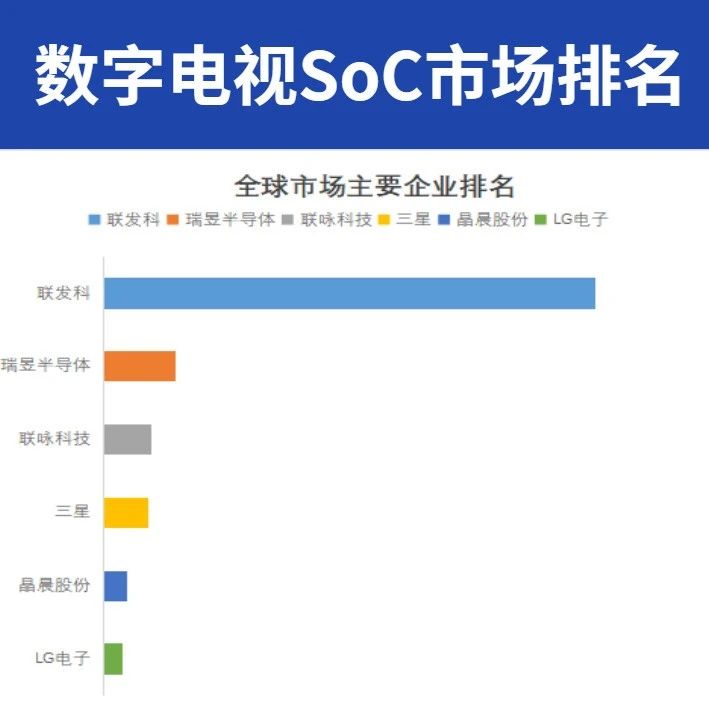
数字电视SoC,TOP6大企业占据全球95%的市场份额(2024)
QYResearch· 2025-08-06 08:31
Core Insights - The global digital TV SoC market is projected to reach USD 4.77 billion by 2031, with a compound annual growth rate (CAGR) of 1.8% over the coming years [1]. Market Overview - Digital TV SoC integrates various components and functions required for digital TV reception and processing into a single chip, supporting multiple video and audio codecs and broadcasting standards [1]. - The leading product type in the digital TV SoC market is UHD SoC, which holds approximately 96.6% market share [5]. - LCD TVs represent the largest downstream market for digital TV SoC, accounting for about 94.2% of the demand [9]. Market Players - Major global manufacturers of digital TV SoC include MediaTek, Realtek Semiconductor, Novatek Microelectronics, Samsung, and Amlogic, with the top four companies holding around 89.0% of the market share in 2024 [5]. Market Drivers - The transition from analog to digital broadcasting is driving demand for digital TV SoC as governments worldwide promote digital broadcasting [16]. - Increasing consumer demand for high-definition and ultra-high-definition video support, smart TV features, and internet connectivity is pushing TV manufacturers to adopt advanced digital TV SoC [16]. - The growing popularity of UHD content and the increasing number of TV channels and services require more powerful SoCs for high-quality video experiences [16]. - Technological advancements in digital TV SoC enhance performance, integration capabilities, and support for complex audio and video processing [16]. - Cost-effectiveness and integration advantages of digital TV SoC are facilitating market penetration, especially in emerging economies [16]. Market Challenges - High R&D costs for developing high-performance and feature-rich digital TV SoC pose a significant barrier for smaller manufacturers [18]. - Compatibility issues arise due to the need for digital TV SoC to support various codecs, streaming standards, and network protocols [18]. - Rapid technological updates in the digital TV sector require manufacturers to continuously invest in R&D to meet evolving consumer demands [18]. - Variations in digital TV standards across different regions complicate the design and development of compatible digital TV SoC solutions [18]. - Data security and privacy concerns are increasingly important as smart TVs become more connected, necessitating robust measures to protect user data [18].

厨房里的寒冬
3 6 Ke· 2025-08-06 06:10
Group 1 - The core point of the article highlights the shift in consumer behavior towards meal delivery services and the impact on traditional kitchen appliance companies, as companies like JD are investing in community kitchens to meet the demand for convenient meal options [1][3] - JD plans to invest 1 billion yuan to create "Qixian Kitchen," aiming to recruit "dish partners" to provide reliable meal alternatives for busy consumers, particularly office workers and students [1] - The trend of hotels selling meals in communities reflects a growing preference for convenient dining options, with popular dishes priced affordably, catering to the time-constrained lifestyles of modern consumers [3] Group 2 - The cost of maintaining a home kitchen in first-tier cities is significant, with kitchen space being less prioritized compared to living areas, leading to reduced kitchen sizes in new housing developments [4][8] - Younger generations view cooking as a time-consuming luxury, preferring open kitchen designs that integrate cooking with other household activities, which diminishes the importance of traditional cooking [8] - The integrated stove market, heavily reliant on new housing, is facing a sharp decline due to the downturn in the real estate market, with new housing starts expected to drop significantly in the coming years [9][10] Group 3 - Major integrated stove companies like Zhejiang Meida and Mars have reported substantial revenue and profit declines, indicating severe financial pressure within the industry [10] - The demand for kitchen appliances in the existing housing market is shifting towards essential items with higher replacement rates, such as range hoods and gas stoves, while newer categories like health-oriented appliances are gaining traction [12][14] - Companies like Boss Electric are struggling with stagnant revenue growth and increasing competition in a saturated market, leading to a need for strategic adjustments [16][21] Group 4 - The impact of government subsidies on kitchen appliance demand is seen as a short-term boost that may lead to a decline in future sales, as many consumers have preemptively made purchases [22][25] - The kitchen appliance market is experiencing a divergence in sales performance, with mid-to-high-end products gaining popularity while lower-end products face declining demand [27] - Companies lacking innovation and differentiation are at risk, as evidenced by the struggles of brands like Joyoung, which have seen significant revenue and profit declines [27][28]





新款Apple TV 4K确认2025年底发布:性能升级,价格或下调
Huan Qiu Wang Zi Xun· 2025-08-06 03:56
Group 1 - Apple plans to release a new version of Apple TV 4K in late 2025 to replace the current 2022 model, featuring multiple hardware upgrades [1][3] - The new Apple TV 4K is expected to be powered by a chip more advanced than the A15 Bionic, such as the A17 Pro or A18, enhancing processing capabilities for complex Apple Intelligence functions and high-quality gaming [3] - The device will support Wi-Fi 7 technology, significantly improving network connection speed and stability, and will incorporate Apple's own designed Bluetooth and Wi-Fi chips for better synchronization with smart home devices [3][4] Group 2 - Analyst Ming-Chi Kuo predicts a potential price reduction for the new Apple TV 4K to enhance market competitiveness, with the current model starting at $129 [3] - The anticipated release window for the new Apple TV 4K aligns with Apple's plans to launch several original content pieces on Apple TV+ between September and December 2025 [3] - The new device may also include video calling capabilities with a built-in camera and further optimize integration with Apple Vision Pro for innovative user experiences [4]


法狮龙股价上涨1.35% 盘中振幅达2.4%
Jin Rong Jie· 2025-08-05 17:03
Group 1 - The stock price of Fashilong reached 27.84 yuan as of August 5, 2025, with an increase of 0.37 yuan from the previous trading day [1] - The opening price was 27.60 yuan, with a high of 28.00 yuan and a low of 27.34 yuan, resulting in an intraday fluctuation of 2.40% [1] - The trading volume was 19,290 hands, with a total transaction amount of 0.53 billion yuan [1] Group 2 - Fashilong's main business includes the research, production, and sales of integrated ceilings and integrated wall panels, primarily used in residential decoration [1] - The company's products cover various spaces such as kitchens, bathrooms, living rooms, and bedrooms [1] - Fashilong has also made advancements in the smart home sector within the building decoration industry [1] Group 3 - On August 5, the net outflow of main funds for Fashilong was 4.8672 million yuan, with a cumulative net outflow of 18.3622 million yuan over the past five trading days [1] - During the morning session, the stock experienced a rapid decline, with a drop of over 2% within five minutes, reaching a low of 27.34 yuan [1]

麦思智能引擎上涨13.82%,报4.15美元/股,总市值1.08亿美元
Jin Rong Jie· 2025-08-05 13:52
Core Viewpoint - MAAS experienced a significant stock price increase of 13.82% on August 5, reaching $4.15 per share, with a total market capitalization of $108 million [1]. Financial Performance - For the fiscal year ending December 31, 2024, MAAS reported total revenue of 716 million RMB, reflecting a year-on-year growth of 1911.86% [1]. - The company's net profit attributable to shareholders was 232 million RMB, showing a remarkable increase of 798.03% year-on-year [1]. Company Overview - MAAS, established in 2010, aims to become a leading provider of smart home and enterprise services [1]. - The company's mission focuses on enhancing the quality of life for families globally, emphasizing two main drivers: "technological intelligence" and "capital investment" [1]. - MAAS has a global strategic vision, identifying high-quality enterprises with global investment and operational potential [1]. - Key focus areas for MAAS include asset allocation, education and study abroad, cultural tourism, healthcare and elderly care, as well as family governance [1].
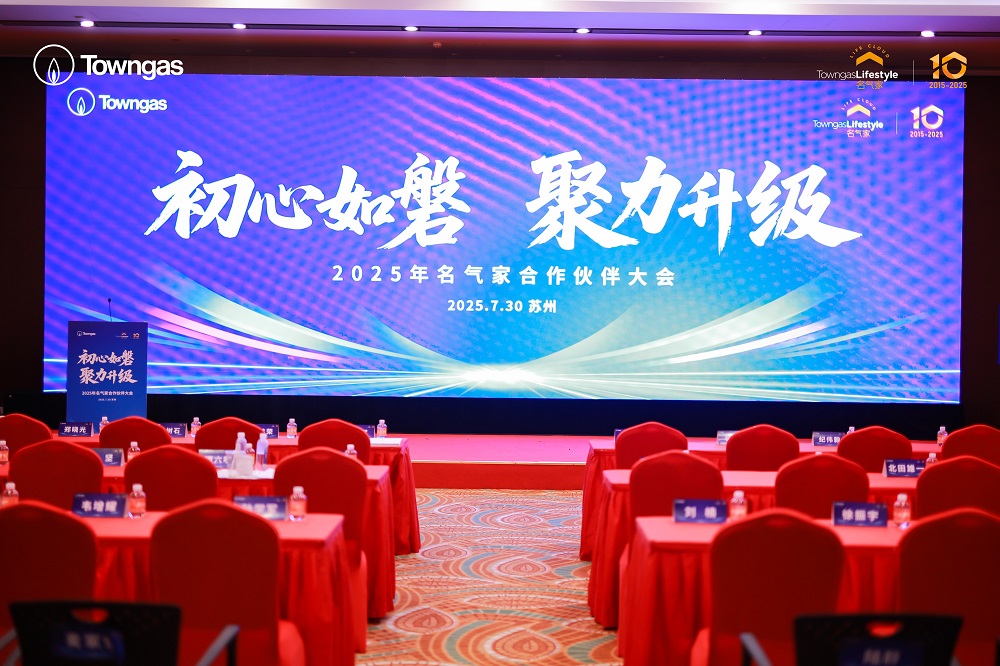
初心如磐 聚力升级!名气家2025年合作伙伴大会成功举办
Zhong Guo Neng Yuan Wang· 2025-08-05 09:05
7月30日,名气家2025年合作伙伴大会在苏州召开。本次大会以"初心如磐聚力升级"为主题,多位集团领导、各企业代表、合作伙伴及相关行业专家齐聚一堂,围绕延伸业务、市场及行业趋 势、业务创新、产品力提升等主题展开精彩分享与讨论。 共启延伸业务发展新篇 香港中华煤气行政总裁黄维义在致辞中指出:"中华煤气早在60年前就开始探索延伸业务,凭借专业服务和优质产品,赢得了香港市场的良好口碑。2015年名气家成立以来,凭借香港 的成功经验和自身创新,一直致力于为内地用户提供线上线下一站式生活服务解决方案。面对内地和香港4500万家庭燃气用户,我们始终在思考燃气安全服务之外,如何为用户提供更多元 的服务。新的十年,希望名气家继续结合香港市场经验,充分挖掘市场潜力,创新业务,为更多家庭提供安全、优质的产品及服务。" 香港中华煤气执行董事暨首席投资总裁陈英龙表示,名气家十年创业路经历了很多的创新与变革,也遇到过重重挑战。站在战略融资的新起点,期待名气家继续保持初心,为4500万 家庭客户提供更优质的产品与服务,真正成为值得用户托付的家庭生活管家。 名气家于7月完成首轮战略融资,领投方元禾辰坤和方源资本也出席了本次大会。作为投资方 ...

沪指重夺3600点,结构牛继续,把握三个机会
Sou Hu Cai Jing· 2025-08-05 05:12
Market Overview - On August 5, the A-share market showed a mixed performance, with the Shanghai Composite Index fluctuating around 3600 points and closing up 0.53% at 3602.13 points, while the Shenzhen Component Index rose 0.14% and the ChiNext Index fell 0.26% due to adjustments in AI hardware [2][3] - The Hong Kong market continued its rebound, with the Hang Seng Index rising 0.27% to 24799.67 points, driven by strong performances in healthcare and materials sectors [2][3] Leading and Lagging Sectors - In the A-share market, leading sectors included PEEK materials, consumer electronics, steel, real estate, and banking, with respective gains of 1.32%, 1.24%, and 1.12%, driven by policy catalysts and expectations of infrastructure investment [2][3] - Lagging sectors showed a "high to low" characteristic, with declines in computer and pharmaceutical sectors of 0.64% and 0.45%, reflecting cautious sentiment towards high-valuation tech stocks [3][4] - In the Hong Kong market, the healthcare index led with a 1.91% increase, supported by the new pricing mechanism for innovative drugs, while the paper and packaging index surged 4.47% due to a new round of price hikes [3][5] Investment Insights - The current market is characterized by "structural trends and accelerated capital rotation," with A-shares facing profit-taking pressure around the 3600-point mark but maintaining high trading volumes [6] - Investment focus should be on sectors benefiting from policy support, such as new materials, consumer electronics, and infrastructure chains, while monitoring economic data and policy interactions between China and the US for Hong Kong stocks [6] - Long-term investment themes include technology (AI, semiconductors, advanced manufacturing), new consumption (smart home, service consumption), and non-ferrous metals, which are seen as having allocation value [6]
萤石网络20250802
2025-08-05 03:16
Summary of the Conference Call for YingShi Network (2025 H1) Company Overview - **Company**: YingShi Network - **Period**: First half of 2025 - **Total Revenue**: 2.827 billion CNY, up 9.45% YoY - **Net Profit**: 302 million CNY, up 7.38% YoY Key Financial Highlights - **Smart Home Products Revenue**: 2.256 billion CNY, up 8.9%, accounting for approximately 80.3% of main business revenue, with a gross margin of 36.8%, an increase of 1.3 percentage points [2][5] - **Smart Home Camera Revenue**: 1.548 billion CNY, up 7.2%, accounting for about 55.1% of main business revenue, with a gross margin of 39.1%, unchanged from the previous year [2][6] - **Smart Entry Products Revenue**: 436 million CNY, up 33%, with gross margin increasing by 5.1 percentage points to 46.3% [2][7] - **IoT Cloud Platform Revenue**: 555 million CNY, up 12.2%, accounting for 19.7% of main business revenue [2][9] - **Domestic Revenue**: 1.763 billion CNY, up 1.63%, accounting for 62% of total revenue; **Overseas Revenue**: 1.064 billion CNY, up 25.42%, accounting for 38% of total revenue [2][10] Product and Market Insights - **AI Face Video Lock Y5,000FBX**: Launched as a self-developed product, integrating AI technology for enhanced visual and interactive capabilities [2][7] - **Sales and Marketing Expenses**: Increased to 444 million CNY, up 19.18%, accounting for 15.71% of revenue, driven by expansion in smart home camera and new product markets [4][11] - **Cross-Border E-commerce Growth**: Significant growth noted in overseas markets, particularly in Europe for smart entry products [4][12] Strategic Initiatives - **Cloud Services**: Public cloud platform revenue grew by 12%, maintaining double-digit growth for several years, with a focus on personalized services to enhance user experience [4][13] - **AI Integration**: Plans to leverage AI models to enhance service offerings for both developers and customers, with a focus on IoT and cloud services [16][36] - **New Brand Development**: Introduction of sub-brands targeting younger demographics, with a focus on innovative designs and marketing strategies [27][30] Future Outlook - **Market Expansion**: Continued focus on international markets, with expectations for overseas revenue growth to outpace domestic growth [12][20] - **Product Diversification**: Plans to expand product lines, including smart locks and cleaning robots, to capture emerging market opportunities [21][24] - **Investment in AI and Robotics**: Commitment to invest in AI interaction and video technology for smart service robots, aiming for breakthroughs across various product lines [36][37] Additional Insights - **Customer Trends**: Increasing demand for smart cameras in home care, pet companionship, and outdoor activities, indicating a shift in consumer needs [29][30] - **Competitive Positioning**: The Y5,000 product is positioned as a premium offering with advanced AI capabilities, aiming to capture a broader market segment [25][26] This summary encapsulates the key points from the conference call, highlighting the financial performance, product developments, strategic initiatives, and future outlook for YingShi Network.
匠心家居涨1.97%,成交额9375.51万元,近3日主力净流入705.38万
Xin Lang Cai Jing· 2025-08-04 08:00
Core Viewpoint - The company, Jiangxin Home, is experiencing growth driven by its focus on smart home products and its significant overseas revenue, particularly benefiting from the depreciation of the RMB [2][7]. Group 1: Company Overview - Jiangxin Home specializes in the research, design, production, and sales of smart electric sofas and beds, with its main products including single chairs, combination sofas, mechanisms, motors, and control devices [2][7]. - The company has a strong presence in the overseas market, with 99.49% of its revenue coming from international sales, which is positively impacted by the depreciation of the RMB [2]. - As of March 31, 2025, Jiangxin Home reported a revenue of 773 million yuan, representing a year-on-year growth of 38.16%, and a net profit of 194 million yuan, up 60.41% year-on-year [7]. Group 2: Product and Market Expansion - The company is entering the health and wellness industry with products such as smart beds for rehabilitation and home care [3]. - Jiangxin Home has established a production base in Vietnam, focusing on localized operations and has developed complete independent manufacturing capabilities [3]. Group 3: Financial Performance and Shareholder Information - The company has distributed a total of 519 million yuan in dividends since its A-share listing, with 423 million yuan distributed over the past three years [8]. - As of March 31, 2025, the number of shareholders increased by 0.90% to 5,493, with an average of 20,233 circulating shares per person, an increase of 160.31% [7][9].