碳中和

Search documents
中国石化胜利油田 协同发展“三大产业” 助力保障能源安全
Jing Ji Ri Bao· 2025-12-25 22:03
Core Insights - The Shengli Jiyang shale oil field has become China's first billion-ton shale oil field to pass national review, marking a significant breakthrough in the exploration and development of shale oil in continental rift basins [1][3] - Shengli Oilfield has produced a total of 115.55 million tons of crude oil and 4.015 billion cubic meters of natural gas since the 14th Five-Year Plan, contributing to national energy security [2] - The company has established a comprehensive smart energy system, achieving a green electricity generation capacity of 740 million kilowatt-hours annually, with renewable energy usage in oil and gas production reaching 25% [1][6] Exploration and Production - Shengli Oilfield is advancing deep exploration, with new drilling activities targeting depths of up to 5,750 meters to tap into deeper oil and gas resources [2] - The company has achieved significant breakthroughs in shale oil production, with the Jiyang shale oil field estimated to have a resource volume of 10.52 billion tons, comparable to conventional oil and gas resources discovered over 60 years [3] - By 2025, Shengli Oilfield expects to produce over 700,000 tons of shale oil, positioning it as a strategic area for resource replacement [3][5] Renewable Energy Integration - Shengli Oilfield has built a multi-energy complementary system, with 572 megawatts of solar power installed and 184 renewable energy projects implemented [6][8] - The company has achieved carbon neutrality in certain operational areas, with green electricity generation reaching 8.66 million kilowatt-hours annually [6][7] - The integration of renewable energy into oil and gas production has led to significant improvements in energy supply quality and efficiency [7][10] Carbon Capture and Utilization - Shengli Oilfield has developed a leading CCUS (Carbon Capture, Utilization, and Storage) project, with over 2.3 million tons of CO2 injected and a doubling of daily oil production in demonstration areas [9][10] - The company has established a comprehensive carbon footprint accounting system across all oil and gas development units, achieving full coverage in the industry [10] - The CCUS project is seen as a key technology for achieving low-carbon transformation and enhancing the company's leadership in the industry [9][10]

海尔智家: 夯实全球家电行业领军地位
Zheng Quan Shi Bao· 2025-12-25 18:45
Core Insights - Haier Smart Home has transformed from "selling products" to "creating ecosystems" during the 14th Five-Year Plan period, focusing on smart, high-end, global, and green initiatives [1][2] - The company has maintained double-digit growth in revenue and profit despite a slowdown in industry growth, with a compound annual growth rate (CAGR) of 8% in revenue and 14% in net profit from 2021 to 2024 [1] Group 1: Business Strategy - The growth drivers for the company include breakthroughs in high-end branding, localized overseas operations, and efficiency optimization through digital transformation [1] - The core of Haier's smart transformation is to replace products with scenarios and cover industries through the UHome model, leading to a global smart home ecosystem [1] Group 2: High-End Branding - The high-end brand Casarte has become a core engine for performance growth, ranking first in online sales of high-end home appliances priced over 10,000 yuan during the 2025 Double 11 shopping festival [1] Group 3: Global Expansion - Haier has established a global brand matrix with precise regional coverage, achieving a 10.5% year-on-year increase in overseas revenue in the first three quarters of 2025 [2] - The company has built 35 industrial parks, 163 manufacturing centers, and 12 "lighthouse factories" to facilitate global resource coordination and efficient allocation [2] Group 4: Sustainability Initiatives - Haier has committed to achieving global operational carbon neutrality by 2050, creating a comprehensive green ecosystem covering home, commercial, and industrial sectors [2] - The green strategy is being rapidly promoted in over 200 countries and regions, allowing low-carbon values to benefit global users [2] Group 5: Future Outlook - The company aims to continue deepening technological innovation and accelerate the development of new productive forces, focusing on basic research, disruptive technologies, and the integration of AI with scenarios [2] - Haier is steadily moving towards its goal of becoming a "world-class smart living ecosystem enterprise" [2]

铜价还要暴涨?杰富瑞研报看多:建议配置一篮子铜矿企业股票,洛阳钼业与紫金矿业是中国市场核心标的
Zhi Tong Cai Jing· 2025-12-25 15:25
Group 1 - The core viewpoint of the article emphasizes the strategic importance of copper in the context of global energy transition and industrial recovery, with a bullish outlook on copper prices due to supply constraints and increasing demand [1][3]. - Jefferies' report indicates a significant decline in global copper production in Q3 2025, with a 2.1% decrease quarter-on-quarter and a 3.6% decrease year-on-year, marking a recent low in quarterly production [2]. - The report highlights that major copper mines are facing operational challenges, leading to production shortfalls, particularly with the Grasberg mine planning a complete shutdown in Q4, which will exacerbate supply constraints [2][4]. Group 2 - The supply-demand gap in the copper market is widening, entering a "tight balance" phase, driven by weak supply growth and steady demand expansion [3][4]. - Jefferies forecasts a global copper market deficit of 300,000 tons in 2025, escalating to 866,000 tons in 2026, indicating a persistent supply shortfall even under moderate GDP growth scenarios [4]. - Demand for copper is primarily driven by three key sectors: electric vehicles, renewable energy, and power grid construction, with significant increases expected in copper usage in these areas by 2030 [6][8]. Group 3 - Investment opportunities are identified in a basket of copper mining stocks, focusing on companies with resource advantages and cost control capabilities [10]. - In the Chinese market, key investment targets include Luoyang Molybdenum and Zijin Mining, both of which are well-positioned to benefit from rising copper prices and production capacity [10][11]. - In the North American and European markets, Freeport-McMoRan and Anglo American are highlighted for their strong positions and potential for performance recovery due to the tight copper market [12].



独家专访刘振民:《巴黎协定》十载后,迎战气候变化重在“落实”
2 1 Shi Ji Jing Ji Bao Dao· 2025-12-25 14:18
Core Viewpoint - The article emphasizes the importance of global cooperation in combating climate change, especially in light of the absence of the United States from the Paris Agreement, and highlights the need for countries to recognize energy transition as a key area for economic collaboration and investment opportunities [1][9][10]. Group 1: Climate Change Cooperation - Liu Zhenmin, China's climate change envoy, stresses that multilateral cooperation must continue despite the U.S. absence, and the upcoming COP30 in Brazil is seen as a successful model for this "Plan B" [1][9]. - The COP30 conference confirmed the historical significance of the Paris Agreement and the necessity for ongoing multilateral efforts to address climate change and advance global energy transition [4][6]. Group 2: Challenges and Progress - The conference faced challenges, including disagreements on creating a separate fossil fuel transition roadmap and funding issues, particularly in light of the U.S. withdrawal from the Paris Agreement [5][6]. - Despite these challenges, over 190 countries reached a consensus on continuing cooperation under the Paris Agreement framework, indicating that the multilateral process is irreversible [4][6]. Group 3: Energy Transition and Investment - Liu Zhenmin predicts that renewable energy will dominate global energy structures, potentially accounting for over 75% of energy sources, while emphasizing the need for clean utilization of fossil fuels [7][10]. - The article notes that the cost of renewable energy has decreased significantly, making it competitive with fossil fuels, but highlights the need for improved infrastructure and technology to support widespread adoption [8][10]. Group 4: Future Outlook - The next decade is critical for implementing energy transition strategies and controlling global temperature rise, with a focus on helping countries that have not submitted their 2035 contributions to develop actionable plans [2][14][15]. - Liu Zhenmin calls for a stable policy framework and international cooperation to guide businesses in the transition process, emphasizing the urgency of addressing funding and adaptation challenges [14][15].
南华期货2026年度碳酸锂展望:淡季炒预期,旺季证现实
Nan Hua Qi Huo· 2025-12-25 13:09
1. Report's Investment Rating for the Industry No information provided regarding the report's investment rating for the industry. 2. Core Views of the Report - In 2026, with multi - dimensional domestic and international policies, the lithium carbonate industry will see growth in demand from new energy vehicles and energy storage. The supply of lithium resources will increase steadily, but the price of lithium carbonate will be affected by multiple factors, showing a pattern of "bottom support, top constraint, and stage fluctuations dominated by expectations" [1][2][5]. - The new energy vehicle market is transitioning from high - growth to structural adjustment. Domestic policies will focus on increasing the battery capacity per vehicle of plug - in hybrid (including extended - range) models, while overseas policies vary by country. The energy storage industry will develop around the goals of efficient use of renewable energy and energy system security, with significant regional differences in policies [8][12][15]. 3. Summary by Relevant Catalogs 3.1 Chapter 1: Viewpoint Summary 3.1.1 Policy End - Domestic policies in 2025, such as the preferential procurement of new energy vehicles by government agencies and the new energy vehicle countryside campaign, helped the industry achieve its annual sales target ahead of schedule. In 2026, the focus will be on plug - in hybrid vehicles, increasing their battery capacity per vehicle. Although the vehicle purchase tax halving policy may suppress short - term growth, the long - term trend is positive. In the energy storage field, after the cancellation of mandatory energy storage allocation, policies focus on new energy consumption [1]. - Internationally, European countries have introduced subsidy and leasing policies to meet carbon emission assessments. The United States, India, and South Korea have different new energy vehicle policies. In the energy storage field, the US focuses on large - scale projects and technological breakthroughs, Europe relies on subsidies and market mechanisms, and African countries like South Africa emphasize the self - controllability of the industrial chain [1]. 3.1.2 Supply End - In 2026, global lithium resource supply will increase by about 471,000 tons of lithium carbonate, showing a pattern of "overseas - led, domestic and international coordinated release". Domestic production will see significant growth, especially in salt - lake lithium extraction. However, high lithium prices may stimulate the resumption of production of suspended mines [2]. - In the second half of 2025, lithium carbonate production remained high. The capacity utilization rate of spodumene - based lithium extraction was relatively high, that of lepidolite - based lithium extraction was low due to production suspension, and the capacity utilization rate of recycled material - based lithium extraction gradually recovered [2]. 3.1.3 Demand End - In the new energy vehicle field, from January to November 2025, domestic production increased by more than 32% year - on - year, with pure - electric vehicles leading and hybrid vehicles collaborating. From 2026 to 2027, the increase in battery capacity per vehicle of plug - in hybrid vehicles will drive the demand for lithium carbonate [2]. - In the energy storage market, from January to November 2025, the tender and winning scale expanded steadily. This was supported by policies and market mechanisms, and the decline in lithium battery costs and the maturity of large - capacity battery cell technology further enhanced the economy of energy storage systems. The consumer battery cell market also performed well, with demand surging in the fourth quarter of 2025 and expected high - speed growth in 2026 [2]. 3.1.4 Future Outlook - In 2026, the explosive growth of the energy storage field will push up the cost curve of lithium resources and the price center of lithium carbonate. However, the upper price limit will be restricted by factors such as the resumption of production of mines at high prices, profit pressure in the battery cell link, and the price comparison effect of alternative batteries. The lower price limit will be anchored to the cash cost. The price will fluctuate based on the verification of "expectations and reality" [5]. - Futures prices are more affected by market sentiment, with stronger short - term upward elasticity than spot prices [5]. 3.2 Chapter 2: Market Review - In the first quarter of 2025, the market expected post - holiday demand to pick up, but after the Spring Festival, the unexpected resumption of production of the Jianxiawo mine increased supply, while downstream demand was overdrawn, causing the futures price of lithium carbonate to fall from its high [6]. - In the second quarter, the demand for lithium carbonate was weak during the peak season, and the Trump administration's tariff policy on China led to a general decline in the commodity market, further depressing the futures price [6]. - In the third quarter, the market sentiment improved. Supply concerns due to issues such as mine certificates and production suspension pushed up the lithium price. However, the expected resumption of production of the Jianxiawo mine later reversed the supply expectation and led to price fluctuations [6]. - In the fourth quarter, the release of energy storage demand led to a "strong supply and demand" situation, and the price center of lithium carbonate continued to rise [6]. 3.3 Chapter 3: Core Focus Points 3.3.1 New Energy Policies 3.3.1.1 New Energy Vehicle Policies - In 2025, domestic new energy vehicle policies, such as the preferential procurement of government agencies and the new energy vehicle countryside campaign, helped the industry achieve its annual sales target. By November 2025, the cumulative sales of domestic new energy vehicles reached 15.5 million [8]. - In 2026, domestic policies will focus on increasing the battery capacity per vehicle of plug - in hybrid vehicles, which will drive the growth of the power battery market. However, the vehicle purchase tax halving policy may suppress short - term market growth [8]. - Internationally, European countries will face stricter carbon emission assessments and have introduced subsidy policies. Other countries have different policies: India has set a low electric vehicle penetration target, the US is ending its subsidy policy, and South Korea is increasing subsidies [10]. 3.3.1.2 Energy Storage Policies - Domestically, after the cancellation of mandatory energy storage allocation, policies focus on new energy consumption, promoting the coupling of energy storage with terminal energy demand through scenario - based projects and activating the "peak - shaving and valley - filling" function of energy storage [12]. - Internationally, the US focuses on large - scale energy storage projects and technological breakthroughs, European countries use subsidy and market - based mechanisms, and African countries like South Africa aim to build a self - controllable industrial chain [15][16]. 3.3.2 Lithium Resources 3.3.2.1 Global Lithium Resources - In 2026, the global new supply of lithium resources is expected to reach 471,000 tons of lithium carbonate, with overseas accounting for 60%. Attention should be paid to the price conditions for the resumption of Australian mines and geopolitical risks in Africa [20]. 3.3.2.2 Chinese Lithium Resources - In 2025, domestic lithium resource supply increased significantly, with lithium ore production reaching 265,000 tons of lithium carbonate equivalent and salt - lake lithium extraction reaching 146,600 tons. In 2026, the production is expected to grow by over 40% [22]. - In terms of imports, domestic lithium concentrate imports are increasing, with Australia accounting for about 50%. African imports decline in the second quarter due to the rainy season, and imports increased in the second half of 2025 due to rising prices [25]. - In 2025, domestic lithium carbonate imports were about 230,000 tons, mainly from southern hemisphere salt - lake regions. Imports from Chile and Argentina decreased in the third quarter due to winter and equipment maintenance [34]. 3.3.3 Chinese Lithium Salt Production - Since the second half of 2025, domestic lithium carbonate production has remained high. The capacity utilization rate of spodumene - based lithium extraction was above 65%, that of lepidolite - based lithium extraction was about 30% due to mine suspension, and that of recycled material - based lithium extraction rose from 20% to about 33% [37]. 3.3.4 Battery Cells - In 2025, China's total lithium battery production is expected to reach 1,859 GWh, a year - on - year increase of 43%. Power batteries are the main driver of growth, with an output of 1,226.55 GWh, a year - on - year increase of 39.74%. Energy storage battery cells and consumer battery cells also performed well, with growth rates of 52.33% and 42.24% respectively [40]. 3.3.5 Terminal Applications 3.3.5.1 New Energy Vehicles - From January to November 2025, domestic new energy vehicle production reached 14.867 million, a significant year - on - year increase. Pure - electric vehicles led the growth, while hybrid vehicles also increased steadily. From 2026 to 2027, the increase in battery capacity per vehicle of plug - in hybrid vehicles will drive the demand for lithium carbonate [44]. 3.3.5.2 Energy Storage - From January to November 2025, the tender and winning scale of the domestic energy storage market continued to expand, with a cumulative winning capacity of 160.39 GWh. This growth was supported by policies and market mechanisms, and the maturity of large - capacity battery cell technology enhanced the economy of energy storage systems [49]. 3.4 Chapter 4: Valuation Feedback and Supply - Demand Outlook 3.4.1 Valuation Feedback No information provided regarding the global lithium resource valuation - cash cost. 3.4.2 Supply - Demand Outlook - In 2026, the total supply of lithium resources will reach 2.131 million tons (a year - on - year increase of 28.37%), and the total demand will be 2.036 million tons (a year - on - year increase of 23.87%), with the surplus narrowing to 95,000 tons. The high elasticity of supply will suppress the upper price limit, while the structural growth of demand will push up the lower price limit [54]. - In terms of demand structure, the demand for power batteries will reach 1.15 million tons in 2026 (a year - on - year increase of 20.55%), and the demand for energy storage batteries will increase by 50% year - on - year to 564,000 tons. The demand side has the potential for over - performance [55]. 3.4.3 Price Outlook - In the scenario of rising prices in 2026, lithium prices will fluctuate upwards in the early stage. If demand materializes in March - April, battery - grade lithium carbonate will rise to over 130,000 yuan/ton and then enter a volatile phase. In the third quarter, if demand remains strong, it will start a second wave of increase and reach the annual high in October - November [57]. - In the scenario of falling prices in 2026, if demand is lower than expected in March - April, battery - grade lithium carbonate will fall quickly. If supply expansion exceeds expectations, prices will continue to decline. The price decline of battery - grade lithium hydroxide will be similar to that of lithium carbonate [58].
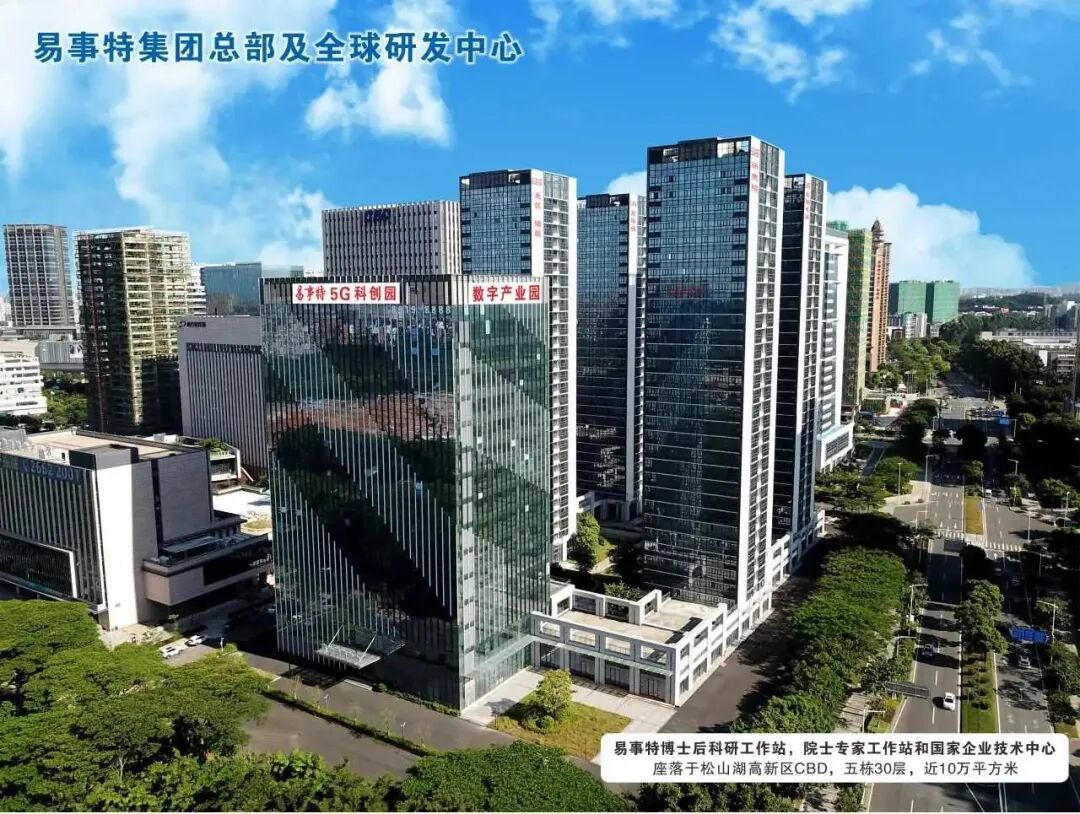
与风相伴 与光同行——易事特光储充可持续发展实践之路
Xin Lang Cai Jing· 2025-12-25 12:41
Core Insights - The article emphasizes that the goals of "carbon peak and carbon neutrality" have become essential drivers for high-quality development, marking a critical phase in global energy transition [1][8] - Yisite Group is highlighted as a leading company in digital energy products and wind-solar-storage solutions, focusing on the "AI + New Energy" sector and committed to providing high-quality green energy [1][8] Industry Overview - As of March 2025, China's total installed capacity for wind and solar power reached 1.482 billion kilowatts, surpassing thermal power for the first time, with non-fossil energy accounting for 35.9% of total power generation [10][1] - The acceleration of energy transition is supported by core technologies, with Yisite investing over 100 million yuan in R&D annually, aiming for a 7.92% R&D expenditure ratio relative to revenue in 2024 [10][1] Technological Innovation - The value of technological innovation must be translated into emission reduction effectiveness through practical applications [12] - Yisite's clean energy generation from its solar and wind power stations has reached 67,116.2176 million kilowatt-hours, equivalent to the annual electricity consumption of approximately 167,800 households, resulting in a reduction of 341,800 tons of CO2 emissions [12][3] Future Projections - By 2026, the national target for newly added wind and solar power capacity is set to be no less than 200 GW, with a cumulative target of over 1,000 GW [16][8] - New energy storage capacity is expected to reach 10%-15% of total new energy capacity by 2030, approximately 280-420 GW [16][8] - Yisite plans to continue focusing on "AI + New Energy" innovations and "New Energy + Storage" practices, accelerating the application of sodium-ion UPS systems and immersion storage technologies [16][8]

2025年中国船用发动机研究报告:碳中和背景下的船用发动机产业观察
Tou Bao Yan Jiu Yuan· 2025-12-25 12:13
Investment Rating - The report does not explicitly state an investment rating for the marine engine industry, but it highlights significant growth potential in the environmental engine market and increasing market concentration among leading manufacturers [3][16]. Core Insights - The marine engine market is experiencing intensified competition due to the environmental transformation and the trend towards larger engines, which is leading to increased market share concentration among top companies. The CR5 of the global low-speed engine market increased from 84% in 2011 to over 89% in 2023, while China's CR3 rose from 44% to over 87% in the same period [3]. - The environmental engine market is projected to grow rapidly from approximately 21.3 billion yuan in 2024 to 123.3 billion yuan by 2035, while the traditional engine market is expected to enter a rapid decline phase after 2030. The International Maritime Organization (IMO) and the European Union have set clear greenhouse gas reduction targets for the shipping industry, necessitating the adoption of low-carbon and zero-carbon fuel vessels [3][18]. - The dual-fuel technology is identified as a core system for eco-friendly vessels, with its value increasing by approximately 20-30% compared to traditional diesel engines. The average unit value of engines is expected to rise as the penetration rate of eco-friendly vessels increases, further expanding industry demand [3][18]. Market Overview - The marine engine market is categorized into low-speed, medium-speed, and high-speed engines, with low-speed engines accounting for over 90% of the propulsion power for ocean-going vessels such as container ships and bulk carriers [5][7]. - The marine engine industry chain consists of upstream key components and material suppliers, midstream core design and manufacturing, and downstream shipbuilding and operation, characterized by high technical barriers and market concentration [8][11]. Market Size - The environmental engine market is expected to grow from approximately 21.3 billion yuan in 2024 to 123.3 billion yuan by 2035, while the traditional engine market will decline significantly after 2030 [16][18]. - The global marine engine aftermarket is projected to reach 98.5 billion yuan in 2024, with steady growth expected to 119.1 billion yuan by 2030, driven by maintenance and spare parts [19][21].
3月19-20日常州!2026锂电关键材料及应用市场高峰论坛
鑫椤锂电· 2025-12-25 07:51
Core Viewpoint - The lithium battery industry is poised for a significant growth cycle in 2026, characterized by strong demand recovery, accelerated global expansion, and disruptive technological advancements, leading to a "spiral rise" in both volume and price [3]. Group 1: Market Predictions - By 2025, global lithium battery production is expected to reach 2250 GWh, with a growth rate of 30% in 2026. The energy storage sector is projected to grow even faster at 48.3%, driven by both domestic and international demand [5]. - There is a notable supply gap in battery cells and various materials, necessitating a focus on ensuring a stable and efficient supply chain to capitalize on this growth opportunity [5]. Group 2: Conference Details - The 2026 Lithium Key Materials and Applications Market Summit will be held on March 19-20, 2026, in Changzhou, Jiangsu, organized by Xinluo Information [4]. - The summit will focus on three core topics: 1. In-depth discussions on cutting-edge technologies and market supply-demand dynamics [5]. 2. Announcement and award ceremony for the "Top 10 Lithium Material Brands of 2025," evaluated based on shipment volume, market share, and customer reputation [6]. 3. B2B procurement matching to connect top battery manufacturers and material suppliers, enhancing resource matching and reducing procurement costs [7]. Group 3: Conference Agenda - The agenda includes various topics such as the analysis of lithium carbonate fundamentals and supply-demand outlook, advancements in solid-state battery key electrolyte materials, and developments in high-performance electrolytes and composite materials [9][10].






荔波小七孔成为贵州首个“碳中和景区”
Xin Lang Cai Jing· 2025-12-25 07:08
Core Viewpoint - The first carbon-neutral certification for a tourist attraction in Guizhou Province was awarded to the Xiaoqikong Scenic Area in Libo County, marking a significant step towards achieving net-zero greenhouse gas emissions in the region [1] Group 1: Carbon Neutral Certification - The Xiaoqikong Scenic Area is recognized as the first "carbon-neutral scenic area" in Guizhou Province, which means its greenhouse gas emissions are offset by its own carbon sink efforts [1] - The carbon source and sink assessment was conducted by the East China Survey and Planning Institute of the National Forestry and Grassland Administration, revealing that the scenic area will emit 9,005.73 tons of greenhouse gases in 2024 [1] - The carbon credits (CER) generated by the scenic area during the assessment period amount to 15,701.62 tons, confirming its compliance with carbon neutrality standards [1] Group 2: Ecological and Operational Aspects - The Xiaoqikong Scenic Area is a UNESCO World Heritage site and a national 5A-level tourist attraction, boasting over 92% forest coverage and rich biodiversity, which provides a strong ecological carbon sink foundation [1] - The scenic area has integrated low-carbon principles into its operational management through energy optimization, facility upgrades, and ecological restoration efforts, achieving a dynamic balance between greenhouse gas emissions and carbon absorption [1]
《分布式能源规划员》(综合能源服务方向)培训通知丨系列培训
中国能源报· 2025-12-25 06:57
关于 举办 《分布式能源规划员》(综合能源服务方向)培训通知 各企事业单位: 《中华人民共和国能源法》 提出,鼓励发展分布式能源和多能互补、多能联供综合能源 服务,提高终端消费清洁化、高效化、智能化水平。多能联供综合能源服务 成为现代能 源产业发展的重要方向和实现碳中和的重要路径。 电力、冷热、用户之间的关系变得越来越紧密,打破不同能源品种单独规划、设计、运行 的传统模式,实现横向 "电热冷气水"能源多品种之间、纵向"源网荷储用"能源多供应环 节之间的协同,以及生产侧和消费侧的互动 ,正成为行业趋势。 目前,在我国熟悉用户用能特性,掌握能源规划、转化、智能控制等技术,并具备能效 碳排放 评估,通晓末端节能 减碳 、投资、建设、运营等跨 学科专 业 应用 人才匮乏, 严重影响各能源企业向综合能源服务转型和发展的进程。为此,中国能源报社 特 开 展 《分布式能源规划员》(综合能源服务方向)培训 ,参加培训并经考核合格者,由人力资 源和社会保障部 社会保障能力建设 中 心 颁 发 《 分 布 式 能 源 规 划员 》 (综 合 能 源 服 务 方 向)培训证书。 一、培训 形式 及时间 培训 地点 : 线上 培训 ...