区块链

Search documents
前瞻全球产业早报:中国首个规模化专用光量子计算机制造工厂落地深圳
Qian Zhan Wang· 2025-11-27 01:48
Group 1 - The first large-scale dedicated optical quantum computer manufacturing factory in China has officially opened in Shenzhen, marking a significant step in the country's transition from laboratory research to production standards in quantum computing [2] - The factory aims to establish replicable and scalable manufacturing standards for quantum hardware, emphasizing its importance beyond just producing a single quantum computer [2] Group 2 - In the first ten months of this year, the national electricity market trading volume in China reached 54,920 billion kilowatt-hours, a year-on-year increase of 7.9%, accounting for 63.7% of the total electricity consumption [3] - The intra-provincial trading volume was 41,659 billion kilowatt-hours, up 6.6% year-on-year, while the inter-provincial trading volume increased by 12.5% to 13,261 billion kilowatt-hours [3] - Green electricity trading volume surged by 39.4% to 2,627 billion kilowatt-hours [3] Group 3 - The Shenzhou-22 spacecraft successfully docked with the Tianhe core module of the space station, marking a significant achievement in China's manned spaceflight program [4] - Following the docking, Shenzhou-22 will serve as the return vehicle for the crew of Shenzhou-21 [4] Group 4 - Beijing's economic and information technology bureau has introduced measures to support the high-quality development of the medical device industry, including funding for collaborations between medical device manufacturers and large model enterprises [4] - The initiative includes a maximum funding support of 30 million yuan for projects that reach leading domestic and international standards [4] Group 5 - The Shanghai Blockchain Innovation Fund was officially launched during the 2025 Global Digital Business Conference, alongside the release of digital identity recognition results and standards for mineral data export [6] Group 6 - UBTECH Technology announced a 264 million yuan order for humanoid robots, expected to be delivered in December, focusing on the latest model capable of autonomous battery swapping [8] Group 7 - Novartis China responded to rumors of dissolving its county-level team, stating that it will adjust its operational model to continue serving the county medical market starting January 1, 2026 [9] Group 8 - The U.S. government has initiated the "Genesis Project," aimed at transforming scientific research through artificial intelligence, with a focus on creating an AI experimental platform [10] - The project will integrate supercomputers and unique data assets to support scientific modeling and robotics [10] Group 9 - Japan plans to invest an additional 700 million USD into the Rapidus advanced semiconductor project over the next two fiscal years to support advanced semiconductor production [11] Group 10 - South Korea will pilot an AI system to manage traffic congestion at intersections, utilizing AI-based video analysis technology to improve law enforcement accuracy [12] - The system aims to be implemented in ten congested intersections by 2026 and expanded nationwide by 2027 [12] Group 11 - Reports indicate that Apple has made significant progress in developing a foldable iPhone with a no-fold design, potentially becoming the first truly crease-free foldable phone on the market [13] - Foxconn has established a dedicated production line for the foldable iPhone, indicating that the project has moved beyond the experimental stage [13] Group 12 - OpenAI has launched a shopping research feature for ChatGPT, which generates personalized shopping guides by clarifying user needs and retrieving information from the web [14]


聚焦区块链等前沿技术 中国青年用AI赋能数字经济
Yang Shi Xin Wen· 2025-11-26 23:40
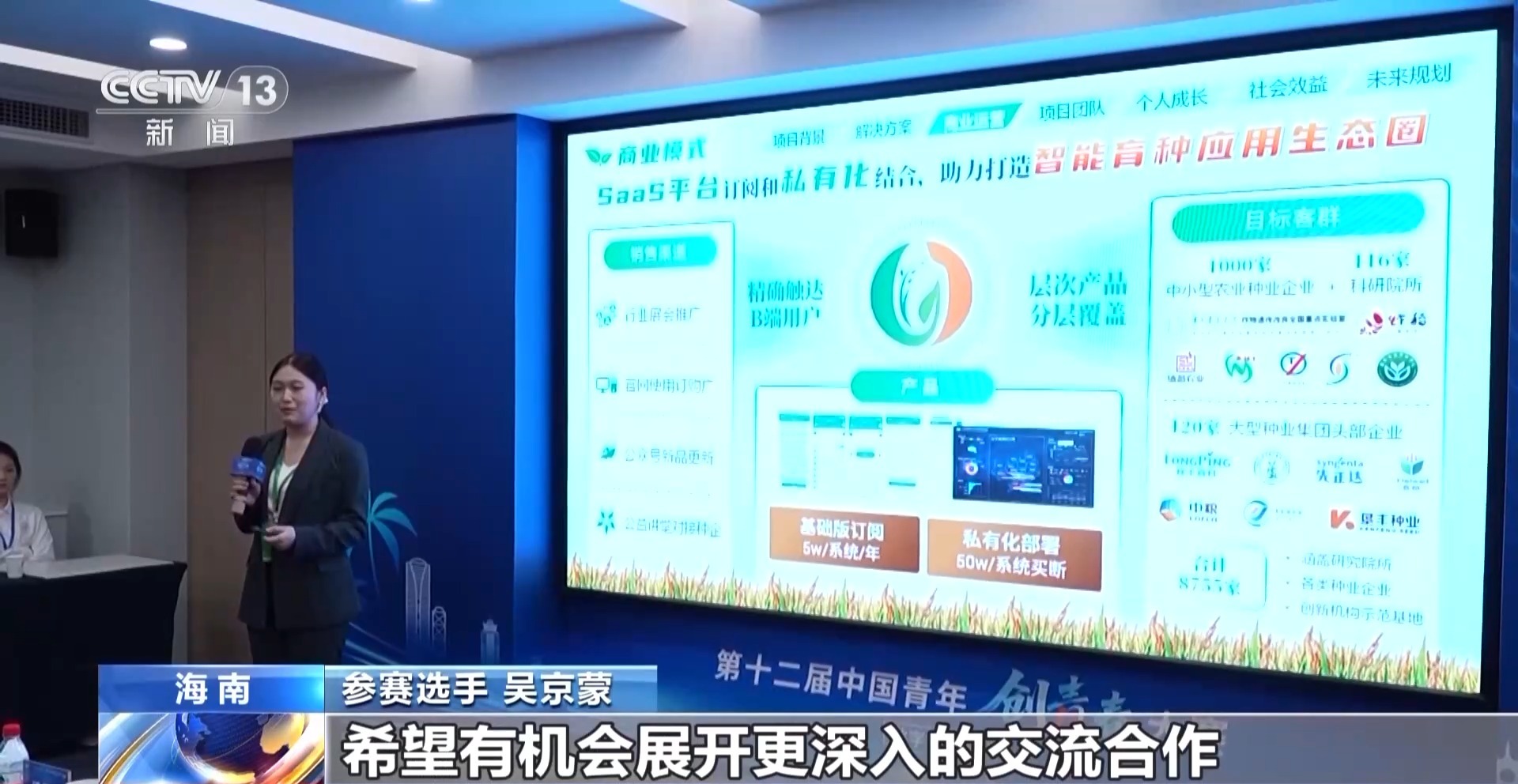
据主办方介绍,赛事期间还举办了创业融资辅导、项目展示交流、资本对接转化、区域人才招引、成果落地孵化等多元配套活动。 中国青年创青春大赛评审组组长袁铭志:此次大赛主旨是在打造一个发现人才、培育项目跟链接产业的一个全新生态。为企业在将来落地的时候,提供政策 的引导性的支持,资金上支持。 (文章来源:央视新闻) 昨天(26日),由共青团中央等部门主办的第十二届中国青年创青春大赛数字经济专项赛在海口举行。 在海口举行的数字经济专项赛现场,选手们聚焦人工智能、区块链等前沿技术,结合产业所需,通过现场答辩、路演等形式,展示新技术、新理念在自动化 绿色养殖、新能源汽车检测、智慧物流等领域的应用。 参赛选手吴京蒙:我们是做传统育种的,进入大学后学习了算法开发,让我看到了用AI来加速传统育种的可能性,希望有机会展开更深入的交流合作。 ...
影响市场重大事件:新资金入市 第10只险资私募基金开始投资运作;工信部等六部门:有序发展平台消费、发展直播电商等新业态
Mei Ri Jing Ji Xin Wen· 2025-11-26 22:31
Group 1 - The 10th insurance private equity fund, Yangguang and Yuan private securities investment fund, has begun operations after being registered with the China Fund Industry Association, marking a significant step in the long-term investment trial for insurance funds with an approved scale of 20 billion yuan [1] - The Ministry of Industry and Information Technology and five other departments have issued a plan to promote the orderly development of platform consumption and new business formats such as live e-commerce, encouraging the use of AI and other technologies to enhance consumer experiences [2] - The same departments have also outlined plans to expand low-altitude tourism and aviation sports, promoting diverse interest consumption products while ensuring safety [3] Group 2 - Morgan Stanley's chief equity strategist for China expressed confidence in the continued inflow of funds into the Chinese market, suggesting that significant fiscal policy adjustments could lead to a more positive outlook [4] - Paradromics, a US brain-computer interface company, has received FDA approval for its first long-term clinical trial, which aims to explore the ability to detect neural activity related to imagined hand movements [5] - Novo Nordisk announced that the European Commission has approved its Kyinsu product, the world's first weekly insulin and GLP-1 receptor agonist combination for adults with type 2 diabetes [6] Group 3 - The Chinese Center for Disease Control reported that the country has entered a rapid rise phase of influenza, with the highest proportion of flu-like cases in four years, particularly noting a higher incidence in northern provinces [7] - OpenAI projects that the number of paid subscribers for ChatGPT will exceed 220 million within five years, potentially generating nearly 200 billion dollars in annual revenue [8] - A former member of Tesla's Optimus team has joined Xiaomi's robotics team to accelerate the development of dexterous hand technology [9] - Dongfeng has delivered its first Mach Power 2.0T engine designed for low-altitude flight scenarios, which is based on a vehicle engine and has a power-to-weight ratio of 1.87 kW/kg, aimed at large drones and logistics aircraft [10]
影响市场重大事件:新资金入市,第10只险资私募基金开始投资运作;工信部等六部门:有序发展平台消费、发展直播电商等新业态
Mei Ri Jing Ji Xin Wen· 2025-11-26 22:30
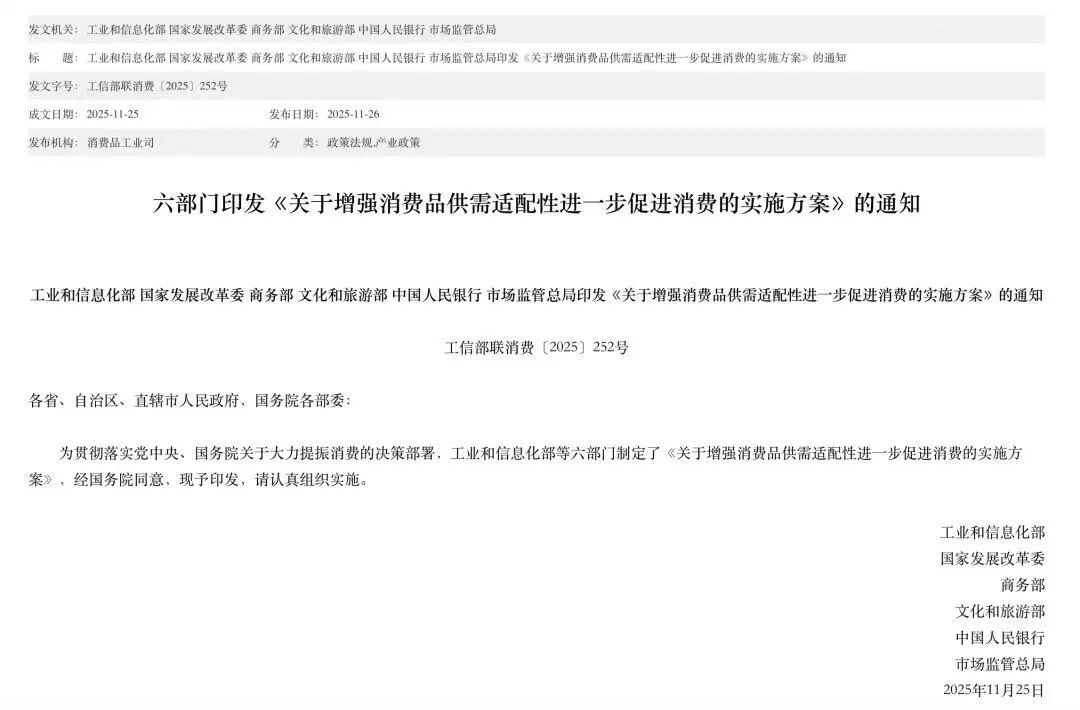
11月26日,工业和信息化部、国家发展改革委等六部门印发《关于增强消费品供需适配性进一步促进消 费的实施方案》。其中提到,有序发展平台消费。有序发展直播电商、即时零售、策展零售、循环电商 等新业态。鼓励平台企业依法合规利用人工智能技术挖掘用户需求,匹配推送产品和服务。支持平台企 业应用虚拟现实、元宇宙、人工智能、区块链等数智技术,打造多场景、沉浸式消费体验。引导平台企 业开展品牌品质促消费活动。 NO.3 六部门:有序扩大低空旅游、航空运动等低空消费供给 11月26日,工业和信息化部、国家发展改革委等印发《关于增强消费品供需适配性进一步促进消费的实 施方案》。方案指出,拓展多元兴趣消费供给。积极发展宠物周边、动漫、潮服潮玩等兴趣消费产品。 在严控风险、确保安全的前提下,有序扩大低空旅游、航空运动、私人飞行、消费级无人机等低空消费 供给。拓展汽车改装、房车露营、汽车赛事等汽车后市场消费,促进汽车租赁高质量发展。 NO.4 摩根士丹利:对资金持续流入中国市场保持信心 摩根士丹利中国首席股票策略师王滢11月25日发布最新报告,她表示,市场关于股票中长期可持续性的 讨论愈发激烈。"投资者似乎正专注于寻找看多中国市场的 ...
让数字技术更好造福全人类 汇聚完善全球数字治理的强大合力(专题深思)
Ren Min Ri Bao· 2025-11-26 22:23
Group 1: Core Perspectives - The global digital economy is undergoing profound changes driven by digital technology, which is reshaping productivity and production relations, leading to a new form of economic globalization [1][2] - There are significant challenges associated with digital technology development, including national security and privacy protection, with some countries leveraging their technological advantages to promote hegemony [1][3] - The need for an inclusive and fair global digital governance system is critical to bridging the digital divide between the Global North and South, ensuring equitable and inclusive development [1][4] Group 2: Enhancing Digital Capabilities - Innovations in digital technologies such as AI, big data, cloud computing, and blockchain are expanding human cognitive boundaries and economic activities, becoming key forces in restructuring global resource allocation and competition [2] - China aims to enhance its digital technology capabilities and self-reliance, which will contribute to global digital governance and high-quality development [2] - Digital security is emphasized as a crucial aspect of national security, necessitating robust cybersecurity measures to address emerging risks from rapid technological advancements [2] Group 3: Improving Governance Rules - The global digital economy faces structural contradictions, including unfair governance mechanisms and imbalances in development, with a few large tech companies monopolizing resources [3] - There is an urgent need to establish a fair global digital governance system that reflects the interests of all parties and promotes justice [3] - China supports the UN's role in global digital governance and has proposed several initiatives to contribute to the formulation of governance rules [3] Group 4: Strengthening Cooperation Mechanisms - Digital hegemony poses significant risks, with developed countries using their advantages to suppress developing nations [4] - A multilateral governance framework is essential for the development of the global digital economy, ensuring equal participation in governance regardless of a country's size or wealth [4] - Strengthening cooperation among developing countries in digital economy integration and rule-making is vital to enhance their voice and promote a shared digital future [4]
加纳黄金局计划建立区块链系统以实现全面溯源
Shang Wu Bu Wang Zhan· 2025-11-26 16:20
Core Viewpoint - Ghana is set to implement a blockchain-based gold tracking system by the end of 2026 to combat illegal mining and ensure supply chain transparency [1] Group 1: Blockchain Implementation - The new system will document the legality and sustainability of each gram of gold [1] - Compliance audits will be conducted to prevent licensed mines from being used as fronts for illegal activities [1] Group 2: Legislative Background - The initiative is a requirement of the Ghana Gold Board Act aimed at curbing smuggling and fighting money laundering [1] Group 3: Economic Impact - Artisanal and small-scale mining has become a pillar of Ghana's economy, contributing approximately 53% of the country's gold exports in 2025 [1] - The introduction of the new system aims to guide this economic driver towards a more sustainable, compliant, and environmentally friendly future [1] - Ghana aspires to become a leader in global transparent mineral governance through this initiative [1]
中国离岸银行制度亟须系统性升级
Di Yi Cai Jing· 2025-11-26 14:19
Core Viewpoint - The revision of the "Offshore Banking Business Management Measures" represents a strategic shift for China's offshore finance from "rule following" to "rule contribution," aiming to adapt to the digital era while balancing safety and efficiency [1][18]. Historical Context and Limitations of the Original Measures - The original measures were established in the aftermath of the Asian financial crisis, focusing on preventing capital shocks and providing limited cross-border services through OSA accounts [2]. - By 2002, four pilot banks had served 12,000 overseas enterprises with over $300 billion in settlements, showcasing a balance between safety and openness [2]. Current Challenges and Critiques - The original framework has become outdated due to the international shift towards functional offshore finance and the rise of digital finance, leading to significant capital outflows and limitations on the offshore RMB market [3][4]. - The restrictions on currency types and monopolistic practices by major banks have resulted in inefficiencies and unfair competition, with foreign banks gaining a larger market share [3][4]. Proposed Revisions and Recommendations - A unified offshore account system is recommended to eliminate fragmentation and reduce compliance costs, allowing for better integration with digital applications [6]. - The proposal includes expanding account opening eligibility, removing the $100 million annual cross-border settlement requirement, and supporting various types of enterprises, including those in technology and green finance [7][9]. - The measures suggest optimizing functionalities by allowing RMB and other currencies to be exchanged freely within offshore accounts and integrating digital RMB systems [8]. Regulatory Framework and Oversight - A new regulatory structure is proposed, involving a collaborative approach among the central bank, financial regulatory authority, and foreign exchange administration to enhance oversight and data sharing [13]. - The framework emphasizes a data-driven approach to compliance, moving away from traditional document verification to real-time monitoring of transactions [4][12]. International Cooperation and Governance - The article advocates for enhancing global governance of offshore finance through cooperation with international regulatory bodies and adherence to global standards [14]. - It emphasizes the importance of maintaining regulatory sovereignty while engaging with foreign entities operating in China's offshore market [14]. Principles for Future Management - The proposed principles include aligning the pace of opening with regulatory capabilities, ensuring coordinated development between onshore and offshore markets, and balancing innovation with risk management [16][17].
重大利好来了!国务院同意→
Jin Rong Shi Bao· 2025-11-26 11:20
Core Viewpoint - The implementation plan aims to enhance the adaptability of consumer goods supply and demand, leading to consumption upgrades that drive industrial upgrades, thereby achieving a dynamic balance between supply and demand at a higher level [1][4]. Policy Framework - The plan is jointly issued by multiple government bodies, including the Ministry of Industry and Information Technology, the National Development and Reform Commission, and others, marking it as a significant policy document following the Fourth Plenary Session of the 20th Party Congress [1][2]. Goals and Targets - By 2027, the supply structure of consumer goods is expected to be significantly optimized, forming three trillion-level consumption sectors and ten hundred-billion-level consumption hotspots [4]. - By 2030, a high-quality development pattern characterized by positive interaction between supply and consumption is anticipated, with a steady increase in the contribution of consumption to economic growth [4]. Industry Focus Areas - The plan emphasizes the development of new fields and tracks, focusing on key industries such as smart connected vehicles, smart home products, consumer electronics, modern textiles, food, and green building materials [5]. - It encourages the integration of artificial intelligence across the entire consumer goods industry, promoting the development of AI-enabled products like household service robots and smart appliances [5]. Sports and Health Products - The plan aims to enhance the supply of leisure and sports products, targeting new demands from the sports economy, outdoor economy, and ice and snow economy [6]. - It supports the innovation and development of health products, including special dietary foods and high-end medical devices, while promoting the consumption of organic and geographical indication agricultural products [6]. Diverse Consumer Interests - The plan seeks to expand the supply of interest-based consumer products, including pet-related items, anime, and trendy products, while also promoting low-altitude tourism and private flying [7]. - It encourages the development of local intellectual property and innovative design in cultural products, as well as the transformation of traditional retail spaces to include trendy stores [7]. Customization and Experience - The plan emphasizes the need for precise matching of consumer needs, particularly in the baby and children's product sector, and encourages the development of high-end fashion brands and personalized services [8]. - It promotes the creation of immersive consumer experiences through the use of digital technologies, including virtual reality and the metaverse [10]. Financial Support and Services - The plan highlights the importance of financial support for the consumer goods industry, including policies for equipment upgrades and trade-in programs, as well as enhancing the adaptability and convenience of consumer financial services [11].
世界经济论坛:全球金融体系出现断层,亟须加强监管合作
Zhong Guo Jing Ying Bao· 2025-11-26 11:02
Core Insights - The World Economic Forum report indicates that fractures are emerging within the global financial system, highlighting disparities across different regions and levels of economic development [1] - Despite a trend towards a more multipolar international order and financial system, globalization is expected to persist in the short term [1] - Increasing prioritization of economic governance strategies by governments poses a risk of further fragmentation within the financial system [1] Financial Fragmentation Risks - The report suggests that the potential risks of financial fragmentation provide a compelling reason for policymakers and financial practitioners to consider alternative pathways [1] - Strengthening regulatory cooperation and further standardizing financial transaction frameworks are recommended to reshape the global financial system [1] Technological Integration - Emerging technologies such as blockchain and artificial intelligence can enhance the transparency and efficiency of cross-border payments [1] - Collaboration among multiple stakeholders can strengthen financial governance, helping to mitigate systemic risks and ensure fair and efficient functioning of financial markets [1] Stability and Resilience - The proposed pathways aim to enhance the stability and resilience of the global economic system, fostering mutual trust among various parties [1]
专访Swift北亚区总裁杨文:已开展CBDC真实交易试点,将增加基于区块链的共享账本
Sou Hu Cai Jing· 2025-11-26 10:30
Core Insights - The global financial market is trending towards multipolarity and regionalization, with steady progress in the internationalization of the Renminbi and improvements in local currency settlement mechanisms [1][3] - Digital technologies such as blockchain and AI are reshaping the foundational logic of finance, with Swift innovating to achieve real-time and secure cross-border payments [1][3] - Swift is actively involved in CBDC (Central Bank Digital Currency) experiments and has validated its role as a unified access point for digital assets and currencies [1][6] Group 1: CBDC and Digital Assets - Swift has conducted a series of CBDC and digital asset experiments with global financial institutions, confirming its feasibility as a unified access point [6] - In 2025, Swift will initiate real transaction pilots for digital assets and currencies, focusing on post-trade settlement, foreign exchange settlement risk, and automated fiat payments [6][8] - The exploration of CBDCs is advancing globally, with 137 countries researching CBDCs, and 72 of them in advanced stages of development [7][8] Group 2: Blockchain Initiatives - At the 2025 Sibos conference, Swift announced the addition of a blockchain-based shared ledger to its technical infrastructure, extending its trusted network into the digital realm [3][9] - Swift is collaborating with over 30 global financial institutions to design and develop a shared digital ledger, with the first application focusing on real-time, round-the-clock cross-border payments [10] - The shared ledger will serve as a secure real-time record of transactions between financial institutions, integrating with existing systems while maintaining Swift's trust and compliance [10] Group 3: Cross-Border Payment Challenges - The future of cross-border payments faces challenges such as fragmentation risks and technological divergence, which could lead to increased transaction costs and inefficiencies [3][14] - Swift emphasizes the need for a unified protocol to mitigate the complexities arising from diverse local payment systems and standards [14] - Swift plays a critical role in promoting universal standards and facilitating interoperability among different technological frameworks to reduce industry fragmentation risks [14] Group 4: Strategic Goals and Innovations - Swift aims to enhance global interoperability and facilitate seamless value exchange between traditional and digital assets [7][11] - The organization is focused on achieving the G20 cross-border payment roadmap goals, targeting faster, cheaper, and more transparent global payments by 2027 [12] - Swift is also advancing the ISO 20022 migration, with most institutions completing the transition, and is now focusing on leveraging structured data for improved operational efficiency [12][13]