
粮食安全

Search documents
为一粒米,聚世界之力——2025年国际粮食减损大会开幕侧记
Da Zhong Ri Bao· 2025-07-26 00:36
Core Viewpoint - The 2025 International Conference on Food Loss Reduction emphasizes the importance of reducing food loss as a critical approach to ensuring global food security, with participation from 62 countries and various international organizations [1] Group 1: Conference Highlights - The conference gathered high-level officials, agricultural ministers, and experts to discuss strategies for food loss reduction and promote food security [1] - The first International Conference on Food Loss Reduction was held in September 2021, resulting in ten consensus outcomes, indicating a growing global focus on this issue [1] - China, as a major food producer and consumer, prioritizes food security for its 1.4 billion population and actively participates in global food-saving initiatives [1] Group 2: China's Achievements - In 2024, China's total grain production is projected to reach 14,130 billion jin, marking a new milestone after nine consecutive years above 13,000 billion jin [2] - The loss rates for major crops in China have significantly decreased, with wheat at 0.93%, rice at 1.76%, and corn at 2.06% [2] - Over 5,500 grain post-harvest service centers have been established, and the grain loss rate for farmers has dropped from 8% a decade ago to around 3% [2] Group 3: Global Food Security Challenges - The 2024 report on global food security indicates that between 713 million and 757 million people still face hunger, highlighting the ongoing challenge of food scarcity alongside significant food waste [3] - The UN's goal to halve global food waste by 2030 is deemed ambitious, given the current annual food loss and waste of 1.3 billion tons, which accounts for about one-third of global production [3] Group 4: Collaborative Efforts - Various countries are recognizing the need for coordinated efforts to address food loss and waste, with China implementing a national action plan to reduce food waste [4] - Countries like Ireland and Slovenia are also developing their own strategies and certifications to prevent food waste across the supply chain [4] Group 5: Technological Innovations - Technology is identified as a key driver in preventing food loss and waste, with Turkey promoting AI-based systems for planning and consumption forecasting in the food industry [5] - Large retail chains are utilizing AI-assisted inventory optimization systems to donate near-expiry products, thereby reducing waste [5]
夏粮稳产筑根基 秋粮向好显活力
Zhong Guo Jing Ji Wang· 2025-07-25 09:02
Core Insights - The summer grain production in 2025 achieved a total output of 2994.8 billion jin, marking the second highest yield in history despite facing adverse conditions such as severe drought in some regions [1] Group 1: Summer Grain Production - The summer grain is the first season crop, accounting for over 20% of the annual grain output, with increased sowing areas in 20 out of 25 provinces tasked with summer grain production [2] - The central government allocated 1.6 billion yuan early to support wheat production and 376 million yuan for drought relief, enhancing agricultural disaster response capabilities [2] - The construction of high-standard farmland exceeded 1 billion mu, with over 80% of winter wheat having irrigation conditions, significantly improving resilience in grain production [2] Group 2: Agricultural Mechanization - Advanced agricultural machinery, including nearly 180,000 high-performance seeders, has been widely adopted, improving sowing quality and increasing seedling emergence rates by over 5 percentage points [3] - The comprehensive mechanization rate for major crops exceeds 75%, with wheat, corn, and rice achieving mechanization rates of over 97%, 91%, and 88% respectively [3] Group 3: Rural Income and Employment - The per capita disposable income of rural residents reached 11,936 yuan in the first half of the year, with a real growth of 6.2%, outpacing urban income growth [4] - Fixed asset investment in the primary industry grew by 6.5% year-on-year, and rural retail sales of consumer goods increased by 4.9% [4] - The Ministry of Agriculture and Rural Affairs is working to expand employment channels and income opportunities for farmers, focusing on smooth grain sales and promoting new industries [4] Group 4: Autumn Grain Outlook - The target for total grain production this year is around 1.4 trillion jin, with a focus on enhancing autumn grain yields through high-performance machinery and integrated farming practices [5] - The Ministry of Agriculture has initiated a 100-day action plan to boost autumn grain production and mitigate disaster impacts, emphasizing timely disaster response and monitoring [5] Group 5: National Food Security - The successful summer grain harvest strengthens the foundation for national food security, with ongoing efforts needed to maintain harvest results and manage autumn crops effectively [6]
金融活水润北疆:农业银行全力护航内蒙古夏粮生产
Zhong Guo Jin Rong Xin Xi Wang· 2025-07-25 02:57
Core Viewpoint - Agricultural Bank of Inner Mongolia is actively supporting summer grain production through financial services, focusing on food security and agricultural development in the region [1][2][7]. Group 1: Focus on Food Security - Inner Mongolia is a crucial grain production base for China, and the Agricultural Bank prioritizes food security by meeting the credit needs of grain producers and related enterprises [2][3]. - The bank provided a loan of 10 million yuan to a local grain company, which helped them acquire 11,500 tons of corn, demonstrating the bank's role in stabilizing the local grain market [2][3]. Group 2: Empowering Farmland Construction - The bank is involved in high-standard farmland construction, providing 283 million yuan in loans, with an annual increase of 203 million yuan, to enhance agricultural productivity [2][3]. - A construction company received a loan of 900,000 yuan for building high-standard farmland, showcasing the bank's efficient service model [3]. Group 3: Supporting Facility Agriculture - The bank supports facility agriculture by providing a loan of 43.5 million yuan to a company developing modern agricultural greenhouses, which will enhance seed research and production [4]. Group 4: Promoting Agricultural Machinery Circulation - The bank is facilitating agricultural mechanization by organizing events to promote financial products for machinery purchases, thus supporting farmers in acquiring necessary equipment [5][6]. Group 5: Supporting Seed Industry Innovation - The bank emphasizes financial services for the seed industry, providing 60 million yuan in credit for the soybean industry chain, which is vital for local agricultural development [6]. Group 6: Future Outlook - The Agricultural Bank of Inner Mongolia plans to continue enhancing its financial services to support high-quality agricultural development in the region [7].

贝莱德:港股吸引力持续凸显 关注人工智能、半导体、机器人等方向
Zhi Tong Cai Jing· 2025-07-24 13:01
Group 1 - The core viewpoint is that the macroeconomic factors influencing the market in the second half of 2025 will be the reshaping of global trade patterns and the potential further stimulus from domestic fiscal policies [1] - The A-share market is experiencing a dual recovery in fundamentals and sentiment, with a GDP growth rate of 5.3% in the first half of the year exceeding expectations, providing solid support for the market [1] - The A-share market has seen active trading, with transaction volumes exceeding 1 trillion yuan for 62 consecutive trading days, indicating improved investor sentiment and sustained momentum for market performance [1] Group 2 - The Hong Kong stock market is highlighted as a "global valuation pit," with the Hang Seng Index's price-to-earnings ratio (TTM) at 11.11 times, significantly lower than major overseas indices, indicating attractive investment value [1] - Within the Hong Kong stock market, there is structural differentiation in valuations, with some sectors experiencing valuation increases due to capital inflows, while still presenting numerous undervalued opportunities worth exploring [1] Group 3 - Investment directions to focus on include sectors that drive domestic demand, such as the internet, sportswear, food and beverage, real estate, and property services, which are characterized by strong cash flow and high dividends [2] - Emphasis is placed on technology innovation sectors, including autonomous ERP, industrial software, artificial intelligence, semiconductors, robotics, and low-altitude economy, which are expected to drive structural adjustments and boost confidence [2] - Industries with strong international comparative advantages, such as textile and apparel manufacturing, electronics components, and automotive parts, are also highlighted, as they are less affected by external demand shocks and are expected to benefit from domestic subsidies [2] Group 4 - Strategic resources such as gold, uranium, and rare earths will be monitored to balance the overall investment portfolio against geopolitical risks [3]

耕好“无形良田”,建设更高水平“齐鲁粮仓”
Qi Lu Wan Bao Wang· 2025-07-24 02:37
Core Viewpoint - The 2025 International Conference on Food Loss Reduction will be held in Jinan, focusing on technological innovation to enhance food security globally [1] Group 1: Food Security and Legislation - Food security is a global issue essential for peace and development, with food loss reduction being a critical pathway to enhance food safety and nutrition levels [1] - The Food Security Guarantee Law of the People's Republic of China will take effect on June 1, 2024, marking a new phase in the legal governance of food loss reduction [1] Group 2: Shandong's Role in Food Production - Shandong is one of China's major grain-producing provinces, consistently ranking third in grain planting area and total production [3] - The province has maintained a total grain production of over 110 billion jin for four consecutive years, with a focus on increasing grain yield [3] Group 3: Technological Innovations in Agriculture - Shandong is implementing a comprehensive approach to enhance grain yield through the integration of five key factors: good land, good seeds, good timing, good methods, and good systems [3] - The province has established high-standard farmland covering 77.59 million acres, with a machinery power of 122 million kilowatts, leading the nation [3] Group 4: Grain Loss Reduction Strategies - The province is focusing on reducing losses from sowing to harvesting by promoting high-efficiency, low-loss agricultural machinery and new crop varieties [5] - Shandong has built a remote sensing monitoring platform to effectively manage pest and disease threats, reducing losses to below 5% [5] Group 5: Post-Harvest Management - Shandong has invested 3.71 billion yuan in scientific grain storage, significantly reducing post-harvest losses by an average of 5 percentage points [8] - The province has established a post-harvest service system with 280 service centers, enhancing grain drying and cleaning capabilities [8] Group 6: Grain Processing and Utilization - Shandong's grain industry has achieved an industrial output value exceeding 500 billion yuan for three consecutive years, accounting for over one-eighth of the national total [12] - The province promotes a "waste not" processing model, achieving over 90% utilization rates in deep processing capacities [12]

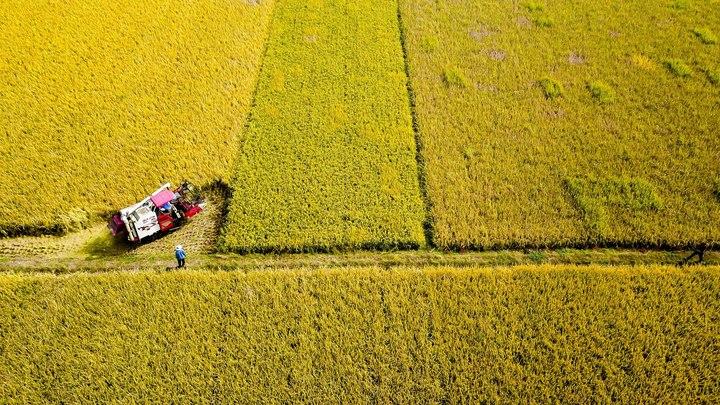
陕西构建现代种业新高地
Shan Xi Ri Bao· 2025-07-23 23:51
Group 1 - The core viewpoint emphasizes the importance of seed security for food security and rural revitalization in Shaanxi, with a focus on promoting quality seeds, breeding innovation, and cultivating leading enterprises [1] Group 2 - The promotion of quality seeds has shown positive results, with the "Huatan Wheat 23" variety achieving an average yield of 735.1 kg per mu, and over 15 million kg of seeds being purchased this year to meet the demand for approximately 1 million mu of wheat planting [2][3] - Shaanxi has accelerated the update of major grain and oil crop varieties, promoting high-yield and quality corn, soybean, rice, and rapeseed varieties, while providing guidance to farmers on seed usage [3][6] Group 3 - The innovation in seed industry has been highlighted by the successful cultivation of high-yield wheat varieties such as "Juliang 19" and "Juliang 8079," with yields reaching 695 kg and 675 kg per mu respectively, showcasing their drought resistance and high quality [4][5] - The Shaanxi Provincial Agricultural Experiment Station has played a crucial role in breeding and promoting over 20 high-quality wheat varieties, contributing to an increase in farmers' income by over 20 million yuan annually [5] Group 4 - The emergence of national-level integrated seed enterprises in Shaanxi, such as Yangling Weilon Agricultural Technology Co., has led to the promotion of varieties like "Weilon 169," which has been planted over 30 million mu, achieving an average yield of 743.5 kg per mu [7] - The "Xinan 511" variety, developed over 30 years, has become a leading wheat variety in the Huanghuai region, with a promotion area exceeding 40 million mu, marking it as a significant contributor to national food security [8]
激发多产粮产好粮新动能
Jing Ji Ri Bao· 2025-07-23 22:11
粮食安全是"国之大者"。四川是农业大省,也是全国13个粮食主产省之一和全国生猪第一大省。为加快 打造国家重要初级产品战略保供基地,四川省通过建良田、强要素、促融合等方式,不断挖掘产粮潜 力,力争建设更高水平大粮仓。 加快建设"好农田"。四川构建五级"田长制"体系,由各级党政一把手出任田长,严格落实耕地占补平衡 政策,持续推进低产低效园地和撂荒地复垦复耕,细化建立耕地动态监测机制,全省耕地净增60万亩以 上。在提质量上,全面摸清6308万亩永久基本农田底数,整区域推进高标准农田建设,实施"天府良 田"建设攻坚提质行动,积极推动"小田变大田"、低产田改造为高产田工作,加快推进高标准农田建设 工作。 展望未来,四川要依托先进技术和制度优化来应对多变气候、地块分散带来的挑战,持续发力提高全省 农田旱涝保收能力。同时,不断研发出更多适应地形地貌的农机农具,强化农村土地承包经营权流转引 导与服务等方面工作,为多产粮、产好粮激活更大的动能。 (文章来源:经济日报) 攻关护航"多产粮"。多产好粮,要素优先。聚焦培育出适应四川气候的好种子、适宜四川地形的好机 具,四川打出集成攻关的组合拳。立足生物资源富集等优势,四川深度挖掘优 ...
《2025年—2034年农业前景展望》预计—— 全球农渔市场持续扩张
Jing Ji Ri Bao· 2025-07-23 22:08
Core Insights - The report by OECD and FAO forecasts growth in global agricultural and fishery markets over the next decade, although the growth rate is expected to slow down [1][2] Consumption Trends - Agricultural and fish consumption will continue to rise, driven by urbanization and increased income levels in low and middle-income countries, leading to more diverse and nutritious diets [1] - By 2034, the total caloric intake from animal-source foods is projected to increase by 6%, with chicken consumption growing the fastest, followed by beef and pork [1] Production Trends - Agricultural and fishery production is expected to grow, primarily due to productivity improvements, especially in low and middle-income countries [2] - The report anticipates a 16% increase in livestock production and a 12% increase in fishery production over the next decade, with aquaculture being a significant driver [2] International Trade - International trade will play a crucial role in the agricultural and fishery markets, with an expected increase in trade volume to balance global supply and demand [3] - Major meat-exporting countries identified include Brazil, the USA, Argentina, India, Thailand, and Turkey, while China, India, Vietnam, Bangladesh, Thailand, and Turkey are expected to be significant importers [3] Challenges and Opportunities - The report highlights the need for policymakers to ensure food security and nutrition, promote sustainable agricultural practices, and enhance international cooperation [4] - Addressing risks such as climate change and geopolitical tensions is essential for maintaining stability in agricultural and fishery production [4]
周期风起,氮肥,磷肥后续怎样看?
2025-07-23 14:35
Summary of Conference Call Records Industry Overview - The conference call primarily discusses the nitrogen and phosphate fertilizer industry in China, focusing on market dynamics, production challenges, and future outlooks [1][2][3]. Key Points on Nitrogen Fertilizer (Urea) - The domestic urea market faces challenges such as overcapacity, high proportion of outdated production capacity, significant cost differences, and export volume impacting pricing. However, increased export quotas may help mitigate losses from supply stability [1][6]. - Coal price fluctuations in the first half of the year reduced costs for some coal chemical products, altering the cost curve between gas-based and oil-based urea, with gas-based urea showing price resilience [1][8]. - The government has set demands for single nutrient fertilizers to not increase or even decrease, but food security strategies and policies supporting land restoration are expected to sustain fertilizer demand. The per-acre fertilizer application in China is nearing levels seen in developed countries, indicating overall demand growth [1][10]. - The urea supply pressure is slightly better than initial expectations for the year, with an estimated release of about 2 million tons in the first half and an additional 1-2 million tons expected in the second half [10]. Key Points on Phosphate Fertilizer - The phosphate market is under pressure from rising raw material prices and domestic supply stabilization requirements. The first quarter saw low export volumes due to delayed export quotas, but limited new capacity and high overseas phosphate prices are expected to improve company performance in the third quarter [1][11]. - Phosphate rock pricing is crucial for the profitability of integrated phosphate fertilizer companies, with expectations for high prices to persist throughout the year, allowing for strong profit margins [1][14]. - The phosphate industry is experiencing tight supply-demand conditions, influenced by high raw material prices and concentrated procurement demands from exporting countries. This has led to a relative shortage in overseas phosphate supply, supporting phosphate prices [1][13]. Challenges and Opportunities - The nitrogen fertilizer industry faces four main challenges: overcapacity, a significant proportion of outdated production capacity, notable differences in profitability across production methods, and the impact of export volumes on domestic demand and pricing [6]. - The phosphate industry is also grappling with challenges such as high raw material prices and the need for domestic supply stabilization, but there are opportunities for improved performance due to concentrated export activities in the third quarter [11][12]. Future Outlook - The outlook for nitrogen fertilizer remains cautiously optimistic despite potential price fluctuations, while the phosphate fertilizer environment appears stable with a positive trend in performance [3][16]. - The overall market environment for both nitrogen and phosphate fertilizers is expected to remain favorable, with no significant new capacity pressures or disruptions to market order anticipated [16].
印尼启动“红白合作社”推动乡村经济,印尼总统表态
Huan Qiu Shi Bao· 2025-07-22 22:49
Core Viewpoint - The "Red and White Cooperative" project initiated by Indonesian President Prabowo aims to shorten distribution chains and improve the supply of essential goods, particularly for economically disadvantaged groups, by establishing over 80,000 cooperatives nationwide [1][2]. Group 1: Project Overview - The project will create approximately 2 million job opportunities and provide services such as grocery delivery, fertilizer supply, subsidized gas, medical services, logistics, and financial services [1]. - Each cooperative can borrow up to 3 billion Indonesian Rupiah from state banks at an interest rate of 3%, with a total potential borrowing exceeding 240 trillion Indonesian Rupiah (approximately 15 billion USD) [1]. Group 2: Economic Strategy - This initiative is part of a broader strategy to enhance food security, reduce rural poverty, and eliminate predatory lending, with a goal of increasing the economic growth rate to 8% [2]. - Previous measures by Prabowo included a nationwide free meal program and health checks, indicating a consistent focus on economic stimulation [2]. Group 3: Concerns and Risks - The project has raised concerns regarding debt and fiscal risks, particularly due to the potential for mismanagement leading to financial burdens and increased corruption [2]. - A report estimates a debt default risk of up to 85.96 trillion Indonesian Rupiah for the cooperatives, with opportunity costs for state banks potentially reaching 76 trillion Indonesian Rupiah [3]. - If credit resources are diverted from high-productivity sectors, it could result in a GDP reduction of 9.85 trillion Rupiah and the loss of 824,000 jobs over the next six years [3]. Group 4: Support and Positive Perspectives - Some officials, like the Minister of Agriculture, view the cooperatives as a means to simplify food distribution and stabilize staple prices [3]. - Local leaders and citizens express support for the cooperatives, believing they will aid rural economic development and support small and medium enterprises [3].