中美贸易博弈

Search documents
研究所晨会观点精萃-20251013
Dong Hai Qi Huo· 2025-10-13 02:54
1. Report Industry Investment Ratings - No specific industry - wide investment ratings are provided in the report. However, for different asset classes, there are short - term investment suggestions: - **Equity Index**: Short - term high - level adjustment with increased volatility, short - term cautious and wait - and - see [3][4] - **Treasury Bonds**: Short - term oscillation, cautious and wait - and - see [3] - **Commodity Categories**: - **Black Metals**: Short - term oscillation, cautious and wait - and - see [3] - **Non - ferrous Metals**: Short - term adjustment, cautious and short - term cautiously go long [3] - **Energy and Chemicals**: Short - term oscillation, cautious and wait - and - see [3] - **Precious Metals**: Short - term high - level strong - side oscillation, cautiously go long [3] 2. Core Views of the Report - **Macroeconomic Situation**: Overseas, the US threatens to impose 100% tariffs on China, intensifying short - term Sino - US game. The US dollar index and RMB exchange rate weaken, global financial markets fluctuate violently, and global risk appetite significantly cools. Domestically, economic growth accelerates, but short - term Sino - US game intensifies, and domestic risk appetite cools significantly. Multiple industries' steady - growth plans are introduced, increasing policy support [3][4]. - **Market Trading Logic**: Focus on domestic incremental stimulus policies and Sino - US game. Short - term macro upward drive weakens; follow - up attention on Sino - US trade negotiation progress and domestic incremental policy implementation [3][4]. 3. Summaries According to Related Catalogs 3.1 Macro - finance - **Macro Situation**: Overseas, Sino - US game intensifies, dollar and RMB weaken, global risk appetite cools, and precious metals strengthen. Domestically, economic growth accelerates, but Sino - US game intensifies, risk appetite cools, and multiple industries' steady - growth plans are introduced [3]. - **Asset Suggestions**: Equity index has short - term high - level adjustment, treasury bonds oscillate in the short - term, black metals oscillate, non - ferrous metals adjust, energy and chemicals oscillate, and precious metals are strong - side oscillating at high levels. All are with cautious operation suggestions [3]. 3.2 Equity Index - **Market Performance**: Domestic stock market drops significantly due to the drag of energy metals, semiconductors, and batteries. Fundamentally, economic growth accelerates, but Sino - US game intensifies, and risk appetite cools. Multiple industries' steady - growth plans are introduced. Short - term cautious and wait - and - see [4]. 3.3 Black Metals - **Steel**: Last Friday, steel futures and spot prices declined slightly, and market transactions were at a low level. After the weekend, Sino - US trade conflict escalated, and market risk - aversion increased. Fundamentally, demand is weak, inventory increases by 127000 tons, and supply is expected to remain high. The steel market may be weak in the short - term [5]. - **Iron Ore**: Last Friday, iron ore futures and spot prices rebounded slightly. Iron ore demand is strong, but due to the weakening steel market and Sino - US trade conflict, the negative feedback may come earlier. It is recommended to short at high prices next week [5]. - **Silicon Manganese/Silicon Ferrosilicon**: Last Friday, spot prices were flat, and futures prices declined slightly. Alloy demand is okay, but supply increases in some areas. Silicon manganese and silicon ferrosilicon futures prices are expected to oscillate in the range [6]. - **Coke and Coking Coal**: Not mentioned in the provided content. 3.4 Non - ferrous Metals and New Energy - **Copper**: Tariff concerns resurfaced last Friday night. US economic data is mixed, and the Fed's rate - cut expectation increases. Some major copper mines have supply disruptions, but most are expected to resume production [8]. - **Aluminum**: Last Friday, Shanghai aluminum rose and then fell, following copper. During the holiday, domestic aluminum social inventory accumulated by 200000 tons, supply is rigid, and demand weakens marginally [9][10]. - **Tin**: Supply is tight globally, but demand improvement is limited, and high prices suppress consumption. Tin prices are expected to oscillate at high levels [10]. - **Lithium Carbonate**: Production increases, inventory decreases slightly. Sino - US trade conflict and 11 - month warehouse receipt cancellation may bring pressure, and prices are expected to oscillate in the range [11]. - **Industrial Silicon**: Production reaches a new high, inventory increases slightly. The 2511 contract faces warehouse receipt digestion pressure, and prices are expected to oscillate in the range [11]. - **Polysilicon**: Production increases, inventory is high, and warehouse receipt quantity increases. Supply is high, demand is weak, and prices depend on the implementation of storage - purchase news [11]. 3.5 Energy and Chemicals - **Crude Oil**: The Gaza cease - fire agreement and US tariff statements lead to a significant drop in oil prices. OPEC+增产 will continue to put downward pressure on prices [12]. - **Asphalt**: Oil price decline drives asphalt price down. Demand in the peak season is almost over, supply pressure increases, and asphalt may oscillate weakly [13]. - **PX**: It oscillates weakly with the polyester sector. Although PTA high - level operation provides some demand support, it is likely to continue to oscillate weakly [13]. - **PTA**: Downstream demand is weak, supply remains high, and port inventory increases. Prices will continue to run weakly [13]. - **Ethylene Glycol**: Port inventory rises, demand deteriorates, and supply increases. It is expected to accumulate inventory in October and run at a low level [14]. - **Short - fiber**: It adjusts with the polyester sector, and terminal orders have limited improvement. It may continue to oscillate weakly [14]. - **Methanol**: Supply growth far exceeds demand recovery, inventory increases, and prices are expected to oscillate weakly [14]. - **PP**: After the holiday, supply and demand both increase, but new capacity and restarted devices bring supply pressure, and prices are expected to be under pressure [15]. - **LLDPE**: After the holiday, supply increases and demand recovers slowly. The "Golden September and Silver October" demand is less than expected, and prices will continue to oscillate weakly [15]. - **Urea**: The market is in a situation of strong supply and weak demand. Supply is above 190000 tons per day, and demand is weak. The short - term price is under pressure, and the subsequent trend depends on export policy [16]. 3.6 Agricultural Products - **Soybean and Rapeseed Meal**: Sino - US trade tension intensifies, and the CBOT soybean market is under pressure. Domestic short - term soybean meal replenishment may increase, but in the fourth quarter, supply is sufficient. CBOT soybean and domestic soybean meal may be under short - term pressure. Rapeseed meal is in a situation of weak supply and demand before the import of Australian rapeseed [17]. - **Soybean and Rapeseed Oil**: Rapeseed oil inventory is expected to decrease before the import of Australian rapeseed. Palm oil has some support, and soybean oil may accumulate inventory after the holiday and run weakly [17]. - **Palm Oil**: The MPOB report is bearish, with inventory rising unexpectedly. In the short - term, there is a risk of correction, but in the medium - term, it is still easy to rise and difficult to fall [17].
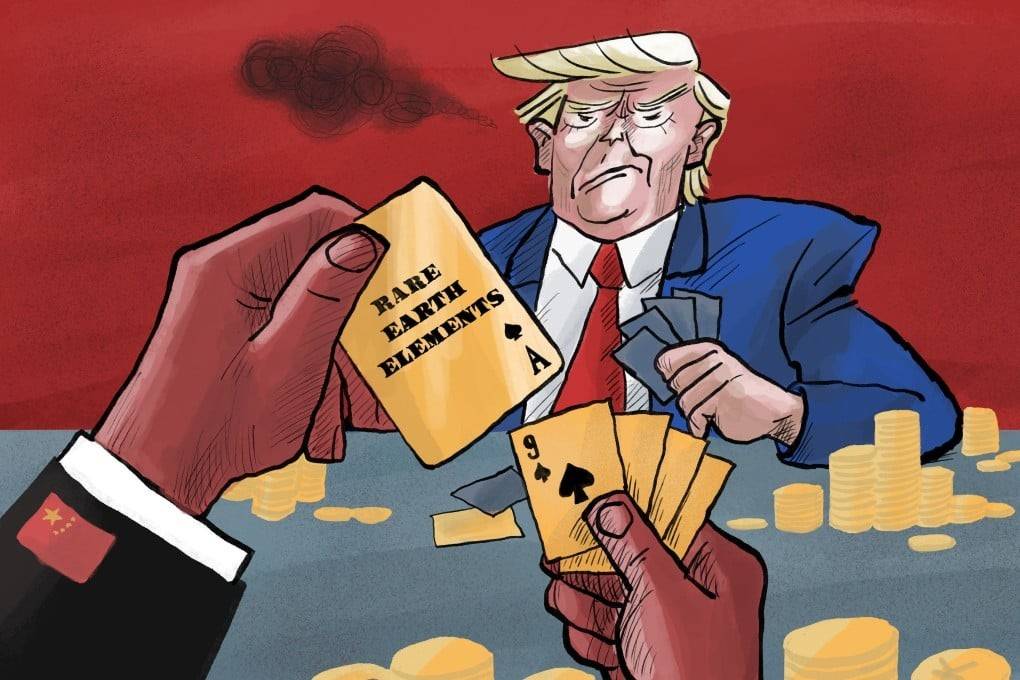
中美都打出了王牌,中国升级稀土管控,美国威胁限制飞机零件出口
Sou Hu Cai Jing· 2025-10-13 02:48
Group 1 - The core of the current conflict revolves around the potential U.S. restrictions on the export of Boeing aircraft parts to China, which could severely disrupt China's aviation operations and maintenance capabilities [3][5] - China currently operates over 1,800 Boeing aircraft, with an additional 220 new orders pending delivery from Chinese airlines, highlighting the significant reliance on Boeing for its aviation needs [3] - If the U.S. imposes a ban on Boeing parts exports, over 1,000 aircraft could face maintenance challenges, leading to increased repair costs and extended downtime, which would disrupt normal operations in China's aviation industry [3][5] Group 2 - Trump's strategy appears to leverage Boeing parts as a bargaining chip to compel China to retract its recent rare earth export controls, but this approach may have unintended consequences [5][6] - Boeing's position is complex; while it is a major player in both military and civilian sectors, it also has significant stakes in the Chinese market and would likely oppose actions that could harm its business there [5][6] - The potential U.S. export restrictions could backfire, as Boeing's dependence on the Chinese market may lead to substantial pressure on the U.S. government to reconsider such measures [6] Group 3 - China's rare earth export controls and the U.S. potential restrictions on Boeing parts represent two critical cards in their ongoing strategic game, with both sides preparing for possible retaliatory actions [6] - The situation underscores the importance of mutual respect and cooperation, as both countries navigate the complexities of their economic interdependence [6]


智通决策参考︱反制主动性更强 芯片要雄起 基建红利类有资金布局
智通财经网· 2025-10-12 22:31
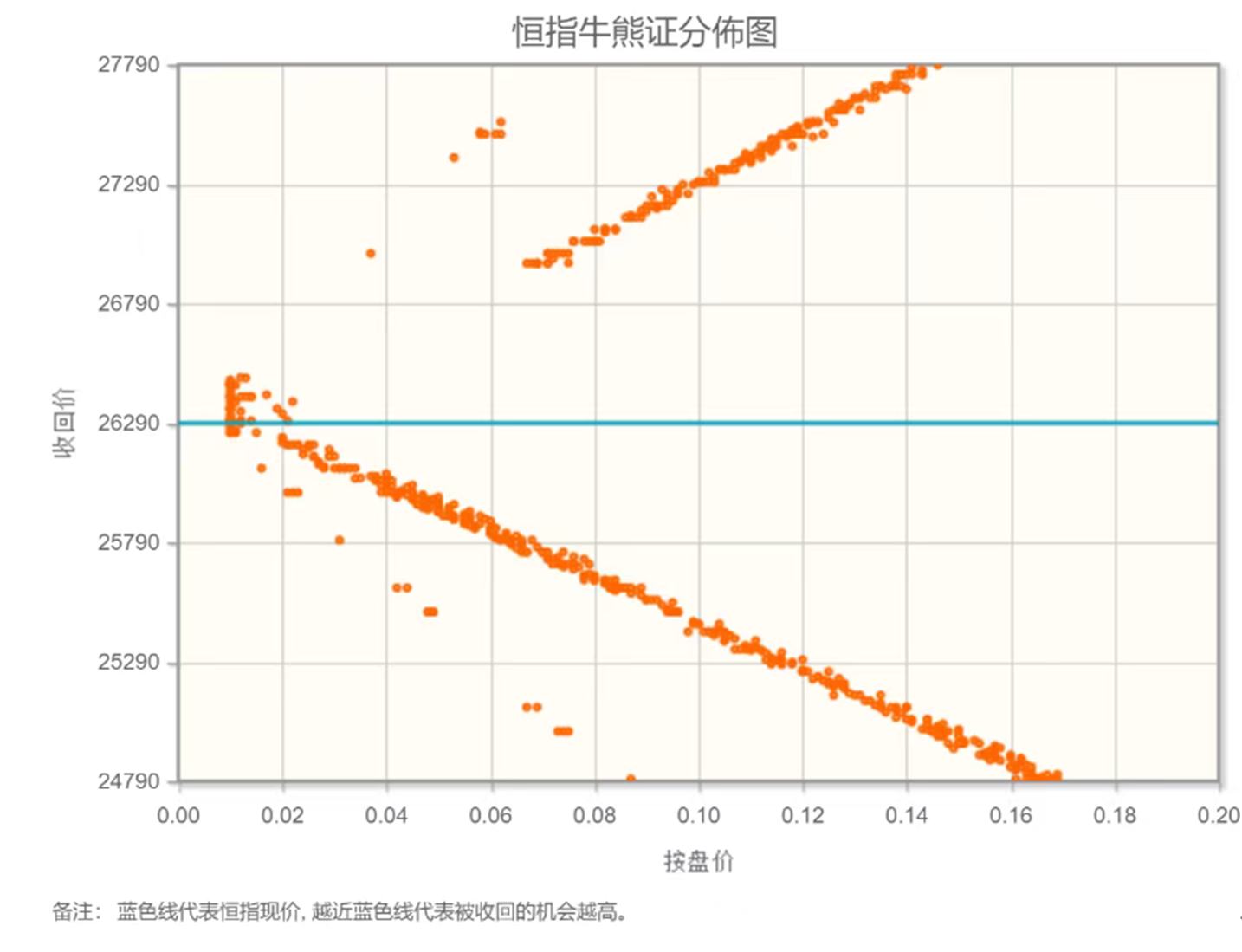
Group 1 - The Hong Kong stock market is experiencing adjustments due to intensified geopolitical tensions, with the Hang Seng Index falling below the critical 20-day moving average [1] - The U.S. government is facing a shutdown while simultaneously increasing sanctions against China, including restrictions on semiconductor equipment exports and imposing high tariffs on Chinese shipping [1] - China has responded with export controls on rare earth materials and other critical resources, indicating a shift from defensive to offensive measures in trade relations [2] Group 2 - The global trend shows central banks, including China, are increasing gold reserves while reducing holdings in U.S. Treasury bonds, marking a significant shift in asset allocation [3] - The cobalt market is transitioning from a surplus to a shortage, with the Democratic Republic of Congo implementing export quotas that will likely drive prices higher [4][5] - Companies like Luoyang Molybdenum and Huayou Cobalt are adjusting their export quotas, indicating a strategic response to the changing market dynamics [4][5] Group 3 - The focus on companies such as Liqian Resources, Luoyang Molybdenum, and Jinchuan International highlights the investment opportunities in the resource sector amid changing geopolitical landscapes [6] - The Hang Seng Index is currently positioned at 26,290 points, with market sentiment leaning towards bearish due to uncertainties in U.S.-China trade negotiations [7]
南华国债期货周度报告:空头的支撑在溃散-20251011
Nan Hua Qi Huo· 2025-10-11 11:28
2025 10 11 3 4 Trump 100% Z0016413 gaoxiang@nawaa.com 9 10 1.74% 3bp 1.77% 1 14 2026-2027 2 9 MLF 3000 PSL 883 3000 2011 1290 2025 10 11 1. 1.1 9 19 T2512 107.96 0.19% TF2512 105.655 0.02% TS2512 102.352 0.01% TL2512 114.02 0.75% 1.84% 2.06bp 1.76bp 1.5% 1.1 113.40 113.60 113.80 114.00 114.20 114.40 114.60 107.20 107.30 107.40 107.50 107.60 107.70 107.80 107.90 108.00 108.10 T2512.CFE TL2512.CFE(RHS) iFind 1.2 2 105.40 105.45 105.50 105.55 105.60 105.65 105.70 105.75 105.80 102.24 102.26 102.28 102.30 102.3 ...
美国大豆滞销,特朗普再甩锅,120亿补贴泡汤,农民卖设备填亏空
Sou Hu Cai Jing· 2025-10-10 13:45
可稍微有点记性的都知道,美国那波关税政策早就在暂停状态了,哪儿来的"赚了很多钱"?难不成是从 其他国家那儿薅了羊毛?这前后矛盾的劲儿,比大豆滞销的新闻还抓马。 10月1日刷到特朗普那条推特时,属实看愣了——这哥们儿怕是急糊涂了,语序乱得像没整理的大豆 田,情绪却满得快溢出来。他一口咬定中方因为"谈判"不买美国大豆,害得自家豆农遭了殃,字里行间 全是"我好无奈"的戏码。 更有意思的是他后面的话,一边拍着胸脯说"通过关税赚了很多钱",一边又赶紧安抚民众,说要从这笔 钱里拿一小部分帮农民,还喊出"永远不会让农民失望"的口号。 当然了,特朗普的老套路永远不会缺席——甩锅。果不其然,话锋一转就骂上了拜登,说"瞌睡乔"没执 行和中国的协议,按约定中方本该买美国数十亿美元的农产品,尤其是大豆。合着只要出点事儿,"瞌 睡乔"或者佩洛西就得被拉出来当靶子,这甩锅手段真是练得炉火纯青。 他还在推特里煽情,说"每个农民都是不折不扣的爱国者",自己最爱这些爱国者,最后喊出"让大豆再 次变得出色"的口号。这话听着热血,可现实却给了他一巴掌。今年中国确实没给美国大豆下新订单, 虽说1-2月还进口了1361万吨,但从5月开始就一粒没买。 ...
订单至今为0,特朗普想和中方当面谈,希望中国放美国大豆一马
Sou Hu Cai Jing· 2025-10-05 05:46
Core Viewpoint - The article discusses the ongoing trade tensions between the U.S. and China, particularly focusing on President Trump's attempts to negotiate soybean purchases from China, which are seen as a response to domestic pressures from American soybean farmers [1][3][4]. Group 1: U.S.-China Trade Relations - Trump initiated the trade conflict and is now seeking to negotiate soybean purchases, indicating a shift from aggression to a need for cooperation due to domestic pressures [3][4]. - China has diversified its soybean supply sources, significantly increasing imports from Brazil and Argentina, which has diminished U.S. competitiveness in the market [4][10]. - In August, Brazil exported 10.49 million tons of soybeans to China, making it the largest supplier, while China's total soybean imports for that month were nearly 14 million tons [4]. Group 2: Domestic Pressure on U.S. Farmers - U.S. soybean farmers are under significant pressure as they face financial losses due to the lack of sales, which has turned their survival into a political issue for Trump [3][6]. - The ability of U.S. farmers to endure the current situation is uncertain, as they rely on selling their crops to avoid losses [6]. Group 3: China's Negotiation Strategy - China has set conditions for resuming soybean purchases, requiring the U.S. to remove "unreasonable tariffs" before any negotiations can take place [4][5]. - The negotiation is likely to be prolonged, with China unwilling to make concessions unless the U.S. compromises in other areas of trade [12].
中国拒绝买单,美损失超百亿美元,特朗普急了眼:想与中方好好谈
Sou Hu Cai Jing· 2025-10-05 04:28
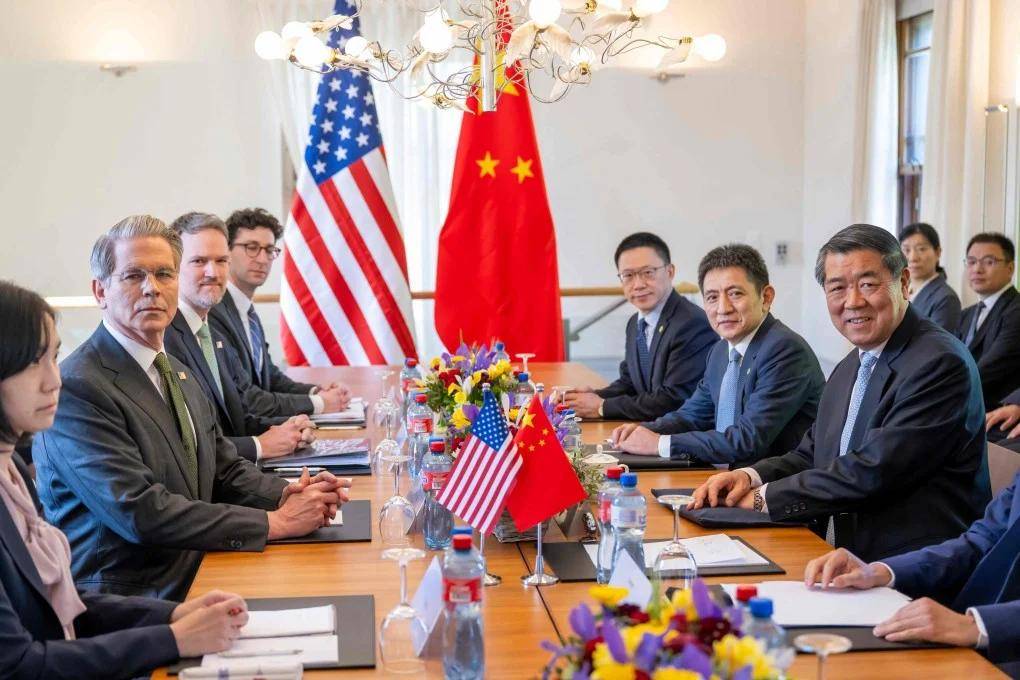
Group 1 - The core issue revolves around China's refusal to bear the consequences of the U.S. tariffs, leading to significant losses for American soybean farmers exceeding $10 billion [1][2][11] - The U.S. initially aimed to pressure China into purchasing more American goods through tariffs, but China's countermeasure of halting soybean imports has resulted in a direct financial impact on the U.S. agricultural sector [2][5] - The U.S. soybean industry is facing a dire situation, with China being a crucial market, previously accounting for $12 billion in soybean exports in 2024, now shifting to imports from Argentina and Brazil due to their lower tariffs [5][6] Group 2 - China's response to the U.S. tariffs has been strategic and effective, showcasing its ability to protect its interests while sending a clear message against economic bullying [6][10] - The U.S. Congress has begun to acknowledge the long-term implications of China's refusal to purchase soybeans, indicating a shift in the political landscape and market dynamics [7][9] - Despite the evident losses, the Trump administration remains reluctant to admit any errors in its decision-making, with trade representatives continuing to advocate for high tariffs [9][10]
美国终于低头?美财长表态可取消对华关税,但前提条件苛刻
Sou Hu Cai Jing· 2025-09-30 03:25
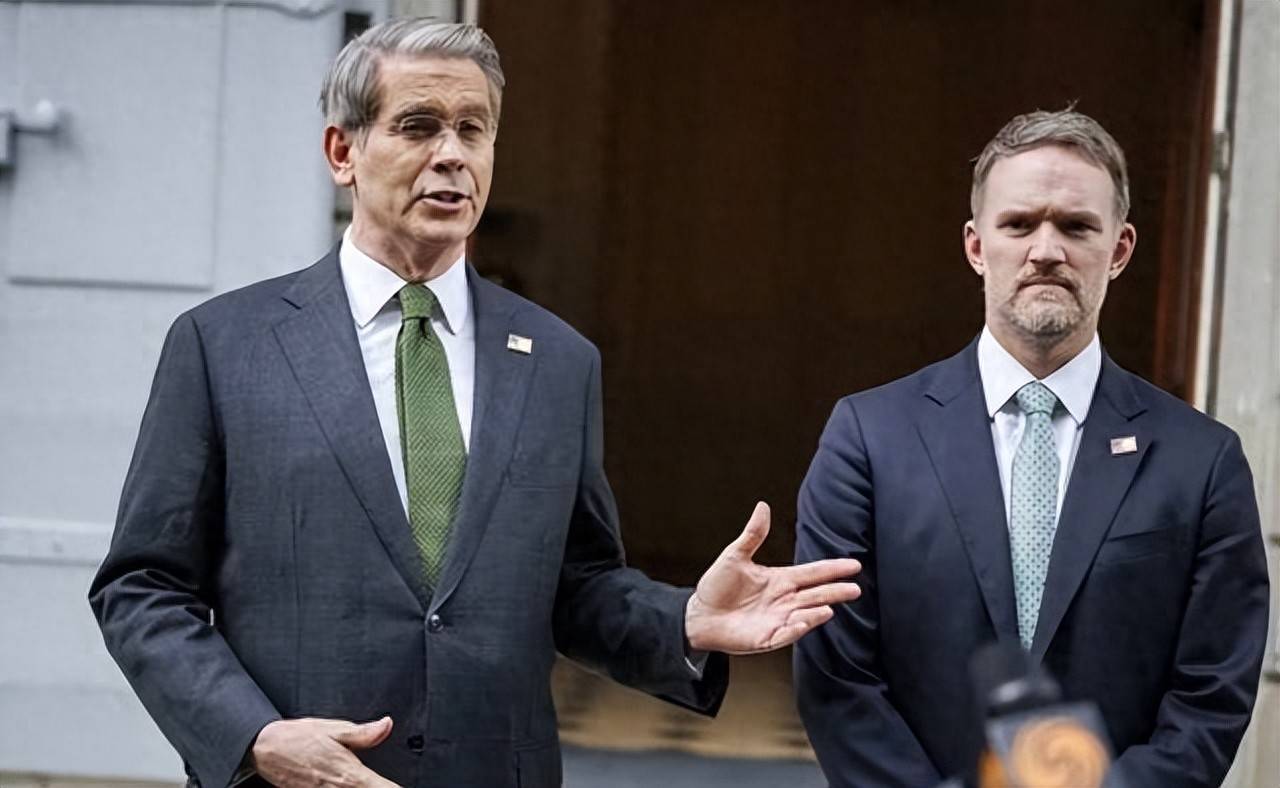
Core Viewpoint - The U.S. Treasury Secretary's recent comments suggest a potential shift in U.S. policy regarding tariffs on Russian oil imports from China, contingent on European actions, indicating a complex geopolitical strategy at play [2][4][9]. Group 1: U.S. Strategy and Conditions - The U.S. is considering not imposing high tariffs on Chinese imports of Russian oil, but only if European countries take action first, which places pressure on Europe [2][4]. - The U.S. has already imposed a 25% tariff on Indian goods and is seeking to coordinate with Europe on tariffs against China, reflecting a continuation of the "America First" policy [4][5]. - The U.S. strategy appears to be one of leveraging European allies to share the burden of economic sanctions against Russia while avoiding direct repercussions on the U.S. economy [5][9]. Group 2: European Dilemma - Europe faces a challenging situation where imposing tariffs on China could harm its own economy due to high trade dependency, yet failing to comply with U.S. demands risks exclusion from the Western alliance [5][15]. - Key European leaders express concerns that tariffs could severely impact their industries, particularly the automotive sector, highlighting the internal divisions within the EU regarding U.S. directives [15][16]. - The EU's decision-making process is complicated by the need for unanimous agreement among member states, which is difficult given differing national interests [16]. Group 3: China's Response - China has responded to U.S. tariffs by emphasizing principles of mutual benefit and opposing the politicization of trade issues, showcasing a mature diplomatic stance [11][12]. - The Chinese government has indicated that its imports of Russian oil are based on market demand and are a matter of national sovereignty, rejecting U.S. pressure as overreach [11][12]. - China's diplomatic strategy aims to maintain open channels for cooperation while firmly standing by its principles, indicating a long-term view in negotiations [13][18]. Group 4: Global Market Implications - The ongoing situation reveals significant fractures within the Western alliance, as countries like India and China resist being drawn into U.S.-led sanctions against Russia [16][18]. - The potential for a tariff standoff could lead to increased volatility in global energy markets, as evidenced by recent fluctuations in Russian oil prices [15][16]. - The upcoming tariff negotiations in November are seen as a critical juncture that could either ease tensions or exacerbate trade conflicts, with the U.S. strategy facing challenges from domestic economic pressures [16][18].
中国亮剑:已停购美国大豆4个月,要求先取消关税,然后再买
Sou Hu Cai Jing· 2025-09-27 05:21
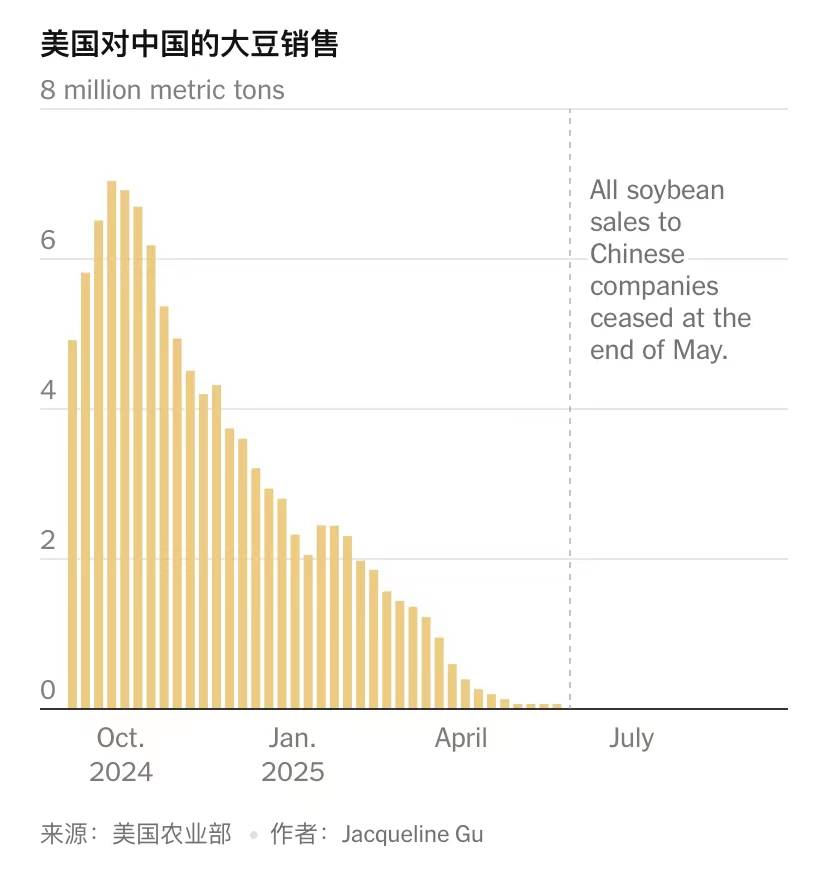
Core Viewpoint - The Chinese Ministry of Commerce signaled to the U.S. on September 25 that if the U.S. wishes to expand bilateral trade, it must remove unreasonable tariff measures, indicating a strong stance in the ongoing U.S.-China trade war, particularly regarding agricultural imports like soybeans [1] Group 1: Trade Dynamics - Since May, China has nearly halted its purchases of U.S. soybeans, a trend that has persisted for 4-5 months, with imports dropping to nearly zero, aligning with the escalation of the U.S.-China tariff conflict [6] - China was previously the largest buyer of U.S. soybeans, with annual imports reaching $12.6 billion, accounting for about 50% of U.S. soybean exports [6] Group 2: Market Shifts - China has shifted its focus to South American markets, significantly increasing imports from Brazil and Argentina, which are major competitors to U.S. soybeans, exacerbating the anxiety and dissatisfaction among U.S. farmers [7] - U.S. farmers are experiencing a psychological and economic impact due to the stagnation of soybean sales, leading them to pressure the Trump administration to adjust tariff policies [7] Group 3: Government Response - U.S. farmers are actively seeking alternative markets, urging the government to expedite trade negotiations with countries like the UK and Japan to boost corn exports [10] - The U.S. Secretary of Agriculture acknowledged the severe export situation for soybeans, corn, and wheat, discussing potential aid plans for farmers, including using tariff revenue to subsidize domestic agriculture [10] Group 4: Long-term Outlook - The soybean trade conflict between the U.S. and China may see temporary relief through compromise, but a stable long-term trade agreement is essential to address fundamental issues [11] - The ongoing trade dynamics reflect profound changes in the global trade landscape, with pressure from U.S. farmers and the government potentially acting as significant variables in negotiations [11]
中方一单不下,美国大豆被判死刑,美农民哭、特朗普劝,都不管用
Sou Hu Cai Jing· 2025-09-23 04:50
Core Viewpoint - The U.S. soybean industry is facing a critical survival crisis due to the ongoing U.S.-China trade tensions, with American farmers experiencing unprecedented anxiety as they struggle to secure orders from China, which has historically been their largest market [1][3]. Group 1: Current Situation of U.S. Soybean Farmers - U.S. soybean farmers are currently in a state of distress, with the American Soybean Association president highlighting that the Chinese market is vital for their survival, as orders that typically flood in during harvest season are non-existent this year [1]. - Approximately 60% of U.S. soybean exports rely on China, and without this major customer, farmers face dire consequences, including unsold stock, potential bankruptcy, and a significant loss of revenue [1][3]. Group 2: Impact of U.S.-China Trade Policy - The crisis can be traced back to the Trump administration's trade policies, which have treated agricultural products as strategic bargaining chips, underestimating China's ability to diversify its import sources [3]. - In 2024, China plans to import 74.65 million tons from Brazil and 4.1 million tons from Argentina, leaving only 25 million tons for the U.S., which reflects a shift in China's import strategy due to increased tariffs [3]. Group 3: Political Ramifications - The Trump administration is taking urgent measures to address the agricultural crisis, including public appeals for orders, extending tariff suspension periods, and potentially delaying military sales to Taiwan, driven by a looming political crisis as his approval ratings drop to 38% [5]. - The Democratic Party is gaining an advantage, with recent polls showing a 49% to 44% support rate, indicating potential challenges for the upcoming midterm elections, which are influenced by the soybean import market [7]. - Analysts suggest that without substantial concessions from the U.S., regaining access to the Chinese market will be difficult, and the repercussions could significantly impact the Republican electoral landscape [7].