
原始创新

Search documents
人民日报头版:在激烈国际竞争中赢得战略主动
Ren Min Ri Bao· 2025-11-25 00:19
Core Viewpoint - Achieving high-level technological self-reliance and strength is crucial for China's modernization efforts [2] Group 1: Technological Self-Reliance - The "14th Five-Year Plan" emphasizes technological self-reliance as a strategic support for national development, while the "15th Five-Year Plan" aims to accelerate high-level technological self-reliance to lead new productive forces [2][3] - Over the past five years, China has made significant technological innovations, establishing a solid foundation for further advancements [2] - The "15th Five-Year Plan" suggests consolidating advantages, breaking bottlenecks, and enhancing weaknesses to gain strategic initiative in international competition [2][4] Group 2: Key Technologies and Innovations - Key core technologies cannot be acquired through purchase or negotiation; they must be solved through independent innovation [4] - Breakthroughs in key technology areas, such as the Beidou system and domestic operating systems, enhance the security and resilience of supply chains [4] - A new type of fluorinated polyether electrolyte has been developed, paving the way for high-safety, high-energy-density solid-state lithium batteries [5] Group 3: Foundation of Basic Research - Basic research funding has increased by over 70% since 2020, with China leading in high-level international journal publications and patent applications for five consecutive years [6] - The "15th Five-Year Plan" calls for strengthening the strategic, forward-looking, and systematic layout of basic research [6][7] - Emphasis on original innovation is crucial, with a focus on creating more landmark original achievements [7] Group 4: Competing for Technological Leadership - The U.S. magazine "Time" listed over 20 Chinese tech companies among the best inventions of 2025, highlighting advancements in AI and robotics [8] - Major technological achievements, such as the successful launch of the Shenzhou 21 spacecraft, demonstrate China's capabilities in space exploration [9] - The establishment of a robust national aerospace industrial system supports China's achievements in the aerospace sector [9] Group 5: New Quality Productive Forces - The integration of technology and industry is accelerating, with the "new economy" expected to account for over 18% of GDP by 2024 [13] - The development of new productive forces is essential for high-quality economic growth, focusing on improving total factor productivity [13][14] - Accelerating the efficient transformation and application of major technological achievements is vital for deepening the integration of technological and industrial innovation [15] Group 6: Regional Innovation and Collaboration - A coordinated national approach is necessary to enhance regional innovation capabilities and build technological innovation centers [16] - The establishment of collaborative models between universities and enterprises has led to significant advancements in research and development [10] - The "15th Five-Year Plan" outlines further deployment for enhancing regional innovation systems and supporting local exploration of innovative development models [16]
在激烈国际竞争中赢得战略主动 ——加快高水平科技自立自强,引领发展新质生产力
Ren Min Ri Bao· 2025-11-24 22:58
Core Viewpoint - Achieving high-level technological self-reliance and strength is crucial for China's modernization efforts, as emphasized by President Xi Jinping [2]. Group 1: Technological Self-Reliance - The "14th Five-Year Plan" emphasizes technological self-reliance as a strategic support for national development, while the "15th Five-Year Plan" aims to accelerate high-level technological self-reliance to lead new productive forces [2][3]. - Over the past five years, China has made significant technological innovations, laying a solid foundation for further advancements [2]. - The "15th Five-Year Plan" suggests consolidating advantages, breaking bottlenecks, and enhancing weaknesses to gain strategic initiative in international competition [2][4]. Group 2: Key Technologies and Innovations - Key core technologies must be developed through independent innovation to solve critical issues, as highlighted by breakthroughs in various fields such as navigation and digital economy [4][5]. - The development of a new type of fluorinated polyether electrolyte by Tsinghua University represents a significant advancement in high-safety, high-energy-density solid-state lithium batteries [5]. Group 3: Foundation of Basic Research - Basic research funding has increased by over 70% since 2020, with China leading in high-level international journal publications and patent applications for five consecutive years [6]. - The "15th Five-Year Plan" calls for a strategic, forward-looking, and systematic approach to enhance basic research, which is essential for original innovation [6][7]. Group 4: High-Quality Development and New Productive Forces - The integration of technological and industrial innovation is accelerating, with the "new economy" expected to account for over 18% of GDP by 2024 [13]. - The focus on enhancing the "new quality" of production is crucial for achieving high-quality development and addressing the challenges posed by global competition [14]. Group 5: Talent Development and Education - The number of highly cited scientists in China has increased by 50% since 2021, indicating a growing pool of talent in key technological fields [11]. - The collaboration between universities and enterprises is fostering a robust talent pipeline, essential for driving innovation [10]. Group 6: Regional Innovation and Collaboration - A coordinated national approach is necessary to enhance regional innovation capabilities, with various regions developing their strengths in technology and industry [16]. - The establishment of regional innovation centers and technology hubs is crucial for fostering a collaborative environment for technological advancements [16].
在激烈国际竞争中赢得战略主动
Ren Min Ri Bao· 2025-11-24 22:31
Core Viewpoint - Achieving high-level technological self-reliance and strength is crucial for China's modernization, as emphasized by General Secretary Xi Jinping [2][3]. Group 1: Technological Self-Reliance - The "14th Five-Year Plan" emphasizes technological self-reliance as a strategic support for national development, while the "15th Five-Year Plan" aims to accelerate high-level technological self-reliance to lead new productive forces [2]. - Over the past five years, China has made significant technological innovations, establishing a solid foundation for further advancements [2]. - The "15th Five-Year Plan" suggests consolidating advantages, breaking bottlenecks, and enhancing weaknesses to gain strategic initiative in international competition [2][3]. Group 2: Key Technological Breakthroughs - The successful development of single-atom-layer metals by a team from the Chinese Academy of Sciences represents a significant innovation, challenging traditional views on metal forms [3]. - Key core technologies must be developed through independent innovation to address critical challenges, as demonstrated by advancements in the Beidou navigation system and domestic operating systems [4]. Group 3: Foundation of Basic Research - Basic research funding has increased by over 70% since 2020, with China leading in high-level international journal publications and patent applications for five consecutive years [6]. - The "15th Five-Year Plan" calls for a strategic, forward-looking, and systematic approach to enhance basic research, which is essential for original innovation [6][7]. Group 4: New Productive Forces - The integration of technological and industrial innovation is accelerating, with the "new economy" expected to account for over 18% of GDP by 2024, driven by sectors like artificial intelligence and biotechnology [13]. - The development of new productive forces is vital for high-quality growth, focusing on improving total factor productivity [13][14]. Group 5: Innovation Ecosystem - The establishment of a complete innovation ecosystem is necessary for transitioning from isolated breakthroughs to systematic capabilities, emphasizing collaboration across various sectors [9]. - The role of enterprises in driving technological innovation is highlighted, with initiatives to support high-tech enterprises and foster innovation clusters [15][16]. Group 6: Talent Development - The growth of high-impact scientists in China has reached 1,405, accounting for 20% of the global total, indicating a strong emphasis on nurturing talent in key technological fields [11]. - Educational reforms are needed to align talent development with industry needs, ensuring that students engage with real-world scientific challenges [11]. Group 7: Green Competitiveness - The introduction of carbon footprint reports for products, such as those from Zhejiang, showcases the importance of green competitiveness in global markets [12]. - Enhancing the "green attributes" of products is essential for improving the economic value of industries [12]. Group 8: Future Challenges and Opportunities - The next five years present significant challenges but also opportunities for China to enhance its technological capabilities and support modernization efforts [16].
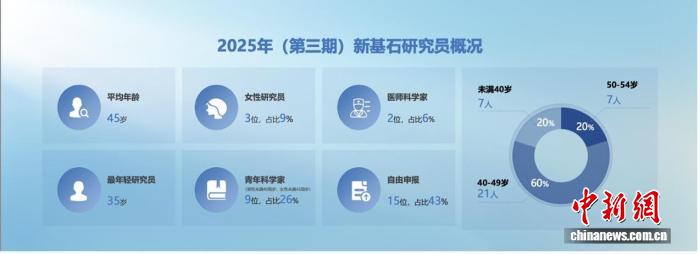
35位“新基石研究员”获资助 青年科学家数量创新高
Zhong Guo Xin Wen Wang· 2025-11-24 08:26
35位"新基石研究员"获资助 青年科学家数量创新高 据悉,未来,"新基石研究员项目"将保持两年一次的开放频率,10年稳定支持200至300位杰出科学家。 (完) 来源:中国新闻网 编辑:张澍楠 广告等商务合作,请点击这里 本文为转载内容,授权事宜请联系原著作权人 中新网北京11月24日电 (陶思阅)作为目前国内社会力量资助基础研究力度最大的公益项目之一,"新基 石研究员项目"经过半年多的申报与评审,于24日在京揭晓第三期获资助名单。名单中的35位科学家平 均年龄45岁,其中青年科学家9位,创纪录地占比超四分之一。 据介绍,"新基石研究员项目"长期稳定支持探索性与风险性强的基础研究,实现"从0到1"的原始创新, 设置数学与物质科学、生物与医学科学两大领域。项目资助类别分为实验类和理论类,资助期为五年, 期间实验类每人2500万元人民币;理论类每人1500万元人民币,期满可申请续期资助。 中国科学院院士、清华大学教授、"新基石研究员项目"科学委员会委员王小云表示:"对数学领域来 说,年轻化是个好现象,这说明,中国数学领域大批优秀的年轻人已经成长起来。" 从探索新一代核污染防治技术到挖掘根际微生物组"暗物质",从蛋 ...

贯彻落实党的二十届四中全会精神权威访谈 | 勇担科技自立自强新使命 走好科技强国建设新征程——访中国科学院院长、党组书记侯建国
Xin Hua She· 2025-11-20 14:50
Core Viewpoint - The article emphasizes the importance of accelerating high-level technological self-reliance and innovation in China, as outlined in the 14th Five-Year Plan, to support the country's modernization efforts and enhance its strategic technological capabilities [1][2]. Group 1: Contributions of the Chinese Academy of Sciences - The Chinese Academy of Sciences (CAS) has played a crucial role in achieving significant technological advancements during the 14th Five-Year period, focusing on key areas such as manned spaceflight, lunar exploration, deep-sea exploration, and energy security [2][3]. - CAS has successfully overcome critical technological challenges in fields like integrated circuits, artificial intelligence, and advanced materials, providing strong technological support for industrial and supply chain security [3][4]. Group 2: Original Innovation and Key Technology Breakthroughs - CAS is committed to seizing technological development high ground by focusing on original innovation and key technology breakthroughs, aligning with national strategic needs and global scientific frontiers [4][5]. - The organization has initiated collaborative efforts involving over 100 leading institutions and nearly 10,000 experts to tackle significant technological challenges and enhance foundational research [5][6]. Group 3: Integration of Technology Innovation and Industry - CAS has actively engaged in building international technology innovation centers and regional innovation hubs, establishing mechanisms for ongoing collaboration between research institutions and central enterprises to facilitate technology transfer [7][8]. - The organization aims to optimize traditional industries and foster emerging sectors through deep integration of technological and industrial innovation, thereby supporting the construction of a modern industrial system [8][9]. Group 4: Education, Technology, and Talent Development - CAS is focused on the interconnection between education, technology, and talent development, implementing programs to cultivate top-tier innovative talent in critical fields such as artificial intelligence and quantum technology [9][10]. - The organization plans to enhance its talent cultivation structure and quality, aiming to train over 100,000 outstanding young scientific talents by 2035 [10][11].
贯彻落实党的二十届四中全会精神权威访谈丨勇担科技自立自强新使命 走好科技强国建设新征程——访中国科学院院长、党组书记侯建国
Xin Hua Wang· 2025-11-20 14:27
Core Viewpoint - The article emphasizes the importance of accelerating high-level technological self-reliance and innovation in China, as outlined in the 15th Five-Year Plan, to support the country's modernization efforts [1]. Group 1: Contributions of the Chinese Academy of Sciences - The Chinese Academy of Sciences (CAS) has played a crucial role in achieving significant technological advancements during the 14th Five-Year Plan, focusing on high-level technological self-reliance and innovation [2]. - CAS has actively undertaken major national scientific tasks and has made breakthroughs in key core technologies, particularly in areas such as manned spaceflight, lunar exploration, deep-sea exploration, and energy security [2][3]. - The academy has successfully addressed critical issues in innovation chains and has produced numerous groundbreaking technologies and strategic products to support national projects [3]. Group 2: Original Innovation and Key Technology Breakthroughs - CAS is committed to seizing technological development high ground by focusing on original innovation and key technology breakthroughs, as emphasized by President Xi Jinping [4]. - The academy has organized collaborative efforts involving over 100 leading institutions and nearly 10,000 experts to tackle major scientific challenges [5]. - Future initiatives will include enhancing research organization models and management systems to better align with the demands of technological advancement [6]. Group 3: Integration of Technology Innovation and Industry - CAS has been actively promoting the integration of technological innovation with industry to transform scientific advancements into productive forces [7]. - The academy has established mechanisms for ongoing collaboration between research institutions and enterprises, facilitating the efficient conversion of scientific results into practical applications [8]. - Future plans include strengthening cooperation with key regions and industries to enhance the synergy between technological and industrial innovation [8]. Group 4: Education, Technology, and Talent Development - The article highlights the interconnection between education, technology, and talent development, with CAS aiming to cultivate over 100,000 outstanding young scientific talents by 2035 [9][10]. - CAS is implementing programs to enhance interdisciplinary education and training in urgent fields, focusing on areas such as artificial intelligence and biotechnology [10]. - The academy plans to improve the overall environment for education, technology, and talent development to foster high-quality growth [11].
勇担科技自立自强新使命 走好科技强国建设新征程——访中国科学院院长、党组书记侯建国
Xin Hua She· 2025-11-20 12:56
Core Viewpoint - The article emphasizes the importance of accelerating high-level technological self-reliance and innovation in China, as outlined in the 14th Five-Year Plan, with a focus on leveraging national strategic scientific capabilities to support modernization efforts [1]. Group 1: Contributions of the Chinese Academy of Sciences - The Chinese Academy of Sciences (CAS) has played a crucial role in achieving significant technological advancements during the 14th Five-Year period, focusing on high-level technological self-reliance and innovation [2]. - CAS has actively undertaken major national scientific tasks and has made substantial contributions in strategic areas such as manned spaceflight, lunar exploration, deep-sea exploration, and energy security [2][3]. - The academy has successfully addressed key technological challenges in fields like integrated circuits, artificial intelligence, and advanced materials, providing strong technological support for industrial and supply chain security [3]. Group 2: Original Innovation and Key Technology Breakthroughs - CAS is committed to seizing technological development high ground by focusing on original innovation and key technology breakthroughs, as mandated by national leadership [4]. - The academy has organized collaborative efforts involving over 100 leading institutions and nearly 10,000 experts to tackle significant scientific challenges [5]. - Future plans include enhancing research organization models and management systems to better align with the goal of achieving key technological breakthroughs [6]. Group 3: Integration of Technological and Industrial Innovation - CAS is actively promoting the integration of technological innovation with industrial development, establishing mechanisms for collaboration between research institutions and enterprises [7]. - The academy aims to create a favorable ecosystem for the application of scientific achievements, facilitating the transformation of research outcomes into productive forces [8]. - Plans include strengthening the connection between major tasks and industry needs, and fostering a collaborative environment for innovation [8]. Group 4: Education, Science, and Talent Development - CAS is focused on the integrated development of education, science, and talent, aligning with national goals for building a strong educational and scientific workforce [9]. - The academy has initiated programs to cultivate top-tier innovative talent, particularly in urgent fields such as artificial intelligence and biotechnology [10]. - Future strategies involve enhancing the synergy between educational institutions and research efforts to improve talent quality and output [11].
20cm速递|科创创业ETF(588360)盘中涨超2%,A股科技股行情表现突出
Mei Ri Jing Ji Xin Wen· 2025-11-20 05:52
Group 1 - The core viewpoint is that since 2025, A-share technology stocks have shown outstanding performance, with the Sci-Tech Innovation Board facilitating direct financing for technology enterprises [1] - The national innovation system needs to focus on the positive cycle among technology, industry, and finance, particularly in "bottleneck" areas such as integrated circuits, industrial mother machines, high-end instruments, basic software, advanced materials, and biomanufacturing, which require increased efforts for breakthroughs [1] - There is significant room for improvement in the 0-1 stage (original innovation) within the technology and industry cycle, and financial services for the real economy should support "early, small, long-term, and hard technology" investments [1] Group 2 - The Sci-Tech Innovation and Entrepreneurship ETF (588360) tracks the Sci-Tech Innovation 50 Index (931643), which has a daily fluctuation limit of 20%, selecting 50 emerging industry stocks with larger market capitalization and better liquidity from the Sci-Tech Innovation Board and the Growth Enterprise Market [1] - The index covers high-tech fields such as semiconductors, new energy, and biomedicine, with a balanced industry distribution focusing on cutting-edge sectors like information technology, industry, and healthcare, aiming to reflect the overall performance of China's high-tech emerging industry listed companies [1]

打造科技领军人才雁阵
Ke Ji Ri Bao· 2025-11-20 02:39
Core Insights - The 20th Central Committee's Fourth Plenary Session emphasizes the need to accelerate the development of national strategic talent, particularly focusing on cultivating strategic scientists and leading technological talents to enhance innovation and core technology breakthroughs [1][3]. Talent Development Achievements and Challenges - China's strategic talent pool has seen significant growth in both scale and quality, with notable increases in the number of Chinese scientists listed in prestigious international rankings, indicating progress in attracting and nurturing top scholars [3]. - However, there are structural shortcomings in the talent pool, with a concentration of top talents in a few disciplines and a notable gap in strategic fields like life sciences and clinical medicine compared to developed countries [4]. New Ecosystem for Talent Attraction and Retention - A new ecosystem focusing on "attracting, nurturing, utilizing, and retaining" talent is essential, which includes reforming evaluation mechanisms to prioritize contributions and potential over traditional metrics like publications and degrees [6]. - Establishing high-level platforms for innovation, such as major scientific facilities and research institutions, is crucial for gathering and developing strategic talents [7]. - Creating a supportive environment that encourages innovation and tolerates failure is necessary to retain talent, including providing comprehensive services for personal and professional needs [8].
周绍东:持续夯实高质量发展安全根基
Jing Ji Ri Bao· 2025-11-20 00:40
Group 1: Innovation and Technology - The current technological revolution and industrial transformation are characterized by unprecedented levels of innovation, particularly in fields like artificial intelligence and quantum communication, which are reshaping global order and development patterns [2] - China's original innovation capabilities remain relatively weak, especially in critical core technologies, leading to risks in certain industrial sectors [2] - There is a need to enhance security guarantees while promoting innovation and industrial upgrades, focusing on mastering core technologies to ensure national economic security [2] Group 2: Economic Coordination and Development - Long-standing issues of uncoordinated development in China manifest in industrial and regional disparities, necessitating a focus on supply chain stability and the promotion of new industries [3] - The strategy for regional coordination and urban-rural integration aims to optimize productivity distribution and reduce urban-rural gaps [3] Group 3: Ecological and Energy Security - Emphasizing the importance of ecological and energy security, there is a call for a green and low-carbon transformation of development methods, alongside improving ecological environment quality [4] - The establishment of a multi-faceted energy supply system that includes traditional fossil fuels, new energy, and renewable energy is crucial for ensuring energy security [4] Group 4: Open Economy and Security - Increased openness in China's economy necessitates a focus on security, particularly in foreign trade and investment, to avoid over-reliance on single trade partners [5] - The "Belt and Road" initiative and other international collaborations require robust policy guidance and emergency management to protect overseas interests [5] Group 5: Shared Development and Social Equity - Shared development aims to address social equity issues, ensuring that development benefits are distributed fairly among the population [6] - Enhancing public services in education, healthcare, and social security is essential for improving the overall well-being and stability of society [6]