四链融合

Search documents
中国经济微观察 “四链融合”“中国造”越来越有分量了
Ren Min Wang· 2025-11-04 03:00
Core Viewpoint - China has made significant strides in overcoming "choke point" technologies through a new type of national system under centralized leadership, emphasizing self-reliance in technology and innovation [1][2]. Group 1: Technological Advancements - The "Four Chain Integration" aims to facilitate the transformation of scientific achievements into industrial applications, enhancing the speed at which laboratory innovations become market-ready products [2][3]. - During the "14th Five-Year Plan" period, R&D expenditure increased from 2.44 trillion yuan to 3.61 trillion yuan, maintaining the second position globally, with R&D intensity rising from 2.40% to 2.68%, surpassing the EU average for the first time [3]. - At least 21 out of 35 previously identified "choke point" technologies are expected to be overcome by 2024, supported by 77 major national scientific infrastructure projects [3]. Group 2: Funding and Support Mechanisms - A new "enterprise innovation points system" has been implemented, allowing companies to secure funding without collateral based on their innovation scores, which consider factors like talent and patents [4]. - Over 1,500 government-guided funds have been established nationwide, attracting over 3 trillion yuan in social capital investments [4]. Group 3: Industry and Innovation Integration - The Guangdong-Hong Kong-Macao Greater Bay Area serves as a model for integrating industry and innovation, where leading tech companies collaborate with universities and research institutions to address the disconnect between R&D and market needs [5]. - The national technology contract transaction volume reached 6.8 trillion yuan in 2024, 1.8 times that of 2020, indicating a rapid acceleration in the integration of innovation and industry [5]. Group 4: Future Directions - Looking ahead to the "15th Five-Year Plan," there is a commitment to further enhance the integration of innovation chains, industry chains, funding chains, and talent chains [6]. - Emphasis will be placed on strengthening basic research and original innovation while promoting a better synergy between effective markets and proactive government initiatives [6].
一颗产学研“金果”,“甜”了动力源和产业链
Xin Hua Ri Bao· 2025-11-03 12:51
Core Viewpoint - The article discusses how Nanjing Jianye High-tech Zone is addressing the challenge of transforming scientific research results from laboratories to production lines through a five-level linkage mechanism and the integration of industry, academia, and research [1][5]. Group 1: Five-Level Linkage Mechanism - The five-level linkage mechanism includes city leaders, district leaders, park leaders, departmental connections, and small team promotions, facilitating effective collaboration between enterprises and universities [3][7]. - Jiangsu Xinnet Vision Software Technology Co., Ltd. and Southeast University signed cooperation agreements for technology development and graduate base construction, marking a significant step in industry-academia integration [2][3]. Group 2: Multi-Dimensional Support for Innovation - The Jianye High-tech Zone has implemented various policies to encourage more enterprises to participate in the "Double High Coordination" initiative, including support in carrier supply, financial empowerment, technical services, platform construction, and talent exchange [5][6]. - The zone has established a "Double High Digital Building" in collaboration with multiple universities, adopting a "1+3+N" model to create a comprehensive innovation ecosystem [5]. Group 3: Integration of Four Chains - The integration of the innovation chain, industry chain, capital chain, and talent chain is emphasized as a crucial approach for promoting new industrialization [7]. - The zone has facilitated over 20 enterprise-university connections and 17 technology cooperation projects, reigniting enthusiasm for industry-academia collaboration [7]. Group 4: Future Directions - The Jianye High-tech Zone aims to leverage regional financial and industrial advantages to advance the "Double High Coordination" pilot work, contributing to the establishment of a globally influential industrial technology innovation center in Nanjing [8].

淄博职业技术大学:“四链融合”校企共建产业学院,助力老工业城市职教突围
Huan Qiu Wang· 2025-10-31 10:19
Core Viewpoint - The article emphasizes the importance of integrating vocational education with industry needs, highlighting the role of Zibo Vocational Technical University in supporting regional economic development through a collaborative educational model [1][8]. Group 1: Educational Integration and Collaboration - Zibo Vocational Technical University focuses on the "four-chain integration" concept, aligning educational efforts with the strategic needs of Shandong Province and Zibo City's industrial transformation [1]. - The university has established 19 mixed-ownership modern industrial colleges in collaboration with leading companies such as Wanhua Chemical and Qilu Petrochemical, ensuring direct involvement of industry leaders in educational governance [3][4]. - A comprehensive evaluation system has been developed, incorporating advanced assessment methods from partner companies to enhance the quality of education and skill development [3]. Group 2: Practical Training and Industry Engagement - The university has created 42 enterprise-level training centers, with production equipment valued over 300 million yuan, facilitating hands-on training that meets industry standards [5]. - Students have engaged in real-world projects, such as participating in major e-commerce events, generating service sales exceeding 8 million yuan in 2024 [5]. - The university's collaboration with Ideal Auto has resulted in high employment rates for graduates, with starting salaries typically above 6,000 yuan [5]. Group 3: Innovation and Regional Development - The university has partnered with leading companies to establish research and development platforms, addressing regional industry needs for innovation and technology [6]. - Successful projects include improvements in battery management systems that enhance vehicle range by 15% and smart sorting equipment that reduces production costs by 20% [6]. - The university has provided technical services to over 145 small and medium-sized enterprises, generating significant economic benefits for the region [6]. Group 4: Outcomes and Future Directions - Over the past five years, the university has trained more than 40,000 skilled workers, with a retention rate of 87.93% for graduates choosing to work in the region [8]. - Approximately 80% of graduates from modern industrial colleges are employed in key industries, contributing to the industrial transformation of Zibo [8]. - The university aims to further enhance its educational model and service capabilities, aspiring to become a nationally recognized vocational institution that supports high-quality regional development [8].


“科学家遇见投资人”闭门研讨会(西安交大专场)成功举办
2 1 Shi Ji Jing Ji Bao Dao· 2025-10-29 12:24
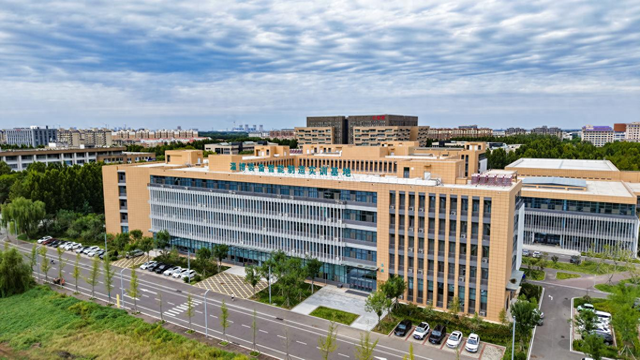
Core Insights - The event "Scientists Meet Investors" aims to bridge the gap between scientific innovation and investment, fostering a more efficient innovation ecosystem in Shaanxi [2][3] - The integration of scientists and investors is seen as crucial for transforming technological achievements into marketable products, emphasizing the importance of collaboration in the innovation chain [2][3] Group 1: Event Overview - The event was co-hosted by Shaanxi Keke Investment Fund, Xi'an Jiaotong University National Technology Transfer Center, and 21st Century Economic Report, with over 70 representatives from universities, venture capital, financial institutions, and tech companies participating [1] - The theme of the event was "Integration, Co-creation, New Momentum," focusing on exploring solutions for the challenges of technology transfer in Shaanxi [1] Group 2: Key Themes and Discussions - The event highlighted the importance of "early, small, and tech-focused" investments in the venture capital industry, with a shift towards investing in the source of technological innovation [2] - A significant statistic shared was that in 2024, 62 key universities in Shaanxi signed 23,000 technology contracts, with a total contract value of 9.7 billion yuan, showcasing the region's potential for technology transfer [2] Group 3: Presentations and Insights - Professor Ding Ning from Xi'an Jiaotong University discussed the development and challenges of large models in AI, emphasizing their broad applications and key challenges such as cost and computational power [3] - Yang Xiangyu from China Merchants Bank presented strategies for the banking sector to focus on technology finance as a means of overcoming challenges posed by narrowing net interest margins [3] Group 4: Dialogue Mechanism - The event featured a multi-layered dialogue mechanism, with discussions on the role of government-guided funds and market-oriented capital in investment mechanisms, risk-sharing, and balancing policy guidance with commercial returns [4][5] - The second round of discussions focused on practical experiences of market-oriented funds, sharing insights on identifying investment opportunities and planning commercialization paths [5] Group 5: Future Directions - The ambition of the event is to create a sustainable ecosystem for technology transfer in Shaanxi, contributing to the construction of an innovative highland in the western region of China [6] - The series of "Scientists Meet Investors" events will continue, aiming to build a bridge between scientific achievements and investment capital [6]
广西南宁兴宁区举办桂籍科技人才创新大赛决赛
Zhong Guo Jin Rong Xin Xi Wang· 2025-10-28 12:48
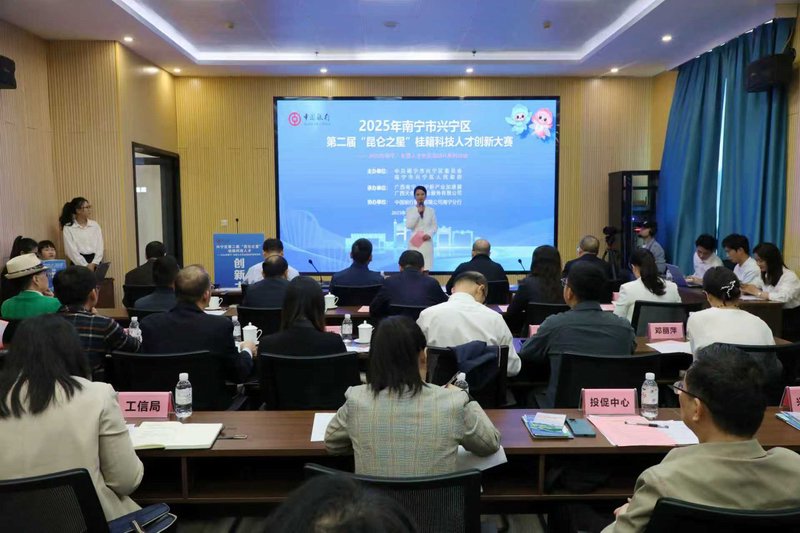
Core Points - The second "Kunlun Star" Innovation Competition for Guangxi Technology Talents was held in Xingning District, Nanning, focusing on various industrial sectors and attracting numerous projects from Guangxi [1][3] - A total of 11 high-quality projects advanced to the finals, contributing to the high-quality economic and social development of Xingning District [1][4] Group 1: Competition Overview - The competition emphasized industries such as artificial intelligence, smart manufacturing, low-altitude economy, new energy, and new consumption, with a focus on technological innovation and market adaptability as core evaluation criteria [4] - The final competition was intense, with awards distributed as follows: 2 first prizes, 2 second prizes, 2 third prizes, and 5 excellence awards [7] Group 2: Support for Winning Projects - Winning projects will receive multiple support policies, including priority for office space in the Xingning New Industrial Accelerator with a two-year rent exemption, and inclusion in the industrial land supply plan for those needing self-built factories [7] - The organizing committee will assist outstanding projects in obtaining seed or angel round financing and facilitate cooperation with large and medium-sized enterprises in the region [7][8] Group 3: Regional Development Initiatives - Xingning District has actively integrated the "technology-industry-finance" cycle, establishing new industrial accelerators and regional platforms to support innovation and project development [3] - The district has successfully incubated several high-quality projects, demonstrating its capability to nurture seed projects into thriving industries, thereby contributing to regional economic development [8]
首善标准筑人才高地 协同之力绘发展新篇
Bei Jing Ri Bao Ke Hu Duan· 2025-10-27 22:09
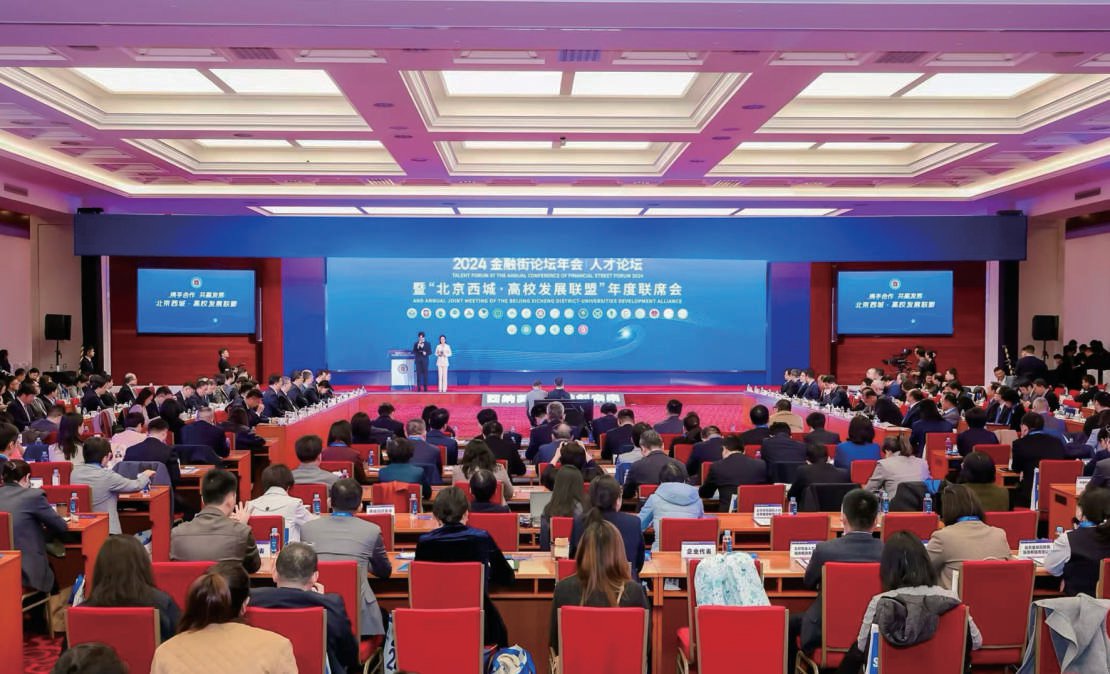
Core Insights - The article emphasizes the importance of education, technology, and talent as foundational elements for building a modern socialist country, highlighting the role of talent in driving high-quality regional development in Xicheng District, Beijing [1] Talent Development Strategy - Xicheng District has surpassed a total talent pool of 1.05 million, with a significant focus on industries such as finance, technology, and culture, which collectively account for 520,000 professionals, showcasing a robust and well-structured talent base [1] - The district implements a comprehensive talent policy system characterized by competitive measures to attract and retain talent, focusing on a "classification guidance, institutional support, and solid guarantees" framework [6][7] Policy Initiatives - The district has introduced several key documents, including the "Implementation Opinions on Strengthening Talent Work" and the "Xirong Plan," which allocates 100 million yuan annually to enhance high-quality development through talent acquisition [7] - A new policy framework, termed "12+10," has been established to promote integrated development across education, technology, and talent, aiming to break down institutional barriers and enhance collaborative innovation [8] Collaborative Platforms - Xicheng District has formed the "Beijing Xicheng University Development Alliance," collaborating with 25 universities to enhance intellectual exchange, internships, and result transformation, resulting in over 150 cooperative achievements [10] - The district is actively engaging in "central-local cooperation" initiatives to create a new model for industry-talent integration, facilitating resource sharing and talent development through various collaborative projects [11] International Engagement - The district is enhancing its global talent pool by hosting international forums and establishing partnerships with overseas talent centers, aiming to attract high-end talent and innovation resources [12] Service Ecosystem - A comprehensive talent service system is being developed to provide a full lifecycle of support for talent, ensuring a conducive environment for professionals to thrive [13][14] - The district is implementing a "talent + industry" service model, establishing a three-tiered talent service mechanism to provide precise support for key enterprises and professionals [15][16] Future Outlook - Xicheng District aims to continuously optimize its talent policies and platforms, enhancing its attractiveness and competitiveness as a destination for top talent and innovative enterprises [17]
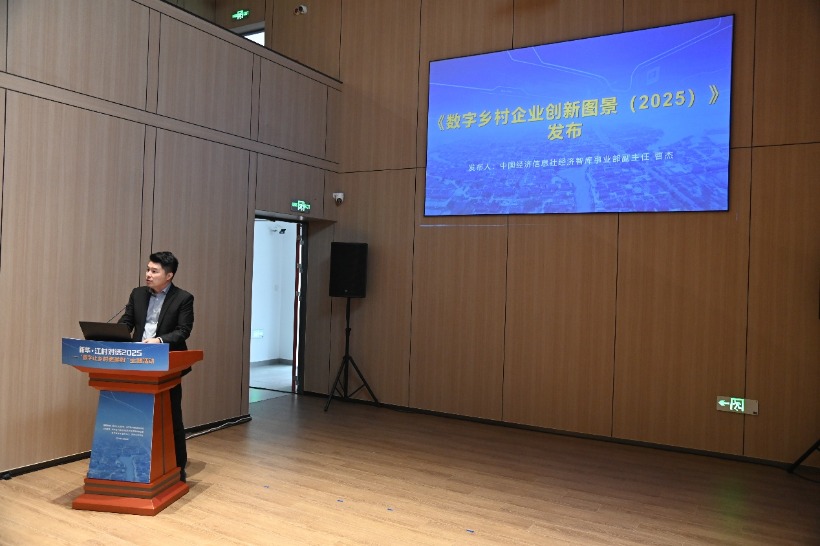
《数字乡村企业创新图景(2025)》发布 首次系统呈现4.9万家数字乡村企业创新全景
Xin Hua Cai Jing· 2025-10-27 08:09
Core Insights - The report titled "Digital Rural Enterprise Innovation Landscape (2025)" was released, highlighting the role of digital economy in rural development through the identification of over 49,000 digital rural enterprises in China [1][2]. Group 1: Report Overview - The report utilizes the "Zhongjing Zhou Tian" digital economic intelligent decision-making system to analyze over 90,000 patents and nearly 50,000 software copyrights related to the digital economy [1]. - It introduces the "Four Chain Integration" analytical framework, categorizing digital rural enterprises into four ecological chains: foundational support industry, data and platform operation, smart agriculture application, and digital governance and public service [2]. Group 2: Industry Characteristics - The innovation landscape of digital rural enterprises shows a structural characteristic of "foundation solidification, data emergence, agriculture leadership, and government driving" [2]. - The foundational support sector has the highest number of enterprises, with significant bidding amounts from operators; the data and platform operation sector exhibits high concentration, indicating an aggregation of data factor industries [2]. Group 3: Regional Distribution - There is a clear gradient development pattern among enterprises, with eastern coastal provinces benefiting from advanced digital infrastructure and mature market economies, leading to significant industrial clustering [6]. Group 4: Enterprise Mapping - The report identifies representative enterprises within the four chains and creates an enterprise map, which collectively forms the industrial backbone of digital rural development, transitioning from "project-driven" to "system operation" [8]. Group 5: Development Models - Three typical cultivation models are summarized: "Niche Champion" focusing on specific fields, "Leading Enterprise" leveraging major companies like Huawei and Alibaba, and "Balanced Ecosystem" emphasizing top-level design and multi-scenario integration [11]. - These models illustrate the critical role of government support in stimulating industrial vitality [11]. Group 6: Future Trends - The report outlines six development trends: systematic integration for comprehensive collaboration, data-driven core engine, deepened applications for agricultural scaling and public welfare, differentiated innovation for regional advantages, sustainable operations for shared mechanisms, and governance upgrades for collaborative symbiosis [11].
南网科技20251023
2025-10-23 15:20
Summary of Nanwang Technology Conference Call Company Overview - **Company**: Nanwang Technology - **Date**: October 23, 2025 Key Points Industry Performance - **Overall Revenue**: In the first half of 2025, Nanwang Technology reported revenue of 1.17 billion yuan, a slight decline year-on-year, but excluding the energy storage segment, other business segments achieved nearly 10% growth [3] - **High Margin Business Growth**: High interest rate and high margin businesses showed significant growth, with all three subsidiaries achieving double-digit revenue growth [3] Energy Storage System Technical Services - **Revenue Decline**: Revenue for energy storage system technical services fell 42% to 330 million yuan, impacted by project fulfillment cycles and margin concessions [4] - **Future Potential**: The company holds over 1 billion yuan in orders, indicating potential recovery in the second half of the year [5] Power Side Testing and Debugging Services - **Revenue Growth**: Revenue for power side testing services increased by 24.53% to 313 million yuan, with a gross margin of 50.8% [6] - **Market Expansion**: Successful market expansion in smart power plants and winning contracts for technical supervision projects in Vietnam [6] Smart Distribution and Monitoring Equipment - **Revenue Performance**: Revenue from smart distribution equipment decreased by 14.87% to 302 million yuan, but gross margin increased by 2.47 percentage points to 37.95% [7] - **Rapid Growth in Monitoring Devices**: Revenue from smart monitoring devices surged by 92.18% to 160 million yuan, with a gross margin of 35.05% [7] Robotics and Drone Business - **Stable Revenue**: Revenue from robotics and drone business grew by 0.36% to 101 million yuan, with drones accounting for nearly 80% of this revenue [8] - **Project Wins**: The company won a 39 million yuan drone framework project with Inner Mongolia Electric Group [8] Strategic Group Integration - **Formation of New Technology Industry Group**: The South Power Grid plans to establish a new technology industry group, transferring control of Nanwang Technology to this group to enhance research and development capabilities [9][10] - **Core Business Focus**: The new group will focus on technology research, industrial development, and technical services, aiming for high-quality development in the energy sector [11] Future Development Plans - **Investment in R&D**: The group aims to invest heavily in new technologies related to energy and power production, with a focus on smart and green technologies over the next 3-5 years [11] - **Market Expansion**: The integration is expected to enhance market expansion capabilities and resource allocation efficiency [12] International Business Development - **Overseas Investments**: The company has made significant strides in overseas markets, including acquisitions in Peru and investments in Southeast Asia [16][17] - **Technology Export**: Future plans include leveraging these investments to export advanced technologies to international markets [17] Role of Power Electronics Technology - **Focus on Power Electronics**: Power electronics technology is a key area of focus, with applications expected to expand significantly in AI data centers [18] Domestic Storage and Testing Business - **Positive Outlook**: The company is optimistic about the domestic energy storage and testing business, with a backlog of nearly 1.2 billion yuan in orders expected to be fulfilled in the second half of the year [19]

厦门推动“两个创新”深度融合 助力产业发展转型升级
Zhong Guo Jing Ji Wang· 2025-10-23 07:25
Core Insights - Xiamen has focused on leveraging technological innovation to drive high-quality economic development over the past five years, implementing a series of initiatives to create a world-class innovation and entrepreneurship ecosystem [1] Group 1: Technological Innovation and Investment - During the "14th Five-Year Plan" period, Xiamen aims to deeply integrate technological and industrial innovation, achieving a systematic enhancement in comprehensive competitiveness [2] - The intensity of R&D expenditure in Xiamen increased from 3.08% in 2020 to 3.46% in 2024, surpassing the national average by 0.77 percentage points, with annual growth in corporate R&D spending exceeding 13% [2] - The number of high-value invention patents per 10,000 people reached 29.5, doubling compared to the end of the "13th Five-Year Plan" [2] Group 2: Innovation Ecosystem Development - Xiamen has established a comprehensive service system for innovation, including new R&D institutions, verification centers, and incubators, with over 2,500 new enterprises and R&D institutions added in core parks [2] - The Xiamen Torch High-tech Zone ranked 14th nationally in the first comprehensive evaluation by the Ministry of Industry and Information Technology [2] Group 3: Strategic Emerging Industries - The total scale of four major pillar industry clusters, including electronic information and machinery, exceeds 20 trillion yuan, while four strategic emerging industries, such as biomedicine and new energy, exceed 500 billion yuan [3] - The output value of strategic emerging industries accounts for over 40% of the total industrial output value, with high-tech manufacturing value-added growing by 18.7% year-on-year from January to August this year [3] Group 4: Policy and Institutional Reforms - Xiamen has deepened institutional reforms, promoting the integration of innovation, industry, finance, and talent, enhancing the vitality of various innovation entities [4] - The city has established a 5 billion yuan venture capital fund for technological innovation and expanded the technology innovation fund to 50 billion yuan, introducing innovative financial products to support enterprise development [4] Group 5: International Collaboration - Xiamen actively integrates into national and global innovation networks, establishing collaboration with 45 institutions from 11 countries, resulting in 138 cooperative projects [4] - The international scientific program on marine negative emissions has gathered 104 institutions from 35 countries, accelerating the aggregation of global innovation resources in Xiamen [4]
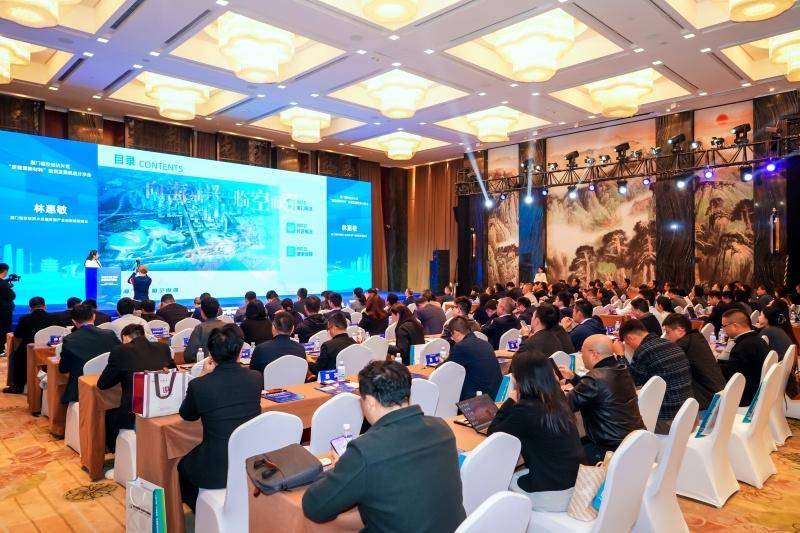
厦门临空经济片区投资发展机遇分享会在武汉举办
Sou Hu Cai Jing· 2025-10-22 10:13
Core Insights - The Xiamen Airport Economic Zone is focusing on developing the "new energy and new materials" industry, aiming to create a high-quality development blueprint under the "dual carbon" goals [1][3] - The zone covers an area of 98.6 square kilometers and is building a "3+2+3" industrial system, with green energy and new materials as one of the three core industrial clusters [3] - A list of application scenarios for new energy and new materials has been released, including 18 opportunities across five categories, such as low-carbon parks and hydrogen energy transportation [3][4] Group 1 - The Xiamen Airport Economic Zone aims to innovate and improve the development ecosystem for the new energy and new materials industry, providing comprehensive support for project investment, research, and talent cultivation [1][3] - The China Energy Engineering Group's Gezhouba Group is keen on leveraging its strengths in energy construction and technology research to deepen strategic cooperation with the Xiamen Airport Economic Zone [3] - The Xiamen University is promoting the commercialization of hydrogen energy through collaborative efforts in technology and research [4] Group 2 - The event highlighted the comprehensive strength and unique advantages of the Xiamen Airport Economic Zone in industrial development, enhancing confidence among participating companies for future cooperation and investment [5] - The zone plans to continue focusing on the new energy and new materials industry, optimizing policy services and expanding application scenarios [4][5] - The event was guided by the Xiamen Airport Economic Zone Command and the China Energy Engineering Group, with the Xiamen Xiangju Investment Technology Development Co., Ltd. as the organizer [5]