
新型举国体制

Search documents
为什么要全链条推动集成电路等重点领域关键核心技术攻关取得决定性突破
Xin Lang Cai Jing· 2025-12-03 13:20
Core Viewpoint - The article emphasizes the importance of overcoming key core technology challenges in critical sectors such as integrated circuits, industrial mother machines, high-end instruments, basic software, advanced materials, and biomanufacturing to ensure national security and promote high-quality economic development [1][5]. Group 1: Importance of Key Core Technologies - Key core technologies are essential for national security and high-quality economic development, necessitating a strong focus on improving the ability to tackle these challenges [1][5]. - Recent advancements have been made in areas like 5G, Beidou navigation, high-speed rail, and nuclear power, but significant gaps remain in integrated circuits and other critical fields that require intensified efforts [1][5]. Group 2: Systematic Approach to Innovation - A systematic and comprehensive approach to deploying key core technology initiatives is crucial for accelerating breakthroughs and shortening innovation cycles [2][6]. - Optimizing the organization of major technological innovations and fostering a collaborative development of innovation forces, resource allocation, and talent is essential for overcoming the current limitations [2][6]. Group 3: Addressing Fundamental Research Gaps - The root cause of the "bottleneck" technology issue lies in inadequate foundational theoretical research, which must be addressed to strengthen the basis for technological innovation and industrial development [3][7]. - Emphasizing original and disruptive innovation is necessary to avoid falling into a cycle of imitation and to secure a competitive edge in the global value chain [3][7]. Group 4: Collaborative Framework for Technology Advancement - A collaborative framework that leverages the advantages of a new type of national system is needed to effectively coordinate government, market, and societal resources in technology research and application [4][7]. - Implementing extraordinary measures to enhance goal orientation and demand-driven approaches will facilitate better collaboration among enterprises, universities, and research institutions [4][7]. Group 5: Incentives and Application of Innovations - Strengthening incentives for researchers to focus on high-quality, original, and disruptive technological innovations aligned with national strategic needs is critical [8]. - Promoting the application of self-innovated products and establishing policies for the first batch of applications will create a virtuous cycle that encourages research and development [9].
焦点访谈丨向着新目标前进:未来五年 打好关键核心技术攻坚战
Yang Shi Xin Wen Ke Hu Duan· 2025-12-02 06:40
Core Viewpoint - The article emphasizes the importance of key core technology breakthroughs in China's "14th Five-Year Plan" and outlines a strategic approach to achieve these breakthroughs through focused efforts in six critical areas [1][3][9]. Group 1: Strategic Focus Areas - The "14th Five-Year Plan" identifies six key areas for technology breakthroughs: integrated circuits, industrial mother machines, high-end instruments, basic software, advanced materials, and biomanufacturing [3][9][21]. - These areas are strategically chosen to address urgent technological challenges and leverage new opportunities in the context of global technological competition [9][11][19]. Group 2: New Approaches and Measures - The plan proposes a "new type of national system" to enhance coordination and resource allocation for technology innovation, ensuring a unified effort across government and market sectors [23][25]. - "Extraordinary measures" will be implemented to overcome existing institutional barriers, focusing on urgent issues and mobilizing all available resources to achieve targeted breakthroughs [25][27]. Group 3: Comprehensive Chain Integration - A "full-chain approach" is advocated, integrating research, technology development, and industrial cultivation to ensure a seamless transition from innovation to market application [27][29]. - The integration of various chains, including industry, innovation, funding, and talent, is crucial for addressing past disconnects and ensuring effective collaboration [29]. Group 4: Investment and Progress - China's R&D investment is projected to exceed 3.6 trillion yuan in 2024, reflecting a 48% increase from 2020, with a focus on strengthening foundational research and innovation capabilities [19][21]. - The country has achieved significant milestones in key technology areas, moving from a position of following to leading in certain sectors, such as the production of ultra-thin steel materials [17][19].

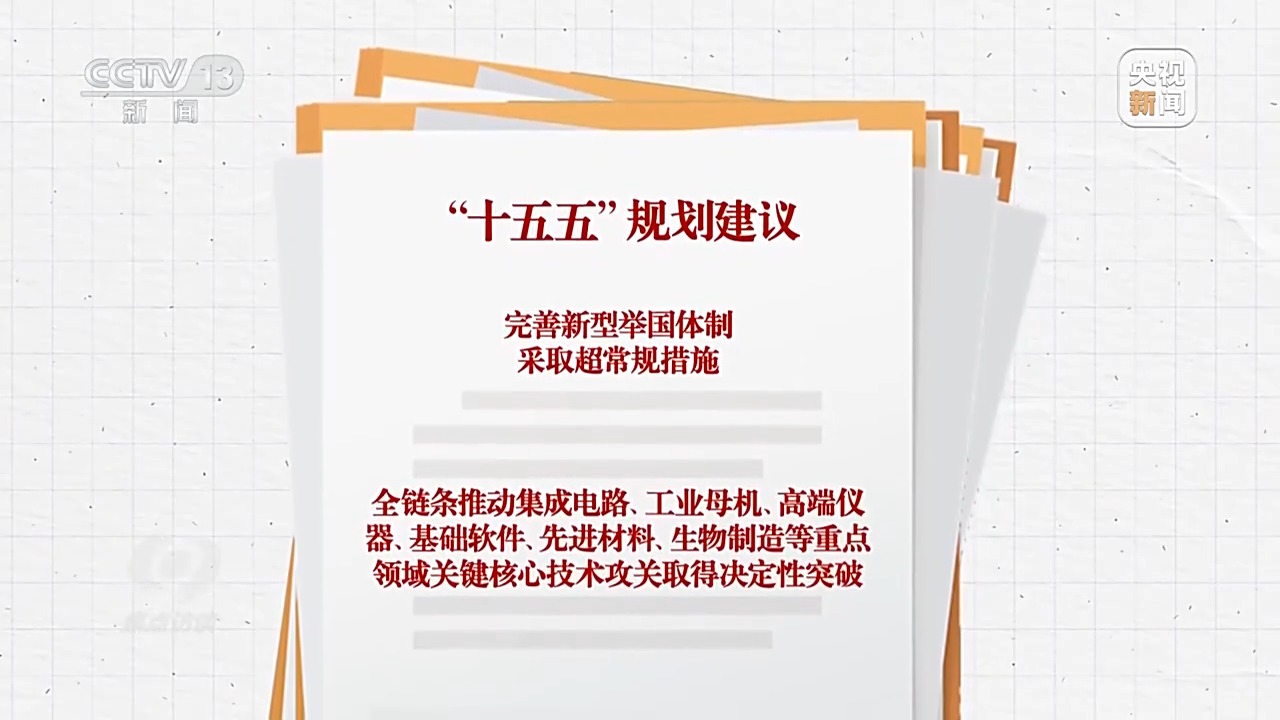
厚实家底支撑核心技术攻关底气 “新提法”“新目标”新在何处?解读↓
Yang Shi Wang· 2025-12-02 04:32
Core Insights - The "14th Five-Year Plan" emphasizes the importance of key core technology breakthroughs, highlighting it as a crucial element for achieving high-quality development in China [1][3][12] - The plan outlines a shift from a broad approach to a more targeted strategy, focusing on six key areas for technological advancement [6][8][19] Summary by Categories Key Areas of Focus - The six major fields identified for concentrated efforts are integrated circuits, industrial mother machines, high-end instruments, basic software, advanced materials, and biomanufacturing [8][9][12] - These areas are critical for overcoming existing technological bottlenecks and seizing new opportunities presented by technological revolutions [9][12] Strategic Approach - The plan introduces a "new proposal" and "new goals" for tackling key core technologies, emphasizing a comprehensive and integrated approach [3][5] - The strategy involves a "new type of national system" that promotes collaboration and resource allocation across various sectors to enhance innovation [19][20] Investment and Resources - By 2024, China's total R&D investment is projected to exceed 3.6 trillion yuan, a 48% increase from 2020, with a research intensity of 2.68%, surpassing the EU average [18] - The plan aims to strengthen both foundational research and the mechanisms that facilitate rapid technological advancement [18][20] Implementation Mechanisms - The strategy calls for "super-normal measures" to break existing constraints and accelerate reforms in technology development [20][21] - A full-chain approach is emphasized, ensuring that every link from research and development to industrial application is effectively integrated [21]
【关注“十五五”规划】前瞻布局未来产业 中国具备禀赋优势
Zheng Quan Shi Bao· 2025-12-01 18:12
Core Viewpoint - The Chinese government has outlined a strategic initiative to proactively layout future industries, focusing on six key areas: quantum technology, biomanufacturing, hydrogen energy and nuclear fusion, brain-computer interfaces, embodied intelligence, and sixth-generation mobile communication. This initiative aims to enhance the country's industrial structure and drive economic growth [1]. Group 1: Future Industry Layout - The strategic layout of future industries is expected to clarify the direction of China's industrial structure and serve as a new pillar for economic growth [1]. - The six core areas identified for future industry development are characterized by their strategic, leading, and disruptive features [1]. Group 2: Advantages of Development - China possesses three unique advantages for developing future industries: a new type of national system for resource concentration, a complete industrial system for technology commercialization, and a vast market for rapid application and iteration of new technologies [1]. - The country is also expected to leverage its technological innovation advantages to support these developments [1]. Group 3: Technological Advancements - In embodied intelligence, China is achieving breakthroughs in both "smart brains" and "strong bodies," with increasing levels of model generalization [2]. - The country has developed leading brain-computer interface technologies, including ultra-flexible, minimally invasive electrodes and dynamic electrodes that can navigate within animal brains [2]. - In biomanufacturing, China leads globally in CAR-T cell therapy and original drug production [2]. - Quantum technology advancements include the "Zuchongzhi No. 3" supercomputer, which is significantly faster than the world's fastest supercomputer, and the "Wukong" quantum computer, which has completed over 710,000 calculations globally [2]. Group 4: Innovation Rankings - According to the Global Innovation Index 2025, China has entered the top ten for the first time, achieving its highest ranking at fourth place [3]. - The Global Key and Emerging Technologies Index 2025 indicates that while the U.S. remains the leading technology power, China ranks second in key technology fields such as semiconductors and artificial intelligence [3]. - China has 24 of the world's top 100 innovation clusters, maintaining its position as the global leader for three consecutive years [3]. Group 5: Policy Initiatives - The National Development and Reform Commission and the Ministry of Industry and Information Technology have issued implementation opinions to promote innovation in future industries, including specific policies for brain-computer interfaces and biomanufacturing [4]. - The State Council has introduced measures to accelerate the cultivation of application scenarios across various fields, establishing a comprehensive ecosystem for future industries [4]. Group 6: Industry Growth - Approximately 350 companies related to brain-computer interfaces have emerged in China, creating a complete industrial chain from core components to end applications [5]. - China has established the largest solar panel and flat screen film production bases globally, along with 23 biomanufacturing bases [5]. - With over 300 billion yuan allocated to quantum technology and substantial local funding, major provinces are developing numerous quantum technology application scenarios [5]. - The country has built 4.55 million 5G base stations, indicating a strong push towards future industries characterized by national strategic guidance and large-scale market applications [5].
焦点访谈|未来五年,打好关键核心技术攻坚战
Yang Shi Wang· 2025-12-01 13:23
Core Insights - The article emphasizes the importance of tackling key core technologies as a strategic priority for China's high-quality development, particularly highlighted in the "14th Five-Year Plan" [1][4][10] - The focus will be on six critical areas: integrated circuits, industrial mother machines, high-end instruments, basic software, advanced materials, and biomanufacturing, which are deemed essential for overcoming technological bottlenecks and seizing new opportunities [6][8][14] Group 1: Strategic Framework - The "14th Five-Year Plan" proposes a new approach to technology development, emphasizing a comprehensive and targeted strategy rather than a broad, unfocused one [4][6] - The plan aims to establish a "new type of national system" that coordinates resources across government and market sectors to enhance innovation capabilities [16][18] - The strategy includes "extraordinary measures" to break existing barriers and accelerate reforms necessary for technological breakthroughs [18][20] Group 2: Implementation Tactics - The focus on "full-chain promotion" ensures that every aspect of the technology development process, from research to industrialization, is integrated and efficient [20] - The article highlights the need for a robust support system that combines funding, talent, and industry collaboration to facilitate rapid advancements in technology [12][14] - The commitment to investing in foundational research and creating a conducive environment for innovation is underscored, with projected R&D spending exceeding 3.6 trillion yuan by 2024, a 48% increase from 2020 [14] Group 3: Future Vision - The envisioned future includes advanced materials and technologies that enhance everyday life, such as smart buildings and sustainable food production methods [22] - The successful execution of the outlined strategies is expected to lead to significant advancements in various sectors, ultimately transforming the technological landscape of China [10][22]
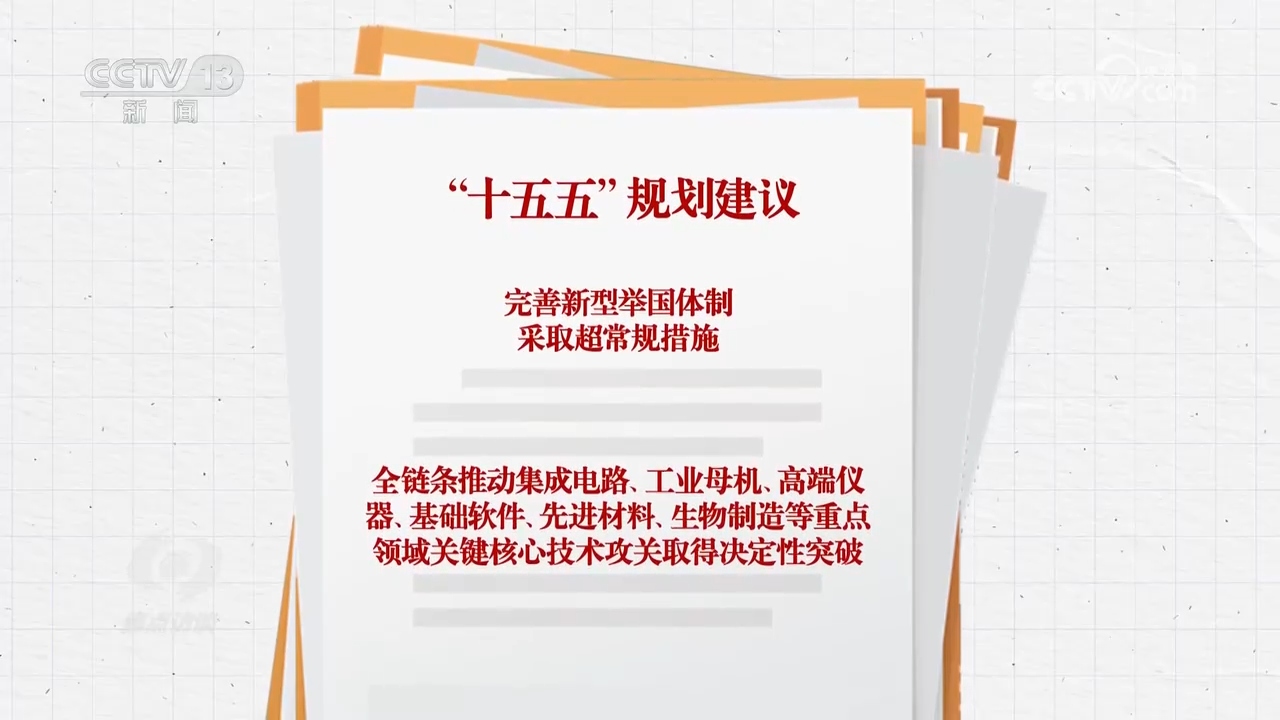
构建教育科技人才一体化发展新生态
Ren Min Ri Bao· 2025-11-30 22:20
Core Viewpoint - Education, technology, and talent are foundational and strategic supports for China's modernization, emphasizing the need for integrated development in these areas to enhance innovation and competitiveness on a global scale [1][2][3]. Group 1: Strategic Importance - The central government has prioritized education, technology, and talent as key strategic areas since the 18th National Congress, implementing various strategies to promote their integrated development [2][3]. - There are existing issues such as the disconnect between education supply and industry demand, and the need for systemic reforms to address these challenges [2][3]. Group 2: Systematic Reform - High-level coordination is essential to break down institutional barriers and drive systemic change, as highlighted by the establishment of cross-departmental coordination mechanisms [3]. - The need for a unified approach in planning and implementing education, technology, and talent development is emphasized to avoid resource wastage and ensure collaborative progress towards innovation goals [3]. Group 3: Innovation Mechanisms - The integration of innovation elements such as knowledge, technology, talent, and funding is crucial for fostering a productive cycle of innovation [4]. - The importance of aligning research projects with industry needs and talent development goals is stressed, along with the need for reforms in project management to enhance the effectiveness of technology transfer [4]. Group 4: Evaluation and Contribution - Establishing a talent evaluation system that focuses on innovation value, capability, and contribution is necessary to guide the integrated development of education, technology, and talent [5]. - The reform of evaluation mechanisms should promote collaboration and value creation, ensuring that educational and research institutions are aligned with national strategic needs [5]. Group 5: Collaborative Innovation - Building collaborative innovation platforms and ecosystems is essential for enhancing the quality and efficiency of innovation efforts [6]. - The example of the Guangdong-Hong Kong-Macao Greater Bay Area illustrates the importance of a comprehensive innovation ecosystem that integrates various elements of research, technology, and talent [6].
学习规划建议每日问答丨为什么要全链条推动集成电路、工业母机、高端仪器、基础软件、先进材料、生物制造等重点领域关键核心技术攻关取得决定性突破
Xin Hua She· 2025-11-29 03:30
Core Viewpoint - The article emphasizes the importance of overcoming "bottleneck" technologies in key areas such as integrated circuits, industrial mother machines, high-end instruments, basic software, advanced materials, and biomanufacturing to ensure national security and promote high-quality economic development [1][2][3]. Group 1: Importance of Key Core Technologies - Key core technologies are crucial for national security and high-quality economic development, necessitating enhanced capabilities in technology breakthroughs [1]. - Accelerating breakthroughs in these areas is essential for achieving competitive advantages and ensuring self-reliance in strategic industries [2]. Group 2: Challenges in Fundamental Research - The root cause of "bottleneck" technology issues lies in inadequate foundational theoretical research, which must be addressed to strengthen the basis for technological innovation and industrial development [3]. - There is a need to focus on original and disruptive innovations rather than merely imitative ones to avoid falling into a cycle of "catch-up" [3]. Group 3: Collaborative Framework for Technology Advancement - A collaborative framework is necessary to leverage the advantages of a new type of national system, integrating government, market, and social forces to enhance research and development efforts [4]. - Emphasizing mission-oriented approaches and incentivizing researchers to focus on national strategic needs will drive high-quality and original technological innovations [4].
将大规模AI算力搬上太空!北京加速布局太空数据中心,建设分为3阶段
Zhong Guo Xin Wen Wang· 2025-11-28 01:05
Core Viewpoint - The conference on the construction of space data centers aims to strategically position Beijing in the emerging field of space-based computing and commercial aerospace development, focusing on the establishment of a space data center innovation consortium to address key challenges in construction and application [1][6]. Group 1: Construction Phases - The construction of space data centers is planned in three phases: 1. From 2025 to 2027, focus on overcoming key technologies related to energy and heat dissipation, with a target power of 200 kW and a computing scale of 1000 POPS [2]. 2. From 2028 to 2030, aim to reduce construction and operational costs while achieving the "ground-based computing in space" application goal [2]. 3. From 2031 to 2035, large-scale satellite production and networking will be implemented to establish a massive space data center [2]. Group 2: Technological and Industrial Integration - The innovation consortium has successfully developed the first generation experimental satellite "Chenguang No. 1" and is preparing for its launch [5]. - The consortium's main tasks include accelerating the development of computing constellations and overcoming key technological bottlenecks in satellite development and application [4]. - The initiative aims to integrate space data centers with cutting-edge technologies such as artificial intelligence and new materials, fostering new business models in space information applications [4]. Group 3: Support and Collaboration - A working mechanism for the space data center innovation consortium has been established, with 24 enterprises and research institutions committing to support the initiative [6]. - The space data center is viewed as a crucial information infrastructure that could lead to a new industrial chain combining reusable rockets, computing constellations, and data application scenarios [6].

新华时评:航天员安全往返天地间,中国载人航天值得期待!
Xin Hua She· 2025-11-26 02:53
Core Points - The successful launch of the Shenzhou-22 spacecraft on November 25, 2023, demonstrates China's capability in ensuring astronaut safety and effective response to emergencies in space exploration [1][2] - The incident involving the Shenzhou-20 spacecraft, which was delayed due to a suspected collision with space debris, highlights the importance of safety protocols and emergency mechanisms in China's manned space program [1][2] Group 1: Launch and Safety Measures - The Shenzhou-22 spacecraft will serve as the return vehicle for the Shenzhou-21 astronaut crew, showcasing the operational readiness of China's space program [1] - The quick activation of emergency protocols during the Shenzhou-20 incident reflects the technical expertise and preparedness of China's manned space program [1][2] Group 2: Collaborative Efforts and Spirit - The successful completion of risk assessments, decision-making, and resource mobilization illustrates the collaborative spirit and resilience of the teams involved in China's manned space missions [2] - The commitment to rigorous planning, quality control, and management practices is embedded in the culture of China's space personnel, contributing to the success of their missions [2] Group 3: Strategic Preparedness - The implementation of a "one launch, one backup" strategy since the Shenzhou-12 mission ensures that backup rockets and spacecraft are ready for immediate deployment in case of emergencies [2] - The recent mission validates the scientific and reliable nature of this strategy, reinforcing China's confidence in managing risks associated with space exploration [2]
神舟二十二号飞船载货飞赴中国空间站
Ren Min Wang· 2025-11-26 01:25
Core Points - China successfully launched the Shenzhou-22 spacecraft on November 25, marking the first emergency launch mission in its manned space program [1][2] - The Shenzhou-22 spacecraft is unmanned and carries supplies and equipment for the Shenzhou-21 astronaut crew, including food, medicine, and a device to address a crack in the Shenzhou-20 spacecraft's window [1] - The launch demonstrates the advantages of China's new national system and validates the "one launch, one backup" strategy for space station missions [2] Summary by Sections Launch Details - The Shenzhou-22 spacecraft was launched at 12:11 PM on November 25 after the Shenzhou-20 mission was delayed due to a suspected collision with space debris [1] - The Long March 2F Yao-22 rocket and Shenzhou-22 spacecraft were put into a launch-ready state within 16 days following the decision to implement an emergency launch [1] Mission Objectives - The Shenzhou-22 spacecraft successfully docked with the Tianhe core module of the space station at 3:50 PM on the same day [1] - The spacecraft will serve as the return vehicle for the Shenzhou-21 astronaut crew [1] Operational Insights - The Shenzhou-21 astronaut crew is currently in good condition and completing their planned tasks in orbit, while the Shenzhou-20 spacecraft will continue to conduct related experiments [2] - The mission highlights the effectiveness of rapid response and emergency management capabilities within China's space engineering [2]