
消费者权益保护

Search documents
“泰山会定制”“茅台总工亲调”?直播间卖的“高端”白酒身份成谜!
Sou Hu Cai Jing· 2026-01-31 09:55
近日 有消费者向 《中国消费者报》3·15消费者之声 全媒体互动平台反映 有直播间推销的白酒 信息公示不全或不公示 记者调查发现 一些直播间在介绍白酒时 有的店铺甚至连资质都看不清 宣称秘酿白酒 对生产厂家、生产地址等 关键信息避而不谈 商品信息集体隐身 近日,《中国消费者报》记者调查发现,在多个白酒直播间内,一款号称"为顶级富豪圈子'泰山会'定制"的秘酿白酒,关键信息在宣传、详情页乃至客服回 应中均被隐藏。 1月6日19时14分,在"周雨霏"直播间内,主播推销一款"泰山会秘酿"白酒,并展示了印着马云、史玉柱、马化腾和王石等名人照片的资料,称这款酒是2008 年专门为"泰山会"定制,由茅台科研所技术总工程师李明英亲调,还特别强调李明英是"茅台第一任厂长李兴发的女儿,现任茅台的总工程师"。 然而,记者在其商品链接中发现,产品参数中品牌为"ZHIDAO/至道",产品名称为"泰山会秘酿",生产企业名称、品质认证等信息均未明确标注,商品详情 图片中也没有实物酒的相关信息。该商品来自"悦香樽名酒专营店",经营主体为常州悦香樽酒业有限公司。 | 产品参数 | | | --- | --- | | 香型 | 酱香型 | | ...


聚焦民生关切与产业升级 一批国家标准2月1日正式施行
Xin Lang Cai Jing· 2026-01-31 09:10
Core Points - A series of important national standards will be implemented starting February 1, aimed at guiding and regulating the development of emerging and future industries, promoting the application of results and standards, protecting consumer rights, and ensuring public safety [1] Group 1: Software and Communication Standards - The Software Process Capability Maturity Model (GB/T 45989—2025) establishes a framework for software process capability, enhancing management levels and promoting the sustainable development of the software industry in China [2] - The 5G Mobile Communication Network Security Technical Requirements (GB/T 46462—2025) set forth security architecture and requirements for access, network security, user privacy protection, and safety services, enhancing communication security capabilities [3] Group 2: Energy and Technology Standards - The Energy Metering Equipment Allocation and Management Guidelines (GB 17167—2025) outline mandatory requirements for energy metering equipment, aiming to improve energy management and economic efficiency in energy-consuming units [4] - The Guidelines for the Transformation of Scientific and Technological Achievements into Standards (GB/T 33450—2025) provide guidance for analyzing and assessing the feasibility of transforming technological achievements into standards, promoting integration with innovation [5] Group 3: Educational and Health Standards - The National Standard for Student Physical Health Testing Equipment (GB/T 19851.12—2025) defines requirements and testing methods for physical health testing equipment, ensuring quality and safety in school sports equipment [6] - The General Technical Requirements for Student Nap Desks and Chairs (GB/T 46016—2025) establish standards for nap furniture in schools, addressing the needs of non-boarding students and promoting their health [7] Group 4: Consumer and Safety Standards - The Guidelines for the Design of Elderly Furniture (GB/T 46015—2025) provide design principles and considerations for furniture aimed at elderly users, enhancing their quality of life and safety [8] - The Barcode Symbol Placement Requirements (GB/T 14257—2025) standardize barcode placement on products, improving data collection efficiency in the supply chain [10] - The Consumer Experience Center Construction and Service Guidelines (GB/T 46705—2025) and the Comparative Testing Requirements for Consumer Goods (GB/T 46708—2025) aim to enhance product quality and service levels through objective evaluations [11] - The Elevator Safety Requirements (GB/T 24803.2—2025) establish safety parameters for elevators, providing a technical basis for safety evaluations [12] - The Basic Requirements for Earthquake Rescue Teams (GB/T 46578—2025) outline capabilities and training requirements for rescue teams, improving disaster response effectiveness [13]
盒马买百合被配送成水仙,误食中毒进急诊 专家:极端情况会危及生命
Xin Lang Cai Jing· 2026-01-28 01:57
Core Viewpoint - A serious incident occurred when a customer received toxic daffodil bulbs instead of fresh lilies from Hema, leading to food poisoning of a 71-year-old and a 12-year-old, requiring medical attention [1][21][23]. Group 1: Incident Details - The customer ordered fresh lilies through the Hema app, but received daffodil bulbs, which are toxic and resemble lilies [4][5]. - The packaging of the daffodil bulbs was similar to that of fresh lilies, with the "daffodil" label being inconspicuous [5][25]. - After consuming the soup made with the daffodil bulbs, both the mother and child exhibited symptoms of poisoning, including severe vomiting and abdominal pain [11][31]. Group 2: Medical Response - The mother and child were taken to a community hospital where their symptoms were initially misdiagnosed as gastroenteritis [9][29]. - Upon realizing the mix-up, they sought further medical help at specialized hospitals, where it was confirmed that the toxins had already been absorbed due to the delay in treatment [11][33]. - The child was treated with activated charcoal to reduce toxin absorption, as gastric lavage was ineffective after six hours [13][33]. Group 3: Company Response - Hema established a special team to handle the incident and expressed a desire to reach a private settlement with the affected family [17][36]. - The company acknowledged the error was due to the similarity in packaging and stated that the sorting staff would not face immediate disciplinary action [17][36]. - Hema has initiated a nationwide review and corrective measures to prevent similar incidents in the future [17][37]. Group 4: Legal and Consumer Rights - The affected family is considering legal action to protect their rights, citing the lack of timely response from Hema after the incident [15][36]. - Legal experts indicated that Hema, as an e-commerce platform, bears responsibility for ensuring the safety of the products it sells [19][39]. - The family has proposed a compensation plan covering medical expenses and potential future costs related to recovery and emotional distress [16][36].
平台售票应少点搭售套路
Jing Ji Ri Bao· 2026-01-28 00:04
这种乱象的滋生,与在线旅游平台的盈利模式密切相关。火车票、机票业务受众广、流量大,是平 台为酒店、旅游套餐等高利润业务引流的重要抓手。但在线旅游平台并不具备火车票和机票的独立定价 权,单纯售票利润微薄,于是通过搭售增值服务进行二次收费,就成了平台提高单客价值的捷径。这种 短视行为,看似能博取一时利益,实则透支了平台信誉,损害了行业生态。 在线旅游平台追求盈利无可厚非,但前提是必须坚守底线,恪守法律法规与行业准则,充分保障消 费者的知情权与选择权。平台更应将眼光放长远,摒弃短期逐利思维,学会站在用户的角度思考问题。 与其靠套路赚快钱,不如以优质的产品和服务作为核心竞争力,主动打造透明化、规范化的交易环境, 更好地留住用户。 此外,监管部门应进一步加强对平台的约束,尽快完善相关认定标准与处罚机制,消除监管盲区, 同时强化常态化监管和精准执法力度,加大对违规平台的查处和曝光力度,让"打擦边球"的违规行为无 处遁形。消费者也应增强防范意识,下单时不被"最低价""超值"等噱头迷惑,支付前仔细核对费用明 细、检查是否有未发现的增值服务。一旦误购增值服务,要及时向平台客服与市场监管部门投诉维权。 春运即将拉开大幕,在线旅游 ...
退货后不给退款,亚马逊拿出10亿美元和解集体诉讼
Sou Hu Cai Jing· 2026-01-27 15:36
Core Points - Amazon is proposing a settlement plan worth over $1 billion to address claims regarding mishandled returns [1][3] - The settlement includes $600 million in refunds and an additional $309.5 million to affected customers [1][3] Group 1: Lawsuit Details - The class action lawsuit was initially filed in 2023, alleging that Amazon failed to issue refunds for returned items and sometimes charged customers multiple times for returns [3] - The lawsuit claims that Amazon was aware of these return issues, leading to significant financial losses for consumers [3] - Amazon has already begun issuing refunds to customers who claimed they did not receive their return refunds [3] Group 2: Settlement Agreement - In addition to the compensation, Amazon has agreed to invest $363 million to improve its return and refund processes, while denying any wrongdoing [3] - The settlement agreement states that the economic compensation may provide full restitution plus interest to each member of the class action [3] - The proposed settlement is pending approval from U.S. District Court Judge Jamal Whitehead [3] Group 3: Additional Legal Issues - Apart from this settlement, Amazon is also required to pay $2.5 billion to resolve a lawsuit filed by the Federal Trade Commission (FTC) regarding misleading Prime membership registrations [3] - Affected customers from the FTC case can now submit claims for compensation [3]


推动高质量发展 今年北京拟制定人工智能产业发展条例
Zhong Guo Xin Wen Wang· 2026-01-27 12:28
Group 1 - Beijing plans to formulate regulations for the development of the artificial intelligence industry as part of its legislative agenda for 2026, which includes 36 legislative topics [1][3] - The legislative agenda aims to support high-quality development in the capital, with a focus on various sectors including private economy and urban governance [3] - The city will also conduct research and discussions on regulations related to market competition, data management, and agricultural technology [3] Group 2 - The Beijing Municipal People's Congress is set to draft regulations for the construction of the Beijing International Commercial Arbitration Center to enhance the city's role in international dispute resolution [2] - Other proposed regulations include those for the protection of cultural heritage sites like the Great Wall and the central axis of Beijing, as well as environmental initiatives such as renewable energy development [2] - The legislative efforts also aim to address urban governance issues, including noise pollution and the management of non-motorized vehicles [2]
湖南去年为消费者挽回经济损失3300余万元
Xin Lang Cai Jing· 2026-01-27 08:30
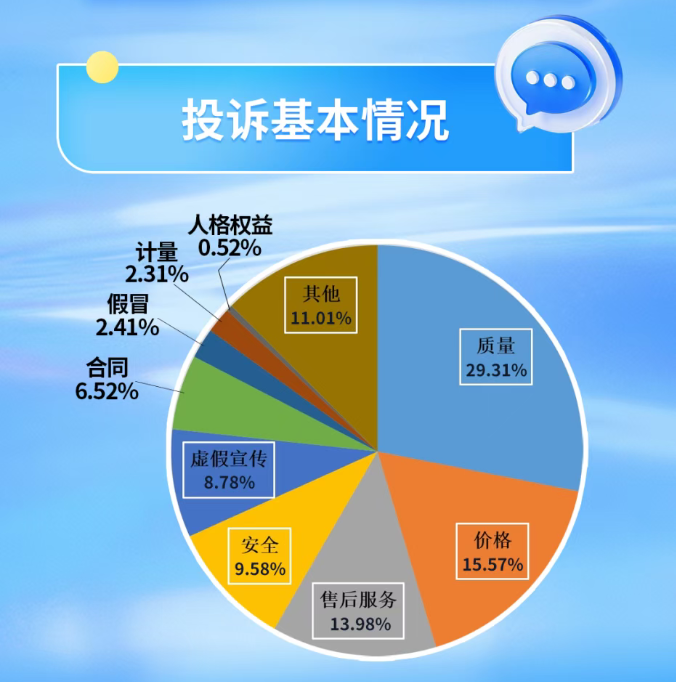
Group 1 - In 2025, the Hunan Consumer Protection Committee received a total of 40,511 consumer complaints, recovering direct economic losses of 33.53 million yuan, which helped maintain market order and boost consumer confidence [1] - Quality-related complaints accounted for nearly 30% of total complaints, with 11,874 cases reported, representing 29.31% of the total, an increase of 0.55% from the previous year [3] - Complaints regarding false advertising and pricing issues also saw increases, with false advertising complaints rising by 1.34% and pricing complaints by 0.45%, indicating strong consumer concerns about transparency and fairness [4] Group 2 - Food-related complaints were the most prevalent, with 9,233 cases, making up 35.5% of total product complaints, highlighting ongoing issues with food quality, safety, and labeling [6] - Complaints about daily necessities and clothing also ranked high, with 3,642 complaints about daily goods (14.00%) and 3,040 about clothing and footwear (11.69%), primarily concerning product quality and return difficulties [6] - Public utility service complaints increased significantly, with 1,031 cases reported, a 69.02% rise from the previous year, indicating a growing need for regulation in service quality and pricing in public utilities [8]
武汉硚口区通报“3家水产经营户销售鱼类产品缺斤少两”:立案调查,并对市场主办方约谈
Xin Lang Cai Jing· 2026-01-26 11:45
Group 1 - The report highlights consumer complaints regarding three seafood vendors in the Pacific Fresh Market for selling fish products with insufficient weight [1] - The regulatory authority has initiated investigations against the three vendors and has held discussions with the market organizer to enforce accountability and improve internal management [1] - The authority emphasizes a zero-tolerance policy towards violations of consumer rights and commits to strict legal actions upon verification of such practices [1]
践行“金融为民”,和谐健康保险全方位筑牢消费者权益保护防线
Hua Xia Shi Bao· 2026-01-26 02:17
Core Viewpoint - Harmony Health Insurance emphasizes consumer rights protection as a fundamental aspect of its high-quality development, aiming to provide superior, transparent, and efficient financial services while ensuring the safeguarding of consumer rights [1][2]. Group 1: Consumer Rights Protection - The company integrates consumer rights protection into its core values, focusing on improving systems, mechanisms, and educational outreach to enhance awareness and execution of consumer protection initiatives among all employees [1]. - Harmony Health Insurance has established a comprehensive consumer rights protection system through top-level governance, institutional improvement, innovative service models, and extensive public education [1]. Group 2: Service Enhancement - The company has upgraded its services for elderly clients by providing direct access to customer service representatives and a "senior mode" on its official app, addressing the needs of this demographic [2]. - For individuals with disabilities, Harmony Health Insurance has improved service processes, ensuring all branches are equipped with accessible facilities and offering home service options [2]. - The company has introduced a dedicated insurance application process for foreign clients, breaking down barriers to cross-border services [2]. Group 3: Financial Literacy and Community Engagement - Harmony Health Insurance has launched a "Customer Service Festival" to enhance public financial literacy, focusing on consumer rights protection through immersive educational activities [2]. - The company aims to create a collaborative atmosphere for consumer rights education, engaging the entire society in these initiatives [2]. Group 4: Future Commitment - The company plans to continue its commitment to consumer protection by deepening its practices and ensuring that financial services are more compassionate and rights protection is more robust [2].
我省消协系统纠纷和解成功率居全国首位
Xin Lang Cai Jing· 2026-01-25 23:27
Core Insights - The provincial consumer association has achieved significant results in optimizing the consumption environment and enhancing consumer protection through various initiatives in the past year [1] Group 1: Consumer Complaints and Resolutions - The provincial consumer association received 178,800 complaints, representing a year-on-year increase of 25.99% [1] - The total amount of losses recovered for consumers reached 31.5928 million yuan [1] - The success rate of dispute resolution within the consumer association system was 65.87%, ranking first in the nation [1] Group 2: Consumer Events and Participation - The "3·15 Golden Autumn Shopping Festival" was successfully held, covering over 10 industries including tourism, retail, and e-commerce, with participation from more than 2,600 business entities [1] - The event benefited approximately 15.7034 million consumers [1] Group 3: Initiatives and Future Plans - The provincial consumer association has been actively promoting the governance of excessive packaging, issuing over 400 related warnings and conducting 387 promotional activities [1] - In the current year, the association plans to focus on six key areas: creating a safe consumption environment, legal empowerment, efficiency enhancement, education and guidance, collaborative governance, and organizational development [1]