AI基础设施

Search documents
达沃斯AI论战 科技大佬争论背后 中国力量改写全球格局
2 1 Shi Ji Jing Ji Bao Dao· 2026-01-26 23:12
当世界目光聚焦于瑞士的冰雪小镇,一场关乎未来命运的对话正在激烈上演。2026年1月19日至1月23 日,以"对话的精神"为主题的世界经济论坛于达沃斯召开,汇聚了来自130多个国家的近3000名政商领 袖。 在这场全球顶级思想盛宴中,人工智能毫无意外地占据了舞台重要一角。 论坛之上,西方科技巨头的认知呈现鲜明撕裂:一面是以微软、谷歌掌舵人为代表的"技术乌托邦"信 念,另一面则是如Anthropic、Palantir等掌门人对失业潮与社会动荡的严峻预警。 上述高层级的观点对立,凸显了AI革命进程中的巨大不确定性。然而,更关键的破局变量已然出现 ——中国AI力量的加速崛起,正在成为改写全球游戏规则的关键因子。 AI是泡沫还是未来引擎? 世界经济论坛上,一个根本性问题被反复提及:当前如火如荼的AI浪潮,究竟是一场坚实的革命,还 是一个危险的泡沫?海外科技领袖们就此展开了激烈交锋。 悲观与警示的声音不容忽视。OpenAI董事会主席Bret Taylor直指,AI"很可能"是泡沫,大量"聪明 钱"与"盲目资金"正涌入技术栈的每一层,催生泡沫膨胀。亚马逊CEO安迪·贾西同样警告存在泡沫风 险,他指出模型商与基础设施提供商之 ...
高盛最新行业报告显示,DDR4现货价较合约价暴涨172%
Sou Hu Cai Jing· 2026-01-26 09:48
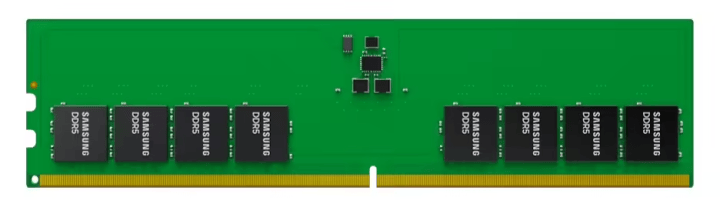
Core Viewpoint - The current DRAM market is experiencing significant price discrepancies between spot and contract prices, with DDR4 spot prices soaring 172% above contract prices and DDR5 showing a 76% difference, indicating a severe deviation from market supply and demand fundamentals. Goldman Sachs predicts a substantial correction in contract prices to align with market realities [1][3]. Supply and Demand Dynamics - The imbalance between supply and demand is exacerbating the price differentiation trend. On the supply side, the construction and production cycle limitations of wafer fabs will result in very limited new DRAM capacity additions by 2026, with further reductions expected in the DDR4 segment, indicating a clear contraction in supply [3]. - On the demand side, there is a sustained high demand driven by the accelerated upgrade of AI infrastructure, which is expanding storage units from single servers to rack systems, significantly increasing overall DRAM demand and widening the supply gap [3]. Market Expectations - Goldman Sachs notes that downstream end customers are gradually recognizing the expectation of a significant price increase for memory in the first quarter of 2026, which solidifies the market foundation for subsequent contract price adjustments [3]. - The ongoing price gap correction and anticipated price increases may have a cascading effect on memory manufacturers' revenues and downstream electronic device manufacturing costs, making this trend crucial for the entire industry to monitor closely [3].

铜:多空因素交织,高位持续拉锯
Ning Zheng Qi Huo· 2026-01-26 09:32
Report Summary 1. Report Industry Investment Rating No relevant content provided. 2. Core View of the Report - Last week, copper prices continued to fluctuate at high levels, with a mix of bullish and bearish factors on the macro and fundamental fronts. The Greenland incident boosted market risk - aversion, and good US employment and inflation data paused the rate - cut expectations. Bond market selling pressured the US dollar, which supported copper prices. On the supply side, strikes in Chilean mines led to production halts, and smelting profits were squeezed, providing bottom - line support for copper prices. On the demand side, there was a clear divergence between "strong expectations" and "weak reality." High prices and the pre - Spring Festival off - season led to weak downstream transactions, but AI infrastructure offers potential for future copper demand. Currently, accumulated visible inventories and weak spot transactions will pressure copper prices, while the short - term resonance of the metal sector has a positive impact. Copper prices are expected to maintain a high - level oscillation pattern. The key turning point is the marginal improvement of the "weak reality," and once long - term expectations turn into real demand, copper prices may open up new upside space [2]. 3. Summary by Related Catalogs Market Review and Outlook - The copper market was affected by multiple factors last week. Macro factors included the Greenland incident, US economic data, and the performance of the bond market. Supply - side factors were the ongoing strikes in Chilean mines and the pressure on smelting profits. Demand - side factors showed a gap between expectations and reality. The market is expected to remain in a high - level oscillation with a potential for an upward breakthrough when demand improves [2]. Key Concerns - The report suggests paying attention to the latest Sino - US economic data and downstream demand changes [3]. Weekly Changes in Fundamental Data | Indicator | Unit | This Week | Last Week | Weekly Change | Weekly Change Rate | Frequency | | --- | --- | --- | --- | --- | --- | --- | | Electrolytic copper price (≥99.95%): Shanghai | Yuan/ton | 100680 | 101770 | - 1090 | - 1.07% | Weekly | | Electrolytic copper premium/discount (≥99.95%): Shanghai | Yuan/ton | - 180 | - 110 | - 70 | - 63.64% | Weekly | | Clean copper concentrate forward spot composite index (TC) | US dollars/dry ton | - 49.8 | - 46.4 | - 3.4 | - 7.33% | Weekly | | Oxygen - free copper rod price | Yuan/ton | 101810 | 102770 | - 960 | - 0.93% | Weekly | | LME copper inventory | Tons | 171700 | 143575 | 28125 | 19.59% | Weekly | | SHFE copper inventory | Tons | 225937 | 213515 | 12422 | 5.82% | Weekly | | COMEX copper inventory | Short tons | 562605 | 542914 | 19691 | 3.63% | Weekly | [3] Other Analyses - The report also includes analyses of the futures market, supply, demand, and inventory, with corresponding data charts. However, specific data and trends from these charts are not elaborated in the text [5][11][13][21].
澜起科技通过港交所聆讯 位居全球最大的内存互连芯片供应商
Zhi Tong Cai Jing· 2026-01-26 09:30
Core Viewpoint - 澜起科技 is set to become the world's largest memory interconnect chip supplier by revenue in 2024, with a market share of 36.8% according to Frost & Sullivan [1] Group 1: Company Overview - 澜起科技 is a leading fabless integrated circuit design company focused on providing innovative, reliable, and energy-efficient interconnect solutions for cloud computing and AI infrastructure [3] - The company offers a full range of memory interface chips from DDR2 to DDR5, including supporting chips like SPD, temperature sensors, and power management ICs [3][4] - 澜起科技 has established a significant first-mover advantage in the memory interconnect field by setting and leading industry standards, being a member of the JEDEC board, and contributing to the development of international standards for DDR5RCD, MDB, and CKD chips [4] Group 2: Product Lines - The company has two main product lines: interconnect chips and津逮 products, with interconnect chips including memory interface chips, PCIe/CXL interconnect chips, and clock chips [4] - 澜起科技 is one of the two global providers of PCIe Retimer and the first to launch CXL MXC chips, expanding its product portfolio to include innovative Ethernet and optical interconnect solutions [5] Group 3: Financial Performance - For the fiscal years 2022 to 2025, 澜起科技 reported revenues of 3.672 billion, 2.286 billion, 3.639 billion, and 4.058 billion RMB respectively, with profits of 1.299 billion, 0.451 billion, 1.341 billion, and 1.576 billion RMB for the same periods [5][6] - The company’s revenue and profit are expected to show significant growth, with a projected revenue of 4.058 billion RMB for the nine months ending September 30, 2025 [6]

澜起科技股份有限公司(06809) - 聆讯后资料集(第一次修订版)
2026-01-25 16:00
香港聯合交易所有限公司與證券及期貨事務監察委員會對本聆訊後資料集的內容概不負責,對其準確性或 完整性亦不發表任何意見,並明確表示概不就因本聆訊後資料集全部或任何部分內容而產生或因倚賴該等 內容而引致的任何損失承擔任何責任。 的聆訊後資料集 警告 本聆訊後資料集乃根據香港聯合交易所有限公司(「聯交所」)與證券及期貨事務監察委員會(「證監會」)的 要求而刊發,僅用作提供資訊予香港公眾人士。 本聆訊後資料集為草擬本,其所載資料並不完整,亦可能會作出重大變動。 閣下閱覽本文件,即代 表 閣下知悉、接納並向本公司、其聯席保薦人、保薦人兼整體協調人、整體協調人、顧問或包銷團成員 表示同意: 本公司文件根據香港法例第32章《公司(清盤及雜項條文)條例》呈交香港公司註冊處處長登記前,本公司 不會向香港公眾人士提出要約或邀請。倘於適當時候向香港公眾人士提出要約或邀請,準投資者務請僅依 據呈交香港公司註冊處處長註冊的本公司文件作出投資決定;有關文本將於發售期內向公眾刊發。 Montage Technology Co., Ltd. 瀾起科技股份有限公司 (「本公司」) (於中華人民共和國註冊成立的股份有限公司) (a) 本文件僅為 ...
电力行业周报:25Q4电力持仓已至低点,南网2026计划固投1800亿
GOLDEN SUN SECURITIES· 2026-01-25 12:24
Investment Rating - The investment rating for the electricity sector is "Maintain Buy" [5] Core Insights - The electricity sector's holdings by active funds have slightly decreased, while index funds have seen a slight increase. The overall holding ratio for both types of funds is at a low point, indicating potential for future increases [11][4] - Southern Power Grid plans to invest CNY 180 billion in fixed assets for 2026, marking a historical high for five consecutive years, with an average annual growth rate of 9.5% over the past five years [3][11] - The investment will focus on three areas: new power system construction, strategic emerging industry development, and enhancement of quality power supply services [3][11] Summary by Sections 1. Industry Overview - The Shanghai Composite Index closed at 4136.16 points, up 0.84%, while the CSI 300 Index closed at 4702.5 points, down 0.62%. The CITIC Power and Utilities Index closed at 3177.58 points, up 2.24%, outperforming the CSI 300 Index by 2.86 percentage points [65][66] - Active funds' holdings in the power and utilities sector decreased to 0.61% by the end of Q4 2025, down 1.31 percentage points year-on-year and 0.03 percentage points quarter-on-quarter [11][12] 2. Fund Allocation Changes - The top five stocks with increased allocation by active funds in Q4 2025 include: - Jiantou Energy (+1.00 percentage points) - Zhongmin Energy (+0.35 percentage points) - Jingneng Power (+0.29 percentage points) - Inner Mongolia Huadian (+0.25 percentage points) - Huaneng International (+0.20 percentage points) [12] - The top five stocks with decreased allocation include: - Xinnatural Gas (-0.46 percentage points) - Datang New Energy (-0.39 percentage points) - Huadian International Power (-0.35 percentage points) - Funiu Co. (-0.33 percentage points) - Huadian International (-0.28 percentage points) [12] 3. Investment Plans - Southern Power Grid's investment plan for 2026 includes CNY 180 billion, focusing on new power systems and supporting the integration of 40 million kilowatts of new energy installations [3][11] - The investment will also support the construction of cross-regional projects, such as the Yangjiang Sanshan Island offshore wind power project and the Cangyu DC project, which aims to optimize energy allocation [15][11] 4. Market Trends - The coal price for thermal power has decreased to CNY 691 per ton [16] - The carbon market saw a price increase of 3.18% week-on-week, with a trading volume of 2.4252 million tons and a total transaction value of CNY 176 million [60][61] 5. Key Stocks - Recommended stocks include: - Huaneng International (Buy) - Huadian International (Buy) - Guodian Power (Buy) - Datang Power (Buy) - Inner Mongolia Huadian (Buy) - Shaanxi Energy (Buy) [4][8]


25Q4电力持仓已至低点,南网2026计划固投1800亿
GOLDEN SUN SECURITIES· 2026-01-25 11:22
Investment Rating - The investment rating for the electricity sector is maintained as "Increase" [5] Core Insights - In Q4 2025, the holdings of active funds in the electricity and public utilities sector slightly decreased, while index funds saw a slight increase. The overall holdings ratio for both types of funds was 1.18%, showing little change compared to Q3 [11] - Southern Power Grid plans to invest CNY 180 billion in fixed assets for 2026, marking a historical high for five consecutive years, with an average annual growth rate of 9.5% over the past five years. The investment will focus on new power system construction, strategic emerging industries, and enhancing quality power supply services [3][15] - The report suggests paying attention to high-dividend coal-fired power leaders and companies with stable electricity prices and coal-electric integration, such as Huaneng International and Huadian International, as well as flexible coal-fired power leaders like Qingda Environmental Protection [4] Summary by Sections Market Overview - The Shanghai Composite Index closed at 4136.16 points, up 0.84%, while the CSI 300 Index closed at 4702.5 points, down 0.62%. The CITIC Power and Utilities Index closed at 3177.58 points, up 2.24%, outperforming the CSI 300 Index by 2.86 percentage points [63] Fund Holdings - Active funds' holdings in the electricity and public utilities sector decreased to 0.61%, down 1.31 percentage points year-on-year and down 0.03 percentage points quarter-on-quarter. In contrast, index funds' holdings increased to 1.77%, down 1.35 percentage points year-on-year but up 0.02 percentage points quarter-on-quarter [11][12] Investment Plans - Southern Power Grid's investment plan for 2026 includes CNY 180 billion, focusing on three areas: new power system construction, strategic emerging industries, and quality power supply service enhancement. This investment will support the integration and consumption of 40 million kilowatts of new energy installations in the southern region [3][15] Key Stocks - Recommended stocks include Huaneng International (A+H), Huadian International (A+H), Guodian Power, and Datang Power, which are identified as high-dividend coal-fired power leaders. Additionally, attention is drawn to wind and solar sectors, including Xintian Green Energy and Longyuan Power [4][8]

速递 | 木头姐2026最新报告炸裂解读:马斯克押注的13个赛道全拆解
未可知人工智能研究院· 2026-01-24 04:08
Group 1: AI Infrastructure - The global data center investment is projected to grow from $500 billion in 2025 to $1.4 trillion by 2030, marking a 29% annual growth rate [4][5] - NVIDIA's dominance in the GPU market, currently at 85% market share and 75% gross margin, is expected to decline as competitors like AMD and custom ASIC chip manufacturers gain market share [8][14] - The AI infrastructure ecosystem includes not only NVIDIA but also ASIC manufacturers, AMD, TSMC, and cloud service providers like AWS and Microsoft Azure, which are experiencing growth rates surpassing traditional cloud computing [14] Group 2: Consumer Revolution - AI Agents are transforming the $8 trillion online shopping market, reducing the time to complete a purchase from 60 minutes in the 1980s to just 90 seconds today [15][21] - By 2030, AI Agents are expected to facilitate online consumption exceeding $8 trillion, a twelvefold increase from the current 2% market share [21] - Brands must adapt to AI recommendations by optimizing product data for AI systems and shifting marketing strategies away from traditional advertising [21] Group 3: Robotics Breakthrough - Home robots could contribute $6.2 trillion to the U.S. GDP, equating to a 20% increase, if they penetrate 80% of American households [26][27] - The cost of a household robot is projected to be around $20,000, making it feasible for widespread adoption [27] - Companies like Tesla and Boston Dynamics are leading the charge in redefining labor through robotics [27] Group 4: Autonomous Driving - The Robotaxi market is projected to exceed $10 trillion by the early 2030s, with profit margins significantly higher than traditional vehicles [29][31] - Autonomous driving is expected to convert non-market activities into GDP-generating activities, enhancing economic growth [31] - Key players in this space include Tesla, Waymo, and Baidu, with opportunities in the supply chain for components like lidar and AI chips [32] Group 5: Underestimated Sectors - The AI-driven biopharmaceutical revolution is expected to reduce drug development costs by 100 times, with new therapies moving from labs to commercialization by 2025 [36][40] - Energy bottlenecks pose a challenge for AI growth, but solutions like distributed energy sources and advancements in storage technology are emerging [40] - Companies in the energy sector should consider transitioning to the intersection of data centers and energy solutions [40]



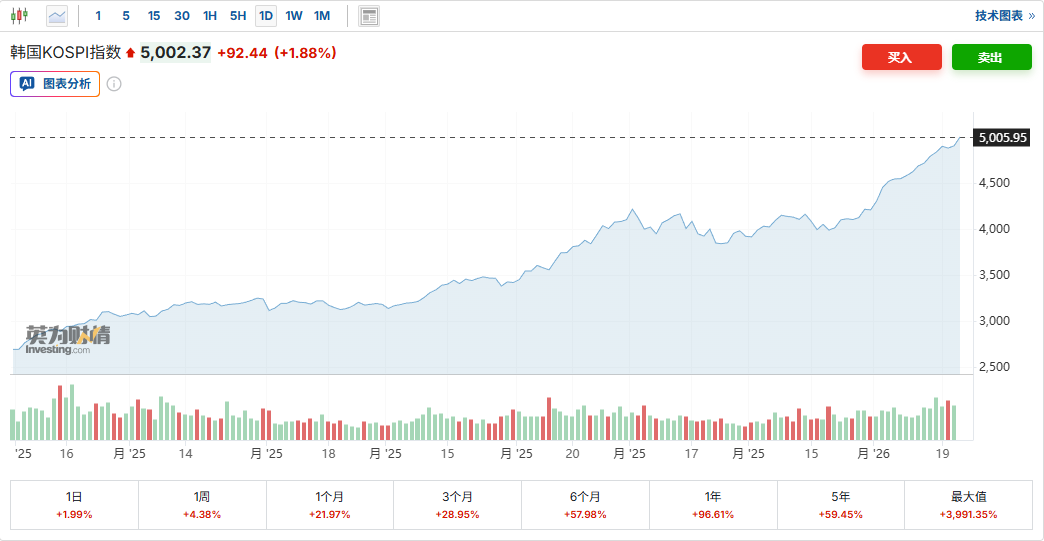
韩股突破5000点!韩国AI战略全面提速,打造“亚洲AI基础设施枢纽”
Hua Er Jie Jian Wen· 2026-01-22 04:15
Core Viewpoint - The South Korean stock market, represented by the Kospi index, has surpassed the 5000-point mark, indicating a significant revaluation of the economy, previously seen as a cyclical export market, now recognized as a key beneficiary in the global AI industry chain [1][3]. Group 1: Market Performance - The Kospi index rose by 2.2% on a recent Thursday, exceeding the target set by President Yoon Suk-yeol, with a total increase of over 95% in the past 12 months, making it one of the best-performing major stock indices globally [1]. - Major stocks leading this surge include Samsung Electronics, SK Hynix, and Hyundai Motor, with the Korean won also showing slight appreciation against the US dollar [1]. Group 2: AI Infrastructure and Investment Cycle - The current market rally is driven by technology-weighted stocks, with a deeper shift in perception regarding South Korea's role in the AI infrastructure, transitioning from a traditional export economy to a critical player in AI computing and data centers [3][4]. - Morgan Stanley suggests that South Korea is entering a new "infrastructure reinvestment cycle" driven by AI, comparable in significance to the semiconductor capital expenditure wave of the past decade [3]. Group 3: AI Service Penetration - AI services have rapidly penetrated both enterprise and consumer sectors, with significant applications in high-value scenarios such as coding, video production, and logistics [4]. - The monthly active users of ChatGPT in South Korea have reached 18 million, indicating a shift from niche technology users to mainstream adoption [4]. Group 4: Data Center Projects - Multiple large-scale AI data center projects, termed "Neocloud," have been announced, indicating a shift towards heavy asset cycles in the data center sector [5]. - Notable projects include a 100MW AI data center by SK Telecom and AWS, and a 120MW AI data center by Samsung SDS, with significant investments involved [5]. Group 5: Government Policies - The South Korean government, under President Yoon, is promoting AI through policies focused on sovereignty, infrastructure, regulatory reform, and talent development, with the "AI Superhighway" initiative being a key component [6]. - The government aims to decentralize data centers to stimulate local economies and reduce centralized power consumption, aligning with the Kospi's recent performance [6]. Group 6: Energy Infrastructure Challenges - The expansion of AI data centers is encountering structural issues within South Korea's energy system, particularly in the Jeollanam-do region, which has renewable energy potential but faces transmission bottlenecks [7]. - The "Energy Highway" project aims to address these challenges by utilizing high-voltage direct current (HVDC) technology to enhance the efficiency of power transmission [7]. Group 7: Investment Opportunities - Following the Kospi's rise, the focus is shifting towards structural investment opportunities, particularly in AI infrastructure, with Samsung SDS identified as a key beneficiary in the AI data center investment theme [9]. - Companies involved in power equipment and transmission are also being reassessed for their potential, as the demand for high-capacity and quality power increases due to AI data centers [9].
688047!6分钟垂直20%涨停!A股芯片板块 全线爆发!
Zheng Quan Shi Bao Wang· 2026-01-21 04:54
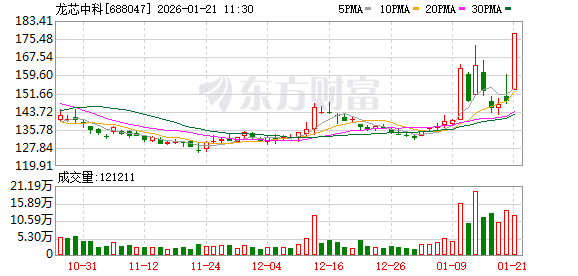
Market Overview - The A-share market opened lower but rebounded strongly, with technology stocks leading the gains. The Sci-Tech Innovation 50 index surged over 4%, surpassing 1500 points, marking a two-and-a-half-month high. The ChiNext index also climbed back above 3300 points, while major indices like the Shanghai Composite, Shenzhen Component, and Northbound 50 experienced significant upward movements. However, overall market trading volume showed a declining trend [2]. Chip Sector - The chip sector continues to thrive, with various sub-sectors such as automotive chips, advanced packaging, storage chips, and MCU chips reaching historical highs. Notably, Longxin Zhongke (688047) hit a 20% limit up within just six minutes of opening, while Jianghua Micro also achieved a limit up for the third consecutive day [3]. - Storage chip prices have been on the rise since September 2025, with DDR5 memory prices increasing over 300%, and the price of a single 256GB DDR5 server memory module exceeding 40,000 yuan. This year, the price of storage chips is accelerating upward [5]. - Morgan Stanley predicts a potential 50% price increase for traditional DDR4 memory in Q1, while Citigroup forecasts an 88% year-on-year increase in average DRAM prices by 2026. NAND Flash prices are also expected to rise significantly, with predictions of a 20%-30% increase for NOR Flash and over 50% for MLC and SLC NAND [6]. Precious Metals - The precious metals sector saw a significant rise, with the index climbing over 5% to reach a historical high. Notable stocks include Hunan Silver, which has surged 97.11% this year, and other companies like Zhaojin Mining and Sichuan Gold also showing strong gains [7]. - The Hong Kong gold sector experienced similar gains, with Lingbao Gold rising over 10% and trading volume nearly doubling compared to the previous day. U.S. gold stocks also saw substantial increases, with Iamgold soaring over 15%, marking a 14-year high [9]. - The price of gold has reached a historical high of $4,846 per ounce, driven by rising geopolitical tensions and market risk aversion. UBS anticipates that gold prices will continue to rise in the first half of the year, potentially reaching $5,000 per ounce if concerns about the independence of the Federal Reserve persist [9].