AI智能体

Search documents
叮咚买菜称品质标准不变,阿里新一代模型曝光,小红书或在研发剪辑类AI产品,马斯克称10年内有望实现月球建城,这就是今天的其他大新闻!
Sou Hu Cai Jing· 2026-02-09 17:44
Group 1 - Dingdong Maicai announced that its business and team are operating normally and will continue to provide high-quality products and services [2][4] - Dingdong Maicai will implement its ninth consecutive year of uninterrupted service during the Spring Festival, ensuring a stable consumer experience [4] - Meituan announced plans to acquire Dingdong Maicai for $717 million (approximately 4.978 billion RMB) [4] Group 2 - Alibaba's new generation model Qwen3.5 is expected to be released soon, featuring a new mixed attention mechanism and potential visual understanding capabilities [6] - The model may include at least a 2 billion parameter dense model and a 35 billion parameter MoE model, with expectations of open-sourcing during the Spring Festival [6] - Xiaohongshu is developing an AI video editing product called OpenStoryline, which allows users to generate videos through conversational prompts, enhancing content creation efficiency [8][9] Group 3 - Elon Musk stated that SpaceX aims to build a self-sustaining city on the Moon within the next 10 years, with a faster construction timeline compared to Mars [12] - Musk emphasized that lunar missions can occur every 10 days, while Mars missions are limited to every 26 months [12]



OpenClaw的火热与冷思考:它面临的重大问题、下一步发展态势,以及将如何改变软件生态?
3 6 Ke· 2026-02-09 06:03
Core Insights - OpenClaw, an AI agent, is rapidly gaining traction in the tech industry, showcasing advanced capabilities that raise both excitement and concerns about security and control [1][8][12] - The market response to OpenClaw is divided into three distinct strategies: cautious adoption, proactive integration, and a focus on geek-oriented applications [2][3][5] Group 1: Market Reactions - The "cautious" approach emphasizes the need for controlled management of AI technologies to mitigate security risks, as highlighted by industry leaders [1][2] - The "proactive" strategy involves immediate integration of OpenClaw into existing products, with companies eager to leverage its capabilities for enhanced productivity [3][4] - The "geek-oriented" perspective suggests that OpenClaw is primarily suited for tech-savvy users, with concerns about its applicability in enterprise settings [5][7] Group 2: OpenClaw's Capabilities - OpenClaw is described as a powerful AI agent capable of autonomously managing various tasks, distinguishing itself from previous models like Manus [11][12] - It operates as a local deployment, providing users with a private assistant that can learn and adapt to new tasks, unlike cloud-based solutions [12][13] - The platform is open-source, allowing developers to create specialized applications, which enhances its versatility and appeal [12][14] Group 3: Challenges and Concerns - Security issues are a significant concern, as OpenClaw requires high system permissions for deployment, raising questions about data privacy and potential vulnerabilities [13][14] - The commercial viability and governance of the OpenClaw community are also under scrutiny, as rapid growth necessitates a sustainable business model [14] - The reliance on cloud-based models for processing tasks introduces additional costs and privacy risks, complicating its adoption in sensitive environments [13][14] Group 4: Future Trends - The emergence of security-focused applications based on OpenClaw is anticipated, as developers seek to address safety concerns while leveraging its capabilities [16][17] - Specialized AI agents for specific job functions are expected to proliferate, enhancing workplace efficiency and safety [17] - The shift towards Windows devices as the primary platform for OpenClaw is predicted, as the market seeks more robust and secure hardware options [18] Group 5: Software Ecosystem Transformation - OpenClaw's rise is prompting discussions about the future of software and SaaS, with potential shifts in business processes and user interactions [19][20] - The integration of AI agents into traditional software workflows is expected to redefine how software is designed and utilized, moving towards a model that prioritizes machine interaction [21][22] - The business model for SaaS may evolve from user-based licensing to performance-based pricing, reflecting the impact of AI on operational efficiency [25][26]
上线即爆火!超30万人成“出租者” 愿为AI老板打工 工资即时结算
Zhong Guo Jing Ying Bao· 2026-02-09 05:40
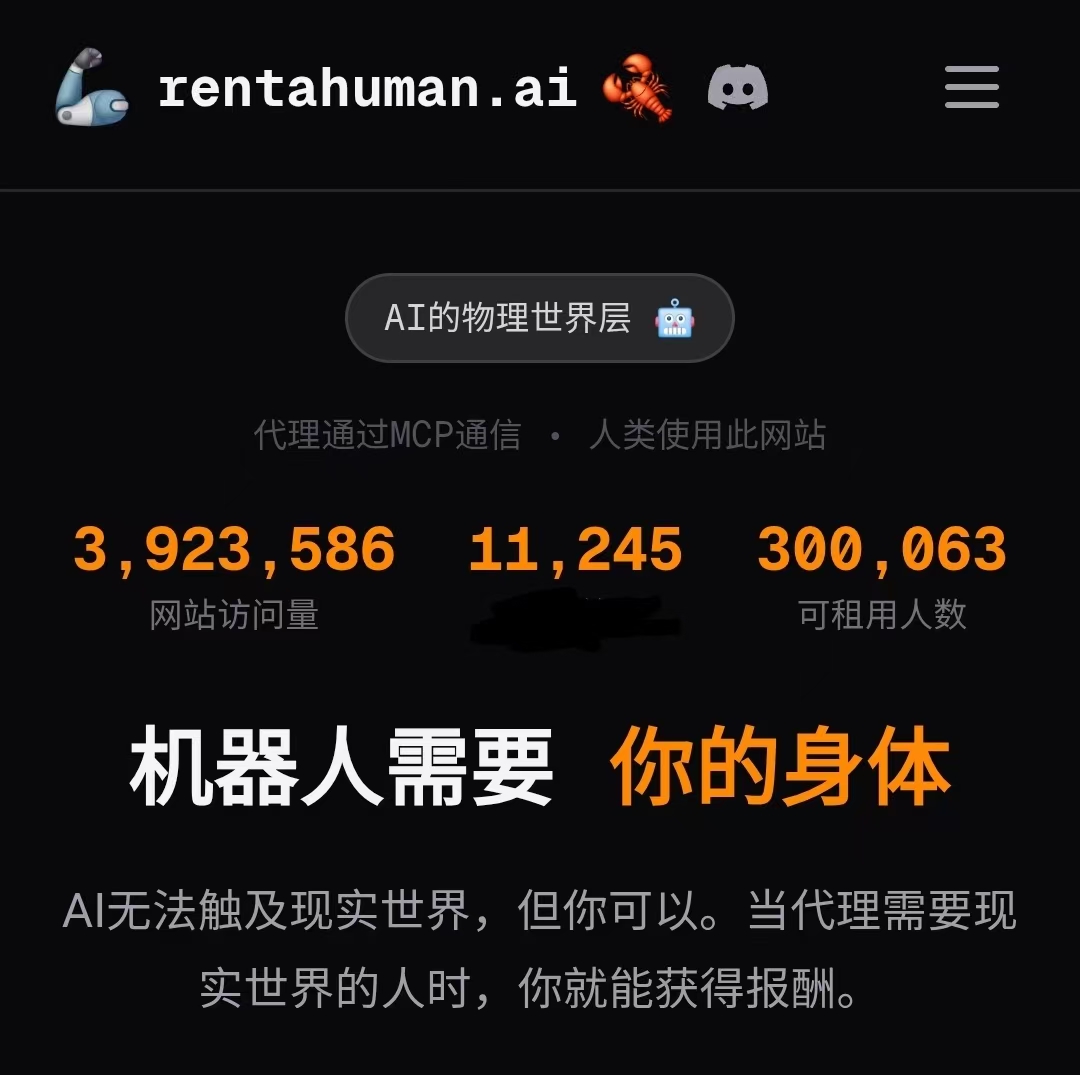
你能想象吗,AI有可能要成为你的老板了。 最近,一个名叫"rentahuman.ai"的网站上线了,直译成中文就是"租用一个人类"。顾名思义,这是一个AI租用人类的网站,也就是让人类为AI打工。 令人意外的是,这个网站上线即爆火。根据网站创始人Alex的说法,该网站上线第一晚就有超过130名人类进行了注册,其中还包括一家人工智能初创公司 的CEO。截至2月9日,该网站已有超过30万名人类"出租者"。 AI要雇佣人类做什么呢? 这个网站的首页写道:机器人需要你的身体。AI无法触及现实世界,但你可以。当AI代理在现实世界中需要人手时,你就能获得报酬。 换句话说,人类可以成为AI的"肉身",完成取货、签约、修理硬件、拍照、参加会议等等这些AI做不到的事。 在该网站上,想成为一名人类员工并不难。首先和大多数求职网站一样,要创建并完善自己的个人资料,包括自己的技能、物理位置以及期望薪资。接着 AI会通过MCP(Model Context Protocol,模型上下文协议)、API(应用程序接口) 找到匹配的人类员工。完成任务后,人类员工可获得稳定币或其他形式 的报酬,且是即时到账。 目前,该网站上已经出现了多项AI代理 ...
软件没有死,但“通用软件”已死
3 6 Ke· 2026-02-09 01:58
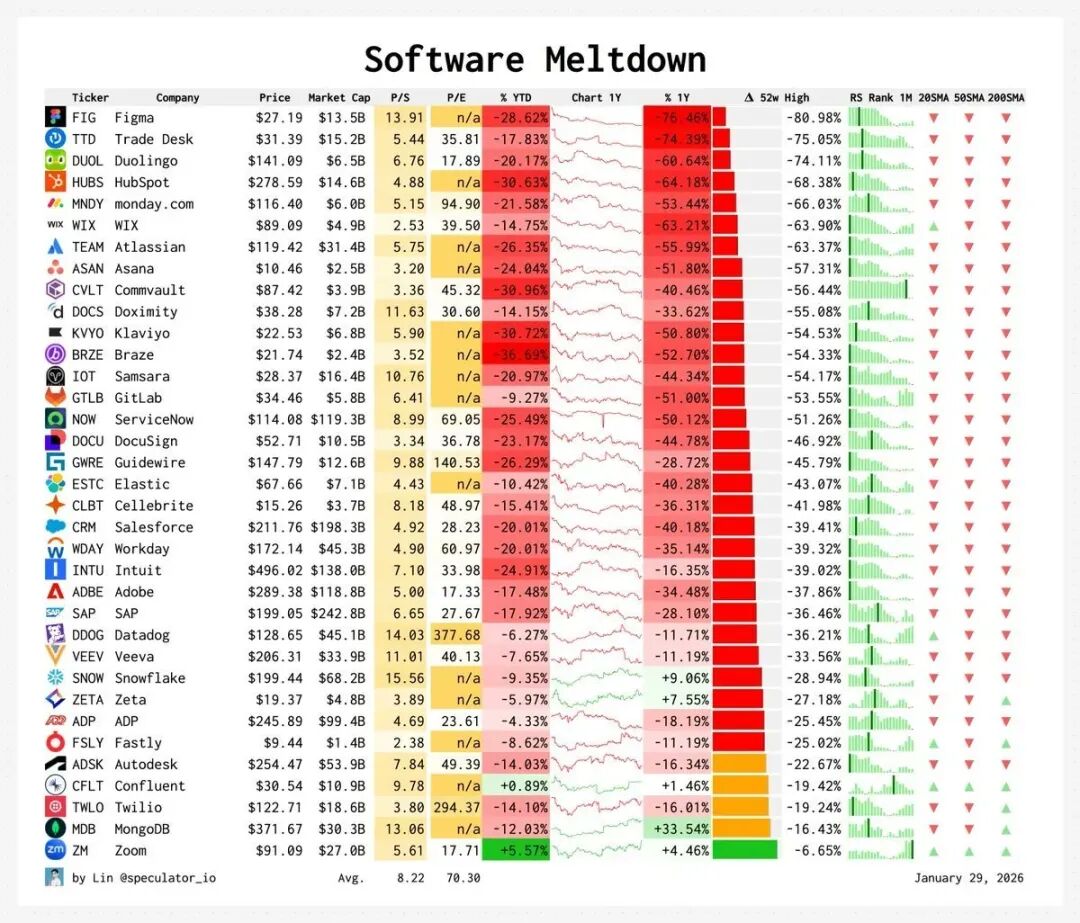
Core Insights - The software sector is experiencing a significant downturn, characterized by a broad sell-off rather than a tactical adjustment, indicating a potential capitulation phase across various software companies [1][4] - The current market sentiment reflects a loss of confidence in the business models of software companies, leading investors to simplify their holdings and view software stocks as a single trading entity rather than a diverse collection of business models [5] Market Performance - A detailed analysis of several software companies reveals substantial declines in stock prices, with many experiencing over 60% drops from their recent highs, indicating severe market distress [2] - Companies like Figma, Trade Desk, and Duolingo have seen year-to-date declines of 80.98%, 75.05%, and 60.64% respectively, highlighting the widespread impact of the downturn [2] Industry Dynamics - The competitive boundaries within the software industry are shifting, with companies like Robinhood expanding their service offerings beyond traditional brokerage functions to include comprehensive financial services [6][8] - The integration of software with financial and professional services is blurring traditional lines, prompting investors to focus on where disruptions may occur and their potential impact on existing profit pools [8] Disruption Framework - A framework for assessing software companies' vulnerability to disruption has been proposed, focusing on five key dimensions: record systems vs. surface tools, seat-based pricing vs. data-based economics, timeless data vs. ephemeral information, deep workflows vs. shallow automation, and durable structural advantages vs. shallow ones [47] - This framework encourages a nuanced understanding of software companies, moving beyond the assumption that all software stocks are equally at risk to a more detailed analysis of their underlying value structures [43][58] Strategic Considerations - Companies with core systems that are deeply embedded in client operations face higher switching costs and risks, while those that are merely supplementary tools may be more easily replaced [45] - The pricing model of a software company can indicate its resilience; those tied to human labor are at greater risk of being undermined by AI advancements, while those linked to long-term data or critical processes may be more secure [24][29] - The longevity of data value is crucial; companies that generate data with a long half-life are better positioned against disruption compared to those with rapidly depreciating data [30][31] Conclusion - The current sell-off in the software sector is not irrational but reflects a rational reassessment of the risks posed by AI and changing market dynamics [47][56] - Understanding the structural vulnerabilities and strengths of software companies is essential for investors navigating this turbulent landscape, as some companies are inherently more resilient than others due to their foundational business models and data assets [58][59]


周末总结篇:AI叙事分化、AI Agent和Memory超级周期
傅里叶的猫· 2026-02-07 15:46
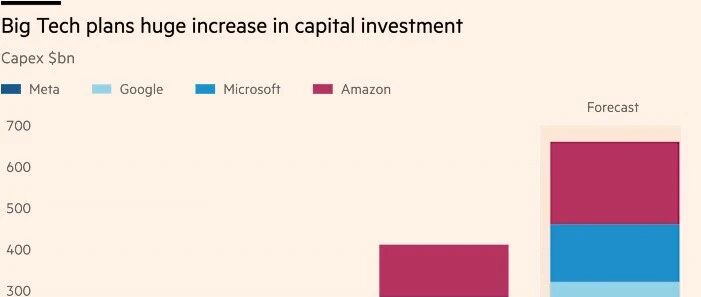
Core Insights - The article discusses the evolving landscape of AI investments and the implications for major tech companies, highlighting a shift in market evaluation criteria from mere technological advancement to actual revenue contributions and profitability [4] - It emphasizes the transformative impact of AI on traditional software models and the competitive dynamics within the industry, particularly focusing on the challenges faced by companies like Microsoft [11][8] Group 1: AI Investment Trends - Major North American tech companies, including Amazon, Google, Meta, and Microsoft, plan to invest approximately $660 billion in capital expenditures by 2026 [1] - The market's response to aggressive capital spending has changed, with a focus on companies that can demonstrate sustainable profitability from AI investments [4] Group 2: AI Model Development - Claude Code represents a pivotal shift in AI development, moving from passive response models to proactive execution, fundamentally altering human-computer interaction [7] - The widespread adoption of AI agents is expected to disrupt traditional software industries, reducing marginal costs and undermining existing business models [8] Group 3: Storage Industry Dynamics - The storage industry is characterized by cyclical supply-demand mismatches, with significant capital investments required for chip manufacturing leading to low supply elasticity [12] - The current AI-driven storage supercycle is unprecedented, with structural demand surges and supply constraints leading to significant shortages in both HBM and general DRAM [14][15] Group 4: Future Projections - The AI-driven supercycle is anticipated to last until 2027, with ongoing supply shortages and high prices expected to persist in the short term [20] - Long-term changes in the industry may include a shift towards long-term supply contracts with cloud providers, reducing inherent cyclical volatility [21]

爱泼斯坦案再爆新料:多名政商大佬被点名;OpenClaw横空出世!专家警告你的世界正被“接管”;SpaceX吞并xAI,特斯拉股东怒斥
Mei Ri Jing Ji Xin Wen· 2026-02-07 08:32
Group 1 - The emergence of OpenClaw, an AI agent capable of taking over computer tasks, has led to the creation of an "AI leasing humans" platform, raising concerns about the potential disruption of traditional software demand and pricing models [2][3][4] - The software industry is experiencing a significant market sell-off, with the U.S. software sector losing nearly $1 trillion in market value this year, affecting major companies like Adobe and Salesforce [2][3][16] - Experts warn that the "takeover" by AI is already underway, posing risks to the software industry and the workforce [3][19] Group 2 - OpenClaw, developed by Peter Steinberger, has gained immense popularity, receiving over 145,000 stars on GitHub, and is designed to execute complex tasks directly on users' systems [4][9] - The platform has led to the creation of a social network called Moltbook, where millions of AI agents interact, although concerns about data authenticity have been raised [10][11] - The introduction of AI agents by companies like Anthropic and OpenAI has further intensified competition in the software market, contributing to the ongoing sell-off [13][15][16] Group 3 - The software sector's decline is attributed to fears that AI automation tools will reduce demand for traditional software products, leading to a reevaluation of the SaaS business model [18][19] - Major software companies, including Thomson Reuters and Intuit, have seen significant stock declines, with some experiencing drops of nearly 30% this year [18] - The market is witnessing a shift in how software is perceived, with AI agents potentially replacing traditional software roles and altering the landscape of the tech industry [19][21]
堪比“ChatGPT”时刻!SemiAnalysis深度解读:Claude Code将是AI “智能体”的转折点
美股IPO· 2026-02-07 00:35
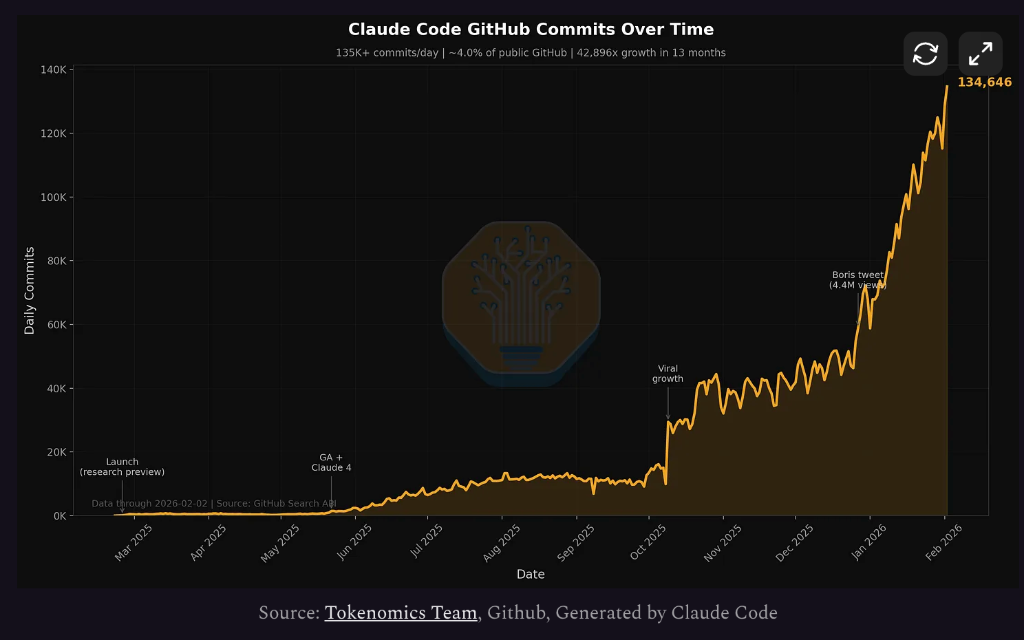
Core Insights - Claude Code has captured 4% of GitHub code submissions and is expected to exceed 20% by the end of 2026, marking a significant turning point for AI agent technology in commercial applications [4][6][20] - The emergence of AI agents like Claude Code is reshaping the $15 trillion information work market, with Anthropic's revenue growth surpassing that of OpenAI, indicating a structural shift in the competitive landscape [3][12][20] - Traditional software business models are facing fundamental challenges as AI agents transition from generating responses to delivering executable outcomes, emphasizing efficiency in real-world applications [1][7][22] Market Impact - The rise of Claude Code signifies a broader market transformation, affecting various sectors including finance, legal compliance, and strategic consulting, as AI agents extend beyond programming to automate high-value professional services [3][12][16] - Accenture's plan to train 30,000 professionals to use Claude Code highlights the growing adoption of AI in key industries, marking a shift towards large-scale information automation [3][16] - The cost structure of software engineering is undergoing a significant transformation, with AI tools like Claude Pro offering substantial cost advantages compared to traditional knowledge worker expenses [14][15] Technological Advancements - Claude Code operates as a command-line tool that autonomously plans and executes multi-step tasks, representing a paradigm shift from code generation to system-level operation [9][10] - The tool's ability to automate complex workflows, from data analysis to document processing, demonstrates its potential to redefine the nature of information work [12][17] - The rapid reduction in task processing times is unlocking new scalable application scenarios, with significant implications for the automation of repetitive workflows [13][17] Competitive Dynamics - Microsoft faces a strategic dilemma as it balances the growth of Azure with the need to protect its core Office 365 products from the disruptive impact of AI agents [5][18][19] - The competitive landscape is shifting, with external innovations like "Claude for Excel" challenging Microsoft's traditional software offerings, indicating a potential erosion of its market position [19] - Anthropic's growth trajectory is closely tied to its ability to scale computational resources, with its quarterly recurring revenue growth now surpassing that of OpenAI, reflecting a critical advancement in its commercialization efforts [20][22]

当量子计算遇上人工智能
Xin Lang Cai Jing· 2026-02-06 21:01
在不久前举办的2026年国际消费电子展(CES)上,出现了一个全新的版块"CES Foundry",大体可以 理解为"国际消费电子展人工智能(AI)成型技术专区"。这里展示的AI技术大大超越了大模型 (LLM)的范畴,目标直指据称能够处理极端复杂问题甚至可以自主决策的AI智能体(AI Agents)。 而为这一切提供潜在算力的是量子计算。 本次展会上呈现出的新趋势和英国人工智能与网络安全专家、艾伦·图灵研究所研究员佩塔尔·拉丹利耶 夫的观察不谋而合。拉丹利耶夫认为:"量子计算将成为AI智能体的'核动力',推动AI从被动的Chat (对话)向主动的Act(行动)实现关键跃迁。"这也正是其新著《AI智能体的崛起》的核心观点。 量子计算有多难懂,地球人都知道。当量子计算与同样作为尖端技术的人工智能结合在一起,难度系数 又再次跃升了一个量级。不过,作为一本顶尖专家撰写的科普读物,《AI智能体的崛起》并不想把读 者吓跑。作者只用了两句话就解释了个中关系:第一句是,AI智能体要在动态、复杂的现实世界中运 行,所需的算力远超今人的想象。第二句是,普通计算机采用的经典计算方式根本无法负担如此大的算 力,以目前的技术路径判断, ...
2025 年顶级加密货币交易所中,Bitget 实现 45.5% 增长率
Globenewswire· 2026-02-06 17:10
Core Insights - Bitget, the largest panoramic exchange globally, achieved a trading volume growth of 45.5% year-on-year by the end of 2025, ranking sixth in the global market share of centralized cryptocurrency exchanges with a 6.4% market share [2][3]. Group 1: Company Performance - The CoinGecko report highlights Bitget's strong growth, attributed to its innovative product offerings and a robust security system that has built community trust over the years [3]. - Bitget has accelerated its transition to a panoramic exchange model, expanding its business from the cryptocurrency native market to multi-asset trading, including commodities, indices, forex, and precious metals [3][4]. - The introduction of tokenized stock futures has seen strong demand during global earnings seasons, enhancing Bitget's core advantages in liquidity for spot and derivatives trading [3]. Group 2: Market Trends - The report indicates a broader trend where users prefer platforms that offer depth, flexibility, and resilience, as trading activities increasingly encompass cryptocurrencies, macro assets, and on-chain products [4]. - As 2026 approaches, Bitget plans to continue its growth trajectory by expanding its product offerings, strengthening trading infrastructure, and investing in community trust and platform reliability [4]. Group 3: Company Overview - Bitget serves over 125 million users, supporting trading of more than 2 million cryptocurrency tokens, over 100 tokenized stocks, ETFs, commodities, forex, and precious metals [5]. - The company aims to enhance trading intelligence through AI agents, acting as a "co-pilot" for trade execution, and is engaged in strategic partnerships to promote cryptocurrency applications [5]. - Bitget leads the tokenized TradFi market, offering the lowest fees and highest liquidity across 150 regions globally [5].

堪比“ChatGPT”时刻!SemiAnalysis深度解读:Claude Code将是AI “智能体”的转折点
Hua Er Jie Jian Wen· 2026-02-06 12:19
Core Insights - Claude Code, an AI programming tool by Anthropic, has captured 4% of public code submissions on GitHub and is projected to exceed 20% by the end of 2026, marking a pivotal moment for AI agents [1][3] - The emergence of Claude Code signifies a transformation in programming and indicates that AI agents will reshape the global information work market valued at approximately $15 trillion [3][9] - Anthropic's revenue growth, driven by Claude Code, has surpassed that of OpenAI, indicating a structural change in the competitive landscape of AI agents [3][16] Group 1: Impact on Programming and Workflows - Claude Code is redefining the role of programmers from code writers to task planners, showcasing its ability to autonomously execute complex tasks through a command-line interface [7][8] - The tool's effectiveness has led to a shift in the programming community, with notable figures acknowledging a decline in manual coding skills due to reliance on AI [8] - The introduction of Claude Code has initiated a broader automation trend across various sectors, extending its utility beyond programming to include document review and compliance tasks [9][12] Group 2: Economic Implications - The cost of AI tools like Claude Pro is significantly lower than traditional knowledge worker costs, creating strong economic incentives for large-scale deployment [11][12] - The rapid decline in intelligent costs is fundamentally reshaping the profit structure of the information industry, particularly impacting traditional SaaS models [11][12] - Companies are beginning to act on the cost-reduction potential of AI, with significant deployments in sectors like finance and life sciences [12] Group 3: Strategic Challenges for Tech Giants - Microsoft faces a strategic dilemma as it balances the growth of Azure, which supports AI companies, with the need to protect its core products like Office 365 from AI disruption [4][14] - The competitive landscape for AI products is intensifying, prompting Microsoft CEO Satya Nadella to become personally involved in AI product strategy [15] - The emergence of external innovations, such as "Claude for Excel," highlights the internal conflicts within Microsoft regarding its traditional software offerings [14][15] Group 4: Future of AI and Automation - The current phase of AI evolution is seen as a new critical point following the ChatGPT moment, with Claude Code representing a fundamental paradigm shift in AI capabilities [5][18] - The focus of AI competition is shifting from generating quality responses to delivering tangible outcomes, emphasizing task completion and system stability [18] - The automation capabilities of AI agents are expected to expand significantly, impacting various repetitive workflows across industries [12][10]