
AI玩具

Search documents
工业和信息化部:引导玩具企业应用AI技术创造更多新需求
Shang Hai Zheng Quan Bao· 2025-11-20 03:45
Core Insights - The Ministry of Industry and Information Technology (MIIT) plans to release an implementation plan to promote the adaptability of supply and demand in consumer goods, specifically encouraging toy companies to leverage AI technology to create new demands [1][6] Group 1: AI Toys as a Growth Engine - AI toys are becoming a new engine for high-quality development in the toy industry, characterized by stronger product integration, redefined functional roles, and comprehensive user demographics [2] - The AI toy market in China is projected to reach approximately 24.6 billion yuan in 2024, with an expected increase to 29 billion yuan in 2025 [2] Group 2: Industry Chain Activation - The explosive growth of the AI toy market is activating the vitality of the entire industry chain, leading to a diverse competitive landscape where toy companies and tech firms are accelerating their positioning [3] - Companies like Shifeng Culture and Aofei Entertainment are actively pursuing AI transformation strategies, collaborating with tech firms and establishing dedicated AI toy divisions [3] Group 3: Advantages of Domestic AI Toys - Domestic AI toy manufacturers possess significant advantages in manufacturing costs, R&D cycles, iteration speed, and supply chain integrity, which could lead to the creation of globally influential products [4] Group 4: Comprehensive Support System - A complete support system is essential for the sustainable development of the industry, encompassing policy guidance, innovation incentives, and safety regulations [5] - The MIIT will work with relevant departments to enhance safety standards and data privacy for AI toys, addressing consumer concerns [6] Group 5: Market Dynamics and Future Outlook - Changes in population structure are putting long-term growth pressure on traditional toys, making AI transformation a key path for industry breakthroughs [7] - With a complete industrial chain and continuous innovation capabilities, China's AI toy industry is expected to enhance its influence in the global smart consumer market [7]
玩具安全强制国标迎修订 新增10类有害物质限量要求
Zheng Quan Shi Bao· 2025-11-19 17:54
Core Viewpoint - The Ministry of Industry and Information Technology has introduced a revised mandatory national standard GB6675 for toy safety, enhancing regulations to ensure the safety of children's toys and promoting high-quality development in the toy industry [1][2]. Group 1: Chemical Safety - The new standard adds limits for ten harmful substances, including formaldehyde and boron, significantly increasing the coverage of chemical hazards in toys [1]. - The revised standard aims to address health risks associated with toys that children may put in their mouths or that could cause skin irritation [1]. Group 2: Mechanical and Physical Safety - New technical requirements have been introduced for products such as flame devices and food-shaped toys, optimizing specific requirements for categories like yo-yos and inflatable toys [2]. - The standard enhances the applicability of technical requirements for the physical safety of toys, ensuring a higher safety threshold [2]. Group 3: Fire Safety - The revised standard includes new flammability performance requirements for headwear toys and improves testing methods for various toy categories, ensuring fire safety [2]. - The standard's rigor has been compared to raising the passing score from 60 to 90, indicating a significant increase in safety expectations [2]. Group 4: Transition Period - A dual transition period has been established to mitigate the impact of the new standards on the industry, allowing 12 months for production adjustments followed by another 12 months for sales [2]. Group 5: AI Toys Development - The Ministry plans to promote high-quality development in the AI toy sector through policy support, product innovation, and regulatory development [3]. - AI toys are characterized by stronger integration with technology, redefining their roles to include educational and emotional support functions, and appealing to a broad user demographic [3]. - The Ministry will collaborate with relevant departments to create implementation plans that encourage the integration of AI technology in toy production, fostering new market demands [3].
11.19犀牛财经晚报:闪存全面大幅涨价 1吨鸭绒从17万元涨到58万元
Xi Niu Cai Jing· 2025-11-19 10:32
Group 1: QDII and Market Trends - Several QDII funds tracking the Nasdaq 100 index have issued premium risk warnings, indicating that their secondary market trading prices are significantly higher than the reference net asset values [1] - The price of domestic gold jewelry has rebounded above 1290 yuan per gram, with notable increases from various brands, reflecting a halt in the previous downward trend [1] - Flash memory prices have seen a substantial increase, with the highest rise reaching 38.46%, indicating a strong demand in the semiconductor market [1] Group 2: AI Toy Market Growth - The AI toy market in China is projected to grow to 29 billion yuan by 2025, driven by advancements in materials and technology, as well as the popularity of interactive AI toys among young consumers [2] Group 3: Price Surge in Down Jackets - Due to a cold wave, the price of duck down has surged from 170,000 yuan per ton to 580,000 yuan, significantly impacting the cost of down jackets [2] Group 4: Corporate Announcements - Dongfang Electric's subsidiary plans to establish a joint venture with Anhui Waneng Energy, with a registered capital of approximately 1.857 billion yuan [3] - Guangyuyuan announced the resignation of its vice president due to work adjustments, effective immediately [4] - Tianyin Holdings received approval from the China Securities Regulatory Commission for a stock issuance to specific investors [5] - Liyuan Technology plans to reduce its shareholding by up to 2.03% due to operational needs [6][7] - Kanglongda's shareholder intends to reduce their stake by up to 3% through various trading methods [8] Group 5: Regulatory Actions and Market Responses - Jieqiang Equipment received a corrective order from the Tianjin Securities Regulatory Bureau due to internal control deficiencies [9] - Jinyuan Co. has seen its stock rise significantly, attributed to the increase in lithium carbonate prices, although the product is still in the trial production phase [10] - Yangguang Nuohuo's acquisition of Jiangsu Langyan Life Science has been accepted for review by the Shanghai Stock Exchange [10] - Puluo Pharmaceutical plans to repurchase shares worth between 180 million and 360 million yuan [11] - Dafeng Industrial won a bid for a stage equipment project worth 165 million yuan, representing 8.97% of its projected annual revenue [12] - Neusoft Group received a notification to supply intelligent cockpit controllers for a major automotive manufacturer, with a total contract value of approximately 4.2 billion yuan [13] - HeFu China has completed its stock trading anomaly investigation and will resume trading on November 20 [14] Group 6: Market Overview - The Shanghai Composite Index experienced a slight increase of 0.18%, with over 4100 stocks declining, indicating a mixed market sentiment [15]
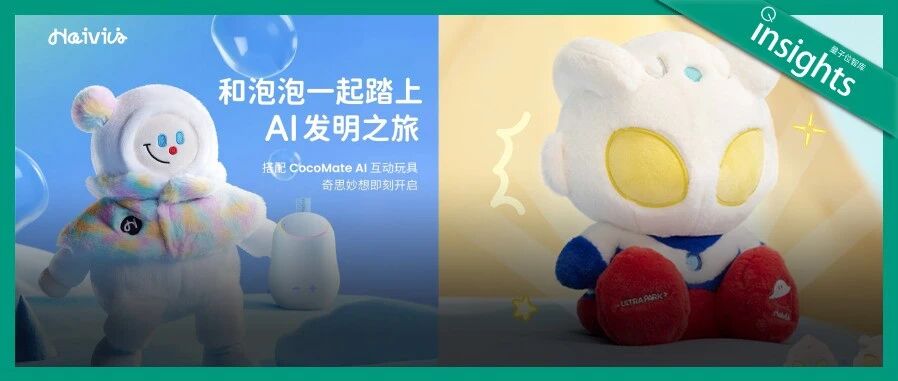
全球销量第一的AI玩具,如何用“无用”撬动情感价值?丨对话跃然创新
量子位· 2025-11-15 08:30
Core Insights - The article discusses the challenges and opportunities in the AI toy market, emphasizing the need to convert emotional value into market value [2][8] - The AI toy market is experiencing significant growth, with the global sales of AI toys currently under 1 million units compared to several hundred million smartphones sold annually [3][25] - Haivivi, a leading AI toy brand, has successfully launched products that combine AI technology with popular IPs, achieving substantial sales figures [4][5][14] Market Dynamics - The AI toy market is still in its early stages, with a high user satisfaction rate attributed to the ability of products to engage in role-playing and continuous dialogue [29][30] - The first product, BubblePal, sold nearly 300,000 units within a year, while the second product, CocoMate, is also gaining traction [4][26] - The emotional connection and interactive capabilities of AI toys are key factors driving consumer interest and purchase decisions [51][52] Product Development - Successful AI toys require a combination of hardware, software, and algorithms, with a focus on emotional value rather than just functional attributes [37][46] - The integration of large model capabilities is crucial for enhancing user experience, allowing for personalized interactions and memory retention [18][41] - The company aims to develop AI toys that can operate without internet connectivity, enhancing user privacy and reducing long-term costs [84][85] Competitive Landscape - The primary differentiator in the toy industry is the IP associated with the products, with a dual strategy of leveraging licensed IPs and developing proprietary characters [20][61] - The company does not view established brands like Disney and Pop Mart as direct competitors but rather potential collaborators in the emotional value space [76] - The focus on emotional engagement rather than mere functionality sets the company apart from traditional toy manufacturers [95] Future Outlook - The market potential for AI toys is significant, with expectations that advancements in AI technology will lead to more interactive and emotionally resonant products [53][88] - The company is exploring new features such as selective memory and emotional recognition to enhance the user experience [82][83] - The belief in the ongoing development of AI technology and its application in toys is fundamental to the company's long-term strategy [93][94]

三大消费“财富密码”浮现,借道港股消费ETF(513230)一键配置AI玩具、黄金与运动服饰
Mei Ri Jing Ji Xin Wen· 2025-11-14 03:17
Core Viewpoint - The Hong Kong consumer sector is experiencing volatility, with the Hong Kong Consumer ETF (513230) declining over 1% amid mixed performances from various holdings. The introduction of AI strategies in the sports goods industry and new tax policies on gold are expected to influence market dynamics positively in the long term [1]. Group 1: Market Performance - The Hong Kong Consumer ETF (513230) is tracking the CSI Hong Kong Stock Connect Consumer Theme Index, which includes leading companies in both internet e-commerce and new consumption sectors [2]. - Notable declines were observed in stocks such as XPeng Motors-W, MGM China, Alibaba-W, Kuaishou-W, and Samsonite, while stocks like Bosideng, Guming, Wanzhou International, and Yum China showed gains [1]. Group 2: Strategic Developments - Anta Group has launched the "AI365 strategy" and introduced the first AI design model in the sports goods industry, establishing AI as a key direction for innovation and development [1]. - The Ministry of Finance and the State Taxation Administration announced new tax policies regarding gold, effective from November 1, 2025, to December 31, 2027, which may impact investment strategies in the gold sector [1]. Group 3: Industry Outlook - Shanghai Securities anticipates rapid growth in AI toys due to supportive policies and economic recovery, while the long-term investment appeal of gold is expected to strengthen amid ongoing Federal Reserve rate cuts and trade tensions [1]. - The demand for gold jewelry is projected to continue rising, with traditional gold and IP gold accessories leading new trends [1]. - The government is promoting reforms and innovations to enhance the quality of development in the sports sector, with sustained consumer activity in sports apparel expected [1].
消费有望迎来轮动补涨!消费ETF(159928)翻红冲击两连阳!港股通消费50ETF(159268)获资金净流入超4600万元!机构:关注消费板块胜率和赔率
Sou Hu Cai Jing· 2025-11-13 06:45
Group 1: Market Performance - The consumer sector is experiencing a rebound, with the Consumer ETF (159928) rising by 0.47% and achieving a trading volume exceeding 660 million yuan [1] - The Hong Kong Stock Connect Consumer 50 ETF (159268) also saw a slight increase of 0.2%, with trading volume surpassing 126 million yuan, indicating strong capital inflow [2] - Notable stocks include Samsonite, which surged over 17% with a 11% year-on-year profit growth and a gross margin increase to 59.6% [4] Group 2: Economic Indicators - The core CPI, excluding food and energy, rose by 1.2% year-on-year in October, marking the sixth consecutive month of growth, which has drawn attention to the recovery of consumer spending [5] - The government plans to continue implementing measures to boost consumption, including financial subsidies for personal consumption loans and support for key sectors like elderly care and childcare [15] Group 3: Valuation and Investment Opportunities - The Consumer ETF (159928) has a TTM price-to-earnings ratio of 20.55, which is at the 7.45% percentile over the past decade, indicating it is cheaper than 92% of the historical time frame [5] - Despite a strong performance in technology and cyclical sectors, the consumer sector has shown relatively weaker growth of only 10.85% year-to-date, suggesting potential for catch-up [8] Group 4: Sector Analysis - The consumer sector is expected to see a rotation and rebound, with specific segments like healthcare, aviation, home appliances, personal care, and non-white liquor showing strong earnings growth while remaining at historically low valuations [12] - The new consumption trends are driven by the Z generation, with sectors like trendy toys and jewelry expected to grow due to changing consumer preferences and technological integration [16][17] Group 5: Company Innovations - Anta Group has launched the first AI design model in the sports goods industry, which has already generated over 2.5 billion yuan in orders, indicating a significant boost in sales conversion rates [18] - Upbeauty Co. has introduced a new baby care brand, expanding its IP strategy to capture the growing demand in the baby personal care market [19]

实丰文化:将陆续释出AI+IP、AI桌宠、桌面AI机器人等多个前沿产品
Mei Ri Jing Ji Xin Wen· 2025-11-12 04:45
Core Insights - The company is actively developing new products in the toy sector, focusing on AI toys and IP-based trendy products [1] Group 1: AI Toy Development - The company collaborates with major technology solution providers to redefine AI toys, planning to release various innovative products such as AI+IP toys, desktop AI companions, and desktop AI robots [1] - The aim is to enhance user experience by integrating technological advancements into AI toys, providing companionship with emotional warmth [1] Group 2: IP Trendy Products - The company's IP matrix includes a wide range of international and domestic popular IPs, such as Pokémon, Disney (Frozen, Toy Story, Zootopia, Monsters University), SpongeBob SquarePants, and various domestic animations like Super Wings and Pleasant Goat and Big Big Wolf [1] - Future product development will be guided by market trends and the core narratives of these IPs, focusing on creating AI toys and trendy products that carry emotional value [1]

AI赋能玩具 实丰文化:打造具有全球影响力的文化娱乐品牌
Zhong Guo Zheng Quan Bao· 2025-11-05 20:14
Core Insights - The company, Shifeng Culture, is focusing on three core areas: AI toys, IP derivatives, and gaming business, while strategically exploring the new energy sector to build a globally influential cultural entertainment brand [1][7] AI Toys - Shifeng Culture is a well-established toy company with over 30 years of history, now leading the AI toy sector by launching products like AI Magic Star and AI Flying Rabbit, covering wearable, desktop, and plush applications [2] - The company emphasizes that the essence of AI toys lies in their playability, educational value, and emotional engagement, targeting both children and adults with differentiated functionalities [2][3] - Sales of AI toys are increasing, with positive user feedback on their play, educational, and companionship attributes; however, the market currently lacks product differentiation, which may affect repurchase rates [3] IP Toys - The company has developed a diverse IP matrix, collaborating with various cultural sectors, including popular games and animations, to maximize the commercial value of IPs through a full-chain operational model [4][5] - Shifeng Culture's strength lies in its comprehensive industry chain capabilities, allowing for rapid project implementation and enhanced market competitiveness of IP derivatives [4] - The company is also cultivating its own IPs, such as Wangzai Xiaoliu and Smart Flying Rabbit, and plans to expand its IP matrix to include trendy IPs favored by Generation Z [5] Gaming Business - The gaming segment has become a significant profit driver for Shifeng Culture, with a 125.27% year-on-year revenue increase and a 285.29% profit growth in the first half of 2025 [6] - The company is focusing on casual games and has adopted a strategy to enhance game quality while expanding the variety of game types to meet diverse player needs [6] - There is a synergistic effect between the gaming and toy businesses, with plans to leverage online games to attract users and convert them into toy sales, creating new growth avenues [6] New Energy Sector - Shifeng Culture is strategically entering the new energy sector, leveraging its existing customer trust and geographical advantages to build a competitive edge [7] - The company is implementing a dual-loop strategy for talent and technology development to address challenges in cross-industry growth [7] - The goal is to enhance the core toy and gaming businesses while expanding globally, aiming to create a globally recognized enterprise [7]
实丰文化:打造具有全球影响力的文化娱乐品牌
Zhong Guo Zheng Quan Bao· 2025-11-05 20:08
Core Insights - The company, Shifeng Culture, is focusing on three core areas: AI toys, IP derivatives, and gaming business, while strategically exploring the new energy sector to create a globally influential cultural entertainment brand [1][6] AI Toys Leading Industry Innovation - Shifeng Culture has launched two representative AI toy products: AI Magic Star and AI Flying Rabbit, with plans to expand into various applications such as wearable, plush, and desktop robots [1] - The company emphasizes that the core of AI toys is not just technology but a combination of toys, content, and AI support, targeting different age groups with differentiated functions [1][2] - Sales of AI toys are increasing, with positive user feedback highlighting their playfulness, educational value, and companionship attributes [1] IP Toys Building a Diverse Matrix - The company has developed a diverse IP matrix covering various cultural domains, including popular games and animations, enhancing the commercial value and cultural impact of these IPs [2][3] - Shifeng Culture's competitive edge lies in its full industry chain capabilities, allowing for rapid project implementation and maximizing IP value through innovative product forms [3] Rapid Development of Gaming Business - The gaming business has become a significant profit driver for Shifeng Culture, with revenue growth of 125.27% and profit growth of 285.29% in the first half of 2025 [5] - The company is adopting a boutique strategy in the gaming sector, expanding game types and enhancing game quality to meet evolving market demands [5] Strategic Layout in New Energy - Shifeng Culture is strategically entering the new energy sector, leveraging its existing customer trust and geographical advantages to build a competitive moat [6] - The company is implementing a dual-loop strategy for talent and technology development to address challenges in cross-industry growth [6]
“AI+国风”推动新型玩具出口订单大幅增长
Zheng Quan Ri Bao· 2025-11-03 16:08
Core Insights - The Chinese toy industry is experiencing a significant transformation driven by AI technology and cultural innovation, leading to a strong wave of exports [1][5][6] - AI toys, particularly those integrating programming education, are seeing a substantial increase in export orders, with some companies reporting over 200% growth in export volume [1][2] - The market demand for AI toys is expected to continue growing, with projections indicating a sales revenue of over 300 billion yuan in the first half of 2025, representing a 65% year-on-year increase [2][6] Industry Trends - The demand for AI toys has led companies to increase R&D investments and expand production capacity, with some firms doubling their production lines and workforce dedicated to AI development [3][4] - The integration of Chinese cultural elements into AI toys is becoming a notable trend, enhancing their appeal in international markets [5][6] - Policy support and technological advancements are crucial for the rapid development of AI toys, with specific goals set for the industry in Guangdong province by 2027 [6][7] Company Developments - Companies like Guangdong Qimeng Toy Industry Co., Ltd. and Shenzhen Lanlang Innovation Technology Co., Ltd. are reporting significant increases in export orders and production capacity due to the popularity of AI toys [1][2][3] - Listed companies are strategically positioning themselves in the AI toy market, with firms like Aofei Entertainment establishing dedicated AI toy divisions and collaborating with educational institutions [3][4] - Guangdong Gaole Co., Ltd. is accelerating its AI toy layout through acquisitions and integrating technology with traditional toy manufacturing [4][6]