数字经济

Search documents
有基础有条件保持经济稳定向好
Jing Ji Ri Bao· 2026-01-22 21:58
Core Viewpoint - China's economy is expected to maintain stable and positive growth despite facing multiple pressures, with a focus on high-quality development and innovation as key drivers for the future [1][2][3] Economic Performance - In the "14th Five-Year Plan" period, China's economy crossed significant milestones, reaching over 140 trillion yuan, with an economic increment exceeding 36 trillion yuan [1] - Domestic demand contributed over 67% to economic growth in 2025, with consumption accounting for 52% [2] - The trade volume reached new highs, and foreign exchange reserves exceeded 3.3 trillion USD [2] Innovation and Development - By 2025, R&D expenditure intensity surpassed the OECD average, with significant advancements in AI, biomedicine, and robotics [1] - The transition to a green and low-carbon economy is progressing, and the digital economy is thriving [1][3] Structural Advantages - China's economic foundation is strong, with advantages in the socialist system, large market size, complete industrial system, and rich talent resources [3] - The shift in consumer behavior towards a balance of goods and services consumption is evident, indicating potential for further domestic demand expansion [3] Policy and Future Outlook - The central economic work conference has outlined comprehensive measures to address existing challenges and enhance macroeconomic policies for 2026 [2] - International organizations have raised their growth forecasts for China, reflecting confidence in the country's economic prospects [3]
山西未来三年数字经济全面发展路线图确定
Xin Lang Cai Jing· 2026-01-22 21:16
(来源:中国改革报) 按照《方案》,山西将围绕六个方面推进数字经济全面发展:一是发挥数据作为关键要素作用,激发数 字经济发展新动能。二是适度超前部署数字基础设施,夯实数字经济发展新支撑。三是因地制宜布局数 字经济核心产业,拓展适度多元发展新赛道。四是纵深推进数字能源建设,构筑能源转型新优势。五是 深化重点领域数智化转型,助力产业升级新跃升。六是营造良好发展环境,塑优数字经济发展新生态。 本报讯 记者王晓涛报道 《山西省推进数字经济全面发展实施方案(2026—2028年)》日前印发,《方 案》确定了该省未来3年数字经济全面发展的目标,到2028年,数字经济及核心产业增加值年均增速达 8%左右。 转自:中国改革报 ...
2025年我区算力产业营收达577亿元
Xin Lang Cai Jing· 2026-01-22 20:13
本报1月22日讯 (记者 杨柳)1月21日,记者从自治区政务服务与数据管理局获悉,2025年我区算力产 业快速发展,实现营收577亿元,同比增长26.2%,为全区数字经济高质量发展注入强劲动能。 (来源:内蒙古日报) 转自:内蒙古日报 按照自治区党委"1571"工作部署,2026年我区将锚定算力产业高质量发展目标,做大做强算力服务业, 培育壮大算力装备制造业,加快布局数据和人工智能产业。同时,高标准推动和林格尔数据中心集群绿 色算力产业先行示范区建设。我区还将深化与北京、广东、湖南等地的对口合作与产业协同,做好算力 产业延链补链强链,力争2026年算力规模达到35万P。 过去一年,我区加快数据要素价值释放,统筹推动数字内蒙古建设,数字经济蓬勃发展。全区数字经济 核心产业法人主体达2.9万家,同比增长26.4%。算力总规模达23.7万P,智算规模22万P,两项指标均居 全国前列。 ...
去年我国对外直接投资比上年增长7.1%
Xin Lang Cai Jing· 2026-01-22 18:09
Group 1: China's Foreign Investment - As of the end of 2025, China will have established over 50,000 enterprises abroad, spanning 190 countries and regions, maintaining a top-three position in global foreign investment stock for nine consecutive years [1] - China's foreign direct investment is projected to reach $174.38 billion in 2025, representing a 7.1% increase from the previous year, solidifying its leading position globally [1] - Chinese enterprises are actively fulfilling social responsibilities, creating over 2 million jobs annually and investing in various public facilities, earning widespread praise from host countries [1] Group 2: Consumer Market Trends - In 2025, the number of consumers purchasing first-level energy-efficient or water-efficient appliances increased by 20%, with smart glasses, smartwatches, and smart bands each growing over 40% [2] - The retail sales of consumer goods in China reached 50.1 trillion yuan in 2025, marking a 3.7% growth, with retail goods sales increasing by 3.8% and dining revenue growing by 3.2% [2] - Final consumption expenditure contributed 52% to economic growth, continuing to serve as a primary engine for economic development [2] Group 3: Response to EU Regulations - The Chinese government expressed serious concerns regarding the EU's recent decision to classify certain Chinese companies as high-risk suppliers, which is seen as discriminatory [3] - Chinese enterprises have been operating in Europe in compliance with laws, providing quality products and services that support the development of the European telecommunications and digital industries [3] - The Chinese government opposes the EU's use of non-technical standards to restrict market access for Chinese companies, arguing that such actions distort competition and threaten supply chain security in the digital industry [3]
AI快速发展 上海着力提升“绿色算力”水平
Zhong Guo Xin Wen Wang· 2026-01-22 15:40
Core Viewpoint - The rapid growth of computing power demand driven by artificial intelligence is prompting Shanghai to focus on the green and low-carbon transformation of computing facilities [1] Group 1: Current State of Data Centers - Shanghai currently has over 160 internet data centers, with an average Power Usage Effectiveness (PUE) of approximately 1.339, which is above the ideal value of 1 [1] - The PUE value indicates the efficiency of energy use in data centers, with lower values signifying better efficiency in terms of cooling and power supply for non-IT equipment [1] Group 2: Climate Impact on Efficiency - The PUE of data centers is influenced by the climate zone, with cooler regions benefiting from reduced cooling energy consumption [1] - Shanghai's hot summer climate presents a challenge for energy efficiency in data centers [1] Group 3: Efforts for Improvement - Since the 14th Five-Year Plan, Shanghai has seen a gradual decrease in the PUE value of its data centers, indicating ongoing efforts to enhance energy efficiency [1] - The city is focusing on improving energy efficiency through various methods, including carbon quota management and the construction of zero-carbon data centers [1]
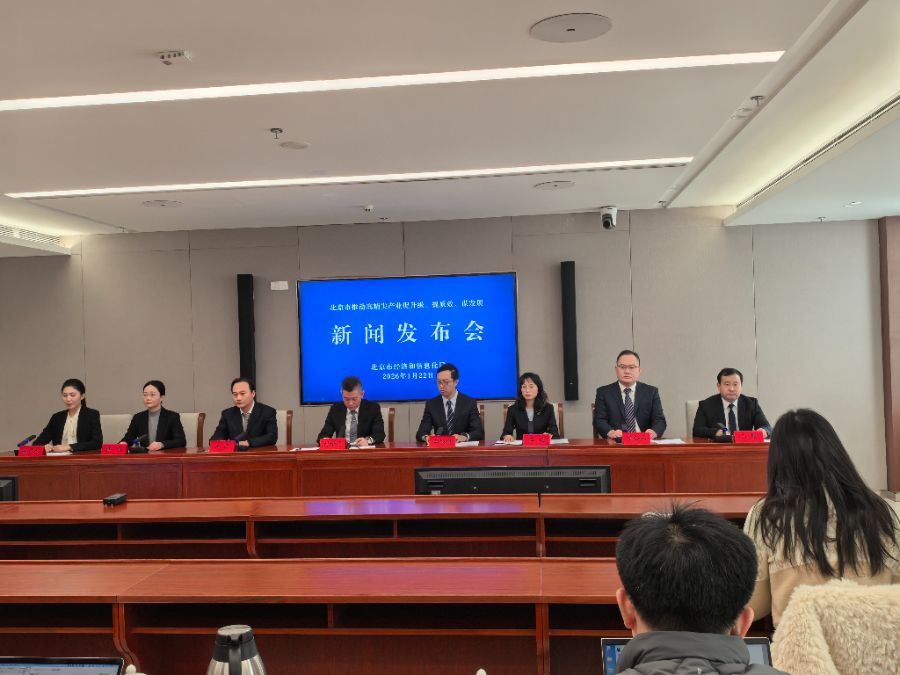
成为第二个“5万亿之城”后,北京2026年将有这些新动作
2 1 Shi Ji Jing Ji Bao Dao· 2026-01-22 13:37
Core Insights - Beijing is projected to achieve a GDP of 52,073.4 billion yuan by 2025, becoming the second "5 trillion yuan city" after Shanghai, marking a significant transition towards innovation-driven growth and regional collaboration [1][3] Economic Growth and Industry Contribution - In 2025, the information transmission, software, and IT services sector, along with the financial industry, will contribute over 70% to Beijing's economic growth [2][10] - The GDP growth rate for 2025 is estimated at 5.4% year-on-year, with the industrial output value increasing by 6.5% [3] Policy Initiatives and Funding - Beijing plans to invest over 1.5 billion yuan in the first batch of high-precision industry development projects and support for small and medium enterprises in 2026, focusing on over 25 policy support directions [3][6] - The initiatives will target key industries such as integrated circuits, biomedicine, materials energy, information software, and the digital economy [3][6] Future Industry Development - The "Create the Future" growth plan will focus on six future industries: future information, future health, future manufacturing, future energy, future materials, and future space [7] - The plan aims to cultivate high-risk, long-cycle industries, with government support to mitigate early-stage risks and attract private investment [8] Digital Economy and Consumption - The digital consumption potential will be stimulated, with plans to nurture 2-3 leading AIGC digital content companies with revenues exceeding 10 billion yuan [10][11] - The strategy emphasizes the integration of technology breakthroughs with industry foundations to enhance consumption potential and establish Beijing as a global digital economy benchmark [11] Computing Power Infrastructure - Beijing aims to build a computing power scale of approximately 200,000 P by 2027, enhancing the supply of computing resources [8][9] - The "Galaxy Computing Corridor" project will create a collaborative computing power supply system, with significant investments in infrastructure across various regions [9]

全力打造全国一流数智先锋城市
Qi Lu Wan Bao· 2026-01-22 12:05
Core Viewpoint - Jinan aims to become a "national first-class smart pioneer city" by 2026, focusing on five key areas: infrastructure, data elements, industrial upgrades, public services, and smart government [1] Group 1: Digital Infrastructure Development - By 2025, Jinan will establish a unified big data platform, creating a "data lake" that aggregates 47.4 billion data entries and supports 544.3 million data sharing instances [1] - In 2025, the city's computing power reached 6451P, with intelligent computing accounting for 83.2% [1] - Jinan will enhance its infrastructure by promoting collaborative computing power development, upgrading intelligent network infrastructure, and accelerating the construction of intelligent perception systems [1] Group 2: Data Annotation Industry - Jinan plans to develop the data annotation industry by establishing an industrial park and attracting 60 data annotation companies [2] - The focus will be on specialized data annotation in sectors like artificial intelligence and healthcare to improve market competitiveness [2] - A supply-demand matching conference will be organized to discuss key issues in high-quality dataset construction and talent development [2] Group 3: Smart Governance and Digital Economy - By 2025, the revenue from core digital economy enterprises in Jinan is expected to exceed 19% of the total [3] - Jinan will enhance smart governance through the establishment of a centralized smart management system, enabling comprehensive perception and efficient response [3] - The city aims to create a unified framework for urban operations, enhancing data integration and application [3] Group 4: No-Proof City Initiative - Jinan is optimizing government service processes to achieve 85% of service items without the need for material submission or form filling [4] - The city is developing applications for quick hotel check-ins and electronic certificates to streamline administrative processes [4] - The initiative includes the integration of various service codes to enhance user experience and efficiency [4] Group 5: AI Industry Development - Jinan is focused on high-quality development of the AI industry, leveraging local computing resources to support AI transformation tools and model resources [6] - The city aims to foster intelligent native enterprises and develop end-to-end solutions for AI applications [6] - Initiatives include enhancing smart healthcare applications and integrating AI in public cultural services [6]
2025胡润中国流量新势力百强榜单发布
Zhong Guo Fa Zhan Wang· 2026-01-22 11:58
Group 1 - The 2026 Hurun China Flow New Forces Ceremony was held in Macau, gathering over 150 guests, including government officials and industry leaders, to discuss trends in the digital and flow economy [1] - The Hurun Research Institute, in collaboration with Aozhitong Technology Co., Ltd. and the Macau Small and Medium Enterprises Association, released the "2025 Hurun China Flow New Forces Top 100 List," highlighting the most valuable flow new force institutions in China [1] - The event served as a high-level platform for industry exchange and cooperation between mainland China and Macau, showcasing the vitality of the flow economy and Macau's role in connecting domestic and international markets [1] Group 2 - The 2025 Hurun China Flow New Forces Top 100 List indicates that the average institution on the list has 280 million followers and 530 signed influencers, with 34 new institutions added and 20 removed due to reasons such as dissolution or key influencers leaving [2] - The top 100 institutions are distributed across 23 cities, with 70% located in six major cities: Hangzhou, Beijing, Guangzhou, Shanghai, Shenzhen, and Qingdao, and four of the listed institutions are subsidiaries of publicly listed companies [2] - According to the China Performance Industry Association, the total number of online performance agencies in China reached 29,000 by May 2025, marking a significant increase from approximately 160 in 2015, representing a growth of over 180 times [2] - The implementation of regulatory measures by the Ministry of Culture and Tourism and the Central Cyberspace Administration of China in 2025 marks the beginning of a comprehensive regulatory era for the industry, providing policy momentum for further standardization and value enhancement [2]

商务部1月22日召开例行新闻发布会
Shang Wu Bu Wang Zhan· 2026-01-22 11:05
Group 1: Consumer Market Insights - In 2025, China's total retail sales of consumer goods exceeded 50 trillion yuan, reaching 50.1 trillion yuan, a 3.7% increase from the previous year, with final consumption expenditure contributing 52% to economic growth [4] - The consumer market is characterized by three key aspects: expansion, benefiting the public, and quality improvement. The implementation of a trade-in policy led to sales of 2.61 trillion yuan, benefiting 366 million people [4] - New consumption trends are emerging, with retail sales of new energy vehicles increasing by 17.6%, and by the end of 2025, 60% of passenger cars sold will be new energy vehicles [4] Group 2: Trade with Central Asia - In 2025, trade between China and Central Asian countries surpassed 100 billion USD for the first time, reaching 106.3 billion USD, with a year-on-year growth of 12% [6] - The trade structure is improving, with over 55% of China's exports to Central Asia being electromechanical products, and an increase in the market share of "new three" products [6][7] - Cross-border e-commerce trade reached 800 million USD, growing over 20%, supported by stable operations of China-Europe (Central Asia) freight trains [7] Group 3: Foreign Investment - By the end of 2025, over 50,000 Chinese enterprises were established abroad, with a total foreign direct investment of 174.38 billion USD, a 7.1% increase from the previous year [8] - Chinese enterprises are actively fulfilling social responsibilities, creating over 2 million jobs annually and contributing to various infrastructure projects in host countries [8] Group 4: Trade Agreements and Regulations - A trade agreement between Canada and China was reached regarding electric vehicles and canola seeds, allowing for an annual quota of 49,000 electric vehicles from China with reduced tariffs [12] - China has implemented export controls on dual-use items to prevent military use, ensuring compliance with international obligations while maintaining supply chain stability [11]
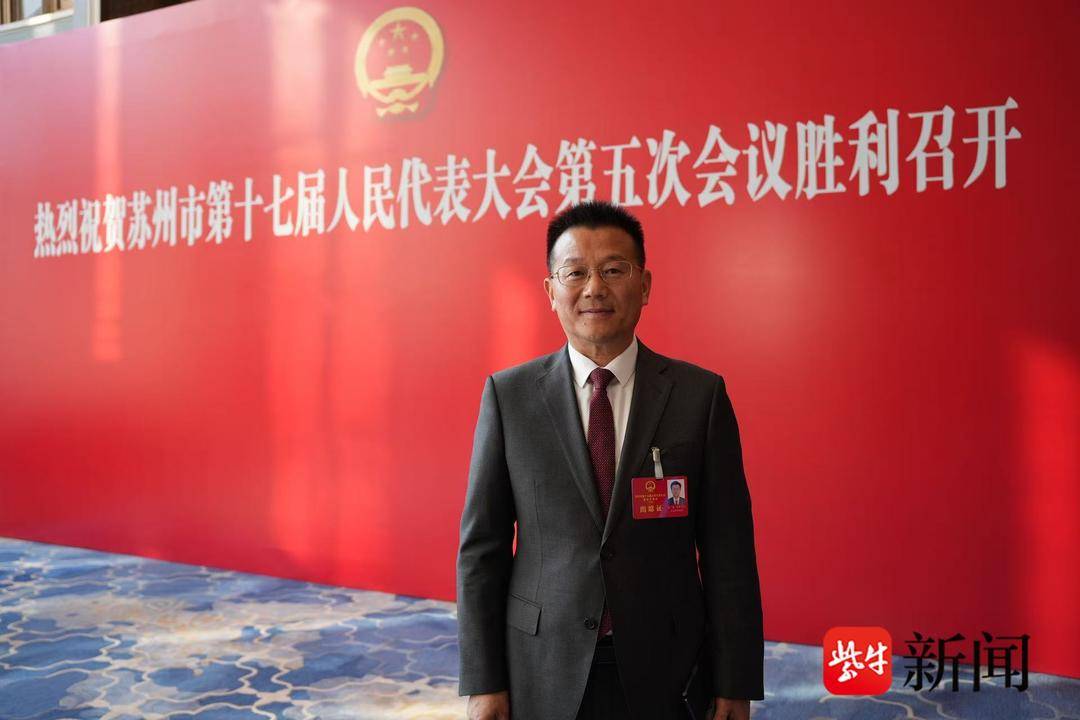
苏州市人大代表单强:加快发展苏州工业软件产业,打造自主可控产业创新高地
Yang Zi Wan Bao Wang· 2026-01-22 10:45
Core Insights - Suzhou is transitioning from "Suzhou Manufacturing" to "Suzhou Intelligent Manufacturing" and "Suzhou Creation," highlighting its strategic importance in the semiconductor industry and modern industrial system development [2] Group 1: Industrial Software Development - The development of autonomous and controllable industrial software is proposed to be elevated to a strategic level for the city, aiming to support the modernization of the industrial system and cultivate new productive forces [2] - Industrial software is identified as a core foundation for smart manufacturing and digital economy, serving as a key indicator of national industrial competitiveness and self-sufficiency [2] Group 2: Challenges in the Industry - Suzhou faces significant challenges in the industrial software sector, particularly in electronic design automation, including reliance on foreign core technologies, an incomplete industrial ecosystem, insufficient talent support, and inadequate policy coordination [2] - These challenges severely restrict the modernization level of the industrial chain and the progress of high-quality development [2] Group 3: Proposed Initiatives - Recommendations include enhancing top-level design and systematic promotion of industrial software development, implementing a "Strong Foundation Project," establishing a municipal special fund for industrial software development, and focusing on core technology breakthroughs and ecosystem construction [2] - The "Chain Building Project" aims to focus on breakthroughs in specialized fields and create a closed-loop ecosystem that integrates industry and application [2] - The "Intelligence Gathering Project" suggests innovating talent cultivation and recruitment mechanisms to build a talent hub for the industry [2] - The "Optimal Environment Project" emphasizes strengthening legislative protection and policy coordination to create a first-class industrial development environment domestically [2]