
资金流向

Search documents
资金流向周报:沪指本周涨1.67%,1366.37亿资金净流出
Zheng Quan Shi Bao Wang· 2025-07-25 08:56
沪指本周上涨1.67%,深成指上涨2.33%,创业板指上涨2.76%,沪深300指数上涨1.69%。可交易A股 中,上涨的有3856只,占比71.26%,下跌的1503只。 资金面上,本周主力资金合计净流出1366.37亿元。其中,创业板主力资金净流出401.29亿元;科创板主 力资金净流出87.58亿元;沪深300成份股主力资金净流出224.21亿元。 本周主力资金流向概况(单位:亿元) | 日期 | 深沪两市 | 创业板 | 科创板 | 沪深300 | | --- | --- | --- | --- | --- | | 一周合计 | -1366.37 | -401.29 | -87.58 | -224.21 | | 7月25日 | -493.76 | -103.43 | -8.19 | -171.68 | | 7月24日 | 89.13 | 11.51 | -17.99 | 81.79 | | 7月23日 | -515.28 | -108.88 | -28.79 | -102.02 | | 7月22日 | -377.02 | -113.82 | -15.25 | -15.12 | | 7月21日 | -6 ...
中工国际收盘下跌1.13%,滚动市盈率28.73倍,总市值107.90亿元
Sou Hu Cai Jing· 2025-07-25 08:42
Group 1 - The core viewpoint of the articles highlights the financial performance and market position of Zhonggong International, which has a current stock price of 8.72 yuan and a rolling PE ratio of 28.73 times, significantly higher than the industry average of 15.17 times [1][2] - Zhonggong International's total market capitalization is 10.79 billion yuan, ranking 50th in the engineering construction industry based on PE ratio [1][2] - The company experienced a net outflow of main funds amounting to 14.99 million yuan on July 25, with a total outflow of 65.30 million yuan over the past five days [1] Group 2 - The main business of Zhonggong International includes design consulting and engineering contracting, advanced engineering technology equipment development and application, and engineering investment and operation [1] - The company has received over 300 national and provincial-level scientific and technological achievement awards and holds a national-level professional qualification for cableway engineering design [1] - The latest quarterly report for Q1 2025 shows that the company achieved an operating income of 2.183 billion yuan, a year-on-year decrease of 7.61%, while net profit increased by 12.17% to 131 million yuan, with a sales gross margin of 19.72% [1]

25Q2银行持仓点评:板块持仓持续回升,关注优质中小银行
Ping An Securities· 2025-07-25 03:25
银行 2025 年 7 月 25 日 25Q2 银行持仓点评 板块持仓持续回升,关注优质中小银行 强于大市(维持) 行 业 报 告 行情走势图 证券分析师 | 袁喆奇 | 投资咨询资格编号 | | --- | --- | | | S1060520080003 | | | YUANZHEQI052@pingan.com.cn | | 许淼 | 投资咨询资格编号 | | | S1060525020001 | | | XUMIAO533@pingan.com.cn | 研究助理 李灵琇 一般证券从业资格编号 S1060124070021 LILINGXIU785@pingan.com.cn 态 跟 踪 平安观点: 证 券 研 究 报 告 行 业 动 报 告 2 季度末银行板块整体持仓明显提升。A 股基金 2025 年 2 季度报披露完 毕,2 季度末包括股票型、偏股混合和灵活配置基金在内的主动管理型基 金配置银行板块持仓比例环比抬升 59BP 至 2.61%,参照板块在沪深 300 的流通市值占比来看低配 21.09 个百分点,持仓水平仍有较大提升空间。 值得注意的是,24 年末以来,在权益类公募基金中,被动指数基 ...
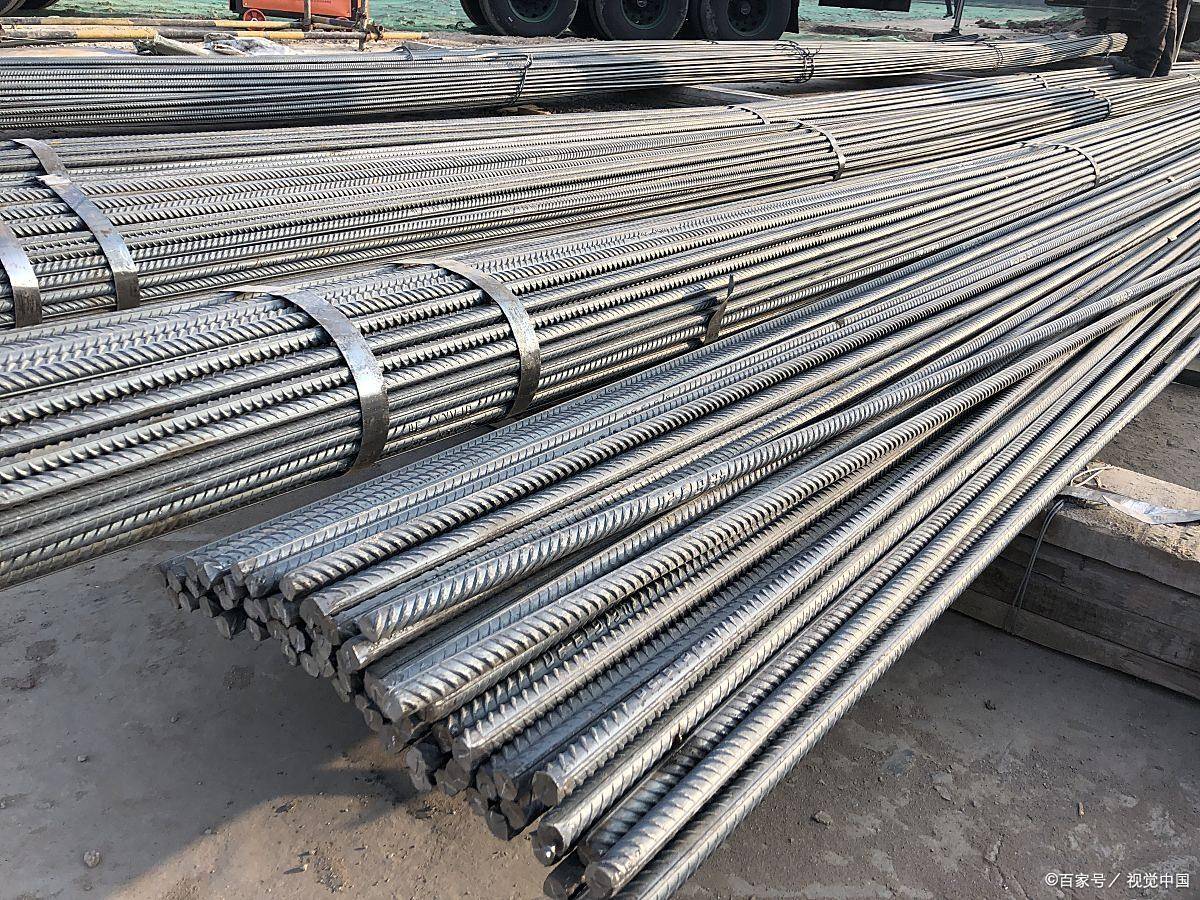
钢价再涨?7月24日螺纹钢热卷中厚板最新价格一览
Sou Hu Cai Jing· 2025-07-24 23:17
Core Viewpoint - The steel market is experiencing mixed price movements, with various factors driving the fluctuations in prices of rebar, hot-rolled sheets, and medium-thick plates [1] Group 1: Medium-Thick Plates - In Wuhan, the price of medium-thick plates surged by 120 yuan/ton to reach 3460 yuan/ton due to production cuts by large local steel mills, leading to a sharp decrease in market supply [3] - In contrast, prices in the Pearl River Delta region remained stable, supported by steady demand from equipment manufacturing and infrastructure projects [3] - Traders holding low-cost inventory may find an optimal opportunity to cash out amid the price surge [3] Group 2: Hot-Rolled Sheets - Prices for hot-rolled sheets increased by approximately 30 yuan/ton in cities like Beijing, Chongqing, and Jinan, while Wuhan saw a rise of 60 yuan/ton; however, Shanghai experienced a decline of 20 yuan/ton [4] - The price divergence is attributed to supply-demand dynamics and export conditions, with Wuhan's price increase driven by strong export orders reducing domestic supply [4] - The market sentiment reflects a mix of urgency and caution, as companies with firm orders feel compelled to purchase while those lacking orders adopt a wait-and-see approach [4] Group 3: Rebar - Rebar prices showed varied movements, with Beijing stable at 3320 yuan/ton, while Shanghai and Guangzhou saw increases of 10 yuan/ton and 40 yuan/ton, respectively [5] - The price increases in northern regions, particularly Jinan and Handan, are due to production cuts by steel mills, tightening market supply [5] - Southern regions benefit from robust demand driven by infrastructure projects, although some companies are hesitant to buy, hoping for price corrections [5] Group 4: Market Dynamics - The core drivers of price fluctuations are identified as "funds" and "demand," with project funding leading to increased steel demand and mills maintaining prices to protect margins [8] - The extent and speed of price increases depend on downstream market acceptance of high-priced steel [8] - Future price trends should be assessed based on multiple factors, including export orders, domestic manufacturing recovery, project initiation pace, and stability of funding [8] Group 5: Market Outlook - Steel traders are advised against blindly chasing prices and should stock based on actual demand [9] - Engineering projects should procure materials timely to avoid delays due to shortages, while downstream processing companies should manage inventory according to their order situations [9] - The current price fluctuations are neither excessively high nor low, emphasizing the importance of rational judgment and cautious decision-making [9]

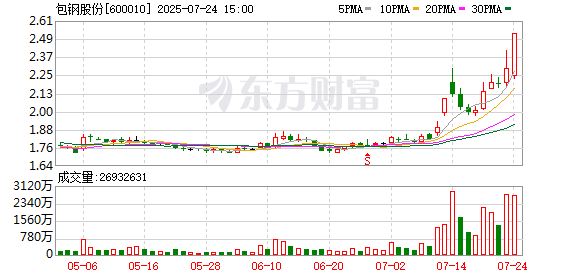
钢铁行业资金流入榜:包钢股份、海南矿业等净流入资金居前
Zheng Quan Shi Bao Wang· 2025-07-24 11:19
Market Overview - The Shanghai Composite Index rose by 0.65% on July 24, with 28 out of 33 sectors experiencing gains, led by the beauty care and non-ferrous metals sectors, which increased by 3.10% and 2.78% respectively [2] - The steel industry ranked third in terms of daily gains, with an increase of 2.68% [3] Fund Flow Analysis - The net inflow of capital in the two markets was 8.913 billion yuan, with 16 sectors seeing net inflows [2] - The non-ferrous metals sector had the highest net inflow of 7.736 billion yuan, followed by the non-bank financial sector with a net inflow of 5.644 billion yuan [2] Steel Industry Performance - The steel industry saw a net inflow of 1.473 billion yuan, with 37 out of 44 stocks in the sector rising [3] - Among the steel stocks, Baogang Co. had the highest net inflow of 1.443 billion yuan, followed by Hainan Mining and Dazhong Mining with net inflows of 109 million yuan and 106 million yuan respectively [3][4] Individual Stock Performance - The top three stocks with significant net outflows in the steel sector were Jiugang Hongxing, Bayi Steel, and Shagang Co., with outflows of 74.2516 million yuan, 62.2445 million yuan, and 55.7950 million yuan respectively [3][5] - The overall performance of steel stocks showed a strong positive trend, with a majority of stocks experiencing gains [3]


大类资产早报-20250724
Yong An Qi Huo· 2025-07-24 08:31
Report Information - Report Date: July 24, 2025 [2] - Report Title: Global Asset Market Performance and Related Trading Data Key Points of Global Asset Market Performance 10 - Year Treasury Yields of Major Economies - On July 23, 2025, yields in the US, UK, France, etc., were 4.383%, 4.634%, 3.299% respectively, with various changes in the latest, weekly, monthly, and yearly periods [3] 2 - Year Treasury Yields of Major Economies - On July 23, 2025, yields in the US, UK, Germany, etc., were 3.850%, 3.876%, 1.839% respectively, with different changes over different time - spans [3] Dollar Exchange Rates Against Major Emerging - Market Currencies - On July 23, 2025, the exchange rate of the dollar against the Brazilian real was 5.520, with a latest change of - 0.81%, and different changes in other time periods [3] Stock Indices of Major Economies - On July 23, 2025, the S&P 500 was at 6358.910, with a latest change of 0.78%, and different changes in weekly, monthly, and yearly periods. Other indices like the Dow Jones Industrial Average, Nasdaq, etc., also had their respective performances [3] Credit Bond Indices - The US investment - grade credit bond index, euro - zone investment - grade credit bond index, etc., had different changes in the latest, weekly, monthly, and yearly periods [3][4] Key Points of Stock Index Futures Trading Data Index Performance - The closing prices of A - shares, CSI 300, SSE 50, etc., were 3582.30, 4119.77, 2801.20 respectively, with corresponding percentage changes [5] Valuation - The PE (TTM) of CSI 300, SSE 50, and other indices were 13.53, 11.44, etc., with corresponding环比changes [5] Risk Premium - The risk premium of the S&P 500 was - 0.68, with a环比change of - 0.07, and the German DAX had its own values [5] Fund Flows - The latest values of fund flows in A - shares, the main board, etc., were - 1079.62, - 851.71, etc., with different 5 - day average values [5] Trading Volume - The latest trading volumes of the Shanghai and Shenzhen stock markets, CSI 300, etc., were 18646.00, 4703.31, etc., with corresponding环比changes [5] Main Contract Basis - The basis of IF, IH, IC were - 10.57, 1.60, - 76.76 respectively, with corresponding percentage changes [5] Key Points of Treasury Futures Trading Data Treasury Futures - The closing prices of T00, TF00, T01, TF01 were 108.520, 105.790, 108.600, 105.875 respectively, with corresponding percentage changes [6] Funding Rates - The R001, R007, SHIBOR - 3M were 1.4268%, 1.5017%, 1.5510% respectively, with corresponding daily changes in basis points [6]
通源石油收盘下跌1.47%,滚动市盈率60.15倍,总市值31.54亿元
Sou Hu Cai Jing· 2025-07-23 09:38
Group 1 - The core viewpoint of the articles indicates that Tongyuan Petroleum's stock is currently underperforming with a closing price of 5.36 yuan, down 1.47%, and a rolling PE ratio of 60.15 times, significantly higher than the industry average of 29.78 times [1][2] - The company's total market capitalization is reported at 3.154 billion yuan, ranking 19th in the industry based on PE ratio [1][2] - In terms of capital flow, Tongyuan Petroleum experienced a net outflow of 42.45 million yuan on July 23, with a total outflow of 59.96 million yuan over the past five days [1] Group 2 - Tongyuan Petroleum's main business focuses on providing comprehensive solutions and technical services for oil and gas field development, with key products including perforation sales and other oilfield services [1] - The latest financial results for the first quarter of 2025 show that the company achieved an operating revenue of 258 million yuan, representing a year-on-year increase of 13.21%, while net profit was 782,700 yuan, reflecting a significant decline of 80.38% [1] - The company's gross profit margin stands at 22.53% [1]

因对美担忧加剧,投资者蜂拥欧洲寻求稳定
Shang Wu Bu Wang Zhan· 2025-07-22 13:50
Group 1 - The article highlights a shift in investor focus from the US to Europe due to increasing uncertainty in US trade policies and the desire for a more stable investment environment [1] - European infrastructure and defense spending plans are attracting capital inflows, providing policy continuity and predictability, contrasting with the erratic nature of US policies under Trump [1] - Data from LSEG indicates that European equity funds have seen inflows exceeding $100 billion this year, three times the amount from the same period last year, while US equity funds have experienced outflows of nearly $87 billion [1] Group 2 - Germany, as the largest economy in the EU, has seen foreign direct investment double to €46 billion in the first four months of 2025, marking a new high since 2022 [2] - There are warnings from investors that Europe must act quickly to maintain this momentum, with KfW's head emphasizing the need for Europe to view current sentiment as both a warning and an incentive [2] - Deutsche Bank's CEO confirmed strong investor interest in Europe and Germany but stressed the necessity for long-term stable conditions to sustain this interest [2]

盛景微龙虎榜:营业部净卖出8525.75万元
Zheng Quan Shi Bao Wang· 2025-07-22 11:10
Group 1 - The stock of Shengjing Micro (603375) increased by 6.17% with a turnover rate of 28.04% and a trading volume of 666 million yuan, showing a fluctuation of 8.13% [2] - The stock was listed on the Shanghai Stock Exchange due to its high turnover rate, with a net selling amount of 85.26 million yuan from brokerage seats [2] - The top five brokerage seats accounted for a total transaction amount of 168 million yuan, with a buying amount of 41.30 million yuan and a selling amount of 127 million yuan, resulting in a net selling of 85.26 million yuan [2] Group 2 - The largest buying brokerage was Guotai Junan Securities with a purchase amount of 9.81 million yuan, while the largest selling brokerage was Kaiyuan Securities with a selling amount of 43.65 million yuan [3][4] - The stock experienced a net inflow of 8.89 million yuan in main funds, with a significant inflow of 12.91 million yuan from large orders, while large orders saw a net outflow of 4.03 million yuan [2] - Over the past five days, the net inflow of main funds totaled 80.39 million yuan [2] Group 3 - As of July 21, the margin trading balance for the stock was 84.38 million yuan, with a financing balance of 84.32 million yuan and a securities lending balance of 0.058 million yuan [3] - The financing balance increased by 2.62% over the past five days, while the securities lending balance increased by 11.40% [3] - The company reported a first-quarter revenue of 88.01 million yuan, a year-on-year decrease of 0.73%, and a net profit of 4.17 million yuan, a year-on-year increase of 282.55% [3]
