首发经济

Search documents
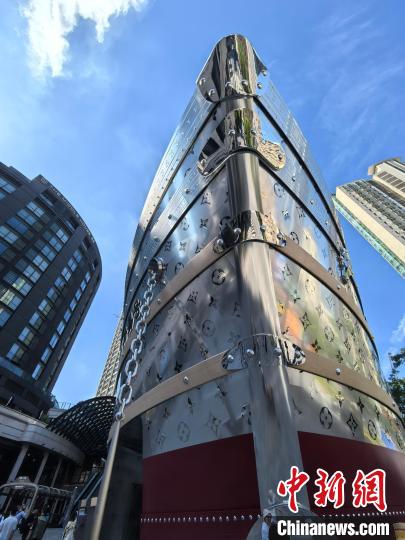
在上海繁华商圈打卡“路易号”:国际顶流品牌持续看好中国市场
Zhong Guo Xin Wen Wang· 2025-07-01 00:27
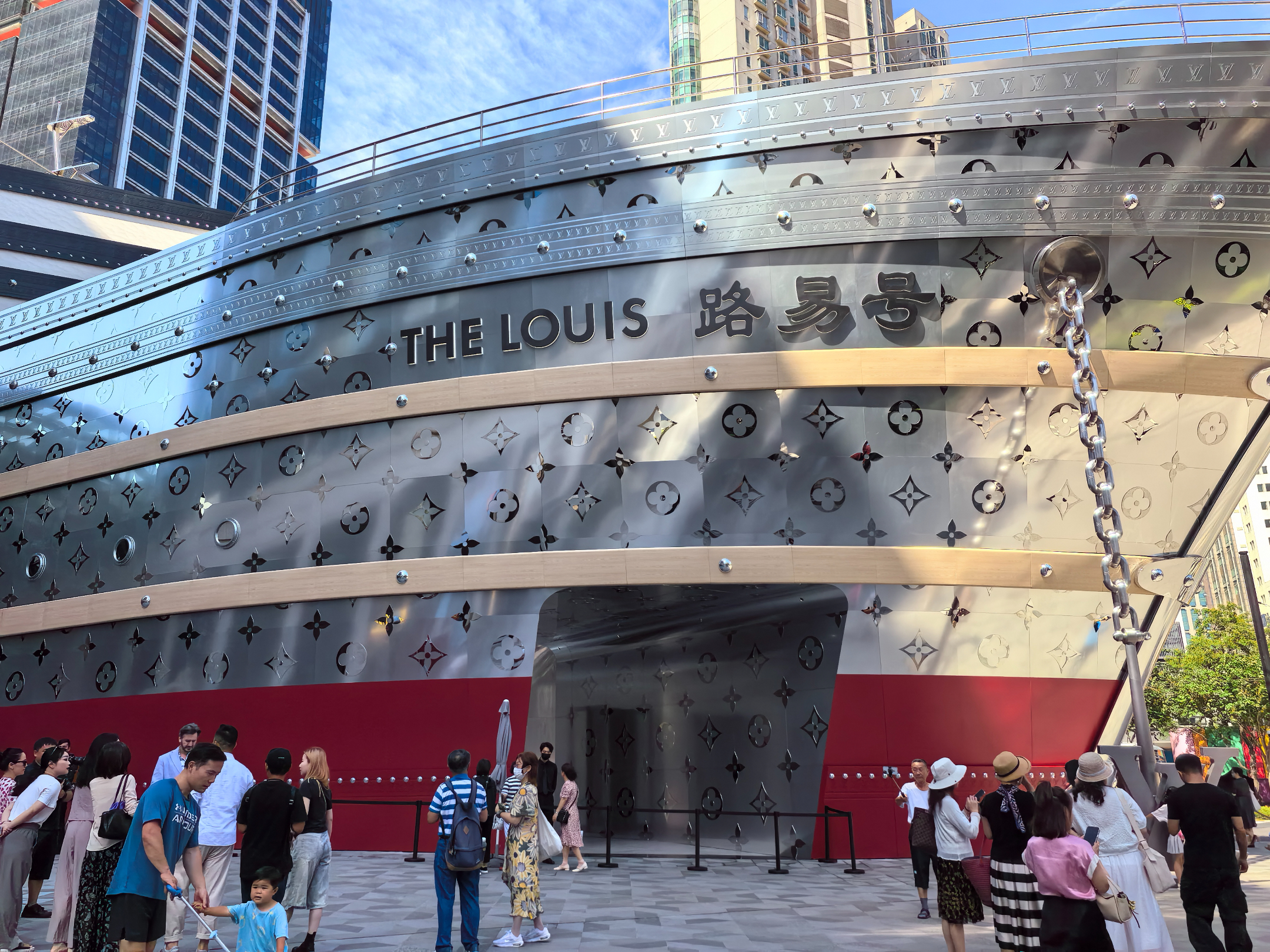
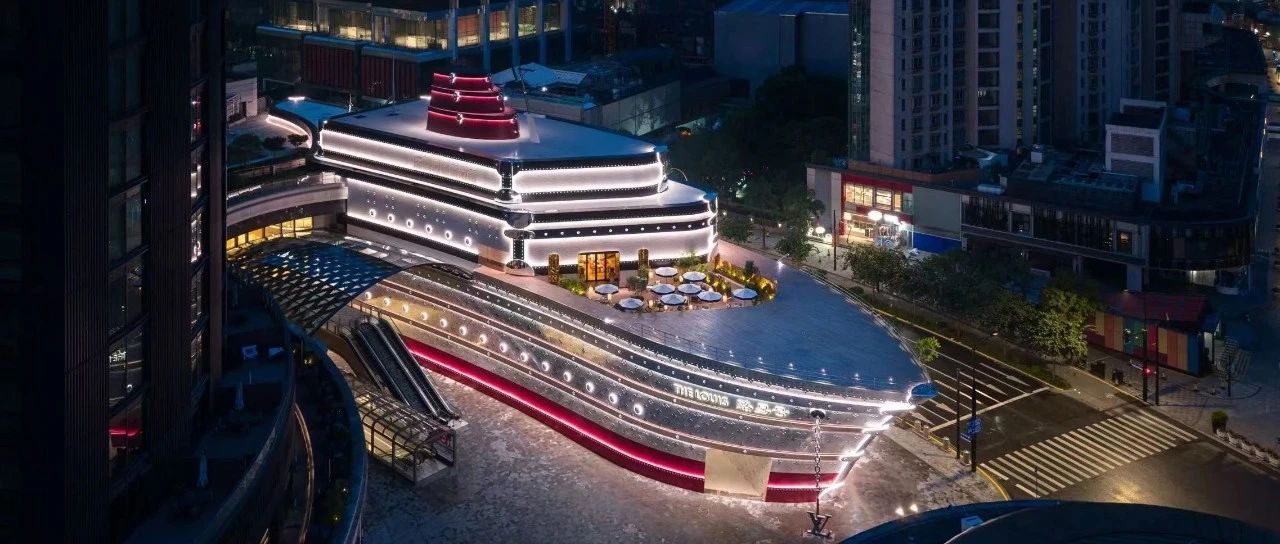
Core Insights - The new concept landmark "Louis Number" by the French luxury brand has attracted significant attention in the bustling Nanjing West Road business district of Shanghai [1][2] - The design of "Louis Number" is inspired by the brand's history of creating hard cases for transoceanic journeys in the 19th century, highlighting Shanghai's port culture and its status as an international shipping trade center [2][5] - The exhibition "Extraordinary Journey" within "Louis Number" connects history and future, showcasing the brand's craftsmanship and cultural significance [2][5] Company and Industry Summary - "Louis Number" features a total exhibition area of 1,200 square meters, spanning two levels, focusing on themes of travel, craftsmanship, fashion, and innovation [2] - The project reflects a successful collaboration between the Jing'an District and international brands, enhancing the district's appeal for foreign investment and boosting consumer spending [5][6] - The Nanjing West Road business district hosts over 2,000 domestic and international brands, with international brands accounting for more than 70% of the total [5] - The district has organized nearly 100 commercial events this year, generating a consumption of 11.9 billion yuan [5] - The rapid realization of the "Louis Number" project, completed in about three months, exemplifies Jing'an's commitment to creating a world-class business environment [6]

助力中小企业走向专精特新,中博会达成意向成交超千亿
Di Yi Cai Jing· 2025-06-30 13:14
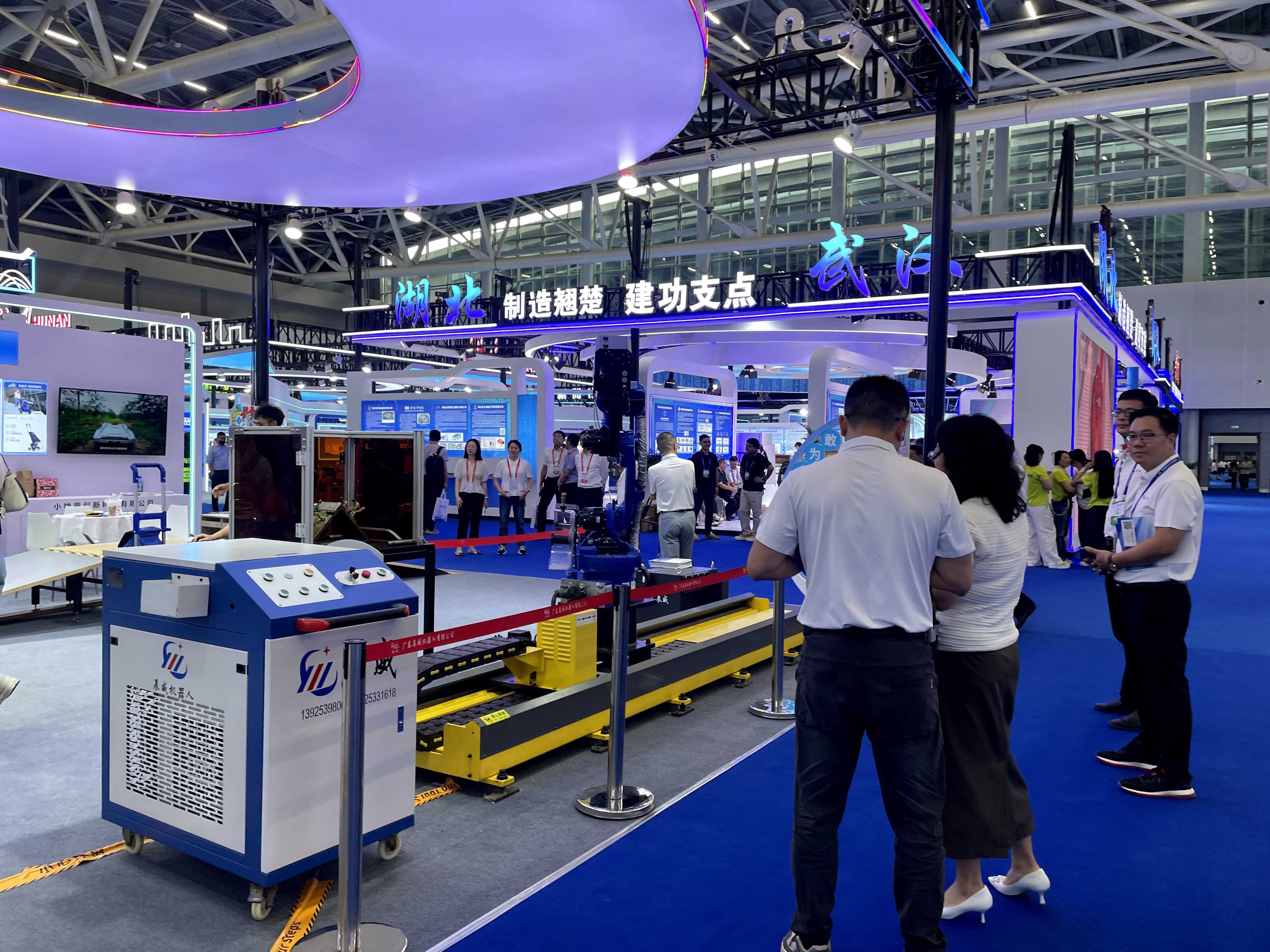
Group 1 - The 20th China International Small and Medium Enterprises Fair (CISMEF) serves as a crucial platform for small and medium enterprises (SMEs) to transition from "small and scattered" to "specialized, refined, distinctive, and innovative" [1] - The exhibition area of this year's CISMEF was approximately 80,000 square meters, featuring over 3,500 booths and attracting more than 2,000 enterprises from over 50 countries and regions [1] - The fair facilitated over 10,000 buyers who attended for discussions and procurement, resulting in an intended transaction amount exceeding 100 billion yuan [1] Group 2 - The industrial design and digital transformation exhibitions were significant highlights, showcasing over 1,000 square meters dedicated to these themes [4] - The industrial design section featured over 150 international design award-winning works and demonstrated the impact of design on industry chain upgrades [4] - The digital transformation exhibition gathered 55 enterprises focusing on digital transformation in niche industries and the application of AI in new industrialization [5] Group 3 - The concept of "first-release economy" was integrated with "specialized, refined, distinctive, and innovative" enterprises, promoting new quality productivity [5] - A series of new product launch activities were organized, targeting "little giant" enterprises to showcase new technologies and products, resulting in 10 "most popular new products" and over 100 shortlisted items [5] - The fair included 22 live product launch events and 3 media exchange meetings to support SMEs in market innovation and enhance supply chain resilience [5] Group 4 - The Guangdong-Hong Kong-Macao Greater Bay Area showcased its strength in intelligent manufacturing through the participation of over 1,500 outstanding SMEs from various provinces and cities [6] - Shenzhen Lexing Tianxia Technology Co., a national-level "little giant" enterprise, is expanding its domestic market presence while focusing on overseas sales of electric unicycles [10] - Guangzhou Ligong Industrial Co. presented humanoid robots and flexible solutions for screw fastening, aiming to meet the demands of traditional automotive industries [10] Group 5 - Guangdong Zhongqiang Electromechanical Technology Co. showcased humanoid robots aimed at research institutions and academic fields, emphasizing their open-source development platform [11] - By the end of 2024, the number of SMEs in Guangdong is projected to reach 7.745 million, with a year-on-year growth of 6.86%, and the province has nurtured over 2,089 "little giant" enterprises [11]
“大船”开进南京西路!“首发经济”带热商圈
Guo Ji Jin Rong Bao· 2025-06-30 13:01
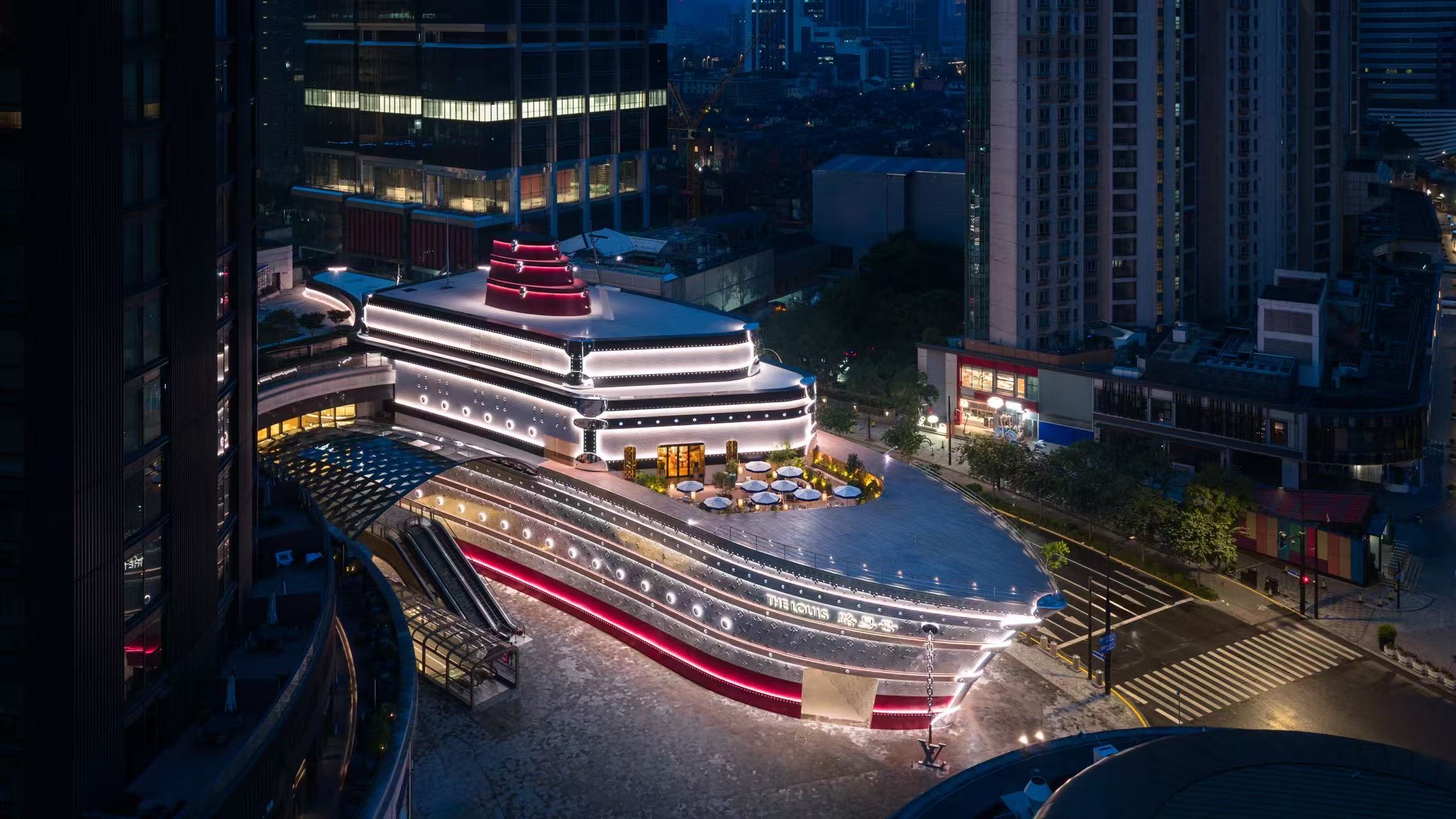
Group 1 - The core concept of the article revolves around the launch of Louis Vuitton's (LV) unique concept space "Louis Ship" in Shanghai, which has become a popular new landmark attracting large crowds [1][3] - "Louis Ship" is designed as a metal cruise ship, measuring 114.5 meters in length and 30 meters in height, with a total area of 1,600 square meters, showcasing LV's brand heritage and Shanghai's port culture [3][8] - The space features a three-level experience area, including an exhibition titled "Extraordinary Journey," a boutique selling LV products, and a café, creating a blend of exhibition, retail, and dining experiences [8][9] Group 2 - The "Louis Ship" project reflects the rapid development capabilities of Shanghai's Jing'an District, with the entire process from concept to completion taking only three months, highlighting the district's efficient business environment [9][10] - The project is part of a broader trend in Shanghai's "first launch economy," which emphasizes the importance of premier brand experiences and has seen significant growth in new store openings, with 364 new stores established in the first five months of the year [10][14] - LV's investment in this unique space indicates the brand's confidence in the Chinese market's potential, particularly in the context of evolving consumer preferences among younger generations [14][18] Group 3 - The article highlights the competitive advantage of Shanghai as a retail hub, with a projected retail sales total of 1.79 trillion yuan in 2024, supported by a high concentration of international brands in the Jing'an District [15][18] - Shanghai's "first launch economy" strategy includes innovative customs policies and financial incentives for new store openings, further enhancing the city's attractiveness to global brands [15][18] - The establishment of "Louis Ship" is seen as a significant step in reinforcing Shanghai's position as a global trendsetter in fashion and luxury retail, contributing to the city's international influence [18]
从逛腻了到打卡地:ESG帮助商场拉回“出走”客群
Zhong Guo Zheng Quan Bao· 2025-06-29 20:59
"商业同质化""场景老化""电商平台竞争"是百货行业2024年年报中频繁提及的关键词。浓缩了本地特色 与时代记忆的百货商场近年来面临消费者流失的局面,行业进入调整改造期。中国证券报记者梳理申万 百货行业22家上市公司的ESG信息后发现,它们的ESG信息披露整体水平欠佳,多数公司ESG评级在A 股上市公司中处于中低水平。 治理架构 (吨二氧化碳当量) (吨二氧化碳当量) 天虹股份 -2.49 《2024年度环境、社会及公司治理报告》 披露 588987.8(范围一、二) 579484.7(范围一、 二) 王府井 -6.97 《2024环境、社会及治理(ESG)报告》 披露 487414.31(范围一、二) 543226.38(范围 一、二) 武商集团 -6.60 无 未披露 未披露 未披露 广百股份 3.46 《2024年度环境、社会及公司治理(ESG)报告》 披露 未披露 未披露 专家认为,未来,发力"首发经济",加强消费场景创新,以"绿色消费"作为差异化卖点,通过可持续运 营节约经营成本,通过增强企业社会责任提升品牌价值,成为百货行业上市公司提质突围的方向。当 下,一些企业正借助ESG理念,将"逛腻了"的老 ...


首发经济燃动中博会 助力专精特新企业发展
Zhong Guo Xin Wen Wang· 2025-06-28 10:52
Group 1 - The 20th China International Small and Medium Enterprises Expo (CISMEF) is being held in Guangzhou, featuring 1,145 participating companies showcasing cutting-edge products and high-value-added services to drive new industrialization [1][2] - The expo focuses on the "first release economy" strategy, promoting the theme of "advancing the specialized, refined, distinctive, and innovative development of small and medium enterprises" through a series of new product launch activities [1] - A total of 10 "most popular new products" and over 100 "finalist new products" were selected from submissions by specialized "little giant" enterprises, highlighting innovation in technology and products [1] Group 2 - The event includes 22 live product launch activities, 3 media exchange meetings, and 2 industry chain exchange activities, aimed at building a multi-dimensional network for promoting innovative achievements [1] - Six companies, including Beijing Luoan Technology Co., Ltd. and Guangdong Kuku Intelligent Robot Co., Ltd., showcased breakthroughs in AI technology, with financial solutions provided by the Bank of Communications [1] - The organizing committee stated that the integration of "first release economy" and "specialized, refined, distinctive, and innovative" approaches positions the expo as a core incubator for new productive forces in China [2]
LV巨轮驶来,首发经济为何青睐上海?
第一财经· 2025-06-27 06:07
Core Viewpoint - The article highlights the significance of Shanghai as a hub for international brands, showcasing the recent launch of Louis Vuitton's "Louis Ship" as a symbol of the city's cultural and economic vibrancy, and its ability to attract new consumption models and experiences [1][2][3]. Group 1: Investment and Infrastructure - The "Louis Ship" project has a substantial investment scale, covering an area of 1,600 square meters, featuring a three-level experiential space that combines exhibitions, a café, and retail [1]. - Shanghai's transportation infrastructure is well-developed, with domestic and international flights, railways, and road networks, facilitating the influx of tourists. In 2024, the city is expected to receive over 6.7 million inbound tourists, a year-on-year increase of 84% [3]. - The local government has created a favorable business environment, exemplified by the successful hosting of over 100 themed events in Jing'an District, attracting more than 20 million visitors and generating an economic contribution of 14.3 billion yuan [3]. Group 2: Market Dynamics and Consumer Behavior - The internationalization of Shanghai attracts global brands due to the high acceptance of new business models among consumers, particularly among Generation Z and millennials who value cultural and emotional connections over mere product functionality [2]. - The presence of over 2,000 well-known brands in the Nanjing West Road area, with more than 70% being international brands, creates a fertile ground for brand collaboration and development [4]. Group 3: Government Support and Talent Pool - The efficient collaboration between government departments has enabled rapid project execution, as seen in the "Louis Ship" project, which took only about three months from conception to completion [4]. - Shanghai's rich talent pool, high levels of foreign language proficiency, and advanced technology contribute to its innovative capacity and support for new consumption models [4]. Group 4: Future Prospects - The concept of "first economy" encompasses not only flagship stores but also events and product launches, with Shanghai positioning itself as a premier destination for inbound tourism and new brand experiences [5][6]. - The continuous efforts in enhancing the industrial ecosystem, diverse scenarios, and optimized business environment are expected to lead to more first economy projects in Shanghai, revitalizing the consumer market [6].
大浪街道布局“四大商圈”驱动消费升级,激活商业繁荣“强引擎”
Sou Hu Cai Jing· 2025-06-27 04:15
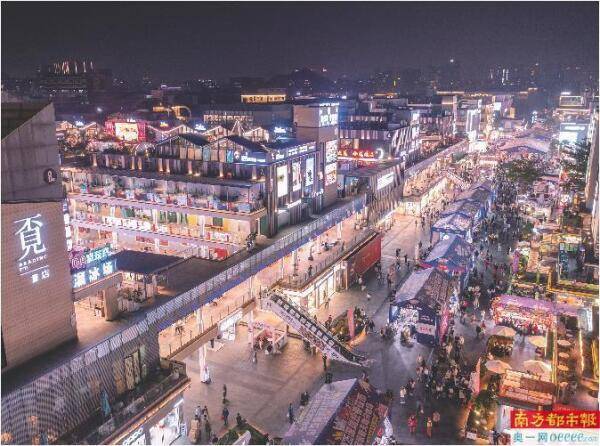
Core Viewpoint - The article highlights the transformation of the Dalang Street area in Shenzhen through the development of four major commercial districts, showcasing a blend of technological innovation and cultural vibrancy that drives consumer upgrades and economic growth [2][5][6]. Group 1: Technological Innovations - The "smart stone" installations at the Houlang New World feature capabilities such as lighting, wireless charging, and video display, enhancing urban life and attracting public interest [2][3]. - An advanced smart parking garage with 2,800 parking spaces operates efficiently through an intelligent management system, addressing parking challenges for residents [3]. Group 2: Cultural and Community Engagement - Events like the "Starry Dalang" singing competition and various cultural activities have been instrumental in attracting crowds and boosting the local economy, demonstrating the integration of culture and commerce [4]. - The viral video of a dancer performing in the rain symbolizes the energetic spirit of Shenzhen, further promoting the area's cultural appeal [3]. Group 3: Economic Development Strategy - The Dalang Street area aims to establish itself as a key player in the international consumer center by developing four distinctive commercial zones, each targeting specific consumer trends and experiences [5][6]. - The area has seen significant growth in retail sales and service industry revenues, ranking among the top in the district for the first four months of the year [5].
消费增速连续27个月高于全国平均水平
Liao Ning Ri Bao· 2025-06-27 01:38
Group 1 - The core viewpoint highlights the vibrant consumption dynamics in Shenyang, driven by events like concerts, which stimulate local tourism and spending [2] - The retail sales of consumer goods in Liaoning province reached 419.13 billion yuan in the first five months of the year, showing a year-on-year growth of 6.4%, surpassing the national average by 1.4 percentage points [2] - The retail sales of major consumer goods categories, such as home appliances and furniture, have seen significant growth, with home appliances and audio-visual equipment sales increasing by 91.2% year-on-year [2] Group 2 - Multiple policies aimed at boosting consumer confidence have been implemented in Liaoning, including measures to promote the silver economy and cultural tourism [3] - The "old-for-new" consumption policy has been effective, with over 6.25 million consumers participating and generating sales of 39.79 billion yuan, contributing to the overall retail sales growth [3] - The retail sales of energy-efficient home appliances and smart phones have increased significantly, with smart phone sales growing by 130% year-on-year [4] Group 3 - The provincial commerce system plans to enhance summer consumption through various festivals and events, while also stabilizing major consumer sectors like automotive sales [4] - New consumption growth points are being explored, including the application of artificial intelligence in commerce and the development of smart retail environments [4]

壹快评|LV巨轮驶来,首发经济为何青睐上海
Di Yi Cai Jing· 2025-06-26 13:20
Core Insights - Louis Vuitton's new landmark "Louis Ship" has debuted in Shanghai, highlighting the city's status as an international hub and its innovative spirit [1][3] - The project represents a significant investment with a total area of 1,600 square meters, featuring a three-level experiential space [3] Investment and Economic Impact - The "Louis Ship" project covers 1,600 square meters, with a height of 30 meters and a length of 114.5 meters, showcasing a blend of exhibition, café, and retail experiences [3] - Shanghai is experiencing a surge in international brand launches, with significant projects from companies like Starbucks, Apple, Disney, and LEGO, indicating a robust consumer market [3][6] Consumer Trends - The acceptance of new business models and consumer experiences in Shanghai is driven by the diverse and personalized demands of younger generations, particularly Gen Z and Millennials [6] - Consumers are increasingly valuing cultural and emotional connections with brands, which aligns with the offerings of international brands [6] Infrastructure and Accessibility - Shanghai's comprehensive transportation network, including domestic and international flights, railways, and cruise services, supports the influx of tourists and enhances the city's capacity to host international projects [6][8] - The city is projected to welcome over 6.7 million inbound tourists in 2024, marking an 84% increase year-on-year, with international tourism revenue expected to reach $11 billion [6] Business Environment - The successful establishment of the "Louis Ship" reflects Shanghai's commitment to creating a favorable business environment, with over 100 themed events attracting more than 20 million visitors in the Jing'an District alone [7] - The Nanjing West Road area, known for its high density of luxury brands, provides a conducive ecosystem for both international and local brands to thrive [7] Collaboration and Efficiency - The rapid development of the "Louis Ship" project, completed in approximately three months, demonstrates the efficiency of local government processes and inter-departmental collaboration [8] - The presence of skilled professionals and a high level of technological advancement in Shanghai contribute to the city's attractiveness for new economic initiatives [8] Future Outlook - The ongoing development of the "first launch economy" in Shanghai is expected to continue, with more projects enhancing consumer experiences and revitalizing the market [8]
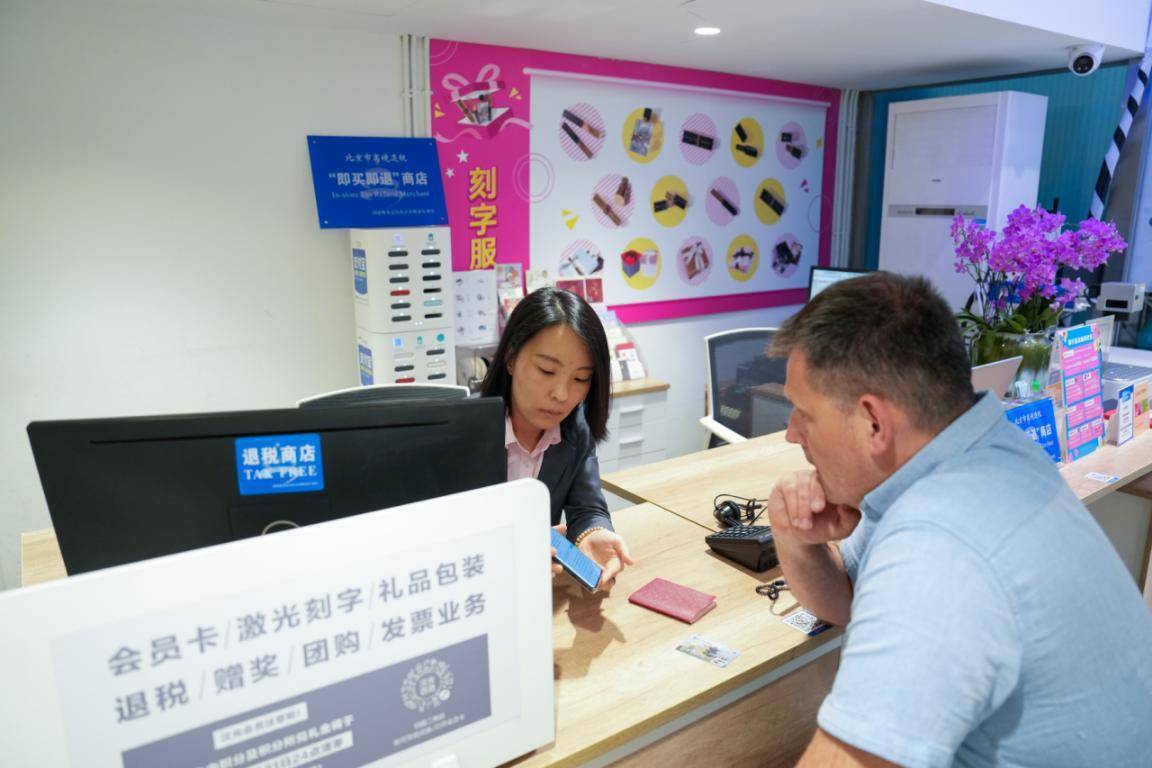
商务部研究院专家:外国人在华消费成为时下热点 “反向代购”引关注
Sou Hu Cai Jing· 2025-06-26 12:13
Core Insights - The optimization of visa-free and tax refund policies, along with the enhancement of China's manufacturing capabilities and the emergence of experiential consumption trends, has stimulated foreign tourists' consumption in China and encouraged "reverse purchasing" by foreigners [1][5][6] Group 1: Policy and Economic Impact - The expansion of the visa-free tax refund policy has made it easier for foreigners to shop in China, contributing to increased foreign consumer spending [3][5] - The shift in foreign shopping preferences from traditional products like silk and tea to high-value items such as drones and smart wearables reflects the improvement in China's manufacturing quality and variety [3][5] Group 2: Consumer Trends - The trend of "immediate purchase and refund" has gained popularity, particularly with the nationwide implementation of the departure tax refund policy, enhancing convenience for foreign shoppers [5][6] - Products that blend traditional Chinese elements with contemporary cultural designs are increasingly favored by foreign consumers [5] - Smart technology products, including smart glasses and drones, have emerged as new highlights in consumer preferences [5][6] Group 3: Strategic Recommendations - There is a need to develop foreign tourist-friendly shopping districts that cater to the specific consumption characteristics of foreign visitors, including multilingual signage and shopping maps [6] - Companies are encouraged to offer customized and personalized products and services for foreign consumers, including exclusive discount packages [6] - Leveraging artificial intelligence to create a range of extended consumer products around popular IPs can help expand the consumption industry chain [6] Group 4: Global Economic Context - The establishment of a global consumption community by China holds significant strategic importance, especially in the context of rising trade protectionism and geopolitical tensions [6][7] - This initiative can contribute positively to the economic recovery of other countries and the overall global economic landscape [7]