
粮食安全

Search documents
马明龙调研粮食安全工作时强调 坚决扛牢责任 提升保障水平 努力促进粮食丰收和农民增收
Zhen Jiang Ri Bao· 2025-07-05 01:37
Core Insights - The article emphasizes the importance of food security as a political responsibility and highlights the need for effective agricultural practices to enhance food production and farmers' income [1][2] Group 1: Food Security and Agricultural Practices - The local government is committed to implementing Xi Jinping's important discourse on "Three Rural Issues" to ensure food security and promote agricultural productivity [1][2] - The restoration of farmland in the Xiaoli Natural Village involves soil improvement and scientific fertilization, with specific areas designated for rice and corn cultivation based on local conditions [1] - The city has a grain storage facility with a total capacity of 30,000 tons, equipped with advanced storage technologies to ensure food safety and effective grain management [1] Group 2: Research and Development in Agriculture - The Zhenjiang Agricultural Science Institute focuses on the innovation and application of new varieties and technologies in agriculture, contributing significantly to the development of the local agricultural sector [2] - The institute is encouraged to strengthen its research capabilities and collaboration with local departments to enhance agricultural productivity and support rural revitalization [2] - Emphasis is placed on the need to improve disaster prevention and mitigation capabilities in agriculture to stabilize planting areas and production levels throughout the year [2]
保障农产品价格稳定 充分保障农民利益——访清华大学中国农村研究院院长王亚华
Xin Hua Cai Jing· 2025-07-04 07:34
Group 1 - The core viewpoint of the articles emphasizes the importance of stabilizing grain prices and ensuring food security in China, particularly through government policies and market mechanisms [2][3]. - The National Food and Strategic Reserves Administration reported that over 50 million tons of summer grain have been purchased, indicating a strong market performance and higher-than-average purchasing levels [1]. - The quality of this year's wheat is reported to be better than in previous years, with purchasing activities being more active compared to the same period last year [1]. Group 2 - The implementation of minimum purchase price policies for wheat in key production areas like Henan, Anhui, and Hebei has led to the purchase of approximately 1.8 million tons, which supports farmers' selling needs and stabilizes market expectations [1]. - The current agricultural market faces dual pressures from external uncertainties, such as volatile international grain prices and low-priced imports, as well as the need for domestic agricultural structure optimization [2]. - To maintain price stability for agricultural products, it is crucial for the government to enhance price policies and subsidies while also improving market information dissemination and production coordination mechanisms [3].

扛稳粮安重任 赋能产业升级——访省粮食和物资储备局局长张弓
He Nan Ri Bao· 2025-07-03 23:30
Group 1 - The provincial government emphasizes the importance of integrating into the national unified market, focusing on industrial transformation and the development of new productive forces [1] - The grain and material reserve system in the province is committed to high-quality development and safety, ensuring food security and market stability [1] - The provincial grain and material reserve bureau has prepared for summer grain procurement, with plans for 28 million tons of available storage capacity and 500 billion yuan in procurement funds [1] Group 2 - The province aims to leverage its unique advantages in wheat resources and logistics to enhance the grain supply chain and market competitiveness [2] - Efforts are being made to establish a wheat trading center and a big data center to optimize grain resource allocation and promote high-quality development [2] - The province is focusing on brand development and promotion in the grain industry, including initiatives to enhance the visibility of local grain and oil brands [2]
我国口粮品种自主率达到100% 处于世界领先水平
Yang Shi Wang· 2025-07-03 22:03
Core Viewpoint - Agricultural modernization in China relies heavily on domestic seed production to ensure food security and stabilize the food supply [1] Group 1: Technological Advancements in Rice Breeding - Significant breakthroughs have been achieved in rice and wheat seed technology, supported by major projects in core agricultural technologies and biological breeding, placing China at a world-leading level [1][5] - A breeding laboratory in Wuhan is conducting experiments to improve rice varieties for resistance to dwarf disease, with over 5,000 new strains being tested for various traits such as disease resistance and yield potential [3] Group 2: Achievements in Rice and Wheat Varieties - China's rice breeding has not only increased yield but also maintained a world-leading position in developing pest-resistant rice, hybrid rice varieties, and high-quality taste rice [5] - The country has achieved 100% self-sufficiency in rice and wheat varieties, all possessing independent intellectual property rights [5] Group 3: Future Directions in Seed Industry - The coverage of quality seeds for grain crops in China has reached nearly full saturation, with over 95% of the planting area consisting of independently bred varieties [7] - The Ministry of Agriculture and Rural Affairs plans to strengthen leading seed enterprises and enhance the integration of production, education, and research [7]

多措并举护航“三夏”生产,淄博冬小麦单产纪录再刷新
Qi Lu Wan Bao Wang· 2025-07-03 09:24
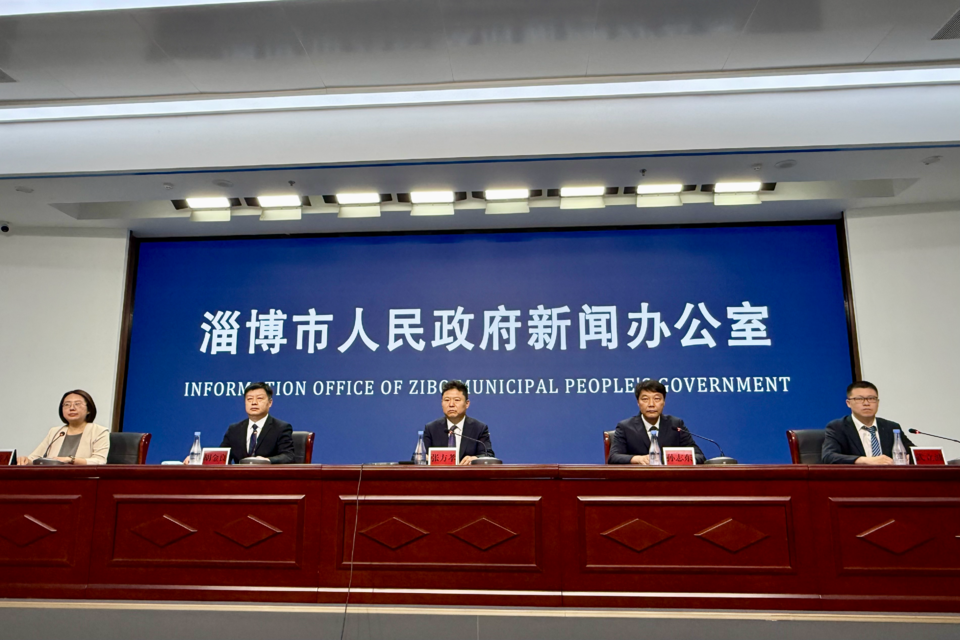
高位推动强统筹。淄博市委、市政府将"三夏"生产列入重要议事日程,精心部署,强力推动。市委、市政府主要负责同志和分管负责同 志多次调研部署"三夏"生产,协调解决重点难点问题,要求精心组织夏粮抢收,确保夏粮颗粒归仓、秋粮种足种好。5月30日,淄博市政 府分管负责同志主持召开全市"三夏"生产视频会议,进一步部署粮食生产重点任务。淄博市农业农村部门成立了由局领导带队的5个工作 指导组,分赴各区县、功能区开展工作督导和技术指导服务。淄博市农业机械事业服务中心下沉一线,帮助区县搞好作业机械调配,确 保农机数量充足、作业安全,为打赢"三夏"生产攻坚战提供了强有力的保障。 齐鲁晚报.齐鲁壹点寇文奇 7月3日,淄博市政府新闻办公室组织召开新闻发布会,邀请市数字农业农村发展中心党总支副书记孙志东介绍全市2025年全市"三夏"生 产情况。 粮食安全是国家安全的重要基础。淄博市坚决扛牢粮食安全这个"国之大者",锚定全年粮食目标,按照"稳面积、提单产、增总产"的思 路,以"抢"字当头、"实"字为要、"干"字为先,狠抓"三夏"生产,全力以赴,坚决打好打赢全年粮食生产第一仗。截至6月23日,全市夏 收夏种全部结束,应收小麦实现颗粒归仓,夏 ...
三条“金牌航线”通往江海未来
Zhen Jiang Ri Bao· 2025-07-02 02:12
Core Insights - Zhenjiang Port has officially surpassed 1,000 vessel calls, marking a significant milestone in its operational capacity [1] - The port achieved a cargo throughput of 295 million tons in 2024, ranking among the top 20 ports in China for the first time, with the highest growth rate among Yangtze River ports [1] - Three new "golden routes" have been launched, focusing on iron ore, agricultural materials, and general cargo, enhancing the port's logistics capabilities [1] Group 1: Iron Ore Operations - Zhenjiang Port serves as the final stop for Capesize vessels transporting iron ore from Australia and Brazil, benefiting from a deep-water channel that has increased loading capacity [2] - The port's deep-water channel has improved the draft capacity from 11.36 meters to 12 meters, allowing for an additional 8,000 tons of iron ore per voyage, saving local enterprises approximately 55 million yuan annually [2] - The port is collaborating with Baowu Steel Group to establish an iron ore processing hub, aiming to become a modern iron ore hub connecting the Yangtze River and global markets [2] Group 2: Agricultural Materials - Zhenjiang Port is the largest potassium fertilizer import port in China, facilitating the efficient transfer of agricultural materials to major production areas [3] - In the first five months of this year, the port handled 652,000 tons of potassium fertilizer and 1.5 million tons of sulfur, ensuring a steady supply of agricultural inputs [3] - The port's policies have reduced vessel docking times by over 30%, enhancing the speed of material delivery to agricultural fields [3] Group 3: General Cargo and Manufacturing Exports - The port has seen a significant increase in general cargo shipments, with a volume exceeding 250,000 tons in 2024 and a tenfold increase in equipment exports [4] - Zhenjiang Port is working with various companies to optimize shipping processes for non-standardized goods, aiming to become the largest export hub for certain products [4] - Future plans include adding new shipping routes and expanding cargo types to enhance the port's operational vitality [4] Group 4: Service Enhancements - The "golden routes" are supported by an upgraded navigation guarantee mechanism, including priority docking and streamlined procedures [5] - The port has established a "green channel" for efficient processing, reducing redundant checks and improving overall transit efficiency [5] - These enhancements connect global markets with Chinese manufacturing and agricultural sectors, positioning Zhenjiang Port for broader operational horizons [5]
“坐”电梯、“穿”新衣、“住”楼房 “大国粮仓”里藏着多少“科技密码”
Yang Shi Wang· 2025-07-02 00:11
Core Insights - The article discusses advanced technologies used in grain storage facilities in China, highlighting innovations that enhance food safety and storage efficiency. Group 1: Grain Storage Innovations - The new shallow round silos in Henan can store 9,800 tons of wheat each, occupying only 1/4 of the area of traditional flat warehouses, allowing one person to manage 3 to 4 silos remotely through an automated control system [1] - The working tower associated with the shallow round silos has a design capacity of 200 tons per hour, enabling the storage of 10,000 tons of grain in just three to four days [2] - The gas membrane silos in Hunan, designed to hold 9,000 tons, utilize a three-layer structure to maintain high airtightness, significantly improving grain preservation in humid southern climates [3] Group 2: Historical Context and Evolution - The article traces the evolution of grain storage from the ancient Li Yang granary, which could store over 30 million jin (approximately 15,000 tons) of grain, to modern automated systems [5] - The historical Li Yang granary, established in 583 AD, served as a crucial national granary and transit point, showcasing the long-standing importance of grain storage in Chinese history [5] - The transition from traditional earth round granaries to semi-automated and modern flat warehouses reflects advancements in grain storage technology over the decades [6][8] Group 3: Structural Comparisons - The article compares cylindrical silos and flat warehouses, noting that cylindrical structures distribute internal pressure evenly, while flat warehouses offer easier maintenance and operational flexibility [10] - Cylindrical silos, such as shallow round and upright silos, are more stable under pressure, while flat warehouses, like the newly built residential-style warehouses, provide better adaptability for different grain types [10]
供销系统护航“三夏”生产
Jing Ji Ri Bao· 2025-07-01 22:10
Core Viewpoint - The national supply and marketing cooperative system plays a crucial role in ensuring food security during the summer harvest, planting, and management seasons by providing comprehensive agricultural services and resources. Group 1: Agricultural Production Services - The cooperative system has established a dedicated team for 24-hour service and an emergency service team to ensure timely support for the summer agricultural activities [1] - Various local cooperatives have innovated service models and integrated resources to meet service demands effectively, such as the establishment of agricultural machinery service alliances in Shandong and Hubei [1] - The cooperative system has over 17,000 production service centers that provide grain drying and storage facilities, ensuring efficient post-harvest services [3] Group 2: Post-Harvest Services - The cooperatives are actively involved in grain drying, storage, and purchasing, with significant operations in key wheat-producing areas like Henan, Shaanxi, and Shanxi [3] - The China Supply and Marketing Group has initiated grain purchasing operations in multiple provinces, successfully acquiring over 100,000 tons of wheat by mid-June [3] Group 3: Agricultural Inputs and Technical Support - The cooperative system ensures timely supply of agricultural inputs, with Hebei cooperatives establishing over 18,000 direct supply points to facilitate fertilizer delivery [4] - Agricultural experts are deployed to provide on-site technical guidance to farmers, covering the entire production chain from harvesting to planting [5] - The modern agricultural service system is highlighted by efficient operations that support the growth of crops, contributing to food security [5]
供销合作社系统助力“三夏”生产 24小时为农服务走进田间地头(市场万花筒)
Ren Min Ri Bao· 2025-07-01 22:08
Core Points - The article highlights the efforts of the China Supply and Marketing Cooperative system in enhancing agricultural production services during the summer harvest season to ensure national food security and achieve a bountiful harvest for the year [1] Group 1: Agricultural Production Services - The cooperative system has mobilized over 20,000 grassroots service outlets and more than 1,300 service personnel to support agricultural production, deploying nearly 600 agricultural machines to ensure timely services during the summer harvest [1] - The cooperative has established a 24-hour service team during the wheat harvest period to ensure zero delays in agricultural services [1] Group 2: Grain Drying and Storage - The cooperative system operates over 17,000 production service centers equipped with grain drying and storage facilities to minimize grain loss and maximize farmers' profits [1] - In Shandong Province, the introduction of drying towers by the cooperative has significantly reduced the drying time for wheat from three to four days to less than half a day [2] Group 3: Grain Purchase and Logistics - The China Supply and Marketing Group initiated grain purchases in early May, with over 10 grain warehouses and 13 docks activated, successfully acquiring over 100,000 tons of wheat by mid-June [2] - The cooperative is addressing storage, transportation, and sales challenges for summer grain, ensuring readiness for grain acquisition [2] Group 4: Agricultural Inputs and Technical Support - In Hebei Province, the cooperative has established over 18,000 direct supply points and implemented an "online ordering, offline delivery" model to ensure timely fertilizer supply to farmers [3] - The cooperative in Jiangsu Province has formed a "technical service team" to provide comprehensive technical guidance to farmers, enhancing efficiency in the entire agricultural process from harvesting to planting [3]
从“智能烘粮”看科技赋能农业
Xin Hua Ri Bao· 2025-07-01 21:44
Group 1 - The transition from traditional "sun drying" to "intelligent drying" reflects the proactive approach of local governments in leveraging technology for food security, showcasing their emphasis on research and development [2][3] - The implementation of advanced drying equipment has significantly improved efficiency and quality, reducing grain loss to below 5% and allowing for drying within four to five hours, compared to traditional methods which resulted in a loss of 30 kilograms per ton of wheat [2] - The collaboration among various stakeholders, including government, agricultural cooperatives, and research institutions, has been crucial in promoting the development of grain drying centers and enhancing agricultural modernization [2] Group 2 - The increase in the number of drying machines to approximately 37,000 units in the province this year has ensured that grain is properly stored, addressing the challenges posed by weather conditions during harvest [1] - The government's support through subsidies and infrastructure investment has facilitated the establishment of grain drying centers, enabling farmers to access socialized drying services [1] - The ongoing technological advancements and government policies are expected to further drive the grain drying industry towards intelligent, green, and large-scale development, reinforcing the foundation of national food security [3]