能源转型

Search documents
海内外全面开花,储能迈向市场化新阶段
Zhong Guo Neng Yuan Wang· 2025-12-25 02:20
Core Insights - The cancellation of mandatory energy storage requirements has not hindered the growth momentum of the energy storage industry, with significant market expansion observed in both domestic and international markets in the second half of the year [1][2] - Energy storage is increasingly recognized for its economic value and importance in renewable energy consumption, with a notable rise in its share within the lithium battery market [1] Market Growth - The global lithium battery production reached 2058.44 GWh in the first 11 months of the year, marking a year-on-year increase of 48.59%, while the cumulative production of energy storage batteries was 535.98 GWh, up 64.14% year-on-year [1] - The energy storage battery's share of total lithium battery production exceeded 25% in the first half of the year and increased to 26% over the first 11 months, with November alone reaching 28% [1] - The expected installed capacity of lithium energy storage in China for 2025 is projected to reach 157 GWh, representing an 82.9% year-on-year growth [1] Regional Insights - China, Europe, and the United States account for approximately 90% of the energy storage market, with China holding a market share of 50%-60% [2] - The European market is expected to see a significant growth rate of 92%, with an anticipated addition of 48 GWh of installed capacity [2] - The U.S. market has experienced a slowdown in growth due to tariff fluctuations and lengthy project approval times, while the Middle East is emerging as a rapidly growing market driven by energy transition and decarbonization demands [3] Supply Chain Dynamics - In the first three quarters of 2025, global energy storage cell shipments reached 410.45 GWh, a year-on-year increase of 98.5%, with the third quarter setting a new record for quarterly shipments at 170.24 GWh [3] - Chinese companies dominate the global energy storage cell market, with the top ten companies holding a market share of 89.9% [4][5] Future Projections - The global energy storage battery shipment is expected to reach 746 GWh in 2026, with a year-on-year growth rate of 39% [5] - The global energy storage market is projected to have significant growth potential, with estimates suggesting that the peak annual installed capacity could exceed 1.5 TWh by 2035, indicating an 8.6 times growth potential from current levels [5] International Expansion - Chinese companies are increasingly expanding into overseas markets, with significant growth in international revenue observed, particularly for companies like CATL [6] - The overseas energy storage market is characterized by higher marketization levels and greater profit margins due to more pronounced peak-valley price differences [6] - As of October 2025, 47 Chinese companies have signed or completed overseas strategic collaborations and projects totaling approximately 69 GWh [6] Pricing Trends - The rising prices of energy storage cells reflect strong downstream demand, with major lithium battery material companies operating at full capacity [7] - Long-term contract negotiations for 2026 have already been completed, with price increases of 0.02-0.04 CNY per watt-hour compared to 2025 levels [7]





全球储能行业正开启增长新周期 | 券商晨会
Sou Hu Cai Jing· 2025-12-25 01:15
|2025年12月25日 星期四| NO.1国金证券:全球储能行业正开启增长新周期 国金证券指出,全球储能行业正开启增长新周期,预计2026年全球储能新增装机将达438GWh,同比增 长62%。增长动力由过去的单一新能源消纳,转变为"AI算力基建+能源转型刚需+电网阻塞"的三重驱 动。行业供需关系显著改善,由去库周期转入补库繁荣期,部分产业链环节将迎来量价齐升。 每日经济新闻 中信建投研报称,低空经济作为国家战略性新兴产业,需强化政策体系的系统性与前瞻性,破解空域管 理碎片化、审批效率需提高等核心矛盾。低空经济基础设施建设层面,需要加速硬基础设施网络布局、 推进低空数字基础设施与智慧化管理等。以eVTOL为核心的新型飞行器作为行业发展的关键载体,需 突破技术壁垒、完善产业链并加速商业化落地。展望未来,随着制度与技术创新的进一步深化,基础设 施的不断完善,应用场景的持续丰富拓展,低空经济产业有望实现良好增长,为新质生产力发展注入新 动能。 NO.3中信建投:聚焦核聚变产业中上游投资机会 12月25日,中信建投研报称,可控核聚变因燃料充足、清洁环保、能量密度高且相对安全等优势,被认 为是能源革命的终极解决方案,也 ...
全球储能行业正开启增长新周期
Mei Ri Jing Ji Xin Wen· 2025-12-25 00:48
Group 1 - The global energy storage industry is entering a new growth cycle, with an expected addition of 438 GWh of new installations by 2026, representing a 62% year-on-year increase. The growth is driven by three factors: AI infrastructure, energy transition needs, and grid congestion [1] - The supply-demand relationship in the energy storage sector is significantly improving, transitioning from a destocking phase to a replenishment boom, leading to simultaneous increases in both volume and price in certain segments of the industry [1] Group 2 - The low-altitude economy is expected to achieve good growth as a strategic emerging industry, necessitating a more systematic and forward-looking policy framework to address core issues such as fragmented airspace management and the need for improved approval efficiency [2] - Infrastructure development for the low-altitude economy requires accelerated deployment of hard infrastructure networks and the advancement of low-altitude digital infrastructure and smart management [2] - The new type of flying vehicle centered around eVTOL is crucial for industry development, requiring breakthroughs in technology, improvement of the industrial chain, and acceleration of commercialization [2] Group 3 - Controlled nuclear fusion is viewed as the ultimate solution for the energy revolution due to its abundant fuel supply, environmental cleanliness, high energy density, and relative safety, making it a focal point of strategic competition in the energy sector among major countries [3] - With breakthroughs in high-temperature superconductors and AI technology, along with continuous policy and capital support, the construction of large scientific facilities is becoming a priority for various countries, and commercial fusion projects are gaining traction in the capital markets [3] - The current focus in the controlled nuclear fusion industry is on technological engineering and commercial feasibility breakthroughs, with significant investment opportunities concentrated in the upstream segments related to the construction of large scientific facilities and experimental reactors [3]

国产天然气有望保持较快增长
Jing Ji Ri Bao· 2025-12-24 22:00
中国石油集团经济技术研究院副院长吴谋远表示,石油产量预计今年可能达2.15亿吨至2.16亿吨,天然 气在"十四五"时期实现大发展,每年天然气产量新增130亿立方米左右,在"十五五"时期,预计持续稳 健发展。 中国石油集团经济技术研究院天然气市场研究所所长段兆芳表示,2000年以来,我国天然气市场进入快 速发展阶段,天然气消费年均增速达13%左右,占一次能源消费比重达9%左右。从今年天然气市场新 特点和新变化看,我国天然气消费进入短暂调整期,预计明年将恢复较快增长。同时,国产气作用将更 加突出,国家持续大力推进勘探开发,预计"十五五"时期,国产气保持较快增长,致密气、页岩气、煤 层气等是未来主要的增量主体。 同时,论坛发布了《2060世界和中国能源展望报告(2025版)》,预计在基准情景下,受经济发展和产 业升级等带动,我国一次能源需求将于2035年达到50亿吨标准油(约71亿吨标准煤)的峰值,较2025年 增长约20%。到2060年,我国能源需求将保持在45亿吨标准油(约64亿吨标准煤)以上。 在近日举行的2025国际能源发展高峰论坛上,《中国油气行业"十四五"发展成就报告》(以下简称《报 告》)发布。《报告 ...

日本最大核电站拟重启面临信任危机
Xin Lang Cai Jing· 2025-12-24 19:51
Core Viewpoint - The Niigata Prefectural Assembly has approved a supplementary budget to restart the Kashiwazaki-Kariwa Nuclear Power Plant, Japan's largest nuclear facility, which has been shut down since 2012 following the Fukushima disaster. This decision has sparked significant controversy and public opposition [1][2]. Group 1: Nuclear Power Plant Restart - The Kashiwazaki-Kariwa Nuclear Power Plant has a total installed capacity of approximately 8.212 million kilowatts and began operations in 1985 [1]. - The plant was initially shut down in March 2012 after the Fukushima disaster, and its restart has faced multiple delays due to safety concerns and equipment failures [1]. - The Niigata Prefectural Assembly's approval allows for the restart of units 6 and 7, with a potential restart date set for January 2026 if all goes smoothly [1]. Group 2: Government and Economic Context - The Japanese government aims to increase nuclear power's share of total electricity generation to 20-22% by 2030, as outlined in its 2021 energy plan [2]. - Tokyo Electric Power Company (TEPCO) has lost operational capacity in its other nuclear plants, making the restart of Kashiwazaki-Kariwa critical for its business restructuring and profitability [2]. - The current depreciation of the yen has increased energy import pressures, further motivating the government to restart nuclear power [2]. Group 3: Public Sentiment and Trust Issues - Public opposition is significant, with approximately 70% of Niigata residents expressing distrust towards TEPCO, reflecting a broader skepticism towards the government's assurances of nuclear safety [2][3]. - Historical incidents, including the 2007 earthquake and the 2011 Fukushima disaster, have eroded public trust in TEPCO and the government's nuclear safety claims [3]. - Despite new safety regulations implemented by the Nuclear Regulation Authority, public confidence remains low, and there is widespread concern about the risks associated with nuclear power [3].
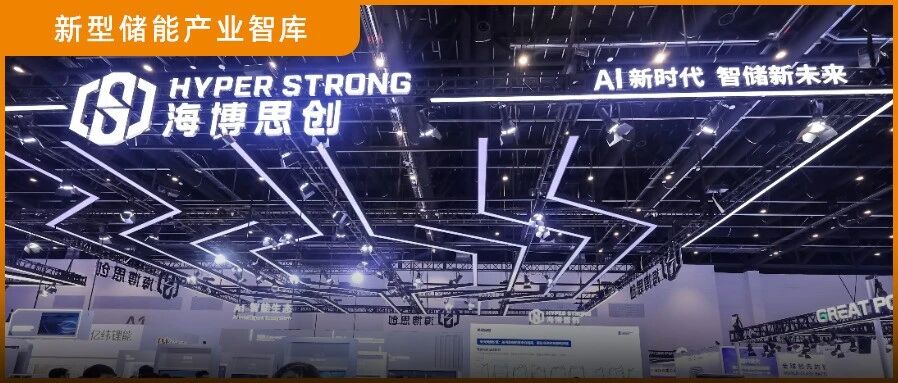
订单倒逼?海博思创20亿扩产储能系统
行家说储能· 2025-12-24 12:43
插播: 1月8日,中车株洲所、阳光电源、弘正储能、海辰储能、海尔新能源、融和元储、华储电气、天合光能、星星充电、星纪云能、汇能科技等超30 家企业出席【行家说储能开盛年会】,报名欢迎联系行家说储能 辛迪Cindy:15989092696 (微信同号) 12月24日,海博思创在北京房山区规划了一20亿投资的先进绿色储能系统制造工厂。 ▋ 海博思创20亿投资工厂 公告显示,该项目将打造为一个集系统集成产线、研发测试中心及配套设施于一体的综合性储能产业基地,旨在显著提升公司在规模化、智能化高端储能产 品领域的自主研发、精益制造与测试验证能力。 项目资金将由海博思创旗下实体自有或自筹解决,建设周期预计为36个月,计划于2028年12月建成投产。这是2025年,在云南普洱博思创普洱储能系统智 能生产基地正式建成投产后,海博思创又一重要储能系统产能推进动作。 值得一提的是,此举是海博思创完善全国产能版图的关键一步。待北京房山这座定位高端的制造基地落成后,海博思创将形成覆盖华南、西北、华北及核心 市场区域等智能制造基地协同发展的新格局。 ☆ 激活 星标 , 第一时间掌握前沿趋势 2025年3月,公司与亿纬锂能签订长期协议, ...

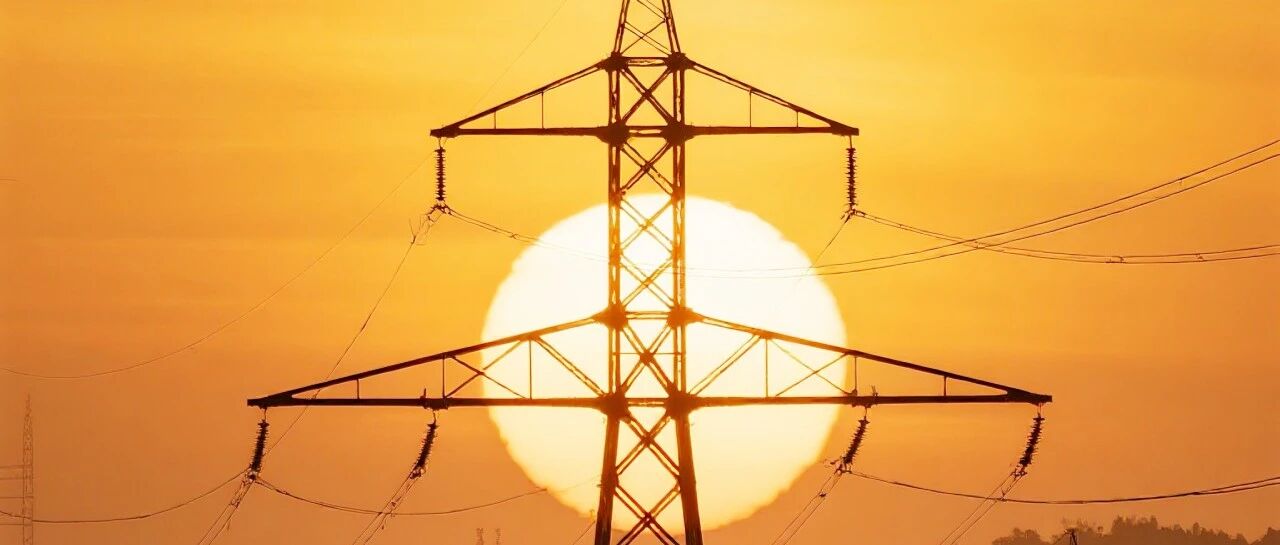
“电力自由”如何赋能中国制造
淡水泉投资· 2025-12-24 09:10
重要提示:本材料不构成淡水泉任何形式的要约、承诺或其他法律文件,亦非任何投资、法律或财务等方面的专业建议。过往业绩 不预示未来表现。投资须谨慎。 在全球新兴产业发展与能源转型浪潮下,电力,这一曾经容易被忽视的隐形基础设施,正日益成为影响 各国产业竞争力的显性变量。 从美国旧金山近期的大规模停电,到德国等传统工业国、越南等新兴经济体频发的缺电事件,全球范围 内的用电挑战已对工业生产构成冲击。 当世界多地频频为"电"所困时,中国却成功实现了"电力自由",这将给中国企业带来怎样的竞争优势? "电力自由"带来的成本红利 2019年以来, 全球平均电价持续上行且波动加剧,表明电力市场开始进入到不稳定的时代 。究其原 因,一方面在于电源侧投资不足,比如对天然气、石油等单一电源过度依赖,导致能源价格波动带动电 价上涨;另一方面也与电网设施长期老化、调节能力下降有关。 来源:万得、华泰研究、淡水泉投资,截至2025年6月。 从能源优势到产品走向世界的竞争力 在全球能源成本高企与供应稳定性不足的背景下, 稳定、低成本的电力供应已成为高耗能、重资产工 业品维持全球竞争优势的重要因素 。这类工业品多属于流程型工业,需 24 小时连 ...
中金:2026光伏需求有望修复 储能迎海内外景气共振
智通财经网· 2025-12-24 07:41
Core Viewpoint - The photovoltaic industry chain is expected to gradually bottom out and improve by the second half of 2025, aided by anti-involution measures, although financial improvements may slow market clearing, making the continuation of anti-involution essential [1] Group 1: Industry Outlook - The photovoltaic demand is anticipated to recover in the latter half of the 14th Five-Year Plan due to enhanced energy storage capacity and the need for market-oriented adjustments in the domestic electricity market [1] - The global energy transition is driving strong demand for energy storage, with a projected growth rate of nearly 50% for new installations in 2026, fueled by domestic policies and decreasing costs [2] Group 2: Market Dynamics - A decline in domestic installations is expected to lead to profit differentiation among glass glue film companies, with those having overseas clients likely to increase export ratios and profit margins [3] - The high silver prices are promoting the industrialization of silver-copper paste, while auxiliary material companies are actively seeking second growth curves in sectors like semiconductors and storage [3] Group 3: Valuation and Recommendations - Current valuations for major companies in the main industry chain are at historical low levels of 1xP/B to 2.5xP/B, with potential for performance recovery and sector opportunities as demand improves in 2Q26 [4] - Recommended stocks include: 1) Quality large-scale storage and industrial storage companies such as Canadian Solar (688472.SH), Shangneng Electric (300827.SZ), and others [4] 2) High-power module manufacturers like JinkoSolar (688223.SH) and Aiko Solar (600732.SH) [4] 3) Silicon material companies such as GCL-Poly Energy (03800) and Tongwei Co., Ltd. (600438.SH) [4] 4) Optimized players like Xinyi Solar (00968) and Flat Glass Group (601865.SH) [4] 5) Companies with new product launches like Dike Co., Ltd. (300842.SZ) and Juhe Materials (688503.SH) [4]



3月19-20日常州!2026锂电关键材料及应用市场高峰论坛
鑫椤锂电· 2025-12-24 06:16
2026锂电关键材料及应用市场高峰论坛 会议背景 2026年,锂电行业正以磅礴之势开启新一轮周期性增长浪潮,其特征表现为需求端的强势复苏、全球 化版图的加速扩张、技术路线的颠覆性迭代,形成"量价齐升+技术跃迁"的螺旋式上升格局。 会议主办: 鑫椤资讯 会议时间: 2026年3月19-20日 会议地点: 江苏·常州 会议咨询: 13248122922(微信同) 据鑫椤资讯的预测,2025年全球锂电池产量将达到2250Gwh,2026年的增长率将达到30%,其中储能 领域增速更是有望达到48.3%,呈现出"海内外需求双轮驱动、上下游产业链协同爆发"的盛况。如此爆 发式的市场需求,对电芯及上游四大主材的需求产生了巨大的拉动作用。 然而,从当前有效产能情况来看,电芯及各种材料的远期供应存在着一定的缺口。面对明确的供应缺 口,如何保障稳定、高效的供应链,将成为抓住这轮确定性增长的关键。 -广告- 关注公众号,点击公众号主页右上角" ··· ",设置星标 "⭐" ,关注 鑫椤锂电 资讯~ 会议议题 为把握锂电行业这一轮发展机遇,鑫椤资讯将于 2026年3月19日-20日 (19日报到)举办 2026锂电关键 材料及应用市 ...




华能英国门迪二期项目正式开工建设!
中关村储能产业技术联盟· 2025-12-24 05:38
Core Viewpoint - China Huaneng Group has officially commenced construction of the Mendi Phase II battery energy storage project in the UK, marking a significant step in its international development strategy [2] Group 1: Project Overview - The Mendi Phase II project has an installed capacity of 49.9 megawatts and a storage capacity of 149.7 megawatt-hours, representing a key achievement following the successful operation of Phase I [2] - The project aims to be connected to the grid by the end of 2026, enhancing the power system's regulation capabilities and promoting energy transition in the UK [2] Group 2: Technological and Strategic Significance - The Mendi Phase II project utilizes a fully domestic battery storage system, which effectively extends storage duration through deep iterative technological advancements [2] - The Mendi Phase I project, with an installed capacity of 99.8 megawatts, began commercial operation in June 2021, featuring over 70% localization in equipment manufacturing and integration by Chinese enterprises [2]