关税政策

Search documents
1000家企业“围攻”白宫:要求退还千亿美元关税,最高法院本周或定生死
Hua Er Jie Jian Wen· 2026-01-08 12:19
Core Viewpoint - A significant legal battle is unfolding in Washington as over 1,000 companies have filed lawsuits against President Trump's controversial tariff policy, seeking refunds for substantial taxes paid in recent months [1][2]. Group 1: Legal Developments - The wave of lawsuits began after the Supreme Court expressed skepticism about Trump's trade policies during a hearing on November 5, leading many companies to join the legal fight [1][3]. - As of January 6, at least 914 lawsuits have been filed, with most submitted after the November hearing, indicating a surge in legal actions from companies previously hesitant to act [3]. - The Supreme Court's upcoming decision will not only impact billions of dollars in cash flow for thousands of importers but will also define the legal boundaries of U.S. trade policy [2]. Group 2: Industry Participation - The coalition of companies opposing Trump's tariff policy spans a wide range of industries, including major retail and manufacturing firms such as Costco, EssilorLuxottica, and Goodyear [3][4]. - Analysis of 327 plaintiff companies shows participation from various sectors, including sports brands, beauty giants, and food companies, highlighting the extensive impact of the tariffs on global supply chains [4]. - Approximately 25% of the companies involved have foreign parent companies, underscoring the global implications of the Supreme Court's ruling [4]. Group 3: Refund Process and Legal Implications - The core issue of the legal battle revolves around whether Trump overstepped his authority under the International Emergency Economic Powers Act (IEEPA) to impose global tariffs [5]. - If the Supreme Court upholds lower court rulings declaring the tariffs illegal, the U.S. International Trade Court will likely handle the refund process [5][6]. - The government has assured the trade court that it will not use customs procedures to obstruct the recalculation of tariffs and payment of refunds [6]. Group 4: Financial Impact on Companies - For many companies, litigation is not just a legal strategy but a necessity for survival, as seen in the case of Ibis Cycles, which paid $800,000 in tariffs [7]. - The financial burden of tariffs has forced some businesses, like B. Stuyvesant Champagne LLC, to raise prices and reduce hiring due to unexpected costs [7]. - Historical precedents indicate that large-scale refunds are possible, as demonstrated by a 1998 Supreme Court ruling that led to a refund process involving $750 million [7].
美最高法院周五将裁决特朗普关税案,输了要退1335亿美元?
第一财经· 2026-01-07 15:56
Core Viewpoint - The U.S. Supreme Court is set to make a ruling on tariffs on January 9, which could significantly impact the Trump administration's economic policies and potentially require the return of over $133.5 billion in tariffs if deemed illegal [3][12]. Group 1: Tariff Policy and Legal Context - The Trump administration implemented a series of tariffs using the International Emergency Economic Powers Act (IEEPA) without Congressional approval [5]. - Previous rulings by the U.S. Court of Appeals and the U.S. International Trade Court deemed these tariffs illegal, prompting the Trump administration to appeal to the Supreme Court [6]. - The tariffs in question include "reciprocal tariffs" and those related to fentanyl [7]. Group 2: Potential Financial Implications - If the Supreme Court rules against the Trump administration, it may face the obligation to refund over $133.5 billion in tariffs collected since February 2025 [12]. - The U.S. Customs and Border Protection reported that the net revenue from tariffs reached a record $195 billion for the fiscal year 2025, with monthly revenues around $30 billion [12]. Group 3: Future Actions and Legal Challenges - In anticipation of a potential unfavorable ruling, the Trump administration is considering using other legal provisions, such as the Trade Expansion Act of 1962 and the Trade Act of 1974, to impose new tariffs [8][9]. - Numerous companies, including Costco and Revlon, have initiated lawsuits to reclaim tariffs paid, with around 40 legal briefs submitted to the Supreme Court opposing the tariff policies [14].

突然,“救市”!刚刚,直线拉升!这国央行,出手
券商中国· 2026-01-07 14:41
Core Viewpoint - The Indian central bank intervened in the foreign exchange market by selling dollars to support the rupee, which had been depreciating, with the aim of preventing it from falling below the 90 mark against the dollar [1][2][4]. Group 1: Currency Intervention - On January 7, the Indian central bank sold dollars, causing the rupee to rise, reaching a high of 89.7458 rupees per dollar [1][2]. - Prior to this intervention, the rupee had weakened significantly, hitting 90.3459 rupees per dollar on January 5, marking a cumulative depreciation of 4.72% for the year, the worst performance since 2022 [4]. - Analysts warn that if the rupee falls below 90 and the central bank does not intervene, the depreciation trend could accelerate, potentially triggering more dollar buying and further selling of the rupee [4]. Group 2: Trade Relations and Economic Impact - The outlook for the rupee's recovery is closely tied to the progress of US-India trade negotiations, which have stalled, particularly after the US imposed punitive tariffs on Indian goods due to India's imports of Russian oil [6][7]. - The US has raised tariffs on Indian products to 50%, which could hinder India's ability to benefit from supply chain shifts from the US market [6]. - Despite high tariffs, India's exports to the US saw significant growth in November, but there was a decline of over 20% in exports from May to November 2025 [6]. Group 3: Economic Growth and Monetary Policy - The Indian economy is facing slowing growth pressures, prompting the central bank to cut interest rates by 25 basis points in December to stimulate the economy [7]. - Analysts suggest that further rate cuts may occur in February 2026, as inflation is expected to remain subdued and the impact of US tariffs continues to affect economic growth [7].

本周五定乾坤!美最高法院将裁决特朗普关税案,输了要退1335亿美元?
Di Yi Cai Jing· 2026-01-07 12:23
Core Viewpoint - The U.S. Supreme Court is set to rule on the legality of tariffs imposed by the Trump administration under the International Emergency Economic Powers Act (IEEPA), which could have significant implications for Trump's economic policies and potential refunds of over $133.5 billion in tariffs to importers if deemed illegal [2][7]. Group 1: Tariff Legislation and Legal Proceedings - The Trump administration invoked IEEPA to impose tariffs without congressional approval, leading to legal challenges that have deemed many of these tariffs illegal [3]. - The Supreme Court's ruling on January 9 could mark a significant legal defeat for the Trump administration, impacting its economic strategy [2][3]. - If the Supreme Court rules against the Trump administration, it may lead to the refund of over $133.5 billion in tariffs collected from importers [7]. Group 2: Potential Legal and Economic Implications - The Trump administration has prepared alternative strategies to impose tariffs, including utilizing the Trade Expansion Act of 1962 and the Trade Act of 1974, which allow for investigations and tariffs on trade partners [5][6]. - Legal experts indicate that the administration may also consider invoking lesser-used provisions of trade law to impose tariffs if the Supreme Court ruling is unfavorable [6]. - Major retailers and companies, including Costco and Revlon, have initiated lawsuits to reclaim tariffs paid, reflecting widespread concern among businesses regarding the legality of these tariffs [9].
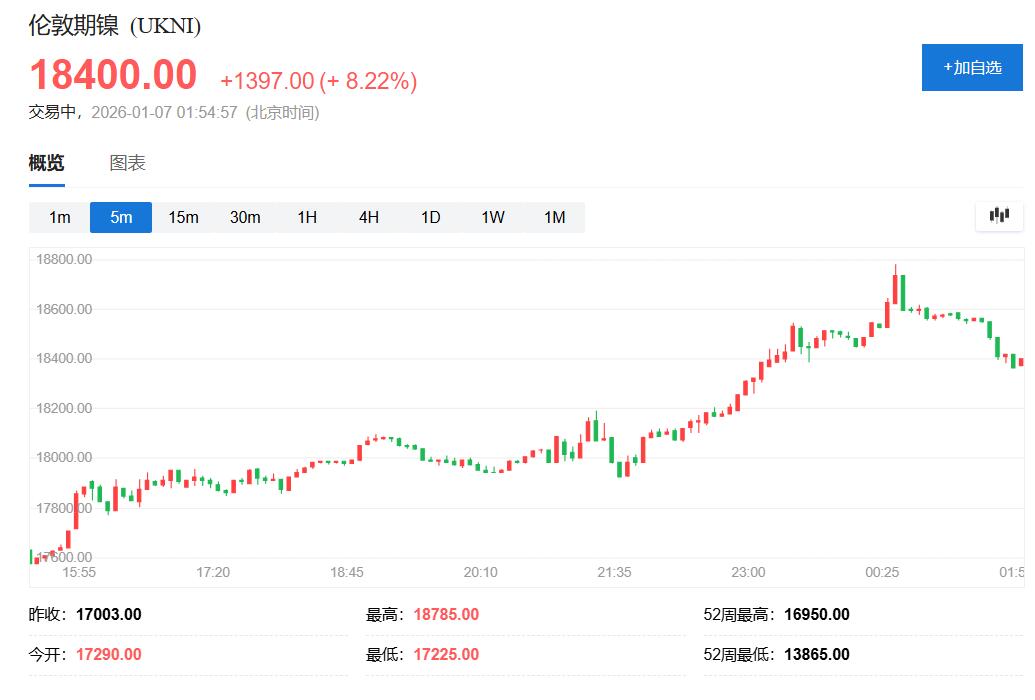
金属狂欢!盘中伦镍涨超10%、纽银涨超6%,伦铜连创历史新高
Sou Hu Cai Jing· 2026-01-07 07:57
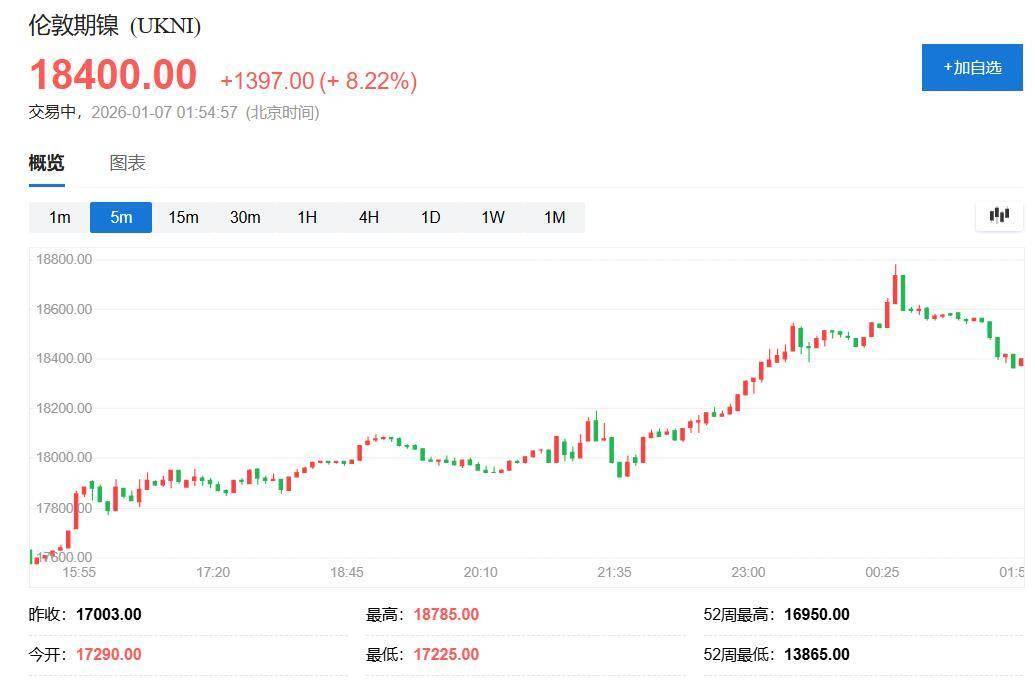
伦敦金属交易所(LME)三个月期镍周二一度飙升逾10%,触及18785美元/吨的高位,创下三年多来最大盘中涨幅,到收盘,涨近9%,报18524美 元/吨。过去两周内,镍价已累计上涨超过20%,自12月中以来三周内涨近30%。 特朗普政府潜在关税政策持续发酵。据一些报道,美国总统特朗普考虑2027年对进口铜征收约15%的关税,2028年提高至30%。投资者对美国提高关 税的预期导致大量铜库存涌入美国。据CME数据,美国铜库存自2025年4月以来增长超过四倍,截至1月2日达到45.345万吨,而全球其他地区供应告 急。 地缘政治风险推升避险需求。据新华社报道,美国1月3日上周六凌晨对委内瑞拉发起大规模军事行动,突袭委首都加拉加斯等地,强行控制委总统 马杜罗及其夫人,并将二人带至美国。美国强行控制马杜罗引发全球紧张局势加剧,支撑贵金属价格上涨。彭博贵金属分类指数过去一个月涨逾 13%,年初以来涨约5%。 伦镍领涨:中国买盘推动三年最大涨幅 本周二,金属市场延续周一涨势全面爆发。伦镍领衔工业金属大涨,盘中一度涨超10%,纽约期银盘中涨超6%,逼近一周前所创的盘中最高纪录, 伦铜在周一史上首次突破1.3万美元关口后进一 ...
特朗普:若输中期选举 我可能被弹劾!美国最高法院本周就关税问题作出裁决
Mei Ri Jing Ji Xin Wen· 2026-01-06 23:40
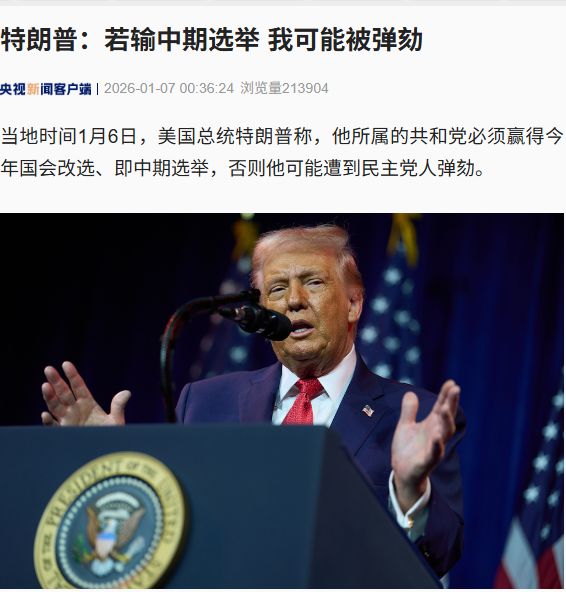
特朗普当天在华盛顿举行的众议院共和党籍议员会议上说:"你们必须赢得中期选举,因为如果我们输 了,他们就会找到理由弹劾我。" 据央视新闻,当地时间1月6日,美国总统特朗普称,他所属的共和党必须赢得今年国会改选、即中期选 举,否则他可能遭到民主党人弹劾。 近期,特朗普政府就最高法院对一揽子关税政策的审理结果前景频繁发声。美国贸易代表格里尔2025年 12月10日表示,如果最高法院裁定一揽子关税政策违法,联邦政府可以"动用"其他手段创造"关税收 入"。特朗普表示,如果最高法院对联邦政府的关税政策作出不利裁决,那将是"美国国家安全的最大威 胁"。 爱尔兰总理:加征关税将损害世界经济 据央视新闻,爱尔兰总理米哈尔·马丁于1月4日下午乘机抵达北京首都国际机场,开启为期5天的访华行 程。此访是爱尔兰总理时隔14年再次访华。 特朗普证实,加利福尼亚州共和党籍联邦众议员道格·拉马尔法突然去世。拉马尔法是特朗普执政议程 的坚定支持者,特朗普对他的去世表示"非常悲痛",称"他每次投票都和我一致"。 曾是特朗普重要政治盟友的玛乔丽·泰勒·格林5日辞去国会众议员席位,加上拉马尔法去世,共和党在众 议院的微弱优势进一步削弱。目前,共和党 ...
金属狂欢!盘中伦镍涨超9%、纽银涨超6%,伦铜连创历史新高
Hua Er Jie Jian Wen· 2026-01-06 18:39
本周二,金属市场延续周一涨势全面爆发。伦镍领衔工业金属大涨,盘中一度涨超9%,纽约期银盘中涨超6%,逼近一周前所创的盘中最高纪录,伦 铜在周一史上首次突破1.3万美元关口后进一步走高,周二盘中涨超3%,连续两日创历史新高。纽约期金盘中涨超1%,抹平上周一芝商所(CME) 提高交易保证金以来多数跌幅,向圣诞节前所创的最高纪录靠近。 中国投资者成为本轮金属涨势的重要推手。交易动态显示,包括镍、铜和锡在内的金属价格在亚洲时段大幅跳涨,交易量激增,上海期货交易所夜 盘开盘后再次拉升。周二日间收盘时,沪银涨超7%,沪铜、沪锡、沪镍涨超4%,夜盘开盘,沪镍涨近5%,沪银涨近3%,沪锡涨超2%,沪铜涨超 1%。 特朗普政府潜在关税政策持续发酵。据一些报道,美国总统特朗普考虑2027年对进口铜征收约15%的关税,2028年提高至30%。投资者对美国提高关 税的预期导致大量铜库存涌入美国。据CME数据,美国铜库存自2025年4月以来增长超过四倍,截至1月2日达到45.345万吨,而全球其他地区供应告 急。 地缘政治风险推升避险需求。据新华社报道,美国1月3日上周六凌晨对委内瑞拉发起大规模军事行动,突袭委首都加拉加斯等地,强行控 ...
美最高法院定于9日就关税问题作出裁决
Yang Shi Xin Wen· 2026-01-06 16:44
特朗普政府2025年1月上台后援引美国《国际紧急经济权力法》,以不经过国会批准、直接颁布行政令 的方式出台一系列加征关税措施。在美国联邦巡回上诉法院和美国国际贸易法院分别裁定现政府一揽子 关税政策违法后,特朗普政府向最高法院提出上诉,目前案件正在最高法院审理。据悉,特朗普政府已 制定了在裁决不利的情况下重新征收进口关税的方案。 当地时间1月6日,美国最高法院宣布,将在本周五(1月9日)就关税问题作出裁决。 (文章来源:央视新闻) ...
阻止购买俄石油,特朗普再次威胁!
中国能源报· 2026-01-06 04:33
Group 1 - The core viewpoint of the article highlights President Trump's warning to India regarding potential tariff increases if it continues to purchase Russian oil, indicating a strong stance on U.S. trade policy [1] - The U.S. government plans to impose punitive tariffs on Indian goods, raising the overall tariff rate to 50% due to India's imports of Russian oil, which reflects the ongoing tensions in U.S.-India trade relations [1] - India maintains that its energy import policy is focused on protecting the interests of its consumers, suggesting a conflict between U.S. demands and India's domestic priorities [1] Group 2 - Negotiations between the U.S. and India regarding the tariff issue are ongoing, indicating that the situation remains fluid and subject to change based on diplomatic discussions [1]

特朗普减税政策刺激消费和投资效果不明朗
Xin Lang Cai Jing· 2026-01-05 20:42
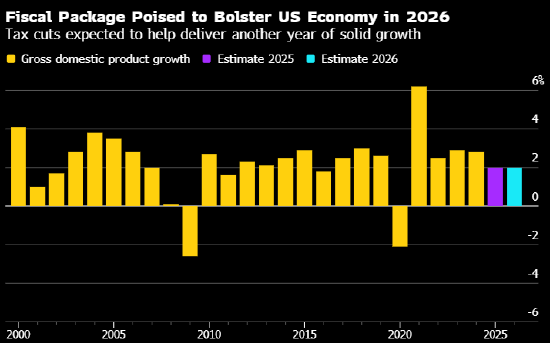
Economic Outlook - The U.S. economy's ability to maintain expansion through 2026, influenced by Trump's tax cuts, remains uncertain after a year of policy shocks [1][12] - Economists estimate that taxpayers will receive higher refunds this year, with total new refunds projected between $30 billion and $100 billion [1][12] - Predictions indicate a cautious outlook, with consumer spending boosts from fiscal stimulus expected to diminish over time, and tariffs continuing to burden small businesses [1][12] GDP Growth Projections - Economists forecast a GDP growth rate of 2% for 2026, consistent with predictions for 2025, which is considered slow by historical standards [1][12] - The Federal Reserve is slightly more optimistic, projecting a 2.3% GDP growth for this year, driven by fiscal policy, a looser financial environment, and diminishing tariff impacts [3][14] Tax Refunds and Consumer Spending - Tax legislation has extended income tax cuts and introduced exemptions for tips and overtime pay, with average refunds expected to be $300 to $1,000 higher than usual [14][15] - Goldman Sachs estimates consumers will receive an additional $100 billion in refunds in the first half of the year, while Citigroup estimates range from $30 billion to $50 billion [14][15] Business Investment and Employment - Economists suggest that business incentives from the Trump administration could increase GDP by 0.3 percentage points this year, despite some negative impacts from cuts to federal assistance programs [6][17] - The unemployment rate rose to 4.6% in November, the highest in over four years, with expectations of an average rate of 4.5% for the year [6][17] Tariff Impacts and Inflation - Federal Reserve officials believe the inflationary effects of rising tariffs are likely to be temporary, but living costs remain a significant issue for upcoming elections [9][20] - Businesses express concerns over tariffs, with expectations of price increases exceeding 3% in 2026, impacting consumer behavior [9][20] Artificial Intelligence and Investment Trends - The surge in investment for data centers driven by artificial intelligence has raised concerns about the actual job creation not matching the scale of investment announcements [11][22] - There are worries that AI could displace human labor, despite its potential to enhance purchasing power among wealthier Americans [11][22]