人工智能

Search documents
计算机行业周报:行业延续下跌态势,英伟达引领AI创新-20260323
Guoyuan Securities· 2026-03-23 09:45
Investment Rating - The report maintains a "Recommended" investment rating for the computer industry, indicating that the industry index is expected to outperform the benchmark index by more than 10% [6]. Core Insights - The computer industry index experienced a decline of 4.74% during the week of March 16-20, 2026, influenced by market conditions. The Shanghai Composite Index fell by 3.38%, while the Shenzhen Component Index decreased by 2.90%, and the ChiNext Index rose by 1.26% [1][11]. - Notable segments within the industry saw declines, with the computer equipment index down by 4.20%, IT services II down by 4.76%, and software development down by 5.06% [1][13]. - NVIDIA's CEO Jensen Huang presented at the GTC conference, showcasing advancements in AI technology and predicting that NVIDIA's flagship chips could generate at least $1 trillion in revenue by the end of 2027. The demand for computing is expected to enter a "million-fold growth" phase, with a new concept of "token factories" for data centers [4][20]. Summary by Sections Market Performance - The computer industry index fell by 4.74% during the specified week, with significant declines in various segments [1][11]. - The performance of the computer equipment, IT services II, and software development sectors reflected a downward trend [1][13]. Major Events - NVIDIA's GTC conference highlighted the introduction of the Vera Rubin AI factory platform and the NemoClaw infrastructure, aiming to create a comprehensive AI ecosystem [4][20]. - The launch of the WebMCP protocol by Google Chrome allows AI entities to access web functionalities more efficiently, marking a significant advancement in AI capabilities [16]. Key Announcements - Hehe Information reported an increase in user engagement and payment rates due to new AI features, projecting a rise in payment rates from 4.35% in 2024 to 5.2% in 2025 [2][17]. - Haitai Ruisheng announced substantial growth in its training data business, with visual business revenue increasing over 200% and text business revenue over 100% [2][21]. - Dongfang Caifu's 2025 annual report showed a total revenue of 16.068 billion yuan, a year-on-year increase of 38.46%, and a net profit of 12.085 billion yuan, up 25.75% [3][21].
瑞达期货沪锡产业日报-20260323
Rui Da Qi Huo· 2026-03-23 09:31
Report Summary 1) Report Industry Investment Rating - No investment rating information is provided in the report [3] 2) Core View of the Report - The report expects Shanghai tin to undergo low - level adjustments and suggests paying attention to whether it can stabilize between 320,000 - 340,000 yuan/ton [3] 3) Summary by Relevant Catalogs Futures Market - The closing price of the main futures contract of Shanghai tin is 328,300 yuan/ton, down 14,180 yuan; the closing price of the May - June contract of Shanghai tin is 60 yuan/ton, down 120 yuan - LME 3 - month tin is at 42,840 US dollars/ton, down 1,060 US dollars; the position of the main contract of Shanghai tin is 24,984 lots, down 2,200 lots - The net position of the top 20 futures of Shanghai tin is - 7,064 lots, up 26 lots; the total inventory of LME tin is 8,920 tons, down 35 tons - The inventory of tin in the Shanghai Futures Exchange is 10,042 tons, down 2,472 tons; the cancelled warrants of LME tin is 710 tons, up 145 tons - The warrants of tin in the Shanghai Futures Exchange is 8,978 tons, down 508 tons [3] Spot Market - The SMM 1 tin spot price is 341,450 yuan/ton, down 11,950 yuan; the Yangtze River Non - ferrous Market 1 tin spot price is 342,450 yuan/ton, down 10,560 yuan - The basis of the main contract of Shanghai tin is 13,150 yuan/ton, up 2,230 yuan; the LME tin premium (0 - 3) is - 235 US dollars/ton, up 14 US dollars [3] Upstream Situation - The import volume of tin ore and concentrates is 17,100 tons, down 700 tons; the average price of 40% tin concentrates is 325,450 yuan/ton, down 11,950 yuan - The processing fee of 40% tin concentrates by Antaike is 16,000 yuan/ton, unchanged; the average price of 60% tin concentrates is 329,450 yuan/ton, down 11,950 yuan - The processing fee of 60% tin concentrates by Antaike is 12,000 yuan/ton, unchanged [3] Industry Situation - The monthly output of refined tin is 14,000 tons, down 1,600 tons; the monthly import volume of refined tin is 2,505.53 tons, up 757.7 tons [3] Downstream Situation - The price of 60A solder bars in Gejiu is 217,600 yuan/ton, down 7,500 yuan; the cumulative output of tin - plated sheets (strips) is 1.6742 million tons, up 145,500 tons - The monthly export volume of tin - plated sheets is 139,600 tons, down 5,900 tons [3] Industry News - The governor of the People's Bank of China, Pan Gongsheng, stated that China will continue to implement a moderately loose monetary policy and use various tools to maintain sufficient liquidity - China's Ministry of Finance will allocate 250 billion yuan to support the replacement of consumer goods with new ones, increasing direct and inclusive policies for consumers - Trump demanded that Iran open the Strait of Hormuz within 48 hours and threatened to destroy its power plants. The US is planning to seize Iran's "nuclear reserves", and the Pentagon is preparing to deploy ground forces to Iran [3] Viewpoint Summary - On the macro - front, the US is taking actions against Iran. On the fundamental side, the supply situation is changing. The resumption of production in Myanmar and the end of the rainy season are expected to increase domestic tin ore imports. Tin ore processing fees have slightly increased, indicating a possible缓解 of the supply shortage. - On the smelting side, the output of refined tin will gradually recover after the Chinese New Year, but most enterprises have low raw material inventory, and some external - ore - purchasing capacities are at a loss, affecting the output of refined tin. - In terms of imports, Indonesia's tin exports have increased, the import window has opened, and the import pressure has increased. - On the demand side, the development of the AI field will drive a significant increase in solder demand. Recently, tin prices have fallen, holders are reluctant to sell, the spot premium exceeds 2,500 yuan/ton, downstream purchasing at low prices has increased, and inventory has decreased significantly, while LME inventory has increased and the spot premium has decreased. - Technically, the position has decreased and the price has declined under pressure, with both long and short positions trading cautiously [3]

高端制造行业周报2026年第12周(2026.3.16-2026.3.22):宇树科技IPO申请获受理,GTC大会释放PCB及液冷增量需求信号-20260323
EBSCN· 2026-03-23 09:21
Investment Rating - The report maintains a "Buy" rating for the high-end manufacturing industry [1] Core Insights - The humanoid robot industry is experiencing significant advancements, with companies like Galaxy General and Digua Robot making notable progress in autonomous capabilities and securing substantial funding [3][4] - Yushu Technology's IPO application has been accepted, aiming to raise approximately 4.202 billion yuan for various projects, with projected revenues and profits showing substantial growth in 2025 [5] - The report anticipates a shift in the robot industry towards mass production and capitalization, driven by technological advancements and market demand [6] Summary by Sections Humanoid Robots - Galaxy General launched the world's first fully autonomous tennis humanoid robot, showcasing advanced skills and high success rates in gameplay [3] - Digua Robot completed a $120 million Series B financing round, bringing total funding to $220 million [3] - Coconuts Group plans to procure 50 humanoid robots for coconut processing, indicating a growing market for humanoid robots in agriculture [4] Investment Recommendations - The report suggests focusing on companies involved in high-complexity dexterous hands, screw production, reducer supply chains, six-dimensional force sensors, and precision injection molding [6][7] North American AI Industry Chain - The demand for power in data centers is surging, with significant contracts being signed for steam turbines and power supply agreements, indicating a robust growth trajectory for the AI sector [8][9] - NVIDIA's GTC conference highlighted the importance of liquid cooling solutions for AI data centers, suggesting a shift in cooling technology [10][12] PCB Industry - The demand for high-end PCBs is expected to rise due to advancements in AI technology and the introduction of new products at NVIDIA's GTC conference [13][14] - Pengding Holdings announced a significant investment in a high-end PCB production base, reflecting the industry's growth potential [14] Solid-State Battery Equipment - Several companies are advancing in solid-state battery technology, with plans for mass production and significant improvements in energy density [15][17] - The report highlights the positive outlook for the solid-state battery industry, driven by technological advancements and supportive policies [17] General & Specialized Machinery - The global demand for mining machinery is expected to increase due to rising metal prices and the need for more equipment to maintain production levels [18] - The report notes a significant increase in exports of mining machinery and tools, indicating a strong international market presence [19][20]

ACCSI 2026:智能光谱新征程,第七届光谱产业化发展论坛第二轮通知
仪器信息网· 2026-03-23 09:06
Core Viewpoint - The "7th Spectroscopy Industrial Development Forum" will be held on April 23, 2026, in Beijing, focusing on the rapid development of intelligent spectroscopy technology, which is becoming a core engine for upgrading multiple fields due to its integration with AI and big data [1][3]. Group 1: Market Potential and Growth - The Chinese spectroscopy market is projected to grow from 10.21 billion yuan in 2024 to 18.7 billion yuan in 2025, indicating significant market potential [2]. - The demand for intelligent spectroscopy devices, which combine non-destructive testing, real-time analysis, and precise interpretation, is surging in sectors such as environmental monitoring, biomedicine, industrial smart manufacturing, and food safety [2]. Group 2: Technology and Applications - Intelligent spectroscopy technology integrates high-precision, miniaturized spectral acquisition devices with AI algorithms and big data analysis, enabling automatic interpretation and modeling of complex spectral data [2]. - This technology addresses the inefficiencies and difficulties of traditional methods and is increasingly being adopted in various fields, including real-time environmental monitoring, pharmaceutical quality control, industrial online detection, and food safety rapid testing [2]. Group 3: Forum Details - The forum aims to promote technological innovation and industrial application by gathering academic researchers, industry experts, and technical personnel to discuss advancements in intelligent spectroscopy instruments and applications [3]. - The event will feature presentations from various experts on topics such as intelligent spectroscopy technology in traditional Chinese medicine regulation, hyperspectral imaging technology, and AI applications in modern industries [5].


两会刚过,母基金“卷”向硬科技:科学仪器成布局重点
仪器信息网· 2026-03-23 09:06
Core Viewpoint - The article highlights the increasing focus on scientific instruments in national policies and the accelerated capital investment in high-tech sectors, particularly through the establishment of various mother funds across multiple regions in China [3]. Group 1: Fund Establishments and Focus Areas - Beijing's Huairou District has launched a guiding fund with a total scale of 5 billion yuan, focusing on scientific instruments, sensors, new materials, and other high-tech fields to support technological innovation and high-quality industrial development [4]. - In Taizhou, Zhejiang, the newly established Chuangxin Mother Fund has a total scale of 2 billion yuan, targeting strategic emerging industries such as automotive parts, semiconductors, and intelligent manufacturing [5]. - Hubei Province has set up a cultural tourism investment fund with a total scale of 10 billion yuan, with part of the investment directed towards artificial intelligence, life health, and advanced manufacturing sectors [6]. - Rugao City in Jiangsu has initiated a mother fund with a total scale of 1 billion yuan, focusing on precision optics, synthetic biology, and high-end equipment [8]. - The Xuyi Advanced Industry Investment Fund in Jiangsu has been established with a total scale of 2 billion yuan, concentrating on advanced manufacturing and artificial intelligence [9]. - Yancheng's specialized and innovative industry fund has a total scale of 500 million yuan, aimed at supporting high-tech enterprises with core technologies [10]. - Guangxi has launched a technology achievement transformation mother fund with a total scale of 2 billion yuan, focusing on artificial intelligence and high-end equipment manufacturing [11]. - The Guilin Science and Technology Innovation Equity Investment Fund has been approved with a scale of 500 million yuan, supporting sectors like artificial intelligence and advanced equipment manufacturing [12]. - Dongguan has registered a 100 million yuan fund targeting emerging industries including new generation information technology and high-end equipment manufacturing [13]. - Wuhan's venture capital fund has been established with a scale of 100 million yuan, focusing on new generation information technology and high-end equipment [14].

仪器仪表产业新机遇,四部门联合印发《节能装备高质量发展实施方案》
仪器信息网· 2026-03-23 09:06
Core Viewpoint - The article discusses the "Implementation Plan for High-Quality Development of Energy-Saving Equipment (2026-2028)" issued by several Chinese government agencies, outlining a roadmap for the energy-saving equipment industry and highlighting new growth opportunities for the upstream instrumentation and meter industry [2][8]. Group 1: Demand for Energy Efficiency Testing Instruments - The plan sets a target for energy efficiency levels of motors and transformers to reach international standards by 2028, necessitating accurate assessment and verification of equipment efficiency, which will drive demand for energy efficiency testing instruments and related devices [3][4]. Group 2: Smart Transformation and Sensor Upgrades - The plan emphasizes the digital enhancement of energy-saving equipment, promoting smart devices equipped with sensors and controllers to collect and process operational data in real-time, indicating a shift towards integrating instrumentation with big data and AI [4][10]. Group 3: Key Component Development - The plan details a list of key technology breakthroughs needed in energy-saving equipment, including high-efficiency components in motors and transformers, which will require precision measurement instruments and monitoring devices for performance validation and quality control [6][16]. Group 4: Waste Equipment Recycling - The plan encourages the recycling and refurbishment of old energy-saving equipment, which will increase the demand for non-destructive testing, component analysis, and performance evaluation services, particularly as a traceability system for retired equipment is established [7][20]. Group 5: Overall Requirements and Goals - The plan aims to enhance energy efficiency in key industries, with specific targets for the market share of energy-saving equipment and the promotion of advanced solutions by 2028, fostering the development of competitive enterprises and industry clusters [9][10]. Group 6: Accelerating R&D and Promotion of Advanced Energy-Saving Equipment - The plan outlines specific targets for the development and promotion of energy-saving motors, transformers, industrial heat pumps, and other equipment, with a focus on achieving significant market penetration by 2028 [11][12][13]. Group 7: Strengthening Green Low-Carbon Supply - The plan advocates for green low-carbon design and manufacturing practices across the energy-saving equipment lifecycle, promoting the use of recyclable materials and advanced manufacturing techniques to reduce carbon footprints [20][21]. Group 8: Enhancing System Coupling and Matching - The plan emphasizes the need for precise matching between energy-saving equipment and their operational environments, encouraging the integration of systems to optimize energy efficiency and reduce redundancy [23][25]. Group 9: Digital Transformation and AI Integration - The plan promotes the use of IoT sensors and AI technologies to enhance the digital capabilities of energy-saving equipment, enabling real-time data collection and intelligent decision-making for energy management [32][34]. Group 10: Updating and Upgrading Energy-Saving Equipment - The plan supports the modernization of energy-saving equipment over ten years old, encouraging companies to conduct energy audits and implement upgrades based on diagnostic results [38][39].

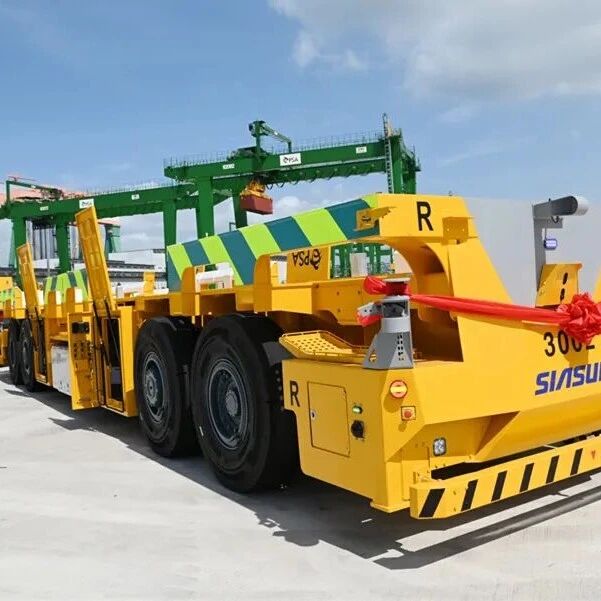
新松港口移动机器人在新加坡港务集团(PSA)实现近 200台大规模部署!首批新型IGV正式交付使用
机器人圈· 2026-03-23 08:59
Core Viewpoint - The delivery ceremony of the first batch of Intelligent Guided Vehicles (IGVs) by PSA and Siasun marks a significant milestone in the collaboration between the two companies, showcasing advancements in port automation and smart logistics solutions [1][4][12]. Group 1: Event Highlights - The delivery ceremony took place at Singapore's Pasir Panjang Terminal, attended by key representatives from PSA and Siasun, symbolizing a commitment to innovation and collaboration in port automation [3][6]. - The event featured the unveiling of a miniature model of the IGV, representing the technological innovation and industrial collaboration between PSA and Siasun [6][9]. Group 2: Partnership Development - The partnership between PSA and Siasun began in 2017, focusing on the development of port mobile robot prototypes, which laid the foundation for mutual technological trust [11]. - By 2023, Siasun completed its first large-scale delivery of port mobile robots to PSA, marking the beginning of a new phase in industrial cooperation [12][14]. - As of 2024, Siasun has delivered over 100 units, becoming the largest mobile robot supplier at Singapore's port, with nearly 200 units deployed within a year [13][14]. Group 3: Technological Advancements - The new IGV can carry loads up to 65 tons, with a positioning accuracy of ±5 cm and a maximum speed of 7 m/s, addressing the challenges of efficiency in large ports [17][18]. - The IGV incorporates advanced AI technologies for autonomous navigation and flexible path planning, enhancing operational efficiency in dynamic environments [20][22]. - The new generation of IGVs features intelligent fault diagnosis and predictive maintenance systems, significantly improving reliability and operational efficiency [20][21]. Group 4: Future Outlook - PSA and Siasun aim to deepen their collaboration to explore more possibilities in smart port construction, combining mature robotic technology with advanced management needs in international ports [23][24]. - The successful partnership serves as a model for international cooperation in high-tech fields under the Belt and Road Initiative, with potential applications extending beyond ports to various industrial and logistics settings [26].

AICon 2026 正式启动:OpenClaw 袭来,我们来谈点真的
AI前线· 2026-03-23 08:50
Core Insights - OpenClaw represents a significant shift in AI capabilities, allowing AI agents to operate deeply within systems, redefining human-machine collaboration [4][5] - The initial excitement around AI has waned, with companies now facing challenges in effectively implementing AI tools [6][7] - Many enterprises struggle with low adoption rates of AI tools, with less than 30% usage reported after three months [8] - Data governance issues are prevalent, with many companies unable to access or utilize their data effectively, hindering AI integration [9] - The concept of AI agents is popular, but most remain in the demo stage and face significant challenges in scaling [10] - ROI from AI projects is difficult to quantify, with many companies unable to provide clear metrics on efficiency improvements [11] Insights from Industry Feedback - Companies are seeking deeper technical knowledge, broader engineering capabilities, and practical applications of AI [13][14][15] - The demand for comprehensive AI toolchains that cover data preparation, model management, and application deployment is increasing [14] - Enterprises are moving beyond basic AI understanding to focus on specific business applications and measurable outcomes [15] Challenges in AI Implementation - Organizational maturity is lagging behind technological advancements, creating a gap between tech and business [17] - Data infrastructure issues, including reliance on outdated systems, hinder AI readiness [19] - Scaling AI agents remains a challenge, with many unable to integrate into existing workflows [20] - Rising inference costs threaten profitability, necessitating cost optimization strategies [21] - Quantifying ROI remains a significant hurdle, with many projects failing to meet expected returns [22] - Compliance and security concerns are critical, especially in regulated industries [23] AICon 2026 Focus Areas - AICon 2026 will address twelve key topics, ranging from cutting-edge technology exploration to practical implementation strategies [25] - Discussions will include advancements in AI for science, simulation, and quantum AI [27] - Emphasis will be placed on optimizing large model inference and building resilient AI infrastructure [29][30] - The event will explore the core capabilities of AI agents, including task management and collaboration [31][32] - Practical applications in finance, manufacturing, and retail will be highlighted, focusing on scalable solutions [41][43]

人工智能的生产率悖论
腾讯研究院· 2026-03-23 08:33
Core Viewpoint - The article discusses the productivity paradox, highlighting the discrepancy between rapid technological advancements and disappointing productivity growth, emphasizing that this phenomenon is not a true paradox but a reflection of specific stages in technological development [4][9]. Group 1: Explanations of the Productivity Paradox - The productivity paradox has three main explanations: erroneous expectations, measurement errors, and time lags [5]. - Erroneous expectations suggest that the optimistic views on technology's transformative potential often do not materialize, as seen in historical examples like nuclear energy and artificial intelligence [5]. - Measurement errors indicate that the benefits of new technologies may exist but are not accurately captured in productivity statistics, particularly for free internet services and rapidly improving tech products [6]. - Time lags propose that new technologies require time to significantly impact productivity, with general-purpose technologies needing secondary innovations and organizational changes before their effects are felt [6][8]. Group 2: Historical Context and Future Implications - Historical data shows that significant technological innovations like the steam engine and computers took decades to influence productivity, with notable inflection points occurring long after their invention [9]. - The current wave of artificial intelligence, despite its potential, has not yet led to a noticeable increase in productivity growth, with labor productivity in Canada and the EU remaining stagnant since the launch of ChatGPT [12]. - The penetration rate of AI technologies is still low, with estimates around 10% in the US and Canada, and 20% in the EU, indicating that AI is in the early stages of adoption and has not yet reached the critical threshold of 50% necessary for significant productivity impact [16][18]. Group 3: AI as a General-Purpose Technology - AI is recognized as a new general-purpose technology with the potential to drive economic growth, but its current application is limited, and its effects on productivity are not yet evident [12][14]. - The article emphasizes that the "AI+" index must reach a penetration rate of 50% for AI to significantly enhance productivity growth, as historical patterns suggest that only after reaching this threshold do cost-saving technologies begin to show substantial effects on total factor productivity [14]. - The approach to AI adoption differs between countries, with the US focusing on performance and AGI, while China emphasizes application and integration across industries, aiming to enhance productivity through increased adoption rates [18].

势银研究 | AI PCB的机会在哪些领域?
势银芯链· 2026-03-23 08:32
Core Viewpoint - The PCB (Printed Circuit Board) industry is undergoing significant structural changes driven by the explosive growth of artificial intelligence (AI) technology, with increasing demand for AI servers, computing infrastructure, terminal AI applications, and automotive intelligence pushing the market towards high-end and refined products [2]. Market Drivers: High-End Products as Growth Core - High-layer multilayer boards (18 layers and above) and HDI boards are the main drivers of growth, with a projected year-on-year increase of 40.3% and 18.8% respectively in 2024, significantly outpacing the overall industry growth [3]. - The global PCB industry is expected to have a compound annual growth rate (CAGR) of 5.2% from 2024 to 2029, while the CAGR for high-layer multilayer boards and HDI boards will reach 15.7% and 6.4% respectively, indicating a strong growth in high-end products [3]. Application Areas: Fastest Growing Segments - The server/storage segment is the fastest-growing market, with a projected year-on-year growth rate of 33.1% in PCB and substrate output in 2024, far exceeding the overall industry growth of 5.8% [8]. - From 2024 to 2029, the CAGR for PCB output in the server/storage sector is expected to be 11.6%, indicating sustained leadership in this segment [8]. Technological Evolution: Breakthroughs in Low Loss and High Density - The technical challenges in AI PCBs focus on material systems and manufacturing processes, with advancements in materials such as M9 materials for lower dielectric constant and loss, and HVLP5 copper foil to reduce skin effect [12]. - High-end PCBs are increasingly adopting mSAP and SAP processes for finer line widths and spacing, with high-layer stacking and back-drilling technology becoming standard to optimize signal integrity [12]. Industry Landscape: Domestic Capacity Dominates but Lacks Strength - China accounts for 58% of global PCB capacity, leading the world, but the capacity structure shows a "large but not strong" characteristic, with severe competition in low-end products and insufficient supply of high-end products [12]. - The domestic production rate for high-layer multilayer boards required for AI servers is only 30%, indicating significant room for domestic replacement and high-end upgrades [12]. Leading Enterprises Accelerating High-End Layout and Overseas Expansion - Major domestic companies like Pengding Holdings, Huadian Co., and Shenzhen South Circuit are expanding high-layer and HDI capacity in regions like Huai'an, Wuxi, and Shenzhen [14]. - To enhance supply chain resilience and be closer to overseas clients, companies are establishing operations in Thailand, Vietnam, Malaysia, Europe, and North America through new factories and mergers [16]. Deep Participation of Domestic Enterprises in Overseas Supply Chains - Domestic companies have formed a complete supporting capability in the supply chains of international giants like NVIDIA, AMD, Intel, and Apple, with firms like Huadian Co. and Pengding Holdings involved in PCB production [18]. Summary and Outlook - AI technology is the core driving force reshaping the PCB industry, with a clear direction towards high-end, refined, and highly reliable products [19]. - The focus of competition is shifting from "scale expansion" to "technological breakthroughs" and "global delivery capabilities," with companies that can bind closely with overseas AI giants and achieve high-end product mass production expected to occupy core positions in the upcoming industrial upgrade wave [19].