通用人工智能(AGI)

Search documents
2025年具身智能行业研究:跨领域融合引领的新一轮智能革命
Tou Bao Yan Jiu Yuan· 2025-09-04 12:52
Investment Rating - The report does not explicitly provide an investment rating for the embodied intelligence industry Core Insights - The embodied intelligence industry is recognized as a key area for future industrial development in China, with the government including it in the future industrial cultivation plan [2] - The commercialization of embodied intelligence is progressing slower than expected, facing challenges in efficiency, cost, and scene adaptability [4][30] - The industry is expected to follow a principle of "from simple to complex" and "specialized before general" in its application over the next five years, with a focus on industrial applications before expanding to household scenarios [4][30] Summary by Sections 1. Application Status of Embodied Intelligence - By 2025, the global embodied intelligence is transitioning from laboratory settings to practical applications, but commercialization is lagging behind expectations [4][30] - The core focus until 2030 will be on industrial-specific scenarios, with gradual expansion to household applications ensuring safety [4][30] 2. Major Challenges Faced by Embodied Intelligence - **Technical Challenges**: Lack of autonomous intention generation, insufficient real data, low quality of synthetic data, and fragmented software ecosystems hinder development [8][34] - **Application Challenges**: Ambiguous market demand, low user acceptance, and an incomplete industrial chain restrict the commercialization process [34][40] 3. Overview of the Embodied Intelligence Industry - Embodied intelligence combines artificial intelligence and robotics, emphasizing dynamic interaction with the environment through physical entities [13][17] - It is distinguished from disembodied intelligence by its reliance on physical bodies for real-time interaction, which enhances adaptability and cross-domain generalization [19] 4. Development History - The evolution of embodied intelligence has progressed through various stages, from philosophical foundations to the integration of large models and practical applications [20] 5. Technical System - The technical framework of embodied intelligence is transitioning from modular AI algorithms to a unified model-based approach, focusing on a closed-loop system architecture [21][23] 6. Core Technical Aspects - The commercialization of embodied intelligence relies on three core technical areas: algorithm evolution, data sourcing, and hardware advancement [24][25] 7. Current Application Status - The report highlights specific applications in industrial manufacturing, service and retail, and medical fields, noting the challenges faced in each sector [30][32] 8. National Policies - Recent national policies emphasize the importance of embodied intelligence, particularly humanoid robots, as a focus for future industrial development [44]
薛澜:AI治理并非创新对立面,需要回归全球合作
Di Yi Cai Jing· 2025-09-04 03:40
Core Viewpoint - The governance of artificial intelligence (AI) must extend beyond national boundaries due to its cross-border characteristics, impact scope, and systemic risks, making it a significant global challenge [1][6]. Group 1: AI Governance Dimensions - AI governance is a dynamic, multi-dimensional process involving various tools and stakeholders, aimed at preventing potential risks and shaping the development direction and application boundaries of AI [2]. - The governance framework can be categorized into three levels: ethical and value dimensions, policy support and market incentives, and regulation and standards [3][4]. Group 2: Ethical and Value Dimensions - This dimension focuses on fundamental ethical principles that AI systems should adhere to during development and application, including safety, transparency, fairness, and accountability [3]. - Various organizations, including China's AI Governance Expert Committee and the EU, have proposed ethical frameworks to guide responsible AI development [3]. Group 3: Policy Support and Market Incentives - Governance is not only about restrictions but also about shaping and incentivizing AI innovation through government support, including funding, infrastructure, and talent policies [4]. - China's "New Generation AI Development Plan" emphasizes a collaborative innovation path between the state and enterprises, showcasing a policy-driven governance structure [4]. Group 4: Regulation and Standards - Regulation is a crucial component of governance, encompassing laws, technical standards, and compliance assessments [4]. - The EU's AI Act, which categorizes AI systems into different risk levels, serves as a significant example of differentiated regulatory requirements [4]. Group 5: Global Governance Challenges - The differences in technological paths among countries lead to varied governance approaches and challenges in aligning risk perceptions [7]. - The rapid development of AI technology often outpaces the evolution of governance frameworks, resulting in a mismatch between technological advancement and regulatory responses [8]. - The existence of multiple global governance initiatives creates a "mechanism complex" that lacks coordination, leading to inefficiencies and conflicts [9]. - Geopolitical tensions increasingly hinder international cooperation on AI governance, transforming collaborative efforts into competitive projects among a few leading nations [10]. Group 6: Future Directions - Effective AI governance requires cooperation, inclusivity, and legitimacy to address cross-border risks and build public trust [11]. - The governance of AI should be viewed as an integral part of its technological evolution, focusing on risk management, social structure shaping, and market mechanism development [11].
早鸟优惠即将截止!3个月搞透具身大脑+小脑算法
具身智能之心· 2025-09-04 01:04
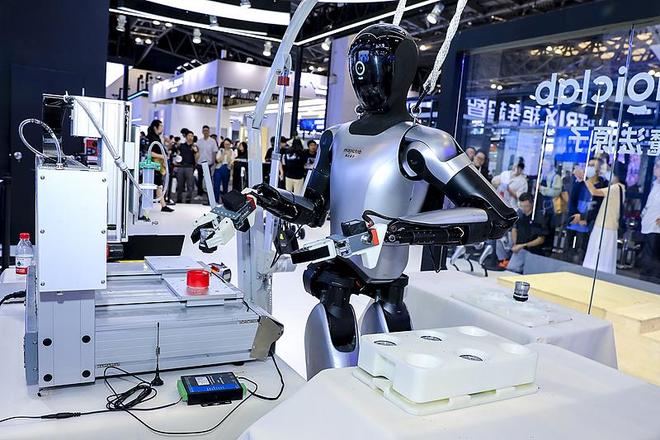
Core Viewpoint - The exploration of Artificial General Intelligence (AGI) is increasingly focusing on embodied intelligence, which emphasizes the interaction and adaptation of intelligent agents within physical environments, enabling them to perceive, understand tasks, execute actions, and learn from feedback [1][3]. Industry Analysis - In the past two years, numerous star teams in the field of embodied intelligence have emerged, establishing valuable companies such as Xinghaitu, Galaxy General, and Zhujidongli, driving advancements in embodied brain and cerebellum technologies [3]. - Major domestic companies like Huawei, JD.com, Tencent, Ant Group, and Xiaomi are actively investing and collaborating to build key technologies in embodied intelligence, while international players like Tesla and investment firms are supporting companies like Wayve and Apptronik in autonomous driving and warehouse robotics [5]. Technological Evolution - The development of embodied intelligence has progressed through several stages: - The first stage focused on grasp pose detection, which lacked the ability to model task context and action sequences, limiting its effectiveness in complex operations [6]. - The second stage involved behavior cloning, allowing robots to learn from expert demonstrations but revealing weaknesses in generalization and performance in multi-target scenarios [6]. - The third stage introduced Diffusion Policy methods, enhancing stability and generalization by modeling action trajectories, followed by the emergence of Vision-Language-Action (VLA) models that integrate visual perception, language understanding, and action generation [7][9]. - The fourth stage, starting in 2025, explores the integration of VLA models with reinforcement learning, world models, and tactile sensing to overcome current limitations [9][11][12]. Product and Market Development - The evolution of embodied intelligence technologies has led to the emergence of various products, including humanoid robots, robotic arms, and quadrupedal robots, serving industries such as manufacturing, home services, dining, and healthcare [14]. - The demand for engineering and system capabilities is increasing as the industry shifts from research to deployment, necessitating higher engineering skills for effective implementation [17].


字节Seed部门豪掷百万期权,力挽大模型人才“留守”潮
Sou Hu Cai Jing· 2025-09-03 21:06
Group 1 - ByteDance has implemented an option issuance plan targeting its Seed department, which focuses on large model technology research, attracting significant industry attention [1][3] - Employees in the Seed department can receive stock options ranging from 90,000 to 130,000 per month based on their performance and rank, with the plan expected to last for 18 months [1][3] - The total amount of options to be issued is substantial, reflecting the company's commitment to incentivizing its core technical personnel [1] Group 2 - The exercise price for the issued options is set at $189.9 per share, lower than the latest repurchase price of $200, indicating the company's special emphasis on this department [3] - The Seed department, established in 2023, is a key part of ByteDance's AGI strategy and has developed the Doubao large model, with a dedicated AGI research team named "Seed Edge" [3] - The internal response has been positive, with employees expressing admiration for the Seed department, which is perceived as a "star department" within the company [3] Group 3 - The generous option issuance is seen as a strategy to strengthen ByteDance's competitive edge in the large model technology sector and retain top AI talent [3] - Industry insiders have noted that this move complicates talent acquisition for competing companies, highlighting the competitive landscape in the AI sector [3] - ByteDance has not provided an official response to the reactions surrounding this incentive program [3]

通往AGI的快车道?大模型驱动的具身智能革命 | Jinqiu Select
锦秋集· 2025-09-01 15:29
Core Insights - Embodied intelligence is seen as a key pathway to achieving Artificial General Intelligence (AGI), enabling agents to develop a closed-loop system of "perception-decision-action" in real-world scenarios [1][2] - The article provides a comprehensive overview of the latest advancements in embodied intelligence powered by large models, focusing on how these models enhance autonomous decision-making and embodied learning [1][2] Group 1: Components and Operation of Embodied AI Systems - An Embodied AI system consists of two main parts: physical entities (like humanoid robots and smart vehicles) and agents that perform cognitive functions [4] - These systems interpret human intentions from language instructions, explore environments, perceive multimodal elements, and execute actions, mimicking human learning and problem-solving paradigms [4] - Agents utilize imitation learning from human demonstrations and reinforcement learning to optimize strategies based on feedback from their actions [4][6] Group 2: Decision-Making and Learning in Embodied Intelligence - The core of embodied intelligence is enabling agents to make autonomous decisions and learn new knowledge in dynamic environments [6] - Autonomous decision-making can be achieved through hierarchical paradigms that separate perception, planning, and execution, or through end-to-end paradigms that integrate these functions [6] - World models play a crucial role by simulating real-world reasoning spaces, allowing agents to experiment and accumulate experience [6] Group 3: Overview of Large Models - Large models, including large language models (LLMs), large vision models (LVMs), and vision-language-action (VLA) models, have made significant breakthroughs in architecture, data scale, and task complexity [7] - These models exhibit strong capabilities in perception, reasoning, and interaction, enhancing the overall performance of embodied intelligence systems [7] Group 4: Hierarchical Autonomous Decision-Making - Hierarchical decision-making structures involve perception, high-level planning, low-level execution, and feedback mechanisms [30] - Traditional methods face challenges in dynamic environments, but large models provide new paradigms for handling complex tasks by combining reasoning capabilities with physical execution [30] Group 5: End-to-End Autonomous Decision-Making - End-to-end decision-making has gained attention for directly mapping multimodal inputs to actions, often implemented through VLA models [55][56] - VLA models integrate perception, language understanding, planning, action execution, and feedback optimization into a unified framework, representing a breakthrough in embodied AI [58] Group 6: Enhancements and Challenges of VLA Models - VLA models face limitations such as sensitivity to visual and language input disturbances, reliance on 2D perception, and high computational costs [64] - Researchers propose enhancements in perception capabilities, trajectory action optimization, and training cost reduction to improve VLA performance in complex tasks [69][70][71]

23岁天才被OpenAI解雇后,又凭AI狂揽15亿美元
3 6 Ke· 2025-09-01 09:09
Core Insights - Leopold Aschenbrenner, a 23-year-old former OpenAI researcher, has founded an AI hedge fund named Situational Awareness, managing over $1.5 billion in assets and achieving a 47% return in the first half of 2025, significantly outperforming Wall Street peers [3][5][8] Group 1: Fund Overview - The Situational Awareness fund focuses on companies benefiting from AI advancements and prominent AI startups, employing a long-short strategy to mitigate risks by going long on AI sectors and shorting traditional industries likely to be disrupted [5][8] - Aschenbrenner's fund is positioned as a leading think tank in the AI field, with a notable investor base including Stripe co-founders and other prominent figures in the tech industry [7][8] Group 2: Investment Strategy and Performance - The fund's performance has been exceptional, with a 47% return after management fees in the first half of 2025, compared to a 6% increase in the S&P 500 and a 7% average return for tech hedge fund indices [5][8] - The fund's concentrated holdings reflect the limited number of publicly traded AI companies, with significant investments in companies like Vistra, which supplies power to AI data centers [9] Group 3: Background and Research - Aschenbrenner gained attention with his 165-page paper titled "Situational Awareness," predicting the arrival of Artificial General Intelligence (AGI) by 2027 and advocating for an "AI Manhattan Project" [3][11] - His research highlights the rapid advancements in AI capabilities, suggesting that by 2027, AI models will be capable of performing tasks traditionally reserved for human researchers and engineers [19][20]

AI治理,需要多元工具协同应用
Jing Ji Wang· 2025-09-01 09:01
Core Viewpoint - The establishment of effective governance mechanisms for artificial intelligence (AI) is crucial for promoting technological innovation while managing potential risks associated with its rapid development [1][6]. Group 1: AI Governance Dimensions - AI governance is a dynamic, multi-dimensional process involving various tools and stakeholders aimed at shaping the direction and boundaries of AI development to align with social values [3][4]. - The ethical and value dimension focuses on fundamental ethical principles that AI systems should adhere to, such as safety, transparency, fairness, and accountability [3][4]. - The policy support and market incentive dimension emphasizes the role of government in fostering AI innovation through financial investment, research funding, and regulatory frameworks [4][5]. - The regulation and standards dimension includes legal frameworks, technical standards, and compliance mechanisms essential for effective governance [5][6]. Group 2: Global AI Governance Challenges - The first challenge is the differentiation in governance due to varying technological paths across countries, leading to discrepancies in risk perception and governance tools [6][8]. - The second challenge is the mismatch between the rapid pace of AI technological advancement and the slower evolution of governance frameworks, resulting in a lag in regulatory responses [7][9]. - The third challenge involves the complexity of global governance mechanisms, which often lack coordination and can lead to inefficiencies and conflicts among different regulatory bodies [8][9]. - The fourth challenge is the impact of geopolitical factors, which can hinder international cooperation on AI governance, making it difficult to address cross-border risks effectively [10][11].

“人工智能+”行动发布,四巨头“闭环能力”破局
Bei Jing Shang Bao· 2025-09-01 08:33
Core Insights - The Chinese government has launched the "Artificial Intelligence +" initiative, marking a significant shift towards integrating AI across various sectors, aiming for over 70% penetration of smart terminals by 2027 and a fully intelligent society by 2035 [1] - Major Chinese AI companies are playing a crucial role in this initiative, focusing on closing the gap between technology and practical applications, with a shift from performance competition to ecosystem collaboration [1][2] Company Summaries ByteDance - Launched the Seed-OSS-36B large language model, breaking the long text processing barrier with a 512K context window, supporting input of up to 900,000 Chinese characters [3] - Introduced a "thinking budget" mechanism allowing users to control the model's depth of reasoning, enhancing its application in complex tasks [3] - The model is integrated with the Volcano Engine, creating a closed-loop ecosystem of open-source models, development tools, and content [3][11] Alibaba - The Tongyi Qianwen model focuses on commercial applications, with its upgraded version capable of generating high-quality dynamic videos from images and audio [4] - Launched the AI programming tool Qoder, enhancing code library search and task delegation efficiency [4] - Over 300 Tongyi series models have been open-sourced, with global downloads exceeding 400 million, significantly improving enterprise efficiency [12] SenseTime - The SenseTime V6.5 multi-modal model has achieved significant advancements in reasoning performance, comparable to leading models in the market [5] - The "Xiaohuanxiong" intelligent assistant has surpassed 3 million users, with applications in finance, education, and government [5][13] - The company has developed the "Wuneng Embodied Intelligence Platform," enhancing interaction between AI and the physical world [5] Baidu - Open-sourced the Wenxin large model series, achieving a 92.7% accuracy in understanding industry-specific terminology [6] - The Wenxin model has a daily call volume of 1.65 billion, integrating solutions across healthcare and education sectors [14] - In the autonomous driving sector, Baidu's Apollo system has covered 30 cities, with L4 testing mileage exceeding 80 million kilometers [14] Competitive Landscape - The competition among the four major AI companies has shifted from scale expansion to performance efficiency and collaborative innovation [8] - Each company has optimized its computing infrastructure, with significant improvements in performance and cost efficiency [8] - According to IDC, Baidu, Alibaba, and SenseTime are leading the domestic AI platform market, indicating a strong competitive position in AI infrastructure [9] Future Directions - The success of AI technology will depend on its penetration into vertical markets and the efficiency of commercial conversion [10] - The four major companies are adopting distinct strategies for market implementation, focusing on ecosystem integration and scene-specific applications [10][14]


“AI争霸赛,中国这招比美国高明”
Guan Cha Zhe Wang· 2025-09-01 00:52
Core Insights - The article discusses the contrasting visions of AI development between China and the United States, highlighting China's pragmatic approach versus the U.S.'s ambitious pursuit of Artificial General Intelligence (AGI) [1][2]. Group 1: AI Development Strategies - The U.S. is investing billions of dollars and consuming vast amounts of energy to achieve a significant leap in AI, which some believe could alter global order [1]. - In contrast, China is focusing on practical applications of AI that enhance productivity and are market-friendly, rather than pursuing AGI [1][4]. - China has established a national AI fund with a total scale of 60.06 billion RMB to support startups, alongside local government initiatives and AI development plans [5]. Group 2: Current Applications and Innovations - AI models similar to ChatGPT are being utilized in various sectors in China, including exam grading, weather forecasting, and agricultural advice [4]. - Chinese universities and companies are deploying AI in practical settings, such as AI hospitals and automated factories, emphasizing immediate utility rather than theoretical advancements [4][5]. Group 3: Competitive Landscape - The article notes that while U.S. tech giants are heavily investing in AGI, there is a growing belief that China's focus on existing AI technologies may allow it to gain a competitive edge [2][8]. - Chinese companies are increasingly embracing open-source models, which are proving to be effective and competitive against proprietary models from U.S. firms [10][11]. - The competitive environment is described as a "Darwinian struggle" among Chinese developers to create the most open and effective AI models, contrasting with the U.S. approach of keeping innovations proprietary [10][12].
最新发声!金沙江朱啸虎:远离大厂“炮火”,建立AI之外的“护城河”
Sou Hu Cai Jing· 2025-08-31 10:04
Core Insights - The AI industry is experiencing a significant shift, with the emergence of new applications and a clearer understanding of the limitations of current AI models, particularly with the arrival of GPT-5 [4][6] - The competition in the AI startup space is intensifying, despite lower entry barriers, making it crucial for companies to develop high-quality products to retain users [8][10] Group 1: AI Model Limitations and Trends - The capabilities of AGI (Artificial General Intelligence) have reached a ceiling, with further advancements becoming increasingly difficult due to data bottlenecks and reasoning limitations [4][6] - The trend towards model miniaturization is expected to be significant in the next two to three years, allowing for reduced costs and improved user experiences [4][6] - The daily token consumption for AI models in China has surpassed 30 trillion, indicating a substantial increase in AI application usage within enterprises [6] Group 2: Application Development and Market Dynamics - There is a notable shift from text-based AI applications to voice and video applications, with voice models becoming highly sophisticated [5][7] - The entry barriers for AI applications have decreased, allowing smaller teams to launch startups, but the competition has become more fierce, with investors focusing on companies that can achieve significant annual recurring revenue (ARR) quickly [9][10] - Companies must establish a "moat" outside of AI technology itself, focusing on unique capabilities such as editing and workflow integration to differentiate their products [12] Group 3: Entrepreneurial Strategies and Opportunities - Successful AI applications must deliver real value to retain customers, as many users tend to discontinue subscriptions after a short period [8][10] - There are emerging opportunities in sectors like medical documentation and AI hardware, where practical applications can significantly enhance efficiency [12] - The ability to manage hardware details, such as AI glasses, presents unique challenges and opportunities for startups, particularly in regions with robust supply chains [12]