
产教融合

Search documents
分数线再度“全线飘红” 就业率一直“遥遥领先” 深圳高校为什么这么“红”
Shen Zhen Shang Bao· 2025-07-23 23:23
Group 1 - The core viewpoint is that Shenzhen universities are increasingly attracting top students, with rising admission scores reflecting their growing appeal and competitiveness [1][2][4] - In the physics category, Harbin Institute of Technology (Shenzhen), Southern University of Science and Technology, and Shenzhen University of Technology ranked as the top three universities in Guangdong, with minimum admission scores of 662, 652, and 629 respectively [2][3] - Shenzhen's educational institutions are not only improving in quality but also expanding in number, with 17 universities now established in the city, including new programs in cutting-edge fields like artificial intelligence and cybersecurity [4][5] Group 2 - The rise in admission scores indicates a significant improvement in the quality of education at Shenzhen universities, with several institutions achieving high rankings in national assessments [4][6] - Shenzhen's universities are adapting to industry needs, with a focus on practical training and collaboration with local high-tech enterprises, which enhances their attractiveness to students [6][7] - The city is also planning to expand its higher education landscape, with new projects aimed at enhancing the quality and diversity of academic offerings, thereby providing more opportunities for students [7]
校企协同 共启新程|外研社与武汉城市职业学院举办校企合作交流会
Sou Hu Cai Jing· 2025-07-23 12:55
Core Viewpoint - The collaboration meeting between Foreign Language Teaching and Research Press (FLTRP) and Wuhan City Vocational College aims to enhance international development in vocational education and explore new cooperative opportunities in various fields [1][12]. Group 1: Company Overview - FLTRP is committed to the mission of "recording human civilization and communicating world culture," with significant achievements in professional publishing, international publishing, digital publishing, and high-quality publishing [3]. - FLTRP has established itself as a leader in foreign language education publishing in China, focusing on building a comprehensive service system that includes textbook development, digital platforms, teacher training, academic publishing, and international cooperation [6]. Group 2: Educational Collaboration - The meeting highlighted the importance of international cooperation in vocational education, with both parties expressing a desire to deepen collaboration in areas such as curriculum development, teacher training, and the establishment of a collaborative education community [4][12]. - Both FLTRP and Wuhan City Vocational College aim to explore innovative models for training high-quality technical and skilled talents that meet the demands of the times, emphasizing the integration of industry and education [13]. Group 3: Future Directions - FLTRP plans to continue empowering Wuhan City Vocational College's educational exchange and cooperation, focusing on enhancing the quality of education and expanding international outreach [6][12]. - The successful hosting of the exchange meeting has laid a solid foundation for future collaboration, with both parties committed to leveraging their strengths in vocational education [12].

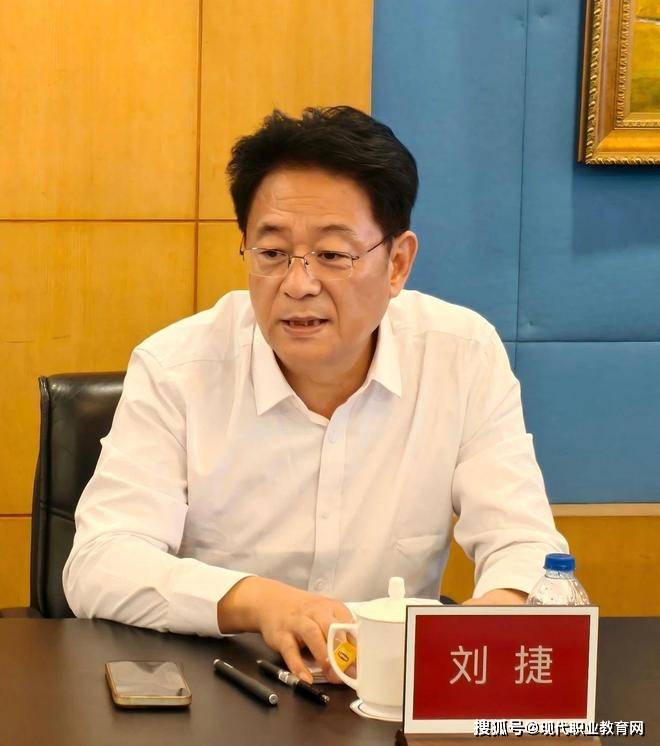
金融行业“青柠实践实境课堂”启动
Nan Jing Ri Bao· 2025-07-23 00:01
Core Points - The "Qingning Practice Reality Classroom" was launched to create a practical platform for youth employment in the financial industry, aiming to integrate education and industry to support high-quality employment for university students in Nanjing [1][2] - The platform is set to begin trial operation by the end of 2024 and officially launch in May 2025, with plans to serve over 10,000 university students this year through various practical courses [1][2] - As of now, 199 enterprises have joined the platform, offering 474 courses and serving 3,832 participants, reflecting a significant engagement from both students and financial institutions [2] Industry Collaboration - The collaboration between universities and financial institutions has led to the development of practical courses that allow students to engage with real financial projects, enhancing their understanding of industry operations and challenges [3][4] - The financial technology practice courses developed in partnership with Nanjing University have already completed four iterations, focusing on key areas such as technology finance and green finance [2][3] - The platform serves as a "catalyst" for education-industry integration, bridging the gap between academic knowledge and practical application, thus preparing students for future roles in the financial sector [3][4]

把毕业论文“写”在实践成果中(纵横)
Ren Min Ri Bao· 2025-07-22 21:51
Core Viewpoint - The reform of master's and doctoral training initiated by nine departments, including the Central Organization Department and the Ministry of Education, aims to break the "thesis-only" barrier and promote practice-oriented education, aligning talent cultivation with industry needs [1][2]. Group 1: Reform Implementation - The first batch of over 2,100 master's graduates from the pilot program has seen 67 individuals apply for degrees based on practical achievements [1]. - Notable cases include a master's student from Shandong University who became the first in the province to earn a degree through practical results, and ten engineering master's students from Tianjin University who applied for degrees based on design projects [1]. Group 2: Significance of the Reform - The pilot program addresses the long-standing issue of an imbalance between theoretical knowledge and practical application in education, particularly in fields that are inherently practice-oriented [2]. - Institutional recognition of practical achievements is expected to motivate students to apply their knowledge to real-world problems, thereby fostering technological advancement [2]. Group 3: Challenges and Standards - The reform does not imply a relaxation of standards; rather, it raises expectations for students' hands-on skills, innovation capabilities, and problem-solving abilities [2]. - Challenges such as the disconnect between educational institutions and enterprises, the standardization of diverse practical achievements, and issues related to individual contributions and intellectual property rights need to be addressed for the reform to be effective [2].
更多蓝领雄鹰振翅起飞
Si Chuan Ri Bao· 2025-07-22 21:24
Core Viewpoint - The "Blue Eagle Project" has significantly improved vocational education in the mountainous region of Muchuan, Sichuan, by aligning educational programs with industry needs, resulting in increased student employment and skill development [6][7]. Group 1: Project Overview - The "Blue Eagle Project" was initiated through a partnership between Zhejiang Province and Muchuan County, focusing on vocational education that meets local industry demands [6]. - The project has led to the establishment of 25 vocational schools and 28 enterprises collaborating on talent cultivation, resulting in the training of 1,999 students, with the highest annual salary reaching 200,000 yuan [6][7]. Group 2: Educational Impact - The Muchuan Vocational School has seen a continuous increase in student enrollment, with a focus on popular fields such as industrial robotics and new energy vehicles [6]. - The school has developed a strong partnership with over 30 "Blue Eagle Teams" and has created a comprehensive training environment with multiple practical training bases [7]. Group 3: Industry Collaboration - The collaboration between vocational schools and enterprises has enabled students to transition smoothly from classroom learning to practical work environments, with many students securing jobs before graduation [6][7]. - The establishment of training bases with six Fortune 500 companies and 25 well-known enterprises has facilitated targeted talent development [7]. Group 4: Future Developments - The introduction of new partners like Xiaomi Group aims to expand vocational training programs, including the establishment of an AIoT Industry Academy [7]. - A new campus is under construction to accommodate the growing demand for vocational training, with plans for additional training facilities and an e-commerce incubation center [7].



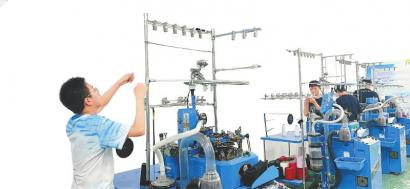
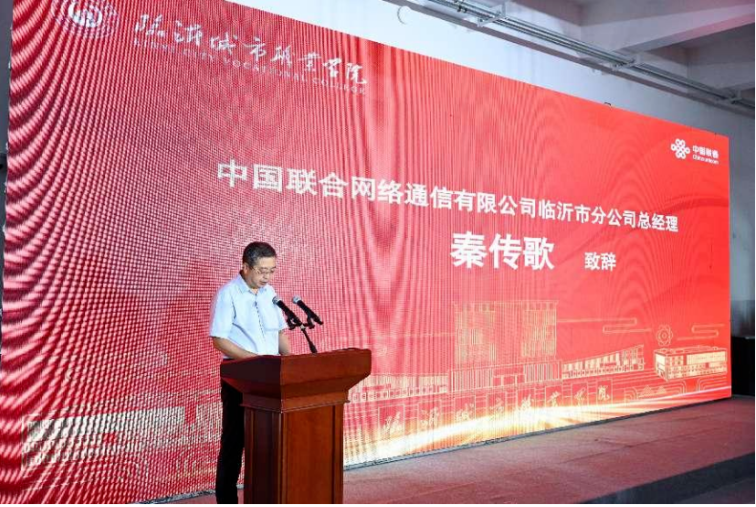
临沂联通首启“万兆全光示范校园”共筑职教新未来
Qi Lu Wan Bao· 2025-07-22 09:30
Core Viewpoint - The launch of the "10 Gigabit All-Optical Demonstration Campus" at Linyi City Vocational College marks a significant advancement in digital education infrastructure in Linyi, China, showcasing a collaboration between China Unicom and the college to enhance educational quality and digital transformation [1][3]. Group 1: Project Launch and Significance - The "10 Gigabit All-Optical Demonstration Campus" is the first of its kind in a higher vocational institution in Linyi, symbolizing a strong partnership between Linyi City Vocational College and China Unicom [1][5]. - This initiative aligns with national strategies such as "Network Power" and "Digital China," as well as the Shandong Province's push for digital transformation in vocational education [1][3]. Group 2: Educational Impact - The establishment of the 10 Gigabit optical network will support a student-centered educational philosophy, enabling a boundary-less learning environment characterized by "anyone can learn, anywhere can learn, anytime can learn" [3]. - Advanced teaching applications such as 4K/VR virtual training, remote collaborative classrooms, and digital twin laboratories will benefit from the high-speed network, facilitating low-latency and boundary-less educational experiences [3]. Group 3: Future Collaboration - A strategic cooperation agreement was signed between Linyi City Vocational College and China Unicom, laying a solid foundation for future collaboration in enhancing digital technology in higher vocational education [5]. - The launch reflects the commitment of both parties to improve educational quality and contribute to the development of a modern, efficient, and safe campus environment [5].
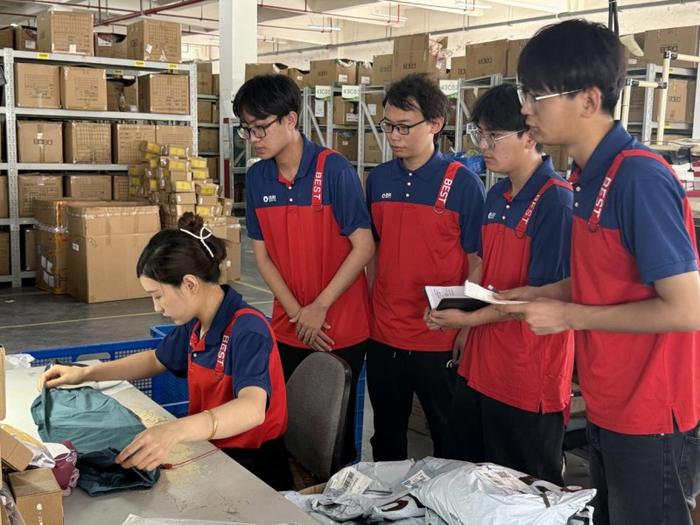
校企合作:百世集团深耕产教融合沃土,拓宽职教出海版图
Xin Lang Cai Jing· 2025-07-22 01:29
Core Insights - The article highlights the collaboration between Best Logistics and Yantai Vocational College to cultivate logistics talent through the "Golden Seed" program, emphasizing the integration of education and industry [1][3] - The Chinese government has identified the need for enhancing talent cultivation in the smart supply chain sector, with a projected shortage of 437,000 logistics-related positions by 2025, indicating a critical talent gap in the industry [3][4] - Best Logistics has established partnerships with over 200 higher education institutions across China to create a comprehensive talent development ecosystem, addressing the disconnect between classroom knowledge and job requirements [3][5] Domestic Development - Best Logistics has developed a closed-loop model for collaborative education, focusing on "course co-construction, practical co-cultivation, and position co-integration" to enhance the quality of logistics education [4][5] - The company has established the first "Best Logistics Technology Industry College" in collaboration with Tianjin Transportation Vocational College, aiming to create 10 production training centers nationwide that operate under a "school within a factory" model [5][6] - Through partnerships with leading companies like Geely and L'Oréal, Best Logistics is facilitating direct employment pathways for students, ensuring a precise match between talent supply and industry demand [5][6] International Expansion - As Chinese enterprises expand globally, Best Logistics is addressing the shortage of logistics talent by establishing overseas training bases in seven countries, including Vietnam and Malaysia, to provide practical training for both Chinese and local students [6][8] - The company has initiated the "National Smart Logistics and Supply Chain Industry-Education Integration Community" to foster resource sharing and collaboration among educational institutions, enterprises, and industry associations [6][8] - Best Logistics is actively involved in the Uzbekistan Luban Workshop project, focusing on logistics training and the development of bilingual teaching materials to meet modern enterprise needs [9]
深化改革创新,建设高水平应用型高校
Xin Hua Ri Bao· 2025-07-21 22:04
Group 1 - The core viewpoint emphasizes the importance of higher education as a key link in implementing national strategies for science, technology, and talent development, particularly through application-oriented universities [1] - The article highlights the need for comprehensive educational reform to focus on moral education and the cultivation of talent, addressing the questions of what kind of people to cultivate, how to cultivate them, and for whom [2] - It stresses the integration of education, innovation, and industry, advocating for a systematic approach to align educational programs with local industrial needs and to enhance the quality of the educational chain [3] Group 2 - The article discusses the necessity of reforming talent development mechanisms, emphasizing the importance of a diverse evaluation system for faculty and the need to break away from traditional evaluation methods [4] - It outlines strategies for dual-direction talent recruitment and development, focusing on practical experience and the integration of teaching and research with industry needs [4] - The article calls for the establishment of a scientific incentive mechanism to support the growth and mobility of talent, ensuring that educational institutions can effectively utilize their human resources [4]
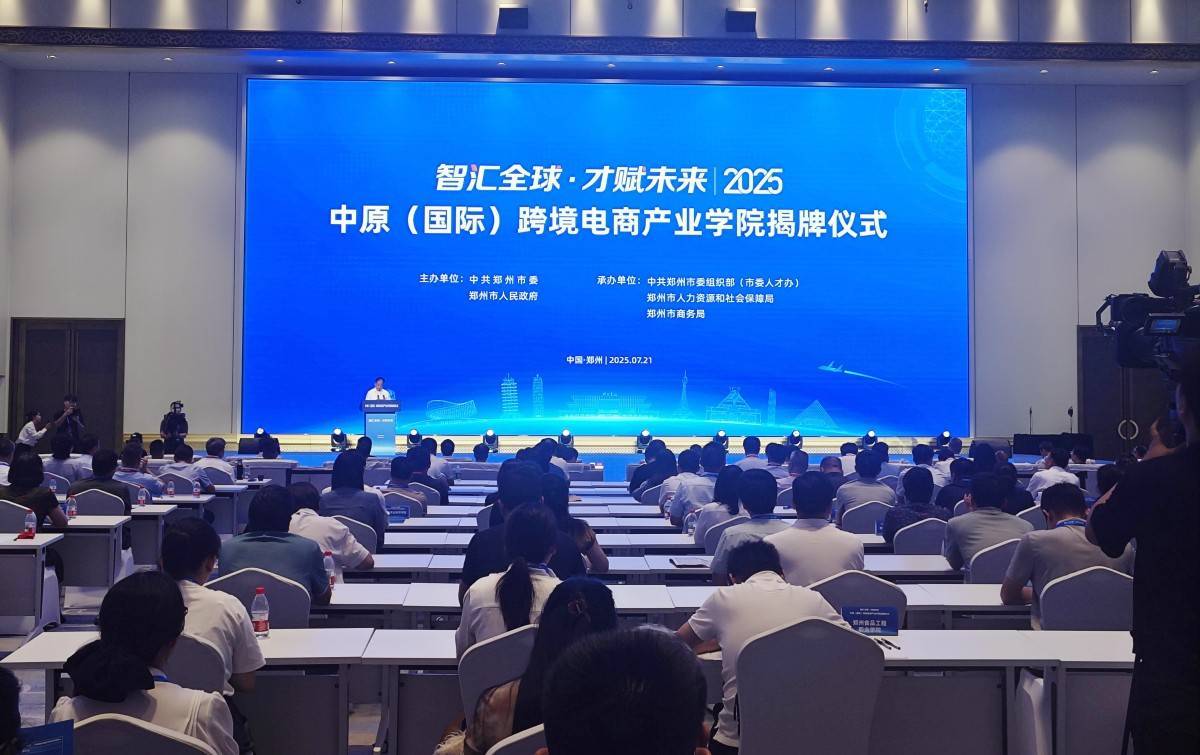
中原(国际)跨境电商产业学院在郑州揭牌
Sou Hu Cai Jing· 2025-07-21 11:59
Core Viewpoint - The establishment of the Central Plains (International) Cross-Border E-Commerce Industry College in Zhengzhou aims to enhance the high-quality development of the cross-border e-commerce industry in the central region of China, leveraging local educational resources and industry partnerships [1][3]. Group 1: College Establishment and Objectives - The college will integrate talent cultivation, skills training, evaluation, title assessment, and industry services to support the high-quality development of cross-border e-commerce in Zhengzhou, with an initial enrollment plan of 500 students [1]. - The college will rely on the industry resource advantages of the Shenzhen Cross-Border E-Commerce Association and the vocational education foundation of Zhengzhou Technician College [1]. Group 2: Government and Industry Support - Zhengzhou's government emphasizes the importance of talent cultivation, resource sharing, open cooperation, and quality improvement to provide comprehensive support for the college's development and enterprise growth [3]. - The establishment of a long-term strategic cooperation relationship between Zhengzhou and the Shenzhen Cross-Border E-Commerce Association is expected to leverage Zhengzhou's human resources and open-door advantages for high-quality development [5]. Group 3: Future Vision and Collaboration - The college aims to create a "government-industry-university-research-application" ecosystem to cultivate compound talents with international vision and practical abilities, facilitating Zhengzhou's leap in the cross-border e-commerce sector [3]. - A roundtable discussion on "New Ecological Development Trends in Cross-Border Talent" was held, indicating ongoing engagement with industry stakeholders [5].
河南空管深化产教融合 为航空人才培养注入新动能
Zhong Guo Min Hang Wang· 2025-07-21 07:15
Core Viewpoint - The collaboration between the Henan Air Traffic Control Bureau and Zhengzhou University of Aeronautics aims to enhance aviation talent development and support the economic growth of the Zhengzhou aviation hub through resource sharing and practical training opportunities [1][5]. Group 1: Collaboration and Resource Sharing - The Air Traffic Control Bureau has established an off-campus internship base with Zhengzhou University to integrate resources and create a practical platform for aviation talent cultivation [1]. - The bureau actively assesses training needs and provides advanced air traffic control simulation equipment, along with a shared operational case library and industry updates for students [2]. Group 2: Curriculum Development and Skill Training - A specialized technical team has designed an internship curriculum that aligns with air traffic control job requirements, focusing on essential skills such as equipment operation and operational scheduling [3]. - Experienced professionals from the bureau serve as part-time instructors, using case studies and simulations to impart emergency response experiences to students [3]. Group 3: Practical Experience and Talent Development - Students engage in observational learning activities that connect theoretical knowledge with practical air traffic control operations, significantly enhancing their professional skills and career recognition [4]. - This model helps identify and cultivate high-quality talent that meets industry demands, contributing to the development of the aviation sector and regional economy [4]. Group 4: Cultural Promotion and Educational Support - The bureau's leadership organizes experienced instructors to conduct on-site teaching at the aviation college, sharing real-world cases and promoting air traffic control culture [5]. - This initiative fosters a deeper understanding of the air traffic control profession among students, igniting their passion for the aviation industry [5].