具身智能

Search documents
首发|清华博士,刚刚又融10亿
投资界· 2026-03-05 00:44
Core Viewpoint - The article discusses the rapid growth and investment in the field of embodied intelligence, highlighting the success of the company "极佳视界" (Jijia Shijie) and its founder Huang Guan, who aims to create a leading entity in this sector akin to "OpenAI" for the physical world [2][13]. Investment and Financing - 极佳视界 has completed nearly 1 billion yuan in Pre-B financing, attracting a prestigious lineup of investors including top chip and automotive industry capital [2] - The company has seen a series of successful funding rounds, including several hundred million yuan in angel and Pre-A financing, with notable investors such as Huawei and various state-owned platforms [14][15][16]. - The latest financing round reflects strong confidence from investors in the company's strategic positioning and industry potential [16]. Leadership and Team - Huang Guan, a prominent figure in AI, has a rich background in the field, having worked with major companies and led significant projects in AI and robotics [6][7]. - The core team of 极佳视界 consists of experienced professionals with over 20 years of combined experience in computer vision, autonomous driving, and physical AI, positioning the company as a "dream team" in the industry [7][9]. Product Development - 极佳视界's product matrix includes the GigaBrain series of embodied models, the GigaWorld platform, and the Maker embodiment, forming a comprehensive system for physical AI [9]. - The company has achieved significant advancements in model capabilities, with GigaBrain-0.1 outperforming other models in global evaluations [9][10]. - The introduction of GigaWorld-Policy has marked a breakthrough in efficiency, achieving a tenfold increase in inference speed and a 30% increase in task success rates compared to mainstream models [12][19]. Industry Trends and Challenges - The article notes a "Matthew effect" in the industry, where resources and talent are increasingly concentrated in leading companies, indicating a shift from technology demonstration to practical application [17]. - The competition in the second half of the embodied intelligence sector will focus on the evolution of foundational models and their ability to adapt to complex real-world scenarios [17][20]. - Despite advancements, the industry faces challenges in general cognitive and decision-making capabilities, which must be addressed for broader application across various sectors [17]. Future Outlook - 极佳视界 aims to lead the charge in the physical world of AI, with plans for large-scale production and delivery of its new generation of physical AGI embodiment, Maker H01, targeting various applications [20]. - The company is focused on high-value, generalized scenarios, collaborating with leading clients in automotive manufacturing, logistics, and home services [20].


一家想让外骨骼成为「人体器官」的公司,再获亿元级融资
36氪· 2026-03-05 00:26
Core Viewpoint - The exoskeleton industry is expected to evolve into an independent sector comparable to smartphones, addressing human mobility limitations and enhancing physical capabilities [2]. Group 1: Company Developments - Cheng Tian Technology secured a significant B+ round financing led by Agricultural Bank Capital, marking its second funding round in a year [2]. - The company plans to launch consumer-grade exoskeleton products in 2025, with an estimated shipment of 60,000 to 100,000 units in 2026 [3][9]. - The initial consumer product, a passive exoskeleton, sold out quickly, indicating strong market demand [7]. Group 2: Product Features and User Feedback - The passive exoskeleton targets individuals with walking disabilities, receiving positive feedback for improving stability and gait, although it has limitations in high-load scenarios like climbing [7]. - Active exoskeletons are being developed to assist with joint pain and fatigue during physical activities, with applications in scenic areas [8]. - The company emphasizes the importance of user-specific needs, suggesting that different demographics require tailored exoskeleton solutions [14][15]. Group 3: Market Trends and Future Outlook - The exoskeleton market is still in its infancy, with significant growth potential driven by aging populations and increasing consumer interest [10][18]. - The company aims to differentiate its products through precise user profiling and targeted functionalities rather than creating a one-size-fits-all solution [12][14]. - AI applications in exoskeletons focus on enhancing human-machine interaction and personalizing user experiences through data-driven insights [24][25]. Group 4: Supply Chain and Production Challenges - The supply chain for exoskeleton components has improved, allowing for better cost control and scalability, which was previously a major barrier [11]. - The company has opted for in-house manufacturing to address the rapid product iteration demands and ensure quality standards [11][12]. - The core indicators for consumer-grade exoskeletons include weight, battery life, and stability, which are influenced by supply chain capabilities [12]. Group 5: Integration of AI and Advanced Technologies - AI is being utilized for personalized adaptations of exoskeletons, enhancing user experience through real-time data analysis [24][25]. - The company is also developing brain-machine interfaces to further integrate exoskeletons with human physiology, aiming to improve rehabilitation outcomes [31][32]. - Continuous data collection from clinical applications is crucial for refining product designs and enhancing user adaptability [30].

瑞幸咖啡实控方大钲资本将收购蓝瓶咖啡;Seedance2.0生成视频价格公布:一秒1块钱;沐曦股份一季度营收最高预增87.26%丨邦早报
创业邦· 2026-03-05 00:09
Group 1 - Dazhong Capital has signed a deal with Nestlé to acquire Blue Bottle Coffee, with Dazhong taking over global stores while Nestlé retains the coffee machine and capsule business [2] - Muxi Co., Ltd. expects Q1 2026 revenue to reach 400 million to 600 million yuan, representing a year-on-year growth of 24.84% to 87.26%, driven by advancements in AI technology and GPU market expansion [2] - JP Gan, founder of Ince Capital, purchased a luxury apartment in Hong Kong for 1.48 billion HKD (approximately 190 million USD), coinciding with a recovery in the Hong Kong real estate market [2] Group 2 - Seedance 2.0 has announced video generation pricing, with costs of 28 yuan per million tokens including video input and 46 yuan per million tokens excluding video input, equating to 1 yuan per second for video generation [6] - Alibaba's Qwen project is emphasized as a top priority by CEO Wu Yongming during an internal meeting following the announcement of a leadership change [8] - The total sales of Hongmeng Intelligent Vehicles have reached 1.28 million units, achieving the fastest record for new force brands to deliver one million vehicles in just 43 months [8] Group 3 - PhonePe, a digital payment app backed by Walmart, aims for a valuation of up to 10.5 billion USD in its upcoming IPO in India [11] - Ayar Labs, supported by NVIDIA, has completed a 500 million USD funding round, bringing its valuation to 3.75 billion USD [11] - Cursor, an AI programming assistant, has surpassed an annual revenue of 2 billion USD, with enterprise clients contributing 60% of its income [10]

3月苏州站:投研闭门会、追觅生态、魔法原子、灵猴机器人——AI中国力量·前沿科技
泽平宏观· 2026-03-04 16:06
Core Viewpoint - The article emphasizes the importance of advanced technology companies in redefining modern life and driving economic growth, particularly through AI and robotics innovations [8][14]. Company Summaries Chasing Technology - Founded in 2017, Chasing Technology focuses on high-speed digital motors, intelligent algorithms, and motion control technology, believing that "core technology is fundamental" [4][19]. - By December 2025, the company aims to have over 8,000 patent applications and more than 3,000 authorized patents, establishing itself as a global leader in the smart cleaning sector [4][19]. Magic Atom - Established in 2024, Magic Atom is one of the few companies in China with full-stack self-research capabilities for humanoid robots, boasting a hardware self-research rate exceeding 90% [5][20]. - The company emphasizes commercial viability and has initiated the "Thousand Scenes Co-Creation Plan" to refine robots in real-world settings, addressing practical usability [5][20]. Monkey Robotics - Founded in 2015, Monkey Robotics is a core component supplier in the smart manufacturing sector, specializing in machine vision, direct-drive motors, and industrial robots [6][21]. - The company is expanding into the embodied intelligence sector, offering a one-stop ODM service for intelligent robotics, and plans to enhance its investment in building an ecosystem around core components and scene testing [6][21]. Industry Insights AI and Robotics Trends - The article highlights the transition of AI from virtual to physical realities, unlocking trillion-dollar market opportunities [9][17]. - Key topics for discussion include the development of service robots driven by AI models, the challenges in mass production of humanoid robots, and investment logic focusing on core hardware and applications [18][17].

关键核心技术要不来等不来:全国两会上原始创新“出圈”
第一财经· 2026-03-04 15:59
Core Viewpoint - The article emphasizes the importance of independent innovation and the development of core technologies in China, particularly in the context of emerging industries like artificial intelligence and quantum computing [2][4]. Group 1: Original Innovation and Key Technologies - The "14th Five-Year Plan" aims to strengthen original innovation and tackle key core technology challenges, promoting deep integration of technological and industrial innovation [6]. - The article highlights the success of China's quantum computing advancements, including the development of a high-precision strontium atomic optical lattice clock, which can operate with an error of less than one second over 300 billion years [4]. - The story of overcoming "bottleneck" challenges in quantum computing, particularly the development of a dilution refrigerator, showcases China's ability to achieve international advanced levels in critical technology [4][6]. Group 2: Role of Enterprises in Innovation - Enterprises are identified as the main drivers of innovation, with companies like CATL investing over 20 billion yuan annually in R&D and employing over 21,000 people in independent research [7]. - CATL's commitment to innovation has resulted in over 50,000 patents and a strong supply chain, enabling its products to be used in over 2 million vehicles worldwide [7]. - The article stresses the need for companies to increase R&D investments, particularly in artificial intelligence and new materials, to maintain a competitive edge [9]. Group 3: Artificial Intelligence and Robotics - The article discusses the advancements in humanoid robots, which integrate artificial intelligence, high-end manufacturing, and new materials, indicating a significant leap in technology and application scenarios [9][10]. - The importance of "embodied intelligence" in manufacturing and the need for breakthroughs in this area are highlighted, with suggestions for establishing national key R&D projects to support deep applications of embodied intelligence [10]. - The development of a robust information infrastructure, including the largest 5G network globally, is noted as a critical factor in enhancing the capabilities of artificial intelligence and related technologies [12]. Group 4: Governance and Ethical Considerations - The article mentions the need for governance in artificial intelligence, addressing issues such as liability in autonomous driving and copyright in AI-generated content [13]. - Suggestions for creating a collaborative governance ecosystem and establishing ethical standards for AI are presented, emphasizing the importance of a structured approach to managing risks associated with rapid technological advancements [13].
能科科技20260304
2026-03-04 14:17
Summary of Nengke Technology Conference Call Company Overview - **Company**: Nengke Technology - **Focus**: Accelerating AI transformation with a target to develop 45 industrial agents by 2027, having completed 25 by the end of 2025. Each agent has a unit price of approximately 6 million, with a single agent valued at around 3 million [2][3]. Key Points AI Business Development - **Revenue Contribution**: AI business revenue share has rapidly increased, reaching 30% by Q3 2025, with a target of 40% in 2026, expected to become the company's largest business segment [2][12]. - **Specialized Industries**: Approximately 60% of AI business will be implemented in specialized industries by 2025, leveraging the company's data foundation and agent processing capabilities [2][17]. - **Business Model Shift**: Transitioning from a self-owned team to an agency system, with 6 partners established by 2025 to enhance operational efficiency and coverage [2][10]. Technological Advancements - **Embodied Intelligence**: Achieved a breakthrough from "training and pushing" to "overall delivery" in embodied intelligence, focusing on "physical AI" in 2026 [2][5]. - **Agent Development**: By the end of 2025, 25 agents have been developed, with plans to reach 30-35 by 2026 and 45 by 2027 [3][4]. Market Positioning and Strategy - **AI Industry Layering**: The company categorizes the AI industry into three layers: IT infrastructure, application software, and industrial data applications, positioning itself as an "industrial data application expert" [7]. - **Client Base**: The company has approximately 3,000 manufacturing clients, with an active client base of about 2,000. The AI business currently covers only about 2% of existing clients, with a goal to increase this to 5% in 2026 [13][14]. Collaboration and Ecosystem - **Partnerships**: Strengthening collaborations with major players like Huawei, AWS, and Nvidia, focusing on enhancing computational power and algorithm partnerships [9][15]. - **Software Ecosystem**: The company aims to expand its software capabilities while collaborating with mainstream software vendors like Siemens and Dassault [9]. Risk Management - **Model vs. Software**: The company acknowledges the risk of "model eating software" but views it as a structural opportunity, actively reducing low-margin software implementation services while enhancing AI capabilities [2][21]. Future Outlook - **2026 Focus**: The company plans to enhance its AI business, with a clear focus on key areas and customer coverage strategies, aiming for a robust operational structure by mid-2026 [11][12][22]. - **Specialized Industry Growth**: The company anticipates maintaining a 40% share in specialized industries, with AI applications expected to deepen in these sectors [16][18]. Financial Projections - **Market Size Estimation**: The estimated annual AI capital expenditure in the covered industries is approximately 200 billion to 300 billion, with the company targeting a reachable market size of about 40 billion [14]. This summary encapsulates the key insights and strategic directions discussed during the conference call, highlighting Nengke Technology's commitment to AI transformation and its proactive approach to market challenges and opportunities.

海天瑞声20260303
2026-03-04 14:17
Company and Industry Summary Company Overview - **Company Name**: 海天瑞声 (Haitian Ruisheng) - **Industry**: Data services and AI technology Key Points Revenue Growth and Business Focus - Projected revenue growth of 59% year-on-year for 2025, with visual and voice services accounting for 85% of total revenue [2][3] - Customized services have increased to 68% of total revenue, leading to a decline in overall gross margin from 64% to 50% [2][5] - The company is focusing on high-end customized demands from major clients like Alibaba and Apple, while abandoning low-margin projects [2][5] Market Trends and Client Dynamics - Significant shift in revenue contribution from data modalities: visual (43%), voice (42%), and text (15%) by the end of 2025, driven by the rise of applications like Kuaishou [4] - The company anticipates that the voice business will benefit from the trend of "humanized interaction" in 2026, with increased demand for multilingual and emotional data [6] International Expansion and Strategy - The Philippine base has exceeded expectations, primarily serving TikTok and Temu, with plans to expand to North America to mitigate compliance risks [2][8] - The company aims to leverage Southeast Asia's advantages, such as English proficiency and cost-effectiveness, to fulfill large-scale customized orders from North American clients [8] R&D and Product Development - The "R&D delivery" segment is expected to contribute approximately 8% of revenue in 2025, with a target of 100 million yuan in 2026 [3][11] - The company is developing a "trusted data space" to meet public data element requirements, which is expected to enhance gross margins [10][11] Talent and Cost Management - The company maintains a lean workforce of 251 full-time employees, relying on a network of thousands of partners for project execution [12] - The focus is on matching high-end data needs with flexible resource allocation, avoiding rigid cost structures [12] Client Relationship and Market Positioning - Major clients are increasingly centralizing their data planning and demand analysis, which has streamlined the company's engagement process [14][15] - The company is adapting to a "head concentration effect," focusing on high-tier clients while also addressing the needs of smaller clients in sectors like finance and education [16][17] Financial Outlook - The company aims for a compound annual growth rate (CAGR) of 40%-50% from 2024 to 2028, with a focus on stabilizing gross margins above 50% [3][19] - Net profit is expected to grow steadily, despite pressures from depreciation and stock compensation expenses [20] Emerging Opportunities - The government’s "AI+" initiative is expected to drive new demand, with significant investments in AI infrastructure anticipated [19] - The company is exploring new revenue streams from the "G-class data elements" driven by national policies [10][19] Conclusion - The company is strategically positioned to capitalize on the growing demand for customized data services, with a clear focus on high-margin projects and international expansion. The evolving client landscape and government initiatives present significant opportunities for growth in the coming years.

大摩闭门会-机器人重塑-中国如何塑造智能机器的未来
2026-03-04 14:17
Summary of Key Points from the Conference Call Industry Overview - The conference focuses on the robotics industry, particularly in China, highlighting its rapid growth and global positioning. By 2024, China is expected to account for 54% of global industrial robot installations and 43% of the total stock, achieving a 7% year-on-year growth despite a global market stagnation [1][2]. Core Insights and Arguments - **Market Dynamics**: The growth in China's industrial robot installations is driven by a shift towards high-end manufacturing, particularly in sectors such as automotive, electronics, batteries, and photovoltaics, which have higher automation levels compared to traditional industries [2]. - **Cost Efficiency**: Autonomous Mobile Robots (AMR) can reduce labor costs by 70%, while collaborative robots (cobots) have a global penetration rate of 12%, reflecting a 12% year-on-year increase [1][4]. - **Manufacturing Scale**: China's permanent magnet production lines are significantly larger than those in the West, with a single line capable of producing 10,000 tons compared to the Western average of 1,000 tons, leading to lower robot costs [1][4]. - **Policy Support**: The Chinese government has included embodied intelligence in its "14th Five-Year Plan" as one of six key transformation industries, indicating strong policy support for the robotics sector while also warning against excessive speculation [1][5]. Competitive Landscape - **Local Brands**: Chinese robotics brands have gained competitiveness by initially serving domestic manufacturers and then expanding to multinational companies operating in China. They now compete on price, performance, service, and customization [3]. - **Global Positioning**: China is transitioning from being a "robot production country" to becoming a central player in the entire value chain of robotics, covering various segments including industrial, mobile, service robots, drones, and humanoid robots [2]. Emerging Technologies - **AMR and Cobots**: AMRs are crucial for flexible deployment in warehouses, capable of operating in low-light and low-human conditions. Companies like Geek+ are leading the way in fully automated warehouses [3]. Cobots are designed to work alongside humans, enhancing productivity in logistics, packaging, and general manufacturing [3]. - **Data Collection and Manufacturing**: China has a structural advantage in data collection and consumer electronics manufacturing, which is expected to widen the gap with the West in the next five years [6][8]. Investment Considerations - Investors should focus on three key areas: progress in industry standard integration, milestones in AI+ manufacturing, and the ability of companies to transition from prototypes to commercial contracts [6]. Challenges and Constraints - Humanoid robots are still in the pilot stage, with most relying heavily on remote control for operation. The complexity of achieving autonomy remains a significant hurdle [6][7]. Future Outlook - By 2026, China's robotics industry is expected to show strong momentum across various levels, including factories, warehouses, supply chains, and humanoid robots, potentially reshaping the global competitive landscape [8].

仿生柔性机器人公司擎羽科技完成数千万元天使轮融资,德迅投资领投
机器人圈· 2026-03-04 10:00
Core Viewpoint - Bionic flexible robot company Qingtian Technology has completed tens of millions of RMB in angel round financing, led by Dexun Investment, with existing shareholder Qiji Chuangtan continuing to invest [1][2] Group 1: Financing and Use of Funds - The funds from this round of financing will primarily be used for technological research and product iteration, strengthening the company's leading advantage in the field of bionic flexible robots [2] Group 2: Company Background and Team - Qingtian Technology was established in March 2025, focusing on the next generation of bionic flexible robots to address challenges such as adapting to non-standard environments, high deployment costs, and unnatural human-robot collaboration [3] - The founder, Peng Rui, has a strong academic background with degrees from Wuhan University and Hong Kong University, and has published papers in top international robotics journals [3] - The core team members come from prestigious institutions and have experience in leading tech companies like DJI and ByteDance [3] Group 3: Technical Approach and Challenges - The company aims to solve systemic challenges of flexible robots in real environments rather than focusing on single components or performance issues [4] - Qingtian's technology route emphasizes maintaining controllability amid uncertainty, constructing a collaborative hardware and software engineering system to enhance stability and replicability [4] Group 4: Hardware and Control Systems - The company employs bionic flexible structures and remote drive mechanisms to balance output capability, safety, and adaptability [5] - Qingtian focuses on closed-loop stability and action predictability rather than extreme precision, developing a multi-modal perception and compliant control system for dynamic environments [5] Group 5: Product Strategy and Market Positioning - The company emphasizes hardware-software synergy and cross-scenario adaptability, allowing the same system to meet different form and application needs without complete redesigns [6] - Qingtian positions bionic flexible robots as a new interface for human-robot collaboration rather than merely "softer robots" [6] Group 6: Vision for Human-Robot Collaboration - As robots become independent execution entities, societal roles will undergo structural changes, with robots taking on execution and collaboration while humans focus on decision-making and creativity [7] - Qingtian aims to create incremental value by embedding robotic capabilities into daily life in a safer and more natural manner, enhancing productivity and quality of life [7]

Optimus V3发布在即:“新T链”们
Robot猎场备忘录· 2026-03-04 09:48
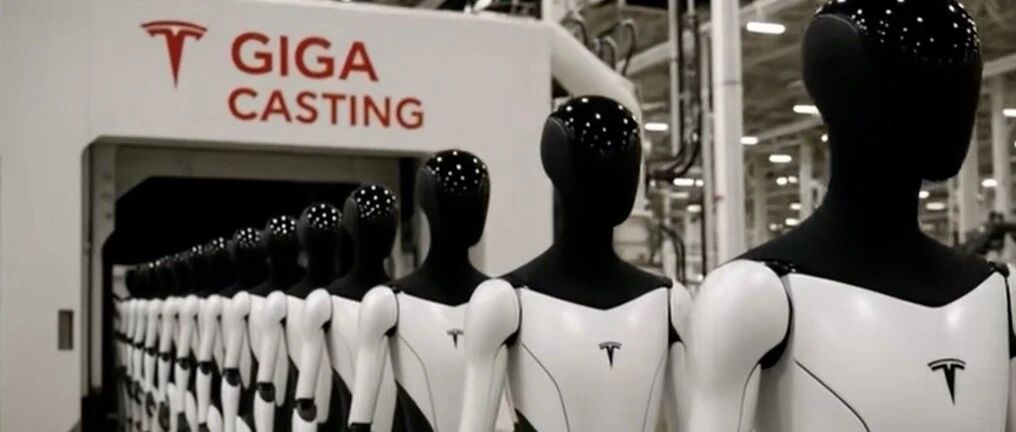
Core Insights - The article emphasizes the upcoming release of Tesla's Optimus V3, which is expected to exceed performance expectations and has a production plan set to begin by the end of 2026 [2][3] - The article highlights the importance of identifying reliable supply chain partners (T-chain) as the industry moves towards mass production of humanoid robots [5][7] Production and Performance Expectations - Tesla's Q4 earnings call indicated that Optimus V3 will be launched in Q1, with supply chain readiness confirmed and a target of producing one million units annually by the end of 2026 [2] - A T1 supplier confirmed that they will receive two units of the V3 in March, with production ramping up to 2 units per week in January, 10 units in February, 2000 units by June, and 10,000 units by early next year [2] Market Sentiment and Trends - The sentiment in the humanoid robot sector is currently low, but not at a critical point, indicating potential for recovery as the V3 launch approaches [4] - There is a noticeable trend in the market favoring new entrants and innovative products over established ones, with many new potential investment opportunities emerging [8] Key Supply Chain Partners - The article identifies several key supply chain partners that are crucial for the T-chain, including companies involved in core components like harmonic reducers and micro-screws [7][8] - Notable companies mentioned include a core supplier (R) that has made significant progress in securing contracts and production capabilities [7] Incremental Opportunities - The V3's design changes, such as increased degrees of freedom and new actuator technologies, present opportunities for suppliers of components like harmonic reducers and electronic skin [8] - The article suggests that companies involved in advanced materials and components related to the V3's design are also worth monitoring for investment potential [8]