国产化替代

Search documents
半导体产业链更新
2025-07-09 02:40
Summary of Semiconductor Industry and ChangXin Storage Conference Call Industry Overview - The semiconductor industry is experiencing a positive market sentiment with significant developments, particularly in advanced logic chip production capacity expansion, which may exceed expectations for 2025 [2] - Concerns regarding the semiconductor industry's prosperity may be overstated, as evidenced by shortages and price increases in upstream supply chains such as PCB and CCL [2] ChangXin Storage Developments - ChangXin Storage has entered the IPO guidance phase with a latest valuation of approximately 150 billion RMB, marking a significant step for domestic DRAM manufacturing capabilities [1][5] - The company achieved over 1 billion USD in revenue in Q1, holding about 6% of the global DRAM market share, expected to rise to 8% by the end of the year [1][6] - ChangXin is rapidly upgrading its product structure, transitioning from DDR4 and LPDDR4 to DDR5 and LPDDR5, with plans to develop high-end HBM solutions [1][7] Capacity Expansion - ChangXin's monthly production capacity is projected to increase from approximately 20,000 wafers in 2020 to over 280,000 wafers by the end of 2025, nearing Micron's capacity of 200,000 wafers and approaching Samsung's 450,000 wafers [1][9] - The company is committed to expanding production despite facing U.S. export restrictions [8] Beneficiaries of ChangXin's Growth - Companies such as Zhaoyi Innovation and Longdi Group are expected to benefit from ChangXin's development, with Zhaoyi holding a 1.9% stake and collaborating on DRAM product development [10] - Leading semiconductor equipment firms like Huachuang and Huahai Qingke are also positioned to gain from ChangXin's expansion [10] Market Dynamics - The storage industry is currently in an upward cycle, with DDR4 prices driven by supply constraints and strong demand, while NAND prices are showing signs of recovery [11][12] - The domestic semiconductor industry is witnessing significant technological advancements, particularly in high-end materials and equipment, enhancing self-sufficiency [13][14] Future Directions - The semiconductor industry's future development will focus on domestic material and equipment substitution, with strong downstream demand for both storage and SoC chips [4] - The overall performance of semiconductor companies is expected to show a high proportion of quarter-on-quarter growth, indicating a promising outlook for the sector [4]
正帆科技战略收购汉京半导体,OPEX业务增长动能全面释放
Sou Hu Cai Jing· 2025-07-09 02:06
Core Viewpoint - The company, Zhengfan Technology, is strategically enhancing its OPEX business growth through a dual approach of internal incubation and external acquisitions, particularly in the semiconductor industry, amidst increasing global competition and supportive national policies [1] Strategic Acquisitions Strengthening Core Components - Zhengfan Technology plans to acquire 62.23% of Liaoning Hanjing Semiconductor Materials Co., Ltd. for cash, marking a significant step in its OPEX strategy [2] - Hanjing Semiconductor is a leading domestic producer of silicon carbide consumables and quartz products, with a market potential of approximately 5 to 7 billion RMB in the semiconductor field and nearly 10 billion RMB in the broader semiconductor-related applications [2] - Hanjing Semiconductor has maintained stable operations with sales of around 500 million RMB and a net profit of 100 million RMB in recent years, serving major clients like TSMC and SMIC [3] MRO Service Expansion - Zhengfan Technology established its subsidiary, Wuxi Xintesi Technology Co., Ltd., to focus on maintenance, repair, and operations (MRO) services for semiconductor manufacturing equipment, tapping into a significant domestic market for localized replacements [5] - The MRO business achieved a revenue of 450 million RMB in 2024, reflecting a 123% year-on-year growth, with potential to reach approximately 1.5 billion RMB in three years if it maintains a 50% annual growth rate [6] Accelerated Overseas Strategy - The company has initiated a systematic global expansion strategy since 2024, achieving significant progress in regions like North America, the Middle East, Southeast Asia, and India, with expectations of securing orders exceeding 500 million RMB [7] - The synergy between CAPEX and OPEX businesses in overseas markets is expected to create a sustainable business model for Zhengfan Technology [7] OPEX Strategy Effectiveness - Zhengfan Technology's recent strategic actions indicate a clear focus on enhancing its OPEX business, which is expected to provide more stable and sustainable revenue streams compared to traditional CAPEX models [8] - The growth of OPEX business is anticipated to improve the overall gross margin structure of the company, as it typically offers higher visibility and valuation premiums [8] Future Growth Drivers - The integration potential of Hanjing Semiconductor, the market prospects of Wuxi Xintesi, and the collaborative progress in overseas operations are identified as key drivers for the company's future performance [9] - The ongoing implementation of the OPEX strategy is expected to reshape the company's profit structure and attract continued market attention [9]

研判2025!中国碟片激光器行业市场政策、市场规模、重点企业经营情况及发展趋势分析:国产化替代空间巨大[图]
Chan Ye Xin Xi Wang· 2025-07-08 01:55
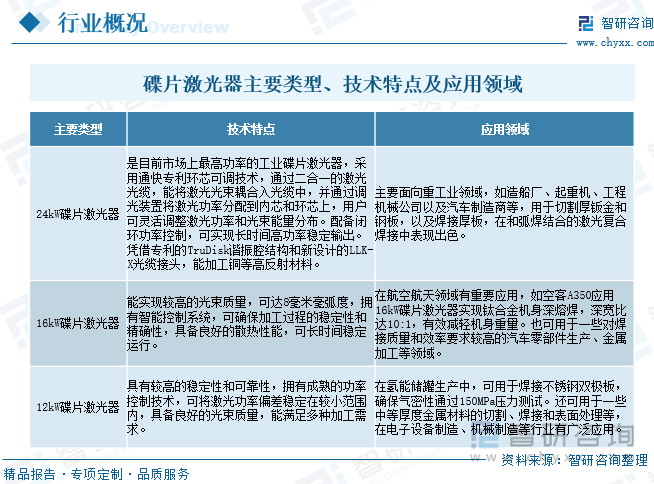
Core Viewpoint - The disk laser market in China is experiencing significant growth, with the market size expected to reach 11.858 billion yuan in 2024, representing a year-on-year increase of 38.23%. This growth is driven by the increasing demand for precision, efficiency, and quality in manufacturing as the industry undergoes transformation and upgrading [1][9]. Overview - Disk lasers, also known as disk laser technology, represent a revolutionary solid-state laser technology that enhances heat dissipation and improves beam quality and energy conversion efficiency. This technology has broad applications in various sectors, including automotive manufacturing, consumer electronics, and high-end metal processing [2][9]. - The disk laser market is categorized by output power, with models such as 12kW, 16kW, and 24kW, each offering different beam quality and performance characteristics [2]. Market Policies - The Chinese government has implemented several policies to support the development of the laser industry, including the "Action Plan for the Development of Basic Electronic Components Industry (2021-2023)" and various regional initiatives aimed at fostering innovation and growth in the laser sector [4][5]. Industry Chain - The disk laser industry encompasses upstream sectors such as optical materials and laser chips, midstream activities including research and production, and downstream applications across automotive, consumer electronics, and medical fields. The technology is particularly valuable in automotive manufacturing for lightweight and energy-efficient solutions [7][9]. Competitive Landscape - The disk laser market is dominated by a few key players, with Trumpf leading globally. Domestic companies like Han's Laser and Suzhou Zhonghui Laser are emerging but still hold a small market share compared to Trumpf. The potential for domestic market share growth is significant as local companies enhance their technological capabilities [11][12]. Development Trends - Future advancements in the disk laser sector are expected to focus on higher power, efficiency, and reliability to meet the stringent demands of high-end manufacturing. The Belt and Road Initiative is anticipated to open new international markets for Chinese disk laser companies, further enhancing their global presence [17].


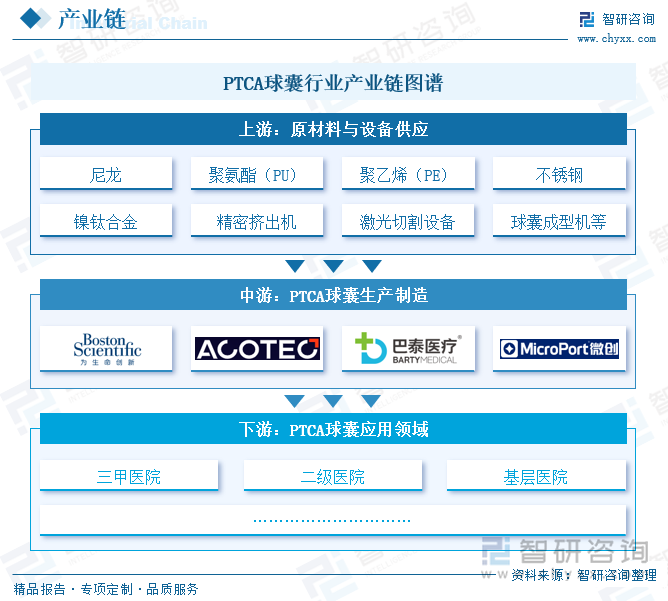
研判2025!中国PTCA球囊行业产业链图谱、产业环节、市场现状及未来前景分析:冠脉介入治疗手段不断普及,PTCA球囊应用需求持续增长[图]
Chan Ye Xin Xi Wang· 2025-07-08 01:29
Core Viewpoint - The PTCA balloon industry in China is experiencing steady growth due to the increasing prevalence of cardiovascular diseases, the expansion of coronary intervention treatments, and the rise of domestic medical device manufacturers. The market size is projected to grow from 1.059 billion yuan in 2021 to 1.366 billion yuan in 2024, with expectations to exceed 2.274 billion yuan by 2030 [1][11]. Industry Overview - PTCA balloons are medical devices used in cardiovascular interventions to dilate narrowed or blocked coronary arteries, improving blood flow and myocardial supply [1]. - The industry chain consists of upstream raw materials and equipment supply, midstream production, and downstream application in various medical institutions for treating cardiovascular diseases [2]. Industry Environment - The incidence of coronary artery disease (CAD) is rising in China, with the number of patients increasing from 25.272 million in 2020 to 27.953 million in 2024, and projected to exceed 30 million by 2030 [4]. - The mortality rate for CAD has also increased significantly, indicating a growing demand for treatment options [4]. Industry Status - Percutaneous coronary intervention (PCI) is a key treatment method for CAD, with a record of 1.63 million PCI procedures performed in 2023, marking a growth rate of 26.44% [7]. - Despite the increasing number of PCI procedures, the market penetration rate in China remains low at 690.9 procedures per million people, compared to 3022.1 in the U.S., suggesting significant growth potential [9]. Competitive Landscape - The global PTCA balloon market is dominated by international giants like Boston Scientific and Medtronic, which hold over 60% market share, particularly in high-end drug-eluting balloons [13]. - Domestic companies account for 60% of the number of firms but only 40% of the market share, indicating a competitive landscape where local firms are striving to catch up through innovation [13]. Future Trends - The industry is witnessing significant technological innovation and product upgrades, with new polymer materials enhancing balloon performance and the introduction of drug-coated balloons reducing the risk of restenosis [19]. - The trend towards domestic substitution is accelerating, with local companies like MicroPort and Lepu Medical increasing their market share due to improved product quality and performance [20]. - The demand for PTCA balloons is expected to grow as their application expands beyond traditional coronary disease treatment to include peripheral and intracranial vascular diseases [21].


乘时驭势,启新立潮——电子行业2025年度中期投资策略
2025-07-07 16:32
Summary of Key Points from the Conference Call Industry Overview - The conference call primarily discusses the **electronic industry** and its various segments, including **AI glasses**, **foldable screens**, **PCB demand**, **semiconductor design**, and **storage market** trends [1][2][3]. Core Insights and Arguments AI Glasses Market - The AI glasses market is expected to experience explosive growth, with sales projected to reach over **5.5 million units** in 2025, driven by brands like **Meta** and the availability of **Qualcomm chips** [4]. - The market is anticipated to approach a total scale of **10 million units**, indicating a significant increase in user acceptance and experience due to model integration [4][11]. Foldable Screen Technology - Foldable screen technology is in an upward trajectory, with major players like **Apple** actively investing in this area. The market potential is substantial once the technology matures [5]. - The foldable phone market is expected to grow from **20 million units** to **40-50 million units**, indicating a strong growth trajectory compared to traditional smartphones [13]. PCB Demand - PCB demand remains robust, particularly in AI-related fields such as **GPU** and **smart driving**, with domestic penetration rates increasing from **10% to 30%** [6][7]. - The performance of companies in this sector should be closely monitored as they release their earnings [6]. Semiconductor Design and Materials - The semiconductor design and equipment materials sector is entering a performance release phase, with domestic companies gaining significant market share [8]. - The focus should be on the performance of these companies and the progress of domestic production [8]. Mature Electronic Segments - In mature segments like **mobile components**, **LCD screens**, and **LED lighting**, the industry is expected to undergo a survival of the fittest phase, where leading companies will emerge as market dominators [9]. Additional Important Insights Storage Market - The **DDR4** price has surged due to major manufacturers exiting the market and shifting to **DDR5**, leading to stockpiling demand [19]. - AI technology is expected to significantly increase the demand for storage capacity and speed, driving continuous growth in the storage industry [20]. Panel Industry - The panel industry is experiencing stable supply-demand dynamics, with prices gradually increasing. The exit of depreciation from 2025 onwards is expected to enhance profitability and boost dividends [27]. ASIC Design Trends - The ASIC design sector is led by overseas companies, with significant growth expected in the coming years, particularly in AI applications [22][23]. Domestic Equipment and Materials - Domestic semiconductor equipment and materials are priced significantly lower than their overseas counterparts, providing a cost advantage for local wafer fabs [25]. - The potential for domestic companies to expand into global markets is promising, with current domestic substitutes holding about **30%** market share [26]. This summary encapsulates the key points discussed in the conference call, highlighting the growth potential and challenges within the electronic industry and its various segments.
激活产业活力,布局未来发展!上海“软信新政”出炉
Guo Ji Jin Rong Bao· 2025-07-07 11:24
Core Viewpoint - The software and information service industry in Shanghai has become a crucial support for high-quality development in the service sector, with new measures introduced to enhance its growth and competitiveness [1]. Group 1: Industry Growth and Performance - From January to May this year, Shanghai's software and information service industry generated over 690 billion yuan in revenue, marking a year-on-year growth of 20.4%, surpassing the national average growth rate of 14.3% [3]. - All 15 districts in Shanghai reported positive revenue growth in the software and information service sector, with Yangpu and Putuo districts achieving growth rates of 25% and 22.6%, respectively. In suburban areas, Jinshan, Songjiang, Qingpu, and Fengxian districts experienced remarkable growth rates of 646.9%, 45.5%, 38.9%, and 47.4% [3]. Group 2: Policy Measures and Support - The newly released measures include 17 specific initiatives aimed at stimulating the development of the software and information service industry, focusing on enhancing operational vitality, supporting AI integration, and reducing costs for enterprises [3][4]. - A tiered subsidy mechanism has been established to reward software and information service companies based on their revenue and growth rates, with specific incentives for high-revenue and high-growth firms [4][5]. Group 3: Financial Support and Incentives - For high-revenue companies, districts are encouraged to provide rewards to those with annual revenues exceeding 2 billion yuan and growth rates exceeding 1.2 times the city average [4]. - Small and micro enterprises can receive one-time rewards based on their revenue growth, with amounts ranging from 30,000 to 50,000 yuan depending on their performance [5]. Group 4: Talent and AI Development - The measures propose lowering employment costs and providing support for high-level talent recruitment and retention in the software and information service industry [7]. - Incentives for AI application include funding support for projects that effectively utilize AI in various sectors, with up to 30% funding for significant projects [8][9]. Group 5: Future Development and Strategic Initiatives - The Shanghai government aims to enhance the infrastructure for AI and cloud services, focusing on building a robust ecosystem for software development and AI integration [10][11]. - The establishment of a CVC industry fund is planned to drive innovation and investment in the software and information service sector, with a target size of 1 billion yuan [11][12].

超捷股份(301005) - 2025年07月07日投资者关系活动记录表
2025-07-07 09:08
Group 1: Automotive Business Overview - The company focuses on high-strength precision fasteners and special connectors, primarily used in automotive engine turbocharging systems, transmission control systems, exhaust systems, and key components in electric vehicles [2] - Future growth points in the automotive sector include expanding exports, developing new customers like NIO and BYD, increasing product categories, and enhancing domestic market share through localization [2] Group 2: Humanoid Robot Business Progress - The humanoid robot segment is a key business direction, with initial small batch orders received, although large-scale orders are not yet achieved due to the industry's nascent stage [3] Group 3: Commercial Aerospace Business Development - The commercial aerospace sector involves manufacturing structural components for rockets, with significant clients including Blue Arrow Aerospace and Tianbing Technology [3] - The estimated value of structural components for a mainstream commercial rocket is around 15 million, with potential increases to 25-30 million after establishing a fuel tank production line [3] Group 4: Competitive Advantages in Aerospace - The company possesses a specialized team with extensive experience in commercial aerospace, alongside financial advantages for equipment purchases and production line construction [3] Group 5: Future of Reusable Rockets - Current domestic technology for reusable rockets is not mature, but the company plans to adapt to future trends in the market, focusing on profitability in the commercial aerospace sector [3] Group 6: Investor Communication - The company ensured transparent communication with investors, adhering to information disclosure regulations to maintain accuracy and timeliness [4]
诠释破局与突围 路维光电20亿光掩膜项目于厦门奠基启航
Zheng Quan Shi Bao Wang· 2025-07-07 05:52
Core Viewpoint - The establishment of the "Xiamen Luwei Optoelectronics High Generation High Precision Photomask" project marks a significant step in China's display industry towards breaking foreign monopolies and achieving self-sufficiency in high-end photomasks [1][4]. Group 1: Project Overview - The project is located in the Xiamen Torch (Xiang'an) Industrial Zone and has a total investment of 2 billion yuan [1]. - It aims to develop and produce high-precision photomasks for G8.6 and below AMOLED/LTPO/LTPS applications, addressing the long-standing reliance on imports for high-precision photomasks in China [2][3]. Group 2: Industry Context - Photomasks are critical consumables in the precision manufacturing chain of the electronics industry, directly affecting the accuracy and quality of chips and display panels [2]. - The technology for photomasks has been dominated by Japanese and Korean companies, creating barriers for Chinese enterprises in the high-end product sector [2]. Group 3: Strategic Importance - Xiamen is a key part of Luwei Optoelectronics' national strategic layout due to its robust electronic information industry ecosystem and advantageous location [3]. - The project will establish 11 high-end photomask production lines, enhancing the supply chain resilience and security of China's display industry [3]. Group 4: Innovation and Future Prospects - The project is seen as an innovation engine, with plans for continuous R&D investment focused on high-precision photomasks [4]. - The first phase will include the construction of 5 production lines with an annual capacity of approximately 1,500 pieces, contributing to the global display industry [4][5].

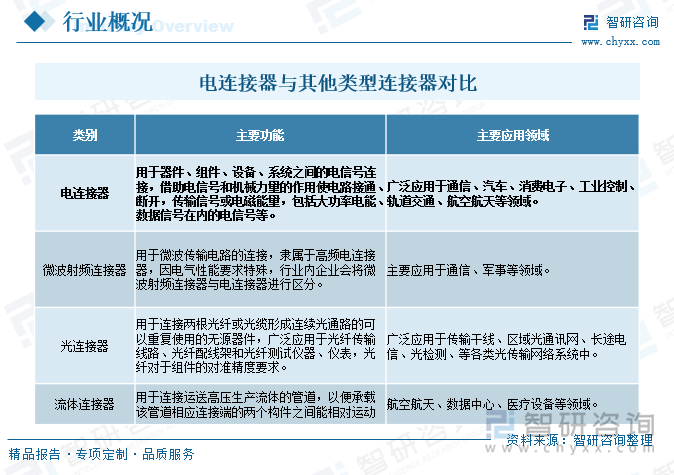
2025年中国电连接器行业市场政策、产业链图谱、市场规模、竞争格局及发展趋势研判:国产化替代进程加速[图]
Chan Ye Xin Xi Wang· 2025-07-07 01:38
Core Viewpoint - The demand for electrical connectors in China is significantly increasing due to the rapid development of 5G and 6G networks, the growth of the electric vehicle industry, and the evolution of consumer electronics, leading to a projected market size of 174.9 billion yuan in 2024, representing a year-on-year growth of 6.27% [1][14]. Market Overview - Electrical connectors are essential components for transmitting electrical signals between devices, systems, and components, widely used in telecommunications, automotive, consumer electronics, industrial control, and aerospace [2][4]. - The electrical connector market is supported by various government policies aimed at promoting the development of the electronic components industry, creating a favorable environment for growth [5][7]. Industry Chain - The upstream of the electrical connector industry includes suppliers of raw materials such as metals, plastics, and plating materials, while the downstream encompasses application markets in telecommunications, automotive, consumer electronics, and industrial control [8][10]. Market Demand - The telecommunications and automotive sectors are the primary demand markets for electrical connectors in China, accounting for over 40% of the market share in 2024. The automotive industry is experiencing significant growth, with production and sales increasing by 14.5% and 11.2% year-on-year, respectively [12][14]. Competitive Landscape - The electrical connector market is dominated by established international brands like Tyco and Amphenol, which have advantages in funding, technology, and global sales networks. However, domestic companies such as Luxshare Precision and AVIC Optoelectronics are gaining ground through competitive pricing and improved technology [16][18]. Key Companies - AVIC Optoelectronics specializes in high-end interconnection solutions and is projected to achieve a revenue of 20.69 billion yuan in 2024, with 78.3% of its revenue coming from electrical connectors [18]. - Luxshare Precision focuses on providing integrated manufacturing solutions for consumer electronics and automotive products, with an expected revenue of 268.8 billion yuan in 2024, where consumer electronics account for 83.37% of its revenue [20]. Development Trends - Future trends in the electrical connector market include the need for higher transmission speeds, lower signal delays, and better electromagnetic compatibility, driven by advancements in 5G, big data, and cloud computing technologies. There is also a push towards miniaturization and high-density designs to meet the demands of modern consumer electronics [22].


为啥我国不禁用Windows和安卓,而全部用鸿蒙系统呢?
Xin Lang Cai Jing· 2025-07-06 13:28
Core Viewpoint - The idea of completely banning Windows and Android systems in favor of the HarmonyOS is considered unrealistic due to the extensive reliance on these systems across various sectors in China, including finance, transportation, and daily life [1][5][9]. Group 1: Windows System Impact - Windows plays a crucial role in various sectors such as government, enterprise, and critical infrastructure, with over 60% of banking core systems based on Windows NT architecture [3][11]. - A recent incident highlighted the dependency on Windows when a software issue caused significant flight delays at a major airport, demonstrating the potential consequences of a Windows ban [3][11]. - Transitioning away from Windows would incur extremely high costs, with financial sector migrations estimated to require several years and investments in the hundreds of billions [13]. Group 2: Android System Impact - Android is deeply integrated into daily life in China, with over 720 million users, accounting for 78% of all smartphone users, making it essential for activities like mobile payments and remote work [7][9]. - The current ecosystem of HarmonyOS is limited, primarily confined to Huawei devices, with only about 30% of devices running a pure HarmonyOS environment [7][9]. - A sudden ban on Android would disrupt the lives of millions, particularly vulnerable groups such as migrant workers and students who rely on affordable Android devices [9][11]. Group 3: Transition Strategy - A complete ban on existing systems would be counterproductive, and a gradual migration strategy is recommended, focusing on pilot programs in critical areas while supporting developer ecosystems [15].