
绿色低碳发展

Search documents
发布会纪要|消费趋势展望、反内卷成效......国家统计局最新回应
Di Yi Cai Jing· 2025-08-15 04:12
Group 1 - The trend of expanding consumption remains unchanged, with a solid foundation for reasonable price recovery [1][7] - The macroeconomic policies are showing effectiveness, supporting stable economic operation and improving development quality [5][9] - There are favorable conditions for export growth in the second half of the year, including diversification of foreign trade and enhanced competitiveness of export goods [6][10] Group 2 - The overall stability of consumer prices in July indicates positive changes, although supply remains strong and demand weak [7][8] - The governance of disorderly competition among enterprises is improving market supply-demand relationships, leading to positive price changes [8][9] - Investment growth faces temporary pressures, but there is still significant potential for investment expansion, especially in new productive forces and urban-rural coordination [10][12] Group 3 - The focus on green development is creating new growth points, with significant increases in the production of new energy products [12][13] - Industrial production remains stable, but challenges persist in certain sectors, necessitating a push for innovation and transformation in traditional industries [13]


临沂市生态环境局加快实现高水平保护和高质量发展互促共进
Qi Lu Wan Bao Wang· 2025-08-15 03:28
Core Viewpoint - The Linyi Ecological Environment Bureau is committed to implementing provincial and municipal directives, focusing on integrating party building, pollution control, green low-carbon development, and ecological safety to achieve high-level ecological protection and high-quality green development. Group 1: Party Building and Governance - The bureau emphasizes party building to enhance collective efforts, conducting 46 sessions to learn and implement important meeting spirits from central and provincial levels [2] - It has established a mechanism to address issues arising from work through party governance, implementing 22 projects to improve work quality and efficiency [2] - The bureau has strengthened anti-corruption measures, identifying 6 areas of integrity risk and 21 specific manifestations, with 35 instances of proactive measures taken [2] Group 2: Pollution Prevention and Control - The bureau has intensified efforts in pollution prevention, addressing 618 enterprises in key industries and enhancing control over volatile organic compounds (VOCs) [3] - Air quality improved with a comprehensive index of 4.26, ranking 7th in the province, showing a year-on-year improvement of 4.7% [3] - Water quality initiatives led to an excellent rate of 82.4% for national control sections, with 18 new remediation measures implemented [3] Group 3: Green Development Initiatives - The bureau is promoting green development by establishing 5 circular economy parks and attracting 20 environmental projects [4] - It has secured 116.78 billion yuan in policy loans and completed 48 projects funded by central and provincial pollution prevention funds [4] - The bureau has implemented non-site law enforcement, achieving a 44.5% rate in this area, and has provided legal services to over 769 enterprises [4] Group 4: Public Engagement and Compliance - The bureau conducted 26 special enforcement actions, inspecting 4,166 enterprises, and resolving 860 issues through supervision and assistance [5] - It achieved a 100% completion rate for handling complaints through the national ecological environment complaint platform [5] - The bureau completed 1,339 emergency response plans and enhanced emergency training, recognized as an exemplary case by the Ministry of Ecology and Environment [6] Group 5: Future Goals and Strategies - The bureau aims to balance short-term and long-term goals in pollution control, focusing on six major projects for air quality improvement [7] - It plans to implement 37 governance projects to address water quality issues and ensure compliance with national standards [8] - The bureau is committed to fostering green high-quality development through the establishment of four circular industry parks, targeting an annual output exceeding 10 billion yuan [9]
青岛向美而行开展美丽城市建设创新实践
Zhong Guo Huan Jing Bao· 2025-08-15 02:52
青岛即墨区墨水河。 在黄海之滨,山东省青岛市正以生态为笔、以绿色为墨,在美丽中国建设的画卷上书写着浓墨重彩的生态蝶变故事。近年来,青岛市始终牢记"国之大者", 立足"山海岛城湾、田园林水乡"的生态基底,紧扣"八美之城"重点任务,在污染防治攻坚、绿色低碳转型等方面持续发力。从陆海统筹的生态治理到产业转 型的绿色实践,从生物多样性的蓬勃生机到城乡交融的宜居图景,这座城市正以系统性思维绘就人与自然和谐共生的现代化图景,让生态文明建设成果惠及 公众。 海陆共治绘就生态新画卷 站在浮山之巅远眺,目之所及皆是"天空蓝"与"生态绿",印证着青岛生态文明建设的"成绩单":空气主要污染物年均浓度连续5年达到国家二级标准,蓝天 白云、繁星闪烁成为常态;20个国控、省控断面全面达标,近岸海域水质优良面积比率达到99%,水清岸绿、鱼翔浅底美景常在。从"治气"到"治水", 从"护蓝"到"增绿",青岛用系统治理的智慧,让碧海蓝天成为城市最动人的底色。 产业转型激活低碳新动能 蓝天碧水,踏歌而行。伴随着生态环境持续向好,青岛市坚定不移地推进区域全面绿色转型。 在青岛莱西市海尔智家再循环互联工厂车间里,一台台废旧冰箱被缓缓推到上料口,经过预 ...
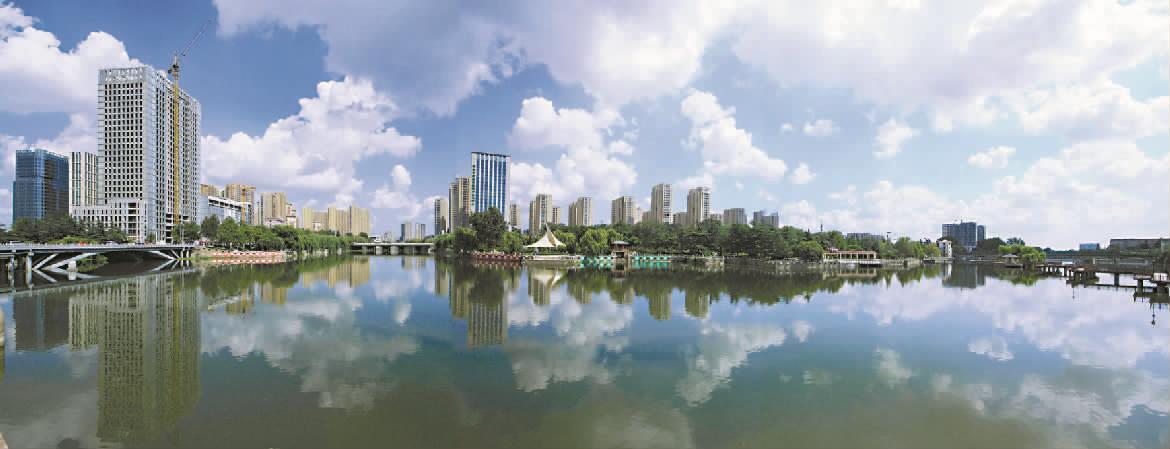
内蒙古推动零碳园区培育建设
Ren Min Ri Bao Hai Wai Ban· 2025-08-15 02:20
Core Viewpoint - Inner Mongolia Autonomous Region is launching a plan to cultivate and construct zero-carbon parks, aiming to establish a series of national and regional pilot zero-carbon parks to promote green and low-carbon development [1] Group 1: Zero-Carbon Park Definition and Goals - Zero-carbon parks are defined as areas where carbon dioxide emissions from production and living activities are reduced to "near zero" levels, with the potential to achieve "net zero" conditions [1] - The plan includes high standards and quality construction of zero-carbon parks through pilot promotion, demonstration leadership, and model innovation [1] Group 2: Implementation Phases - The construction of zero-carbon parks will be carried out in three phases: - In 2025, the selection process for zero-carbon park construction will begin, determining the list of parks to be developed [1] - From 2026 to 2028, comprehensive construction of national and regional zero-carbon parks will take place [1] - By 2030, further exploration and practice of zero-carbon park construction will deepen, with more regional parks included in the national pilot program [1]
钟寰平:践行“两山”理念建设美丽中国
Zhong Guo Huan Jing Bao· 2025-08-15 01:57
Core Viewpoint - The article emphasizes the importance of ecological civilization and the "Two Mountains" theory, highlighting the need for a green and low-carbon development path to achieve a beautiful China [1][2][4]. Group 1: Achievements in Ecological Civilization - In 2024, the average PM2.5 concentration in cities reached 29.3 micrograms per cubic meter, and the proportion of surface water with good quality exceeded 90% for the first time [2]. - During the first four years of the 14th Five-Year Plan, energy consumption per unit of GDP decreased by 11.6%, equivalent to a reduction of 1.1 billion tons of carbon dioxide emissions [2]. - Since 2017, 572 ecological civilization demonstration zones and 240 "Green Water and Green Mountains are Golden Mountains and Silver Mountains" practice innovation bases have been established [2]. Group 2: Challenges and Future Directions - The current phase of ecological civilization construction is marked by significant pressures and challenges, necessitating a commitment to green and low-carbon transformation [2][3]. - The "15th Five-Year Plan" period is crucial for achieving fundamental improvements in ecological environments, requiring adherence to Xi Jinping's ecological civilization thought and the "Two Mountains" concept [2]. - Continuous efforts are needed in pollution prevention and control, emphasizing the importance of precise, scientific, and legal approaches to environmental protection [3]. Group 3: Strategies for Green Development - Green and low-carbon development is identified as a fundamental solution to ecological issues, with a focus on carbon peak and carbon neutrality initiatives [3]. - There is a need for innovative pathways to transform ecological resources into assets, ensuring that ecological advantages translate into developmental benefits [3]. - The article calls for tailored approaches to ecological transformation based on regional characteristics, promoting the integration of ecological values into economic development [3].
能源绿 中国策——写在第三个全国生态日到来之际
Zhong Guo Dian Li Bao· 2025-08-15 01:17
Group 1: Energy Transition and Green Development - The article emphasizes the transformation of China's energy landscape towards green and low-carbon development, highlighting the integration of ecological priorities in economic growth [1][10][17] - Significant advancements in renewable energy, such as wind and solar power, have been made, with non-fossil energy generation capacity surpassing 60% for the first time [12][14] - The shift from coal as a primary energy source to its use as a chemical feedstock is noted, with coal consumption projected to decrease to 53.2% by 2024, down over 15 percentage points since 2012 [2][4] Group 2: Technological Innovations and Projects - The article discusses various innovative projects, including the conversion of abandoned oil fields into renewable energy sites, showcasing the synergy between traditional and renewable energy sources [5][7] - The implementation of Carbon Capture, Utilization, and Storage (CCUS) technology in oil extraction is highlighted, which can enhance oil recovery by over 12% while reducing carbon emissions [7][8] - The development of integrated energy systems, such as combining wind, solar, and hydroelectric power, is presented as a strategy for enhancing energy security and sustainability [9][10] Group 3: Ecological Restoration and Community Engagement - The ecological restoration efforts in coal mining areas, achieving over 90% vegetation coverage and significant soil nutrient improvement, illustrate the commitment to environmental sustainability [4][17] - Community-level initiatives, such as zero-carbon communities and rooftop solar installations, are emerging, demonstrating the grassroots adoption of renewable energy solutions [16][17] - The article emphasizes the importance of ecological assessments in renewable energy projects to ensure minimal environmental impact, reflecting a commitment to harmonious coexistence with nature [17]
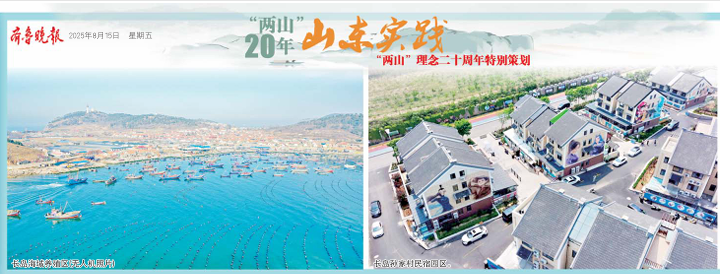
“两山”20年山东实践丨零碳小岛连世界,国际朋友圈喜扩容
Qi Lu Wan Bao· 2025-08-15 00:47
Core Concept - The article emphasizes the significance of the "Two Mountains" theory proposed by Xi Jinping, which advocates for the harmonious coexistence of economic development and ecological protection, marking its 20th anniversary and showcasing its global relevance [1][18]. Group 1: Implementation of the "Two Mountains" Theory - Long Island has been recognized as an "International Zero Carbon Island," serving as a model for low-carbon transformation for island nations globally, demonstrating the practical application of the "Two Mountains" theory [3][19]. - The local community has shifted from traditional industries, such as sea cucumber breeding, to eco-friendly tourism and hospitality, resulting in significant economic benefits and ecological restoration [5][9]. Group 2: Economic and Ecological Benefits - The village of Sunjia has seen an annual output value of over 60 million yuan, benefiting from the ecological restoration efforts that have improved local fisheries and tourism [9][11]. - The implementation of ecological restoration projects, such as the "solid algae collection fish" initiative, has led to a recovery of marine biodiversity and increased carbon sequestration, with carbon capture rates reaching 187.31 grams per square meter in intertidal zones [7][9]. Group 3: Future Goals and International Collaboration - Long Island aims to achieve net-zero greenhouse gas emissions by 2035, with comprehensive plans for renewable energy, waste management, and sustainable tourism [11][19]. - The establishment of the "International Zero Carbon Island Cooperation Organization" aims to promote ecological and economic synergy among island nations, with 41 members already participating [19][20].
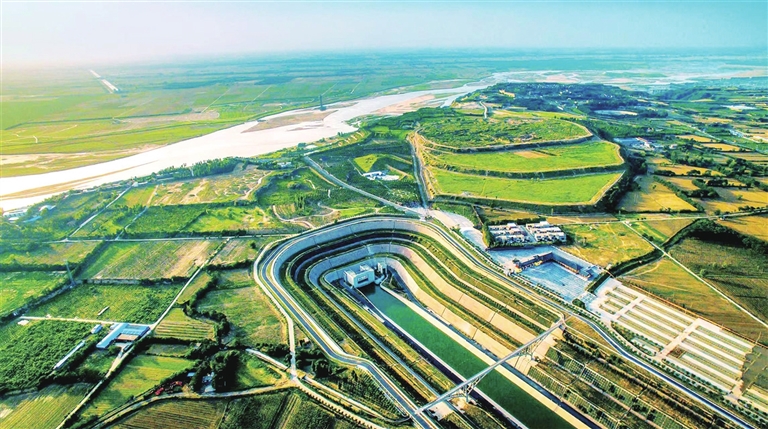
各美其美 美美与共 践行“两山”理念 绘就河南生态新画卷
He Nan Ri Bao· 2025-08-14 23:24
Core Viewpoint - The article emphasizes the successful implementation of the "Green Water and Green Mountains are Golden Mountains and Silver Mountains" concept in Henan, showcasing significant improvements in ecological protection and environmental quality over the past 20 years [1][26]. Environmental Protection and Pollution Control - Henan has actively engaged in pollution prevention since the launch of the national pollution prevention campaign in 2018, achieving all nine binding indicators by the end of 2020 [5]. - The province has introduced new action plans for air quality improvement, with significant reductions in PM2.5 levels, which decreased by 14.9% year-on-year to 41.2 micrograms per cubic meter by July 2023 [8]. - The number of good air quality days increased by 10 days year-on-year, while heavy pollution days decreased by 4.7 days [8]. Water Quality and Ecosystem Restoration - Henan has implemented the "Beautiful Rivers and Lakes Protection and Construction Action," leading to the identification of 1,030 river pollution sources for remediation [8]. - The province has achieved a 100% compliance rate for drinking water sources and has successfully eliminated black and odorous water bodies in urban areas [8]. Soil and Land Management - The province has completed soil pollution tracing in key areas, ensuring 100% safe utilization of contaminated farmland [11]. - Rural wastewater treatment facilities have been established in 1,788 townships, achieving a 48% treatment rate for rural sewage [11]. Green Economic Transition - Henan has shifted from a coal-dependent economy to a more diversified one, with high-tech industries now accounting for over 55% of the economy [14]. - The province has eliminated nearly 2 million kilowatts of outdated coal power capacity and has made significant progress in clean energy initiatives [15]. Green Transportation and Carbon Neutrality - The province has achieved a 96.1% clean transportation rate in the coal industry and has promoted the use of new energy vehicles, with 98.5% of public buses being electric [16]. - Carbon emission checks have been completed for 117 power generation companies, with a 100% compliance rate for those in the national carbon market [17]. Ecological Value Transformation - Henan has established seven innovation bases for the "Green Water and Green Mountains" concept, promoting three ecological value transformation models: "Turning Green into Gold," "Guarding Green for Gold," and "Green Capital" [26][27][28]. - The province has successfully integrated ecological advantages into economic development, demonstrating that environmental protection and economic growth can coexist harmoniously [30].
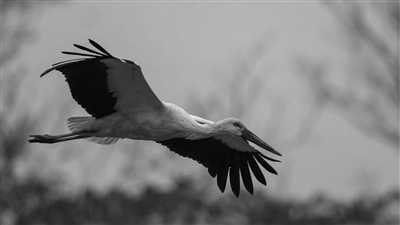
这20年杭州打造绿色低碳发展新模式
Mei Ri Shang Bao· 2025-08-14 22:22
Core Viewpoint - Hangzhou has achieved significant progress in ecological development, highlighted by its 65.74% forest coverage and international wetland city certification, showcasing its commitment to ecological civilization and carbon neutrality [2][3][7] Group 1: Ecological Achievements - Hangzhou's forest coverage reached 65.74%, contributing to improved ecological quality and carbon neutrality capabilities [2] - The city has successfully implemented various environmental governance projects, including blue sky, clear water, and clean land initiatives [2] - The "zero carbon" main event held in Hangzhou emphasized the theme "Green mountains and clear waters are invaluable assets" through green travel and material recycling [2][7] Group 2: West Xixi Wetland Transformation - The West Xixi Wetland has been recognized as an excellent case of the "Two Mountains" concept, showcasing a transformation from "the kidney of the city" to a "common prosperity model" [3][4] - The wetland has seen an increase of 22 new bird species recorded in just two years, with a total of 224 species expected by the end of 2024 [3] - The management has implemented targeted ecological restoration projects, enhancing the habitat for various bird species [3] Group 3: Cultural and Economic Development - The city has introduced specific wetland park regulations, focusing on ecological governance, tourism environment optimization, and cultural heritage protection [4] - The "Wetland+" model has been explored to promote local entrepreneurship and ecological tourism, attracting 60 million visitors and generating over 2.6 billion yuan in revenue [4] - Cultural initiatives include hosting six major folk festivals and publishing cultural books to enhance community engagement and awareness [4] Group 4: Green Travel Initiatives - Hangzhou launched a green travel carbon benefit platform to encourage citizens to adopt low-carbon lifestyles [5][6] - The platform allows citizens to earn points for using public transportation, with specific point values assigned to different modes of transport [6] - Points can be redeemed for various rewards, including discounts and vouchers, promoting sustainable travel behavior [6]
清洁能源占比接近翻倍 数说国家电投十年绿色转型成绩单
Xin Hua Cai Jing· 2025-08-14 13:55
一座电站折射发展理念,印证绿色蜕变。 记者从国家电投获悉,该集团重组成立十年来(2015年5月,国家电投由原中国电力投资集团公司与国 家核电技术有限公司重组组建),深入推进绿色低碳高质量发展,将清洁能源作为装机增量主体,培育 清洁能源产业高增长、高比例、高质量、规模化发展优势,为经济社会发展全面绿色转型注入绿色动 能。 8月15日是第三个全国生态日,也是"两山"理念提出二十周年的日子。 国家电投相关负责人表示,重组成立十年来,国家电投勇作"两山"理念的坚定践行者和引领者,始终坚 持把绿色低碳发展作为履行能源央企生态环保责任的重要使命担当,厚植高质量发展的绿色底色,提交 了一张亮眼成绩单。目前,国家电投集团在参与绿色发展评价的中央企业中名列前茅,全面完成国资委 下达的生态环保目标任务,为推动生态文明和美丽中国建设作出积极贡献。 来自国家电投的数据显示:十年来,该集团清洁能源占比从2015年的38.47%,到2019年突破50%,如今 已达到73.08%。年发电量由3808亿千瓦时提升到7244亿千瓦时,清洁电量占比由不足25%提升至 58.32%。仅2024年就发出清洁电量3936亿千瓦时,碳减排效应相当于新造 ...
