
零碳园区

Search documents
零碳系列报告一:双碳引领绿色转型,零碳园区试点先行
Shenwan Hongyuan Securities· 2026-03-02 14:43
Investment Rating - The report suggests a focus on green fuel, green electricity, natural gas, CCUS, renewable resources, carbon monitoring, and zero-carbon parks as key investment opportunities [4][7][43]. Core Insights - The transition to a dual carbon control system is urgent, with the need to achieve carbon peak by 2030 and a 65% reduction in carbon intensity compared to 2005 levels by 2030 [4][11]. - The establishment of a comprehensive carbon management system is underway, integrating carbon evaluation and market mechanisms [4][21]. - The path to implementation emphasizes energy transition and efficiency improvements, with pilot projects for zero-carbon factories and parks leading the way [4][44]. Summary by Sections Policy Transition - The shift from energy consumption control to carbon emission control is highlighted, with a focus on dual carbon control [6][8]. - The government has outlined a comprehensive policy framework for carbon peak and neutrality, emphasizing the need for a robust carbon management system [12][14]. System Construction - A dual approach combining administrative measures and market mechanisms is being developed, including carbon evaluation and a national carbon market [21][24]. - The national carbon market has expanded to include key industries such as power generation, steel, cement, and aluminum smelting [24][30]. Implementation Path - The report outlines a clear path for energy transition, focusing on green energy supply, energy efficiency improvements, and the establishment of zero-carbon factories and parks [4][44]. - Key tasks include developing renewable energy sources, enhancing energy efficiency, and implementing carbon management systems [46][50].




抢抓机遇求突破 因地制宜抓落实 着力推动资源型城市高质量转型发展
Xin Lang Cai Jing· 2026-02-27 22:32
Group 1 - The core viewpoint emphasizes the commitment of Qitaihe City to enhance capability and service to support the high-quality transformation of resource-based cities, aiming for the highest GDP and industrial value growth in Heilongjiang Province by 2025 [1] - The city is expanding its ice and snow economy by integrating education and sports, creating a national twelve-year integrated short track speed skating school, and hosting international training camps, resulting in a 28.78% increase in tourist numbers and a 32.75% increase in total tourism expenditure [1] Group 2 - The city is releasing new momentum for transformation by strengthening planning for traditional industries, with the approval of the revised overall planning for the Qitaihe mining area by the National Development and Reform Commission [2] - A special task force has been established to promote the development of a "zero-carbon park" in the Jianghe area, enhancing green industry through technical advancements [2] - The establishment of a service mechanism for enterprises has led to a 53.8% increase in the biological economy driven by Lianshun Biopharmaceutical [2]
盘前必读丨美股重挫道指跌超800点;天风证券顶格处罚落地
Di Yi Cai Jing· 2026-02-24 00:01
Group 1 - The spring market trend after the holiday is expected to continue, with price increases being a core focus for the first quarter [12] - The Ministry of Commerce emphasizes the importance of restoring global semiconductor supply chains and urges cooperation between China and the Netherlands [1] - The National Energy Administration plans to implement a new energy system and various energy planning initiatives by 2026, focusing on strategic projects and small-scale projects [2] Group 2 - The China Securities Regulatory Commission (CSRC) has taken action against Tianfeng Securities for illegal financing and information disclosure violations related to Wuhan Contemporary Technology Group [6] - The CSRC has also initiated an investigation into Qunke Technology for misleading statements during its overseas IPO process [7] - The market experienced significant declines, with major U.S. indices dropping, and notable movements in technology stocks, including Nvidia and Apple showing slight gains while others fell [9][11]



杨雷:建设零碳园区要拥抱“外行创新”丨美丽中国·零碳洞察
中国能源报· 2026-01-26 07:28
Core Viewpoint - The establishment of the first batch of 52 national-level zero-carbon parks marks a transition from strategic planning to implementation in China's zero-carbon park development, which is seen as a key component in achieving carbon neutrality and exploring systemic changes in the energy framework [2]. Group 1: Development Status - The cost of renewable energy has significantly decreased compared to traditional energy sources, providing a solid foundation for zero-carbon parks [4]. - Zero-carbon parks are becoming central to energy transformation, moving from marginal exploration to mainstream implementation, with successful examples across the country, such as the Ordos Zero-Carbon Industrial Park and the Chongqing AI City Park [4][5]. - These parks demonstrate that zero-carbon solutions are practical and replicable, focusing on integrated energy systems and collaborative supply-demand models [5]. Group 2: Challenges Faced - Despite rapid development, zero-carbon parks face multiple challenges, including insufficient flexibility in the energy system, leading to increased curtailment rates of renewable energy [6]. - Technical challenges include inadequate planning for multi-energy conversion and supply-demand coordination, which can result in resource misallocation and high costs [6]. - The complexity of achieving dynamic balance in energy supply and demand exceeds expectations, requiring advanced algorithms and computational power [6]. Group 3: Pathways to Solutions - A three-pronged approach involving technology, mechanisms, and cognitive shifts is necessary to overcome current challenges [8]. - Future energy systems must prioritize flexibility, with cross-disciplinary integration of technologies such as electric heating, hydrogen, and energy storage [8]. - Market mechanisms should be user-centered, allowing distributed energy to participate in real-time pricing systems to enhance flexibility and create new growth opportunities [8]. - Breaking traditional cognitive barriers and embracing innovative thinking is crucial for the development of zero-carbon parks, which should focus on collaborative and integrated energy solutions [8].
李乐成接受《经济日报》采访:锚定新型工业化 推动工业经济向新向优
Jing Ji Ri Bao· 2026-01-14 01:28
Core Insights - The article emphasizes the importance of implementing the "14th Five-Year Plan" to promote a strong start for the industrial economy, focusing on new industrialization and high-quality development [2][3]. Group 1: Industrial Economic Development - In 2025, the industrial added value of large-scale industries increased by 6% year-on-year, with high-tech manufacturing and equipment manufacturing growing by 9.2% and 9.3% respectively [4]. - The Ministry of Industry and Information Technology (MIIT) aims to stabilize growth in key industries and regions, which account for 80% of the total industrial output [4]. - The MIIT plans to enhance effective demand by promoting flexible manufacturing and accelerating the application of new technologies like artificial intelligence [5]. Group 2: Modern Industrial System - The MIIT will focus on traditional industry renewal and the development of emerging industries to create new economic drivers [6][7]. - Key areas for development include integrated circuits, new materials, and aerospace, with plans to establish national demonstration bases for emerging industries [7]. - The MIIT aims to enhance the safety and controllability of supply chains while maintaining a reasonable proportion of manufacturing [7]. Group 3: Technological Innovation - The MIIT has made significant progress in integrating technology and industry during the "14th Five-Year Plan," with a focus on overcoming critical technological challenges [9]. - Future plans include increasing high-quality technological supply and enhancing the role of enterprises in innovation [10]. - The MIIT will establish a national manufacturing innovation center and promote the transformation of technological achievements into marketable products [10]. Group 4: Digital and Intelligent Transformation - The MIIT aims to accelerate the digital transformation of manufacturing, with over 7,000 advanced intelligent factories established [11]. - Key initiatives include building a robust digital infrastructure and promoting the application of industrial internet platforms [12]. - The MIIT will implement actions to enhance artificial intelligence in manufacturing, focusing on both technology and application scenarios [13].
2025年,零碳园区政策频出、建设提速、创新升级
Xin Lang Cai Jing· 2025-12-30 11:07
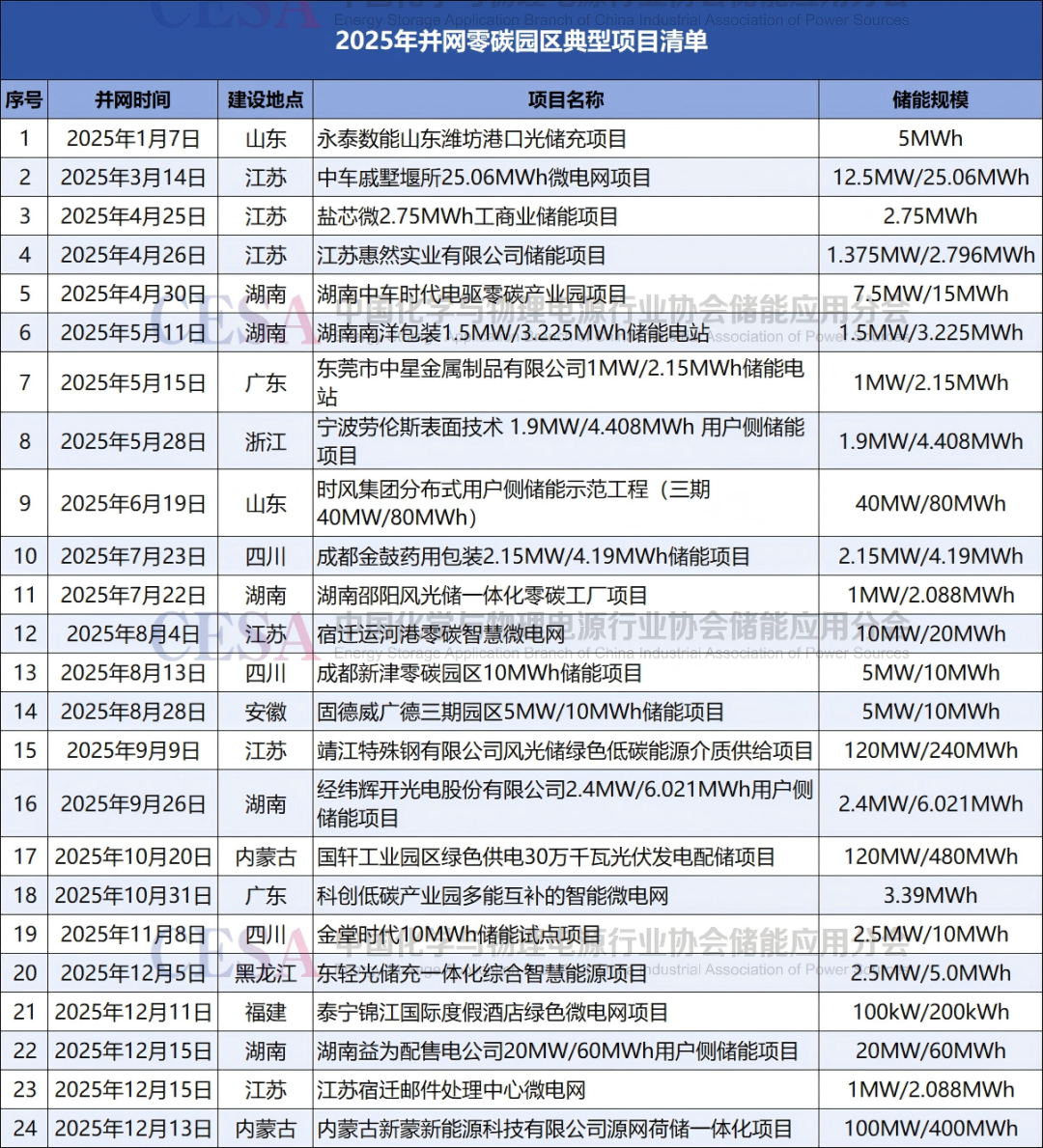
Group 1 - The core idea of the news is the establishment of the first batch of 52 national-level zero-carbon parks in China, covering all 31 provinces and regions, aimed at reducing carbon emissions to "near zero" levels [1][5][31] - Zero-carbon parks are defined as areas where production and living activities are designed to minimize carbon emissions, with the potential to achieve "net zero" conditions [1][31] - The construction of these parks is expected to play a demonstrative role in promoting low-carbon transformation across various industrial parks, as they account for over 80% of industrial enterprises and consume about 60% of national energy [1][16] Group 2 - As of 2025, 24 zero-carbon park projects have been connected to the grid across 10 provinces, with a total capacity of nearly 1.4 GWh [1][16] - The first batch of zero-carbon parks is projected to generate an output value of approximately 3.54 trillion yuan, with an annual energy consumption exceeding 60 million tons of standard coal and carbon emissions below 15 million tons [31] - The transition from energy consumption control to carbon emission control is a key focus, emphasizing the need for parks to reduce carbon emissions per unit of energy consumed to "near zero" levels [3][19] Group 3 - The rapid development of zero-carbon parks is supported by a series of national and local policies, with significant milestones achieved in 2024 and 2025 [5][21] - Major state-owned enterprises, such as China Energy Group and China Huadian, are leading the construction of zero-carbon parks, integrating green electricity advantages with park infrastructure [10][26] - The implementation of innovative energy supply models, such as "green electricity direct supply" and "source-network-load-storage integration," is expected to enhance the local consumption of renewable energy [23][31]
认真学习贯彻全会精神 深入落实能源强国战略
Xin Lang Cai Jing· 2025-12-26 17:58
Group 1 - The core viewpoint emphasizes the importance of the 20th Central Committee's fourth plenary session, highlighting it as a significant meeting during a critical period for achieving socialist modernization [1] - The meeting underscores the major achievements during the 14th Five-Year Plan and outlines the six major principles for economic and social development in the 15th Five-Year Plan [1] - There is a strong focus on implementing the energy power strategy, enhancing energy supply capabilities, and accelerating the construction of the Shage Desert large energy base [1] Group 2 - The development of new energy scenarios such as green electricity direct connection, green hydrogen and ammonia, zero-carbon parks, and green computing power is emphasized [1] - The initiative aims to promote a green and low-carbon transition through renewable energy, contributing to the high-quality construction of a national important energy and strategic resource base [1]
国家发展改革委:加大长时储能、绿电制氢氨醇、核聚变等技术攻关
Yang Shi Wang· 2025-12-25 02:03
Core Viewpoint - The National Development and Reform Commission emphasizes the integration and optimization of infrastructure to enhance efficiency and promote digital transformation and intelligent upgrades in various sectors, particularly in transportation and energy [1] Transportation Sector - The initiative aims to promote the integration of various transportation modes, accelerating the development of hub networks and enhancing the connection between trunk and urban transport systems [1] - Development of comprehensive passenger transport hubs and improvement of the collection and distribution system for hub ports and stations are prioritized [1] - There is a focus on utilizing transportation facility spaces for the construction of photovoltaic, energy storage, and charging facilities, as well as enhancing the flood control, water supply, and power generation functions of shipping and water conservancy hubs [1] - The digital transformation and upgrade of existing facilities are encouraged, alongside a strong push for the development of intelligent transportation systems [1] Energy Sector - Support is provided for the local development and consumption of renewable energy resources in areas rich in such resources, with an emphasis on strengthening cross-regional energy transmission and local self-balancing [1] - The initiative encourages the collaborative construction of national computing power hubs and clean energy bases [1] - There is a push for innovative development of green power parks, zero-carbon parks, and smart microgrids [1] - The advancement of renewable energy generation technologies and the application of flexible direct current transmission and intelligent scheduling are prioritized, along with increased efforts in long-duration energy storage, green hydrogen production, and nuclear fusion technology [1] - Continuous promotion of ultra-supercritical coal power and flexible transformation technologies is also highlighted [1]
某央企:2026年,不再新增持有光伏等智慧绿电项目
Xin Lang Cai Jing· 2025-12-24 10:32
Core Viewpoint - The company, South Network Energy, has announced its strategic plan for 2026, focusing on industrial energy conservation and transitioning from holding solar energy projects to multi-energy collaboration and smart operations [1][7]. Group 1: Strategic Directions - The company has identified five core execution directions, emphasizing transformation and optimization of core business layout, particularly in industrial and building energy conservation [2][8]. - The company will no longer invest in comprehensive resource utilization and will focus on high-end service businesses in industrial and building energy conservation [2][8]. Group 2: Market Development and Product System - The company aims to optimize its market development mechanism and establish a new business opportunity management system, enhancing collaboration with various stakeholders [3][8]. - There will be a focus on deepening the product system and promoting lifecycle management while driving technological innovation and results transformation [3][8]. Group 3: Technological Innovation - The company emphasizes that technological innovation is its core competitive advantage, aiming to leverage business scenario advantages to drive breakthroughs in comprehensive energy technologies and products [4][9]. Group 4: Operational Service Capability - The company plans to enhance project operation management capabilities and optimize organizational models through digital transformation, focusing on improving asset quality and efficiency [5][10]. - Customer relationship management will be integrated with production operations to enhance customer loyalty through product quality and service attitude [5][10]. Group 5: Market Value Management - The company will elevate market value management to a strategic level, aiming to enhance market recognition and investment value, thereby increasing investor returns [6][11]. - It will engage in compliant information disclosure and strengthen investor relations while exploring mergers, refinancing, and asset securitization to enhance asset value and expand business space [6][11].
能源行业年度演讲在青岛举办解码能源行业发展新趋势
Zhong Guo Jin Rong Xin Xi Wang· 2025-12-15 10:18
Core Insights - The "Evolving Energy: Ma Yifeng Annual Speech 2026" conference held in Qingdao attracted 2,000 offline participants and over 3 million online viewers, featuring major energy companies and investment firms [1][3] - Ma Yifeng's keynote highlighted a new trend in the renewable energy and dual carbon industry, emphasizing explosive growth in industry innovation and sharing 25 successful energy project case studies [3][5] - The conference included professional training sessions focusing on key areas such as electricity trading, virtual power plants, and energy storage, providing insights into the future of the renewable energy sector [5][6] Industry Trends - The conference showcased the increasing collaboration among large energy companies, state-owned enterprises, and investment firms, indicating a strong interest in developing innovative solutions for the energy sector [1][6] - Ma Yifeng's analysis of China's renewable energy expansion into Africa highlighted successful business models that adapt to local market needs, showcasing the potential for international growth [3] - The event facilitated networking opportunities through dedicated areas for resource exchange, enhancing collaboration and partnerships within the industry [6] Training and Development - The training sessions featured eight industry experts discussing critical topics such as the electricity spot market and new opportunities arising from market developments, indicating a focus on equipping companies for future challenges [5] - Participants expressed that the in-depth discussions and cutting-edge insights provided new perspectives on navigating the impending changes in the renewable energy landscape [5] Networking and Collaboration - The conference included innovative resource exchange areas designed to foster efficient collaboration among participants, highlighting the importance of building a cooperative ecosystem in the energy sector [6] - Attendees had the opportunity to visit leading projects and technologies, enhancing their understanding of practical applications and outcomes in the renewable energy field [6]
